Shio-Mgvime monastery
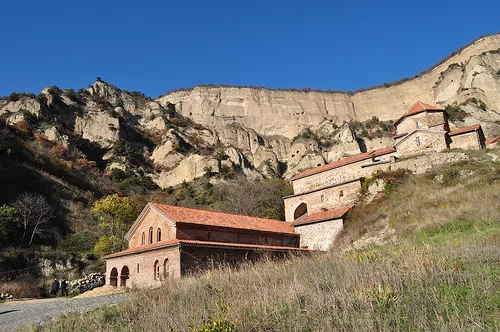
Where a hermit’s cave became one of the most important monasteries in Georgian history, hidden in a dramatic limestone canyon just 30 km from Tbilisi.
Quick Facts
|
Location |
Mtskheta-Mtianeti Region, 12 km from Mtskheta |
|
Distance from Tbilisi |
30 km (~1 hour) |
|
Distance from Mtskheta |
12 km (~20 minutes) |
|
Founded |
6th century (560s AD) |
|
Founder |
St. Shio, one of the Thirteen Assyrian Fathers |
|
Entrance Fee |
Free |
|
Opening Hours |
Daily, approximately 10:00–17:00 |
|
Dress Code |
Modest clothing required |
|
Status |
Active monastery |
The Story of St. Shio and His Cave
The name “Shio-Mgvime” tells you everything you need to know about this sacred place: it means “Cave of Shio” in Georgian. Behind this simple name lies one of the most remarkable stories in Georgian Christianity—a tale of a hermit, a hunter, and a dove that led to the creation of the largest monastic community in the country.
The Thirteen Assyrian Fathers
In the 6th century, thirteen monks arrived in Georgia from Antioch (in present-day Turkey) with a single mission: to spread Christianity throughout the Caucasus. Known as the Thirteen Assyrian Fathers, these missionaries would forever change Georgia’s spiritual landscape. Each father established monasteries in different regions, but it was Shio who created what would become the most influential of them all.
How a Hunter Found a Hermit
According to monastery tradition, Shio initially lived among his fellow monks at Zedazeni Mountain under the guidance of their leader, St. John of Zedazeni. But Shio sought deeper solitude for prayer and meditation. With his teacher’s blessing, he descended into the narrow limestone canyon along the Mtkvari River and found a small, dark cave in the cliffside.
Here, in complete isolation, Shio devoted himself to prayer and fasting. Legend says that God sent doves to bring food to the hermit in his hidden refuge.
One day, a local nobleman named Evagre was hunting in the canyon when he spotted a dove carrying something unusual. Following the bird, Evagre discovered Shio in his cave. The encounter transformed the hunter’s life. So moved was Evagre by Shio’s holiness that he abandoned his wealth and noble title to become a monk, eventually serving as the monastery’s first abbot after Shio’s death.
The Miracle of the Spring
Another legend explains the miraculous spring at Shio-Mgvime. The monks had to carry water up from the Mtkvari River far below—a difficult daily task. Once, a young monk fell while climbing back with his water vessel, shattering the jar and spilling every drop. Heartbroken, he began to weep.
When Shio saw the crying monk, he comforted him: “Do not cry, for God has heard you. In the place where your tears have fallen, He will cause a spring to appear.” Shortly after, fresh water began flowing from the rock itself—a spring that monks say still flows today.
Shio’s Final Years
As word of the holy hermit spread, more and more monks gathered around him. What began as one man in a cave grew to 25 disciples, then 200, and eventually reached 2,000 monks by the end of the 6th century—making Shio-Mgvime the largest monastic community in Georgia.
Yet Shio himself sought even deeper solitude for his final years. He dug a well-like pit for himself and descended into it, spending fifteen years in continuous prayer and fasting until his death. His grave remains visible in the monastery today, drawing pilgrims who descend into the darkness to pay their respects at the saint’s final resting place.
History Through the Centuries
The Golden Age (6th–13th centuries)
Shio-Mgvime quickly became more than just a monastery—it evolved into a vibrant center of Georgian religious, cultural, and literary life. The community remained under the direct patronage of the Catholicos (the head of the Georgian Orthodox Church), a sign of its supreme importance.
The monastery’s golden age came under King David IV “the Builder” (1089–1125), Georgia’s greatest medieval ruler. In 1123, David made Shio-Mgvime a royal domain and personally wrote the monastery’s regulations (typicon). He commissioned the construction of the Upper Church dedicated to the Virgin Mary, transforming the site from a hermitage into a magnificent complex worthy of a kingdom at the height of its power.
An archaeological expedition in 1937 discovered remnants of a 2 km aqueduct that once supplied the monastery with water from the nearby village of Skhaltba. Historical chronicles from 1202 record that this engineering marvel was built by Bishop Anton of Chkondidi, a minister at the court of Queen Tamar—evidence of the ongoing royal support for Shio-Mgvime.
Decline and Destruction (14th–18th centuries)
The fragmentation of the medieval Georgian kingdom left Shio-Mgvime vulnerable. In the 15th century, King George VIII granted the monastery to the noble Zevdginidze-Amilakhvari family, who used it as their ancestral burial ground until the 1810s.
The monastery suffered catastrophic destruction during the Persian invasions of Shah Abbas I (1614–1616). During one raid, Persian soldiers discovered St. Shio’s relics and carried them back to Persia. That same year, a terrible plague swept through Persia—the frightened invaders returned the holy relics to Georgia, believing they had incurred divine wrath.
Prince Givi Amilakhvari rebuilt the monastery in 1678, but peace was short-lived. The Ottoman occupation of the 1720s brought another wave of devastation. Restored again in 1733, the monastery was raided by Persian forces just two years later, and the monks were massacred.
Modern Revival
In the 19th century, Bishop Alexander undertook a thorough renovation of Shio-Mgvime. New frescoes were painted, cells were added, and the monastery partially recovered its former glory—though it never regained its central role in Georgian spiritual life.
Under Soviet rule, the monastery was forcibly closed. The monks were expelled, and the site fell into neglect. Only a handful of hermits remained until the 1960s, when even they passed away, leaving the ancient canyon silent.
Revival began in the 1990s after Georgia’s independence. Monks gradually returned to the canyon that had sheltered their predecessors for 1,500 years. Today, Shio-Mgvime is once again an active monastery, with a small but devoted community continuing the traditions that St. Shio established in his solitary cave.
What to See
The monastery complex cascades down the cliff face in terraced layers, each building seeming to emerge from the rock itself. Ancient caves dot the limestone walls—silent witnesses to the hermits who once meditated in their depths.
St. John the Baptist Church (6th century)
The oldest building in the complex, this remarkable church dates to the 560s–580s AD and was likely built during St. Shio’s lifetime. Its architectural features define early Georgian ecclesiastical style:
- Free cross (cruciform) plan with an octagonal dome topped by a conical roof
- Half-subterranean construction—only the upper walls and dome rise above ground level
- Deliberately plain and austere design reflecting the ascetic values of its founders
- Original stone iconostasis decorated with scenes from St. Shio’s life (now in the Georgian National Museum in Tbilisi)
The church’s partially underground construction creates an atmosphere of primordial holiness—entering feels like descending into the earth itself, much as Shio descended into his cave and later his well.
The Cave of St. Shio
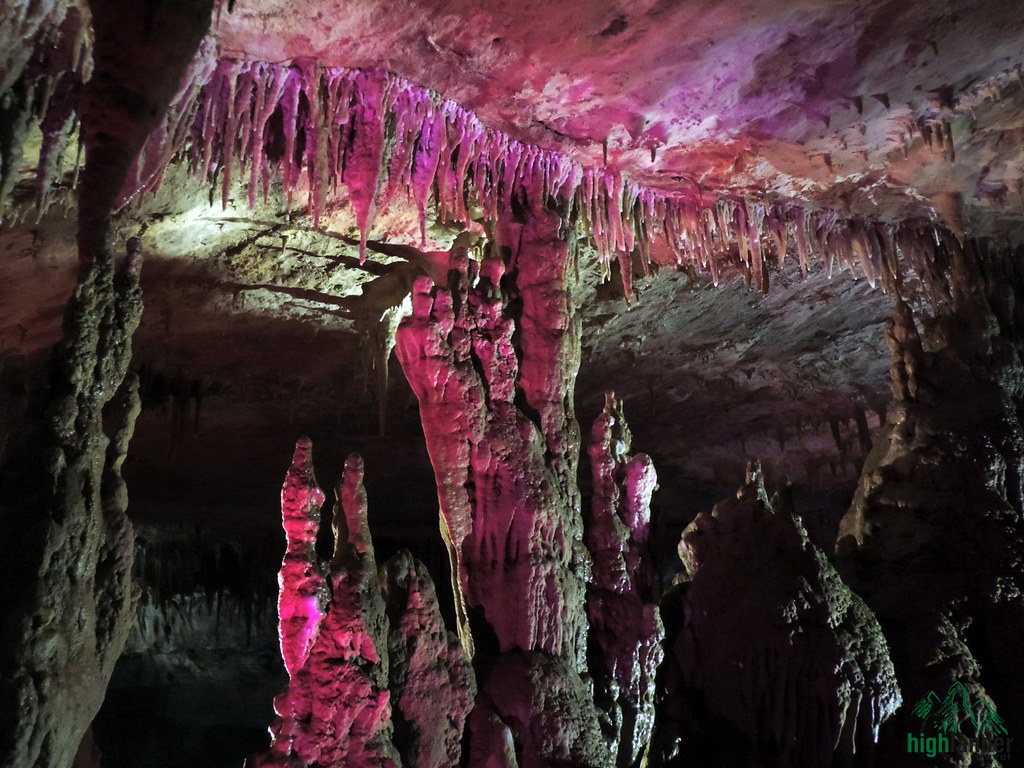
Connected to the church through a dark passage, this is the most sacred space in the monastery—the original cave where St. Shio lived and prayed. At the back of the cave lies St. Shio’s grave, where the saint was buried after his death.
The cave is quite dark—bring a flashlight or use your phone light to navigate. Pilgrims descend to touch the tomb and light candles in memory of the hermit who transformed this hidden canyon into a spiritual capital of Georgia.
Church of the Assumption of the Virgin (12th century)
Built at the command of King David the Builder around 1100, this was originally a magnificent domed church befitting royal patronage. However, the Persian invasion of 1614–1616 destroyed the dome and much of the structure.
The church was rebuilt in 1678 by Prince Givi Amilakhvari, but in a simplified basilica form rather than the original domed design. Despite this transformation, the interior contains some of the finest frescoes in the Mtskheta region:
- Medieval murals dating from the 13th–18th centuries
- Portraits of the Amilakhvari family (their burial ground for centuries)
- Religious scenes painted during various restoration periods
The contrast between the austere exterior and the vivid interior paintings makes entering this church one of the highlights of any visit.
The Refectory (12th–17th centuries)
The monastery’s dining hall spans several centuries of construction and directly connects with the Cave of St. Shio. This architectural link symbolizes the connection between monastic community life and the solitary prayer that founded it.
Chapel of the Holy Cross (12th century)
A small single-nave church stands on top of the hill above the main complex, reached by climbing the stairs on the left side of the monastery grounds. Inside are fragments of 13th-century wall paintings, preserved despite the centuries of destruction that swept through the canyon below.
From this elevated chapel, you can see the full sweep of the monastery complex and the ancient hermit caves dotting the surrounding cliffs.
Hermit Caves
Look carefully at the cliff faces surrounding the monastery—the limestone is pockmarked with dozens of caves where monks once lived in solitary meditation. These natural and carved-out cells stretch along the canyon walls and the road leading to the complex, visual reminders of a time when 2,000 hermits made this remote gorge their home.
How to Get There
Shio-Mgvime is located 12 km northwest of Mtskheta, at the end of a dead-end road that winds through a scenic limestone canyon along the Mtkvari River.
From Mtskheta
Distance: 12 km | Time: 20–25 minutes
The most common way to visit Shio-Mgvime is as an extension of a Mtskheta day trip.
By Taxi:
- Taxis gather near the fountain in Mtskheta’s main square, close to Samtavro Monastery
- Price: 15–20 GEL round trip (including waiting time)
- Negotiate in advance for a combined Jvari + Shio-Mgvime trip
- The driver will wait while you explore the monastery
Important: There is no public marshrutka service to Shio-Mgvime. The only access is by private vehicle or taxi.
From Tbilisi
Distance: 30 km | Time: 45 minutes–1 hour
Option 1: Taxi/Private Transfer
- Book through Bolt app or arrange with a taxi driver
- Price: 60–80 GEL round trip from Tbilisi
- Can combine with Mtskheta sights (Svetitskhoveli, Jvari) for a full day trip
Option 2: Organized Tour
- Several tour companies include Shio-Mgvime on their Mtskheta itineraries
- Often combined with Svetitskhoveli Cathedral, Jvari Monastery, and lunch in Mtskheta
Option 3: Walking from Dzegvi Village
- For adventurous travelers: walk 4 km along a path from Dzegvi village (on the Mtskheta-Kavtiskhevi highway)
- Scenic but strenuous; not recommended in hot weather
Driving Notes
- The road to Shio-Mgvime is paved but narrow with many curves
- No turning areas on much of the road—be cautious of oncoming traffic
- The final approach requires driving through the limestone canyon
- Parking is available near the monastery entrance
- Dead-end road—the only way out is back the way you came
Practical Information
Opening Hours
- Generally 10:00–17:00 daily
- As an active monastery, hours may vary for religious services
- Best to arrive in the morning for a quieter experience
Dress Code
This is an active Orthodox monastery with strict dress requirements:
- Women: Long skirts (not pants), covered shoulders, headscarf
- Men: Long pants, covered shoulders
- Wraps and scarves are sometimes available at the entrance, but don’t rely on this
What to Bring
- Flashlight or phone light for the dark Cave of St. Shio
- Water (limited facilities at the monastery)
- Comfortable shoes for uneven stone paths and stairs
- Modest clothing (see dress code above)
- Cash for the small monastery shop
Monastery Shop
The monks maintain a small shop selling:
- Beeswax candles made on-site (highly recommended—they smell like honey)
- Honey produced by monastery bees
- Religious items and icons
Visitor Etiquette
- Shio-Mgvime is an active monastery, not a museum
- Speak quietly and be respectful of monks at prayer
- Photography is generally allowed outdoors but forbidden inside churches during services
- Some areas are restricted for the resident monks—respect closed gates and barriers
Best Time to Visit
- Morning hours for fewer crowds and better lighting in the canyon
- Weekdays are quieter than weekends
- Sunday mornings offer a chance to attend Orthodox services with beautiful polyphonic singing (but more crowded)
- Spring and autumn offer pleasant weather; summer can be very hot in the canyon
Combining with Other Sites
Shio-Mgvime is rarely visited alone—most travelers combine it with other Mtskheta-area attractions for a full day trip from Tbilisi.
Suggested Day Trip Itinerary
Morning:
- Jvari Monastery (6th century) – Iconic hilltop church overlooking the confluence of the Mtkvari and Aragvi rivers
- Svetitskhoveli Cathedral – Georgia’s second-most sacred church, home to Christ’s Robe
- Walk through Mtskheta’s old town, browse souvenirs, have Georgian lemonade
Lunch: Traditional Georgian restaurant in Mtskheta center
Afternoon: 4. Samtavro Convent – Active nunnery with the grave of St. Gabriel 5. Shio-Mgvime Monastery – The hidden cave monastery in the canyon
Optional additions:
- Zedazeni Monastery – Remote hilltop monastery founded by St. John of Zedazeni, Shio’s teacher
- Bebris Tsikhe Fortress – Medieval fortress ruins near Mtskheta
Tours That Include Shio-Mgvime
Most standard Mtskheta day trips skip Shio-Mgvime due to its off-the-beaten-path location. If you want to include it, look for tours specifically mentioning the monastery, or arrange a private tour.
Book a Mtskheta tour including Shio-Mgvime →
Frequently Asked Questions
How far is Shio-Mgvime from Tbilisi? The monastery is approximately 30 km from Tbilisi, about 45 minutes to 1 hour by car depending on traffic.
Is there public transport to Shio-Mgvime? No. There is no marshrutka or bus service to the monastery. You must visit by taxi, private car, or organized tour.
How much does a taxi cost from Mtskheta to Shio-Mgvime? Expect to pay 15–20 GEL for a round trip from Mtskheta, including waiting time at the monastery.
Is Shio-Mgvime worth visiting? Absolutely. While less famous than Svetitskhoveli or Jvari, Shio-Mgvime offers something they cannot: an authentic, uncrowded spiritual experience in a dramatic natural setting. The frescoes inside the main church are among the best-preserved in the region.
Can I visit St. Shio’s cave? Yes. The cave is accessible through a dark corridor from the 6th-century church. The saint’s tomb is at the back. Bring a light—it’s quite dark inside.
How long should I spend at Shio-Mgvime? Allow 1–1.5 hours to explore the complex thoroughly, including the churches, cave, and chapel on the hill.
Is Shio-Mgvime included on standard Mtskheta tours? Most basic Mtskheta day trips do not include Shio-Mgvime. Look for tours that specifically mention it, or arrange a private tour.
What’s the connection between Shio-Mgvime and the Thirteen Assyrian Fathers? St. Shio was one of the Thirteen Assyrian Fathers—monks who came from Antioch in the 6th century to spread Christianity in Georgia. Each father founded important monasteries; Shio’s cave became the largest monastic community in the country.
Is the monastery active today? Yes. After being closed during Soviet times, monks returned to Shio-Mgvime in the 1990s. It remains an active monastery with a small resident community.
What should I wear to visit? Modest clothing is required: long skirts for women (not pants), headscarves, and covered shoulders. Men should wear long pants and cover their shoulders.
Why Shio-Mgvime Matters
In a country filled with ancient churches and monasteries, Shio-Mgvime stands apart. This is not just another medieval monument—it is the birthplace of Georgian monasticism, the place where the hermit tradition took root and flourished into a movement that shaped the nation’s spiritual identity.
The monastery’s setting reinforces its meaning. Hidden in a narrow canyon, accessible only by a winding dead-end road, Shio-Mgvime preserves something of the solitude that drew St. Shio here 1,500 years ago. Unlike the UNESCO-listed sites in Mtskheta proper, Shio-Mgvime rarely sees crowds. You may find yourself alone with the frescoes, alone in the cave, alone with the monks going about their daily prayers.
This is Georgia as it was before the tour buses ancient, sacred, and quietly powerful.