Georgia gives you an unusual opportunity: to walk through three thousand years of its history in the order it happened, along a single river valley, in one day.
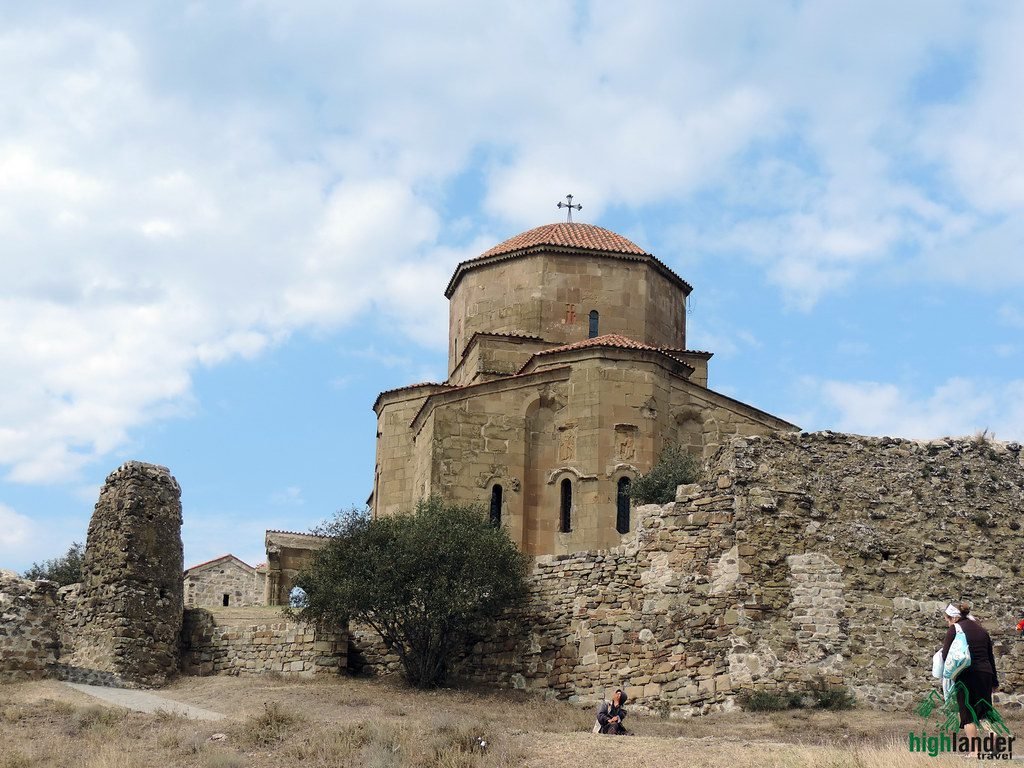
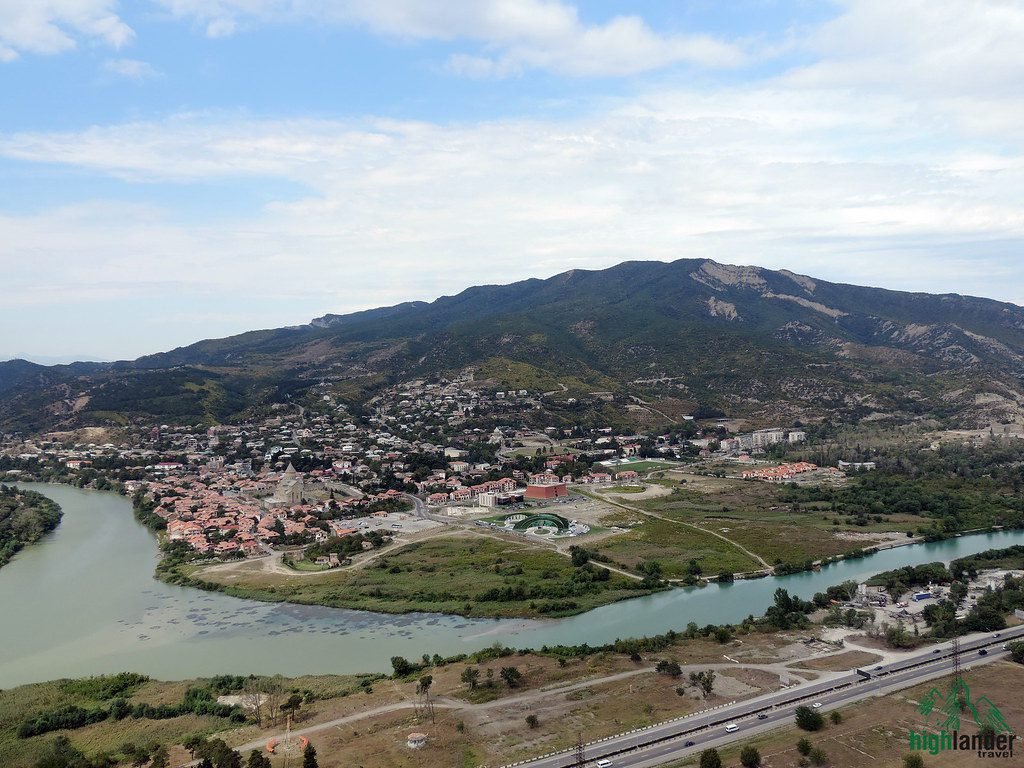
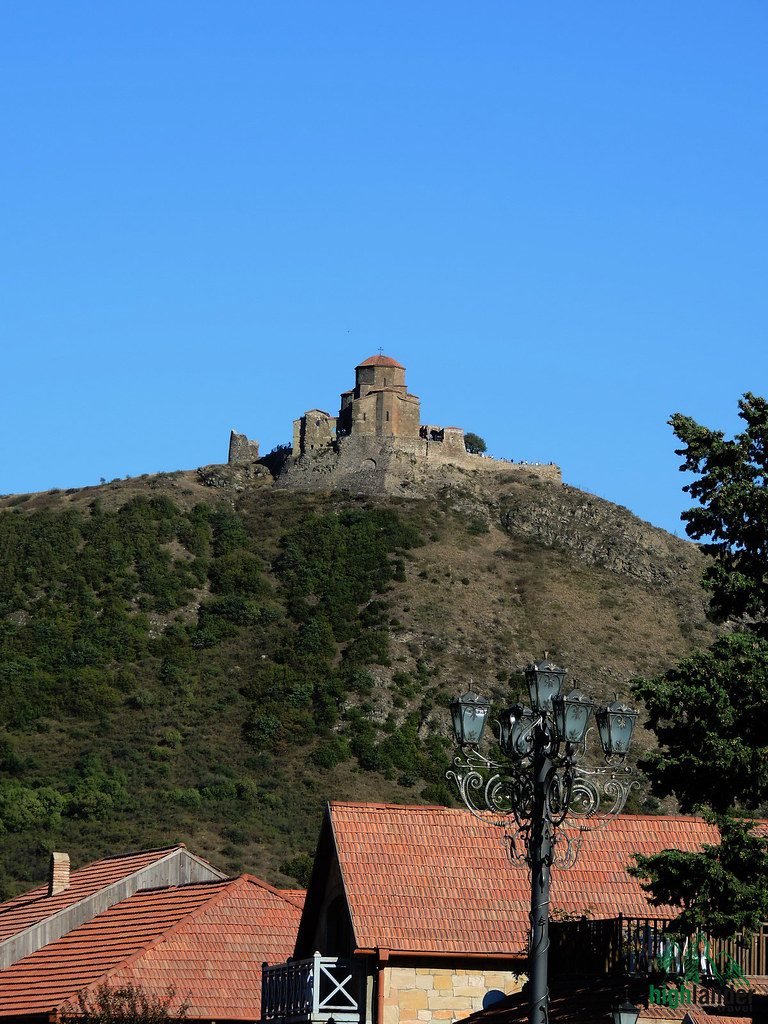
You start at the end that is still standing. Jvari, on its ridge, is a sixth-century church built when Christianity here was still new enough to be an argument. Svetitskhoveli, below in Mtskheta, is where the argument was settled — the cathedral where Georgian kings were crowned and buried, and where the head of the church is still enthroned today.
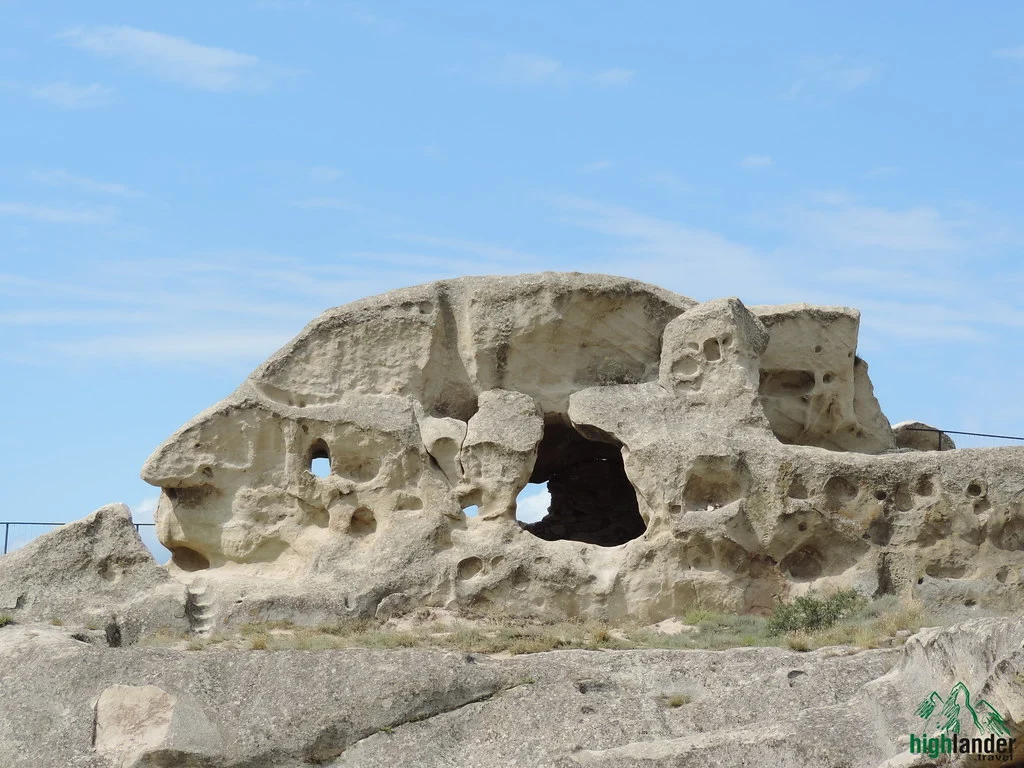
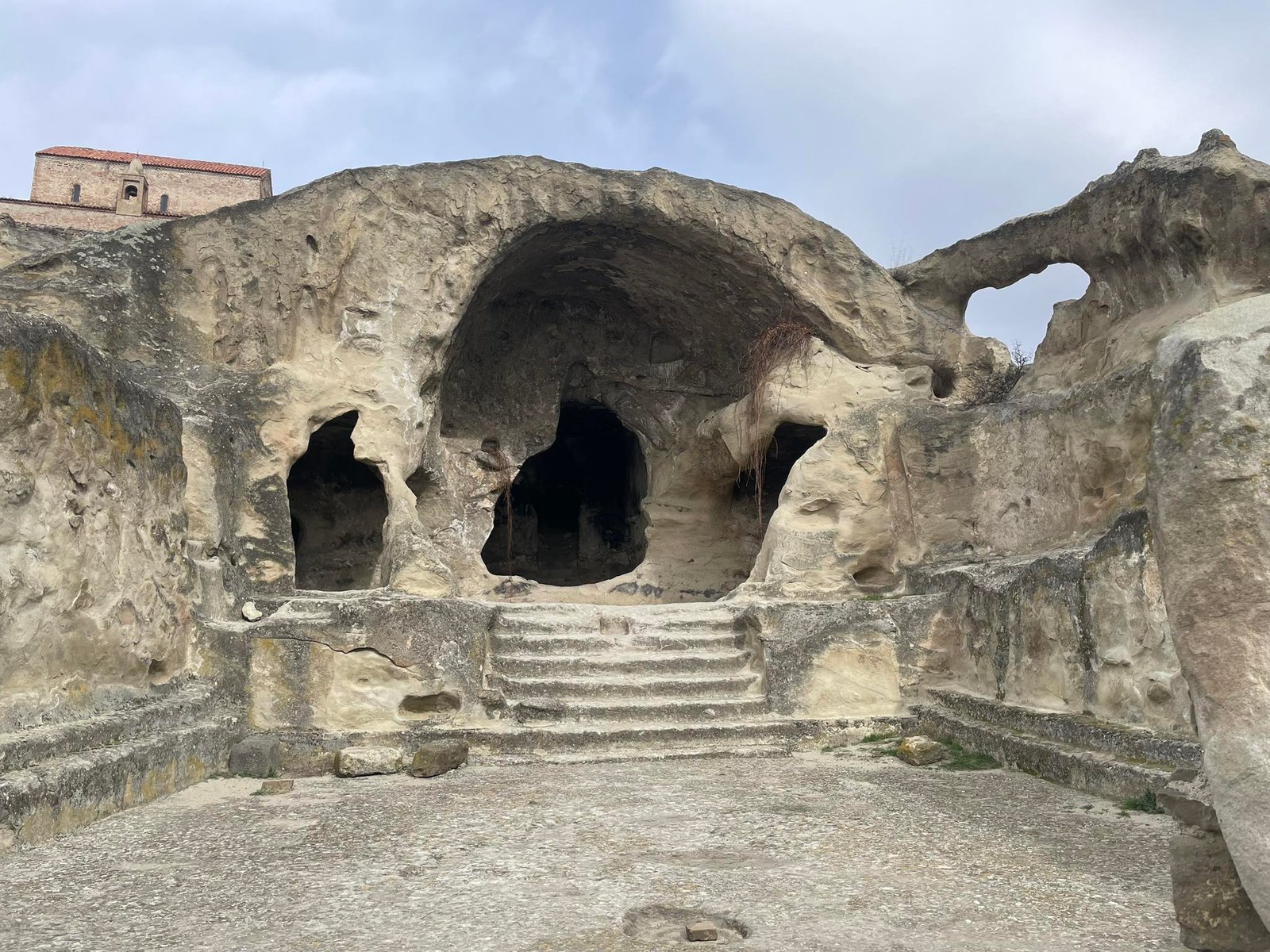
Then you drive west into Shida Kartli, and history goes backwards. Uplistsikhe is a town cut directly into a sandstone bluff above the Mtkvari, and people were living in it before either of those churches existed — before Christianity reached the Caucasus at all. The name means “the lord’s fortress”. At its height it held several hundred rock-cut chambers, of which around 150 survive: a pagan sanctuary, a hall with a ceiling carved to imitate wooden beams by masons who had never built in stone before, a wine cellar with the qvevri pits still sunk in the floor, and a tunnel down to the river for when the town was under siege. The Mongols emptied it in the thirteenth century and nobody ever really moved back.
And between the two, in Gori, there is the other thing. Iosif Dzhugashvili was born in a one-room wooden house here in 1878. The house is still standing, sheltered under a marble pavilion, next to a museum that was built in 1957 and has changed remarkably little since. What that museum says about him — and what it carefully does not say — is the most instructive twenty minutes of the day, and we do not pretend otherwise.
This is a full day: eight to nine hours, around two hundred kilometres, and roughly three to four kilometres on foot across uneven ground. It suits people who like their history physical — climbing into the actual rooms, standing in the actual doorway — rather than read off a panel.
What you’ll see
Tour highlights
- Uplistsikhe, cut into living rock — around 150 surviving chambers out of several hundred, including a pagan sanctuary that predates Christianity in Georgia by centuries. You walk through the streets, not past them.
- The hall with the carved ceiling — coffered stone cut to imitate wooden beams, by masons copying a building material they were not using. It is the single most striking thing at the site and most visitors walk under it without looking up.
- The escape tunnel to the river — a rock-cut passage running down from the town to the Mtkvari, so the site could survive a siege. You can still go down it.
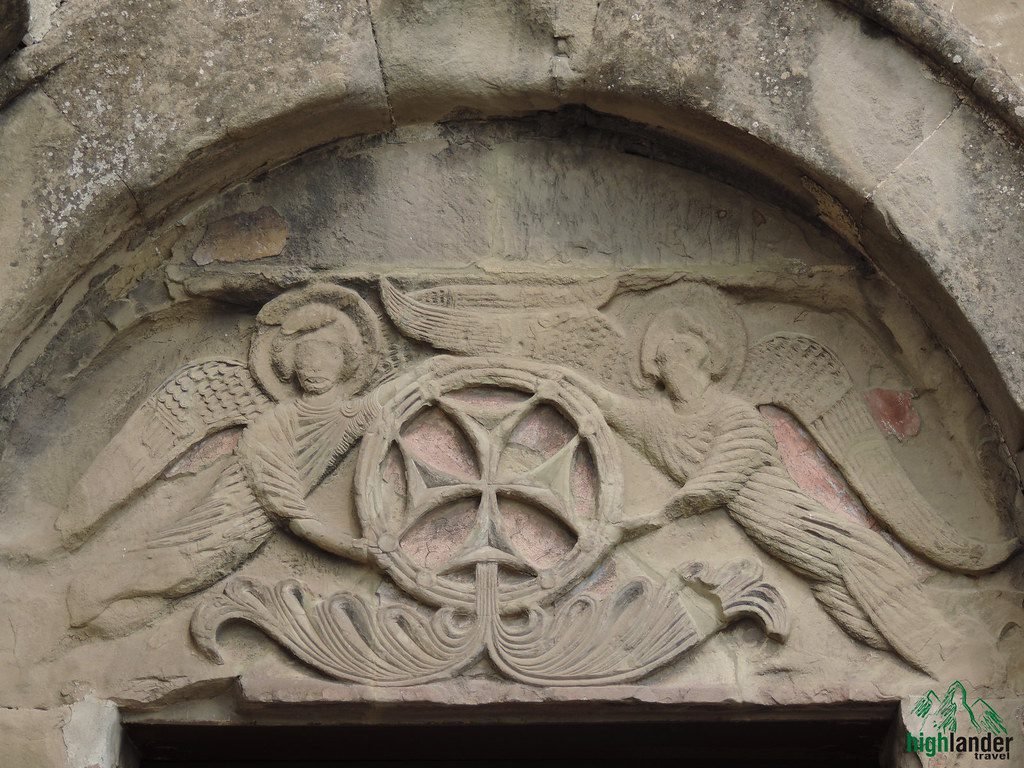
- Jvari Monastery, 590–605 — a tetraconch church on the ridge above the meeting of the Aragvi and the Mtkvari, so well proportioned it became the template copied across the Caucasus for four centuries.
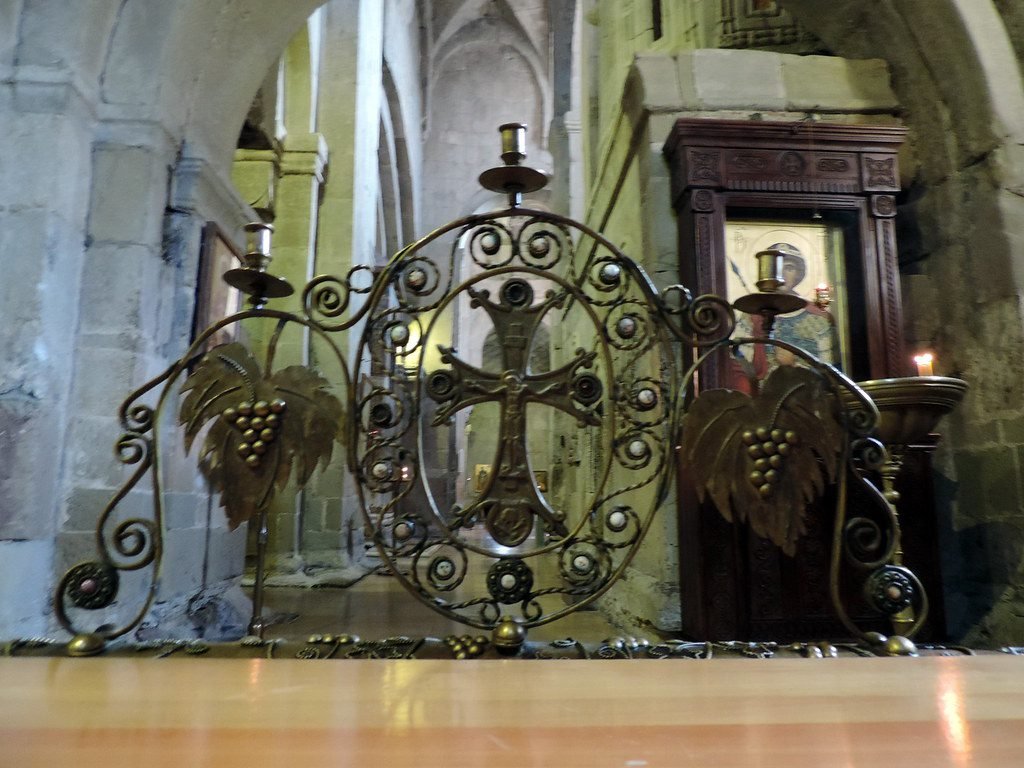
- Svetitskhoveli Cathedral — eleventh century, the coronation and burial church of the Georgian kings, and the second-largest church in the country.
- The Stalin Museum in Gori — his birth house preserved under a pavilion, his armoured railway carriage in the garden, and a permanent exhibition that has never been rewritten. Uncomfortable, fascinating, and worth going in with your eyes open.
- Gori Fortress — the medieval citadel on the hill in the middle of town, visible from everywhere and worth a stop for the view down over the plain.
- Private vehicle and driver-guide — your group only, and the day flexes if a site is holding your attention.
Step by step
Tour itinerary
Eight to nine hours door to door, around 200 kilometres. Times are indicative — the order is fixed by geography, the pace is not.
09:00 — Pickup in Tbilisi
Collected from your hotel or apartment. Mtskheta is twenty-five minutes north, so the day starts gently.
09:30 — Jvari Monastery
Thirty to forty minutes on the ridge. The church is almost bare inside — cut stone, narrow windows, the base of a wooden cross — and the terrace outside looks down on the point where the clear Aragvi meets the brown Mtkvari and the two run side by side without mixing. It is windy up here in every season; bring a layer.
10:15 — Svetitskhoveli Cathedral
Forty to fifty minutes in Mtskheta. Inside there are royal tombs underfoot and a great deal of dim space overhead. On the north facade, look for the carved hand holding a mason’s bevel — the builder, Arsukidze, is said to have lost that hand so he could never make anything finer. Shoulders and knees covered; scarves are lent at the door.
11:30 — West to Gori
An hour on the highway through Shida Kartli, past orchards and the long flat farmland that made this valley worth fighting over. Gori Fortress appears on its hill as you come into town.
12:30 — The Stalin Museum
Sixty to seventy-five minutes. Three parts: the wooden house where he was born, kept under a colonnaded pavilion; the museum building itself, opened in 1957 and largely unrevised since; and the green armoured railway carriage in the garden, which took him to the Yalta conference in 1945 because he would not fly.
Your guide will give you the context the exhibition does not. If you would rather not go in at all, say so — we will spend the time at Gori Fortress instead and nobody will make it awkward.
13:45 — Lunch in Gori
An hour at a local restaurant. Shida Kartli cooking is less famous than Kakhetian but the bread and the grilled meat are excellent, and it is the last real meal before a lot of walking.
15:00 — Uplistsikhe
Ninety minutes to two hours, and the physical part of the day. A path climbs from the ticket office onto the bluff, and from there you are walking on and through the town itself: chambers cut straight into the sandstone, a central street worn into a groove, the pagan sanctuary, the hall with the imitation-timber ceiling, wine pits still sunk in a cellar floor. On top, a ninth-century basilica sits on the site of the pagan temple it replaced — the whole religious history of the country in one section of rock.
Come down through the tunnel to the river if the group is up for it. The rock is slippery, the steps are uneven, and it is the best five minutes of the site.
17:00 — Back to Tbilisi
Around ninety minutes east, arriving between 18:30 and 19:00.
Starting from
€130
per person
Locally operated since 2011
We reply within 24 hours
What your price covers
What’s included
Included
- Private air-conditioned vehicle for your group only
- English-speaking driver-guide for the full day
- Hotel pickup and drop-off in central Tbilisi
- Uplistsikhe entrance fee
- Stalin Museum entrance fee — nothing to pay at the door
- Entry to Jvari and Svetitskhoveli, both free
- Fuel, parking and road costs
- Bottled water in the car
- All taxes and booking fees
Not included
- Lunch in Gori — expect 25–45 GEL per person
- A licensed site guide inside Uplistsikhe, if you want specialist archaeological commentary (available on request, quoted separately)
- Wine tasting at a Kartli cellar — an optional add-on, ask us when you book
- Travel insurance
- Tips for your driver-guide
- Personal expenses and souvenirs
Photographs
Gallery
Where you’ll go
Map & route
Tbilisi — city centre
Jvari Monastery
Svetitskhoveli Cathedral
Stalin Museum, Gori
Uplistsikhe Cave Town
Practical details
Good to know before you go
What the day asks of you physically
Three to four kilometres of walking in total, most of it at Uplistsikhe. The surfaces there are the hard part: bare sandstone, polished smooth in places by two and a half thousand years of feet, with no handrails and a great many uneven steps. It is not dangerous if you are steady, and it is genuinely difficult if you are not. Boots or trainers with grip; no sandals, no smooth soles.
The Stalin Museum, honestly
People ask about this before they book, so here is the straight answer. The museum was built in 1957 as a memorial and it still reads like one. The exhibition follows his life as an achievement; the purges, the famine and the camps are handled in one small side room added later, and easily missed. Nothing outside that room contradicts the main story.
That is exactly why it is worth seeing — it is a working piece of the twentieth century, not a considered account of it. Your guide will fill in what the labels leave out. And if you would rather not walk through a monument to Stalin at all, that is a completely reasonable position: tell us and we will spend the hour at Gori Fortress instead.
Dress code
Jvari and Svetitskhoveli are working churches. Shoulders and knees covered for everyone; women are asked to wear a skirt and a headscarf. Wraps and scarves are lent at both doors, but they run out at busy times — your own scarf makes the morning easier.
When to go
| Season | Conditions | Worth knowing |
|---|---|---|
| April – June | Green, mild, long light | The best window — Uplistsikhe has no shade at all |
| July – August | 30–38°C on the bluff, no shelter | Take the earliest start we offer and bring more water than you think |
| September – October | Warm, clear, harvest in the valley | The most comfortable walking conditions of the year |
| November – March | Cold and quiet; rock can be icy after rain | Sites are nearly empty. Ask about conditions at Uplistsikhe before booking |
What to bring
- Shoes with grip. The single most important item on this list.
- Sun protection and water. Uplistsikhe is an exposed sandstone bluff with no trees and no shade.
- A scarf or wrap for the churches.
- A wind layer for Jvari, which is colder than the valley in every season.
- Cash in lari for lunch and any souvenirs.
Children and accessibility
Children from around eight manage this well — Uplistsikhe is essentially a large climbing frame with three thousand years of history attached, and most of them enjoy it more than the adults. For visitors with limited mobility the day is challenging: Jvari, Svetitskhoveli and the Stalin Museum are all manageable, but Uplistsikhe is not, and there is no way to see the interesting part of it without climbing. Tell us in advance and we will be honest with you about what will and will not work.
How this differs from our half-day Mtskheta tour
Our Mtskheta tour spends four hours on three monuments in one town and includes Samtavro Monastery. This one gives Mtskheta about ninety minutes and spends the rest of the day 90 kilometres west. If Mtskheta itself is what you came for, take the half-day. If you want range — pagan, Christian, Soviet — take this one.
Booking
Book at least 24 hours ahead. Free cancellation up to 24 hours before departure. Child seats free on request.
From our travellers
Reviews
Before you book
Frequently asked questions
How long is the Mtskheta, Gori and Uplistsikhe tour?
Eight to nine hours door to door, covering about 200 kilometres. Roughly three hours of that is driving, split across three legs, so no single stretch in the car is long.
How difficult is Uplistsikhe to walk around?
Moderate, and the difficulty is the surface rather than the distance. You are walking on bare sandstone worn smooth over centuries, with uneven rock-cut steps and no handrails. Shoes with grip make it straightforward. Smooth soles make it genuinely awkward.
Can I skip the Stalin Museum?
Yes, and a fair number of guests do. Tell your driver-guide in the morning and we will spend the hour at Gori Fortress instead. There is no charge either way and nobody will make it uncomfortable.
Is the Stalin Museum propaganda?
Substantially, yes. It opened in 1957 and the main exhibition has never been rewritten — it presents his life as an achievement, with the purges and the famine confined to one small side room added much later. We think that makes it more worth seeing rather than less, because you are looking at a surviving artefact of the period rather than a modern account of it. Your guide supplies the context the labels leave out.
How old is Uplistsikhe?
The site was inhabited from the Early Iron Age and was a major pagan religious centre well before Christianity reached Georgia in the fourth century. Around 150 rock-cut chambers survive out of several hundred. The Mongols destroyed the town in the thirteenth century and it was never properly resettled.
Is photography allowed?
Yes at Uplistsikhe and Gori Fortress, and generally inside the churches without flash — but not of people at prayer. Some chapels post a no-camera sign, and where they do, it means it.
Is the tour suitable for children?
From about eight upwards, yes. Uplistsikhe is the highlight for most children — real caves you can walk into. Younger children find the driving stretches long, so bring something for the car.
What happens if it rains?
The tour runs. Jvari, Svetitskhoveli and the museum are unaffected; at Uplistsikhe the rock gets slippery, so we slow down and skip the tunnel. If conditions are genuinely unsafe there we will tell you and adjust — usually by adding Gori Fortress and more time in Mtskheta.
Is lunch included?
No. Your driver-guide takes you to a local restaurant in Gori where a full meal is about 25–45 GEL, and you order what you want. Vegetarian and vegan options are available with notice.
Is the tour private?
Yes. Your own vehicle, your own driver-guide, your own pace. The per-person price falls as the group grows, because the cost of the car is shared between more people.
Ready when you are
Tell us your dates and how many of you are travelling. We’ll come back within 24 hours with availability, a confirmed price, and your guide’s name.