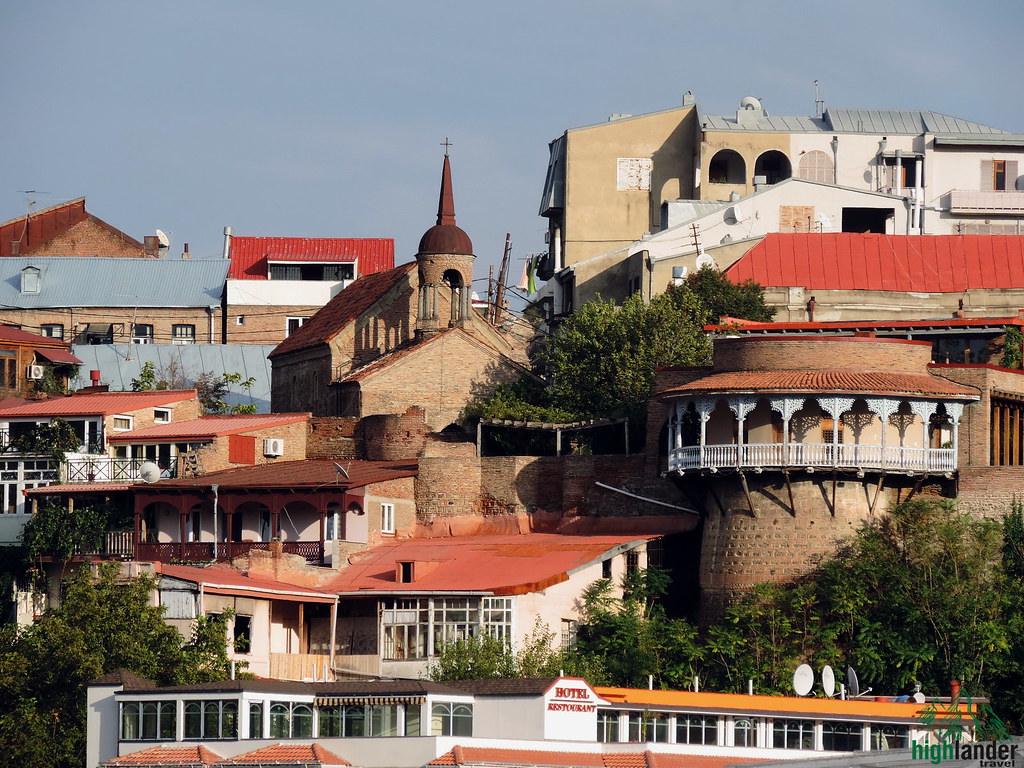
Tbilisi “bridge of Peace” is included into the most curious bridges
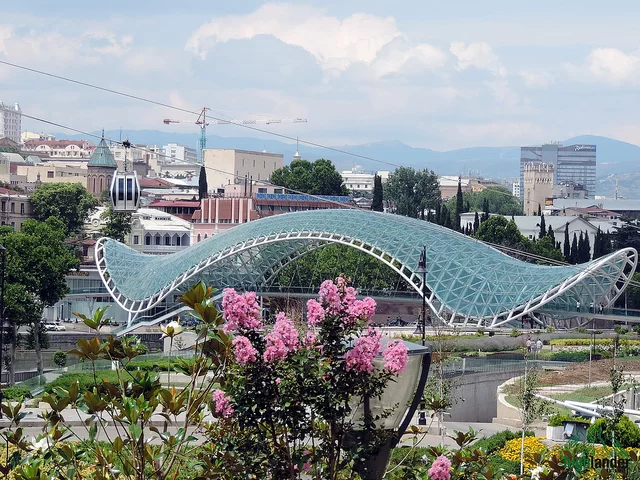
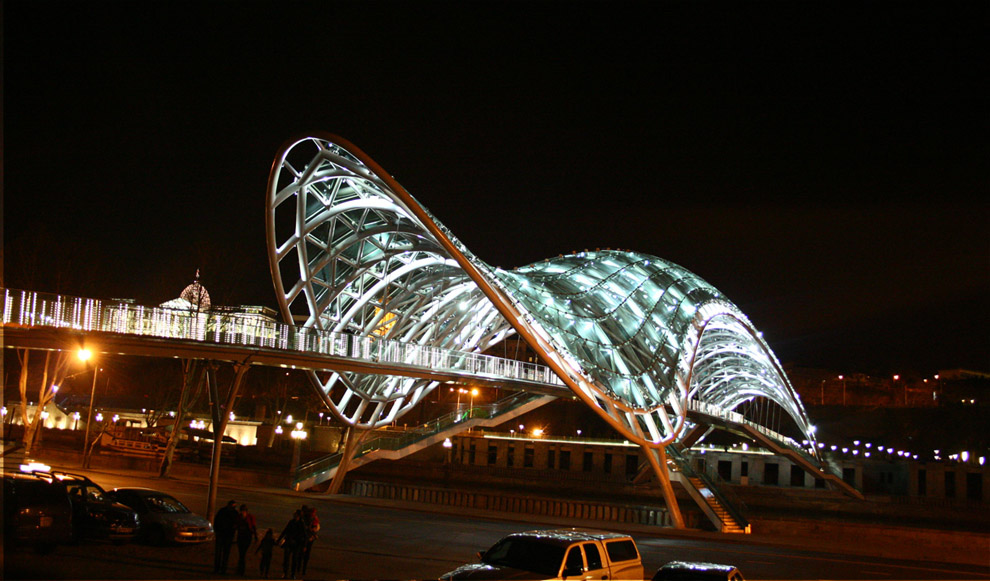
A glass-and-steel ribbon spanning the Mtkvari River, the Bridge of Peace has become Tbilisi’s defining contemporary symbol — loved, debated, and photographed millions of times since opening in 2010.
Stand on the western bank of Tbilisi’s Old Town as evening falls, and you’ll witness one of the city’s most striking contrasts. Behind you, the sulfur baths and carved balconies of the historic district speak of centuries past. Before you, a 156-meter arc of glass and white steel curves across the river, its LED-studded canopy preparing to pulse with light. This is the Bridge of Peace — the structure that sparked fierce debate, redefined Tbilisi’s skyline, and became one of the most recognizable landmarks in the Caucasus.
Whether you find it brilliantly contemporary or controversially out of place, the Bridge of Peace demands attention. And understanding what makes it significant — architecturally, symbolically, and practically — enriches any visit to Georgia’s capital.
What Is the Bridge of Peace?
The Bridge of Peace (მშვიდობის ხიდი, Mshvidobis Khidi in Georgian) is a pedestrian and cyclist bridge spanning the Mtkvari River (also called the Kura) in central Tbilisi. It connects the historic Old Town on the river’s left bank with Rike Park and the modern developments on the right bank.
Key Facts:
- Opened: May 6, 2010
- Length: 156 meters (512 feet)
- Width: 5 meters (16 feet) at the walkway
- Type: Bow-string arch bridge, pedestrian only
- Designer: Michele De Lucchi (Italian architect)
- Lighting Designer: Philippe Martinaud (French)
- Construction Cost: Approximately 25 million USD
- Daily Visitors: Tens of thousands cross the bridge daily
The bridge’s most distinctive feature is its undulating glass-and-steel canopy, supported by a complex system of cables attached to the main arch. The entire structure rests on just four points — two on each bank — creating the impression of a glass wave floating above the water.
Architecture and Design: A Modern Icon
The Vision Behind the Bridge
Italian architect Michele De Lucchi, known for designing products for brands like Olivetti and Artemide as well as significant architectural projects across Europe, conceived the Bridge of Peace as a symbol of connection — between Tbilisi’s past and future, between Georgia and the broader world, and between the city’s diverse communities.
The design deliberately contrasts with its surroundings. Where Tbilisi’s Old Town features warm stone, carved wood, and the organic geometry of centuries-old construction, the bridge presents cool glass, white steel, and computer-calculated curves. This wasn’t accidental — De Lucchi intended the bridge to represent Georgia’s forward-looking aspirations while respecting (through contrast rather than imitation) the heritage around it.
The Glass Canopy
The bridge’s roof comprises approximately 1,500 glass panels arranged in a wave-like pattern, supported by a steel mesh structure. By day, the canopy provides shade and weather protection for pedestrians while allowing filtered light through. The glass itself is specially treated to handle Tbilisi’s temperature extremes — from summer heat exceeding 35°C to winter cold dropping below freezing.
The canopy’s shape has drawn numerous comparisons. Some see a whale skeleton. Others see a caterpillar, a centipede, or a futuristic tunnel. The most generous interpretations describe it as a frozen wave or a ribbon of light connecting past and future. Whatever metaphor resonates, the shape is unmistakably memorable.
The Supporting Structure
The main structural element is a steel arch rising above the walkway and canopy, from which cables descend to support the deck. This bow-string arch design allows the bridge to span the river without supports in the water — an engineering choice that both simplifies construction and creates the floating appearance central to the design.
White was chosen for all structural elements to create visual lightness and to contrast with the darker tones of Tbilisi’s historic architecture. The color also maximizes the impact of the evening lighting display.
The Light Show: A Morse Code Message
The Bridge of Peace transforms after sunset into one of Tbilisi’s most mesmerizing spectacles. Embedded within the bridge structure are approximately 30,000 LED lights that create an animated display visible from both banks and from the hillside vantage points around the city.
How the Light Show Works
Every hour after dark, the bridge’s lights perform a synchronized display lasting several minutes. The LEDs pulse and shift in patterns along the length of the bridge, creating waves of color that ripple across the structure.
The most meaningful aspect of the lighting design is invisible to casual observers: French lighting designer Philippe Martinaud programmed a message in Morse code into the LED sequences. The message spells out the chemical elements that compose the human body — carbon, hydrogen, oxygen, nitrogen, and others — symbolizing that regardless of nationality, politics, or belief, all humans share the same fundamental composition.
According to the designers, this “message of life” represents the bridge’s deeper meaning: a hymn to peace and human unity.
Best Times to See the Lights
The display begins at sunset and continues throughout the evening. For photography:
- Blue hour (approximately 30-45 minutes after sunset): The sky retains deep blue color while the bridge lights are fully visible — optimal for dramatic photographs
- Full darkness: The lights appear most vivid, though background detail is lost
- Evening shows: The most elaborate light sequences typically occur on the hour
Controversy and Debate: Tbilisi’s Love-Hate Relationship
Few structures in Tbilisi have generated as much passionate debate as the Bridge of Peace. Understanding the controversy adds depth to any visit.
The Case Against
Critics argue that the bridge’s aggressively modern design clashes with Tbilisi’s historic character. The Old Town, with its UNESCO World Heritage Site candidates and centuries of architectural layering, suddenly confronts a structure that looks imported from a European capital’s waterfront development. Some Georgian architects and preservationists felt the bridge prioritized international architectural fashion over local context.
The most cutting criticism came in the form of nicknames. Locals dubbed the bridge “the Always maxi pad” (referring to a feminine hygiene brand), “the sanitary napkin,” and other unflattering comparisons to its curved white shape. These names stuck, and you may still hear them from Tbilisi residents.
There were also political dimensions. The bridge was built during the presidency of Mikheil Saakashvili, whose government championed modernist architecture as a symbol of Georgia’s Western orientation and post-Soviet transformation. For critics of that government, the bridge represented style over substance, expensive gesture over needed infrastructure, and foreign design replacing Georgian tradition.
The Case For
Supporters counter that great cities embrace architectural dialogue across eras. Paris has the Eiffel Tower and the Pompidou Center alongside its classical monuments. London has the Gherkin and the Shard near medieval churches. Bilbao transformed itself through the Guggenheim. Why shouldn’t Tbilisi add contemporary landmarks to its historic fabric?
The bridge has undeniably succeeded in creating a new icon for Tbilisi — an image that appears in virtually every tourism promotion, on countless Instagram posts, and as a visual shorthand for the city itself. It has also activated Rike Park, previously underutilized, as a major public space.
From a functional standpoint, the bridge provides a crucial pedestrian connection between the Old Town and the right bank, reducing walking distance and making both areas more accessible.
Where It Stands Today
More than a decade after opening, the controversy has largely faded into acceptance. Most Tbilisi residents have made peace with the bridge (pun intended), and for visitors, it simply is Tbilisi — one more layer in a city defined by architectural layers.
How to Visit the Bridge of Peace
Location and Access
The Bridge of Peace spans the Mtkvari River between Irakli Abashidze Street (Old Town side) and Rike Park (right bank side). It is centrally located and easily accessible from most tourist areas.
From the Old Town side: Walk down from Shardeni Street or the Sulfur Baths district toward the river. The bridge’s western end is clearly visible from most points along the riverbank. The Rezo Gabriadze Theater and the Anchiskhati Basilica are nearby landmarks.
From Rike Park: Enter the park from any direction — the bridge dominates the eastern edge, impossible to miss.
Nearest Metro Station: Avlabari Station (approximately 10 minutes walk) on the Blue Line. Cross the Metekhi Bridge and walk along the river.
When to Visit
For photography: Arrive 30-45 minutes before sunset to see the bridge in daylight, then stay for the blue hour transition and evening lights. The view from the Old Town side (looking toward Rike Park with the Presidential Palace and Sameba Cathedral in the background) is particularly dramatic at dusk.
For pleasant walking, Morning hours are coolest in summer. The bridge can get crowded on weekend evenings and during the prime sunset photography period.
For the light show: Any evening after dark. The display is best appreciated from the riverbank rather than from the bridge itself, where you’re too close to perceive the patterns.
Practical Information
- Cost: Free to cross at any time, day or night
- Hours: Open 24 hours
- Accessibility: Fully accessible for wheelchairs and strollers — flat, smooth surface
- Duration: Crossing takes 2-3 minutes; allow longer for photographs and to appreciate the views
- Facilities: No facilities on the bridge itself; restrooms and cafes available in Rike Park and the Old Town
Photography Tips
The Bridge of Peace is one of Tbilisi’s most photographed locations. These tips will help you capture compelling images.
Best Viewpoints
From the Old Town riverbank: Standing on the left bank, you can photograph the entire bridge with Rike Park, the futuristic Presidential Administration building, and Sameba Cathedral in the background. The elevated terrace near the Gabriadze Theater offers a slightly higher perspective.
From Rike Park: Looking back toward the Old Town, the bridge frames the historic district, including Narikala Fortress on the hill above. This angle works best in morning light.
From the Narikala Fortress area: The elevated position provides a dramatic aerial view of the bridge in context with the river and both banks. Requires a hike or cable car ride.
From Metekhi Bridge: Positioned upstream, Metekhi Bridge offers a side view of the Bridge of Peace with the Old Town as backdrop.
Lighting Conditions
Golden hour (1 hour before sunset): Warm light bathes the bridge and surrounding buildings; long shadows add depth. Blue hour (20-40 minutes after sunset): Deep blue sky, bridge lights illuminated, optimal for dramatic images. Night: Bridge lights most vivid, but the surrounding detail disappears into darkness
Technical Suggestions
- A tripod enables long exposures during blue hour and night shots
- Wide-angle lenses (16-35mm equivalent) capture the entire bridge and context
- For the light show, the video captures the animated patterns better than stills
- The glass canopy creates interesting reflections and patterns when photographed from underneath
What’s Nearby: Combining the Bridge with Other Attractions
The Bridge of Peace occupies a central position between several of Tbilisi’s major attractions. A visit easily combines with:
On the Old Town Side
Shardeni Street: Tbilisi’s most popular cafe and restaurant street, lined with outdoor terraces, just minutes from the bridge.
Rezo Gabriadze Theater: The charming clock tower with its angel figure is visible from the bridge and is worth a closer look.
Anchiskhati Basilica: Tbilisi’s oldest surviving church, dating to the 6th century, is located steps from the bridge’s western end.
Sulfur Baths District (Abanotubani): The historic bathhouse neighborhood is a 10-minute walk along the riverbank.
On the Rike Park Side
Rike Park: Tbilisi’s modern central park with open lawns, gardens, an outdoor concert venue, and river access. The park hosts events and festivals throughout the year.
Aerial Tramway: The cable car station in Rike Park connects to Narikala Fortress, offering aerial views of the bridge and city. A 2-3 minute ride providing spectacular perspectives.
Presidential Administration: The striking modern building (sometimes called the “glass egg” or “jellyfish”) visible from the bridge is Georgia’s executive administration office.
Peace Bridge Cafe: Located in Rike Park near the bridge’s eastern end, offering refreshments with a view.
The Bridge in Context: Tbilisi’s Architectural Dialogue
The Bridge of Peace joins several modern structures added to Tbilisi during the 2000s and early 2010s as Georgia sought to project a contemporary image while developing its infrastructure.
Related modern landmarks:
- Presidential Administration (Rike): The tubular glass building near the bridge
- Public Service Hall: The distinctive flower-shaped government services building
- Bank of Georgia Headquarters: The cubic modern tower dominating the left bank skyline
Together with the historic layers of the city — the medieval fortress, 19th-century European-style buildings, Soviet-era blocks, and traditional Old Town architecture — these modern additions create Tbilisi’s characteristic juxtaposition of eras and styles.
Whether this dialogue enriches or diminishes the city depends on your perspective. But no one can deny it creates a cityscape unlike anywhere else.
Frequently Asked Questions
Who designed the Bridge of Peace in Tbilisi?
Italian architect Michele De Lucchi designed the bridge, with lighting design by French designer Philippe Martinaud. Construction was completed by Italian companies.
When was the Bridge of Peace built?
Construction began in 2009 and the bridge opened on May 6, 2010.
How long is the Bridge of Peace?
The bridge is 156 meters (512 feet) long and 5 meters wide.
Is there an entrance fee for the Bridge of Peace?
No. The bridge is free to cross at any time, day or night.
What is the Morse code message on the Bridge of Peace?
The bridge’s 30,000 LED lights flash a Morse code message spelling the chemical elements that make up the human body, symbolizing human unity and peace.
What time does the Bridge of Peace light show start?
The lights illuminate at sunset and display animated sequences throughout the evening. The most elaborate patterns typically occur on the hour.
Why is the Bridge of Peace controversial?
Critics argue its ultra-modern design clashes with Tbilisi’s historic Old Town. Supporters view it as a symbol of Georgia’s contemporary aspirations and a valuable addition to the city’s architectural diversity.
Where is the best place to photograph the Bridge of Peace?
The Old Town riverbank near the Gabriadze Theater offers the classic view. For elevated perspectives, Narikala Fortress or the cable car provides aerial angles.
Can I ride a bicycle across the Bridge of Peace?
Yes. The bridge accommodates both pedestrians and cyclists.
How do I get to the Bridge of Peace?
The bridge is in central Tbilisi between the Old Town and Rike Park. Walk from Shardeni Street or the Sulfur Baths area on one side, or from Rike Park on the other. The nearest metro station is Avlabari.
Experience the Bridge of Peace
The Bridge of Peace embodies Tbilisi’s character — a city where contradictions coexist, where ancient and ultramodern stand side by side, where passionate debate about aesthetics and identity is itself part of the culture.
Visit at sunset, watch the lights begin their hourly dance, and form your own opinion. Then cross into Rike Park, ride the cable car to Narikala, and look back at the glowing ribbon spanning the dark river below. Whatever you think of the design, the view is unforgettable.
The Bridge of Peace is included in our Tbilisi City Tour, which explores both the historic Old Town and the modern landmarks that make Georgia’s capital unique.
Georgia Tours has explored Tbilisi with visitors since 2011. Our city tours combine the iconic highlights with the hidden corners that only locals know. Contact us to plan your Tbilisi experience.