
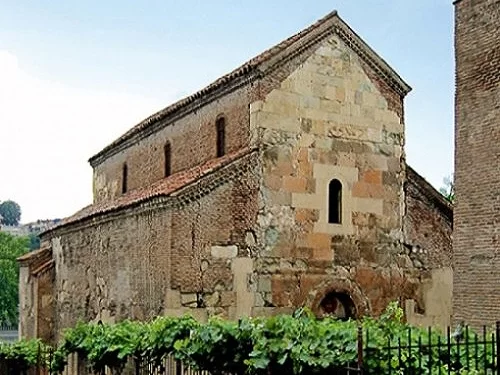
Anchiskhati church stands as the oldest surviving church in Tbilisi, with foundations dating to the early 6th century AD. Located in the heart of Old Tbilisi on Shavteli Street, this ancient basilica has witnessed 1,500 years of Georgian history – from the reign of King Vakhtang Gorgasali’s successors to the present day. For travelers exploring Tbilisi’s historic core, Anchiskhati offers something rare: an unbroken thread connecting modern Georgia to its earliest Christian roots.
Unlike the city’s more famous Sameba Cathedral or the picturesque Metekhi perched above the river, Anchiskhati doesn’t compete for attention. Its weathered stone exterior, partially obscured by the narrow street, reveals itself gradually. Step through the entrance, and the cool, dim interior carries the weight of centuries in its worn flagstones and blackened frescoes.
History of Anchiskhati Church
The oldest church in Tbilisi was built during the reign of King Dachi Ujarmeli, son and successor of the legendary Vakhtang Gorgasali who founded the Georgian capital. Construction began in the early 6th century, making Anchiskhati roughly contemporary with Hagia Sophia in Constantinople – though far more modest in scale.
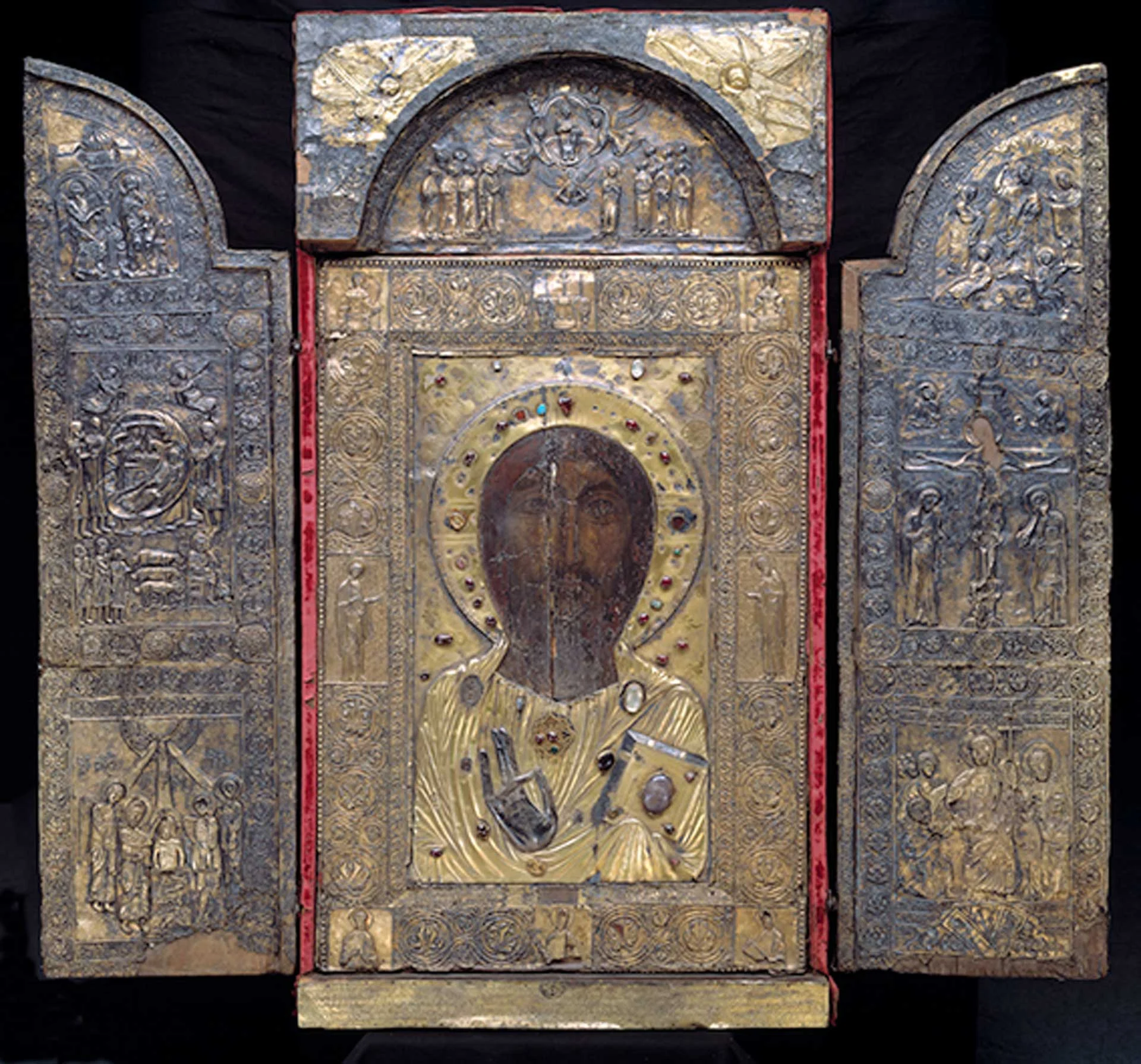
The church’s original name was the Mother of God Basilica. The current name “Anchiskhati” arrived in the 17th century along with a famous relic: the Anchi icon of Jesus Christ. This icon, adorned with precious metalwork crafted by the renowned 12th-century goldsmith Beka Opizari, was brought here from Anchi Monastery in southern Georgia after that region fell under Ottoman control. The icon gave the church its lasting name – “Anchis khati” literally means “the icon from Anchi.”
During the 18th century, Anchiskhati served as more than a place of worship. A theological seminary operated within its walls, making the church one of Tbilisi’s leading centers of education and Georgian Orthodox scholarship.
Architecture: What Survives from 1,500 Years
The building you see today represents layers of Georgian history, not all of them harmonious. The original 6th-century structure was built from carefully hewn stone blocks — some of which remain visible in the lower sections of the walls. The church follows a classic three-nave basilica plan with three entrance openings through the lateral and western walls.
The 17th century brought significant changes. The upper portions of the church were rebuilt using brick rather than the original stone. Two new pairs of round columns were added to the interior, joining the original three pairs of cross-shaped columns and altering the spatial character of the nave.
The current bell tower, considered one of the finest examples of late medieval Georgian architecture, was constructed in 1675 under the patronage of Patriarch Domentios. Its proportions complement the basilica far better than the awkward 19th-century additions that once marred the building.
The 19th century was not kind to Anchiskhati. A poorly designed dome was added, along with a clumsy bell tower attached to the western facade. New windows were cut through the ancient walls, compromising both the structure and its aesthetic integrity.
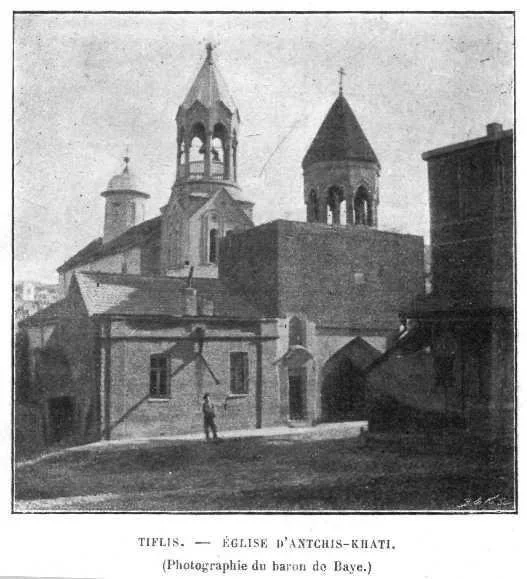
Restoration work beginning in 1958, led by architect R. Gverdtsiteli, removed these unfortunate 19th-century additions and returned the church to something closer to its historical appearance. The monument today reflects this careful restoration.
Frescoes and Interior Details
Inside Anchiskhati church, fragments of wall paintings from different periods survive. The oldest visible frescoes in the sanctuary and apse area date to 1683, commissioned during the time of Patriarch Nikolas. Additional fragments from the early 19th century can be found on the middle nave walls.
The altar apse, hidden within the rectangular outline of the exterior walls, follows an architectural plan that demonstrates how developed the tri-sectional sanctuary design was in early Georgian Christian architecture. A pair of separate rooms flanking the apse — visible in churches across Georgia — appears here in one of its earliest known Georgian forms.
The interior is intimate rather than grand. Natural light enters sparingly, and the accumulated candle smoke of centuries has darkened the stone. This is not a museum church sanitized for tourists; Anchiskhati remains an active place of worship where Tbilisi residents come to pray, light candles, and attend services.
Visiting Anchiskhati Church: Practical Information
- Address: Ioane Shavteli Street, Old Tbilisi, beside the Gabriadze Theatre.
- How to get there: About a 10-minute walk from Freedom Square metro station or the Peace Bridge. Follow Ioane Shavteli Street toward the Gabriadze Theatre.
- Opening hours: Generally open daily from morning until early evening. Anchiskhati is an active church, so access may change during services, religious holidays or seasonal schedules; confirm locally before visiting.
- Entrance fee: Free
- Time needed: 15–30 minutes
- Dress code: As with all Georgian Orthodox churches, modest dress is expected. Women should cover their shoulders; headscarves are available at the entrance. Men should remove hats.
- Photography: Restrictions can change. Follow the signs inside the church and ask permission before taking photographs; never photograph worshippers or services without consent.
- Sunday liturgy: Services are generally held on Sunday mornings, but times can change. Visitors may attend quietly while remaining respectful and unobtrusive.
Best Time to Visit
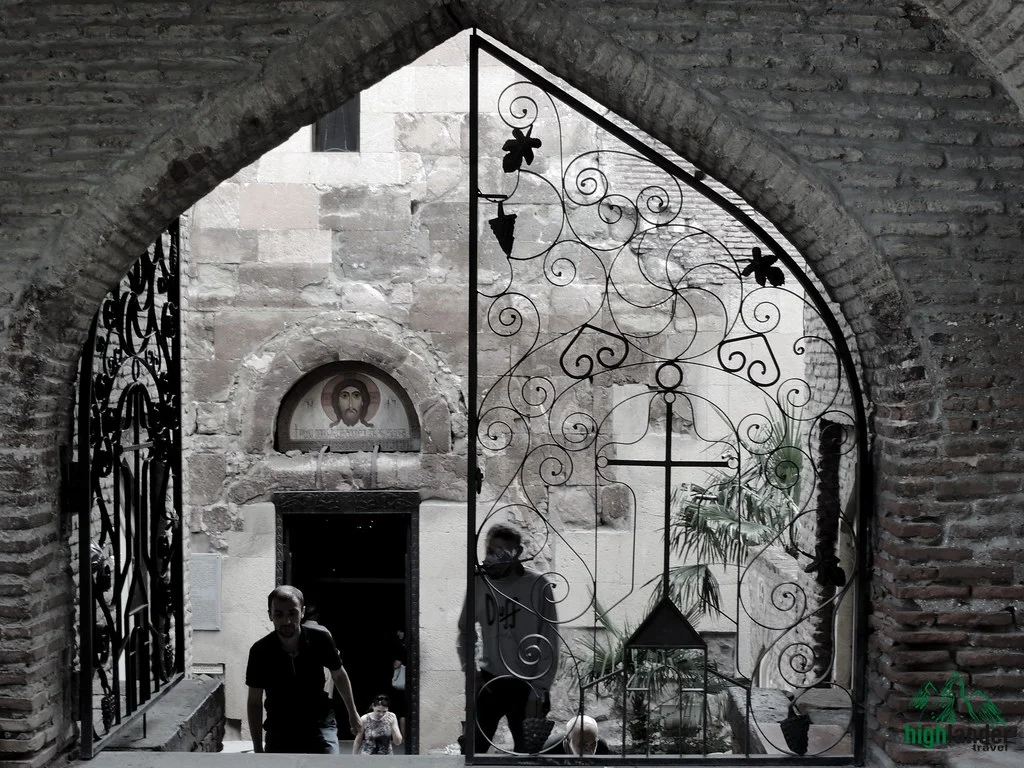
Weekday mornings offer the quietest experience, with fewer visitors and soft light filtering through the small windows. Sunday mornings bring the church to life with liturgy and local worshippers — a different but equally valuable experience.
The church provides cool respite during Tbilisi’s hot summers. In winter, the stone interior can be cold; dress warmly.
Nearby Attractions in Old Tbilisi
Anchiskhati’s location in the historic Kala district places it within easy walking distance of several other important sites:
- Sioni Cathedral — Tbilisi’s historical main cathedral, a 2-minute walk east along Sioni Street. Houses the cross of St. Nino, who brought Christianity to Georgia.
- Gabriadze Puppet Theatre — Directly adjacent to Anchiskhati. The whimsical clock tower performs brief shows at noon and 7 PM.
- Shardeni Street — The Old Town’s café and restaurant hub, less than a minute’s walk. Good for coffee after your visit.
- Peace Bridge — The modern glass pedestrian bridge spans the Mtkvari River, offering views back toward the Old Town. 5-minute walk.
- Narikala Fortress — Visible from much of Old Tbilisi, accessible by cable car from Rike Park or on foot. 15-minute walk plus climb.
- Metekhi Church — Another ancient Tbilisi church, dramatically positioned on a cliff above the river. 10-minute walk.
Anchiskhati in Context: Tbilisi’s Oldest Church
What makes Anchiskhati significant is not architectural grandeur but survival. While other early Georgian churches have been destroyed, rebuilt, or heavily modified, Anchiskhati has maintained continuous use as a place of worship since the 6th century. The stones in its lower walls have stood through Arab invasions, Mongol conquests, Persian occupations, Soviet atheism, and Georgian independence.
For travelers interested in Georgian Christianity and church architecture, Anchiskhati provides essential context for understanding later developments. The basilica plan seen here — adapted from Byzantine models — would evolve into the distinctive domed churches that define Georgian religious architecture. Visiting Anchiskhati before the great cathedrals of Mtskheta or the cave monasteries of David Gareja creates a chronological framework for appreciating Georgia’s Christian heritage.
The church also represents something about Tbilisi itself: layers of history compressed into a small space, the old existing alongside the new without apparent contradiction. Tourists photograph the Gabriadze clock tower next door while elderly women in black enter Anchiskhati to light candles, as their grandmothers did, as women have done here for fifteen centuries.
Planning Your Visit
Anchiskhati church fits naturally into any walking tour of Old Tbilisi. We include it in our Old Tbilisi City Tour, which covers the historic districts on both banks of the Mtkvari River.
For independent visitors, consider this walking route: Start at Freedom Square, walk down to Anchiskhati and Sioni Cathedral, continue to the sulfur baths district, take the cable car up to Narikala Fortress, then descend through the botanical garden. This circuit covers the essential Old Tbilisi sights in a half-day.
Frequently Asked Questions
When was Anchiskhati Basilica built?
Anchiskhati was built in the early 6th century during the reign of King Dachi of Iberia, the son of Tbilisi’s founder, Vakhtang Gorgasali. It is the oldest surviving church in Tbilisi.
Why is the church called Anchiskhati?
The church received its present name in the 17th century after the revered Anchi icon of Christ was brought from Anchi Monastery. The original icon is now preserved in the Shalva Amiranashvili Museum of Fine Arts in Tbilisi.
Is there an entrance fee for Anchiskhati Church?
No. Entry to Anchiskhati Basilica is free, although visitors may leave a voluntary donation or purchase candles.
What are Anchiskhati Church’s opening hours?
The church is generally open daily from morning until early evening. Because it remains an active place of worship, access and hours may change during services, religious holidays or seasonal schedules, so confirm locally before visiting.
Is there a dress code at Anchiskhati Church?
Modest clothing is expected in Georgian Orthodox churches. Visitors should cover shoulders and knees, men should remove hats, and women may be asked to cover their hair; scarves are usually available near the entrance.
Can I take photographs inside Anchiskhati Basilica?
Photography rules can change. Follow the on-site signs and ask permission before taking photographs; avoid flash and never photograph worshippers or services without consent.
How much time do I need at Anchiskhati Church?
Allow 15–30 minutes for the church itself. Its location beside the Gabriadze Theatre makes it easy to combine with Sioni Cathedral, the Peace Bridge, Metekhi Church and other Old Tbilisi landmarks.
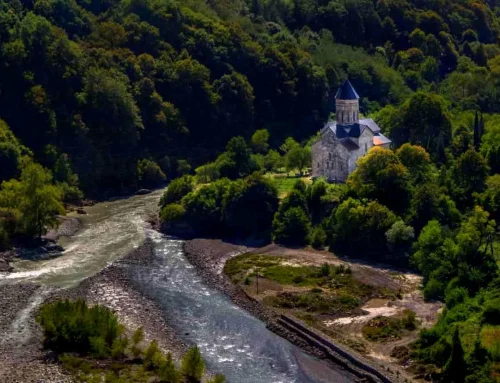
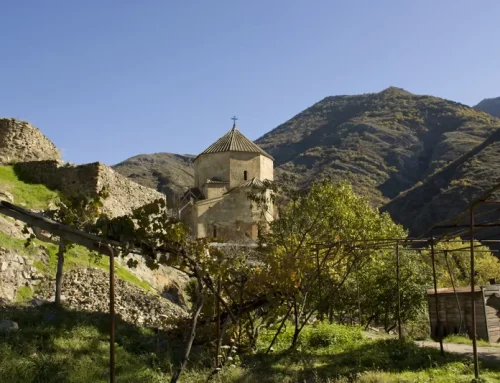
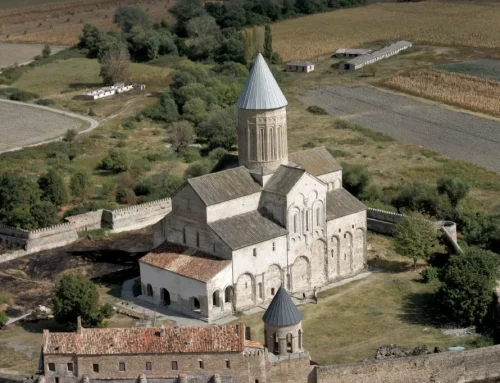




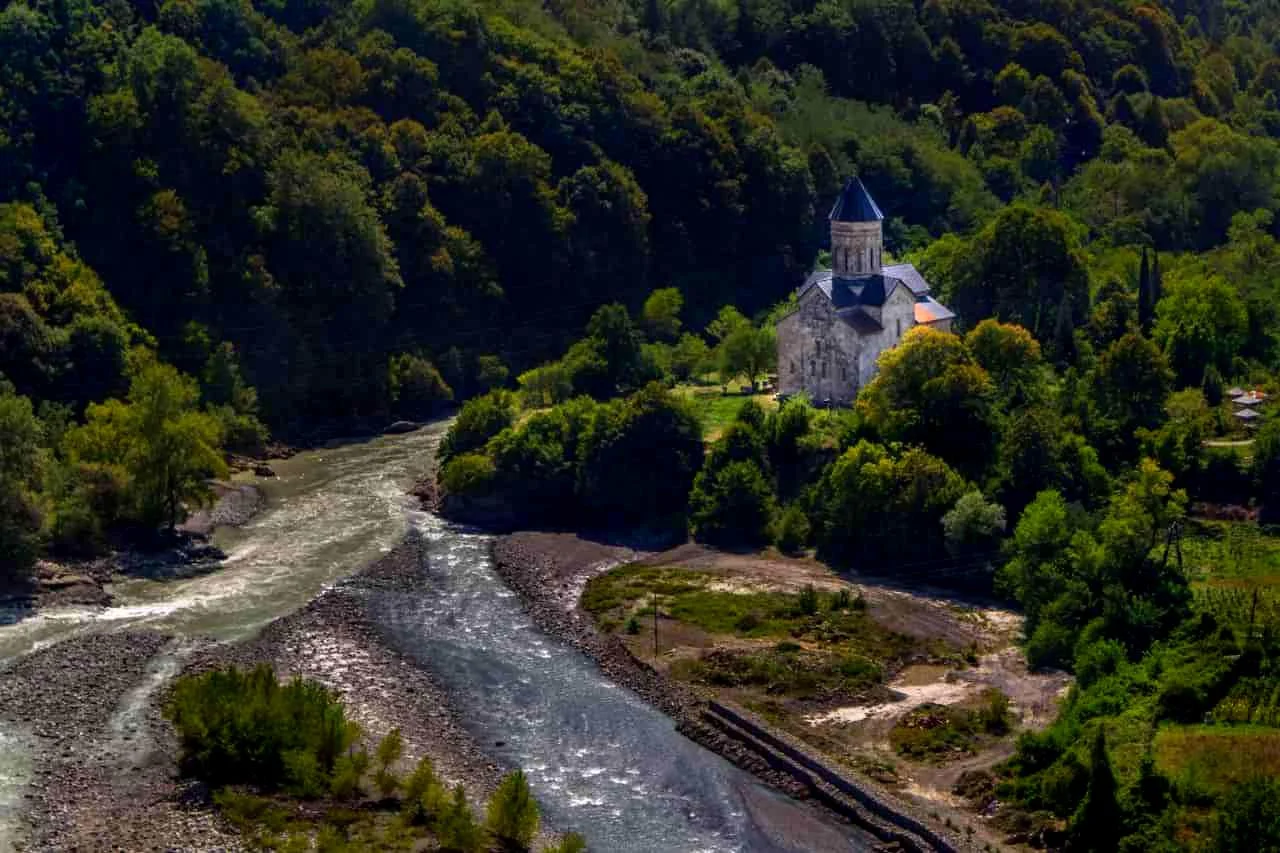
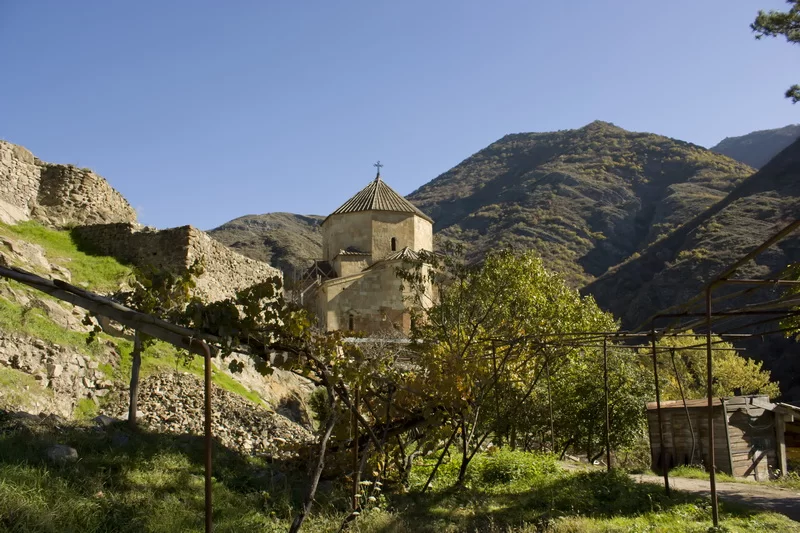


[…] Anchiskhati Church — Tbilisi’s oldest surviving church (6th century), a 2-minute walk west along Sioni/Shavteli Street. […]