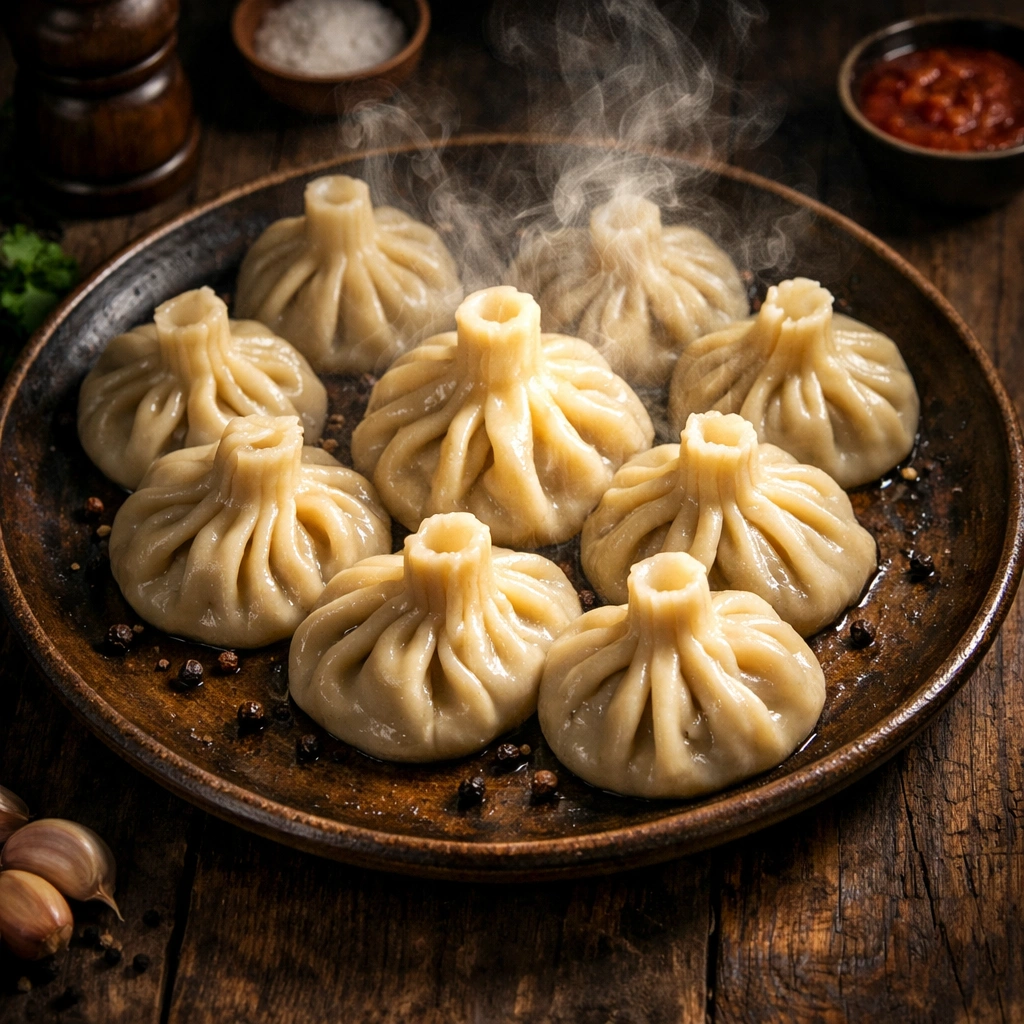
There is a moment in every Georgian meal when conversation stops. Plates of steaming khinkali arrive at the table, their pleated tops twisted into delicate knots, and everyone reaches in with focused purpose. No forks. No knives. Just hands, hunger and the promise of that first scalding, broth-filled bite.
I have been eating khinkali across Georgia for over a decade, from busy Tbilisi restaurants to remote kitchens in Tusheti, where grandmothers make them by the hundred. No other dish captures the Georgian soul quite like khinkali.
What Is Khinkali?
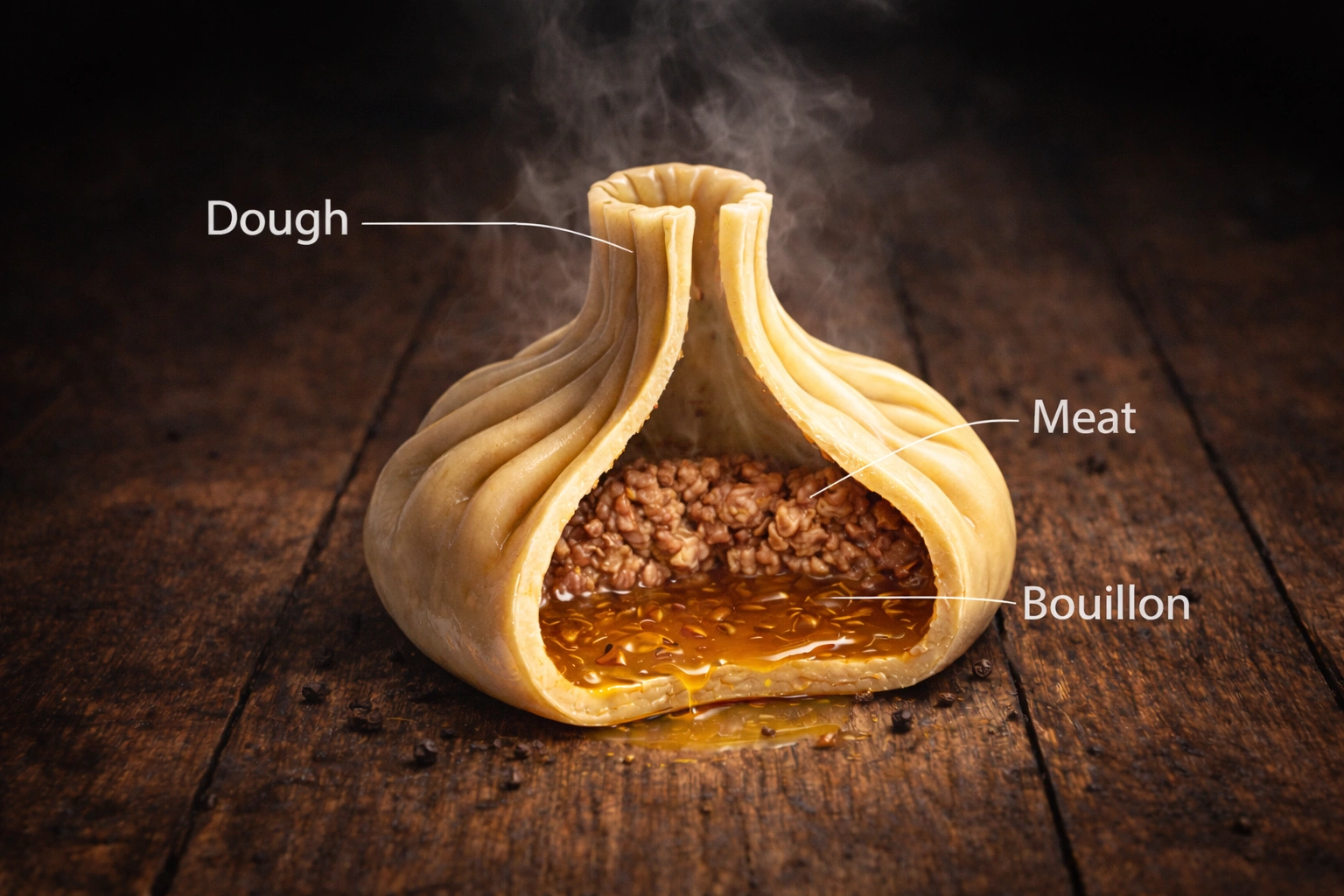
Khinkali (ხინკალი) are Georgian dumplings. But calling them simply “dumplings” does not quite capture what they are. These handmade parcels of dough contain spiced meat or other fillings and are sealed with intricate pleats that form a twisted knob called the kuchi (კუჭი).
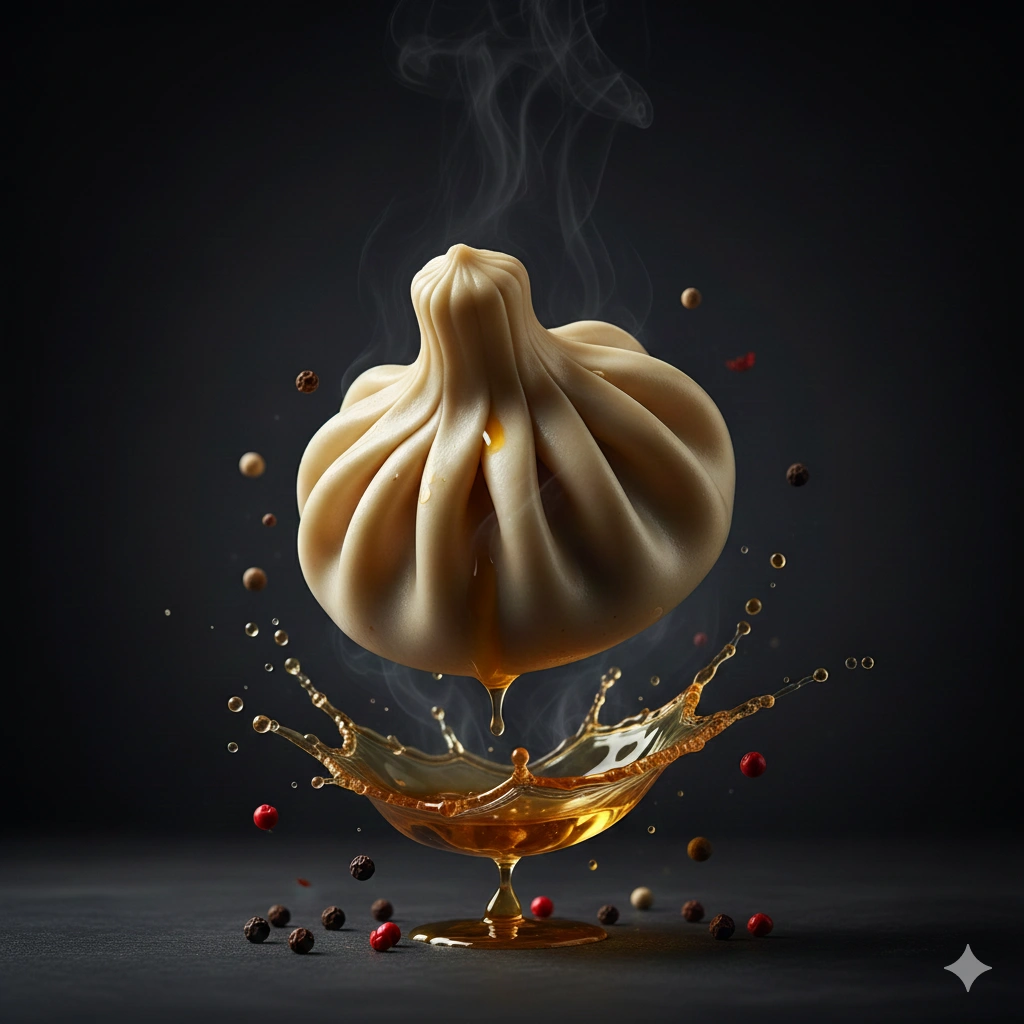
What makes khinkali special is not just the filling. It is the broth. When prepared correctly, the meat releases its juices during cooking, creating a pocket of intensely flavoured soup inside each dumpling. This broth is the soul of khinkali. Lose it, and you have lost the best part.
The dough should be thin enough to remain delicate but strong enough to hold the broth without tearing. The pleats, traditionally 19 or more, are not merely decorative. They gather the dough evenly so that the thick top cooks at the same rate as the thinner walls. An experienced cook can pleat 30 khinkali in the time it takes a beginner to finish one.
The dish originated in the mountain regions of eastern Georgia: Pshavi, Khevsureti and Mtiuleti. Shepherds needed portable, filling food that provided both calories and liquid—ideal for life at high altitude. Today, khinkali are eaten throughout Georgia, with different regions adding their own ingredients and techniques.
Regional Types of Khinkali
Mtiuluri (მთიულური): The Mountain Original
This is the ancestral style of khinkali from the Mtiuleti region in the Greater Caucasus. Mtiuluri contains coarsely minced beef and pork seasoned with black pepper, cumin and fresh coriander. Onions provide both flavour and moisture.
What sets it apart is the texture of the meat, which is not minced too finely, and the generous amount of black pepper—enough to make your lips tingle. This is bold, warming and unapologetic mountain food.
Where to try it: Pasanauri village on the Georgian Military Highway claims to be the birthplace of khinkali. Most restaurants there serve authentic Mtiuluri-style khinkali.
Kalakuri (ქალაქური): City Style
Kalakuri means “city style,” and this version reflects Tbilisi tastes. The meat is minced much more finely, almost into a paste, and fresh herbs such as parsley are added. Some recipes include garlic, although purists consider that incorrect.
Kalakuri khinkali tend to be milder and slightly smaller. Some consider this an improvement, while others call it a diluted version of the mountain original. The debate continues in almost every Tbilisi khinkali restaurant.
Where to try it: Zakhar Zakharich, Khinklis Sakhli or another dedicated khinkali restaurant in Tbilisi.
Khevsuruli (ხევსურული): Pure Beef
Khevsureti is a remote highland region known for its medieval defensive towers and warrior traditions. Khevsuruli khinkali contain only beef, without pork. The cattle graze in alpine meadows above 2,000 metres, and the quality of the meat is noticeable.
The flavour is cleaner and more mineral. Khevsuruli khinkali also use more dried herbs, including blue fenugreek, or utskho suneli, because fresh herbs were historically difficult to obtain in the mountains.
Where to try it: In Khevsureti around Shatili, or at Tbilisi restaurants specialising in highland Georgian cuisine.
Tushuri (თუშური): The Mutton Version
Tusheti is one of Georgia’s most isolated inhabited regions. It is accessible by road only during the warmer months, when the Abano Pass is open. Sheep farming dominates the local economy, so Tushuri khinkali are made with mutton, sometimes mixed with beef.
The taste is richer and gamier, while the higher fat content creates more broth. The seasoning remains relatively simple, allowing the flavour of the meat to dominate.
Where to try it: Omalo during the summer season, usually from July to September, or at Tushetian restaurants in Telavi and Tbilisi.
Pankisi Khinkali: The Best I Have Ever Had
The finest khinkali I have ever eaten were not served in a famous restaurant. They were prepared by Kist women in a family kitchen in Pankisi Gorge.
The Kists are ethnic Chechens who settled in the Pankisi Valley generations ago. They make khinkali with pure mutton and season it according to traditions that combine Georgian and North Caucasian influences. The sheep had been grazing on the nearby hillside that same morning. The broth was rich without being heavy, and the pleating was perfect.
What made them unforgettable was not only the technique. It was eating them cross-legged on a carpet, with the Alazani River visible through the window and our hosts refilling the plate faster than we could empty it. This is what food means in the Caucasus: hospitality made edible.
Pankisi does not feature on most standard tourist routes, which is part of what keeps it special. Visits and traditional meals can be arranged with local families who welcome guests.
Khinkali with Apkhoti (აფხოტი): Dried Meat from Javakheti
In the volcanic highlands of Samtskhe-Javakheti, where Georgian and Armenian cultures meet, you can find khinkali prepared with apkhoti. This traditional dried meat developed as a practical preservation method in a region with severe winters and, historically, no refrigeration.
Apkhoti has an intensely concentrated beef flavour, a slightly chewy texture and deep savoury notes. These khinkali are richer and saltier than fresh-meat versions. The dried meat rehydrates during cooking but retains its distinctive texture.
Apkhoti khinkali are uncommon even in Javakheti today. Ask about them at local guesthouses around Akhalkalaki.
Tsero Khinkali (წერო ხინკალი): A Different Dish Entirely
Tsero khinkali is not a dumpling. It is a separate dish that shares only the name. Small pieces of plain dough are boiled and then served with fried onions, matsoni, garlic sauce and crushed walnuts.
Think of it as Georgian comfort pasta rather than a dumpling. The combination of tangy matsoni, sweet caramelised onions, pungent garlic and rich walnuts creates something simple but satisfying.
You are more likely to find tsero khinkali in home kitchens than in restaurants. It is the type of quick, filling dish commonly prepared by Georgian grandmothers.
Vegetarian and Vegan Khinkali
Georgian celebratory food often centres on meat, but khinkali also offer genuine meat-free options that are more than an afterthought.
Cheese Khinkali (ყველით)
Cheese khinkali contain fresh Georgian cheese, normally Imeruli or Sulguni, sometimes mixed with herbs. There is no broth. Instead, the pleasure comes from the contrast between thin dough and hot, stretchy cheese. They are best eaten immediately while the cheese is still molten.
Quality varies according to the freshness of the cheese, but most khinkali restaurants in Georgia offer this variety.
Dambal Khacho (დამბალ ხაჭო): Fermented Cheese Khinkali
Dambal khacho is a traditional fermented cheese from Georgia’s mountain regions. It is pungent and complex, with a flavour entirely different from the mild fresh cheeses most visitors encounter. It is sometimes described as Georgia’s answer to blue cheese.
Regular restaurants rarely offer dambal khacho khinkali. In the village of Bulachauri, I once asked a family to prepare them specially. The result was sharp, earthy and unlike any other khinkali.
These khinkali must be eaten immediately while hot. As they cool, the cheese texture becomes less pleasant and its powerful flavours begin to overwhelm the dish. This is not a standard menu item and must normally be arranged in advance with village families who have access to authentic dambal khacho.
Mushroom Khinkali (სოკოთი)
Wild mushroom khinkali are becoming increasingly common, especially in autumn, when Georgian forests produce an abundance of fungi. The best versions use a mixture of chanterelles, porcini and honey mushrooms sautéed with onions before being wrapped in the dough.
Mushrooms release moisture but do not create the same broth as meat. Good mushroom khinkali are deeply savoury and delicious in their own right rather than merely serving as a substitute for meat.
Where to try them: Quality khinkali restaurants during autumn, or by advance request using dried mushrooms throughout the year.
Potato Khinkali (კარტოფილით)
Potato khinkali are the simplest vegan option. They contain mashed potatoes seasoned with onions and herbs. They are mild, filling and satisfying, and commonly appear during Lent, when observant Orthodox Georgians avoid animal products.
They are pleasant but less distinctive than meat or mushroom versions. Try them for variety, but save room for Georgia’s more memorable khinkali.
How to Eat Khinkali Properly
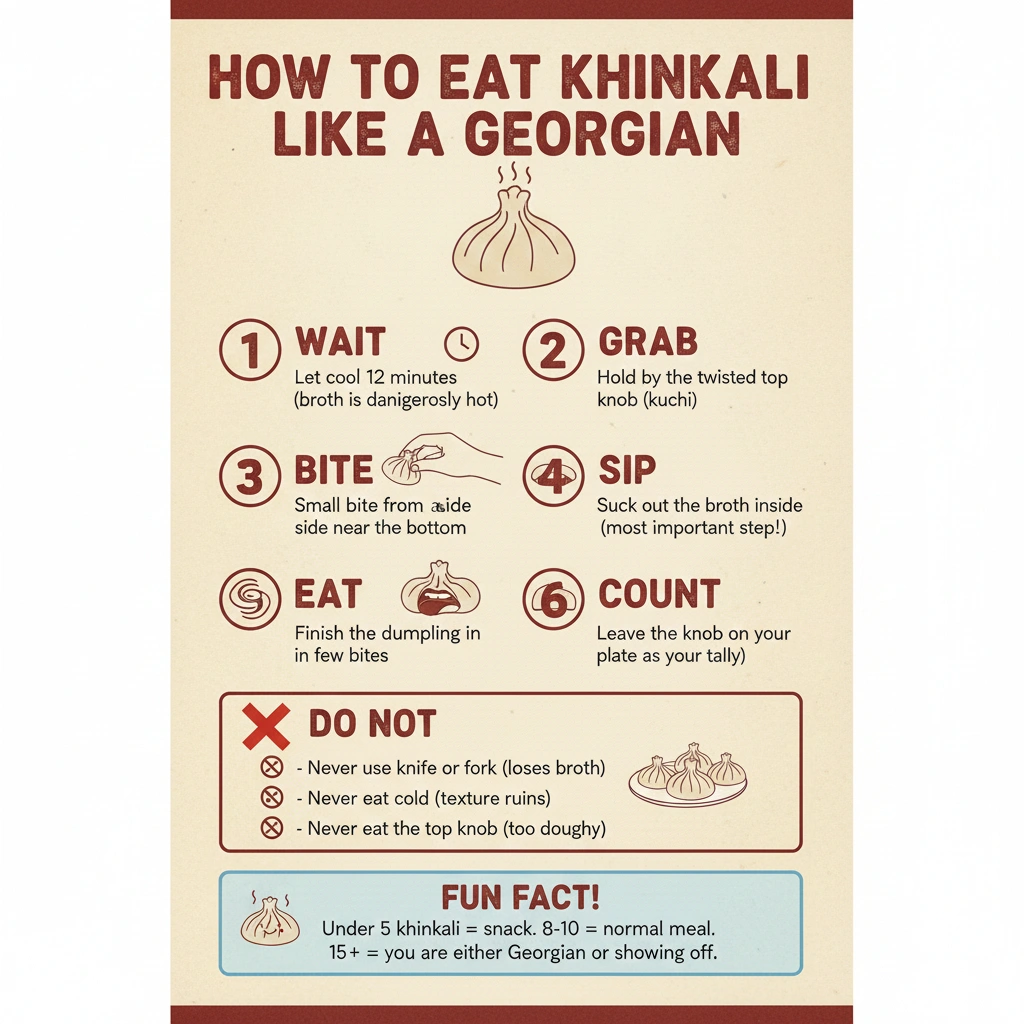
It is easy to eat khinkali incorrectly. Eating them properly takes a little instruction, and Georgians take the process seriously. Watch a local’s reaction when a visitor cuts into khinkali with a knife and allows the broth to spill across the plate.
Here is the correct method:
- Wait briefly for them to cool. Fresh from the pot, khinkali are dangerously hot. The broth can cause burns, so wait for a minute or two.
- Pick one up by the knob. The twisted pleated top, or kuchi, serves as a handle. Khinkali are eaten with the hands, not utensils.
- Bite the side near the bottom. Take a small bite to pierce the dough and create an opening.
- Drink the broth. Tilt the khinkali and carefully draw out the soup before it escapes.
- Eat the rest. Once the broth is safely consumed, finish the dumpling in a few bites.
- Leave the knob on your plate. The top is thick and chewy, so it is traditionally left uneaten. The pile of kuchis reveals how many khinkali you have consumed.
- Add seasoning if you wish. Black pepper is traditional. Some people add vinegar or adjika, while purists eat them without anything else.
What not to do:
- Never cut khinkali with a knife or fork because the broth will escape immediately.
- Do not leave them sitting for too long. Lukewarm khinkali lose much of their appeal, while cold ones can be unpleasant.
- Do not fill up on bread beforehand. Khinkali are substantial, so arrive hungry.
Khinkali vs Other Dumplings: What Makes Them Different?
Every culture with cold winters seems to have developed some form of meat wrapped in dough. Georgian khinkali, however, stand apart from their relatives around the world.
Khinkali vs Russian Pelmeni
Pelmeni are small, frequently frozen in bulk and boiled as everyday food. Their dough-to-meat ratio favours the dough, while the filling is dense and compact. Diners may eat dozens at a time, normally with sour cream or butter.
Khinkali are larger, prepared fresh and place the meat and broth at the centre of the experience. Five to eight may be enough for one person. The pocket of broth inside khinkali has no real equivalent in pelmeni, which remain solid throughout.
The cultural context also differs. Pelmeni are everyday food, while khinkali are more communal and celebratory. Georgians regularly invite guests to gather around a table of freshly prepared khinkali.
Khinkali vs Central Asian Manti
Manti from Turkey, Kazakhstan, Uzbekistan and neighbouring regions are normally steamed or baked rather than boiled. This creates a chewier dough. They are often served with yoghurt sauce and spiced butter, becoming part of a dressed dish rather than standing alone.
Size varies by region, but most manti are smaller than khinkali. Their flavour often centres on lamb and onion with spices such as paprika or sumac, reflecting Middle Eastern and Central Asian culinary influences.
The eating method is also different. Manti are eaten with a fork from a plate of sauce, while khinkali have their own ritualised method of eating by hand.
Khinkali vs Himalayan Momos
Momos share the hand-eating tradition and a similar size, making them perhaps the closest international relative of khinkali. Both can contain broth when prepared well, and both use pleats to seal the dough.
The differences lie in the details. Momo dough may contain oil for a richer texture, while fillings often include ginger, garlic and curry spices reflecting South Asian influences. Momos are usually steamed rather than boiled and generally arrive with tomato- or sesame-based dipping sauces.
The family resemblance is strong. If you enjoy momos, you will probably appreciate khinkali, and the reverse is equally true.
What Makes Khinkali Unique?
Three things distinguish khinkali from other dumplings:
The broth: The quantity and intensity of soup inside well-made khinkali exceed most comparable dumplings. It is not merely juice released from cooked meat but a concentrated part of the dish.
The ritual: The specific eating method, the pile of accumulated kuchis and the communal atmosphere make eating khinkali as much a social performance as a meal.
The freshness: The best khinkali are made only hours or minutes before they are eaten. This helps explain why truly memorable khinkali are most often found in Georgia.
Where to Eat Khinkali: Our Recommendations
Where to Eat Khinkali in Tbilisi
- Zakhar Zakharich: Consistent quality, a good selection and late opening hours
- Pasanauri: Tourist-friendly but genuinely good
- Khinklis Sakhli No. 1: A local favourite with a simple atmosphere
On the Georgian Military Highway
- Pasanauri village: Several family restaurants serve Mtiuluri-style khinkali. One of the best options is Guda.
- Roadside restaurants near Gudauri: Quality varies, but the khinkali are generally prepared fresh.
- Village Bulachauri is famous with the best Khinkalis
Where to Eat Khinkali in Kakheti
- Sighnaghi and Telavi: Numerous restaurants serve khinkali. Ask whether Tushuri khinkali are available.
For Adventurous Eaters
- Pankisi Gorge: Traditional meals can be arranged with local families
- Javakheti: Ask guesthouses around Akhalkalaki about khinkali prepared with apkhoti
Experience Khinkali During Your Georgia Trip
We include khinkali experiences in many of our tours. These may involve more than a restaurant meal: cooking classes where you learn the pleating technique, visits to mountain villages where regional styles originated and meals in family homes where khinkali are prepared fresh for guests.
Want to build a trip around Georgian food traditions? Our Kakheti wine tours combine winery visits with traditional meals. Our Kazbegi day trips stop in Pasanauri, the town that claims to be the birthplace of khinkali. Our multi-day Tusheti adventures also include authentic Tushuri khinkali in settings no restaurant can reproduce.
Have questions about Georgian food or want to plan a culinary-focused trip? Contact us. We are always happy to talk about khinkali.