Orthodox Easter in Georgia 2026: Complete Travel Guide
Georgia takes Easter seriously. As one of the oldest Christian nations in the world, the country transforms during this holiday in ways that can catch visitors off guard. Museums close, roads jam, and entire cities empty out as families return to ancestral villages. But for travelers who plan accordingly, Easter offers something rare: a genuine glimpse into Georgian spiritual life and hospitality at its most abundant.
This guide covers everything you need to know about visiting Georgia during Orthodox Easter, from practical logistics to the deeper traditions that make this celebration special.
When is Orthodox Easter in Georgia?
Orthodox Easter follows the Julian calendar for calculating the date, which means it usually falls one to five weeks after Western Easter. The exact timing depends on the lunar cycle and the spring equinox calculation used by the Eastern Orthodox Church.
| Year | Orthodox Easter Date | Western Easter Date |
|---|---|---|
| 2026 | April 12 | April 5 |
| 2027 | May 2 | March 28 |
| 2028 | April 16 | April 16 |
The gap between Western and Orthodox Easter varies each year. In some years, like 2028, both fall on the same date. In others, the difference stretches to over a month.
Why the difference? When Pope Gregory XIII reformed the calendar in 1582, the Orthodox Church continued using the original Julian system for religious holidays. Georgia adopted the Gregorian calendar for civil purposes but keeps Julian calculations for Easter and other movable feasts. This is not about being “behind” but about maintaining a continuous tradition dating back centuries.
What to Expect During Easter in Georgia
Easter in Georgia unfolds over several days, each with its own character and traditions. The intensity builds from Thursday through Sunday, then shifts to something more somber on Monday.
Holy Thursday: Preparation Begins
Thursday marks the start of serious preparation. Georgian families begin cleaning homes, buying ingredients for Easter dishes, and gathering supplies for egg dyeing. Bakeries start producing paska (Easter bread) in large quantities, and you will see these round, dome-topped loaves appearing in shop windows throughout the country.
Churches hold evening services commemorating the Last Supper. The atmosphere is anticipatory rather than celebratory.
Good Friday: Church Services and Egg Dyeing
Good Friday is a day of mourning. Church services focus on the crucifixion, with many Georgians attending long afternoon and evening liturgies. This is not a public holiday, so businesses remain open, but the mood is subdued.
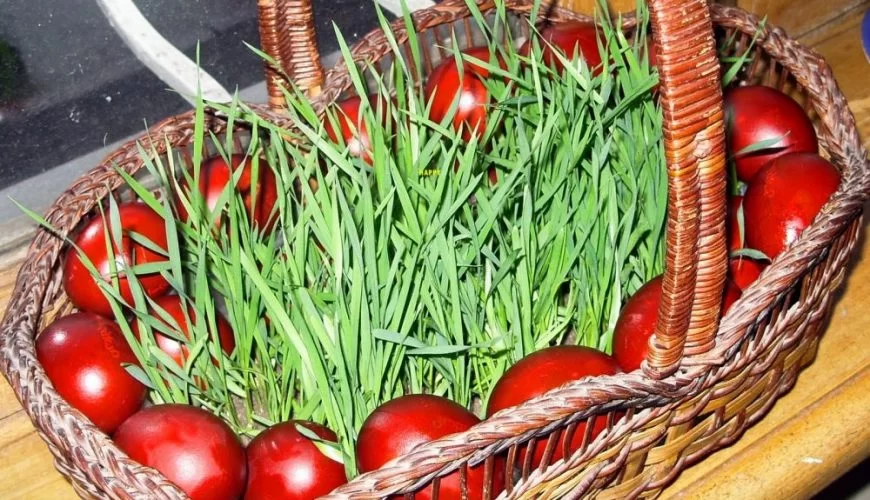
In homes, families dye eggs red. This happens almost universally on Friday, and the kitchen typically becomes the center of activity. The process is simple: eggs are boiled with onion skins or red dye, sometimes with leaves pressed against the shell to create patterns. Children often help, and the resulting eggs are kept for Sunday.
Holy Saturday: The Midnight Liturgy
Saturday builds toward the main event: the midnight liturgy marking Christ’s resurrection. Churches fill to capacity, with crowds spilling outside. The service begins late Saturday evening and continues past midnight.
At the stroke of midnight, priests announce “Christ is risen!” and the congregation responds “Truly, He is risen!” Churchgoers then share the Paschal greeting, often kissing three times on alternating cheeks. Candles are lit from the holy flame, and people carry this light home, sometimes shielding the flame with their hands through the streets.
The atmosphere shifts instantly from solemn to joyous. Church bells ring, and families return home to break the Lenten fast with a feast that has been prepared over the preceding days.
Easter Sunday: Family Celebrations
Sunday is for family. Most Georgians spend the day at home or visiting relatives, sharing elaborate meals that showcase the best of Georgian cuisine. The table groans with dishes that were forbidden during Lent: meat, cheese, eggs, and wine.
The egg-cracking game happens throughout the day. Two people tap their eggs together, and whoever’s egg survives uncracked is declared the winner. This continues through multiple rounds until a champion emerges, usually accompanied by considerable commentary and disputed calls about cracking technique.
In Tbilisi, the streets are notably quiet. The usual traffic and crowds disappear as residents scatter to family homes across the country. For tourists, this creates an unusual opportunity to experience the capital without its typical hustle.
Easter Monday: Cemetery Visits
Monday brings a tradition that surprises many visitors. Georgians visit cemeteries to honor deceased family members, bringing food, wine, and flowers. Families gather at gravesites, share meals, pour wine, and spend time remembering those who have passed.
This is not a somber affair in the way Western cemetery visits might be. There is conversation, sometimes laughter, and a sense of communion between the living and the dead. Cemeteries become crowded, almost festive spaces where families reconnect while paying respects.
Monday remains a public holiday, so most businesses stay closed.
Where to Experience Easter in Georgia
Best Churches for Easter Services in Tbilisi
Sameba (Holy Trinity) Cathedral is the obvious choice for the most impressive setting. Completed in 2004, it is the largest Orthodox cathedral in Georgia and the main cathedral of the Georgian Orthodox Church. The midnight liturgy here draws enormous crowds, and the scale of the building creates a powerful atmosphere. Arrive early if you want to get inside; many people end up watching from the courtyard.
Sioni Cathedral in the Old Town offers a more intimate experience. This has been Tbilisi’s main cathedral for centuries and holds important relics, including the cross of St. Nino who brought Christianity to Georgia. The smaller space means the liturgy feels more immediate, though it also fills quickly.
Kashveti Church on Rustaveli Avenue provides a central location and beautiful 20th-century frescoes. It draws a mix of locals and visitors due to its prominent position.
Anchiskhati Basilica is the oldest surviving church in Tbilisi, dating to the 6th century. Services here have a particularly ancient feel, though the small size limits how many can attend.
For any church service, plan to stand. Georgian Orthodox liturgies do not involve sitting, and services run long. Wear comfortable shoes.
Easter in Mtskheta
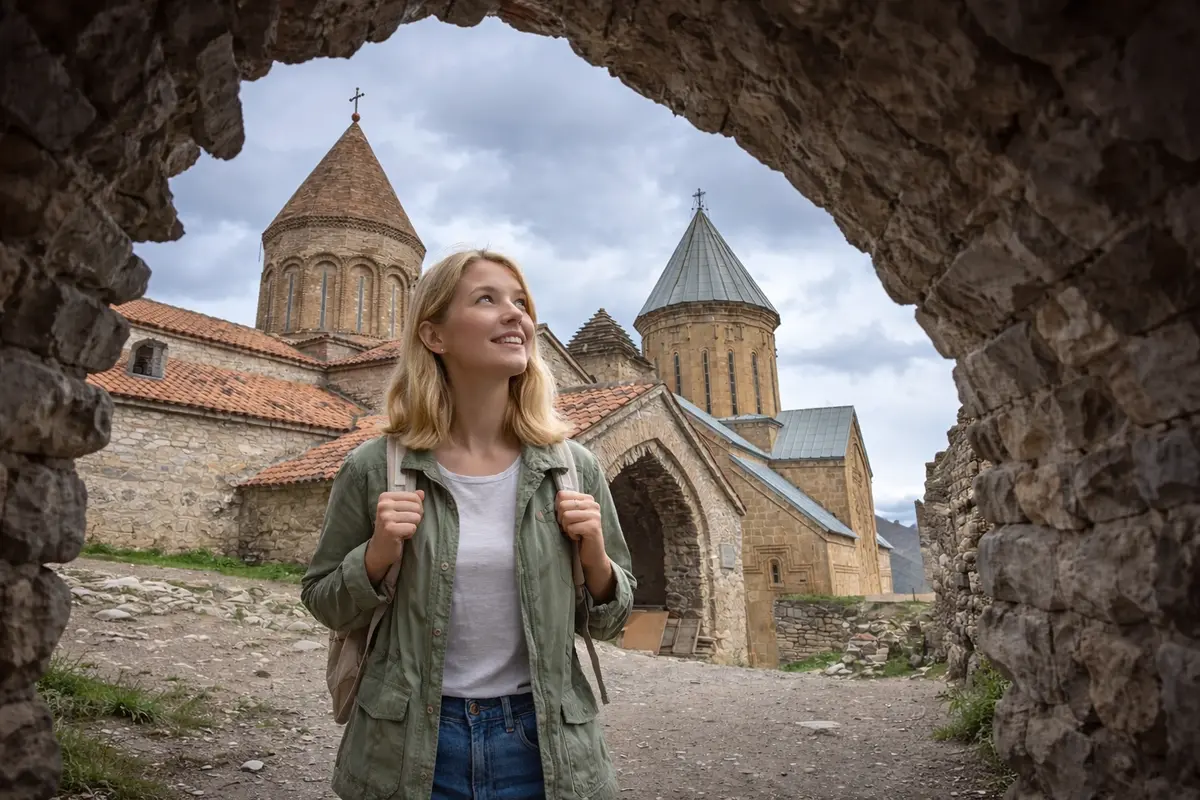
The ancient capital of Georgia, just 20 kilometers from Tbilisi, offers perhaps the most atmospheric Easter experience in the country. Svetitskhoveli Cathedral, a UNESCO World Heritage site, has been the spiritual heart of Georgian Christianity for over a thousand years. The midnight liturgy here connects you to an unbroken tradition stretching back to the 4th century.
Jvari Monastery, perched on a hilltop overlooking Mtskheta, provides stunning views and a more contemplative setting. The church itself is small, but the location at sunrise on Easter morning is unforgettable.
The challenge with Mtskheta is logistics. The town fills with visitors, parking becomes impossible, and returning to Tbilisi late at night means joining the traffic everyone else warned you about. Consider staying overnight in Mtskheta if you want to experience Easter here, or hire a driver who knows the back routes.
Easter in the Countryside
For the most authentic experience, Easter in a Georgian village cannot be matched. If you have Georgian friends or can arrange a homestay, this is where the traditions run deepest. Villages in Kakheti, Imereti, and other regions maintain customs that have faded in the cities.
The communal aspect intensifies in rural areas. Neighbors visit each other throughout Sunday, sharing food and wine. The feast moves from house to house, with each family contributing dishes. The generosity can be overwhelming; declining food or drink is nearly impossible and possibly inadvisable.
Without a personal connection, accessing this experience is difficult but not impossible. Some guesthouses in wine regions like Kakheti offer Easter packages that include participation in family celebrations. Book well in advance, as these fill quickly.
Georgian Easter Food and Traditions
Red Eggs: Symbolism and the Egg-Cracking Game
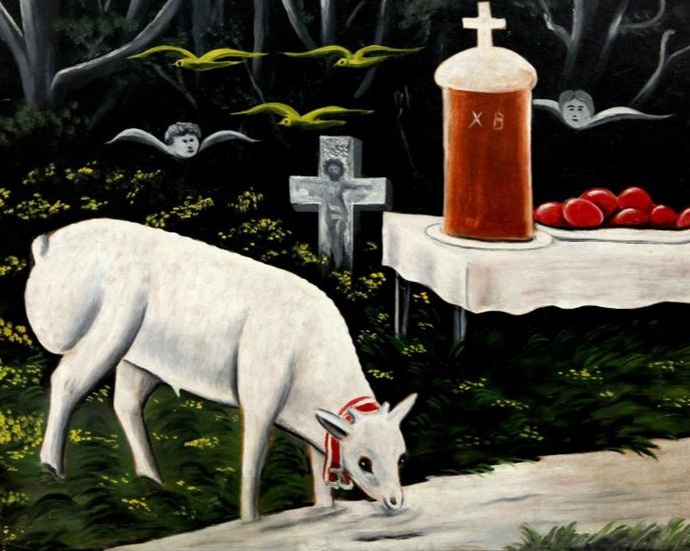
Red eggs are non-negotiable at Georgian Easter. The color represents the blood of Christ, and the egg itself symbolizes the sealed tomb and resurrection. Every household prepares them, and no Easter table is complete without a bowl of deep red eggs.
The egg-cracking game (called “egg fighting” by some) follows simple rules: two players tap their eggs together, pointed end to pointed end. The egg that cracks loses; the intact egg advances to face new challengers. Strategy exists, though opinions differ on what it involves. Some swear by technique, holding the egg at specific angles. Others believe certain eggs are simply stronger, perhaps those from village chickens rather than factory farms.
Children take the competition seriously. Adults pretend not to, but also take it seriously.
Paska: Easter Bread
Paska is a sweet, enriched bread traditionally baked for Easter. The Georgian version is round with a domed top, often decorated with braided dough or symbols. The dough contains eggs, butter, and sometimes raisins or candied fruit.
Making paska from scratch requires time and skill, so most families now buy it from bakeries. This is not considered cheating. Starting about a week before Easter, every bakery in Georgia produces paska, and the quality is generally excellent. Prices range from a few lari for small loaves to significantly more for elaborately decorated versions.
When someone offers you paska, accept it. The bread is meant to be shared, and refusing would be unusual.
Chakapuli: Traditional Easter Lamb Stew
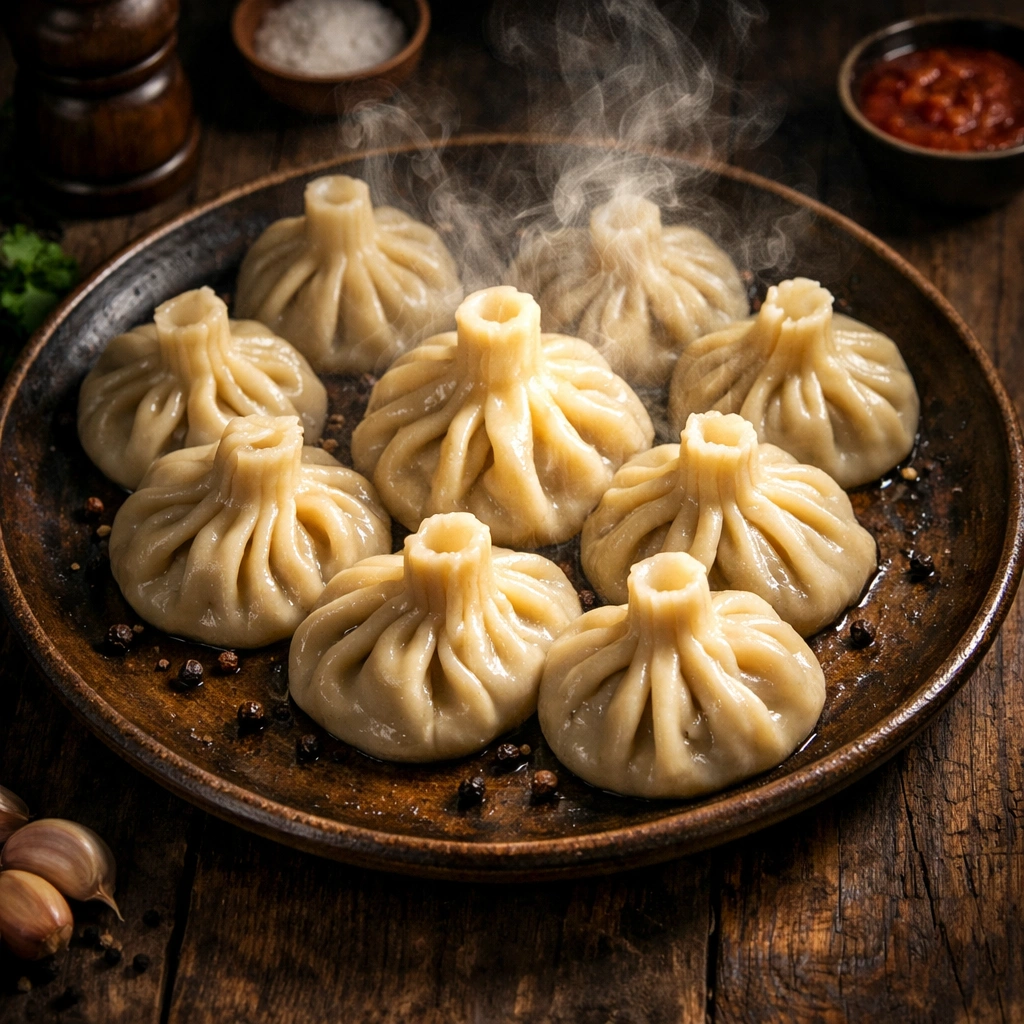
Chakapuli is the defining dish of Georgian Easter. This stew combines young lamb or veal with tarragon, green onions, white wine, and green tkemali (sour plums). The result is bright, herbal, and distinctly springlike.
The timing matters. Chakapuli depends on spring ingredients: fresh tarragon at its most aromatic, green plums before they ripen, and young onions just pulled from the ground. This is not a dish you can make year-round, which is precisely why it belongs to Easter.
Every family has their version. Some use more wine, others more herbs. The meat might be lamb or veal, bone-in or cut into pieces. Arguments about the correct method are common and inconclusive.
Other dishes appear on the Easter table as well: satsivi (walnut sauce with chicken or turkey), various cheeses, fresh herbs, and of course wine. The feast is meant to be abundant after the restrictions of Lent.
Where to Eat Easter Meals in Tbilisi
Finding a restaurant open on Easter Sunday is challenging but not impossible. Some high-end hotels serve special Easter brunches and dinners. A few restaurants in tourist areas remain open, though often with limited menus.
Better options include:
- Hotel restaurants at Rooms Hotel, Stamba, or the Tbilisi Marriott typically offer Easter dining
- Some restaurants in the Fabrika complex may stay open
- The area around Freedom Square sometimes has options
The honest advice: Easter Sunday is not the day for restaurant dining in Georgia. If you are not celebrating with a Georgian family, stock up on food Saturday, buy paska and red eggs, and create your own modest feast. Many guesthouses will prepare Easter meals for guests if arranged in advance.
Practical Tips for Traveling During Easter
What’s Closed
On Easter Sunday and Monday, expect closures across the board:
- All museums and galleries
- Government offices
- Most shops, exceptfor some convenience stores
- Banks
- Many restaurants, especially outside tourist zones
- Attractions with paid admission (churches remain open but as places of worship, not for tourism)
Saturday operates closer to normal, though some businesses close early. Friday is a regular working day.
Traffic Warnings
This deserves emphasis: traffic around Tbilisi becomes severe from Friday afternoon through Monday evening. Georgians working in the capital return to family homes throughout the country, creating massive outflows on Friday and Saturday, then equally massive returns on Monday.
The Georgian Military Highway toward Kazbegi is clogged. Roads to Kakheti slow to a crawl. The Tbilisi-Batumi route becomes tedious. Even within the city, approaches to cemeteries jam on Monday.
If your itinerary involves leaving Tbilisi during Easter weekend, either depart early Thursday or wait until Tuesday. Getting stuck in holiday traffic for hours is a real possibility and an unpleasant one.
What IS Open
Tbilisi itself becomes remarkably pleasant on Easter Sunday. The streets are empty, parking appears everywhere, and the Old Town feels almost peaceful. This is an excellent time to walk the city, photograph architecture without crowds, and enjoy the quiet.
Churches are open and active, hosting services throughout the day. You are welcome to enter, observe, and even participate in the services.
Some cafes and restaurants in the Vera and Vake districts may open, as these areas have more secular-minded residents. Convenience stores (usually small shops attached to gas stations) operate throughout.
Public transportation runs on holiday schedules with reduced frequency.
Hotel Booking Advice
Easter weekend sees increased demand for accommodations, particularly in:
- Tbilisi city center
- Mtskheta
- Kazbegi
- Kakheti wine region
Book at least two to three weeks in advance for Easter weekend. Prices may be elevated, though not dramatically.
Guesthouses in rural areas often offer Easter experiences but require advance booking. Contact them directly rather than relying on booking platforms, as they may have special arrangements not listed online.
Money and ATM Considerations
ATMs function normally throughout the holiday. Banks are closed, so any services requiring a physical branch must wait until Tuesday.
Exchange offices in tourist areas often remain open, though hours may be reduced. The airport exchange operates regardless of holidays.
Credit cards work as usual in establishments that accept them, which includes most hotels and many restaurants, but not all shops or smaller businesses.
Easter Day Trips from Tbilisi
If you find yourself in Tbilisi over Easter without family celebrations to attend, day trips remain possible with planning.
Kakheti Wine Region
Kakheti works well for Easter because many family wineries welcome visitors even on holidays. This is Georgia’s heartland of hospitality, and showing up at a small winery might result in an impromptu invitation to join their Easter table.
The drive takes about 90 minutes under normal conditions, but plan for longer during the holiday. Leave early Saturday if you want to spend the day exploring, or wait until Tuesday when traffic normalizes.
Signagi, the “City of Love,” perched above the Alazani Valley, offers beautiful views and a few restaurants that may open for tourists. The town is small enough to explore on foot, and the 18th-century walls provide excellent walking.
Mtskheta Churches
At just 20 kilometers from Tbilisi, Mtskheta makes sense for Easter morning if you want to attend services at Svetitskhoveli or visit Jvari. The concentration of important religious sites in such a small area means you can experience a great deal without extensive driving.
Consider going very early on Sunday morning, before most families begin their visits. The churches will be active with Easter services, and you can return to Tbilisi before traffic builds.
Kazbegi (Weather Permitting)
The drive along the Georgian Military Highway to Kazbegi takes about three hours normally, longer during holiday traffic. Whether this makes sense depends on weather and road conditions, which are unpredictable in April.
If the weather cooperates, Kazbegi offers dramatic mountain scenery and Gergeti Trinity Church, one of Georgia’s most photographed sites. Easter services at Gergeti have a wild, almost mystical quality, with the snow-capped peak of Mount Kazbek as backdrop.
Check conditions before committing to this trip. Snow, fog, or rain can close roads or make the journey unpleasant. The Gudauri ski resort area, about two-thirds of the way, sometimes has significantly different weather from Tbilisi.
How to Experience Easter Respectfully
Church Etiquette
Georgian Orthodox churches follow traditional practices that visitors should understand:
- Services involve standing; there are few or no seats
- Women should cover their heads inside churches (scarves are often available at entrances)
- Shoulders and knees should be covered for both men and women
- Silence is expected during services, though churches often have a gentle hum of movement and prayer
- Crossing oneself follows the Orthodox pattern: right to left, using three fingers
You do not need to be Orthodox or even Christian to attend services. Georgians generally welcome respectful visitors to their churches. Stand to the side or back, observe quietly, and follow the lead of those around you.
During the Paschal greeting (“Christ is risen!”), you may respond “Truly, He is risen!” if you wish, or simply smile and nod. Georgians will not be offended by a visitor who does not know the response.
Dress Code
Easter services call for modest dress:
- Women: Skirts or dresses below the knee, covered shoulders, head covering inside churches
- Men: Long pants, shirts with sleeves (not necessarily long), no hats inside churches
This is not the time for shorts, tank tops, or revealing clothing. Georgians dress up for Easter, and you will feel out of place in casual tourist attire.
Photography Rules
Ask before photographing inside churches, particularly during services. Many churches permit photography; some do not. Flash photography is generally inappropriate during liturgy.
Photographing people during Easter celebrations, including at cemeteries on Monday, requires sensitivity. When in doubt, ask permission. Most Georgians are happy to be photographed but appreciate being asked.
Frequently Asked Questions
Is Easter a good time to visit Georgia?
Yes, with qualifications. Easter offers unique cultural experiences unavailable at other times: the midnight liturgy, traditional foods, family celebrations, and a genuine window into Georgian spiritual life. However, the holiday closures and traffic require planning. If you want museums, restaurants, and standard tourist activities, Easter weekend itself may frustrate you. If you want to experience Georgia at its most traditional, Easter delivers.
Can tourists attend church services?
Absolutely. Georgian churches are open to all visitors. You do not need to be Orthodox, Christian, or religious at all. Dress modestly, behave respectfully, and you will be welcomed. No one will ask about your faith or expect you to participate in rituals you do not understand.
What should I pack?
For Easter specifically, add these to your usual Georgia packing list:
- A scarf for women (a head covering in churches)
- Modest clothing for services (covered shoulders and knees)
- Comfortable shoes for standing during long services
- Layers, as April weather varies, and churches can be cool
Are restaurants open during Easter?
Most are not. On Easter Sunday and Monday, finding an open restaurant in Tbilisi requires effort. Hotel restaurants are your best option. Some establishments in heavily touristed areas may open with limited service. Planning ahead is essential: either arrange meals through your accommodation or stock up on food before Sunday.
Can I travel during Easter weekend?
You can, but traffic will be heavy. The worst times are Friday afternoon through Saturday (outbound from Tbilisi) and Monday (return). If possible, schedule long-distance travel for Thursday or Tuesday. Within Tbilisi, Sunday is actually pleasant due to the exodus of residents.
Should I try to join a Georgian family celebration?
If you have the opportunity, yes. Georgian hospitality during Easter reaches its peak, and being invited to an Easter table is a remarkable experience. However, do not assume you can simply find a family to join. These invitations come through genuine connections: Georgian friends, guesthouse hosts who offer the experience, or organized cultural tours. Showing up at a stranger’s door expecting inclusion would be awkward for everyone.
Experience Easter with Highlander Travel
Easter in Georgia rewards those who prepare. The traditions run deep, the food is extraordinary, and the welcome extended to guests reflects centuries of Georgian hospitality.
We offer Easter packages that go beyond standard tourism. Our connections with families throughout Georgia mean we can arrange authentic experiences: joining a village celebration, attending services at historic churches, or exploring the wine region with local guides who open doors that remain closed to casual visitors.
Whether you want a fully planned Easter itinerary or simply need advice on navigating the holiday, we are here to help. Contact us to discuss your plans.
Book Your Easter Tour | View Our Spring Tours
Highlander Travel has been organizing tours in Georgia since 2011. We are based in Tbilisi and know the country intimately, from the main attractions to the hidden corners that make Georgia special.