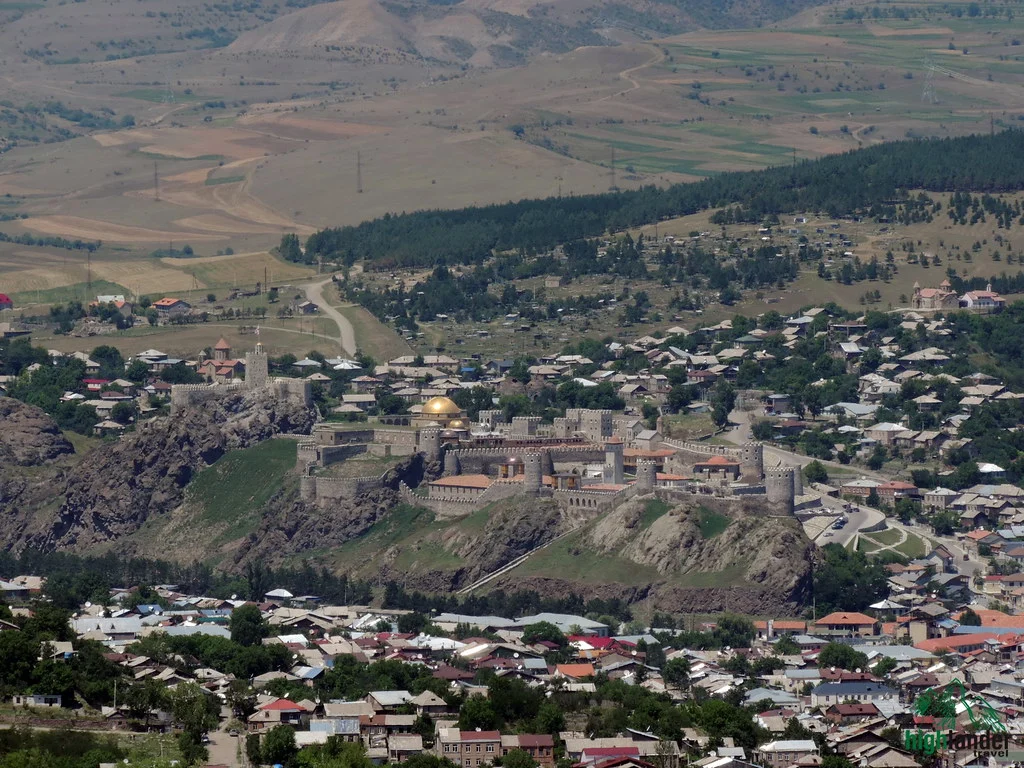
Most people meet Akhaltsikhe through a car window: a glimpse of a golden dome above the road, a stop at the castle, then on to Vardzia. That’s a shame, because the town has a second story the castle doesn’t tell. Walk downhill from the walls into the old Rabati quarter and you’ll find a 19th-century synagogue, the outline of an Armenian church, and narrow lanes where Georgian, Armenian, Jewish and Turkish families lived side by side for centuries. Akhaltsikhe was a frontier town, and you can still see the seams.
Akhaltsikhe is the capital of Samtskhe-Javakheti in southern Georgia, about 200 km west of Tbilisi and an hour from Borjomi. It’s best known for Rabati Castle, and it’s the natural base for Vardzia, Sapara Monastery and the Abastumani forests. Plan at least half a day in town. A night here makes the southern circuit far more relaxed.
Akhaltsikhe in brief
- Region: Samtskhe-Javakheti, on the Potskhovi River, at about 1,000 m.
- Population: about 17,000 (2024 census).
- Distance: about 200 km (3–3.5 h) from Tbilisi, 50 km (1 h) from Borjomi and 60 km (1–1.5 h) from Vardzia.
- Known for: Rabati Castle, the old Jewish and Armenian quarters, Meskhetian food, and as the gateway to Vardzia.
- The name: Akhal-tsikhe means “new fortress” in Georgian.
- Time needed: half a day for the town, or 2–3 days as a base for the region.
A short history of Akhaltsikhe
Akhaltsikhe has been a border town for most of its life, and its mix of peoples came from that. The hill now crowned by Rabati Castle was fortified by the 9th century under the name Lomsia. By around 1200 the settlement below had become a town with a new name, Akhaltsikhe, “new fortress”.
From the 13th century it was the capital of Samtskhe-Saatabago, the principality of the Jaqeli family, who ruled much of southwest Georgia. The Ottomans took the town in 1579, and from 1625 it was the seat of a pasha governing the province. For two centuries Akhaltsikhe was one of the largest trading towns in the South Caucasus, with a slave market, caravanserais, and merchants arriving from Anatolia, Persia and the Black Sea.
Russian troops stormed the fortress in 1828, and the town passed to the Russian Empire in 1829. Armenian refugees from Erzurum settled here after the war, joining a Jewish community that had lived in Akhaltsikhe for centuries. By the late 19th century the town’s streets held Orthodox, Armenian, Catholic and Jewish places of worship within a few hundred metres of each other.
The 20th century thinned that mix. The Muslim Meskhetian population was deported by Stalin in 1944. Most of the Jewish community emigrated to Israel in the 1970s and after 1991. Today Akhaltsikhe is mostly Georgian, with an Armenian minority. The old quarters keep the memory of the rest, and the 2011–2012 restoration of the castle turned the town into the region’s main stop for visitors.
Things to do in Akhaltsikhe
Start at Rabati Castle, then spend the rest of your time in the old quarter below it: the synagogue, the churches and the museum. Everything in the centre is walkable.
1. Rabati Castle
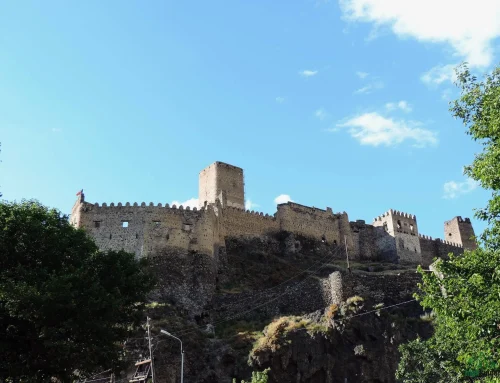
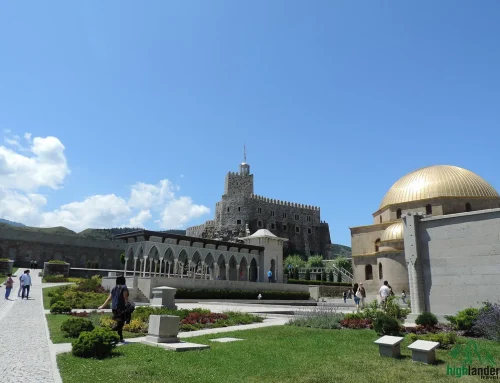
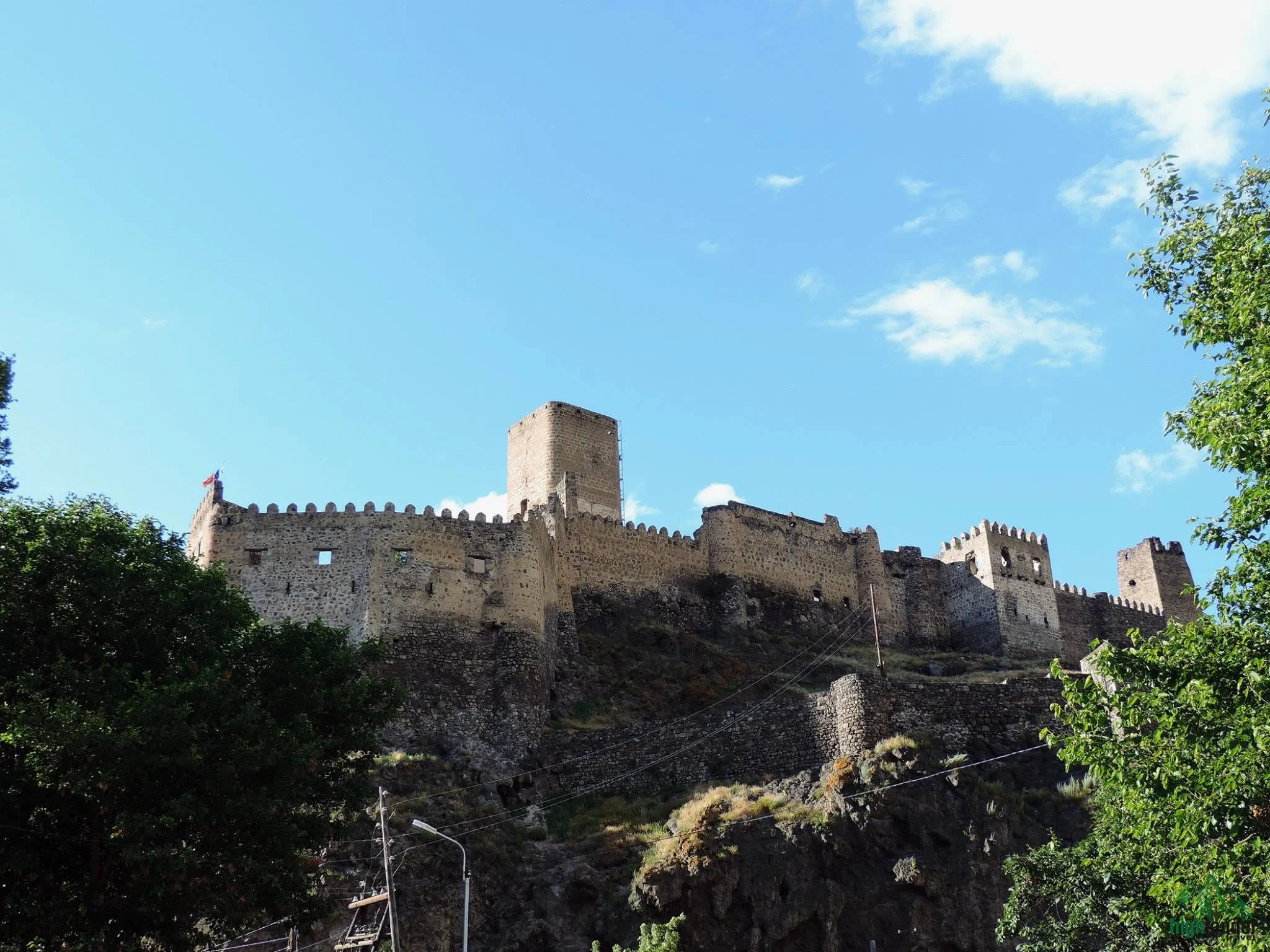
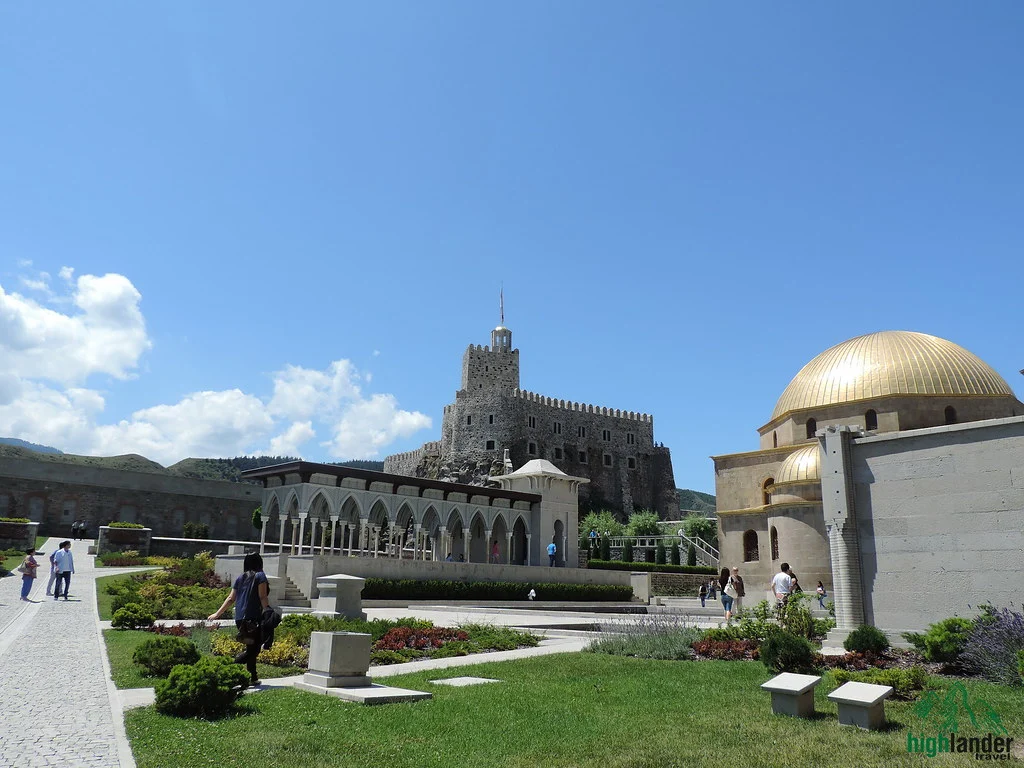
The restored castle complex on the hill is Akhaltsikhe’s landmark: a mosque, a madrasa, a citadel and the palace of the Jaqeli rulers, all inside one set of walls. Give it 1.5–2 hours. For tickets, opening hours and the full history, see our Rabati Castle guide.
2. The Samtskhe-Javakheti History Museum
The regional museum inside the castle grounds tells the story of the whole province, from archaeology through the medieval Christian period to Ottoman rule. It’s the best way to make sense of everything else in this guide. It has its own ticket and usually closes on Mondays.
3. The old Rabati quarter and the synagogue
Below the castle, the old quarter is a tangle of lanes, half-restored houses and wooden balconies. Its centrepiece is the Akhaltsikhe Synagogue, built in 1862–1863 and restored in 2012. Its painted wooden interior survived Soviet closure from 1952 to 1986. The community that built it has almost entirely emigrated. The building is now cared for by the family of the last rabbi and opened for visitors, so ask locally if the door is shut. The Jewish cemetery nearby has graves going back to the 17th century.
4. Churches of four faiths
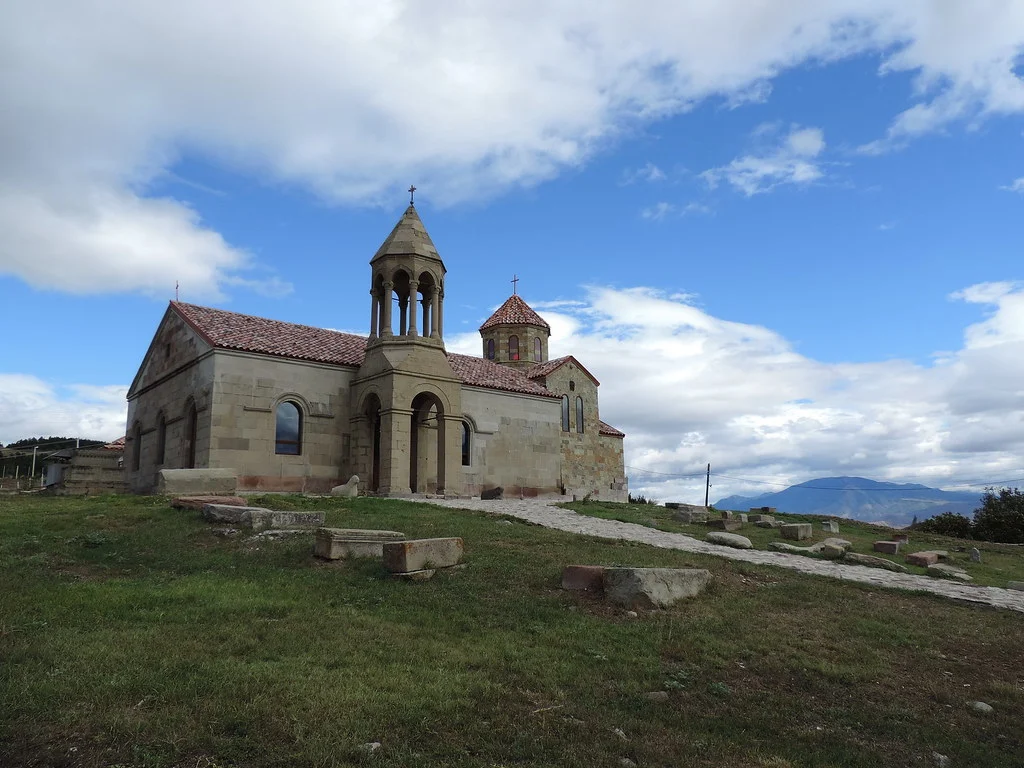
Within a short walk you’ll find Georgian Orthodox, Armenian Apostolic and Catholic churches, some active, some roofless. The Orthodox St Marine church and the Amaghleba (Ascension) church are in use. The Armenian churches are a reminder of the large community that settled here after 1829. Together with the castle mosque and the synagogue, they make Akhaltsikhe one of the few towns in Georgia where you can see five faiths’ buildings in one afternoon. A short drive from town, the village of Arali has a Catholic church of its own, from the region’s Georgian Catholic community.
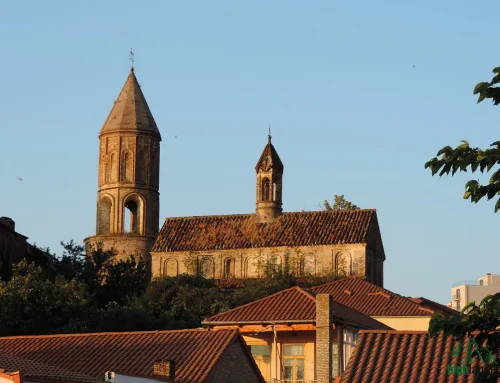
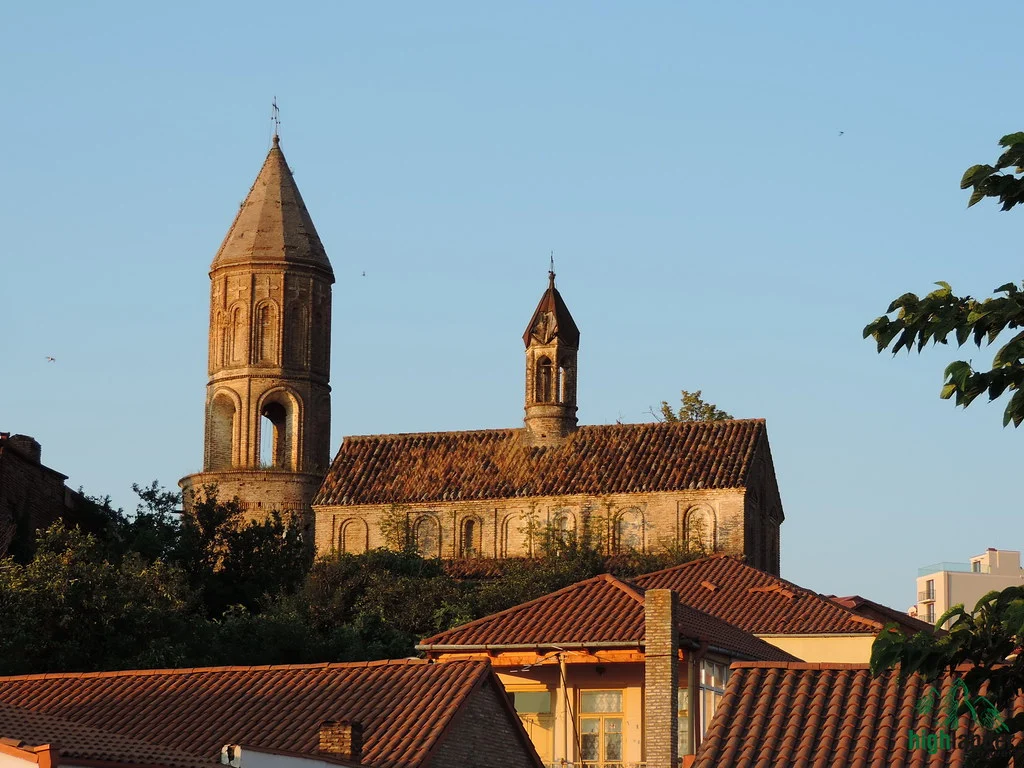
Don’t miss the Catholic church above Rabati. Walk uphill from the castle and you’ll reach Akhaltsikhe’s Catholic church, one of the most beautiful buildings in town. It stands above the old quarter, looking down toward the castle walls. It’s a reminder that southern Georgia has been home to a Georgian Catholic community for centuries, and it’s well worth the short climb, especially in late afternoon light.
5. The old railway station
Akhaltsikhe’s old railway station has been restored and turned into a hotel. Even if you’re not staying, it’s worth a look for the architecture and a coffee.
6. Walk the Potskhovi riverside at dusk
The river divides the old town from the new. In the evening, when the castle is floodlit, the walk along the water and across the bridges gives the best view of the walls from below.
| Time in town | What to do |
|---|---|
| 2 hours | Rabati Castle only |
| Half a day | Castle, museum and a walk through the old quarter to the synagogue |
| A full day | All of the above, plus Sapara Monastery in the afternoon |
| 2–3 days | Use Akhaltsikhe as a base for Vardzia, Khertvisi, Abastumani and Borjomi |
Food in Akhaltsikhe: what to order
Meskhetian cooking is heartier than the Georgian food you’ll find in Tbilisi: more potatoes, more butter, more cheese, and dishes built for mountain winters.
| Dish | What it is |
|---|---|
| Tashmijabi | Mashed potato beaten with melted cheese until it stretches like mozzarella |
| Meskhetian khinkali | Dumplings, often larger and plainer than the Tbilisi versions |
| Apokhti | Dried, salted meat (traditionally lamb or beef), cooked into stews and omelettes |
| Chirbuli | Eggs fried with tomato, walnuts and herbs, a regional breakfast |
| Meskhetian honey | Mountain honey sold at markets and roadside stalls around the region |
Where to stay in Akhaltsikhe
- In the castle: a hotel inside the Rabati walls means an evening walk through the complex after the visitors leave.
- In the old railway station: a restored historic building in the new town.
- Guesthouses near the castle: cheaper and more personal, often with breakfast and home-cooked dinners.
- Alternatively, Sapara or Borjomi: pilgrims can sometimes stay at Sapara Monastery, and Borjomi works as a base if you prefer a resort town.
How to get to Akhaltsikhe
From Tbilisi it’s 3–3.5 hours by car via Gori and Borjomi, or about 3.5–4 hours by marshrutka from Didube bus station.
| From | By car | By marshrutka | Notes |
|---|---|---|---|
| Tbilisi | 3–3.5 h (about 200 km) | 3.5–4 h | Marshrutkas leave from Didube through the day |
| Borjomi | About 1 h (50 km) | About 1 h | Frequent minibuses |
| Kutaisi | About 3 h | 3.5–4 h | A few morning departures |
| Batumi | 4.5–5 h | 5+ h | Long but scenic, via Khashuri or the Goderdzi Pass (summer, by car) |
| Vardzia | 1–1.5 h (60 km) | Limited service | Via Aspindza and Khertvisi |
Akhaltsikhe also has bus connections to Turkey through the Vale–Türkgözü border crossing, and to Armenia via Akhalkalaki.
Day trips from Akhaltsikhe
Akhaltsikhe is the best base in the region: Vardzia, Sapara, Khertvisi and Abastumani are all within about an hour.
| Destination | Distance | Why go |
|---|---|---|
| Sapara Monastery | About 12 km | A 13th-century church with some of Georgia’s finest frescoes, in a forested gorge |
| Vardzia | About 60 km | Queen Tamar’s cave city, the reason most people come |
| Khertvisi Fortress | About 45 km | A 14th-century fortress where the Paravani meets the Mtkvari |
| Zarzma Monastery | About 30 km | Medieval frescoes and a tall bell tower in a quiet valley |
| Abastumani | About 28 km | A pine-forest spa town with Georgia’s historic astronomical observatory |
| Uraveli gorge | About 16 km | A short hike to the Agara church ruins and a carved stone idol |
| Borjomi | About 50 km | Mineral water, a park and the Borjomi–Kharagauli forests |
| Abuli Fortress and the Javakheti plateau | 1.5–2 h | Cyclopean walls and volcanic lakes above 2,000 m |
Tips for visiting Akhaltsikhe
- Stay the night if you’re going to Vardzia. Tbilisi to Vardzia and back in one day is about 9 hours of driving. Sleeping in Akhaltsikhe cuts it in half and gets you to the caves before the crowds.
- Check the synagogue in advance. It isn’t always open. Ask at your guesthouse or the castle, and someone can usually call the keyholder.
- Pack a layer. At about 1,000 m, Akhaltsikhe is noticeably cooler than Tbilisi in the evenings, even in summer.
- Carry cash for the villages. Cards work in town, but Sapara’s candle stall, roadside honey sellers and village guesthouses usually want lari.
- Dress for monasteries. Sapara and Zarzma are active monasteries: women cover their heads and wear skirts, and men wear long trousers.
Tours that include Akhaltsikhe
Akhaltsikhe and Rabati Castle are on the route of every tour we run in Samtskhe-Javakheti.
| Tour | Length | Highlights |
|---|---|---|
| Cave Monastery Vardzia Tour from Tbilisi | 2 days | Borjomi, Rabati, Sapara, Khertvisi and a full morning in Vardzia |
| Mystic South Georgia | 4 days | Adds the Javakheti volcanic lakes and Borjomi |
| 7-Day Spring and Autumn Tour | 7 days | The south combined with Kakheti wine country |
| Svaneti and Vardzia | 10 days | The high Caucasus and the cave city in one trip |
| Around Georgia | 12 days | Svaneti, wine country and the cave cities |
For the wider region, see our Samtskhe-Javakheti travel guide.
Frequently asked questions about Akhaltsikhe
Is Akhaltsikhe worth visiting?
Yes. Rabati Castle is one of the most striking sights in southern Georgia, and the old quarter adds a side of Georgian history few travellers see: a 19th-century synagogue, Armenian churches and the traces of an Ottoman trading town. It’s also the best base for Vardzia and Sapara.
How far is Akhaltsikhe from Tbilisi?
About 200 km, or 3–3.5 hours by car via Gori and Borjomi. Marshrutkas from Didube bus station take 3.5–4 hours.
How many days do you need in Akhaltsikhe?
Half a day covers the town. Two or three nights let you use it as a base for Vardzia, Khertvisi, Sapara, Abastumani and Borjomi.
What is the difference between Akhaltsikhe and Rabati?
Akhaltsikhe is the town. Rabati is the name of its old quarter below the castle, and it’s also the popular name for the restored castle itself, officially Akhaltsikhe Castle.
Is Akhaltsikhe a good base for Vardzia?
Yes, it’s the most practical one. Vardzia is 1–1.5 hours away, Akhaltsikhe has the widest choice of hotels and restaurants in the area, and you can see Rabati Castle the evening before.
What food is Akhaltsikhe known for?
Meskhetian dishes: tashmijabi (cheesy mashed potato), large Meskhetian khinkali, and dishes made with apokhti, dried salted meat. Look for local mountain honey too.