Most ten-day tours of Georgia pick a half. They go north to Svaneti, or they go south to Vardzia and the volcanic plateau, and they run out of days before they can do both. This one does both, and the reason it can is a gravel road over the Zekari Pass that almost nobody uses.
You start in Tbilisi and finish there, and in between you cross the country twice. Three nights among the defensive towers of Svaneti, with a full day at Ushguli under Shkhara. Then down out of the mountains, over the Lesser Caucasus at 2,182 metres, and into the dry southern highlands — Rabati, Sapara’s frescoes, and the cave monastery at Vardzia where six thousand chambers were cut into a cliff in the twelfth century. The last morning takes you home across Javakheti, a treeless volcanic plateau at 2,000 metres that looks nothing like the rest of the country and where the villages speak Armenian.
It runs as a private tour, which means your group, your driver-guide and nobody else. Two UNESCO sites, four regions, and a route that goes where the coaches cannot.
Two things are worth knowing before you book this one.
It is a driving tour. Ten days, about two thousand kilometres, and two of those days are five to six hours behind the windscreen. The stops are frequent and the scenery does most of the work, but if you would rather stay in one place and walk out from it, this is the wrong tour and we would rather tell you now. Our four-day Svaneti trek or the Kakheti tours will suit you better.
And the Zekari Pass is the point. It is a gravel road, it is rough, and in a bad year it is shut. When it is open it takes you from the wet green of Imereti to the bare southern highlands in about four hours, past shepherds and alpine meadow and not one other tour vehicle. If it is closed we go round by Borjomi, which is paved and pleasant and nothing like as good — so we watch the conditions, and if the forecast is poor early in your trip we will sometimes reshuffle the days to give the pass its best chance.
Everything else is negotiable. This is a private tour and the itinerary is a plan, not a contract. If you want longer at Ushguli and less time in museums, or a cooking afternoon instead of a wine tasting, or an hour standing in one place waiting for the light — tell your guide on Day 1 and it will happen.
What you’ll see
Tour highlights
- Three nights in Svaneti. Not two. Time for the Mestia museums, a day in the Becho valley under Ushba, and a full day at Ushguli rather than a dash.
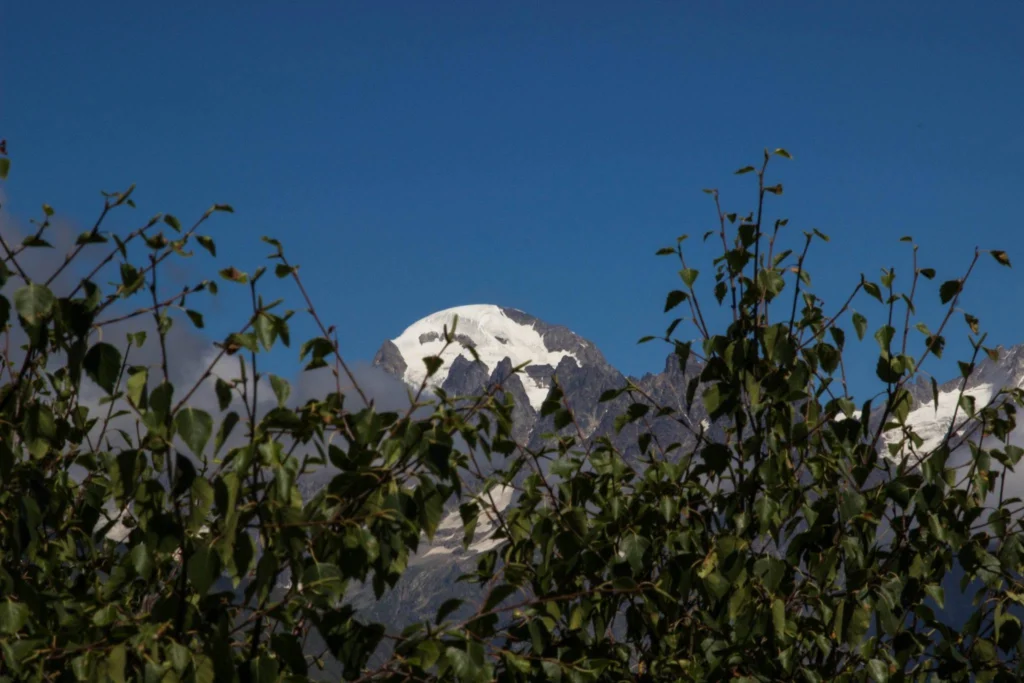
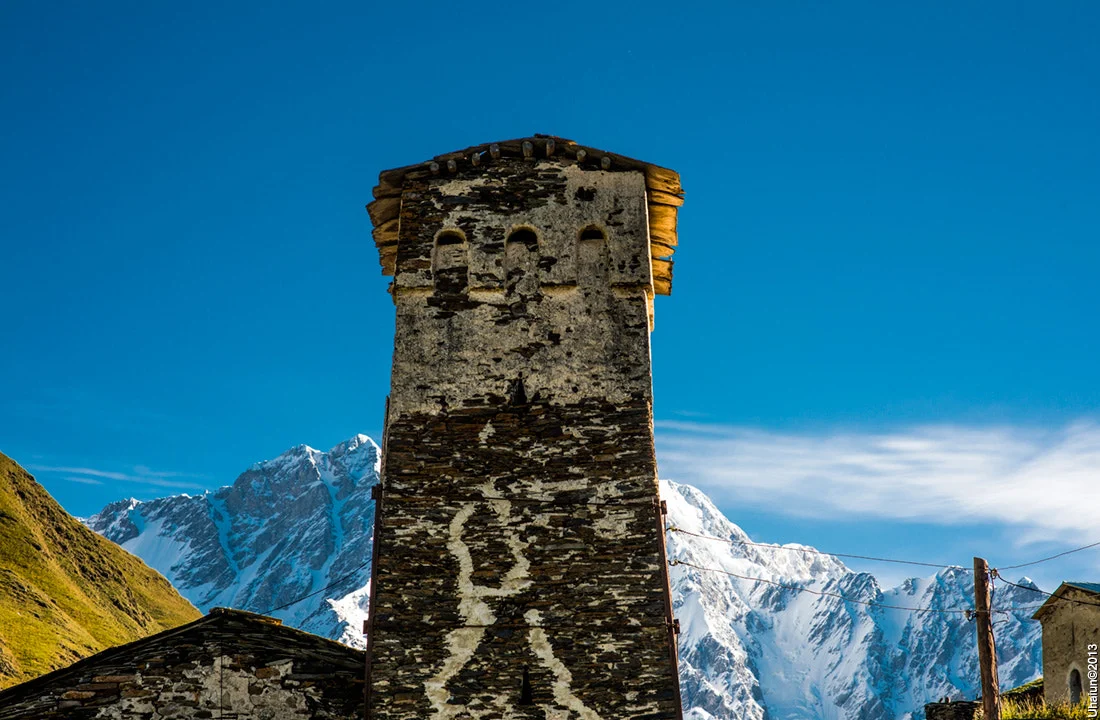
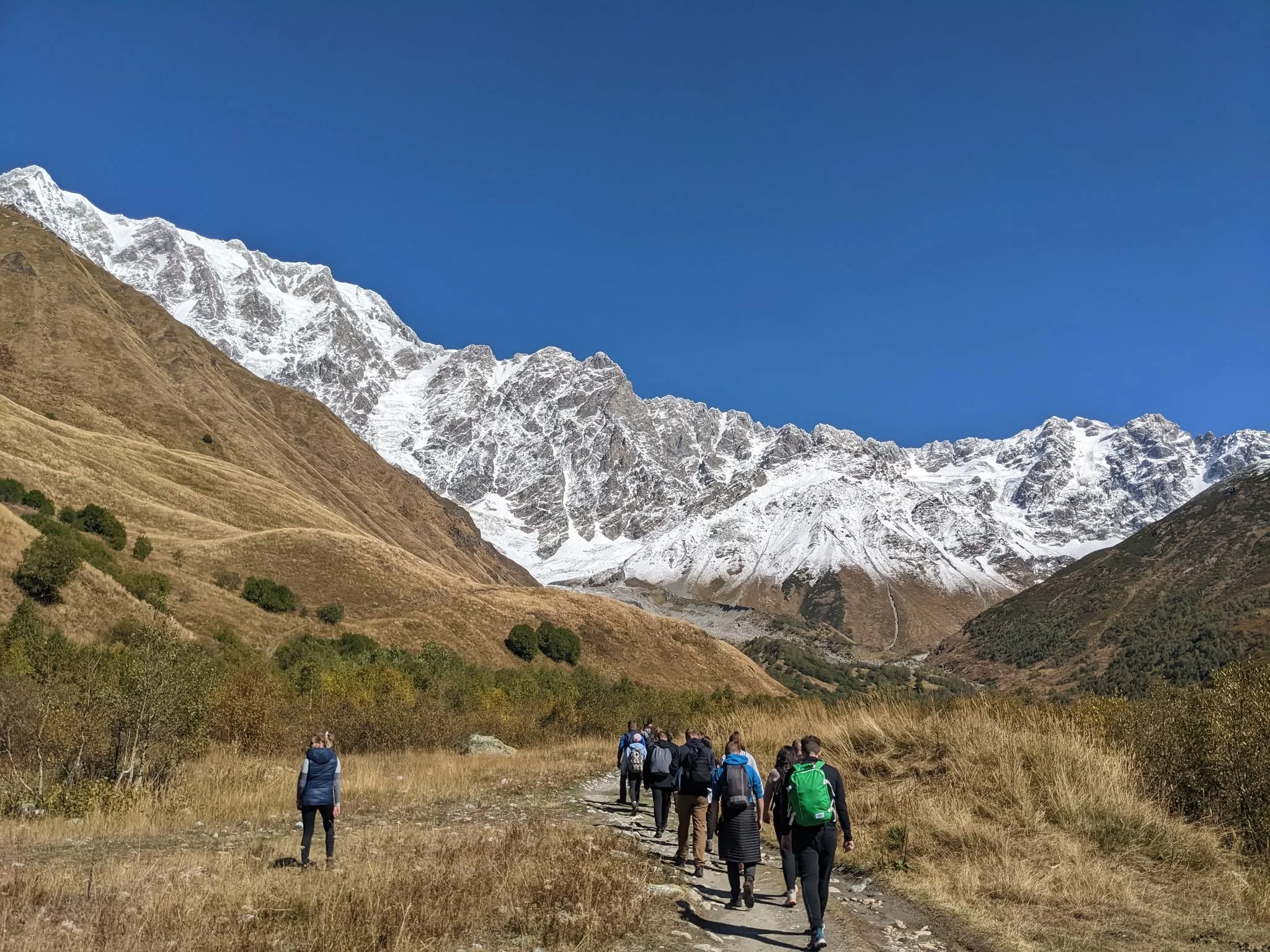
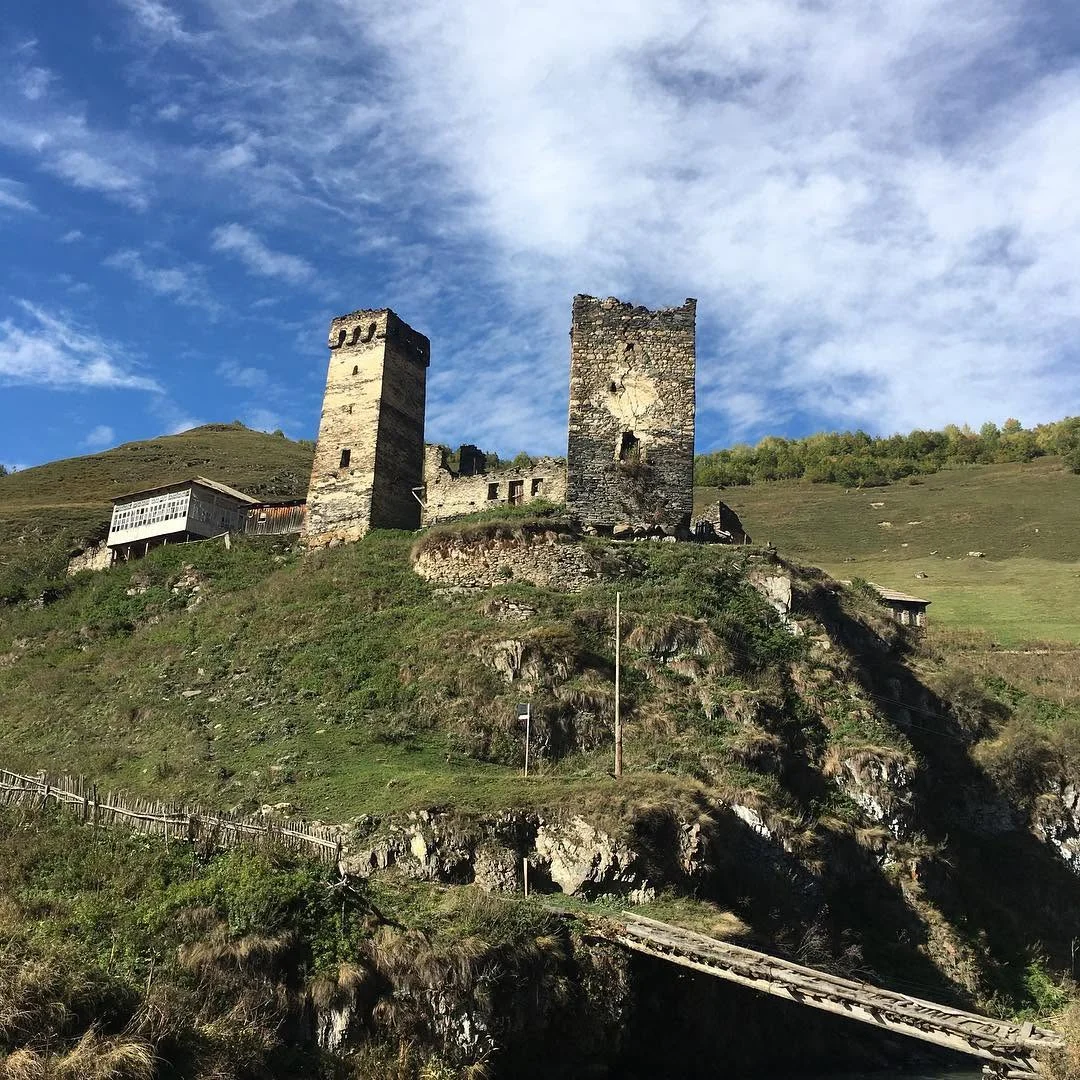
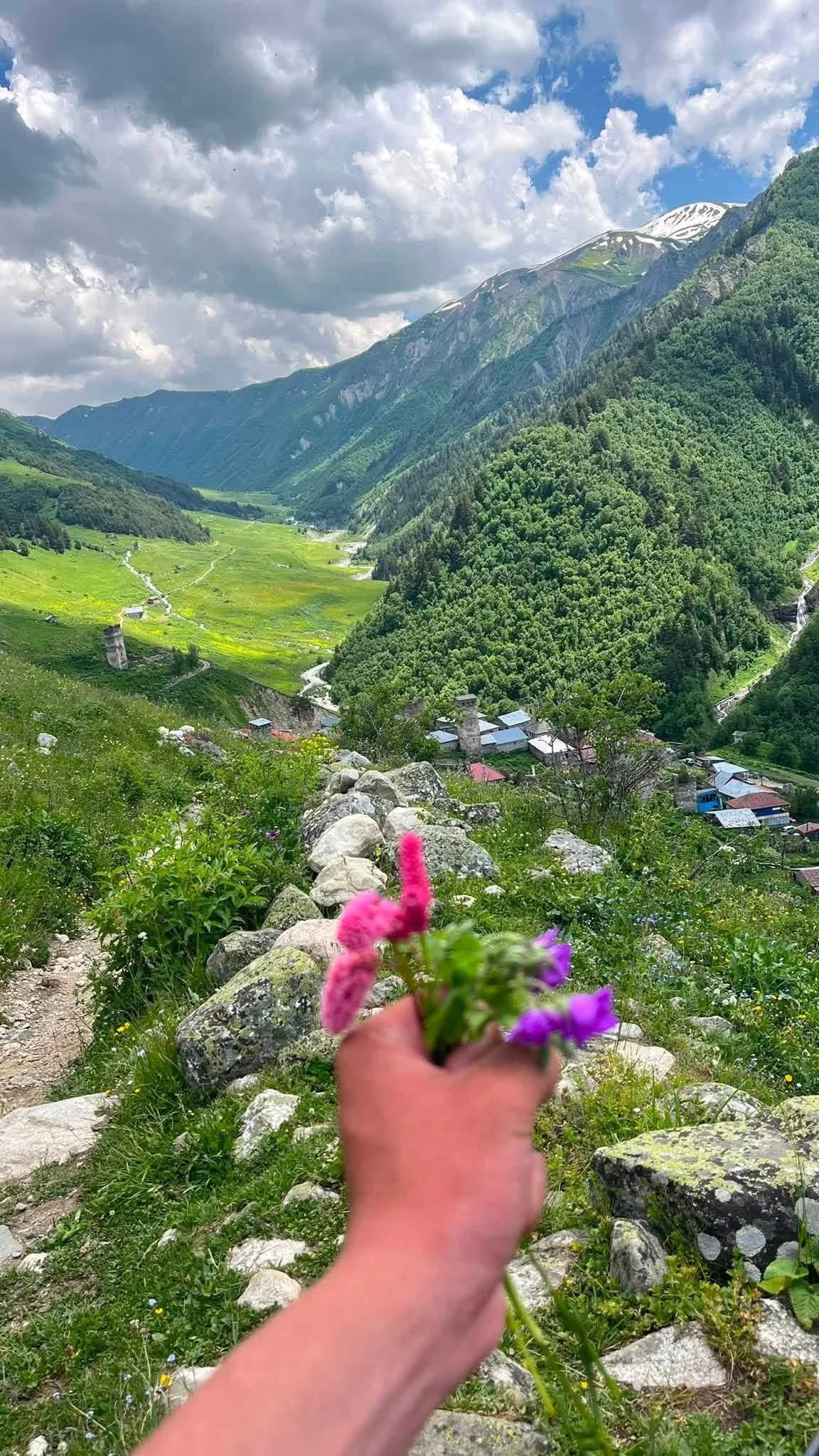
- Ushguli at 2,200 metres. Four hamlets, seventy families, more medieval towers per square metre than anywhere in Europe, and Shkhara — Georgia’s highest peak at 5,068 m — standing behind the Lamaria church.
- Vardzia before the buses. We are at the gate before nine. Thirteen levels of caves, the Church of the Dormition with its portrait of Queen Tamar, and two or three hours in it while it is still cool and quiet.
- The Zekari Pass at 2,182 m. A gravel crossing of the Lesser Caucasus that takes you from subtropical Imereti to the southern highlands in an afternoon. Almost no tour uses it.
- Two UNESCO World Heritage sites — Mtskheta’s Jvari and Svetitskhoveli, and the tower villages of Upper Svaneti — plus Uplistsikhe, carved out of rock since the Iron Age.
- The Javakheti plateau. Volcanic grassland at 2,000 metres, Georgia’s largest lake at Paravani, Armenian villages, and a horizon of dormant cones. It looks like Central Asia and it is two hours from Tbilisi.
- Sapara and Saro. A thirteenth-century monastery hidden in a wooded gorge with frescoes worth the detour, and a near-empty village under the remains of a megalithic wall. Neither gets visitors.
- Stargazing at Abastumani. A 1932 observatory at 1,650 metres with the original telescopes still turning, on one of the driest, clearest nights you will get in the Caucasus. Weather permitting, and we will be honest about the weather.
Step by step
Tour itinerary
Day 1 — Arrival in Tbilisi
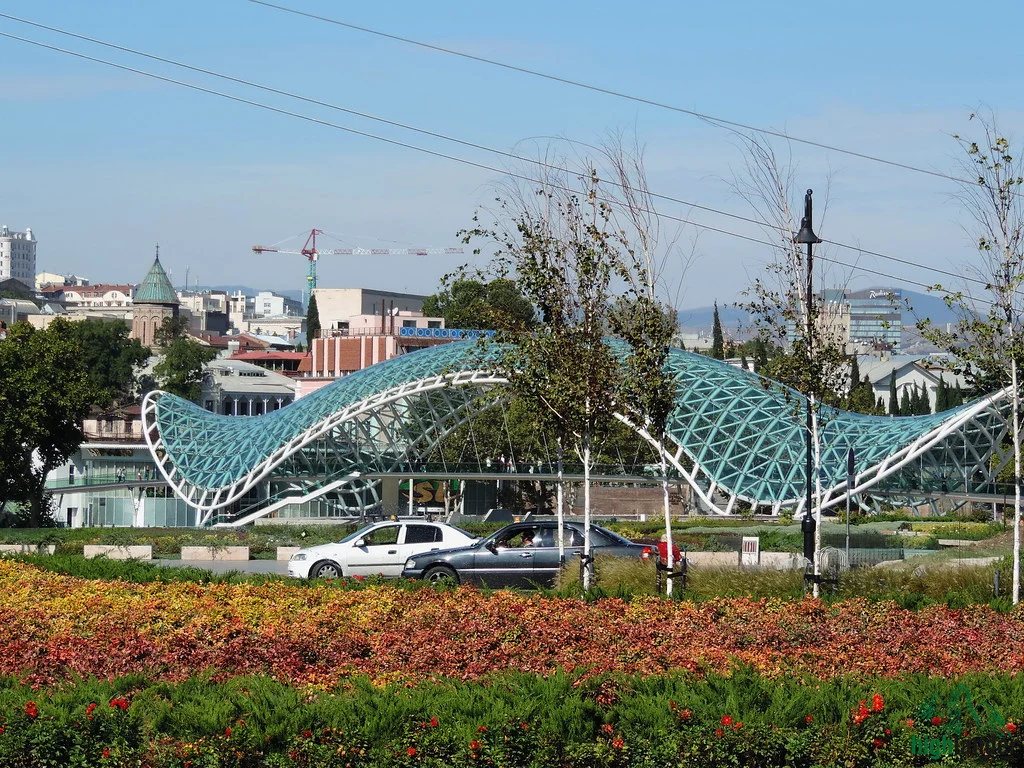
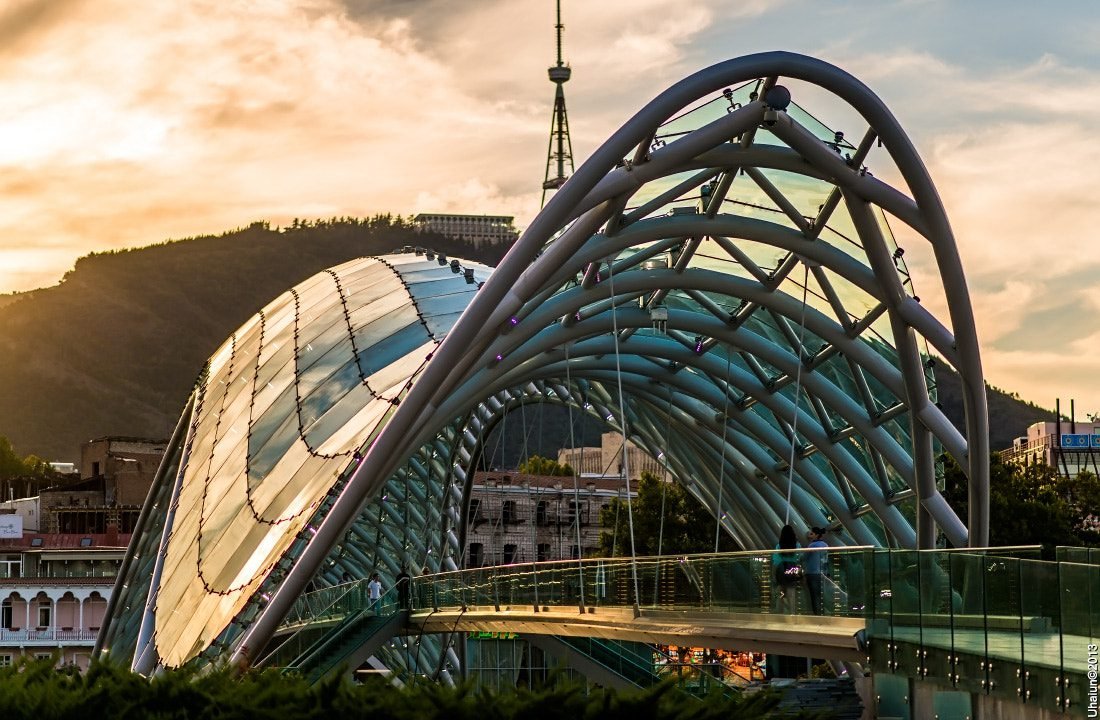
We meet you at the airport and take you to your hotel in the old town. When you have dropped your bags we walk — and Tbilisi is a city that rewards walking, because everything is stacked on top of everything else. Sulphur baths under a fourth-century fortress. An Armenian church at the end of a lane of wine bars. The Metekhi cliff above the river, with King Vakhtang on his horse looking at the city he founded in the fifth century. We finish around Shardeni and Erekle II square, where the evening happens, and leave you to choose your own dinner — your guide will tell you where to go.
Walking 3–4 km, flat · overnight Tbilisi, 4-star
Day 2 — Mtskheta, Uplistsikhe and on to Kutaisi
West out of the city, and two sites that explain most of what follows. Jvari stands on a bare hilltop where the Aragvi meets the Mtkvari, built in the sixth century when Georgia had been Christian for two hundred years; church builders across the Caucasus copied it for the next five hundred. Down in Mtskheta, Svetitskhoveli is where the kings are buried, on a site that has held a church since the fourth century.
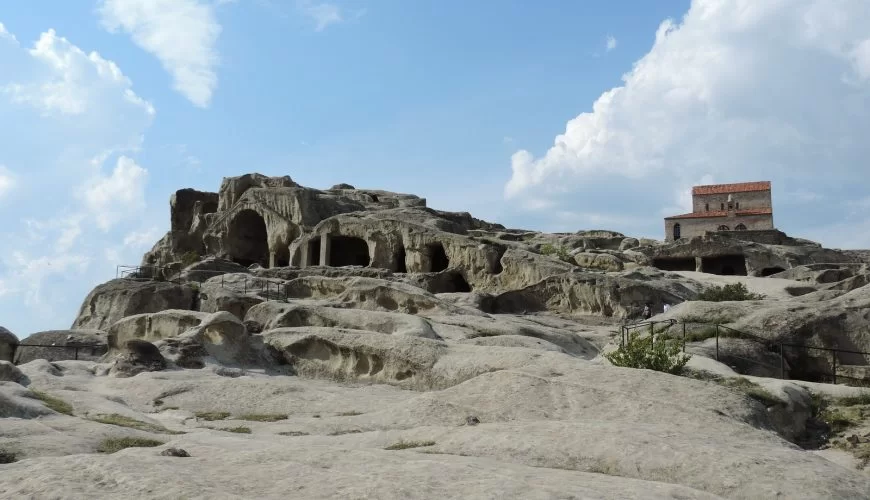
Then Uplistsikhe — a town cut into a riverside cliff and lived in from the Iron Age to the Middle Ages. You walk the streets, a pagan temple that became a church, and a theatre carved out of the rock. Lunch is at a family winery in Kartli, where the wine is lighter and sharper than the Kakhetian bottles you will have met already. Kutaisi by evening, and a short walk round a very compact centre.
Driving 5–6 h with stops · walking 3–4 km · lunch included · overnight Kutaisi, 4-star
Day 3 — Martvili Canyon and the road to Svaneti
North into Samegrelo. At Martvili the Abasha has cut a limestone slot forty metres deep, and you take a boat through the narrow part of it, under walls hung with moss and fern. Early is better — the water is still and the light comes down in shafts. If you would rather have height than water, we swap it for Okatse and its walkway suspended over a 140-metre drop.
Lunch in Zugdidi, where the food changes: Samegrelo cooks hotter and more aromatic than the east. Try gebzhalia, which is cheese folded in mint, or kupati.
Then the climb. We stop at the Enguri Dam, 271 metres of concrete arch wedged between canyon walls and still the second-highest of its kind anywhere, and after that the gorge narrows and keeps narrowing until the first Svan towers appear above the road. Into Mestia in the late afternoon and a walk through the Lanchvali and Seti quarters while the light goes.
Driving 5–6 h · walking 2–3 km · overnight Mestia
Day 4 — Mestia’s museums, then the Becho valley
The morning is indoors and worth it. The Svaneti Museum of History and Ethnography holds the best collection of medieval icons and worked gold in the country, much of it hidden in towers for centuries so that invaders would not find it. The Margiani tower house shows you how a Svan family actually lived — animals below, people above, tower attached. And the Khergiani house-museum is about a climber they called the Tiger of the Rocks, which sounds niche and is not: it tells you more about this region’s relationship with its mountains than any of the icons do.
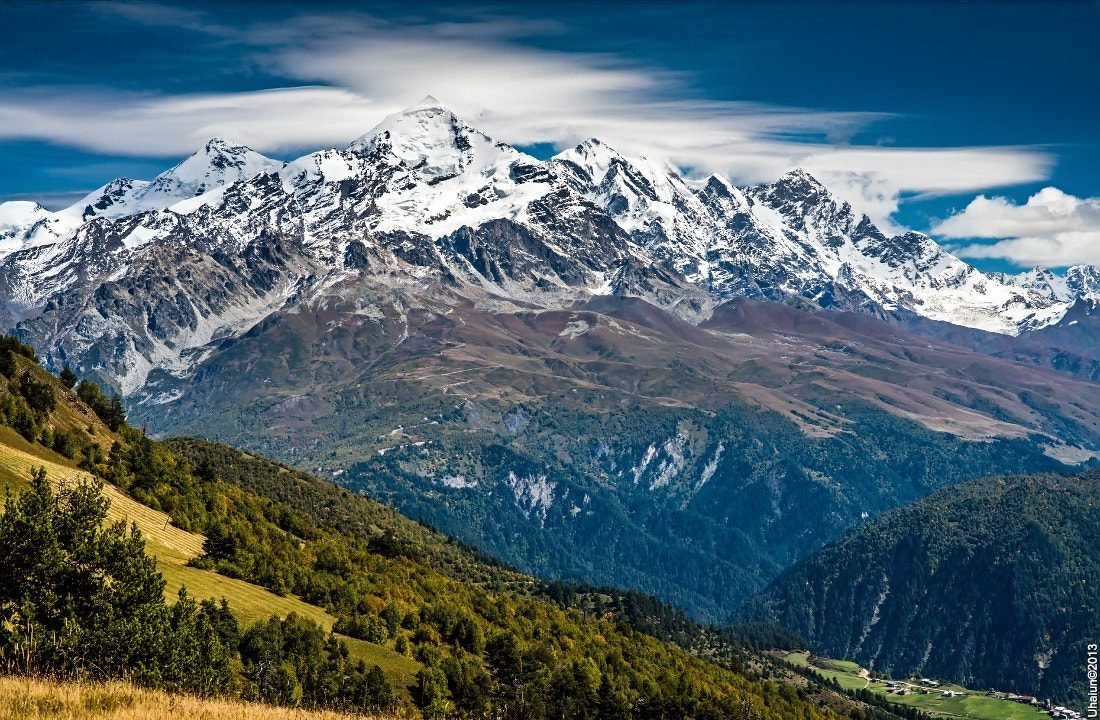
Afternoon in Becho, half an hour away, for the best road-accessible view of Ushba — the twin-headed peak at 4,710 m that everyone in Svaneti navigates by. You choose your effort: the village and its church and photographs from the valley floor; or the Shdugra waterfall, four or five kilometres there and back; or on up to the Ushba glacier viewpoint, another four kilometres with steep sections and three more hours.
Dinner back in Mestia, and if you want it, a demonstration of kubdari — the meat bread that Svaneti will not let you leave without eating.
Driving 30 min · walking 4–8 km depending on your choice · overnight Mestia
Day 5 — Ushguli
Forty-five kilometres and two and a half to three hours, because the road is unpaved, forded in places and hairpinned in others. We go in a 4×4 with a driver who knows every hole in it, and we stop where it is worth stopping.
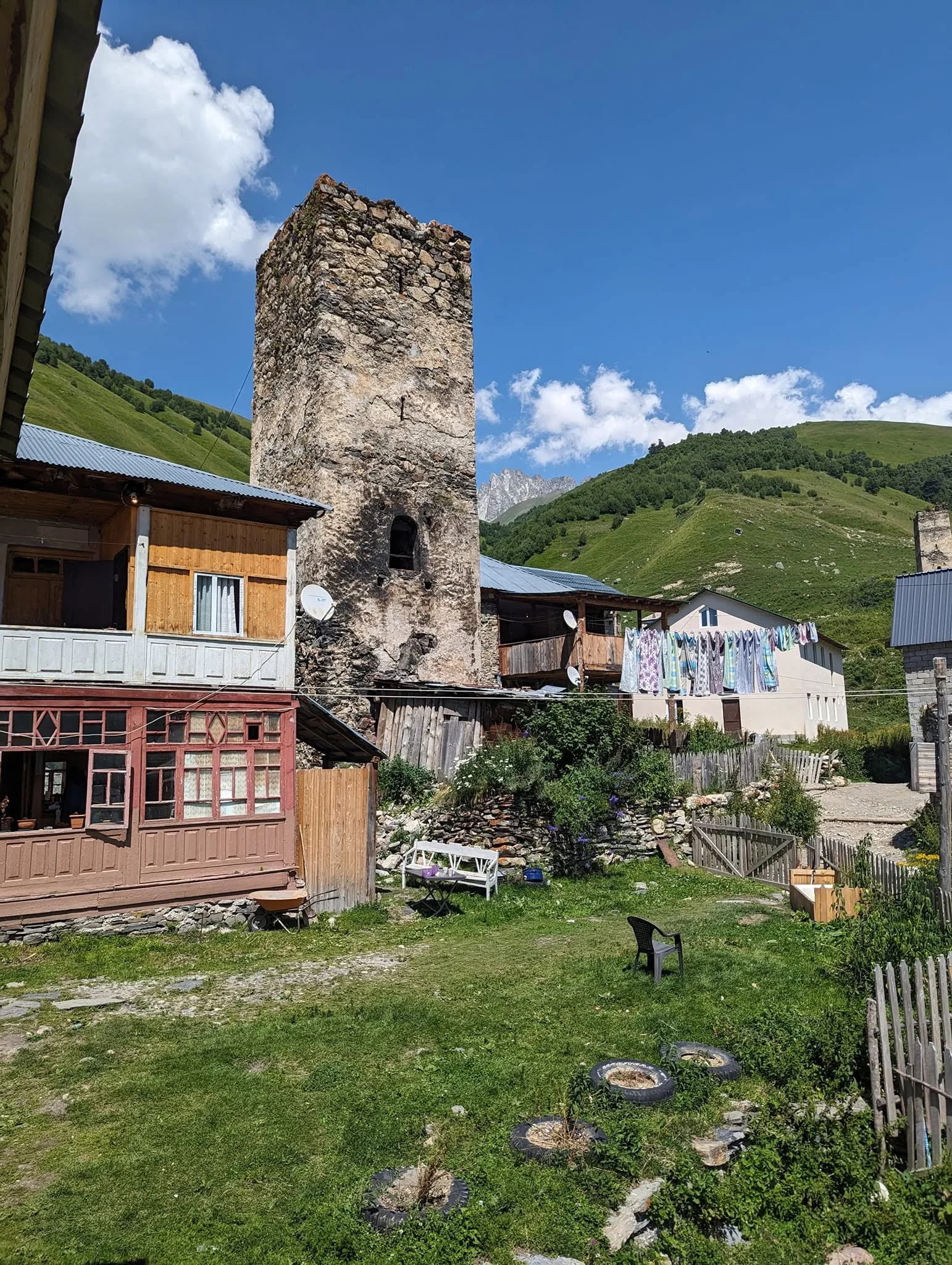
Ushguli is four hamlets — Zhibiani, Chvibiani, Chazhashi and Murkmeli — holding about seventy families who stay through winters that bring three metres of snow. At the top, Lamaria church, twelfth century, with Shkhara filling the sky behind it; this is the view every photograph of Svaneti is taken from, and it is better in person. Chazhashi has the densest cluster of towers, some of them ninth century, and you can walk the lanes between them. The ethnographic museum is one preserved tower house and a room of icons.
Lunch is in somebody’s home, because there are no restaurants here in any meaningful sense. Back in Mestia by early evening.
Driving 5–6 h return, 4×4 · walking 3–4 km · lunch included · overnight Mestia
Day 6 — Down from Svaneti, Prometheus Cave, Kutaisi
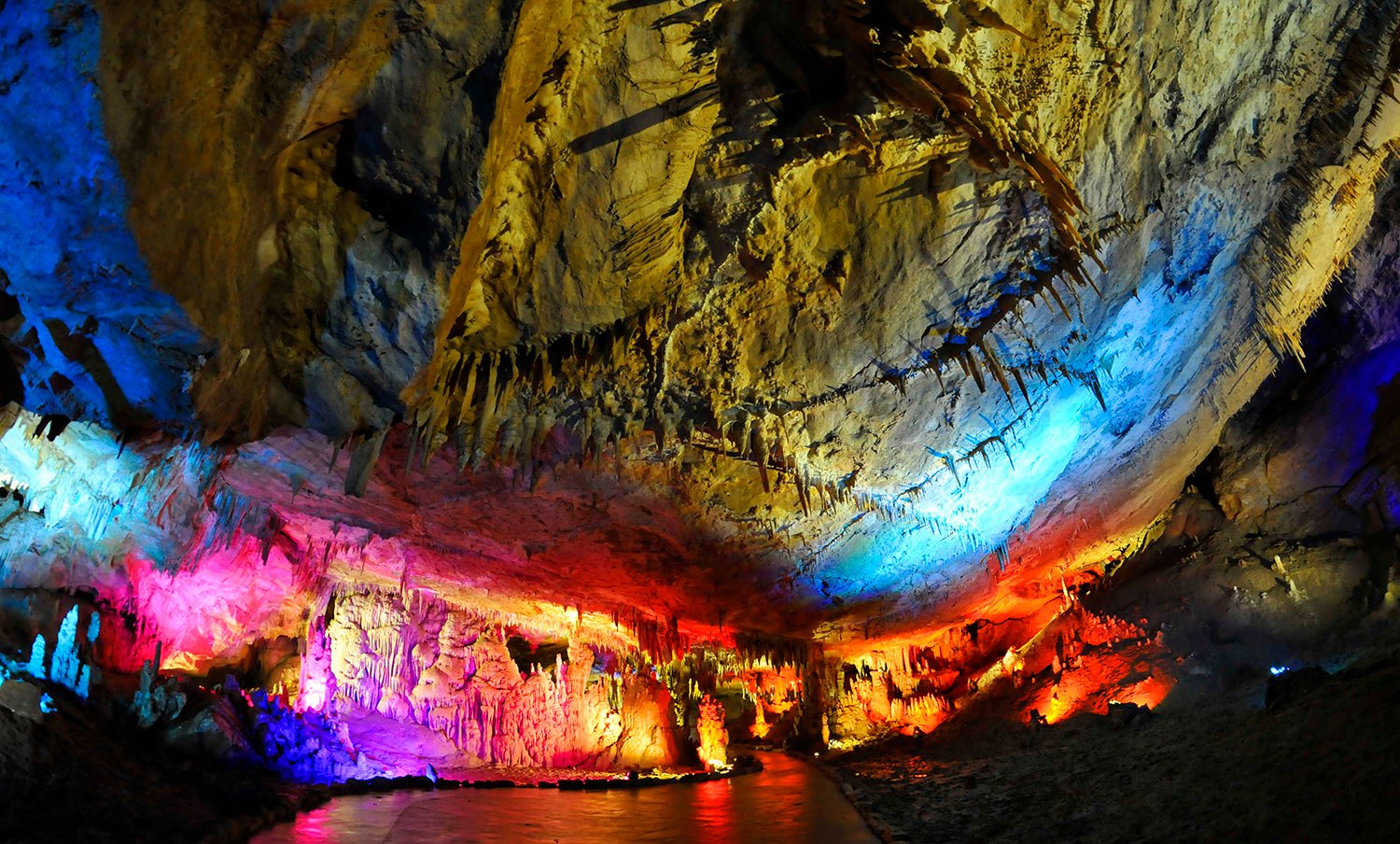
Out of the mountains the way we came, with one stop that is worth breaking the drive for. Prometheus Cave runs 1.4 km of developed passage through stalactite chambers, an underground river and lakes. The coloured lighting divides opinion — some find it too much — but the formations behind it are the real thing, and there is an optional boat out along the river at the end.
If you want it, we can stop at Tskaltubo. It was one of the Soviet Union’s great spa towns, and the enormous sanatoriums now stand mostly empty — extraordinary buildings if you have any interest in that architecture, and quietly sad if you do not. A few of the bathhouses still operate.
Evening at a family winery outside Kutaisi. Imeretian wine is made in qvevri like the Kakhetian, from different grapes, and it comes out lighter — a good comparison to have if you tasted in Kartli on Day 2.
Driving 5–6 h · walking 1.5 km · wine dinner included · overnight Kutaisi, 4-star
Day 7 — Over the Zekari Pass to Abastumani
A quick stop first at Bagrati, Kutaisi’s hilltop cathedral — eleventh century, blown up in the seventeenth, rebuilt in 2012 in a way that cost it its UNESCO listing and still divides Georgian opinion. Whatever you make of the reconstruction, the view over the city is excellent.
Then the crossing. From the spa village of Sairme a gravel road climbs to Zekari Pass at 2,182 metres, over the ridge that separates Imereti from Samtskhe-Javakheti. It is slow and rough and we take a 4×4. What you get for it is a landscape changing under you in real time — wet green forest, then alpine meadow with shepherds and their flocks, then the dry open highlands of the south, and no other vehicle for hours.
Abastumani sits in a wooded valley, a small resort town with a mild microclimate and a row of nineteenth-century sanatoriums. Above it, on the ridge, is the Astrophysical Observatory, built in 1932 and still working. If the sky is clear we go up after dark. At 1,650 metres in dry air it is one of the best places to look at the sky in the Caucasus, and the original Soviet telescopes are the ones you look through.
Driving 5–6 h, mountain roads · overnight Abastumani, guesthouse
Day 8 — Rabati, Sapara, Saro and Khertvisi
Akhaltsikhe means “new fortress”, and Rabati is why: an Ottoman administrative seat for two hundred and fifty years, and the complex holds a mosque, a synagogue, a church and a castle inside one set of walls. The 2012 restoration is polished to the point that some visitors find it Disneyish; others are glad to be able to read the layers at all. Make up your own mind.
Twelve kilometres away, down a wooded gorge, Sapara is the opposite kind of place — a working monastery, hard to find, with thirteenth-century frescoes in the Church of St Saba that are among the best in the country. It feels genuinely remote and is twenty minutes from a city.
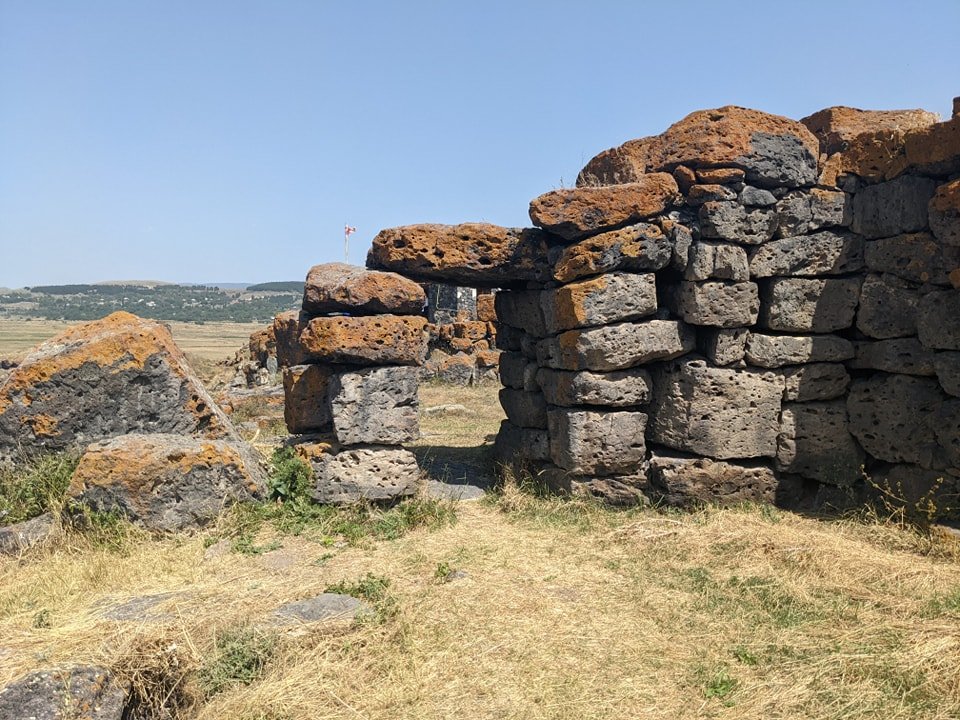
In the afternoon, Saro: an almost-empty village of stone houses with the remains of a cyclopean wall above it, pre-Christian and unexplained, and essentially no visitors. Then Khertvisi, guarding the meeting of the Mtkvari and Paravani since at least the second century BC — the walls you see are tenth to fourteenth century. A short stop for photographs and the story, and on to Vardzia.
Driving 2–3 h · walking 3–5 km · overnight near Vardzia, guesthouse
Day 9 — Vardzia at dawn, then Javakheti and home
Early, deliberately. We are at Vardzia before nine, before the coaches and before the heat.
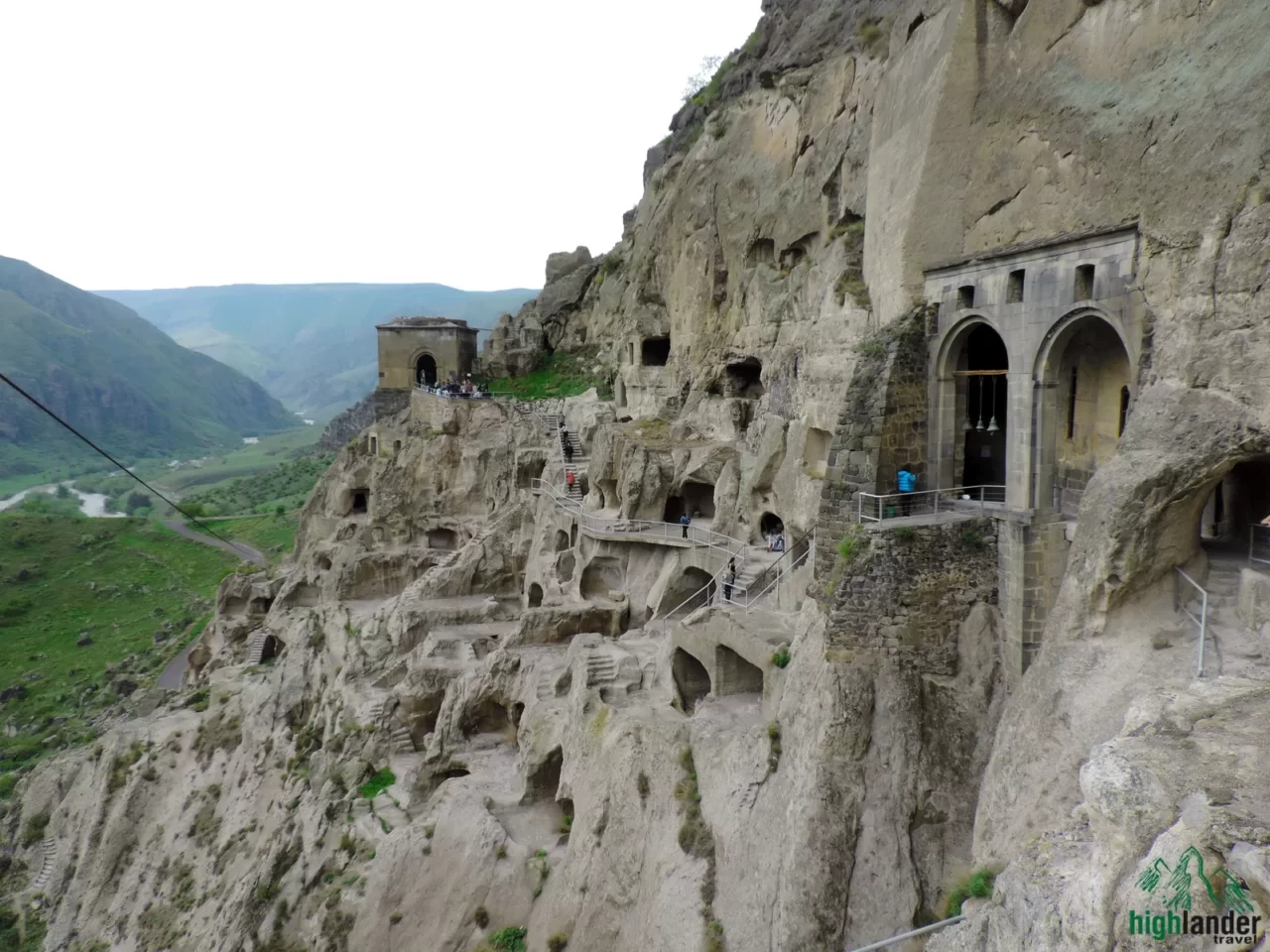
It was cut into the cliff above the Mtkvari in the twelfth century and at its height held six thousand chambers, churches, storerooms and a water system, with a monastic community of several thousand living inside the rock. An earthquake in 1283 tore the outer face away, which is why you can see into it at all. What is left is thirteen levels connected by tunnels, the Church of the Dormition with its frescoes — including the portrait of Queen Tamar, painted in her lifetime — and a handful of monks who still live there. Two to three hours.
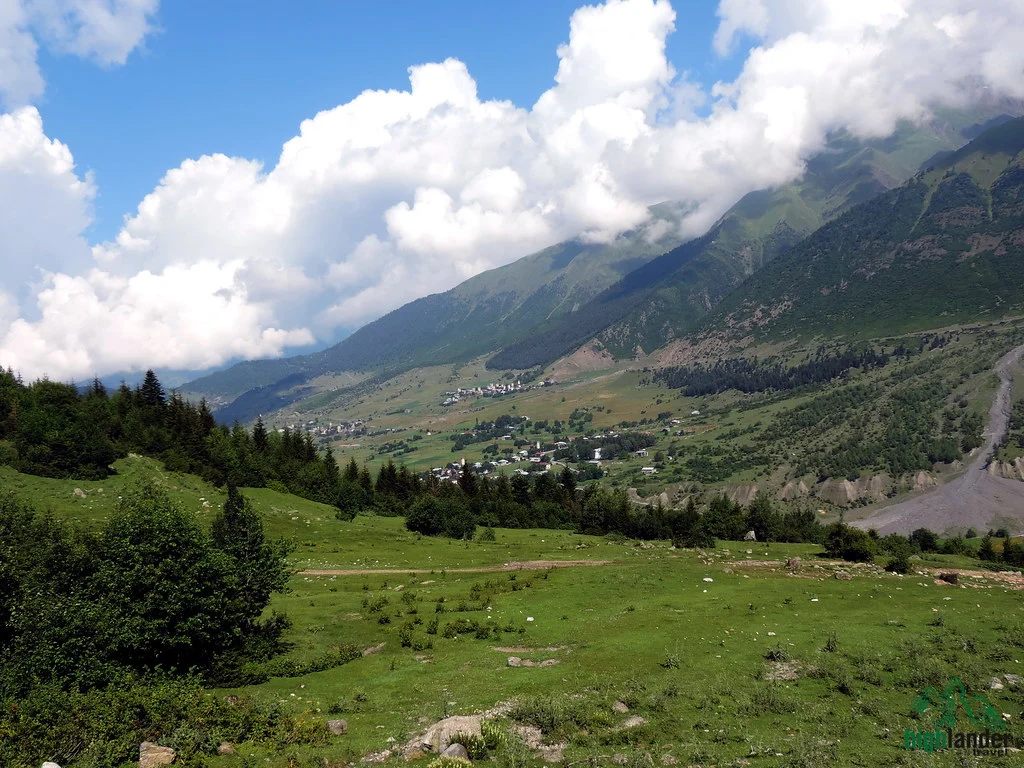
Then east across the Javakheti plateau, and the country changes again. Volcanic highland at around 2,000 metres, treeless, thinly populated, with dormant cones on the skyline and cattle scattered across grassland. The villages here speak Armenian first. We stop at Paravani, Georgia’s largest lake at 2,073 m, and at Sagamo, which is smaller and quieter. Tbilisi by six or seven, and a last dinner wherever you have not been yet.
Driving 5–6 h · walking 2–3 km · overnight Tbilisi, 4-star
Day 10 — Departure
Breakfast, then the airport, timed to your flight. If you have days left over we can add Kakheti and its wine, Kazbegi and the Military Highway, or the Black Sea coast — ask us before you book and we will price it in.
Breakfast included · transfer to Tbilisi airport
Starting from
€1,800
per person
Locally operated since 2011
We reply within 24 hours
What your price covers
What’s included
Included
- All transport in a private vehicle — sedan for two, minivan for three or more
- 4×4 with a local driver for the Ushguli road and the Zekari Pass
- English-speaking driver-guide for all ten days
- Nine nights’ accommodation: 4-star hotels in Tbilisi and Kutaisi, the best available hotel in Mestia, family guesthouses near Abastumani and Vardzia
- Breakfast every day
- Three lunches — the Kartli winery on Day 2, a family table in Ushguli on Day 5, and one on the road
- Wine dinner with tasting at an Imeretian family winery on Day 6
- Every entrance fee on the itinerary: Uplistsikhe, Martvili and the boat, Prometheus Cave, the Mestia and Ushguli museums, Rabati, Vardzia
- Abastumani Observatory visit, weather permitting
- All local taxes
Not included
- Flights to and from Georgia
- Travel and medical insurance — required, and we will ask to see it
- Meals not listed above. Budget $16–27 a head for lunch or dinner at a local restaurant
- Alcohol outside the included tastings
- Optional extras: the Tskaltubo spa, cable cars, the Prometheus underground boat
- Single room supplement — $300 for the ten days
- Overnight in Ushguli instead of returning to Mestia — $55 per person
- Tips for your guide
Photographs
Gallery
Where you’ll go
Map & route
Practical details
Good to know before you go
Duration and start point
Ten days, nine nights. Begins and ends at Tbilisi International Airport, with transfers timed to your flights.
Season
May to October. September is the one we recommend — settled weather, autumn colour, and the crowds thinning at Ushguli and Vardzia. July and August are the most reliable for the passes and the busiest everywhere else. The Zekari Pass and the Ushguli road are normally closed from November to April.
Fitness
Moderate. There is no hiking you cannot decline, but the sites involve walking on uneven ground and Vardzia has more than a hundred steps. If you have mobility limitations tell us when you book — we can cut the walking components and build in rest time, and we will tell you honestly which sites will be difficult.
Driving
About two thousand kilometres over ten days. Two days are five to six hours in the vehicle: Day 3 to Mestia and Day 9 back from Vardzia. Everything else is two to four hours broken up by stops. If that sounds like too much, say so and we will suggest a shorter regional tour instead.
Group size
One to six people. Above six the vehicle and the guiding both have to double, which changes the price rather than reducing it — ask us and we will quote properly.
Accommodation
Proper 4-star hotels in Tbilisi and Kutaisi. In Mestia, the best hotel available — standards there are rising but are still simpler than the cities. Near Abastumani and Vardzia, family guesthouses with private rooms: basic, clean, and the home cooking is usually the best food of the trip. No dormitories and no shared bathrooms anywhere on this tour.
If the Zekari Pass is closed
It happens, usually early or late in the season or after heavy rain. The alternative runs via Borjomi — paved, longer, still scenic — and the rest of the itinerary is unaffected. Your guide decides on the morning, based on conditions rather than optimism.
What to bring
Layers. Summer temperatures run from about 10 °C in the mountains at night to 25 °C in the south. Comfortable shoes with grip for the cave sites, a light waterproof, and sun protection — the southern highlands are dry and bright. Bring cash in lari: the villages have no ATMs and no card machines.
From our travellers
Reviews
Before you book
Frequently asked questions
How much does the 10-day Georgia tour cost?
Prices are per person and depend on group size: $3,875 for a solo traveller, $2,280 each for two, $1,750 each for three or four, and $1,325 each for five or six. That covers accommodation, all transport including the 4×4 legs, your driver-guide, breakfast every day, three lunches, a wine dinner and every entrance fee on the itinerary. The single room supplement is $300.
What is the best time of year to take this tour?
May through October. We recommend September above all — settled weather, autumn colour, and fewer people at Ushguli and Vardzia. July and August give the most reliable mountain conditions and the largest crowds. The Zekari Pass and the Ushguli road are normally closed from November to April, which is why the tour does not run in winter.
How much driving is involved?
Around two thousand kilometres across the ten days. Two of them are long: Day 3 from Kutaisi to Mestia and Day 9 from Vardzia back to Tbilisi, both five to six hours. The rest are two to four hours with frequent stops. This is a touring itinerary and it covers real ground — if you would rather stay put, our regional tours will suit you better.
What is Zekari Pass, and is it safe?
It is a gravel road over the Lesser Caucasus at 2,182 metres, connecting western Georgia to the southern highlands. Rough, but safe with a driver who knows it and a proper 4×4, which is what we use. It is also the reason this tour can cover both halves of the country in ten days.
What if the Zekari Pass is closed?
It happens occasionally, usually early or late in the season or after heavy rain. We take the alternative route via Borjomi — paved, a little longer, still a good drive — and the rest of the itinerary runs unchanged.
Is the Ushguli road dangerous?
Rough and unpaved, but not dangerous with an experienced driver and the right vehicle. Our drivers make the trip through the whole season. We watch conditions and will not attempt it if it is genuinely unsafe, which is rare but does happen after heavy rain.
What is the accommodation like?
Proper 4-star hotels in Tbilisi and Kutaisi. In Mestia, the best hotel available — standards are rising there but still simpler than the cities. Near Abastumani and Vardzia, family guesthouses with private rooms: basic, clean, and usually the best cooking of the trip. No dormitories, no shared bathrooms.
Can we stay overnight in Ushguli?
Yes, for an extra $55 per person to cover the change of accommodation. A night up there gives you sunset and sunrise in the village, which is a different place entirely once the day visitors have gone. Photographers should take it. Tell us when you book.
What is Vardzia, and why does it matter?
A cave monastery cut into a cliff above the Mtkvari in the twelfth century. At its height it held six thousand chambers across thirteen levels, with churches, storerooms and a water system supporting a community of several thousand monks. An earthquake in 1283 tore the outer face off, which is why the caves are open to view today. The Church of the Dormition holds frescoes including a portrait of Queen Tamar painted during her reign.
Is this tour suitable for older travellers or people with limited mobility?
Often yes, with adjustments. Most sites involve walking on uneven ground, and Vardzia has more than a hundred steps. We can reduce the hiking, add rest time and skip the harder sites. Tell us your limitations when you enquire and we will tell you honestly what will and will not work rather than finding out on Day 8.
Can you cater for vegetarians or vegans?
Yes. Georgian cooking leans on meat, but there are vegetarian dishes at every meal — cheeses, bean stews, vegetable plates, fresh bread. Vegan takes more arranging and is entirely doable with notice, because we can tell the guesthouses in advance.
Can we customise the itinerary, or extend it?
Both. It is a private tour, so if you want to swap a museum for a hike, a wine tasting for a cooking afternoon, or more time at the scenic stops, tell us and we will rearrange it. For extensions, the usual additions are Kakheti and its wine (2–3 days), Kazbegi and the Military Highway (2 days), or the Black Sea coast (2–3 days). Ask before you book so we can price it in.
Ready when you are
Tell us your dates and how many of you are travelling. We’ll come back within 24 hours with availability, a confirmed price, and your guide’s name.