Most Svaneti tours are a there-and-back. Up the Enguri gorge to Mestia, a day trip to Ushguli, and out the same road two days later. This one goes in one side and out the other.
Three nights in Upper Svaneti — two in Mestia and, on the last night, one in Ushguli itself, which is the part people write home about. The day visitors leave around four, the light goes long on Shkhara, and for about fourteen hours the highest inhabited village in Europe belongs to the seventy families who live there and to you. Then, instead of turning round, you cross the Zagaro Pass at roughly 2,600 metres into Lower Svaneti and drop down through Lentekhi into Racha — a wine region with a 1753 church on the Rioni, the best carved stonework in Georgia at Nikortsminda, and Khvanchkara made where Khvanchkara comes from.
Before the mountains there is a canyon and Gelati; before Ushguli there is Latali, whose eleventh-century frescoes were painted by Svans with no Byzantine painter looking over their shoulder, and which look it. And there is a glacier day: twelve kilometres up the Mestiachala to a face that is actively breaking apart while you stand in front of it.
The tour starts and finishes in Kutaisi, which is the sensible way to do it — Kutaisi airport is two hours from the first canyon and the loop closes on itself. From Tbilisi it becomes a nine-day tour: a day of driving at each end, and in exchange you get Mtskheta and Uplistsikhe on the way out. Both versions are in the practical information below.
It is not a soft week. One twelve-kilometre hike, two long mountain drives, and a pass that needs a 4×4 and can be shut. You sleep in family guesthouses for four of the six nights. If that sounds right, it is the best seven days we know how to build in this part of the country.
Three things I tell people before they book this one.
The pass is the reason to come and the reason to be flexible. Zagaro is a high unsurfaced crossing and it is the only way to make this a loop instead of a there-and-back. When it is open it is one of the great drives in Georgia — four hours of empty high country between Upper Svaneti and Lower, with shepherds and no other vehicles. When it is shut, and it does shut, we go back down the Enguri and out to Kutaisi, and you lose Racha. I will know on the morning and I will tell you straight. It is why this tour only runs July to mid-September.
Say yes to the Ushguli night. It is in the price and it is the best thing on the itinerary. Every other operator does Ushguli as a day trip: three hours up, two hours in the village between eleven and three when the light is flat and the lanes are full, three hours back. We arrive in the late afternoon as everyone else is leaving, and we are there for the evening, the night and the morning. It is the difference between photographing a village and being in one.
The glacier day is the only real physical test. Twelve kilometres there and back, about four hundred metres of climb, five to six hours, topping out near two thousand metres. The trail is good and heavily used — the difficulty is the altitude and the length, not the ground. If you walk regularly at home you will be fine, and if you would rather not, Mestia has three museums, a cable car and good coffee, and I will meet you back in town.
What you’ll see
Tour highlights
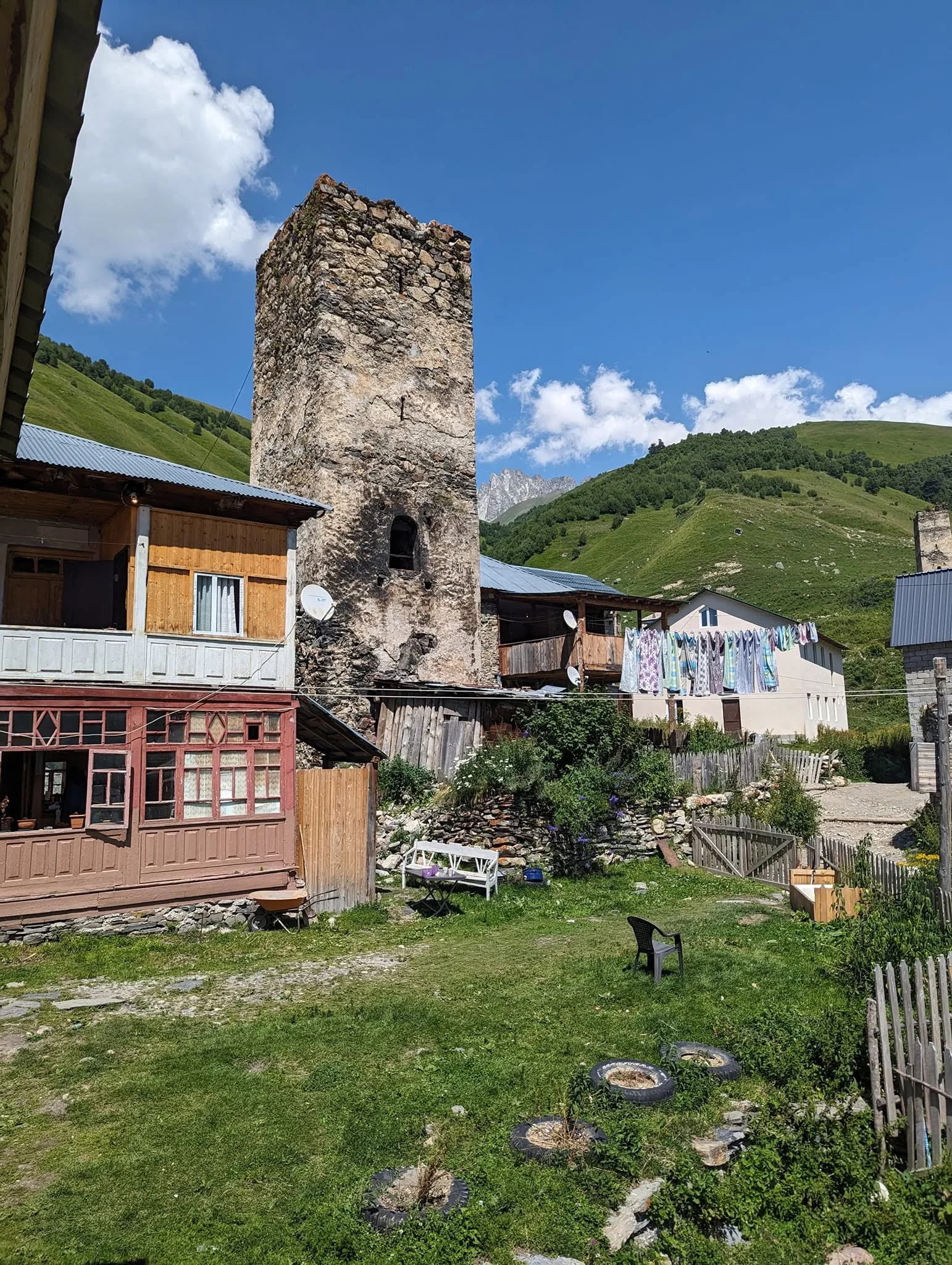
- A night in Ushguli. Not a day trip. Four hamlets at 2,100 m, more than two hundred medieval towers, Shkhara filling the sky behind the Lamaria church — and the evening and the morning when everyone else has gone.
- The Zagaro Pass. Roughly 2,600 m of unsurfaced crossing from Upper Svaneti into Lower, then down through Lentekhi into Racha. A loop instead of a there-and-back, and a road almost no tour uses.
- Chalaadi Glacier on foot. Twelve kilometres up the Mestiachala valley through pine and meadow to a glacier face coming off Ushba that is actively calving — you hear it before you reach it.
- Latali’s frescoes. Matskhvarishi, tenth to eleventh century, painted by Svans working without Byzantine or Persian models. Brighter, differently arranged, and inscribed in both Svan and Georgian.
- Mestia’s towers and museums. Three old quarters, more than a hundred defensive towers, the Margiani tower house, the Khergiani mountaineering museum, and the Svaneti Museum’s medieval gold and manuscripts — much of it hidden in those towers for centuries.
- Racha, which almost nobody reaches. Barakoni church of 1753 above the Rioni, Khvanchkara tasted where the grapes grow, and Nikortsminda — carved in 1010 and still the finest exterior stonework in the country.
- Western Georgia on the way in. Gelati’s mosaics, and your choice of canyon: Martvili by boat, Okatse on the suspended walkway, or Balda on foot.
- Guesthouses, not hotels, for four of six nights — Mestia, Ushguli and Ambrolauri, with dinner at the family table.
Step by step
Tour itinerary
Day 1 — Arrival in Kutaisi, and Gelati
We meet you at Kutaisi airport, which is twenty-five minutes from town, and take you in or if you have landed in Tbilisi, we travel from Tbilisi.. Kutaisi is Georgia’s second city and was the capital of two kingdoms, and it wears that lightly — a compact centre, a market worth an hour, and the Rioni running through the middle of it.
Above the town, Gelati. David the Builder founded it in 1106 with an academy attached that pulled scholars from across the Middle East and Europe, and the mosaics in the main church are the high point of medieval Georgian art. It is a UNESCO site and it is usually quiet in the late afternoon.
Dinner in Kutaisi — Imeretian food is lighter than eastern Georgian, and the local khachapuri is the one the rest of the world copied.
Overnight Kutaisi
Day 2 — A canyon, the Enguri, and up into Svaneti
North first, to one of three canyons depending on the season and what you feel like. Martvili puts you in a boat through a limestone slot where the water runs turquoise and waterfalls come in from both sides. Okatse is a steel walkway bolted to a cliff for seven hundred and eighty metres with the river twenty to thirty metres below — better if you want height, wrong if you do not like it. Balda is undeveloped: a proper walk along the river, rougher path, almost nobody.
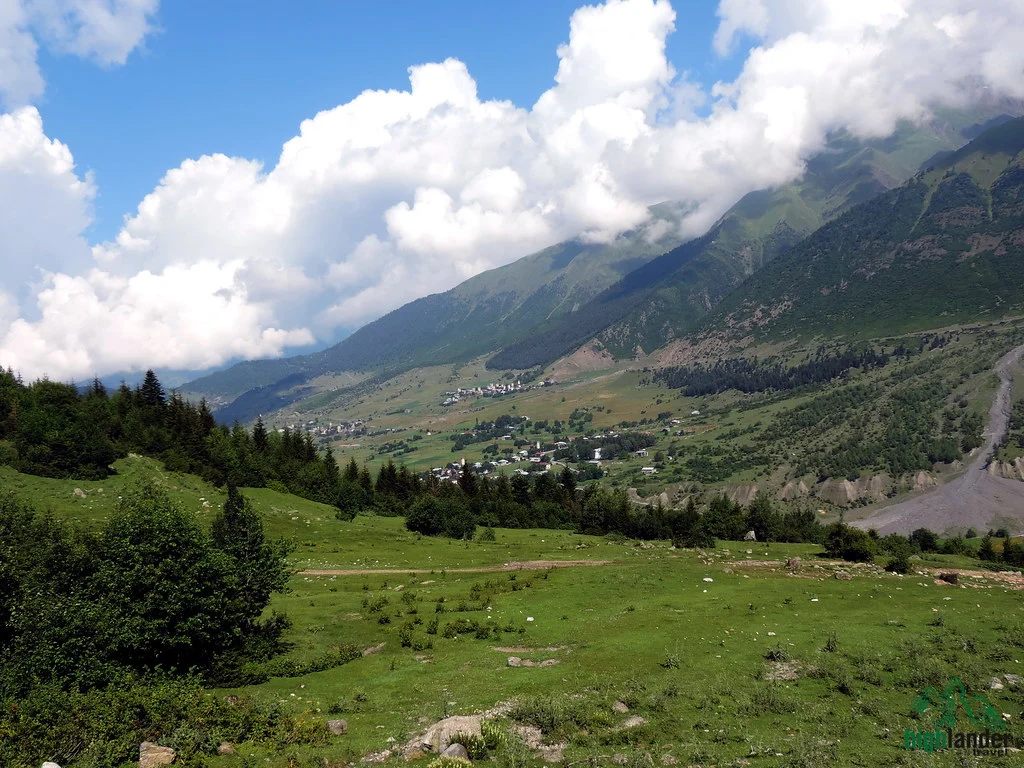
Then the climb. We follow the Enguri up into the High Caucasus, gaining more than twelve hundred metres, with a stop at the Enguri Dam — 271 metres of concrete arch wedged between canyon walls. The gorge narrows and keeps narrowing, and about four hours in the first Svan towers appear above the road. Six hours from Kutaisi, and somewhere in the middle of it you understand why Svaneti stayed separate for so long.
Into Mestia in the late afternoon, at 1,500 m under Ushba. A walk before dinner through Lanchvali, Lekhtagi and Lagami — Mestia’s three old quarters, more than a hundred towers between them, each cluster from a different century.
Driving 6–7 h · walking 2–3 km · overnight Mestia, dinner included
Day 3 — Chalaadi Glacier, and Mestia’s museums
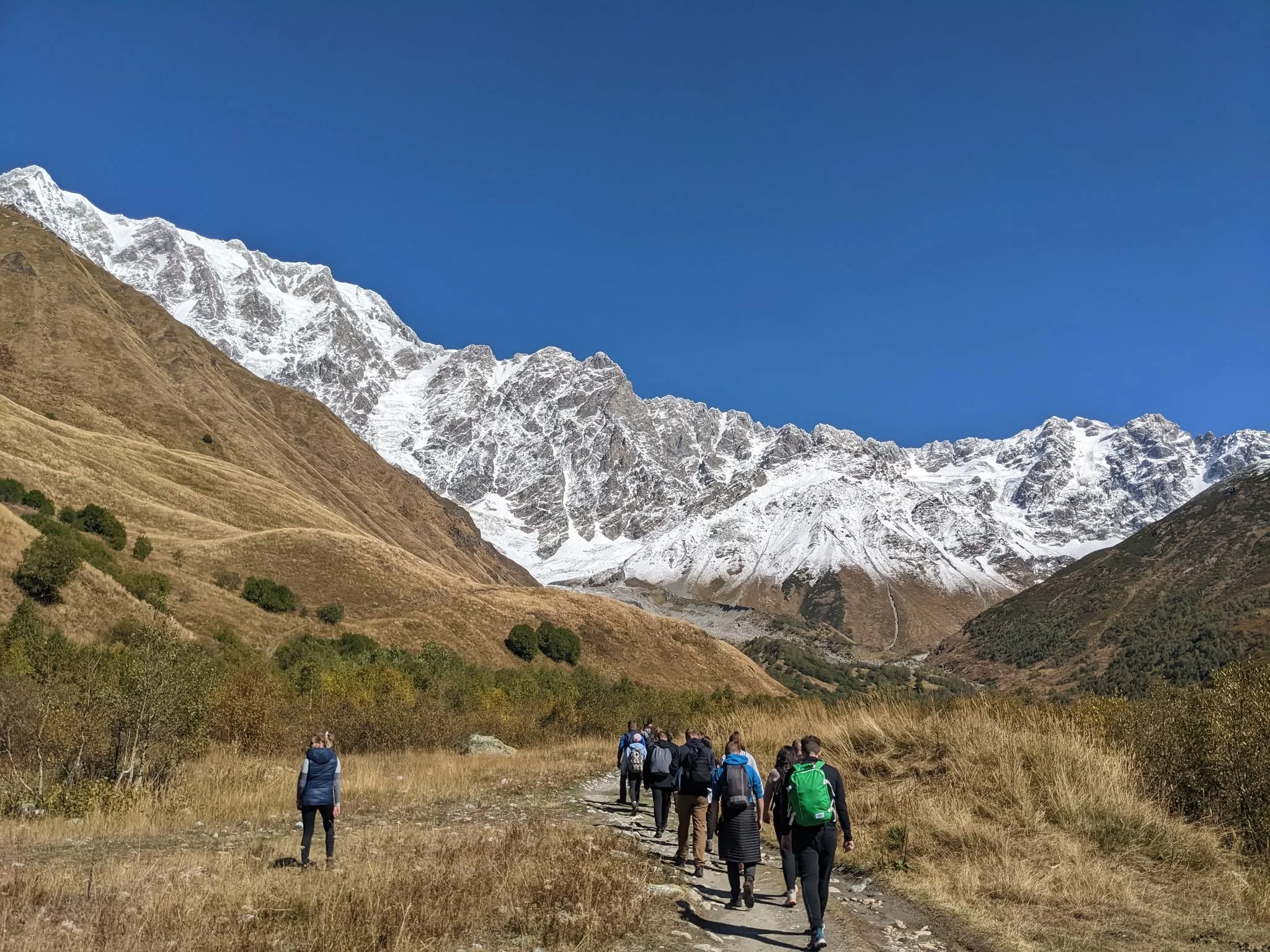
The walk. The trail starts at Lenjeri, ten minutes out of town, and follows the Mestiachala up through pine and fir, over wooden bridges across meltwater, then out into alpine meadow — solid with wildflowers in June and July — before steepening at the end.
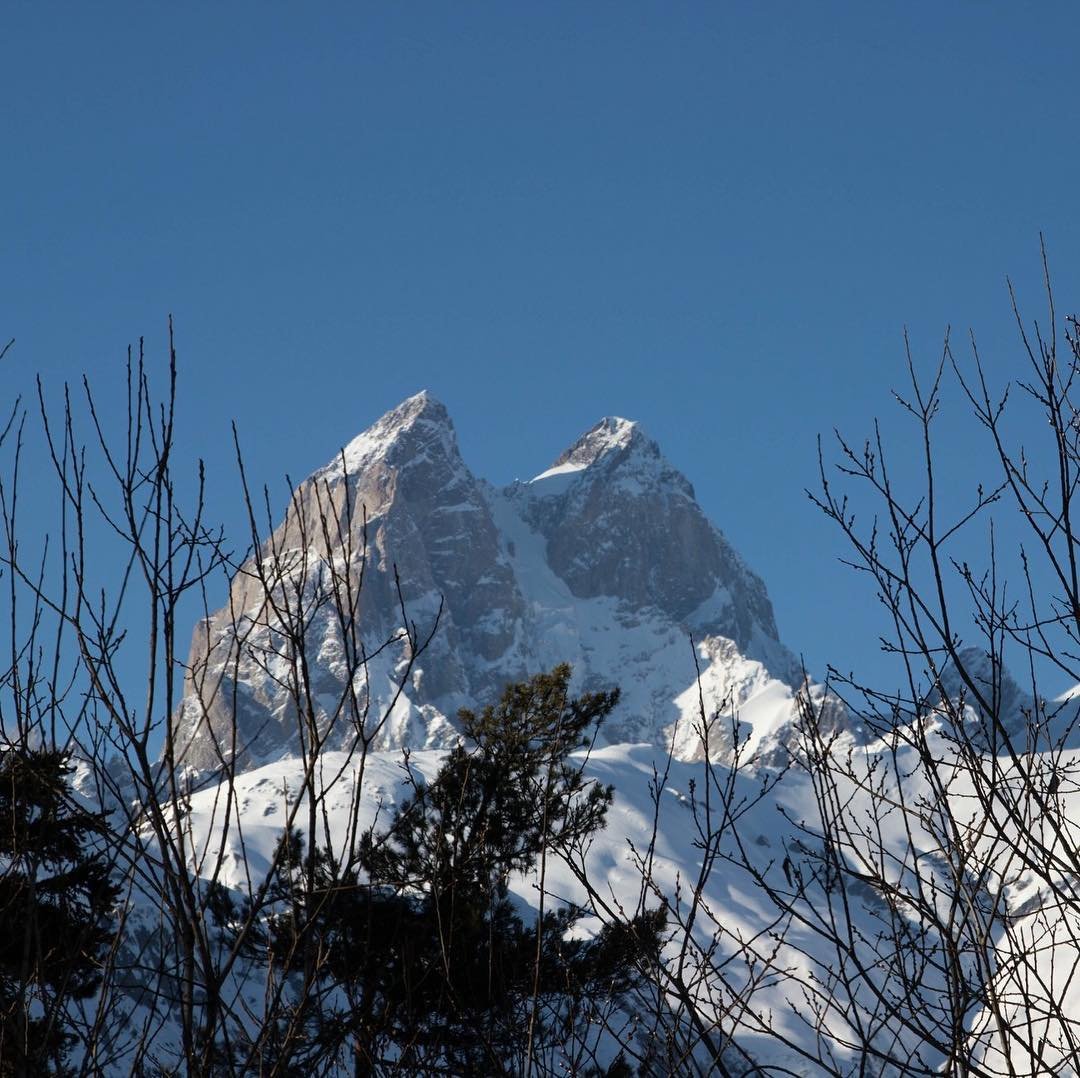
Chalaadi Glacier comes down off Ushba’s flank and the face is actively calving: ice breaks off it while you are standing there and you hear the whole thing cracking and shifting behind the noise of the river. The blue in the ice is compressed snow with the air squeezed out of it. Twelve kilometres there and back, five to six hours, topping out near 2,000 m — and the altitude makes it feel longer than the distance says.
Back in Mestia for the afternoon and the three museums, which are better than they sound. The Svaneti Museum of History and Ethnography holds medieval icons, worked gold and silver, and manuscripts going back to the ninth century, most of it hidden inside the towers for centuries so invaders would not find it. The Margiani tower house is a two-hundred-year-old family home left as it was — animals below, family above, tower attached. And the Khergiani museum is about a climber they called the Tiger of the Rocks, and tells you more about this region’s relationship with its mountains than the icons do.
Hiking 12 km, 5–6 h · overnight Mestia, dinner included
Day 4 — Latali, then the road up to Ushguli
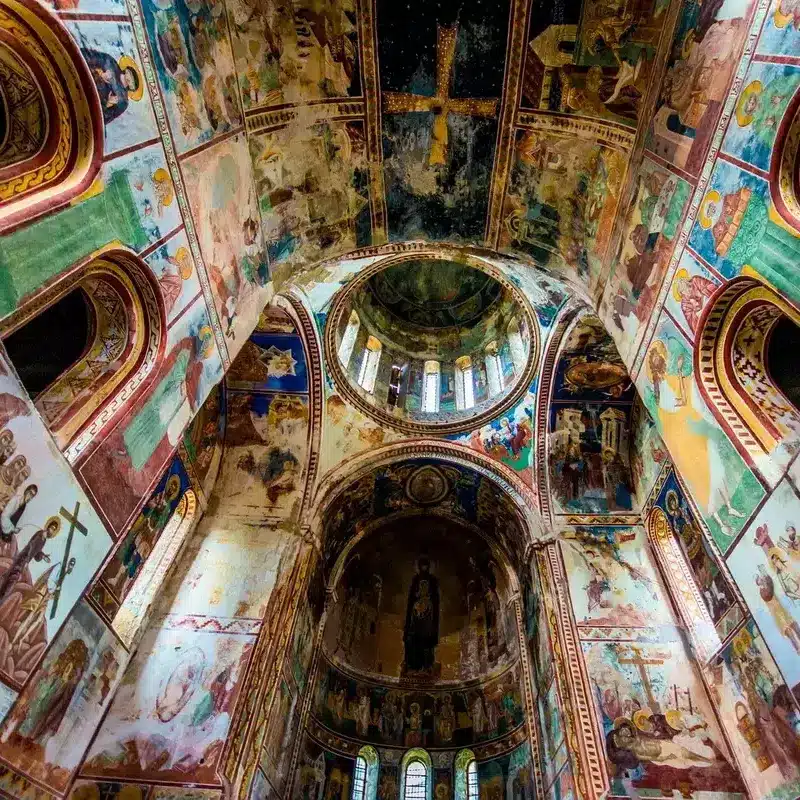
West first, twenty minutes to Latali, for the church at Matskhvarishi. Tenth to eleventh century, and the frescoes are the reason art historians come to Svaneti: painted by Svans with no Byzantine or Persian painter to copy, and it shows — brighter colours than anything in lowland Georgia, compositions arranged differently, saints depicted in ways that exist nowhere else, and inscriptions in both Svan and Georgian.
Back through Mestia, and if the sky is clear the Hatsvali cable car is worth an hour: 2,347 m, with Ushba to the north, Tetnuldi to the north-east and the whole Mestia valley underneath you.
Then east, and this is the road people talk about. Forty-five kilometres to Ushguli and two and a half to three hours to do it, in a 4×4, fording rivers that have no bridges and running along cliff edges. We go up in the afternoon and arrive as the day vehicles are heading down.
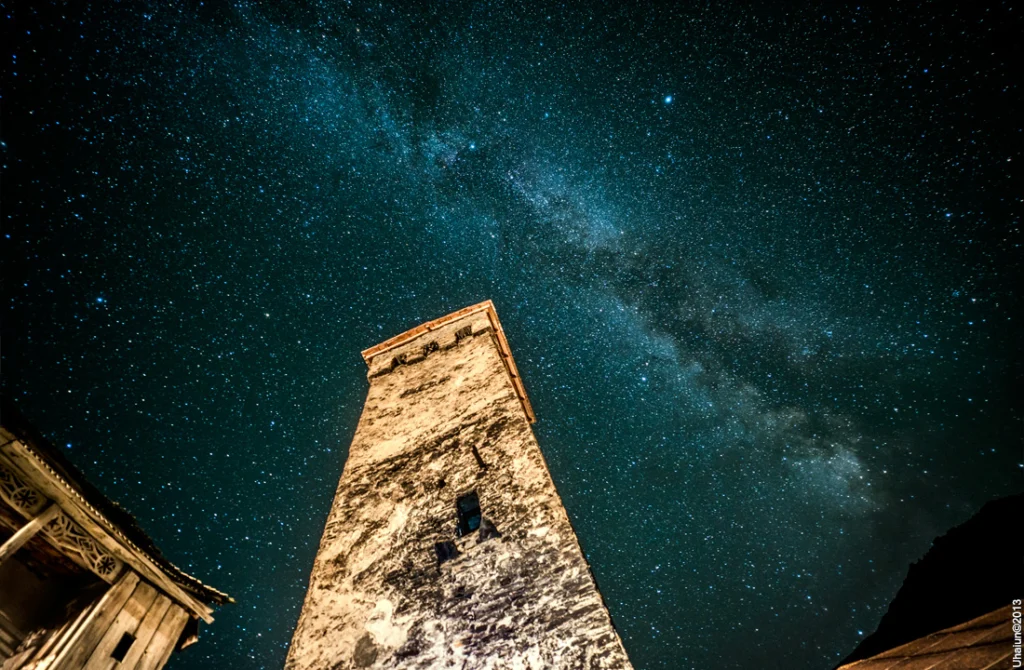
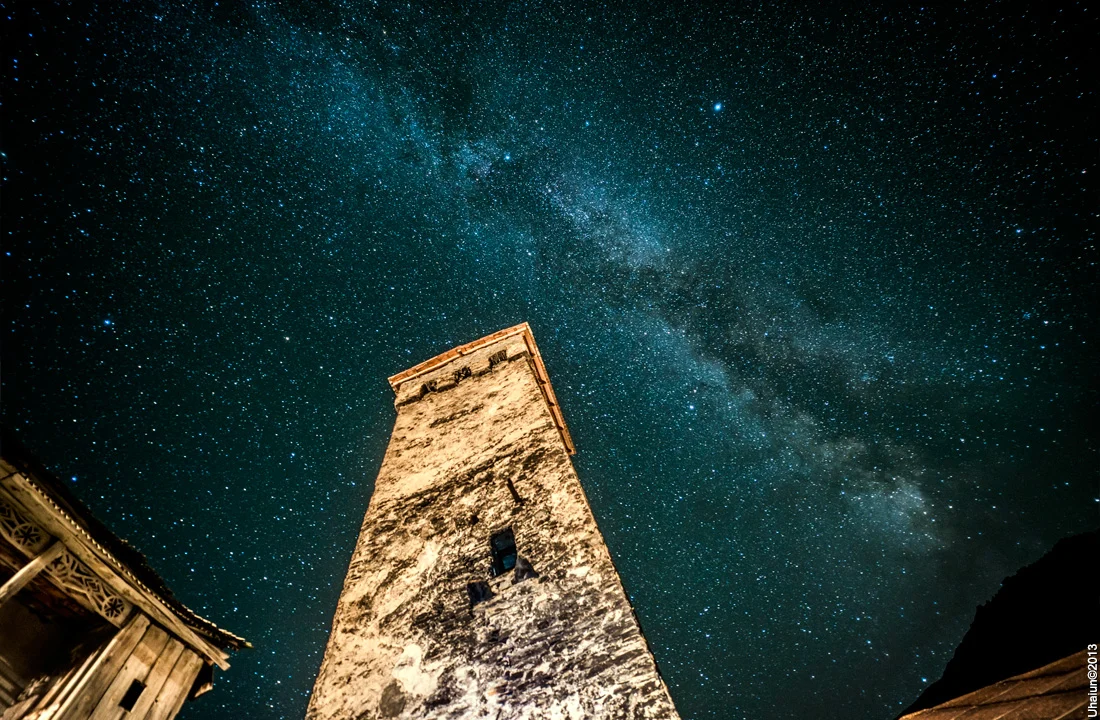
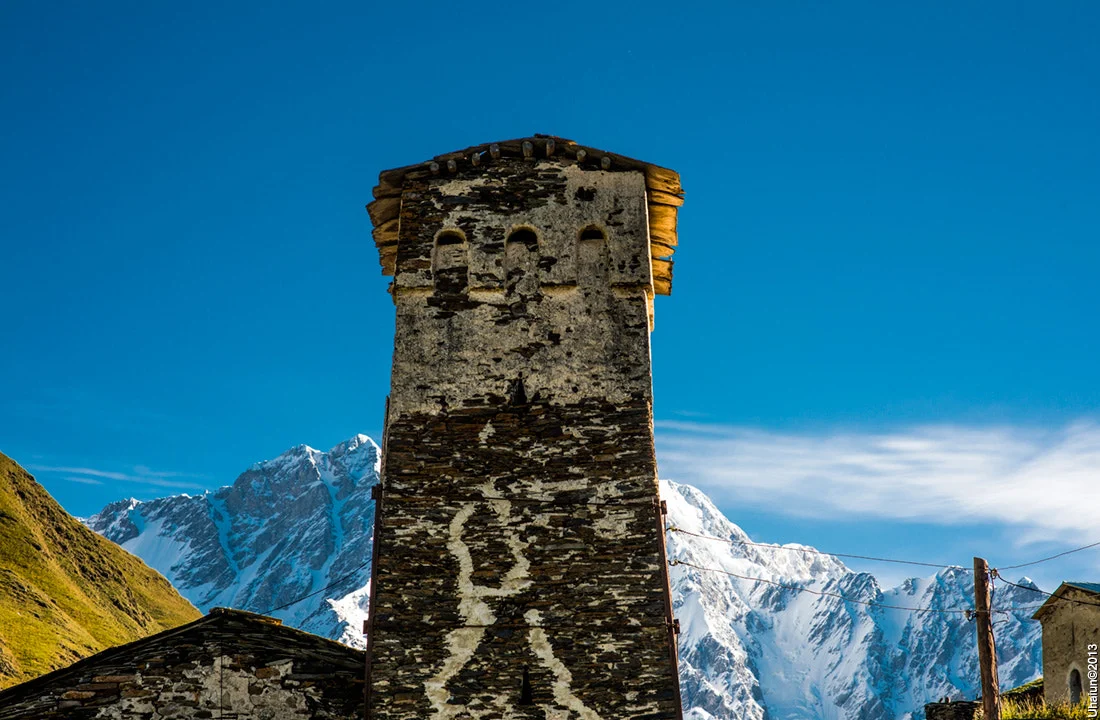
And that is the point of this itinerary. Ushguli is four hamlets holding about seventy families at 2,100 m, with more than two hundred medieval towers between them and Shkhara — glacier-covered, three thousand metres straight up — standing directly above. Everyone else sees it between eleven and three. You get the evening.
Driving 3–4 h, 4×4 · walking 2–3 km · overnight Ushguli, dinner included
Optional extra night — Latali. If you would rather not do Latali and the Ushguli road on the same day, we can split it: a night in a family guesthouse at Latali, a slower morning in the Lower Svaneti villages, and up to Ushguli the following afternoon. That makes it an eight-day tour and it is the gentler version. Tell us when you book.
Day 5 — Ushguli at first light, then over the Zagaro Pass into Racha
Be up early. Lamaria sits above the village — twelfth century, with frescoes that isolation preserved — and the light on Shkhara behind it in the first hour is the reason to have slept here. Then Chazhashi, the best-preserved of the four hamlets, and its towers: ground floor for animals, middle floors for the family, top floors for defence, and some households will let you climb one. The icon museum holds what the village churches have kept.
Then the crossing, and it is a long day. The Zagaro Pass road climbs out of Ushguli to roughly 2,600 m and drops into Lower Svaneti — four to five hours over sixty-odd kilometres, unsurfaced the whole way, with almost nothing on it but high pasture and the occasional shepherd. From Lentekhi the road improves and turns east, following the Tskhenistsqali down and over into Racha.
Into Ambrolauri in the evening. It is a small town at the centre of a wine region, and after four days of mountains the change of scale is abrupt and welcome.
Driving 7–8 h, 4×4 required for the pass · overnight Ambrolauri
If the pass is closed. It happens — snow early or late in the season, or heavy rain at any point. Your guide checks conditions the evening before and again in the morning. If Zagaro is not passable we go back down to Mestia and out via the Enguri to Kutaisi, which means losing Racha and Day 6 as written. We will tell you the moment we know, and we would rather do that than take a group onto a road that is not safe.
Day 6 — Racha, and back to Kutaisi
A gentle day after yesterday. Barakoni stands above the Rioni at Tsesi, built in 1753 and one of the last great domed churches raised in Georgia before the tradition stopped — tall, elegant, and almost never busy.
Then the wine. Khvanchkara is Georgia’s famous naturally semi-sweet red, made from Alexandrouli and Mujuretuli grapes, and it is made here — these slopes, this valley, and nowhere else in the world. A tasting at a family cellar, which is a different thing from the bottle you have met abroad.
On the road out, Nikortsminda. Consecrated in 1014, and the exterior carving on it is the best in Georgia — the whole building is worked, doorframes, drum, window surrounds, in a way nothing else quite matches. Inside, sixteenth- and seventeenth-century frescoes on every surface. If you see one thing in Racha, see this.
Down to Kutaisi through the Rioni gorge, arriving in the evening.
Driving 3–4 h · walking 2–3 km · wine tasting included · overnight Kutaisi
Day 7 — Departure from Kutaisi
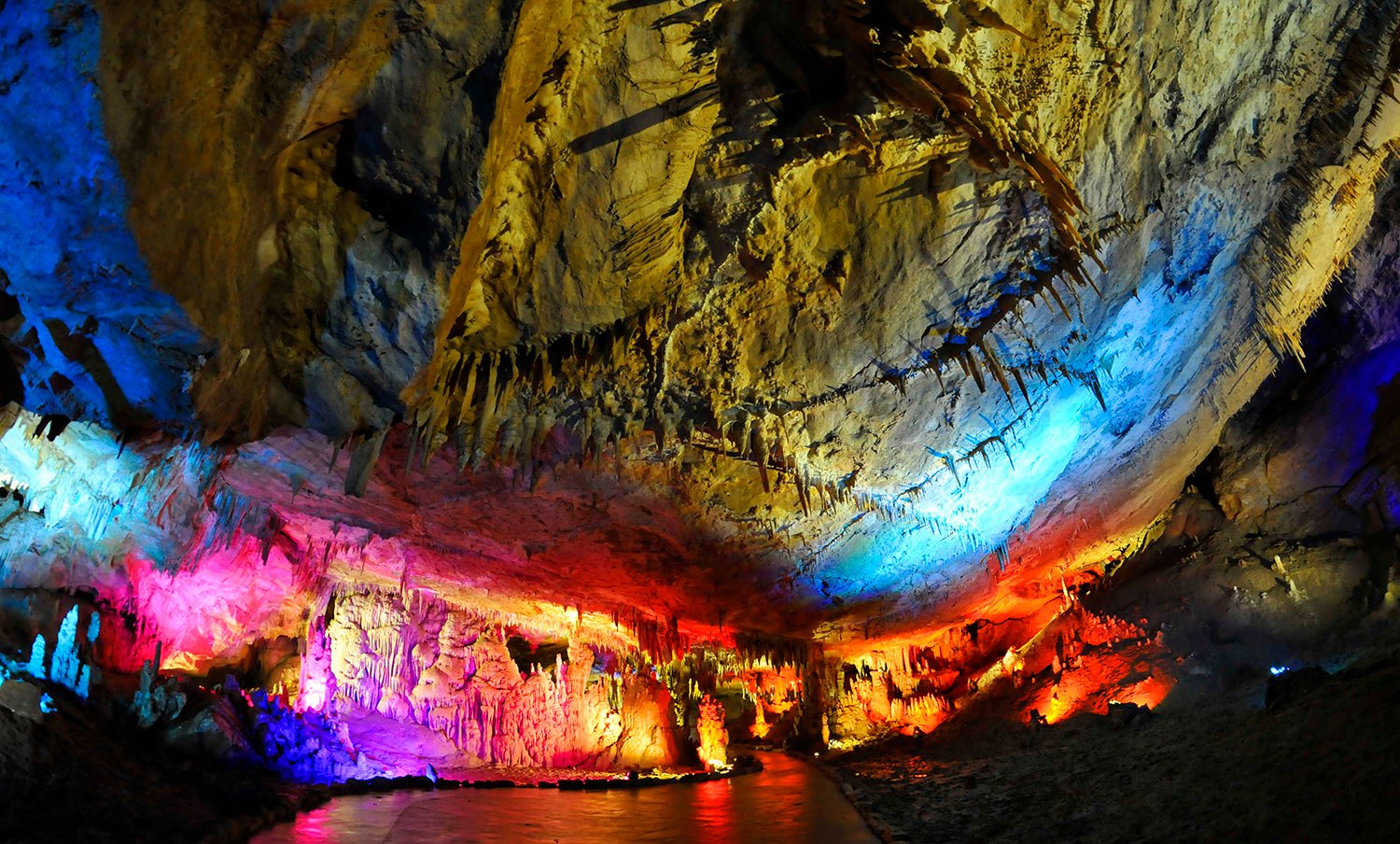
Breakfast, then the airport when your flight needs you. If you have a late departure there is time for Sataplia twenty minutes out of town — a three-hundred-metre cave walk, dinosaur footprints in fossilised mud, and a glass platform over the forest looking west toward the sea.
Transfer to Kutaisi International Airport
Starting from
€1,680
per person
Locally operated since 2011
We reply within 24 hours
What your price covers
What’s included
Included
- Airport transfers at Kutaisi on arrival and departure
- All transport in a private vehicle for seven days
- 4×4 with a local driver for the Ushguli road and the Zagaro Pass crossing
- English-speaking driver-guide throughout
- Six nights: hotels in Kutaisi, family guesthouses in Mestia, Ushguli and Ambrolauri — private room and bathroom in all of them
- Breakfast every day
- Dinner every night in Svaneti — Mestia twice and Ushguli, at the family table
- Khvanchkara tasting at a family cellar in Racha
- All entrance fees: Gelati, your canyon, the three Mestia museums, the Hatsvali cable car, Ushguli’s icon museum, Nikortsminda
- All parking, road tolls and local taxes
Not included
- Flights to and from Kutaisi
- Travel and medical insurance — required, and it must cover hiking to 2,500 m and evacuation from a remote mountain region
- Lunches throughout
- Dinners outside Svaneti — Days 1, 5 and 6. Budget $16–27 a head
- Alcohol beyond the included tasting
- Extra night in Latali if you take the eight-day option
- Sataplia on the last morning, if your flight allows it
- Single room supplement — see the price table
- Personal spending and tips
Photographs
Gallery
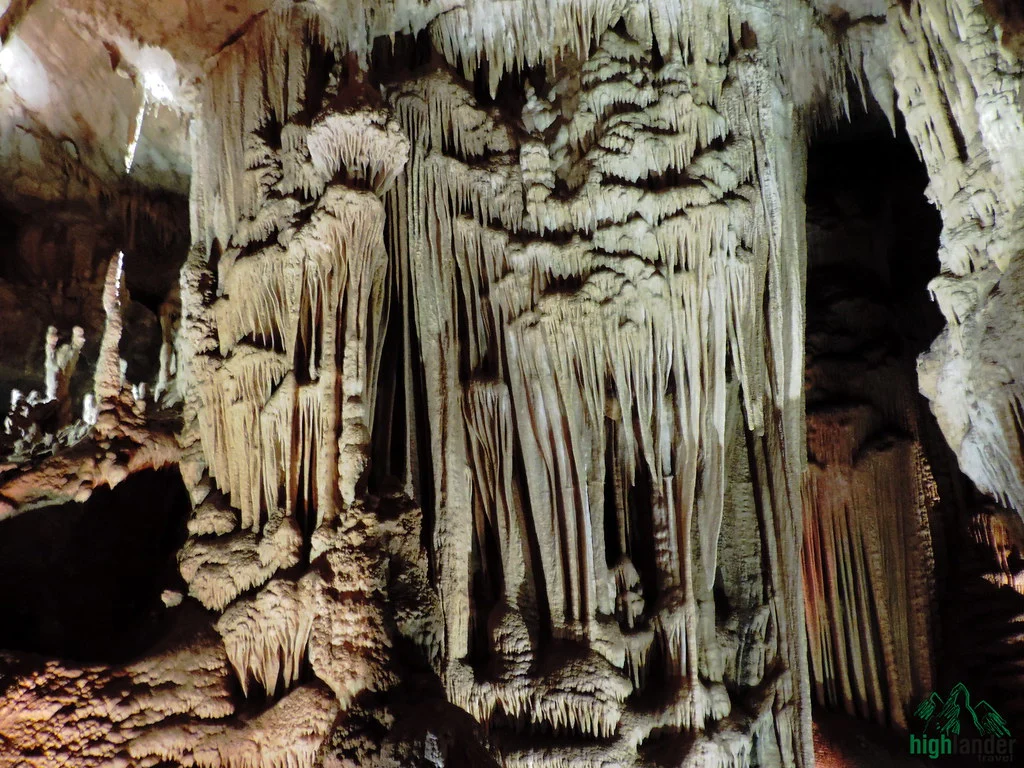
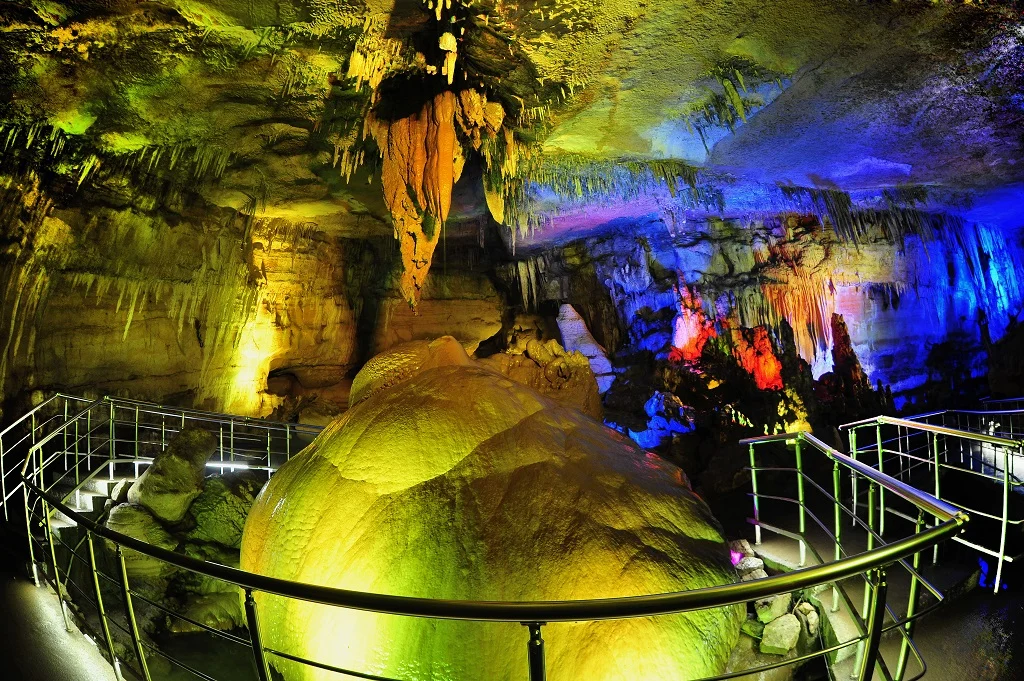
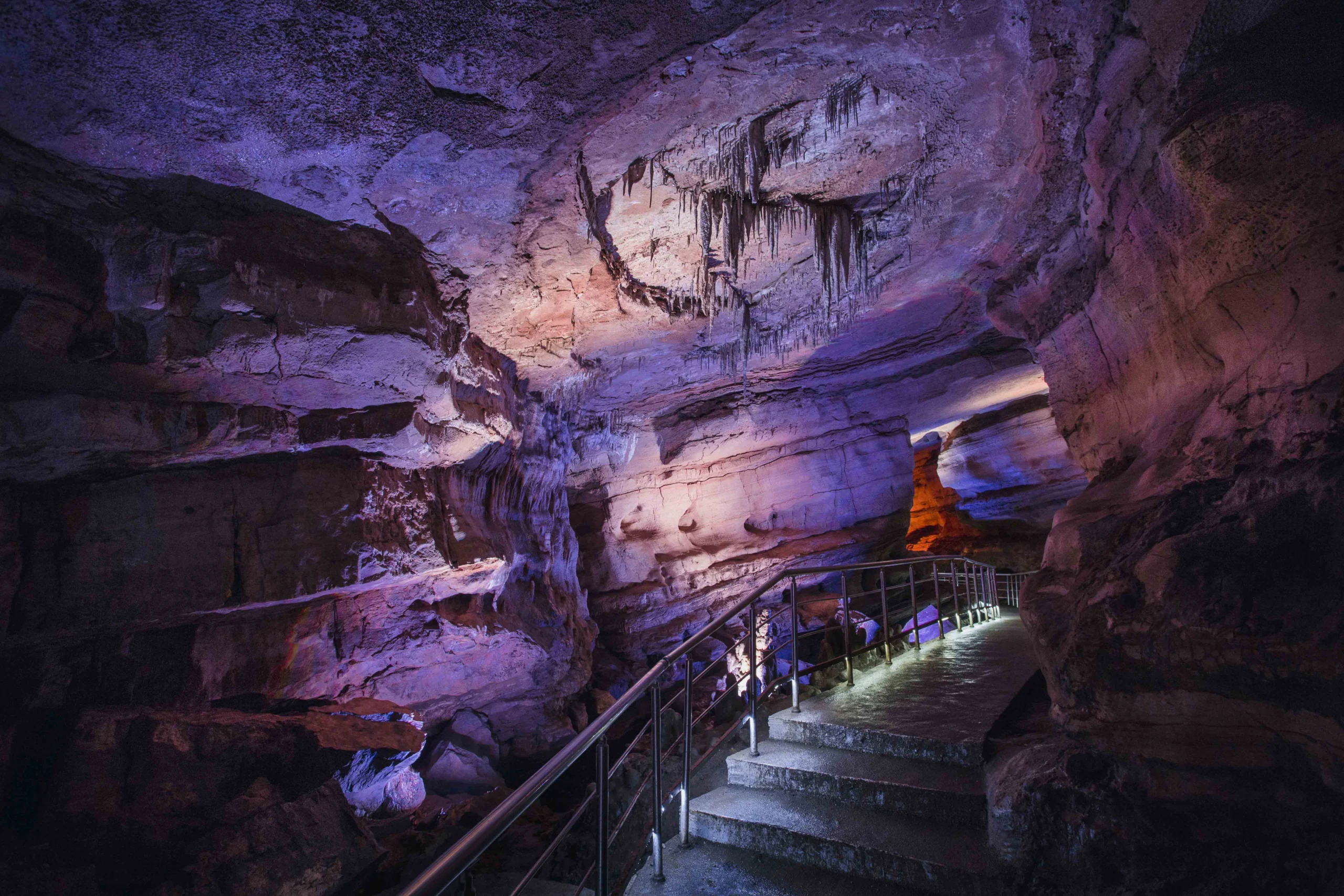
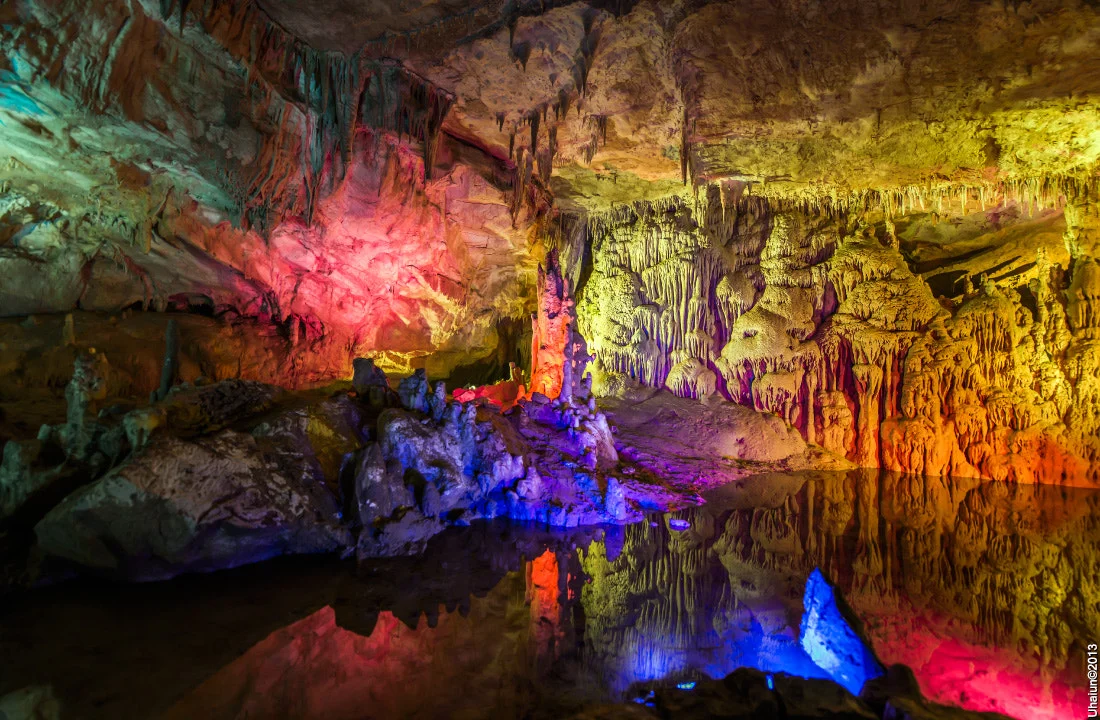
Where you’ll go
Map & route
Kutaisi — city centre
Gelati Monastery
Martvili Canyon
Enguri Dam
Mestia
Chalaadi Glacier
Mestia
Matskhvarishi Church, Latali
Ushguli
Zagaro Pass
Lentekhi
Ambrolauri
Barakoni Church
Nikortsminda Cathedral
Kutaisi — city centre
Practical details
Good to know before you go
Starting from Kutaisi — the standard version
Seven days, six nights, beginning and ending at Kutaisi International Airport. Kutaisi is the natural base for this loop: the airport is twenty-five minutes from town, the first canyon is two hours north, and the route closes on itself so nothing is driven twice. Wizz Air and a handful of other carriers fly into Kutaisi directly from across Europe, often more cheaply than into Tbilisi.
Starting from Tbilisi — nine days
If you are flying into Tbilisi, or you want to combine this with time in the capital, the tour becomes nine days. One extra day at each end:
- An added first day — Tbilisi to Kutaisi, going west through Mtskheta for Jvari Monastery and Svetitskhoveli Cathedral, both UNESCO, and Uplistsikhe, the town cut into volcanic rock and lived in from about 1000 BC. Overnight Kutaisi, and the tour above starts the next morning.
- An added last day — Kutaisi back to Tbilisi over the Rikoti Pass, about four hours, with the option of stopping in Shida Kartli on the way.
So the from-Tbilisi version is not just two days of driving: it puts two UNESCO sites back into the itinerary that the Kutaisi loop does not reach. Ask us for the nine-day price.
Season — and please read this one
July to mid-September. Shorter than most of our tours, and the reason is the Zagaro Pass: it holds snow later than anything else on the route and can close after heavy rain even in high summer. June may look possible and usually is not. If you want Svaneti outside these months we run the there-and-back version via the Enguri, without Racha — ask and we will quote it.
Fitness
Moderate. One twelve-kilometre hike with about four hundred metres of climb, reaching 2,000 m, taking five to six hours. Everything else is walking on uneven ground at village sites. You should be comfortable on your feet for five hours with breaks. The hike can be skipped entirely; the rest of the tour cannot be made much easier than it is.
The roads, honestly
Two long driving days. Day 2 into Svaneti is six to seven hours on a winding gorge road with unpaved sections. Day 5 over Zagaro is seven to eight, most of it unsurfaced, in a 4×4, and you will be shaken about. If you are prone to motion sickness bring what works for you and sit in the front. The Ushguli road on Day 4 fords rivers with no bridges.
Group size
One to eight people, your group only. The guesthouses in Ushguli and Ambrolauri, and the vehicles over Zagaro, set that ceiling — above eight we need two 4×4s and two guides, which changes the price rather than reducing it.
Accommodation
Two nights in a Kutaisi hotel. Four in family guesthouses: two in Mestia, one in Ushguli, one in Ambrolauri. Private rooms with private bathrooms throughout, hot water, mountain views, and dinner cooked by the family. They are not hotels — no air conditioning, no room service, and the Ushguli night is the most basic of the six and the one people remember.
Money and signal
Mestia has cash machines and they run dry. Ushguli and the Zagaro road have neither cash machines nor cards. Bring 200–300 GEL per person from Kutaisi. Guesthouse wifi is slow where it exists; there is no signal at all over the pass.
What to bring
Walking boots with ankle support, broken in. A waterproof jacket and overtrousers. A fleece or light down layer — Ushguli at 2,100 m is cold at night in any month. A 20–25 litre daypack, one to two litres of water capacity, sun hat, sunglasses, high-factor sun cream. A headlamp, because the power goes off. Blister plasters and your own medication. Something modest for church visits, and cash in lari.
From our travellers
Reviews
Before you book
Frequently asked questions
How much does the tour cost?
Per person, depending on group size: $2,865 for a solo traveller, $1,660 each for two, $1,260 each for three or four, $940 each for five or six, and $800 each for seven or eight. That covers six nights, all transport including the 4×4 for Ushguli and the Zagaro Pass, your driver-guide, breakfast daily, every dinner in Svaneti, the Khvanchkara tasting and all entrance fees. The nine-day version from Tbilisi is priced separately — ask us.
What is the Zagaro Pass, and what happens if it is closed?
It is an unsurfaced crossing at roughly 2,600 metres from Upper Svaneti into Lower, and it is what turns this tour into a loop instead of a there-and-back. It needs a 4×4 and it can close — snow at the edges of the season, heavy rain at any point. Your guide checks the evening before and again in the morning. If it is not passable we return via the Enguri to Kutaisi, which means losing the Racha day. We will tell you as soon as we know rather than set off and hope.
Why does the tour only run July to mid-September?
The pass. Everything else on this itinerary works from June to October, but Zagaro holds snow later and turns to mud faster than the rest of the route, and there is no version of this loop without it. If you want Svaneti in June or late September we run the there-and-back via the Enguri, without Racha.
Do we really sleep in Ushguli?
Yes, and it is the best decision on the itinerary. Almost every operator does Ushguli as a day trip and is gone by four. We arrive in the late afternoon and leave after breakfast, so you get the evening light on Shkhara, the village once the vehicles have gone, and first light on the Lamaria church. The guesthouse is basic and the food is good.
How hard is the Chalaadi Glacier hike?
Moderate. Twelve kilometres round trip with about four hundred metres of climb, five to six hours, reaching around 2,000 metres. The trail is well marked and heavily used — the challenge is the length and the altitude, not the terrain. If you walk or hike regularly you will be fine, and it can be shortened.
What if I do not want to do the hike?
Stay in Mestia. There are three museums, the Hatsvali cable car, the tower quarters and decent coffee, and your guide will meet you back in town in the afternoon. Nothing else on the tour depends on having done it.
How rough is the road to Ushguli?
Rough. Forty-five kilometres in two and a half to three hours, fording rivers that have no bridges, over rocks, along cliff edges. The 4×4 handles it and our drivers do it all season, but expect to be shaken about. If you get carsick, take something beforehand — and note that Day 5 over Zagaro is longer and rougher again.
What are the guesthouses like?
Clean, warm, private rooms with private bathrooms, and dinner at the family table. What they are not is hotels — no air conditioning, no room service, and hot water that occasionally has opinions. Ushguli is the most basic of the four and the one people talk about afterwards.
Is there wifi and mobile signal?
Most guesthouses have wifi and most of it is slow — messaging and email usually work, video calls do not. Ushguli has very little of anything and there is no signal at all over the Zagaro Pass. Tell people at home you will be off the map for a day.
Can you cater for vegetarians or vegans?
Vegetarian, easily — Georgian cooking has good vegetarian dishes at every meal and the guesthouses handle it without fuss. Vegan takes arranging, particularly in Ushguli where there is no shop, and is entirely doable if you tell us when you book so we can brief the households in advance.
Can we start from Tbilisi instead, or extend the tour?
Yes to both. From Tbilisi it becomes nine days — one driving day at each end, and the outbound one adds Mtskheta and Uplistsikhe, two UNESCO sites the Kutaisi loop does not reach. For an eighth day in the mountains, we can add a night in a Latali guesthouse before going up to Ushguli, which makes Day 4 much gentler. Ask us for either price when you book.
Ready when you are
Tell us your dates and how many of you are travelling. We’ll come back within 24 hours with availability, a confirmed price, and your guide’s name.