Twelve days through seven regions—from Svaneti’s medieval tower villages at 2,100 meters to cliff monasteries housing 2,000 monks, glacier hikes to underground wine cellars, this is Georgia beyond the tourist brochures
See the real Georgia in twelve days. Not just Tbilisi and the tourist highlights, but Svaneti’s remote mountain villages at 2,100 meters elevation, monasteries carved into cliffs, wine cellars using 8,000-year-old techniques, and canyons where you walk suspended bridges over rushing water.
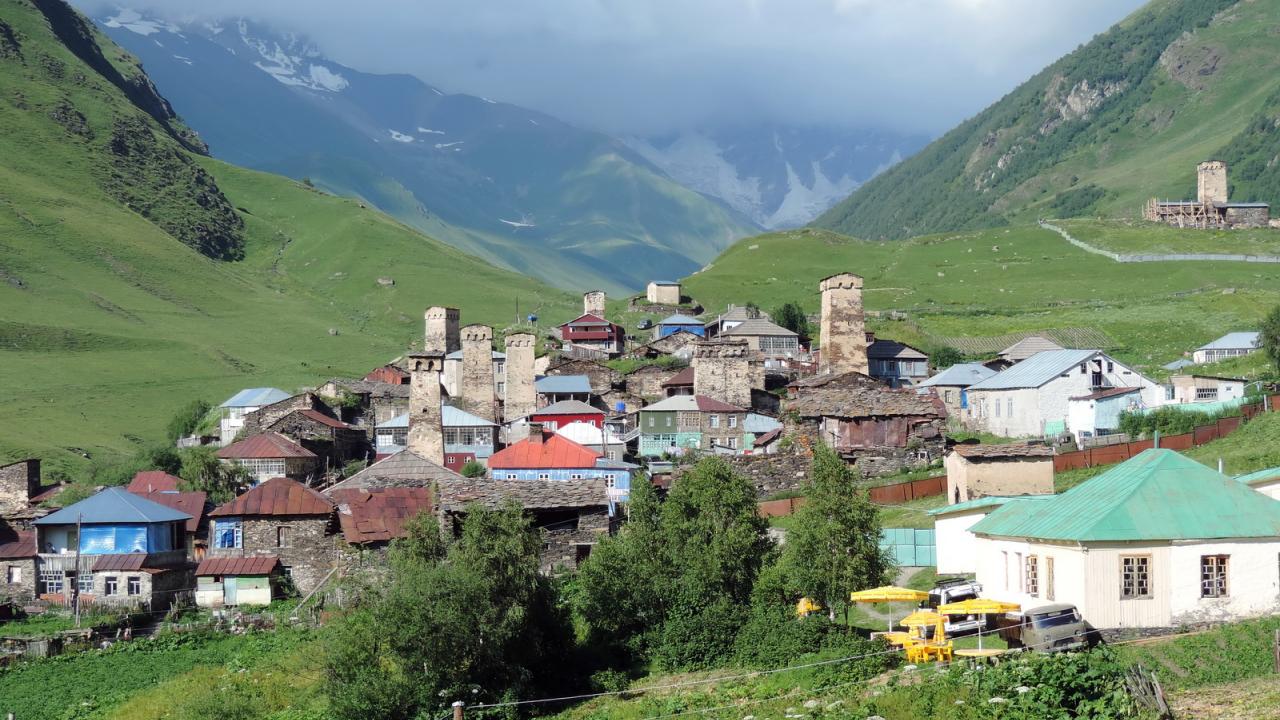
This tour covers seven regions across Georgia from east to west and back through the south. You’ll spend three nights in Svaneti, Georgia’s mountain heartland, where medieval stone towers still stand and glaciers carve through valleys. You’ll hike to waterfalls, taste wine in clay vessels buried underground, and visit villages that have been inhabited continuously for 3,000 years.
This isn’t a relaxing vacation. It’s twelve days of mountain roads, guesthouse accommodations in remote villages, and hiking that requires reasonable fitness. If you want to understand Georgia beyond the capital city brochures, this tour shows you the country that most visitors never see.
This tour suits: Physically active travelers who can hike 4-6 hours on mountain trails, adventurers comfortable with rough roads and basic guesthouse accommodations, photographers seeking dramatic mountain landscapes and medieval architecture, cultural explorers wanting authentic village experiences, and anyone with twelve days to see Georgia properly rather than superficially.
This tour doesn’t suit: Travelers expecting luxury hotels throughout, anyone with mobility limitations or knee/back problems, people uncomfortable with long mountain driving days (up to 7 hours), visitors wanting a relaxed beach-style vacation, or those who can’t walk more than 2-3 hours at a time.
Tour highlights
12 days • 11 nights • 7 regions • 3 nights Svaneti • Glacier hiking • UNESCO sites • Max 8 people
Why This Tour Covers More Than Standard Georgia Packages
Most Georgia tours stick to the easy circuit: Tbilisi, Kazbegi, Kakheti, maybe Mtskheta. Those tours skip the entire western half of the country and never reach Svaneti, where Georgia’s most dramatic landscapes and unique culture exist.
Svaneti Changes the Trip
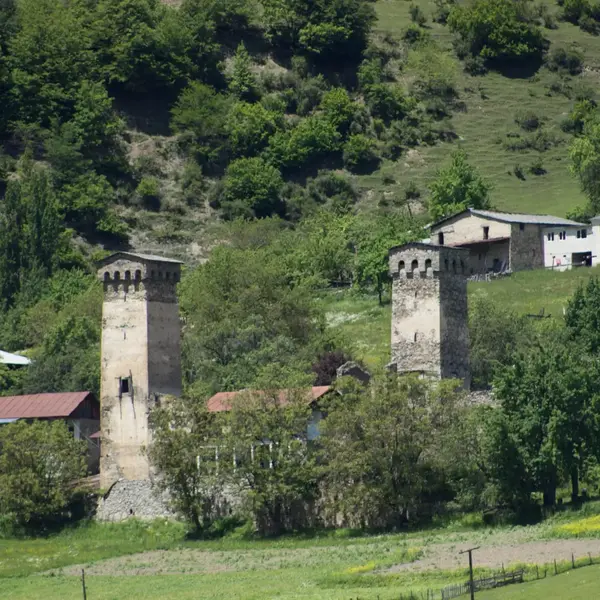
Getting there requires six hours of mountain driving from Kutaisi. The region sits isolated by the Caucasus peaks, which preserved medieval culture that disappeared elsewhere. Stone defensive towers from the 9th to 13th centuries still stand in every village. Families have lived in the same houses for 40 generations.
Three nights in Svaneti lets you actually experience the region instead of just driving through. You’ll hike to Chalaadi Glacier, take jeeps to Ushguli (Europe’s highest continuously inhabited village at 2,100 meters), and walk the Shdugra waterfall trail through alpine meadows.
Southern Georgia Gets Missed Entirely
Most itineraries skip southern Georgia completely. The Vardzia cave monastery complex housed 2,000 monks in the 12th century, carved 13 stories deep into a cliff face. Rabati Fortress in Akhaltsikhe shows 700 years of architectural layers from Georgian, Ottoman, and Russian periods. The Javakheti Plateau’s volcanic lakes sit at 2,000 meters with views across to Armenia and Turkey.
Geographic and Cultural Diversity
This route covers the diversity that makes Georgia interesting: wine-growing valleys in Kakheti, Soviet-era cities in western Georgia, Alpine villages in Svaneti, and semi-arid southern plateaus near the Turkish border. You’ll experience subtropical lowlands, high mountain passes, volcanic highlands, and everything between.
What to Expect: This Is an Adventure Tour
Physical requirements matter. Day 6 includes a 5-6 hour hike to Chalaadi Glacier over uneven terrain. Day 8 covers 12 kilometers round-trip to Shdugra waterfalls with 400 meters elevation gain. If you can’t walk 4-5 hours with breaks, this tour will be difficult.
Accommodations shift with regions. Tbilisi and Kutaisi have standard hotels. Svaneti, Becho village, and Borjomi area use family-run guesthouses. Rooms are clean with private bathrooms, but don’t expect hotel amenities. Guesthouses serve traditional meals family-style. This is part of experiencing how Georgians actually live outside cities.
Roads in mountain regions are rough. The drive to Mestia takes 6 hours from Kutaisi on winding mountain roads. Some sections are unpaved. If you get carsick easily, bring medication. The scenery justifies the drive, but the journey is real.
Weather affects Svaneti significantly. Rain can close roads or make hiking trails muddy and slippery. Snow is possible in Ushguli even in summer (the village sits at 2,100 meters). We carry backup plans, but mountain weather sometimes forces itinerary changes.
Tour Itinerary
Arrival: Tbilisi International Airport | Duration: Arrival day (flexible)
We meet you at Tbilisi International Airport regardless of arrival time. Most international flights land in the morning or late evening.
Transfer to your hotel in Tbilisi’s city center. If you arrive in the morning, you have the afternoon free to walk around the neighborhood, find restaurants, and adjust to the time zone. If you arrive late, check in and rest for tomorrow’s city tour.
Overnight: Hotel in Tbilisi (central location)
Focus: Capital city walking tour | Duration: Full day
Morning: Old Town and Narikala
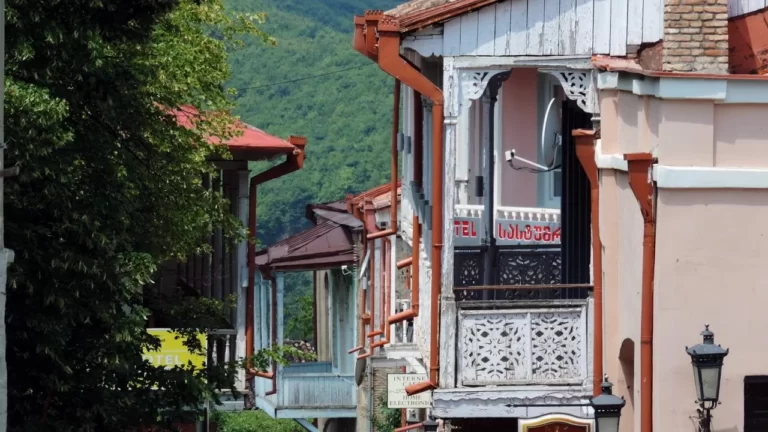
Tbilisi’s history shows in layers. The Old Town’s narrow streets and wooden balconies date from the 18th and 19th centuries, built after Persian invasions destroyed earlier structures. The sulfur bath district (Abanotubani) is where Tbilisi began in the 5th century around natural hot springs.
Narikala Fortress sits on the ridge above Old Town. Originally built in the 4th century, the fortress was expanded by every power that conquered Tbilisi over 1,500 years. We take the cable car up for city views showing how Tbilisi spreads through the valley between two mountain ranges.
Midday: Churches and Modern Architecture
Metekhi Church (13th century) stands on a cliff above the Mtkvari River. This area was the royal quarter during Georgia’s medieval kingdom. The church survived because it was converted to a theater during Soviet times.
Rustaveli Avenue represents modern Georgia. The Opera House, Parliament, and National Museum line the main boulevard. The architecture mixes 19th-century Russian Imperial buildings with Soviet structures and new glass construction.
Evening: Welcome Dinner
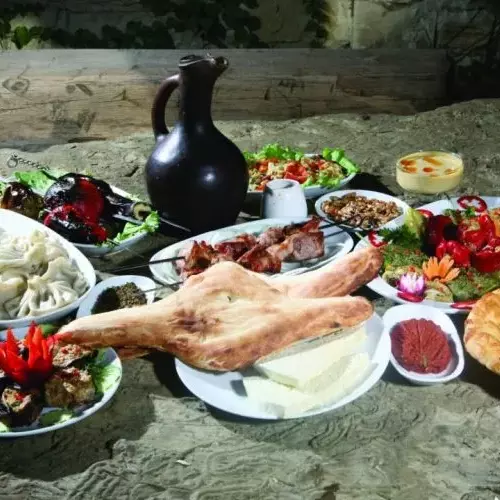
Shardeni Street and Meidan (Old Town squares) host cafes, wine bars, and restaurants. Welcome dinner in a traditional Georgian restaurant introduces you to the cuisine and the Georgian feast tradition called “supra” where toasts and conversation are as important as food.
Overnight: Hotel in Tbilisi (welcome dinner included)
Route: Tbilisi → Telavi → Ikalto → Gremi → Winery → Sighnaghi → Tbilisi | Duration: Full day
Morning: Kakheti’s Historic Sites
Kakheti produces 70% of Georgia’s wine. The Alazani Valley between the Greater and Lesser Caucasus creates perfect grape-growing conditions. Over 500 grape varieties grow in Georgia, most found nowhere else. Archaeological evidence dates Georgian winemaking back 8,000 years.
Telavi is Kakheti’s regional capital. Markets sell fresh produce, spices, churchkhela, and locally made cheeses.
Ikalto Monastery (8th century) housed one of Georgia’s first academies where medieval scholars studied philosophy, rhetoric, and astronomy. The monastery includes a wine cellar where monks made wine using traditional qvevri clay vessels.
Gremi Fortress (16th century) was once a thriving Silk Road trading city before Persian Shah Abbas destroyed it in 1615. Views from the tower show the Alazani Valley stretching toward the Caucasus.
Afternoon: Wine Tasting and Sighnaghi
Lunch at a traditional winery includes wine tasting with Georgian appetizers. The qvevri method ferments wine in large clay vessels buried neck-deep in the ground. You’ll try 4-5 wines alongside Georgian dishes designed to pair with wine.
Sighnaghi sits on a hilltop overlooking the Alazani Valley. The town’s Italian-looking architecture came from 18th-century reconstruction when Georgian King Erekle II fortified the town. Four kilometers of defensive walls with 28 towers still surround Sighnaghi. On clear days, you can see mountains in both Georgia and Azerbaijan.
Return to Tbilisi in the evening.
Overnight: Hotel in Tbilisi (wine tasting lunch included)
Route: Tbilisi → Jvari → Svetitskhoveli → Uplistsikhe → Gelati → Kutaisi | Duration: Full day with ~3hr drive
Morning: Georgia’s Ancient Capital
Jvari Monastery (6th century) sits on a mountain overlooking where the Aragvi and Mtkvari rivers meet. UNESCO designated this a World Heritage Site in 1994. The cross that gives it its name was erected in the 4th century when Georgia converted to Christianity.
Mtskheta served as Georgia’s capital for 1,000 years until the 6th century. Religious Georgians consider this the holiest city in the country.
Svetitskhoveli Cathedral (11th century) is where Georgian kings were crowned and buried for centuries. The cathedral supposedly houses the robe of Christ, brought to Georgia in the 1st century.
Midday: 3,000-Year-Old Cave City
Uplistsikhe is Georgia’s most impressive archaeological site. Starting around 1000 BC, people carved an entire city into soft volcanic rock. At its peak, 20,000 people lived in these caves with houses, streets, a theater, temples, and even a complex water system. You’ll walk through rock-cut streets and chambers, seeing how pagan temples were later converted to Christian churches.
Afternoon: Drive West to Kutaisi
Continue driving west to Kutaisi, Georgia’s second-largest city. The drive takes approximately 3 hours from Uplistsikhe.
Gelati Monastery (12th century) was the intellectual center of medieval Georgia. King David the Builder founded an academy here that attracted scholars from throughout the Middle East and Europe. The monastery’s mosaics and frescoes represent the peak of Georgian medieval art. UNESCO lists Gelati as a World Heritage Site.
Overnight: Guesthouse in Kutaisi
Route: Kutaisi → Okatse Canyon → Mestia | Duration: Full day with ~6hr mountain drive
Morning: Okatse Canyon
Kutaisi in the morning shows a typical Georgian provincial city. Soviet-era buildings mix with newer construction and older neighborhoods. Local markets sell produce from western Georgia’s subtropical climate.
Okatse Canyon requires a 30-minute drive from Kutaisi. A metal walkway suspended above the canyon lets you walk 780 meters along the cliff face with the Okatse River rushing 20-30 meters below. The canyon cuts through limestone, creating formations carved by thousands of years of water flow.
Afternoon: The Long Drive to Svaneti
After Okatse, the serious mountain driving begins. The drive to Mestia takes approximately 6 hours from Kutaisi. The road follows the Enguri River valley into the High Caucasus. You’ll gain over 1,500 meters in elevation. The scenery shifts from western Georgia’s green subtropical zones to alpine landscapes with snow-capped peaks.
The last section of road to Mestia is partly unpaved and winds through steep mountain terrain. This drive shows why Svaneti remained isolated from the rest of Georgia for centuries. The mountains create a natural fortress.
Evening: Arrival in Mestia
Arrive in Mestia in the evening. Mestia sits at 1,500 meters elevation in the valley beneath Mount Ushba (4,700 meters), one of the Caucasus’s most dramatic peaks. The air is noticeably thinner and cooler than lowland Georgia.
Overnight: Guesthouse in Mestia (all meals included)
Focus: Medieval towers and glacier hiking | Hike: 12km round trip, 5-6 hours, elevation to ~2,000m
Morning: Mestia’s Medieval Towers
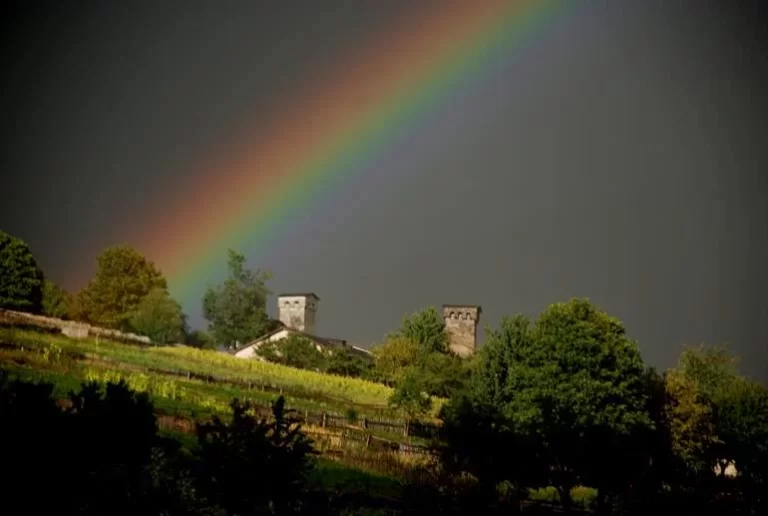
Mestia serves as Svaneti’s main town (population around 2,600). Stone defensive towers dominate the skyline. Svan families built these towers from the 9th to 13th centuries for protection during feuds and invasions. Each family had their tower. When conflicts started, everyone retreated to their towers and waited out the danger.
The towers are unique to Svaneti. The combination of available building stone, isolation, and constant threats created this architecture found nowhere else.
Svaneti Museum houses medieval manuscripts, icons, and artifacts showing Svan culture’s development over 2,000 years. The oldest manuscript dates to the 9th century.
Afternoon: Chalaadi Glacier Hike
Chalaadi Glacier hike begins from the village of Lenjeri, 10 minutes from Mestia. The trail follows the Mestiachala River valley toward the glacier. Total hiking distance is approximately 12 kilometers round trip.
The trail climbs gradually through alpine meadows and pine forests. You’ll cross wooden bridges over glacier-fed streams. The last section gets steeper as you approach the glacier itself.
Chalaadi Glacier descends from the flanks of Mount Ushba. The glacier face is actively calving, meaning ice constantly breaks off and falls. You can hear the glacier cracking and shifting. The turquoise ice and dramatic mountain backdrop make this one of Svaneti’s most striking landscapes.
The hike takes 5-6 hours total including stops for photos and rest. The altitude (reaching about 2,000 meters) makes the hike more demanding than the distance alone suggests. Bring water, snacks, sun protection, and layers.
Overnight: Guesthouse in Mestia (all meals included)
Route: Mestia → Ushguli → Mestia | Duration: Full day, 45km each way, 2.5-3 hours each direction by 4×4 jeep
Morning: The Journey to Europe’s Highest Village
Ushguli is Europe’s highest continuously inhabited village at 2,100 meters elevation. The village actually consists of four small communities at the base of Mount Shkhara (5,193 meters), Georgia’s highest peak and the third-highest in the Caucasus.
The road from Mestia to Ushguli covers 45 kilometers but takes 2.5 to 3 hours. Regular vehicles can’t handle the terrain. We use 4×4 jeeps for this trip. The road crosses several rivers (no bridges, just fording through the water), climbs over high passes, and winds along cliff edges. The roughness is part of the experience. This remoteness kept Ushguli essentially unchanged for centuries.
Exploring Ushguli
Ushguli has over 200 defensive towers, the highest concentration in Svaneti. UNESCO designated the entire upper Svaneti region (including Ushguli) as a World Heritage Site for these unique medieval tower structures.
On clear days, Mount Shkhara dominates the view. The mountain’s glacier-covered peak rises directly above the village. Seeing a 5,000-meter mountain from a village where people are living normal daily lives creates a surreal contrast.
Walk through the village’s narrow stone-paved lanes between towers. Some families open their towers for visits. The ground floor was for livestock, middle floors for living, and top floors for defense during attacks.
The 12th-century Lamaria Church sits above the village. Frescoes inside show medieval Georgian religious art preserved by Ushguli’s isolation.
Return to Mestia by the same rough road. The drive back offers different lighting on the mountains and valleys.
Overnight: Guesthouse in Mestia (all meals included)
Route: Mestia → Becho village | Hike: 12km round trip, 5-6 hours, elevation gain 400m to ~2,300m
Morning: Into Becho Valley
We drive to Becho village, about 45 minutes from Mestia deeper into the Caucasus. Becho sits in the valley leading to the Ushba region, less visited than Mestia or Ushguli.
The Shdugra Waterfall Trail
Shdugra waterfall trail takes you into the high alpine zone. The hike covers 12 kilometers round trip with approximately 400 meters of elevation gain. Plan for 5-6 hours including breaks.
The trail follows the Dolra River through the Shkhra Valley. You’ll hike through pine forests, then above the tree line into alpine meadows filled with wildflowers in summer. The valley opens up with views of surrounding peaks.
Shdugra waterfalls drop about 30 meters in multiple cascades. The water comes directly from glaciers, so it’s freezing cold even in summer. The turquoise color comes from glacial sediment suspended in the water.
Horses can be hired for this hike if you prefer not to walk the entire distance (arrange in advance, additional cost around 50-60 GEL). However, even with horses, you’ll still need to hike the last section to the falls on foot.
This is genuine backcountry hiking. The trail is marked but not developed. You’ll be at altitude (reaching around 2,300 meters), so the air is thin. Weather can shift quickly in the mountains, so bring rain gear and warm layers.
Evening: Rustic Mountain Life
Stay overnight in Becho village guesthouse. These are more rustic than Mestia accommodations. Expect basic rooms, shared family-style meals, and limited electricity. This is authentic Svan mountain life.
Overnight: Guesthouse in Becho (all meals included)
Route: Becho → Kutaisi → Prometheus Cave → Borjomi | Duration: Full day with ~7-8 hours driving
Long Drive Day
After breakfast in Becho, we start the long drive back west toward Kutaisi, then south to Borjomi. Total driving time is approximately 7-8 hours with stops.
Midday: Prometheus Cave
Prometheus Cave (near Kutaisi) is one of Georgia’s largest cave systems. The tourist route covers about 1,600 meters through underground chambers filled with stalactites, stalagmites, underground rivers, and petrified waterfalls. The cave stays at a constant 14°C year-round.
The cave was discovered in 1984. Geological surveys suggest the entire system extends for over 11 kilometers, though only a small section is open to tourists.
Afternoon: Borjomi Spa Town
Borjomi became famous in the 19th century for its mineral water springs. The Russians built the town as a spa resort. Soviet leaders came here for health treatments. Borjomi mineral water (naturally carbonated) is now Georgia’s most famous export product.
Borjomi Central Park follows the Borjomi River through a forested gorge. Walk to the original spring where you can taste the mineral water straight from the source. The water is warm (38-41°C) and highly mineralized with a distinctive taste.
Overnight: Guesthouse near Borjomi
Route: Borjomi → Akhaltsikhe → Rabati → Sapara → Saro village | Duration: Full day
Morning: Rabati Fortress
Akhaltsikhe is the main city of the Samtskhe-Javakheti region in southern Georgia near the Turkish border. The area has a mixed history of Georgian, Armenian, and Turkish cultural influences.
Rabati Fortress dominates Akhaltsikhe. The fortress complex shows 700 years of architectural layers. Originally built in the 13th century, expanded under Ottoman rule (16th-19th centuries), then modified again when the Russians took control.
The fortress includes a mosque, Orthodox church, Catholic church, and synagogue all within the same walls, reflecting the region’s diverse population through history.
Midday: Hidden Monastery
Sapara Monastery sits hidden in forest about 10 kilometers from Akhaltsikhe. The monastery dates from the 10th century but the main church was built in the 13th century. This was one of the most important monastic centers in southern Georgia.
The frescoes inside show medieval Georgian religious art at its finest. The paintings survived because the Ottoman Turks converted the church to a mosque rather than destroying it.
Afternoon: Saro Village
Saro village sits on a high hill with views across the Mtkvari River gorge. The location shows typical Georgian defensive positioning. A megalithic fortress (prehistoric stone structure) still stands near the village.
Overnight: Guesthouse in Akhaltsikhe area
Route: Akhaltsikhe → Vardzia → Khertvisi → Javakheti Plateau → Tbilisi | Duration: Full day with ~5-6 hours driving
Morning: Vardzia Cave Monastery
Vardzia is Georgia’s most impressive cave monastery complex. In the 12th century, Queen Tamar ordered the creation of this massive defensive monastery carved into the cliff face of the Erusheti Mountain.
At its peak, Vardzia housed up to 2,000 monks living in 6,000 cave rooms spread over 13 stories carved deep into the rock. The complex included churches, living quarters, wine cellars, libraries, and a sophisticated irrigation system bringing water 450 meters up from the Mtkvari River.
In 1283, an earthquake destroyed about two-thirds of the complex and exposed the inner rooms that were originally hidden behind the rock face. What remains today is still massive. The main church contains frescoes of Queen Tamar herself.
Vardzia sits 100 kilometers from the Turkish border in a semi-arid landscape completely different from northern Georgia’s lush mountains.
Midday: Khertvisi Fortress
Khertvisi Fortress stands on a rocky ridge above the confluence of the Mtkvari and Paravani rivers on the road back north. This fortress dates from the 10th century (possibly older foundations). The strategic position controlled the trade route from Georgia to Armenia and Turkey.
Afternoon: Javakheti Plateau
The drive back to Tbilisi crosses the Javakheti Plateau, a volcanic highland at about 2,000 meters elevation. The plateau is dotted with lakes including Paravani Lake (Georgia’s largest) and Sagamo Lake.
The landscape is treeless, windswept, and stark, resembling Central Asian steppes more than typical Georgian terrain. Armenia’s Mount Aragats is visible to the south. This region has a large Armenian population.
Arrive in Tbilisi in the evening (approximately 5-6 hours from Vardzia).
Overnight: Hotel in Tbilisi
Departure: Tbilisi International Airport | Duration: Departure day
Free time until your departure transfer. Depending on your flight time, you might have a few hours to revisit Old Town, do last-minute shopping, or explore neighborhoods you didn’t see on Day 2.
We transfer you to Tbilisi International Airport according to your flight schedule.
End of tour: Tbilisi Airport
Price details
This is a private tour. Contact us with your group size and dates for detailed pricing.
What’s Included
Why some meals aren’t included: Outside of Svaneti (where guesthouse meals are standard), we give you flexibility to choose restaurants matching your preferences and budget. Tbilisi, Kutaisi, and Borjomi have diverse dining options. Our guides recommend restaurants for each area.
Accommodation details: Tbilisi has 3-4 star hotels in central locations. Svaneti and other regions use family-run guesthouses with clean private rooms and bathrooms—genuine hospitality rather than hotel amenities. Becho village (Day 8) offers the most rustic accommodation.
Tour map
Tbilisi Airport
Tbilisi (Nights 1-3, 11)
Kakheti - Telavi
Sighnaghi
Jvari Monastery
Svetitskhoveli Cathedral
Uplistsikhe Cave City
Gelati Monastery
Kutaisi (Night 4)
Okatse Canyon
Mestia (Nights 5-7)
Chalaadi Glacier
Ushguli (2,100m)
Becho Village (Night 8)
Shdugra Waterfalls
Prometheus Cave
Borjomi (Night 9)
Rabati Fortress
Sapara Monastery
Akhaltsikhe (Night 10)
Vardzia Cave Monastery
Khertvisi Fortress
Javakheti Plateau
Tour gallery
Practical Information
Duration: 12 days / 11 nights
Start/End: Tbilisi International Airport
Group Size: Maximum 8 people (private tours available)
Difficulty: Moderate to Challenging—requires ability to hike 4-6 hours, handle altitude to 2,300m
Best Season: June to September (Svaneti inaccessible other months)
Language: English guide throughout
Physical Requirements
You should be able to walk/hike for 4-6 hours with breaks, handle uneven terrain (rocky paths, river crossings, steep sections), manage altitude up to 2,300 meters, and sit in vehicles for long driving days (some days involve 6-7 hours of driving). This tour is not suitable for people with serious knee or back problems, anyone who can’t walk more than 2-3 hours, or very young children.
What to Pack
Essential: Sturdy hiking boots with ankle support (broken in, not new), waterproof rain jacket and pants, warm fleece or down jacket for Svaneti evenings, sun hat and sunglasses, sunscreen SPF 30+, daypack 25-30L for hiking days, water bottles 1-2 liters, trekking poles if you use them, first aid kit with blister treatment, headlamp (power outages in mountain villages), personal medications.
Clothing layers: Quick-dry hiking pants, long-sleeve shirts, t-shirts, warm layers, swimsuit (some guesthouses have saunas), modest clothing for church visits.
Best Time to Visit
June ⭐⭐⭐⭐: Wildflowers in bloom, fewer tourists, snow still visible on peaks. Some trails may still be muddy from snowmelt. Ushguli road sometimes closed by late snow.
July-August ⭐⭐⭐⭐⭐: Best weather reliability, all trails fully accessible, warmest temperatures, longest daylight hours. Peak tourist season, highest prices.
September ⭐⭐⭐⭐: Autumn colors beginning, fewer tourists, comfortable temperatures, harvest season in wine regions. Days getting shorter, first snow possible in Ushguli late month.
October-May: Svaneti hiking difficult or impossible due to snow. Not recommended for this itinerary.
Tour FAQ
Why This Tour Works
This isn’t a tour for everyone. But if you’re physically active, culturally curious, and want to see Georgia beyond Tbilisi’s tourist streets, this 12-day journey covers the country’s geographic and cultural range better than any other itinerary.
Three nights in Svaneti makes the difference. Most tours drive to Mestia for a day trip and leave. We stay three nights, giving you time to hike to a glacier, explore Ushguli by jeep, and experience a remote village with family-style meals. You understand Svaneti rather than just photographing it.
Southern Georgia completes the picture. Vardzia’s cliff monastery, Rabati’s multicultural fortress, and the volcanic Javakheti Plateau show you landscapes and history that most visitors never see. The contrast between lush Svaneti and semi-arid southern highlands demonstrates Georgia’s geographic diversity.
Small groups matter in remote regions. Maximum 8 people means we can stay in family guesthouses, move efficiently on hiking trails, and respond to weather changes quickly. Svaneti’s infrastructure simply can’t handle large tour buses.
Georgia rewards travelers willing to handle rough roads, simple accommodations, and unpredictable weather. The mountain views, wine country sunsets, and cave monasteries carved into cliffs make the effort worthwhile. This tour shows you the Georgia that most visitors never experience—the country beyond the capital city brochures.
The tour runs from June through September. Peak season (July-August) books 2-3 months in advance. June and September have more availability but require flexibility with weather.