Svetitskhoveli Cathedral Mtskheta: Complete Visitor Guide to Georgia’s Holiest Site
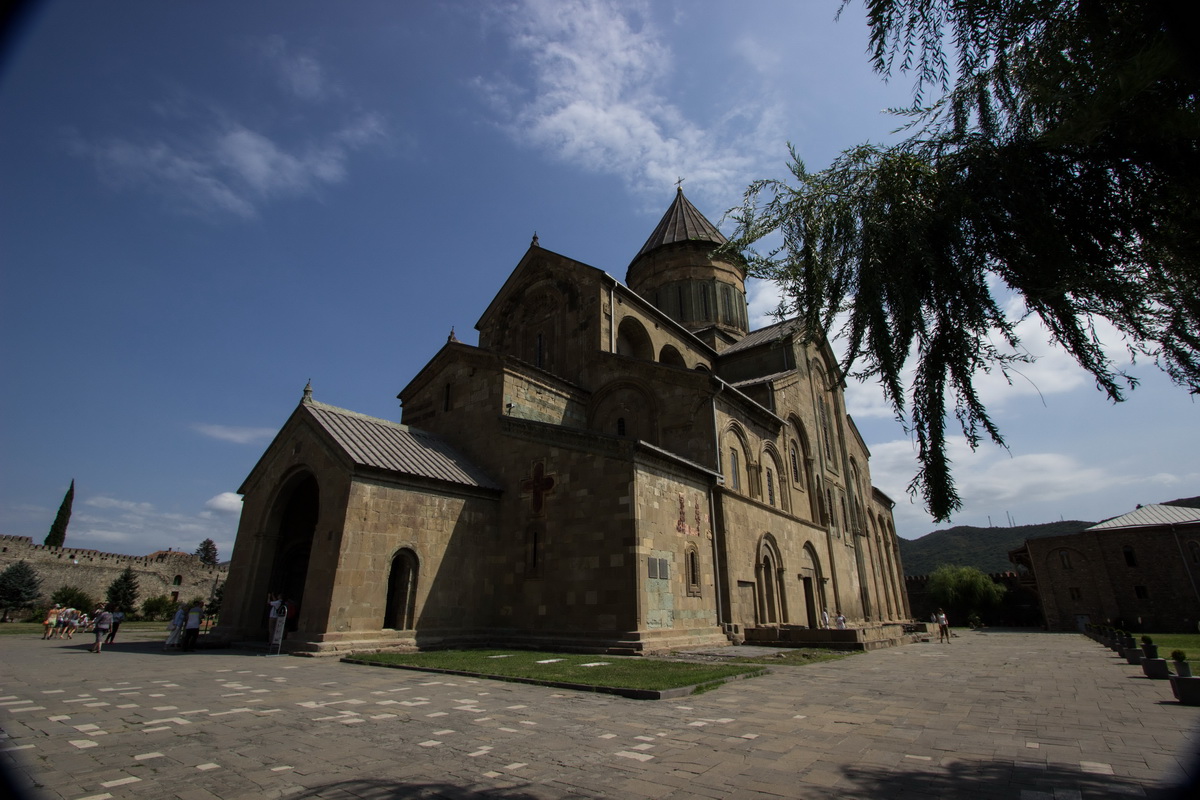
Rising 54 meters into the Georgian sky, Svetitskhoveli Cathedral (Georgian: სვეტიცხოველი) stands as the spiritual heart of an entire nation. Located in the ancient capital of Mtskheta – just 20 kilometers from Tbilisi—this UNESCO World Heritage Site draws pilgrims and travelers alike with its extraordinary legend: beneath these stone floors lies the Robe of Christ himself.
The name Svetitskhoveli translates as “The Living Pillar” or “Life-Giving Pillar,” referring to one of Christianity’s most remarkable miracle stories. As Georgia’s principal cathedral and the seat of the Catholicos-Patriarch of All Georgia, Svetitskhoveli isn’t merely a monument—it remains the beating heart of Georgian Orthodox Christianity, where coronations took place, kings were buried, and the faithful have prayed for over 1,700 years.
Whether you seek spiritual significance, architectural mastery, or simply one of the most essential experiences in the Caucasus, Svetitskhoveli Cathedral rewards every visitor with a profound connection to Georgia’s soul.
Practical Information for Visitors
|
Detail |
Information |
|
Location |
|
|
Built |
Current structure 1010–1029 AD; site dates to 4th century |
|
Architect |
Konstantine Arsukidze |
|
Opening Hours |
Daily 08:00 – 20:00 |
|
Entrance Fee |
Free (donations welcome) |
|
Dress Code |
Strict: women must cover heads, shoulders, and knees; men need long pants |
|
Time Needed |
45 minutes – 1.5 hours |
|
Best Time |
Early morning (before 10 AM) to avoid tour groups |
|
UNESCO Status |
World Heritage Site since 1994 |
The Legend of Christ’s Robe and the Living Pillar
The story that makes Svetitskhoveli unique among the world’s churches begins in Jerusalem, at the foot of the Cross.
The Robe Comes to Georgia (1st Century AD)
According to Georgian tradition, a Jewish man named Elias (Elioz) from Mtskheta was present in Jerusalem when Jesus was crucified. At Golgotha, Elias purchased Christ’s seamless robe from a Roman soldier and brought this sacred relic back to his homeland.
When Elias arrived in Mtskheta, his sister Sidonia came to meet him. The moment she touched the holy garment, she was overwhelmed by such powerful emotions that she died instantly, clutching the robe to her chest. Try as they might, no one could remove the robe from her grasp. Sidonia was buried with Christ’s Robe still in her arms, on the very spot where the cathedral stands today.
The Miraculous Cedar Tree
From Sidonia’s grave grew an enormous cedar tree. People began to notice something extraordinary: those who stood beneath its branches were healed of their diseases. The tree became known throughout the region for its miraculous properties.
Saint Nino and the Seven Pillars (4th Century)
Three centuries later, Saint Nino—the woman who would convert Georgia to Christianity—arrived in Mtskheta. She learned of the sacred tree growing over Sidonia’s grave and the buried robe. When King Mirian III declared Christianity the state religion in 337 AD, he decided to build Georgia’s first church on this holy site.
The cedar was cut down and seven pillars were carved from its wood to support the new church. Six pillars were erected without incident, but the seventh refused to stay in place—it rose miraculously into the air and hovered above the ground. Only after Saint Nino prayed through the entire night did the pillar descend and take its place. From this seventh column, a sacred liquid began to flow that cured all diseases.
This miracle gave the cathedral its name: Sveti means “pillar” in Georgian, and Tskhoveli means “life-giving” or “living”—hence Svetitskhoveli, the Cathedral of the Living Pillar.
What Remains Today
Inside the cathedral, you can see a small stone structure marking the spot where Saint Sidonia is buried with Christ’s Robe. Above it stands a replica of the miraculous pillar, decorated with frescoes depicting the legend. An icon portraying the floating pillar miracle—showing Sidonia’s grave, the ascending column, Saint Nino in the foreground, and King Mirian and Queen Nana on either side—is reproduced widely throughout Georgia.
A small stone chapel built in the 13th–14th century stands within the cathedral, designed as a symbolic copy of the Church of the Holy Sepulchre in Jerusalem. Its presence marks Svetitskhoveli as the second most sacred Christian site in the world, after Jerusalem itself.
History of Svetitskhoveli Cathedral
The First Churches (4th–5th Centuries)
The wooden church built by King Mirian and Saint Nino in the 330s was Georgia’s first Christian church. In the 480s, King Vakhtang Gorgasali—one of Georgia’s greatest rulers—replaced this with a stone basilica. Remnants of both structures were discovered during archaeological excavations in 1970–71 and can be seen beneath glass panels in the floor and in the foundations.
The Current Cathedral (1010–1029)
The magnificent structure standing today was built between 1010 and 1029 by the architect Arsukidze, commissioned by Catholicos-Patriarch Melchizedek I during the reign of King George I. The construction coincided with Georgia’s emergence as a unified, powerful kingdom.
A Georgian legend tells a tragic postscript: after completing his masterpiece, King George ordered Arsukidze’s right hand cut off—either from jealousy (to prevent him from building anything more beautiful) or to preserve the cathedral’s uniqueness. A relief carving of a hand holding a chisel on the cathedral’s exterior supposedly commemorates this story, with an inscription reading: “The hand of Arsukidze, slave of God—may forgiveness be his.”
Centuries of Damage and Survival
Svetitskhoveli has survived invasions by Arabs, Persians, Mongols, and Timurids, plus numerous earthquakes. Each assault left its mark, but the cathedral endured.
In the 15th century, King Alexander I undertook major renovations on the heavily damaged building. Much of the interior ornamentation and surviving wall paintings date from this restoration.
Perhaps the most devastating blow came not from foreign invaders but from Russian Imperial authorities in the 1830s. When Czar Nicholas I planned a visit to Mtskheta, the cathedral’s ancient frescoes were whitewashed to present a “cleaner” appearance. This cultural vandalism destroyed irreplaceable medieval artwork.
In 1787, King Erekle II (Heraclius) constructed the defensive walls that still surround the cathedral complex today, complete with towers and gun emplacements.
Modern Restoration
Major restoration work was conducted in 1970–71 under the supervision of architect V. Tsintsadze. These excavations uncovered the foundations of earlier churches and revealed the full historical depth of the site.
Architecture: A Masterpiece of Medieval Georgian Design
Svetitskhoveli stands among Georgia’s five tallest medieval cathedrals, reaching 54 meters at its dome. The current structure exemplifies the cross-dome style that became dominant in Georgian church architecture after the political unification under Bagrat III.
Exterior Features
The cathedral’s exterior showcases some of the finest medieval Georgian stone carving:
Western façade – The most elaborately decorated, featuring intricate relief work that has largely preserved its original 11th-century form.
Southern façade – Notable for its characteristic asymmetry, with relief sculptures and figures from the original construction period preserved in the western section.
Eastern façade – More symmetric than the other faces, distinguished by the variety and mastery of its ornamental patterns.
Decorative elements – Carved grape motifs reflect Georgia’s ancient winemaking tradition. On the exterior wall, you’ll find Georgia’s only zodiac circle and the first sundial in the country, shaped like a peacock.
Interior Highlights
The interior was originally covered with frescoes, though most have been lost to whitewashing, earthquakes, and age. What remains includes:
The Living Pillar shrine – A small decorated structure marking Sidonia’s grave and the original miraculous pillar, with 17th-century paintings depicting scenes from the Gospels and Georgia’s conversion to Christianity.
Copy of the Holy Sepulchre – A 13th–14th century stone chapel symbolically connecting Svetitskhoveli to Jerusalem.
Royal tombs – The cathedral served as the burial place for Georgian kings. At least ten monarchs were interred here, including Vakhtang Gorgasali, Erekle II, and the last Georgian king, George XII. Six tombs have been found, all positioned before the altar.
4th-century baptismal font – Believed to be the font used to baptize King Mirian and Queen Nana upon Georgia’s conversion.
Iconostasis – The large painting of Christ behind the iconostasis was painted by a Russian artist in the 19th century, replacing earlier work.
What to See at Svetitskhoveli
Inside the Cathedral
Upon entering, allow your eyes to adjust to the interior’s solemn atmosphere. Key features to seek out:
The shrine of the Living Pillar with its painted scenes of the miracle and Georgia’s Christianization. The stone chapel replicating Jerusalem’s Holy Sepulchre. Royal tombs with their grave markers. The ancient baptismal font in the corner. Fragments of surviving frescoes wherever they escaped the whitewashing.
If you’re fortunate to visit during a service, the Georgian Orthodox liturgy—with its distinctive polyphonic chanting—creates an unforgettable experience.
The Cathedral Complex
Beyond the main church, the complex includes:
Defensive walls – Built by King Erekle II in 1787, with towers, gates, and gun emplacements reflecting the turbulent era.
Western gate – The arched main entrance dates to the 11th century, contemporary with the cathedral itself.
Patriarch’s residence ruins – Remains of the 11th-century patriarchal residence are incorporated into the walls.
The Town of Mtskheta
The cobblestoned streets surrounding Svetitskhoveli offer:
Cafes and restaurants – A row of eateries faces the cathedral, serving Georgian cuisine, khachapuri, and local wine.
Souvenir shops – Small shops sell religious items, churchkhela (traditional Georgian candy), icons, and handicrafts.
Wine tasting – Several wine shops offer tastings of Georgian wines, including some made using traditional qvevri methods.
Tourist Information Center – Located adjacent to the cathedral, offering maps and information.
Georgian Weddings
Like Bagrati Cathedral in Kutaisi, Svetitskhoveli remains a beloved venue for Georgian weddings. On weekends especially, you’ll likely witness wedding parties in traditional attire, processions, and joyful celebrations—a wonderful glimpse into living Georgian tradition.
How to Get to Svetitskhoveli from Tbilisi
Mtskheta lies just 20 kilometers (about 25 minutes) northwest of central Tbilisi, making it one of the easiest day trips in Georgia.
By Marshrutka (Minibus)
The cheapest option at approximately 2–3 GEL per person:
- Take the Tbilisi Metro to Didube Station
- Exit through the market area to the bus lot
- Find the ticket counter and buy a ticket to Mtskheta (მცხეთა)
- Board a marshrutka—they depart every 20–30 minutes from approximately 07:00 to 20:00
- Journey takes 30–40 minutes
- Ask to stop in the town center near the cathedral (otherwise you’ll end up at the bus station 500m away)
To return, flag down any marshrutka heading to Tbilisi from the main road and pay the driver directly.
By Taxi
More comfortable and convenient at 20–30 GEL one way:
Use the Bolt or Yandex Go apps for transparent pricing. A taxi from central Tbilisi takes approximately 25 minutes depending on traffic. This option works well for groups who can split the cost.
By Train
Georgian Railway operates trains from Tbilisi Central Station to Mtskheta:
Journey time approximately 24–27 minutes. Tickets cost 2–8 GEL depending on train type. Service operates 2–4 times daily (Monday, Tuesday, Thursday, Saturday). Check schedule at railway.ge.
By Guided Tour
The most comprehensive option if you want to combine multiple sites:
Our Mtskheta tour or Mtskheta, Gori and Uplistsikhe tour includes Svetitskhoveli along with other UNESCO sites, with expert guides providing historical context.
By Rental Car
Mtskheta makes an easy self-drive destination and can be combined with trips to Kazbegi via the Georgian Military Highway or Gori and Uplistsikhe. Paid parking is available near the cathedral.
Tips for Visiting Svetitskhoveli
Dress Code (Strictly Enforced)
Svetitskhoveli enforces a strict dress code throughout the entire complex, including the courtyard:
Women: Must cover heads (headscarves available at entrance), shoulders, and knees. Long skirts or wrap-around cloths are provided if needed.
Men: Long pants required; no shorts. Avoid sleeveless shirts.
Best Time to Visit
Early morning (before 10 AM) – Tour buses typically arrive after 10 AM; come early for a more peaceful experience.
Weekdays – Less crowded than weekends when local weddings and Tbilisi day-trippers increase visitor numbers.
Spring and autumn – Most pleasant weather for exploring Mtskheta on foot.
During Services
Sunday liturgy and weekday services may limit access. If you visit during a service:
Maintain respectful silence. Photography is generally not permitted during services. Stand in the back and observe quietly. The Georgian Orthodox liturgy, with its distinctive polyphonic singing, is worth experiencing.
Facilities
Restrooms – Available in restaurants near the cathedral.
Food and drink – Multiple cafes and restaurants face the cathedral square.
Guides – Local guides offer their services near the entrance for those wanting deeper historical context.
ATMs – Available in central Mtskheta.
Nearby Attractions: Complete Your Mtskheta Experience
Mtskheta offers several UNESCO-listed monuments within easy reach. A full day allows you to explore the area comprehensively.
Jvari Monastery (3 km)
The 6th-century Jvari Monastery perches dramatically atop a mountain overlooking the confluence of the Mtkvari and Aragvi rivers—one of the most photographed views in Georgia. The monastery marks the spot where Saint Nino erected a wooden cross upon arriving in Georgia.
Getting there: No public transport; hire a taxi from Mtskheta (approximately 15–20 GEL round trip with waiting time, or 5 GEL per person via tourist office shuttle). The views from above are spectacular, looking down on Mtskheta and Svetitskhoveli.
Samtavro Monastery (400 m)
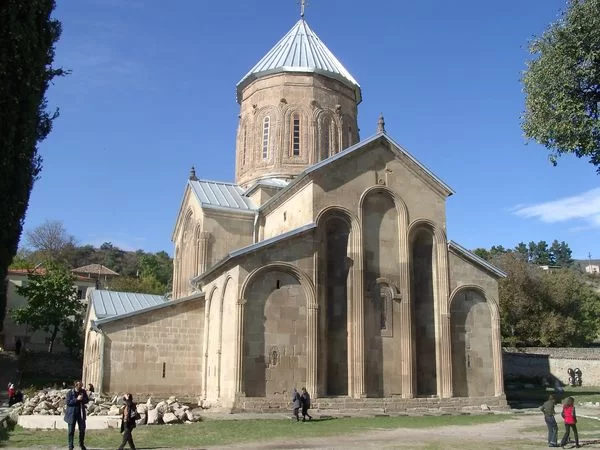
A short walk from Svetitskhoveli, Samtavro Monastery contains the small church where Saint Nino lived and prayed during Georgia’s conversion. The larger church, rebuilt in the 11th century, holds the tombs of King Mirian III and Queen Nana—the first Christian rulers of Georgia.
Shio-Mgvime Monastery (12 km)
Set dramatically into a rugged hillside, this 6th-century monastery complex once accommodated 2,000 monks. Caves used for meditation dot the cliff face. The monastery preserves some of the best-maintained frescoes in the Mtskheta region. A taxi is required (approximately 40–50 GEL round trip with waiting time).
Bebris Tsikhe (2 km)
The ruins of this ancient fortress offer panoramic views over Mtskheta and the river valleys. Free to explore but requires some climbing on potentially dangerous ruins.
Suggested Day Itinerary from Tbilisi
- Early morning: Depart Tbilisi, start at Jvari Monastery for panoramic views
- Mid-morning: Svetitskhoveli Cathedral (before crowds arrive)
- Late morning: Samtavro Monastery (5-minute walk)
- Lunch: Restaurants facing Svetitskhoveli
- Afternoon: Shio-Mgvime Monastery (optional, requires taxi)
- Return: Marshrutka or taxi back to Tbilisi
We always visit Svetitskhoveli Cathedral during our tours in Mtskheta.
Frequently Asked Questions
Is there an entrance fee for Svetitskhoveli Cathedral?
No, admission to Svetitskhoveli Cathedral is completely free. It is an active place of worship, and entry is open to all visitors who dress appropriately and behave respectfully. Donations are welcome and help maintain this UNESCO World Heritage Site.
What are the opening hours?
Svetitskhoveli Cathedral is open daily from approximately 08:00 to 20:00. Access may be limited during Sunday liturgy and ceremonial services on weekdays. For the most peaceful visit, arrive before 10:00 AM.
Do I need to cover my head?
Yes, women must cover their heads inside the cathedral and throughout the complex, including the courtyard. Headscarves and wrap-around skirts are typically available at the entrance for those who need them. Men must wear long pants.
How do I get to Svetitskhoveli from Tbilisi?
The easiest options are marshrutka (minibus) from Didube Metro Station (2–3 GEL, 30–40 minutes, departures every 20–30 minutes) or taxi via Bolt/Yandex Go (20–30 GEL, approximately 25 minutes). Trains also run 2–4 times daily.
Is Christ’s Robe really buried at Svetitskhoveli?
According to Georgian Orthodox tradition dating back over 1,700 years, the robe that Jesus wore is buried beneath the cathedral, brought from Jerusalem in the 1st century. The site’s sanctity is based on this belief, making Svetitskhoveli one of Christianity’s most significant pilgrimage destinations. Whether you approach as a believer or a cultural visitor, the power of this tradition permeates the experience.
How much time should I spend at Svetitskhoveli?
Most visitors spend 45 minutes to 1.5 hours at the cathedral itself. To explore all of Mtskheta’s attractions (including Jvari Monastery and Samtavro), plan for a full day or half-day excursion.
Can I take photographs inside?
Photography is generally permitted inside the cathedral but may be restricted during services. Flash photography and tripods are discouraged. Always be respectful of worshippers and clergy.
Is Svetitskhoveli worth visiting if I have limited time in Georgia?
Absolutely. If you can visit only one religious site in Georgia, make it Svetitskhoveli. As the most sacred church in the country, seat of the Patriarch, burial place of kings, and holder of Christianity’s most significant Georgian relic, it offers an unparalleled window into Georgian faith, history, and identity.
What is the best way to combine Svetitskhoveli with other day trips?
Mtskheta combines naturally with trips to Gori and Uplistsikhe to the west or with travel along the Georgian Military Highway to Kazbegi to the north. Our Charming Mtskheta, Gori and Uplistsikhe tour covers all these sites in a single day.
Why Svetitskhoveli Matters
For Georgians, Svetitskhoveli represents nothing less than the soul of their nation. Here, beneath these ancient stones, faith and history intertwine: the robe that touched Christ’s body, the pillar that floated through prayer, the saints and kings who shaped a civilization, the worshippers who continue to light candles and seek blessings today.
For visitors, Svetitskhoveli offers something increasingly rare—an encounter with living tradition stretching back nearly two millennia, in a building whose beauty and sanctity have survived everything history could throw at it. The legend of the Living Pillar may test the boundaries of belief, but standing in this cathedral, watching light filter through ancient windows onto stones worn smooth by centuries of pilgrims, something ineffable communicates itself.
This is why Georgians call Mtskheta the “Second Jerusalem.” This is why, of all the remarkable experiences Georgia offers, Svetitskhoveli Cathedral should not be missed.
Planning your visit? Contact us to arrange guided tours, airport transfers, or custom itineraries that include Svetitskhoveli Cathedral and Georgia’s other treasures.