Telavi Travel Guide: Georgia’s Wine Capital Where Kings Made History
There’s a feeling I get in Telavi that I don’t find anywhere else in Georgia. It’s warm – not just the climate, though the Alazani Valley sun does its part. It’s the kind of warmth that comes from a place that hasn’t learned to hurry.
Telavi is quiet. Not empty, not boring, just unhurried. The cafes fill slowly in the morning. Old men play backgammon in the park beneath the giant plane tree. Families stroll Cholokashvili Street in the evening, stopping to chat with neighbors they’ve known for decades. Nobody’s rushing to get somewhere else.
And the food. Telavi is delicious in a way that sneaks up on you. Fresh churchkhela from the bazaar that’s still soft. Khinkali with that particular Kakhetian spicing. Local cheese that tastes like the valley itself. Wine poured straight from the qvevri in someone’s backyard cellar. Every meal here feels like an act of generosity.
Cozy is the word that keeps coming back to me. Telavi feels like a place where you could settle in, let your shoulders drop, and simply be. While Tbilisi rushes toward the future and Sighnaghi poses for Instagram photos, Telavi just… continues. Making wine. Baking bread. Living the way Kakhetians have always lived.
For travelers, Telavi offers something increasingly rare: a real Georgian city that happens to welcome visitors, rather than a tourist attraction pretending to be a city. The capital of Kakheti region has serious history, world-class wine, jaw-dropping mountain views, and an authenticity that’s getting harder to find. This guide shows you how to experience it properly.
Why Telavi Deserves More Than a Day Trip
Most tourists treat Telavi as a checkbox, a quick stop on a Kakheti wine tour before heading back to Tbilisi. That’s a mistake.
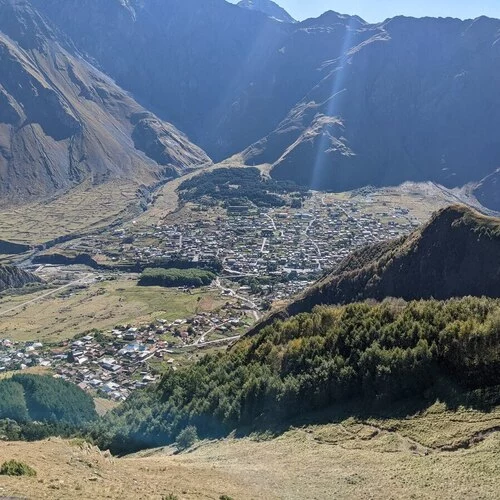
Telavi was Georgia’s capital during the Kingdom of Kakheti (15th-18th centuries), and that royal heritage shows in everything from the fortress dominating the skyline to the elegant wooden balconies lining the old streets. The city sits at 490 meters elevation in the Alazani Valley, with the snow-capped Greater Caucasus stretching across the northern horizon like a wall between worlds.
But here’s what most guides don’t tell you: Telavi only reveals itself slowly. The bazaar is best early morning. The fortress views peak at sunset. The wine cellars come alive after dark. Rush through in four hours, and you’ll see buildings. Stay two or three days and you’ll understand why Kakhetians consider themselves the soul of Georgia.
Practically speaking, Telavi also works better as a base than Sighnaghi. Yes, Sighnaghi is prettier in photos. But Telavi has better transport connections, more restaurant options, lower prices, and easier access to the major monasteries and wineries scattered across the valley. It’s where Georgians actually go when they visit Kakheti.
Exploring the City: What to See in Telavi
Batonis Tsikhe: The Fortress That Defined a Kingdom
Every Georgian kid learns about King Erekle II—the last great king before Russian annexation, the warrior who fought Persians and Ottomans, the tragic figure who signed his kingdom away trying to protect it. His fortress dominates central Telavi, and walking through it is walking through the end of Georgian independence.
Batonis Tsikhe (“Master’s Fortress”) took its current form in the 17th century, though its foundations date to the 1660s. The design surprises visitors: it’s Persianate, modeled on the Arg of Karim Khan in Shiraz, with circular corner towers and massive stone walls that speak more of Isfahan than the Caucasus. This wasn’t an accident. Georgian kings played a dangerous diplomatic game between the Persian and Ottoman empires, and architecture reflected those relationships.
Inside the walls, the 17th-century Royal Palace now houses the Telavi History Museum. The building itself impresses: restored Shebeki-style colored glass windows throw rainbow light across antique carpets, and the room where King Erekle II was both born (1720) and died (1798) remains eerily preserved. The museum collection includes medieval weapons, royal portraits, and archaeological finds from across Kakheti.
Don’t miss the art gallery section showcasing works by Jemal Khutsishvili, a Telavi-born painter whose canvases capture Kakhetian daily life—wine harvests, bread-baking, village scenes rendered with remarkable emotional depth.
Details: Open 10am-6pm Tuesday-Sunday (closed Mondays). Entrance 7 GEL; optional guide 18 GEL. Allow 1-2 hours.
The 900-Year-Old Plane Tree
Behind Batonis Tsikhe stands Georgia’s most famous tree—and yes, a tree can be famous here. The Giant Plane Tree (Platanus) has witnessed nine centuries of Kakhetian history. Its trunk measures 12 meters around. Its canopy spreads across an entire park. Legend says King Erekle II held court meetings beneath its branches.
Is it actually 900 years old? Probably. Dendrochronology studies support the claim, and plane trees commonly live that long. What’s certain is that generations of Georgians have touched this bark, posed in the hollow of its trunk, and felt some connection to the absurd persistence of living things.
The tree loses its leaves in winter, so summer and early autumn offer the most impressive views. Either way, it’s worth five minutes of your time—and the endless selfie line suggests most visitors agree.
Architecture Walking: Cholokashvili Street and Erekle II
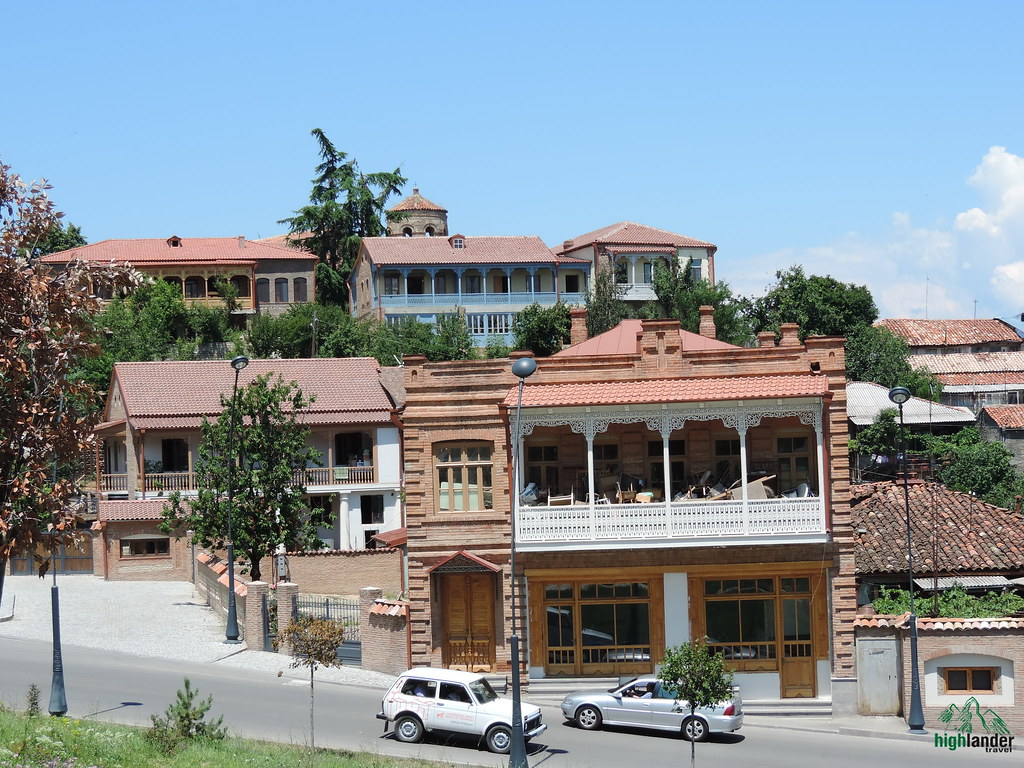
Telavi’s soul lives in its residential streets, where traditional wooden balconies hang over cobblestones and neighbors still know each other’s grandparents. Two streets deserve particular attention.
Cholokashvili Street is where Telavi has invested most heavily in heritage preservation. Nearly every building sports restored carved balconies—intricate woodwork painted turquoise, forest green, or natural stain. The street feels like stepping into a 19th-century photograph, except with excellent coffee shops and a ceramics studio.
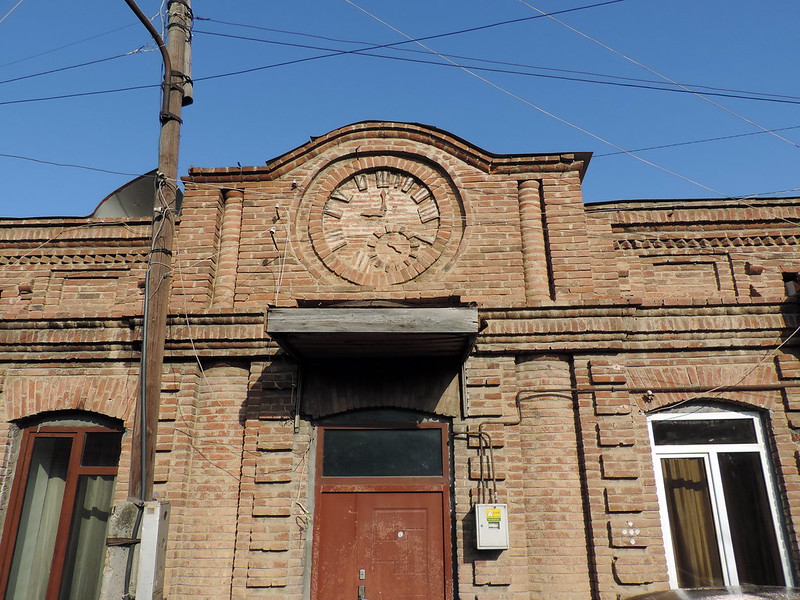
Erekle II Street offers more architectural variety: wooden balconied houses pressed against Stalin-era apartment blocks, arched walkways leading to hidden courtyards, and neoclassical Soviet buildings with impossible grandiosity. The Vazha-Pshavala State Theatre (1970s late Soviet style) and the Tourist Information office (one of the city’s oldest buildings) sit near each other, centuries apart.
Look for the black-and-white QR codes mounted on various buildings—they’re part of Telaviin, a self-guided walking tour project that reveals the hidden history behind ordinary-looking facades. Scan with your phone for English-language historical context.
Nadikvari Park: The View Everyone Photographs
The city’s best panorama waits at Nadikvari, a hilltop park southeast of the center. On clear days—most days, honestly—you can trace the entire Alazani Valley from here, with the Caucasus peaks glittering white on the horizon and Telavi’s rust-colored rooftops spreading below.
The park itself offers leafy walking paths, Soviet-era monuments (a statue of the White George, Georgian patron saint), modern sculptures, and a slightly retro amusement park that local families love. The Nadikvari Terrace restaurant has outdoor seating positioned perfectly for sunset watching.
The hike up involves moderate effort—maybe 15-20 minutes from the center via Nadikvari Street. Bring water in summer. The views reward the climb.
Telavi Bazaar: Where Locals Actually Shop
I judge every Georgian city by its bazaar, and Telavi’s is exceptional. The distinctive curved roof covers parallel rows of stalls—fruits, vegetables, spices, churchkhela (grape-and-nut candies), cheese, dried fruits, and more churchkhela. It’s visually striking (stand at the top of the main staircase for the best photos) and genuinely useful.
This isn’t a tourist market selling overpriced souvenirs. It’s where Telavi feeds itself. Prices are fair, vendors expect bargaining only on large purchases, and you’ll find products rarely seen in Tbilisi—fresh walnuts still in their green husks, obscure adjika varieties, homemade fruit leather, and Kist and Tush beers sold by farmers outside.
The best churchkhela comes from vendors making it themselves, not reselling commercial versions. Look for fresh, slightly soft candies rather than hard, dried-out ones. The quality difference is dramatic.
Visit in the morning (before 11am) for peak activity and freshest products.
Wine Culture: Why Telavi Is the Heart of Georgian Winemaking
Georgia claims 8,000 years of continuous winemaking—the world’s oldest documented wine culture. Kakheti produces about 70% of Georgia’s wine, and Telavi sits at its center. You cannot understand this city without understanding wine.
Qvevri: The Vessel That Defines Georgian Wine
What makes Georgian wine different isn’t the grapes (though Saperavi and Rkatsiteli are excellent). It’s the qvevri—egg-shaped clay vessels buried in the ground where wine ferments for months, skins and stems included. This “amber wine” or “orange wine” technique produces flavors impossible to achieve any other way.
UNESCO recognized qvevri winemaking as Intangible Cultural Heritage in 2013. The craft nearly died during Soviet collectivization but survived in family cellars across Kakheti. Today, it’s experiencing a global revival, with Georgian amber wines appearing on serious restaurant lists worldwide.
In Telavi, you can meet qvevri makers, tour working cellars, and taste wines fermented exactly as they were millennia ago. This isn’t tourism. It’s archaeology you can drink.
Wine Bars and Cellars in Central Telavi
You don’t need to leave town to drink excellent Georgian wine:
- Dakishvili Wine & Chocolate: Underground wine bar-boutique from one of Telavi’s respected winemaking families. Walk-ins welcome, comfortable seating, paired with handmade truffles.
- Rostomaant Marani: Family wine cellar in the heart of the city offering tastings in a charming traditional setting.
- Zurab Kviriashvili Vineyards: Natural qvevri wines from a respected small producer. Reservations recommended.
- Doli Restaurant: Attached to Communal Hotel, excellent wine list paired with contemporary Kakhetian cuisine.
Rtveli: The Grape Harvest Experience
If you can visit Telavi in late September or October, do it. Rtveli—the grape harvest—transforms Kakheti into a region-wide celebration. Trucks piled with grapes crowd the roads. Families work their vineyards from dawn to dusk. Cellars open for crushing and fermenting.
The atmosphere is intoxicating (sometimes literally). Neighbors help neighbors. Massive communal meals happen spontaneously. Music plays. Children run through vineyards. It’s Georgian hospitality concentrated to its purest form.
Note that smaller wineries often close to visitors during Rtveli—everyone’s too busy actually making wine. But larger estates like Tsinandali and Shumi remain open, and your guesthouse can usually arrange visits to family cellars where you can participate (or at least observe) the harvest process.
Beyond the City: Must-See Sites Near Telavi
Telavi’s greatest asset might be its location. Within 30-40 minutes’ drive, you’ll find some of Georgia’s most important monasteries, historic estates, and wine cellars. A car (hired driver or rental) opens everything.
Alaverdi Cathedral: The Giant of Kakheti
Twenty kilometers northwest of Telavi, Alaverdi Monastery rises from the valley floor like something from a medieval illuminated manuscript. At 50 meters tall, it’s the second-highest religious building in Georgia after Tbilisi’s Sameba Cathedral—but it feels taller, standing alone against the mountain backdrop.
The monastery dates to the 6th century, founded by Joseph Alaverdeli, one of the 13 Assyrian Fathers who spread Christianity across Georgia. The current cathedral was built in the 11th century and has survived earthquakes, invasions, and Soviet indifference through sheer massive construction.
Inside, the scale overwhelms. Medieval frescoes cover the walls. Light falls through narrow windows. Monks still live here, still make wine, still maintain traditions unbroken for 1,500 years. Their Alaverdi Monastery Cellar wine is sold across the road—the label reads “Since 1011.”
Try to visit around 9:30 AM when the monks chant morning prayers. The sound echoing through that vast stone space is something you won’t forget.
Details: Open 8am-6pm daily. Free entrance. Strict dress code enforced (women must borrow ankle-length skirts from the gift shop).
Ikalto Academy: Where Georgia’s Greatest Poet Studied
Ten kilometers from Telavi, Ikalto Monastery holds ruins of something remarkable: the Ikalto Academy, founded in 1106, where students studied theology, philosophy, astronomy, geometry, pharmacology, pottery, metalworking, and—of course—winemaking.
Shota Rustaveli, Georgia’s national poet and author of “The Knight in the Panther’s Skin,” supposedly studied here in the 12th century. The academy attracted scholars from across the Christian East until Mongol invasions ended its golden age.
What survives includes three modest churches (Khvtaeba, Kvelatsminda, and Sameba) and scattered ruins of the academy buildings. But the real treasure lies around the grounds: dozens of ancient qvevri in various states of mossy decay, some still half-buried, evidence of the sophisticated winemaking that happened here a thousand years ago.
Details: Open daily. Free entrance. 20 minutes from Telavi on the road to Alaverdi—combine both sites in one trip.
Tsinandali Estate: Where Georgian Wine Met Europe
Ten kilometers east of Telavi, the Tsinandali Estate represents a different side of Kakhetian wine history—the moment Georgian winemaking encountered European techniques.
The estate belonged to Alexander Chavchavadze, a 19th-century aristocrat, poet, and military officer who traveled extensively in Europe. He built formal gardens, a elegant manor house, and Georgia’s first European-style winery. In 1841, he corked the first bottle of Kakhetian wine using Western methods.
Today the estate includes a museum inside the restored manor (period furniture, aristocratic artifacts, portraits), sprawling gardens perfect for wandering, and most impressively, an enoteca containing wines dating back to 1841. The oldest bottles sit purposely caked in dust—protection from light—and the guided tour through the cellar is genuinely fascinating.
The Radisson Collection Tsinandali Estate now occupies part of the property, offering luxury accommodation if budget allows.
Details: Open 10am-6pm daily including Mondays. Entrance 10 GEL. The museum allows no photography, but the enoteca does.
Gremi Citadel: The Lost Capital
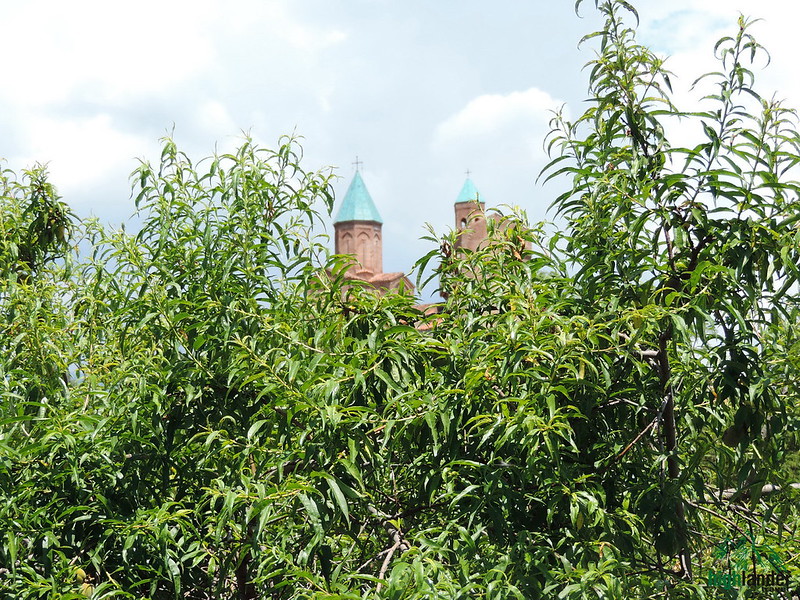
Across the Alazani Valley, the turquoise-domed Church of the Archangels crowns a green hill—all that remains of Gremi, which served as Kakheti’s capital before Persian invasions devastated it in 1615.
The church and attached three-story bell tower survived because they sat on high ground. Everything else—the marketplace, royal residence, trading town—was destroyed. Walking the ruins, you feel that absence: a capital city reduced to a single beautiful church.
Inside, frescoes remain remarkably intact. The bell tower functions as a small museum displaying archaeological finds and portraits of Kakhetian kings. Climb to the top for panoramic views across the valley.
Details: Open 10am-6pm Tuesday-Sunday. Entrance 10 GEL. 25 minutes from Telavi toward Kvareli.
Old and New Shuamta Monasteries
Eleven kilometers from Telavi on the road toward Tbilisi, two monasteries sit within walking distance of each other, representing different eras of Georgian Christianity.
Dzveli Shuamta (Old Shuamta) dates to the 5th century—one of Georgia’s oldest religious sites. The monastery is humble, almost primitive, but the setting stuns: wooded Tsivgombori Mountain behind, Caucasus peaks framing the red-roofed churches. “Shuamta” means “among the mountains,” and standing here you understand the name viscerally.
Akhali Shuamta (New Shuamta), closer to the highway, was built in the 16th century. Active nuns maintain the complex today. The churches show more architectural sophistication, and the grounds include beautiful gardens.
A 2-kilometer forest path connects the two monasteries—a pleasant walk if weather cooperates.
Details: Both open from 9am daily. Free entrance. On the route to Tbilisi via Gombori Pass.
Where to Eat in Telavi
Kakhetian cuisine emphasizes grilled meats, fresh vegetables, local cheeses, and of course, wine. Telavi’s restaurant scene has improved dramatically in recent years:
Odlisi Cheese Bar: This might be the most special dining experience in Kakheti. Owner Rati Rostomaschvili creates gourmet cheeses infused with wild garlic, truffle, nettle, and 25 other ingredients—all aged onsite in a 100-year-old schoolhouse. Request a tour of the aging room before sitting down to an opulent tasting board paired with local wines. Reservations essential; message them on Facebook or call ahead.
Doli: Contemporary Kakhetian cuisine in a beautifully designed space attached to Communal Hotel. The khinkali (made with red Doli wheat flour, beef, and thyme) are exceptional. Great wine list. Open daily from 1:30pm.
Kapiloni: Local favorite serving traditional Georgian food in a leafy courtyard. Large portions, reasonable prices, reliable quality. The veal ribs with adjika and kebab with sulguni both recommended.
Zodiaqo: Often called the best khinkali restaurant in Georgia. Simple atmosphere, spectacular dumplings. They have a branch in Tbilisi too.
Biblus Piatto: Bookstore-cafe overlooking the river, perfect for breakfast, coffee, and light meals.
Nadikvari Terrace: Go for the sunset views rather than the food, though the wine selection is solid.
Marleta’s Farm: Outside the city, this unique venue serves gourmet goat cheese in a setting decorated with large-scale artworks by painter Malkhaz Gorgadze. There’s even an outdoor pool with mountain views. Reservations required; call Sopho in advance.
Where to Stay in Telavi
Budget: Guest House Lilia offers spotless rooms, warm hospitality, a garden verandah, and a wine cellar. Perfect for travelers who prefer staying with local families.
Heritage boutique: Dzveli Galavani (“Old Wall”) occupies a restored building on Cholokashvili Street with three gorgeous rooms featuring heritage fittings and private bathrooms. Highly recommended for atmosphere.
Mid-range: Hestia Hotel, Wine & View sits atop a hill with panoramic views from the rooftop terrace. Beautiful rooms, excellent home-cooked dinners.
Boutique: Communal Telavi, from the team behind Tbilisi’s acclaimed Communal hotels, offers the finest boutique accommodation in Kakheti. Central location on Cholokashvili Street, outdoor pool, attached Doli restaurant.
Luxury: Radisson Collection Tsinandali Estate provides five-star accommodation on the historic Chavchavadze property, 15 minutes from Telavi. Phenomenal breakfast, unrestricted estate access.
Practical Information
Getting to Telavi
Marshrutka from Tbilisi: Vans depart from Ortachala and Isani stations, taking 2-2.5 hours via the scenic Gombori Pass. Cost: approximately 10-12 GEL. Ortachala can be confusing—ask locals for help finding the Telavi vans.
Taxi/Bolt from Tbilisi: Approximately 80-100 GEL one-way. Comfortable but limits flexibility unless you hire the driver for the day.
Organized tours: Day trips from Tbilisi run 50-80 USD per person for small groups. Private tours cost more but allow custom itineraries. We offer comprehensive Kakheti tours with knowledgeable local guides.
Self-driving: Straightforward 95km drive on good roads. The Gombori Pass section is winding but paved and well-maintained. Any rental car handles it fine.
Getting Around Telavi
The city center is completely walkable. Bolt app works here for reaching restaurants or sites outside walking distance.
For monasteries and wineries outside town, you’ll need wheels. Your guesthouse can arrange a driver for the day (typically 80-120 GEL depending on itinerary), or use GoTrip.ge to pre-book transfers with set prices.
Best Time to Visit
Rtveli season (late September-October): The grape harvest transforms Kakheti. Atmospheric, busy, unforgettable. Book accommodation well in advance.
Spring (April-May): Lush green landscapes, wildflowers, pleasant temperatures. Some rainy days.
Summer (June-August): Hot—often 35°C+. Start early, carry water, take afternoon breaks.
Winter (December-February): Quiet, mild, excellent mountain visibility. Landscape looks dry but crowds disappear entirely.
How Much Time Do You Need?
One day: Enough for Batonis Tsikhe, the plane tree, Cholokashvili Street, the bazaar, and one nearby monastery (Alaverdi or Ikalto). Rushed but possible.
Two days: Comfortable exploration of the city plus two or three outside sites. Time for proper meals and wine tastings.
Three+ days: Deep immersion. Visit multiple monasteries, explore wineries at leisure, hike Nadikvari at sunset, experience local rhythm. Highly recommended.
Frequently Asked Questions
Telavi or Sighnaghi—which should I visit?
Both, if time allows. Sighnaghi is more photogenic—tiny hilltop town with defensive walls and valley views. Telavi is more authentic—a working regional capital with better restaurants, accommodation, and transport connections. For a single base in Kakheti, Telavi works better. For Instagram shots, Sighnaghi wins.
Is Telavi worth visiting if I don’t drink wine?
Absolutely. The monasteries, history, architecture, and food all stand independent of wine culture. You’ll understand Kakheti better with some wine context, but you don’t need to drink any.
Can I visit the monasteries by public transport?
Theoretically possible but impractical. Marshrutkas connect Telavi to nearby villages, but timing and routes make independent monastery-hopping frustrating. A hired driver costs little for the convenience provided.
What should I buy in Telavi?
Fresh churchkhela from the bazaar (much better than packaged versions), local adjika spice blends, honey from monastery shops, and handmade ceramics from Kera studio on Cholokashvili Street. Wine, obviously, if you can transport it home.
Is Telavi safe?
Extremely safe. Virtually no crime affects tourists. Georgian hospitality culture takes guest-protection seriously. Solo women travelers consistently report positive experiences.
Why Telavi Matters
Here’s what I keep coming back to: Telavi isn’t performing for anyone.
The fortress isn’t a recreation. The monasteries aren’t museums. The wineries aren’t tasting rooms designed by marketing consultants. Everything here is still doing what it was built to do—the churches hold services, the cellars make wine, the bazaar feeds the city.
That continuity is Georgia’s real treasure. Eight thousand years of winemaking. Seventeen centuries of Christianity. Generations of families working the same land, singing the same polyphonic songs, preparing the same foods for the same holidays.
Telavi gives you access to all of it. Not as a spectator watching costumed performers, but as a guest welcomed into something ongoing. The table will be set whether you’re there or not. The wine will ferment in its qvevri. The monks will chant their morning prayers.
You’re just lucky enough to witness it.
Plan Your Visit
We run comprehensive Kakheti tours from Tbilisi with guides who know this region intimately—the hidden cellars, the back roads, the family vineyards that don’t appear on tourist maps. Small groups, flexible schedules, real depth.
Visit www.georgia-tours.eu to explore options and book.
See you in Telavi.