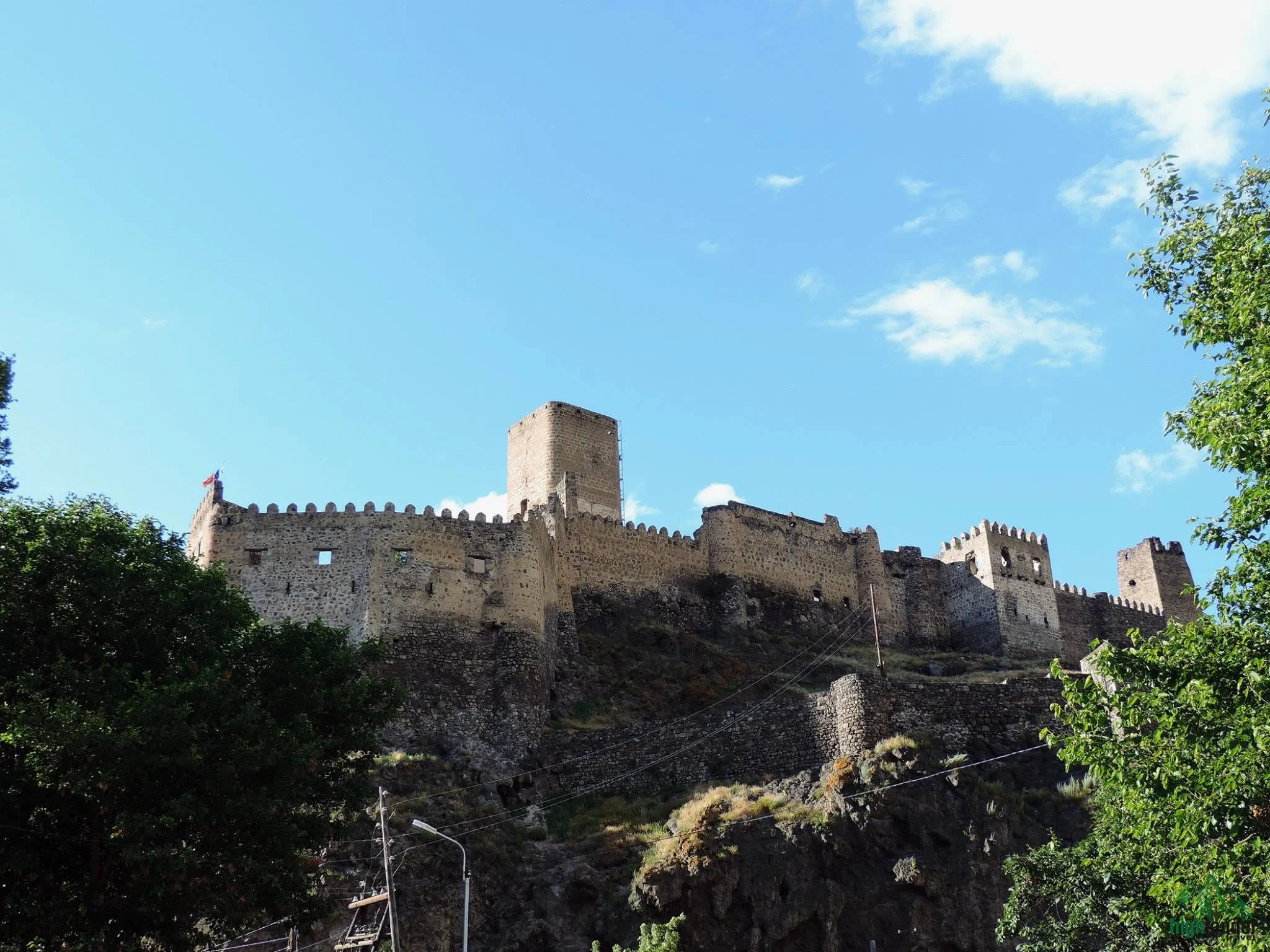
You see it long before you reach it. The road from Akhaltsikhe follows the Mtkvari through a canyon of rust-coloured rock. Then, where a second river pours in from the east, a single crag rises from the valley floor with walls wrapped around its top like a crown pulled down too tight. That’s Khertvisi. For roughly a thousand years, anyone heading south to Vardzia or east onto the Javakheti plateau had to pass under it, and ask its permission first.
Khertvisi is one of the oldest and best-preserved fortresses in Georgia. It’s also one of the easiest to fit into a trip, because it sits right on the road to Vardzia. It’s on the route of every Samtskhe-Javakheti tour we run, from the 2-day Vardzia tour from Tbilisi to the 12-day Around Georgia tour. This guide covers its history, what you’ll find inside the walls, and how to plan a stop.
Khertvisi Fortress at a glance
- Where: Khertvisi village, Aspindza Municipality, at the confluence of the Mtkvari and Paravani rivers.
- Distances: about 16 km (20 minutes) from Vardzia, 45 km from Akhaltsikhe, and about 210 km (3.5–4 hours) from Tbilisi.
- Built: the current walls mostly date from 1354–1356, on a site fortified since at least the 10th century.
- Entry: usually free, open during daylight hours.
- Time needed: 45–90 minutes, including a 10–15 minute climb.
- Condition: largely unrestored. What you see is authentic stone, not a reconstruction.
History of Khertvisi Fortress
Khertvisi’s history is a list of everyone who wanted this crossroads. Geography explains why. The Mtkvari valley leads south toward Vardzia and on to what is now Turkey. The Paravani valley climbs east onto the Javakheti plateau and toward Armenia. Whoever held the rock above the junction controlled both roads, and the trade and armies that travelled them.
Legend and antiquity
Local tradition dates a fortress here to the 2nd century BC, and one popular legend claims Alexander the Great destroyed it on his campaigns. There’s no evidence Alexander came this way. The story says more about how old the place feels than about what happened. What is certain is that Georgian chronicles remember Khertvisi as a town long before its surviving walls were built.
The medieval fortress (10th–13th centuries)
The first reliable records date from the 10th and 11th centuries. By then Khertvisi was the main centre of Meskheti, the historic region of southwest Georgia. A church was built inside the walls in 985. By the 12th century a town had grown up on the terraces around the rock, living off the customs and traffic the fortress controlled.
That prosperity drew attackers. In the 13th century the Mongol invasions swept across Georgia, and Khertvisi was badly damaged.
The 1354–1356 rebuilding
Most of the walls you see today come from one campaign in the mid-14th century. A stone inscription found at the fortress records that Zakaria Kamkamisdze (spelt Kamkamishvili in some sources) rebuilt the walls between 1354 and 1356. This happened under the Jaqeli family, who ruled Samtskhe from the late 13th century and whose seat was at Rabati Castle in Akhaltsikhe. It was the same period in which the Jaqelis endowed nearby monasteries such as Sapara.
Three centuries of Ottoman rule (16th century – 1828)
In the 16th century the Ottoman Empire took southern Georgia, and Khertvisi became a frontier fortress facing the Georgian kingdoms to the north. Georgians retook it twice, briefly: Giorgi Saakadze in 1624, and King Erekle II in 1771. Erekle’s troops reportedly carried off a large quantity of goods, a sign of how much trade still passed through. Both times the Ottomans returned.
The Russian garrison and after
Ottoman rule here ended in 1828, when Russian forces took southern Georgia during the Russo-Turkish War. The Russian army kept a garrison at Khertvisi into the late 19th century. After that the fortress lost its military role and slowly settled into the ruin you see today. It’s now owned by the Georgian state as a protected monument.
What you’ll see: the fortress, part by part
Khertvisi isn’t one building. It’s a small walled system that follows the shape of the rock, and it reads best in two parts: the citadel on the summit and the lower yard wrapped around its south and east sides.
The setting
Stand on the road bridge before you climb. The crag rises sheer from the point where the Paravani meets the Mtkvari. Cliffs protect it on the river sides, so the builders only needed heavy walls where the slope is gentler. Once you notice that, you’ll see it everywhere: the masonry thickens and the towers gather exactly where an attacker could have walked up, and thin out where the rock does the work.
The walls and towers
The curtain walls from the 1354–1356 rebuilding run along the edge of the rock, broken by square and rounded towers. They’re built of rough local stone set in lime mortar, darker and more irregular than the dressed blocks of Georgian churches. Look closely and you’ll see different building phases stacked on top of each other: patched sections, filled-in openings, and courses that change height halfway along a wall. It’s a thousand years of repairs recorded in stone.
The lower yard
You enter through the lower yard, the part of the fortress where the garrison lived and worked. Today it’s a grassy, uneven terrace inside the outer wall, with foundations and fallen masonry marking where buildings once stood. It gives you your first view down the Mtkvari gorge toward Vardzia.
The church
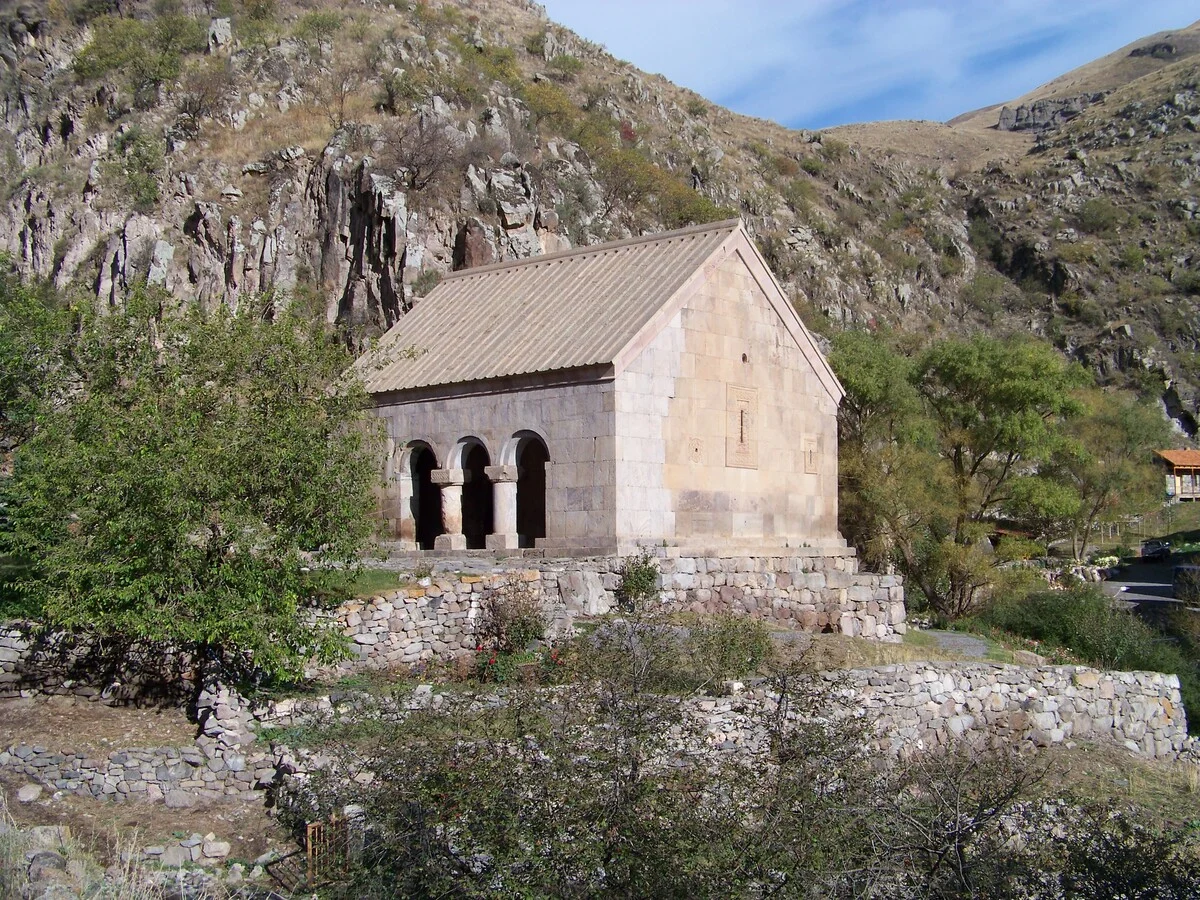
Inside the fortress stands a small single-nave church, which sources date to the 10th century and link to the 985 church in the chronicles. It’s plain and compact, built as a garrison chapel rather than a showpiece. That simplicity is part of its appeal after the painted interiors of Vardzia and Sapara.
The citadel
The summit is the heart of Khertvisi: the keep and watchtower on the highest point of the rock, the last line of defence if the lower walls fell. The view from up here explains the whole fortress in one look. The Mtkvari runs south to Vardzia, the Paravani climbs east toward Javakheti, and the village terraces cling to the slopes below. Few places in Georgia show so plainly why a castle was built exactly where it was.
The water tunnels
Khertvisi could hold out through long sieges because of an underground passage cut into the rock toward the river, so the garrison could reach water without leaving the walls. Parts of these tunnels survive. Treat any opening you find with caution, since they’re unlit and unmaintained.
A suggested route (45–90 minutes)
- Photograph from the bridge or the road on the Vardzia side. The classic shot of the crag above the two rivers is from below, not from the top.
- Walk up from the village along the footpath: 10–15 minutes, uneven and steep in places.
- Enter the lower yard and follow the outer wall around to the church.
- Climb to the citadel for the view over the confluence.
- Come down slowly. The loose stones are harder going on the way down than on the way up.
Visiting Khertvisi Fortress
| Details | |
|---|---|
| Entry | Usually free. Some visitors report a small fee during conservation works, so bring a few lari |
| Opening hours | Daylight hours, roughly 9:00–18:00. There’s no staffed gate most of the year |
| Parking | Free, in Khertvisi village at the foot of the hill |
| The climb | 10–15 minutes up a rough footpath. Moderately steep, with no handrails in most places |
| Time needed | 45–90 minutes |
| Facilities | None at the fortress. Cafés and toilets are in Vardzia or Aspindza |
Getting there
- From Akhaltsikhe (about 45 km): 45 minutes south along the Mtkvari through Aspindza. The fortress rises above the road at the junction where the Vardzia and Akhalkalaki roads split.
- From Vardzia (about 16 km): 20 minutes back up the valley. It’s easy to see both on the same day.
- From Tbilisi (about 210 km): 3.5–4 hours via Gori, Borjomi and Akhaltsikhe. That’s too far for a relaxed day trip that also includes Vardzia and Rabati.
- By public transport: Akhaltsikhe–Vardzia minibuses pass through Khertvisi. Ask the driver to drop you at the fortress, but check return times first, as there are only a few each day.
Tips before you go
- Wear real shoes. The path is loose gravel and polished rock. Sandals are a bad idea, especially on the way down.
- Go in the morning or late afternoon. The gorge has little shade, and in July and August the rock soaks up heat by midday.
- Watch your footing on the walls. Nothing here is fenced, and the drops are serious. Keep children close.
- Bring water. Nothing is sold at the site.
- Combine it properly. Khertvisi, Vardzia, Upper Vardzia and Tsunda all sit in the same stretch of the Mtkvari valley and fill a full day.
What’s nearby
- Vardzia (16 km): the 12th-century cave city of Queen Tamar, and the reason most people are on this road.
- Tmogvi Fortress and Vanis Kvabebi: a ruined fortress and a cave monastery further up the Mtkvari gorge, near Vardzia.
- Saro: a village above the valley near Khertvisi, with its own small fortress.
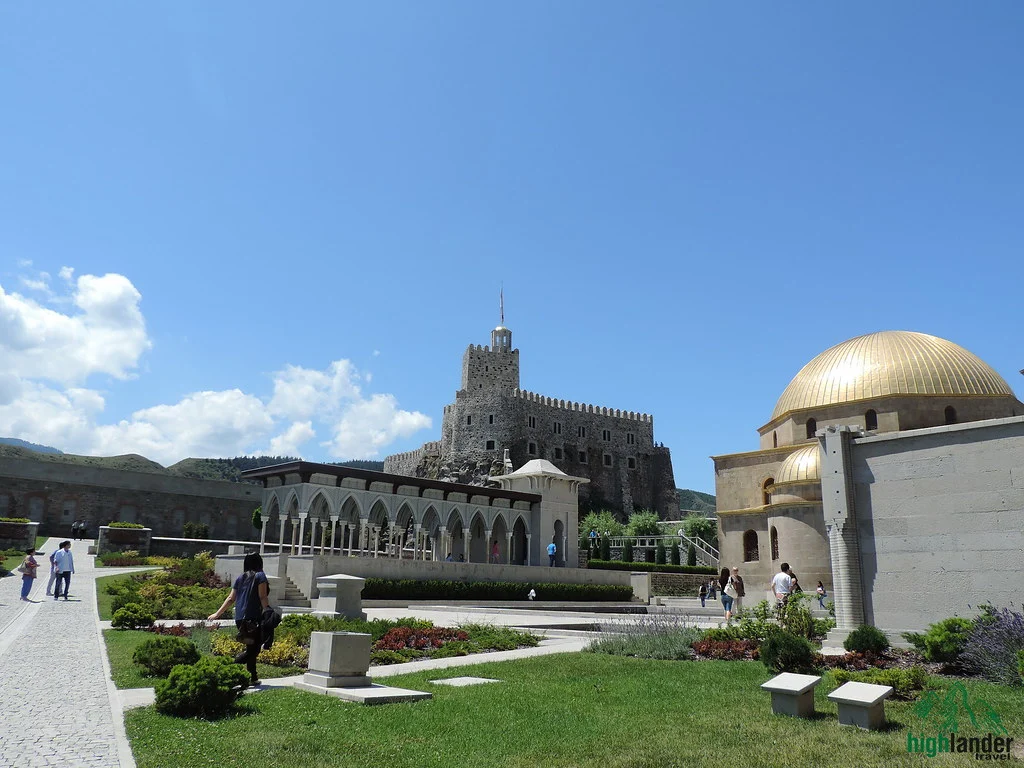
- Rabati Castle, Akhaltsikhe (45 km): the seat of the Jaqeli rulers who rebuilt Khertvisi.
- Javakheti plateau: follow the Paravani east toward the volcanic lakes and Abuli Fortress. Our Samtskhe-Javakheti guide covers the region.
Tours that include Khertvisi
Khertvisi is on the route of every tour we run in Samtskhe-Javakheti.
| Tour | Length | Why take it |
|---|---|---|
| Cave Monastery Vardzia Tour from Tbilisi | 2 days | The shortest way to see Vardzia properly, with Borjomi, Rabati and Sapara |
| Mystic South Georgia | 4 days | Adds the Javakheti volcanic lakes, the Paravani road Khertvisi guards |
| 7-Day Spring and Autumn Tour | 7 days | The south combined with Kakheti wine country |
| Svaneti and Vardzia | 10 days | The high Caucasus and the cave city in one private trip |
| Around Georgia | 12 days | The full loop: Svaneti, wine country and the cave cities |
Plan your trip to southern Georgia. Tell us your dates and we’ll build a route around Vardzia and the Mtkvari valley. Plan my trip
Frequently asked questions about Khertvisi Fortress
How old is Khertvisi Fortress?
The site was fortified by at least the 10th century, and a church inside dates to 985. Local tradition places the first fortress in the 2nd century BC. Most of the standing walls were rebuilt between 1354 and 1356, as recorded by an inscription found at the fortress.
Is there an entrance fee at Khertvisi?
Entry is usually free, and there’s no staffed ticket office most of the year. Some visitors have paid a small fee during conservation works, so carry a little cash.
How long does it take to visit Khertvisi Fortress?
Plan 45–90 minutes: 10–15 minutes to walk up from the village, time to explore the lower yard and citadel, and a slower walk back down.
How far is Khertvisi from Vardzia?
About 16 km, or 20 minutes by car. Almost everyone visiting Vardzia passes Khertvisi, so it’s an easy stop on the same day.
Is Khertvisi Fortress suitable for children or older travellers?
The climb is short but rough, and there are no railings on the walls. Confident walkers of any age manage it well. Families should keep young children close at the top, and anyone unsteady on loose ground can enjoy the view from the road below.
Did Alexander the Great really destroy Khertvisi?
That’s a local legend, and there’s no historical evidence for it. Alexander’s campaigns never reached this part of the Caucasus. The story shows how ancient the fortress has always felt to the people who live around it.