Three nights in the Pearl of the Caucasus—medieval tower villages at 2,100 meters, glacier hiking, Europe’s highest inhabited settlement, and family guesthouses where Svan culture has survived unchanged for a thousand years
Experience Svaneti, the most remote and culturally distinct region of Georgia, over seven days that also cover the country’s main UNESCO World Heritage sites. This isn’t a rushed one-day visit to Svaneti. You’ll spend three full days in the mountain region at elevations between 1,500 and 2,100 meters, hike to a glacier, explore Europe’s highest inhabited village, and stay with Svan families in traditional guesthouses.
The route takes you through Georgia’s geographic and cultural diversity: from Tbilisi through the ancient capital Mtskheta with churches from the 6th and 11th centuries, past Uplistsikhe’s 3,000-year-old rock-carved city, through western Georgia’s subtropical canyons, into Svaneti’s alpine zone where medieval defensive towers still define village skylines, and back through cave systems carved by underground rivers.
Svaneti’s isolation by the High Caucasus peaks preserved a culture that disappeared elsewhere in Georgia. Stone towers built between the 9th and 13th centuries protected families during blood feuds. The Svan language predates Georgian and belongs to a different linguistic branch. Church frescoes show artistic traditions developed without outside influence. Three nights in Svaneti give you time to understand this unique mountain culture beyond just seeing the famous views.
This tour suits: Travelers wanting deep Svaneti immersion rather than a rushed day trip, hikers comfortable with 5-6 hour trails at altitude, culture enthusiasts interested in medieval architecture and isolated mountain traditions, photographers seeking dramatic Caucasus landscapes, and anyone with a week to experience Georgia’s geographic diversity from subtropical lowlands to alpine peaks.
This tour doesn’t suit: Travelers uncomfortable with basic guesthouse accommodations, anyone unable to walk 4-5 hours on mountain trails, people who get severely carsick on winding mountain roads, visitors wanting luxury hotels throughout, or those seeking beach vacations or nightlife.
Tour highlights
7 days • 6 nights • 3 nights Svaneti • Glacier hiking • Ushguli 2,100m • UNESCO sites • Family guesthouses
Why This Tour Combines Georgia’s Highlights with Deep Svaneti Immersion
Most Georgia tours either skip Svaneti entirely or include just one rushed day. Tours that focus only on Svaneti miss the context of how different this region is from the rest of Georgia. This itinerary solves both problems.
Days 1-2 establish the baseline: You see mainstream Georgian culture in Tbilisi and at the UNESCO churches in Mtskheta. Uplistsikhe shows Georgia’s pre-Christian past. Kutaisi and Gelati represent western Georgia’s distinct character. This context makes Svaneti’s differences more apparent.
Days 3-5 immerse you in Svaneti: Three full days in the region let you experience it properly. Day 3 covers Mestia’s museums and historic districts. Day 4 takes you hiking to Chalaadi Glacier and up to Hatsvali for mountain panoramas. Day 5 visits Ushguli, Europe’s highest village, with time to actually explore instead of just taking photos.
Days 6-7 complete the circuit: Return through different routes showing more of western Georgia. Matskhvarishi church’s unique frescoes differ from what you saw at Gelati. Sataplia caves demonstrate Georgia’s karst geology. The route back creates a complete loop through the country.
This structure works better than tours that try to cover everything in 5 days (too rushed) or spend 10 days only in Svaneti (too much for one region unless you’re serious about hiking).
What Makes Svaneti the Pearl of the Caucasus
The “Pearl of the Caucasus” nickname comes from how Svaneti’s geographic position created something precious and rare. The region sits at 1,400 to 2,200 meters elevation, surrounded by peaks over 4,000 meters. Only two road access points exist, both built in Soviet times. Before the 1930s, Svaneti was accessible only by mountain passes closed 6-7 months per year.
Geographic isolation preserved medieval culture. When Mongols, Persians, and Turks invaded Georgia between the 13th and 18th centuries, Svaneti’s mountain barriers kept invaders out. Culture that was destroyed or changed in accessible Georgia survived here. Defensive towers that became obsolete elsewhere in the 1400s remained necessary in Svaneti into the 1800s because blood feuds continued.
The Svan language isn’t a dialect of Georgian. It belongs to the Kartvelian language family but diverged over 4,000 years ago. Svan has no standard written form. Most Svans speak Svan at home, Georgian in public, and increasingly Russian or English for tourism.
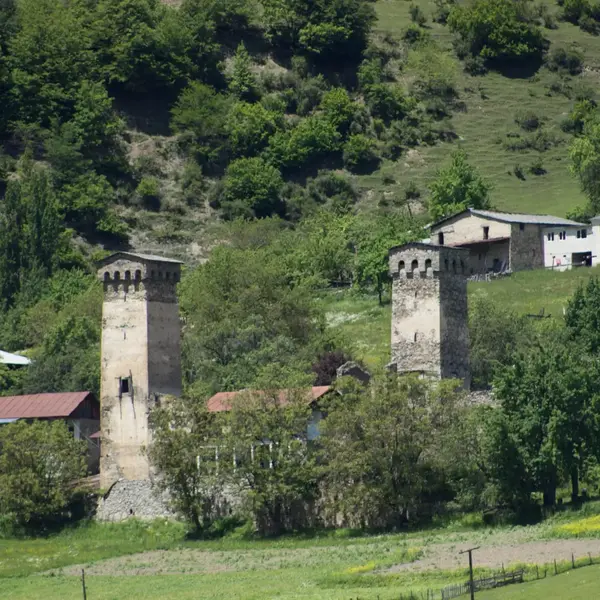
Svan towers define the region visually. Families built stone towers 20-25 meters tall starting in the 9th century. The towers served as fortified refuges during attacks and blood feuds. When conflicts started, the entire extended family retreated to their tower with livestock on the ground floor and supplies for weeks. UNESCO recognized Svaneti’s towers as globally unique medieval architecture.
Mount Ushba (4,710m) is Svaneti’s iconic peak. The twin summits create a distinctive silhouette visible from multiple villages. First ascent wasn’t until 1888, decades after easier but higher Caucasus peaks were climbed.
Tour Itinerary
Arrival: Tbilisi International Airport | Duration: Full day
We meet you at Tbilisi International Airport regardless of arrival time. Transfer to your hotel in central Tbilisi.
Old Tbilisi Walking Tour
Old Tbilisi’s narrow streets and wooden balconies date from the 18th and 19th centuries, built after Persian invasions destroyed earlier structures. The architecture shows Middle Eastern and European influences mixing with Georgian traditions. The sulfur bath district (Abanotubani) is where Tbilisi began in the 5th century around natural hot springs.
Narikala Fortress sits on the ridge above Old Town. Originally built in the 4th century, the fortress was expanded by every power that conquered Tbilisi over 1,500 years. Cable car up for views showing how Tbilisi spreads through the valley between mountain ranges.
Metekhi Church (13th century) stands on a cliff above the Mtkvari River. This area was the royal quarter during Georgia’s medieval kingdom.
Rustaveli Avenue represents modern Georgia. Parliament, Opera House, National Museum, and modern office buildings line the main boulevard. The architecture mixes 19th-century Russian Imperial style with Soviet structures and new glass construction.
Freedom Square (formerly Lenin Square) shows post-Soviet transformation. The Soviet monuments were removed and replaced with a column bearing Saint George slaying the dragon.
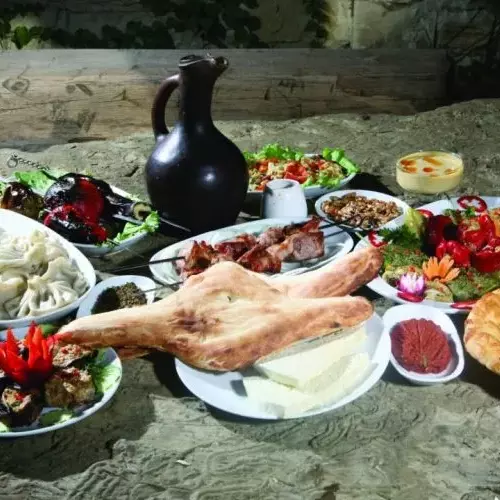
Evening free to explore restaurants. Georgian cuisine centers on bread, dumplings (khinkali), grilled meats, vegetable dishes, and wine.
Overnight: Hotel in Tbilisi
Route: Tbilisi → Mtskheta → Uplistsikhe → Gelati → Kutaisi | Duration: Full day with ~6 hours driving
Morning: Georgia’s Ancient Capital
Mtskheta (20 minutes from Tbilisi) served as Georgia’s capital for 1,000 years until the 6th century. The city sits where the Aragvi and Mtkvari rivers meet, a strategic position that made it the political and religious center of ancient Georgia.
Jvari Monastery (6th century) stands on the mountain overlooking Mtskheta. The cross that gives the church its name was erected in the 4th century when Georgia adopted Christianity. UNESCO designated this a World Heritage Site in 1994.
Svetitskhoveli Cathedral (11th century) in Mtskheta’s center is Georgia’s most sacred church. Georgian kings were crowned and buried here for centuries. The cathedral supposedly houses the robe of Christ.
Midday: 3,000-Year-Old Cave City
Uplistsikhe (1.5 hours from Mtskheta) is Georgia’s most impressive archaeological site. Starting around 1000 BC, people carved an entire city into soft volcanic rock. At its peak in the 1st millennium AD, 20,000 people lived in these caves.
Walk through rock-cut streets connecting hundreds of cave chambers. You’ll see the theater carved into the rock face, pagan temples later converted to Christian churches, storage chambers, wine cellars, and water systems.
Afternoon: Gelati Monastery and Kutaisi
Continue driving west to Kutaisi, Georgia’s second-largest city.
Gelati Monastery (12th century) sits in the hills above Kutaisi. King David the Builder founded Gelati as an academy that became medieval Georgia’s intellectual center. The monastery’s mosaics and frescoes represent the peak of Georgian medieval art. UNESCO lists Gelati as a World Heritage Site.
Arrive in Kutaisi or nearby Tskaltubo resort town in the evening. Tskaltubo was a famous Soviet-era spa resort built around natural thermal springs.
Overnight: Hotel in Kutaisi or Tskaltubo
Route: Kutaisi → Canyon → Mestia | Duration: Full day with ~6 hours mountain driving
Morning: Western Georgia Canyons
Canyon visit (choice between Martvili, Okatse, or Balda depending on season and preference):
Martvili Canyon: Boat ride through the lower canyon where the river has carved narrow gorges through limestone. The water is turquoise from minerals. Waterfalls drop into pools. The boat ride lasts 15-20 minutes covering about 300 meters.
Okatse Canyon: Metal walkway suspended 20-30 meters above the canyon floor. The walkway extends 780 meters along the cliff face. Views look down to the river and across to waterfalls. More dramatic than Martvili but not suitable if afraid of heights.
Balda Canyon: Less developed, more natural hiking along the river. Better for fewer tourists and rougher paths.
Afternoon: The Serious Mountain Drive
After the canyon, the serious mountain driving begins. The drive to Mestia takes approximately 6 hours from Kutaisi. The road follows the Enguri River valley into the High Caucasus. You’ll gain over 1,200 meters in elevation.
The scenery shifts dramatically: from dense green forests to alpine meadows to mountain villages with stone houses and towers. The last section winds through steep terrain with views down to the Enguri River gorge hundreds of meters below.
Arrive in Mestia in the afternoon. Check into your guesthouse.
Evening: Mestia Exploration
Walk through Mestia’s historic districts: Lanchvali, Lekhtagi, and Lagami are Mestia’s three old neighborhoods. Each has distinctive tower groups dating from different periods. Over 100 defensive towers stand in Mestia.
Margiani House is a 200-year-old Svan family home converted to a museum showing traditional Svan living arrangements with livestock on ground floor and family quarters above.
Mikheil Khergiani Museum honors Svaneti’s most famous mountaineer who completed first ascents throughout the Caucasus and Pamirs.
Svaneti Museum (Museum of History and Ethnography) houses the region’s most important medieval artifacts including gold and silver jewelry, medieval manuscripts, icons, and ethnographic items.
Dinner at your guesthouse. Meals are family-style with traditional Georgian and Svan dishes: khachapuri, kubdari (Svan meat-filled bread), potatoes with Svan spices.
Overnight: Guesthouse in Mestia (dinner included)
Focus: Glacier hiking and mountain panoramas | Hike: 12km round trip, 5-6 hours, elevation to ~2,000m
Morning: Chalaadi Glacier Hike
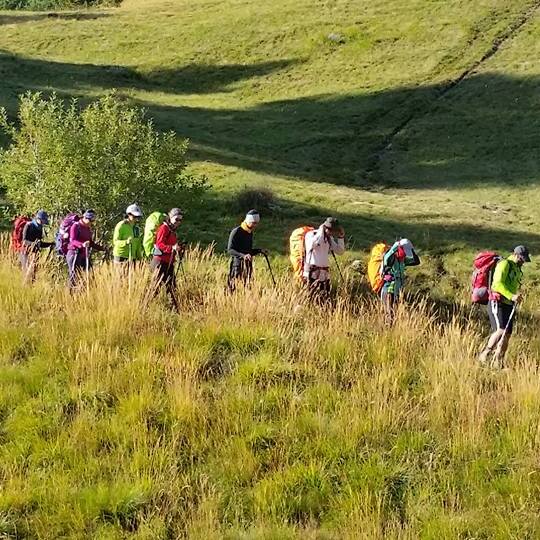
Chalaadi Glacier hike is the main physical activity of the tour. The trail starts from Lenjeri village, about 10 minutes’ drive from Mestia. Total hiking distance is approximately 12 kilometers round trip.
The path follows the Mestiachala River valley through diverse terrain: pine and fir forests, wooden bridges over glacier-fed streams, alpine meadows (wildflowers in June-July), then climbing gradually toward the glacier with about 400 meters elevation gain.
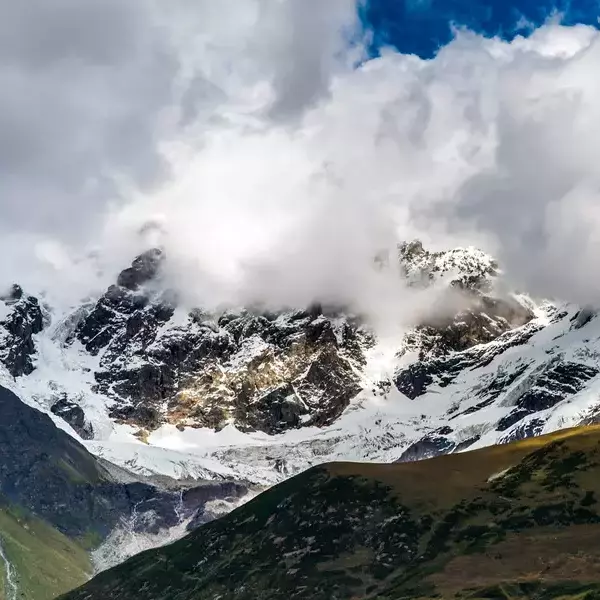
Chalaadi Glacier descends from the flanks of Mount Ushba. The glacier face is actively calving, meaning ice constantly breaks off and crashes down. You can hear the glacier cracking and shifting. The turquoise ice color comes from compressed ancient snow with air bubbles squeezed out.
The glacier has retreated significantly in the last 20 years due to climate change. From the glacier viewing area, Mount Ushba’s twin peaks (4,710m north summit, 4,690m south summit) dominate the skyline.
The hike takes 5-6 hours total including stops for photos and rest. The altitude (reaching about 2,000 meters) makes the hike more demanding than the distance suggests. Bring water, snacks, sun protection, and layers.
Afternoon: Hatsvali Mountain Views
Return to Mestia for lunch. Try local restaurants serving Svan cuisine. Kubdari (meat bread) is the signature dish.
Hatsvali ski resort (accessible by cable car from Mestia or by vehicle) sits at 2,347 meters elevation on the slopes above Mestia. In summer, the bare ski slopes offer panoramic mountain views.
From Hatsvali’s viewing platforms, you see Mount Ushba (4,710m) to the north, Mount Tetnuldi (4,858m) to the northeast, the Mestia valley spread below, and surrounding peaks of the High Caucasus.
Evening: Optional Folk Music
During high season (July-August), some restaurants in Mestia host live folk music shows featuring traditional Svan polyphonic singing. Svan polyphonic songs are UNESCO-recognized intangible cultural heritage. Ask your guide about current performance schedules.
Overnight: Guesthouse in Mestia (dinner included)
Route: Mestia → Ushguli → Mestia | Duration: Full day, 45km each way, 2.5-3 hours each direction by 4×4
Morning: The Journey to Europe’s Highest Village
Ushguli is Europe’s highest continuously inhabited village at 2,100 meters elevation. The village consists of four small communities: Zhibiani, Chvibiani, Chazhashi, and Murkmeli, clustered at the base of Mount Shkhara (5,193 meters), Georgia’s highest peak.
The road from Mestia to Ushguli covers 45 kilometers but takes 2.5-3 hours each direction. Regular vehicles can’t handle the terrain. We use 4×4 vehicles.
The road conditions: crosses several rivers with no bridges (fording through water), climbs over high passes with steep grades, winds along cliff edges with dramatic drop-offs, partly unpaved with large rocks and rough surface. The roughness is part of the experience—this difficulty kept Ushguli isolated for centuries.
Exploring Ushguli
UNESCO designated the entire Upper Svaneti region (including Ushguli) as a World Heritage Site in 1996. Ushguli has over 200 defensive towers, the highest concentration anywhere in Svaneti.
Walk through Chazhashi, the most preserved of Ushguli’s four communities. Stone-paved lanes wind between towers and traditional houses. Some families open their towers for visits (small tip expected). Climb inside a tower to see: ground floor for livestock, second floor for storage, third-fourth floors for living quarters, top floors for defensive positions.
Lamaria Church sits above the village complex. Dating from the 10th-11th centuries, the church contains frescoes showing Svan religious art traditions. Lamaria is the Svan name for the Virgin Mary.
Icon museum in Ushguli houses religious artifacts collected from the village’s churches—icons, crosses, and manuscripts dating from medieval times.
On clear days, Mount Shkhara towers directly above Ushguli. The glacier-covered peak rises 3,000 vertical meters above the village. The scale is difficult to grasp until you’re standing there.
Lunch in Ushguli at a local guesthouse.
Return to Mestia by the same rough road. The drive back offers different lighting on the mountains and valleys.
Overnight: Guesthouse in Mestia (dinner included)
Route: Mestia → Latali → Sataplia → Kutaisi | Duration: Full day with ~6 hours driving
Morning: Matskhvarishi Church
Before leaving Svaneti, one final cultural site:
Matskhvarishi Church in Latali village (30-40 minutes from Mestia) contains some of Svaneti’s most unique frescoes. The church dates from the 10th-11th centuries. The frescoes show purely local Svan artistic development: brighter color palettes than lowland Georgian churches, different compositional arrangements, unique saint depictions, and inscriptions in both Svan and Georgian.
Art historians value these paintings because they represent Svan artistic traditions that evolved in isolation without Byzantine or Persian influence.
Midday: Leaving Svaneti
Begin the long drive back to Kutaisi (approximately 6 hours total). The route descends from Mestia through the Enguri River valley, retracing the path you took entering Svaneti but with different views in reverse. The descent from alpine zone back to subtropical lowlands shows Georgia’s dramatic topographic diversity.
Afternoon: Sataplia Caves
Sataplia Nature Reserve (near Kutaisi) is famous for:
Sataplia Cave: A 300-meter walkway through underground chambers filled with stalactites, stalagmites, and limestone formations carved by underground rivers over millions of years. The cave stays at constant cool temperature year-round.
Dinosaur footprints: The reserve preserves dinosaur tracks from the Cretaceous period (about 145-66 million years ago). Over 200 individual tracks show where herbivorous dinosaurs walked through mud that later fossilized.
Glass viewing platform: Suspended over the forest canopy, offering views across the Colchis lowlands toward the Black Sea (on clear days).
Sataplia provides a complete contrast to Svaneti’s high mountains, showing western Georgia’s subtropical zone and karst geology.
Overnight: Hotel in Kutaisi or Tskaltubo
Route: Kutaisi → Tbilisi | Duration: ~4 hours driving
After breakfast, drive back to Tbilisi. The route crosses from western to eastern Georgia via the Rikoti Pass, then descends into the Mtkvari River valley where Tbilisi sits. The drive shows the geographic transition between Georgia’s wet western regions and drier eastern zones.
Arrive in Tbilisi by early afternoon. We transfer you to your hotel or to Tbilisi International Airport depending on your departure plans.
End of tour: Tbilisi Airport or city center
Optional Extension: Southern Georgia
Instead of returning to Tbilisi, continue south to visit:
Vardzia – 12th-century cave monastery carved 13 stories deep into a cliff face, once housing 2,000 monks
Rabati Fortress in Akhaltsikhe – Fortress showing 700 years of Georgian, Ottoman, and Russian architectural layers
Borjomi – Mountain resort town famous for natural carbonated mineral water springs
Sapara Monastery – Hidden in forest with remarkable 13th-century frescoes
The southern extension adds 2-3 additional days visiting regions most tourists never see. Contact us for extension pricing and detailed itinerary.
Price details
This is a private tour. Contact us with your group size and dates for detailed pricing.
What’s Included
Meal inclusions explained: All breakfasts are included. Dinners in Svaneti (Days 3-5) are included because guesthouses serve family-style dinners as standard practice. Outside Svaneti, lunches and dinners aren’t included to give you flexibility choosing restaurants that match your preferences and budget.
Accommodation details: Tbilisi and Kutaisi have 3-4 star hotels. Mestia uses traditional Svan family guesthouses with clean private rooms, bathrooms, mountain views, and family-style meals. Don’t expect hotel amenities, but expect genuine Svan hospitality.
Tour map
Tbilisi Airport
Tbilisi (Night 1)
Narikala Fortress
Jvari Monastery
Svetitskhoveli Cathedral
Uplistsikhe Cave City
Gelati Monastery
Kutaisi (Nights 2, 6)
Martvili Canyon
Okatse Canyon
Mestia (Nights 3-5)
Svaneti Museum
Chalaadi Glacier
Hatsvali (2,347m)
Ushguli (2,100m)
Mount Shkhara (5,193m)
Matskhvarishi Church, Latali
Sataplia Cave
Tour gallery

Practical Information
Duration: 7 days / 6 nights
Start/End: Tbilisi International Airport
Group Size: 2-12 people (private tours available)
Difficulty: Moderate—requires 5-6 hour hiking ability, altitude tolerance to 2,100m
Best Season: June to September (winter tours available with modified itinerary)
Language: English guide throughout
Best Time to Visit
June ⭐⭐⭐⭐: Wildflowers in bloom, fewer tourists, dramatic snow-capped peaks. Some trails may be muddy, Ushguli road sometimes closed by late snow.
July-August ⭐⭐⭐⭐⭐: Best weather reliability, all facilities operational, warmest temperatures, longest daylight. More tourists at popular spots, highest prices.
September ⭐⭐⭐⭐: Autumn colors beginning, fewer tourists, comfortable temperatures. Days getting shorter, possible early snow in Ushguli late month.
October-May: Svaneti hiking difficult or impossible. Winter tours (December-March) replace glacier hike with skiing at Tetnuldi/Hatsvali.
What to Pack
Essential: Sturdy walking shoes or light hiking boots (broken in), waterproof rain jacket and pants, warm fleece or insulated jacket (Svaneti evenings are cold even in summer), sun hat and sunglasses, sunscreen SPF 30+, daypack 20-25L, water bottle, headlamp or flashlight, basic first aid kit, personal medications.
Clothing layers: Quick-dry pants, long-sleeve shirts, t-shirts, warm layers for evenings, comfortable shoes for non-hiking days, modest clothing for church visits.
Tour FAQ
Why This Tour Works
The “Pearl of the Caucasus” name fits. Like a pearl formed by isolation and pressure, Svaneti’s culture developed its unique character by being cut off from the outside world, protected by mountains that both preserved and challenged its people.
Three nights in Svaneti makes the difference. Most tours drive to Mestia for a rushed day trip and leave. We stay three nights, giving you time to hike to a glacier, explore Ushguli by jeep, and experience family guesthouses with home-cooked meals. You understand Svaneti rather than just photographing it.
Georgia’s context makes Svaneti’s differences visible. The first two days establish the baseline: Tbilisi’s capital city culture, Mtskheta’s UNESCO churches, Uplistsikhe’s pre-Christian caves, Kutaisi’s western Georgian character. When you arrive in Svaneti on Day 3, the contrast is dramatic and meaningful.
The return route shows more diversity. You don’t just retrace your steps. Matskhvarishi church, Sataplia caves, and the geographic transition from alpine zone to subtropical lowlands complete your understanding of Georgia’s range.
This tour operates year-round. June-September offers standard hiking itinerary. December-March replaces glacier hiking with skiing at Tetnuldi and Hatsvali—Svaneti’s winter character is equally dramatic.
Georgia rewards travelers who venture beyond Tbilisi. Svaneti rewards those who stay long enough to understand it. Three days in the mountains, medieval towers, glacier hikes, and family guesthouses show you Georgia that most tourists never see.