Dmanisi Archaeological Site
Beneath the ruins of a medieval Silk Road city, archaeologists discovered something that rewrote human history: the oldest human ancestors ever found outside Africa. These small-brained, small-bodied pioneers shouldn’t have survived—but they did. And one skull suggests they may have cared for each other.
On a windswept promontory in southern Georgia, where two rivers meet beneath volcanic cliffs, lies a site that changed everything we thought we knew about human evolution.
Dmanisi is where the “First Europeans” walked. At 1.8 million years old, the hominin fossils found here are the earliest well-dated human remains outside of Africa—predating any other Eurasian site by hundreds of thousands of years. They challenged the assumption that only big-brained, technologically sophisticated humans could have left Africa. Instead, they revealed that our small, primitive ancestors made the journey far earlier than anyone imagined.
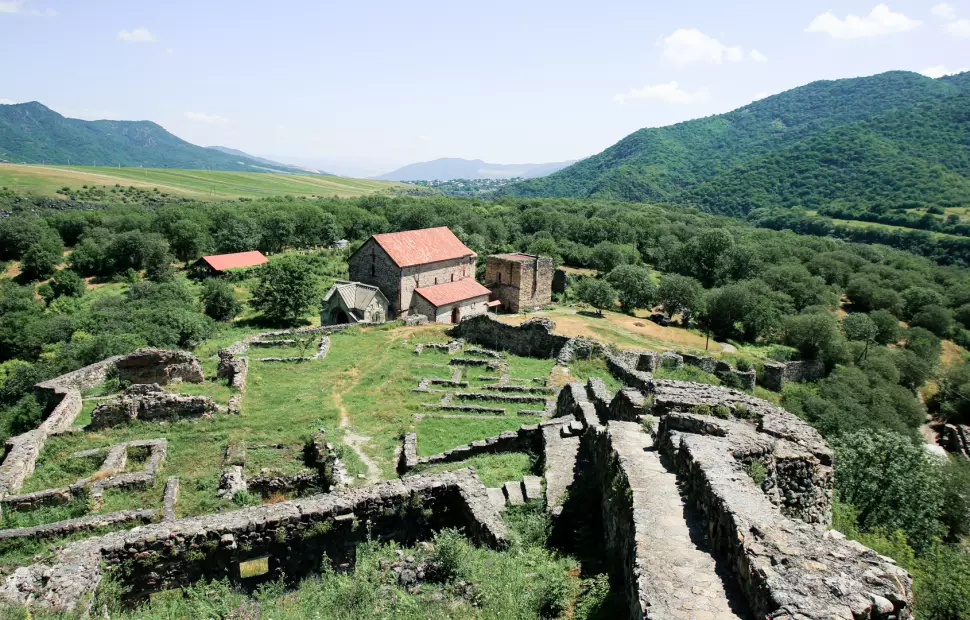
But Dmanisi isn’t just about prehistoric bones. The same promontory hosts the ruins of a medieval city that was once a major stop on the Silk Road, complete with a 6th-century cathedral, bathhouses, workshops, and cemeteries of Christians and Muslims who traded and lived side by side. It’s a place where 1.8 million years of human history collides in a single archaeological complex.
The Discovery That Changed Human Evolution
In 1983, archaeologists excavating medieval storage pits at Dmanisi made an unexpected find: fossilized animal bones embedded in the walls and floors of the pits. The medieval inhabitants had unknowingly dug into deposits containing prehistoric fauna—rhinoceros, saber-toothed cats, ostriches, and other animals from a world unimaginably older than their own.
Then came the stone tools. Archaic, crudely flaked choppers and flakes of the Oldowan tradition—the most primitive stone tool technology known, previously associated only with African sites. Their presence at Dmanisi was startling.
The breakthrough came in 1991, when Georgian paleontologist David Lordkipanidze and his team discovered a human jawbone (mandible) with teeth showing anatomical similarities to Homo erectus. Radioactive dating of the volcanic basalt beneath the fossil-bearing sediments confirmed an astonishing age: approximately 1.8 million years.
This made Dmanisi home to the oldest known humans outside Africa—by a significant margin.
Further excavations between 1999 and 2005 yielded an unprecedented bounty: five remarkably well-preserved skulls, four mandibles, isolated teeth, and over 100 postcranial bones (arm, leg, vertebrae, rib, and foot bones). Together with thousands of stone tools and more than 8,000 animal fossils, the Dmanisi collection became the richest assemblage of early Homo fossils at a single site anywhere in the world.
The Dmanisi Hominins: Small Bodies, Small Brains, Big Questions
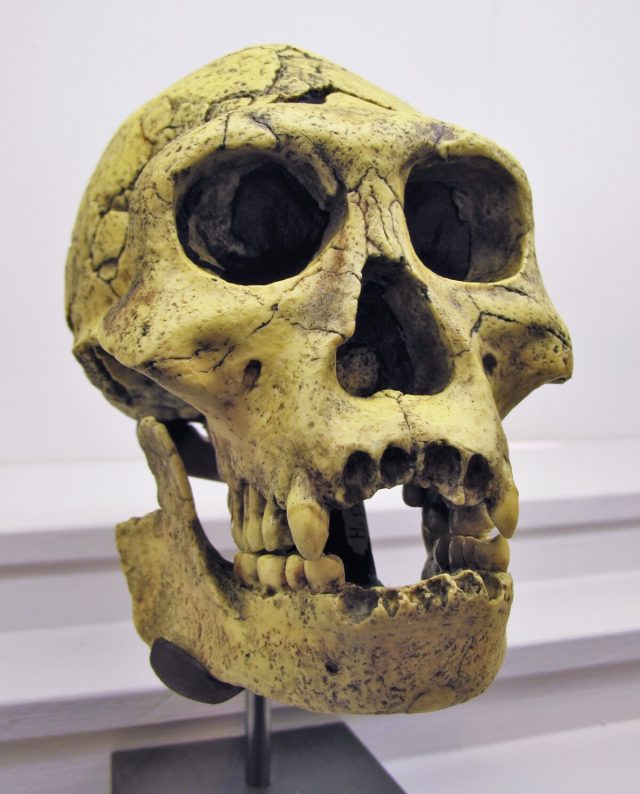
Before Dmanisi, scientists assumed that the first humans to leave Africa must have been relatively advanced: tall, with large brains, and armed with sophisticated stone tools. Otherwise, the reasoning went, how could they have survived the journey and adapted to new environments?
The Dmanisi fossils shattered these assumptions.
The Dmanisi hominins were small—standing between 145 and 166 cm (4’9″ to 5’5″) and weighing 40–50 kg (88–110 lbs). Their brains ranged from just 546 to 730 cubic centimeters—far smaller than later Homo erectus (around 1,000 cc) and modern humans (1,350 cc). Their stone tools were primitive Oldowan implements, not the more advanced Acheulean handaxes associated with later human migrations.
Yet these small-brained, simply-tooled pioneers somehow made it from East Africa to the Caucasus Mountains—a journey of thousands of kilometers through varied and challenging terrain.
How did they do it? Researchers believe the answer lies partly in Dmanisi’s environment. During the Early Pleistocene, the region was warmer and more humid than today, with a Mediterranean-like climate. The ancient lake shore where the hominins lived was surrounded by forests and grasslands teeming with prey animals. The Caucasus may have served as a refuge—a favorable environment reachable from Africa through the Levantine corridor (modern-day Israel, Lebanon, Syria).
The Dmanisi hominins likely employed aggressive scavenging, using rocks to drive predators away from their kills and claim meat for themselves. This “power scavenging” may have required group cooperation for safety—and may have laid the groundwork for the social behaviors that would later define humanity.
The Five Skulls: A Family Portrait of Early Humanity
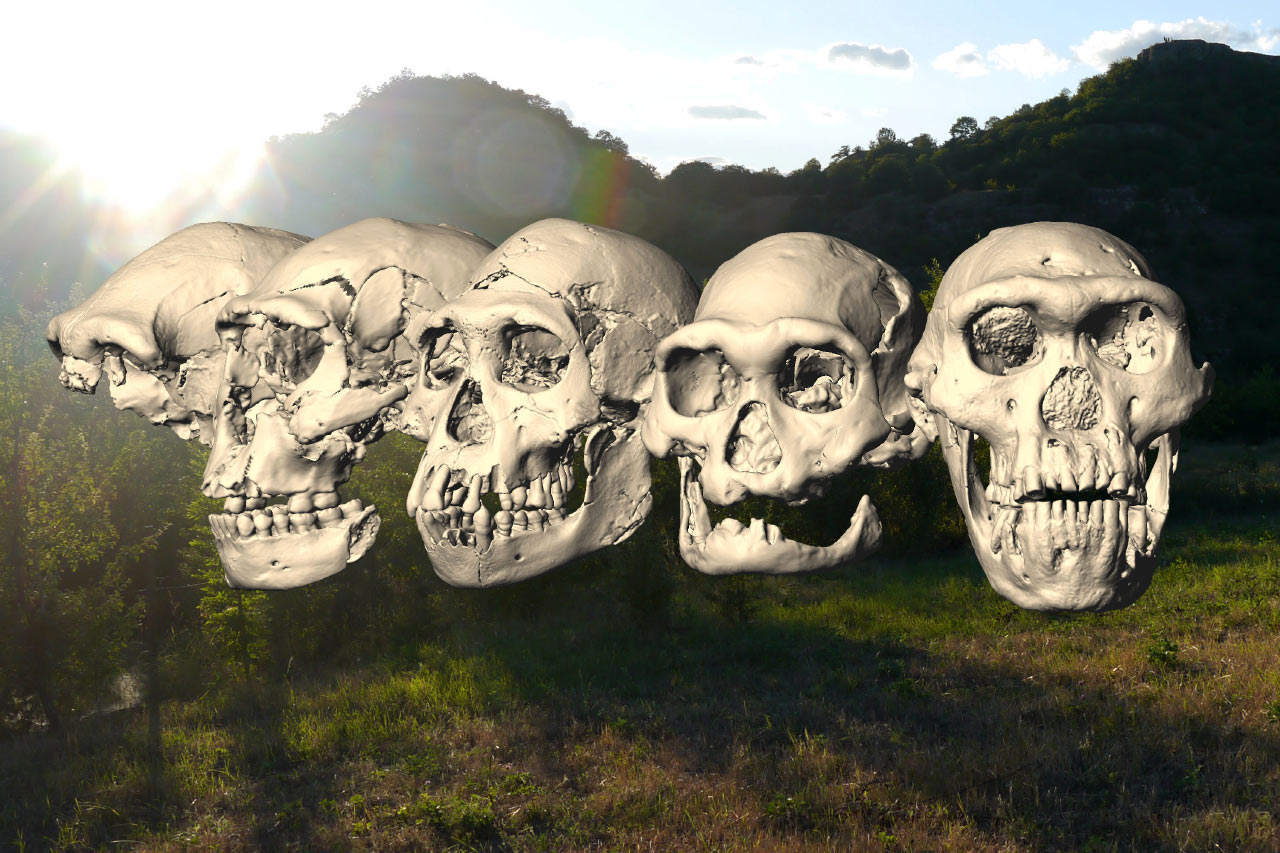
The five Dmanisi skulls represent the most complete collection of early Homo fossils from a single time and place. Each tells a different part of the story.
Skull 1 (D2280) and Skull 2 (D2282) — 1999
These two skulls, discovered in 1999, announced Dmanisi to the world. They exhibited small braincases, flat foreheads, and prominent brow ridges characteristic of Homo erectus, but with some features more reminiscent of the earlier African species Homo ergaster. Their discovery proved that humans had left Africa far earlier than previously thought.
Skull 3 (D2700) — 2001
This skull belonged to a subadult—a young individual who had not yet reached full maturity. With a brain size of only about 600 cc, it demonstrated that even juveniles were part of these early migrant populations. The presence of juveniles, adults, and elderly individuals at the same site gave researchers a unique window into population variability.
Skull 4 (D3444) — “The Old Man”
Perhaps the most poignant discovery at Dmanisi is the skull of an elderly male who had lost all but one of his teeth long before he died.
The empty tooth sockets had been completely reabsorbed into the bone—a process that takes years and can only occur while the individual is still alive. This means the “old man” survived for several years without the ability to chew.
In Georgia’s periodically cold Pleistocene climate, where meat was essential for survival and cooking had not yet been invented, how did a toothless individual survive? According to lead researcher David Lordkipanidze, the most likely explanation is that others in his group helped him—finding soft plant foods, pounding raw meat with stone tools so he could “gum” his dinner, and generally looking after him.
If true, this represents the earliest known evidence of compassion and care for the elderly in the human fossil record—predating similar evidence from Neanderthals by over 1.5 million years.
As Lordkipanidze told National Geographic: “We’re looking at perhaps the first sign of truly human behavior in one of our ancestors.”
Some scientists urge caution—toothless chimpanzees have been known to survive in the wild without assistance. But the Dmanisi environment, with its harsh winters, would have made independent survival much harder than in tropical Africa.
Skull 5 (D4500) — The Game Changer
Discovered in 2005 and described in a landmark 2013 paper in Science, Skull 5 is the most complete adult hominin skull from the Early Pleistocene ever found. It combines a small braincase (546 cc) with a large, prognathic (projecting) face and massive brow ridges—features previously thought to belong to different species.
Here’s what made Skull 5 revolutionary: the five Dmanisi skulls look remarkably different from each other. If they had been found at separate sites, they almost certainly would have been classified as different species.
But they weren’t found at separate sites. They were all found at Dmanisi, in the same geological layer, from the same time period. They must have been part of the same population.
This forced researchers to reconsider how they classified early human fossils. The team concluded that the variation among the Dmanisi skulls was no greater than the normal variation seen among modern humans or chimpanzees. This suggested that many supposed early human “species”—Homo habilis, Homo rudolfensis, Homo ergaster, Homo erectus—might actually represent a single evolving lineage rather than separate species.
The implications are still debated, but Skull 5 demonstrated that our understanding of early human diversity was far from complete.
Taxonomy: What Were the Dmanisi Hominins?
The precise classification of the Dmanisi fossils remains controversial.
Initially, researchers noted similarities to Homo ergaster, an early African form sometimes considered the ancestor of Homo erectus. The 2000 discovery of a massive jawbone (D2600) led some scientists to propose a new species: Homo georgicus.
However, subsequent analysis by the Dmanisi research team concluded that all the fossils likely represent the same taxon with significant age-related and sexual variation. They now favor classifying them as Homo erectus georgicus or Homo erectus ergaster georgicus—an early, small-brained, archaic form of Homo erectus.
The debate continues, but one thing is certain: the Dmanisi hominins occupy a crucial position in human evolution, representing the earliest well-documented stage of human expansion beyond Africa.
The Medieval City: A Silk Road Crossroads
Long after the last hominin walked these hills, another chapter of human history unfolded at Dmanisi.
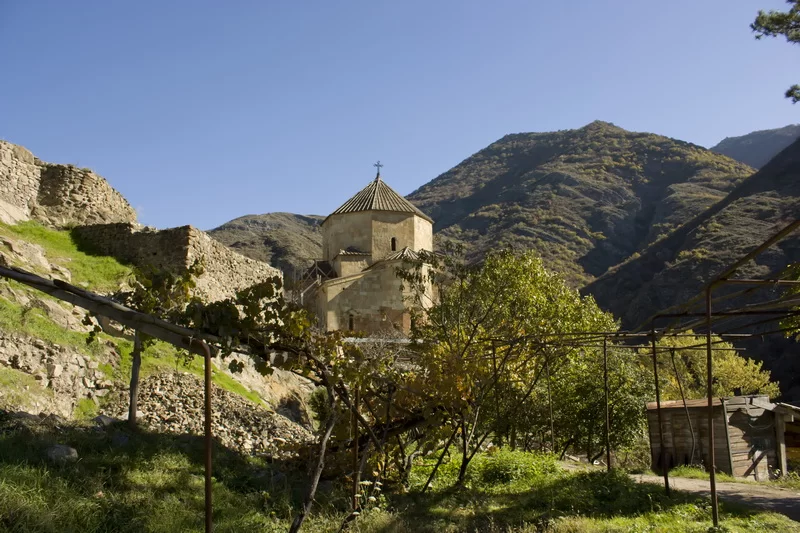
By the 6th century AD, an Orthodox Christian cathedral called Dmanisi Sioni stood on the promontory. The oldest written records of the town date to the 9th century, when Dmanisi was a possession of the Arab Emirate of Tbilisi.
Located at the confluence of important trade routes—including the “Camel Road” connecting Tbilisi to Dvin and Tabriz, and the “Artanuji Road” linking the Black Sea to the Caspian—Dmanisi grew into a major commercial center. According to the Arab geographer Yaqut al-Hamawi, the town exported silk.
The town changed hands repeatedly. The Seljuk Turks took it in the 1080s. King David the Builder and his son Demetrios I liberated it between 1123 and 1125, making it a royal city. Under Georgian rule, an emir was appointed to administer the town, which became part of the kingdom’s border defense system.
At its height in the 12th–14th centuries, Dmanisi was a multiethnic trading hub. Archaeological evidence reveals:
- Georgian and Armenian churches, including the main Sioni cathedral with its richly adorned 13th-century narthex
- A Muslim cemetery with Arabic inscriptions—the largest burial ground at the site, indicating that Muslims formed the single largest population group
- A mosque and madrasa (Islamic school)
- Bathhouses along the Pinezauri River with sophisticated hot and cold water systems
- Workshops for pottery, metalwork, and other crafts
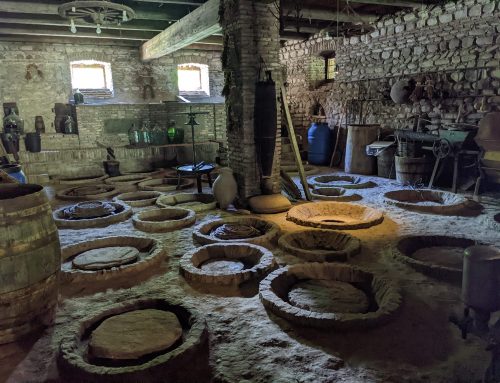
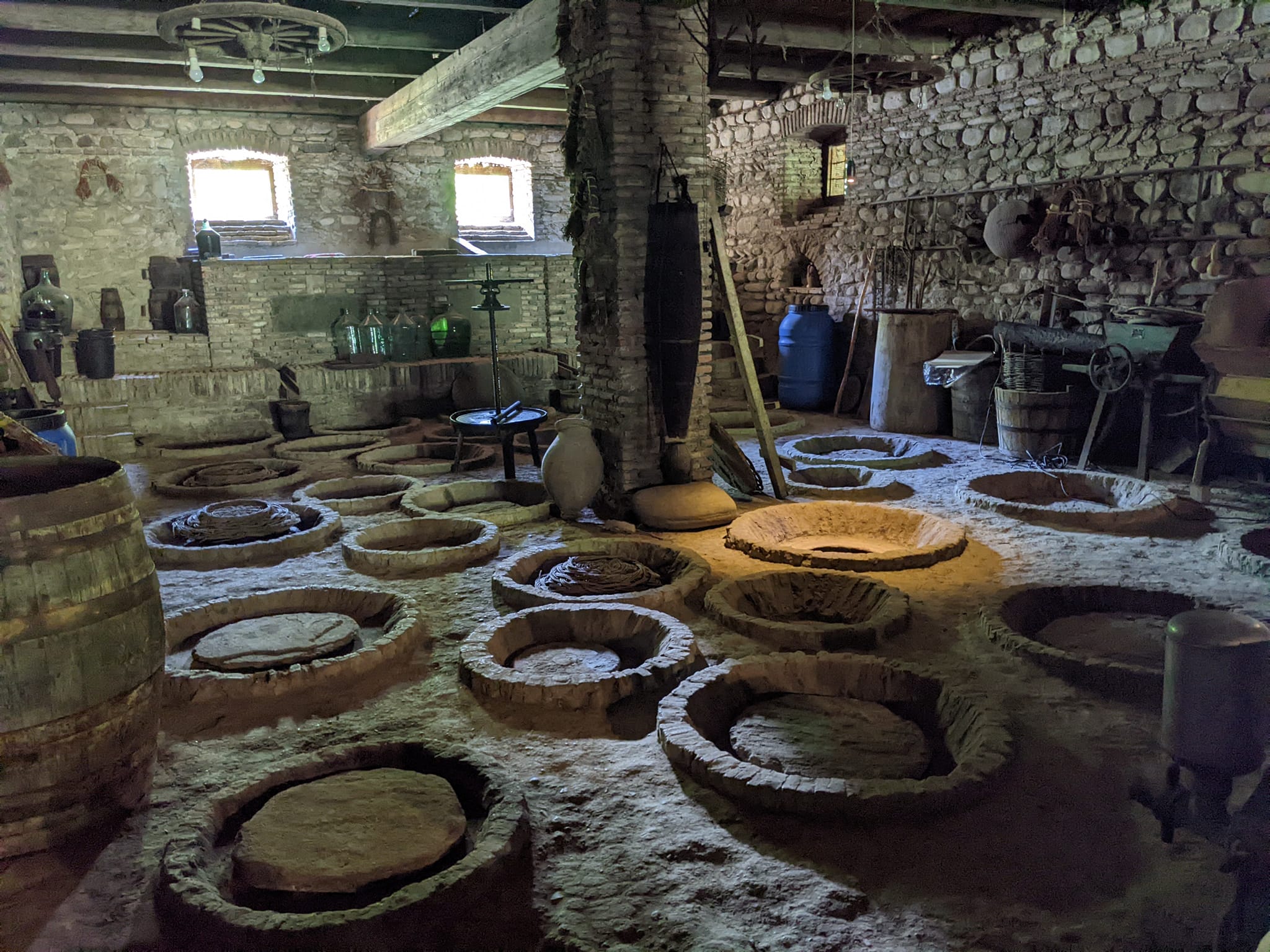
- Wine cellars with traditional Georgian qvevri vessels
- Paved stone streets about 2.5 meters wide
The population included Georgians, Armenians, Persians, and Arabs, united by commerce.
This prosperity ended violently. Tamerlane’s armies devastated the town in the 14th century. Further sacking by Turkomans in 1486 completed the destruction. Dmanisi never recovered, declining to a barely inhabited village by the 18th century. The medieval city was abandoned, eventually becoming so overgrown that its existence was nearly forgotten.
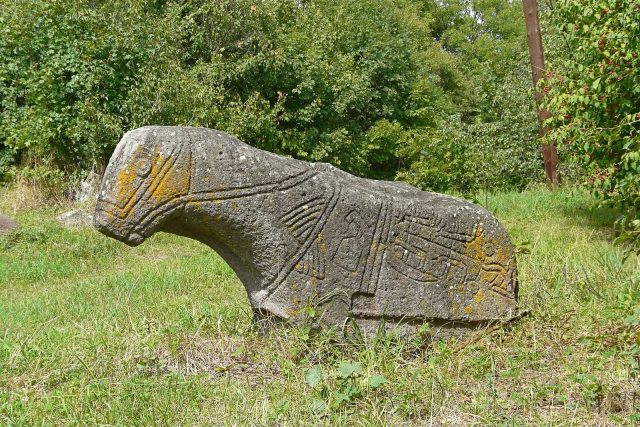
Archaeological Exploration: From Medieval Ruins to Prehistoric Treasure
Archaeological interest in Dmanisi began in 1936 at the initiative of historian Ivane Javakhishvili, who directed several expeditions focused on the medieval ruins. Excavations resumed in the 1960s.
The prehistoric dimension of Dmanisi emerged only in 1983, when excavators found Pleistocene animal fossils in medieval storage pits. The discovery of stone tools in 1984 opened an entirely new chapter—one that would place Dmanisi among the most important paleoanthropological sites in the world.
Systematic excavations led by David Lordkipanidze of the Georgian National Museum have continued since 1991. The team’s discoveries have been published in top scientific journals including Science and Nature, attracting international attention and collaboration from researchers in Switzerland, Germany, the United States, and elsewhere.
In 2007, the Dmanisi Hominid Archaeological Site was added to UNESCO’s Tentative List of World Heritage Sites. The 2008–2010 excavations included both paleontological work and substantial renovation of the medieval structures.
Research continues today. In 2025, archaeologists announced the discovery of additional hominin fossils at Orozmani, a site about 100 km south of Tbilisi, potentially contemporary with or even older than Dmanisi.
What You’ll See: The Open-Air Museum
The Dmanisi Historic and Architectural Museum-Reserve is administered as part of the Georgian National Museum. It combines the prehistoric excavation site with the medieval ruins in a single open-air complex.
The Excavation Site
The active dig where hominin fossils and stone tools have been found. You can see the layers of volcanic ash and sediment that preserved the remains for 1.8 million years. Interpretive signage explains the finds and their significance.
Dmanisi Sioni Cathedral
The early medieval basilica (6th–7th century) is the spiritual heart of the site. Its three-bay nave and apse retain original stonework, while a richly decorated narthex added in the early 13th century shows Armenian stylistic influences—a reflection of the town’s multiethnic character. A khachkar (Armenian cross-stone) adorns the façade.
The 13th-century frescoes inside are faded but atmospheric. The church is still consecrated and occasionally holds services.
The Citadel and Fortifications
Ruins of the defensive walls, gates, and citadel that protected the medieval town. A secret tunnel provided escape routes in times of siege.
The Town Ruins
Foundations of dwellings, workshops, wine cellars, and public buildings. Look for the remains of the mosque with its minaret, the bathhouses along the river, and the paved medieval streets.
The Cemeteries
Extensive burial grounds containing both Christian (Georgian and Armenian) and Muslim sections, reflecting the diverse population. Arabic, Georgian, and Armenian inscriptions survive on tombstones and memorial stelae.
The Exhibition Hall
A modern museum building displays over 2,300 artifacts, including replica skulls (the originals are housed at the Simon Janashia Museum in Tbilisi), stone tools, animal fossils, and medieval finds including pottery, coins, and jewelry.
Visiting Dmanisi
We highly recommend our day tour from Tbilisi to Bolnisi and Dmanisi, to see all the best of the region Kvemo Kartli.
Location
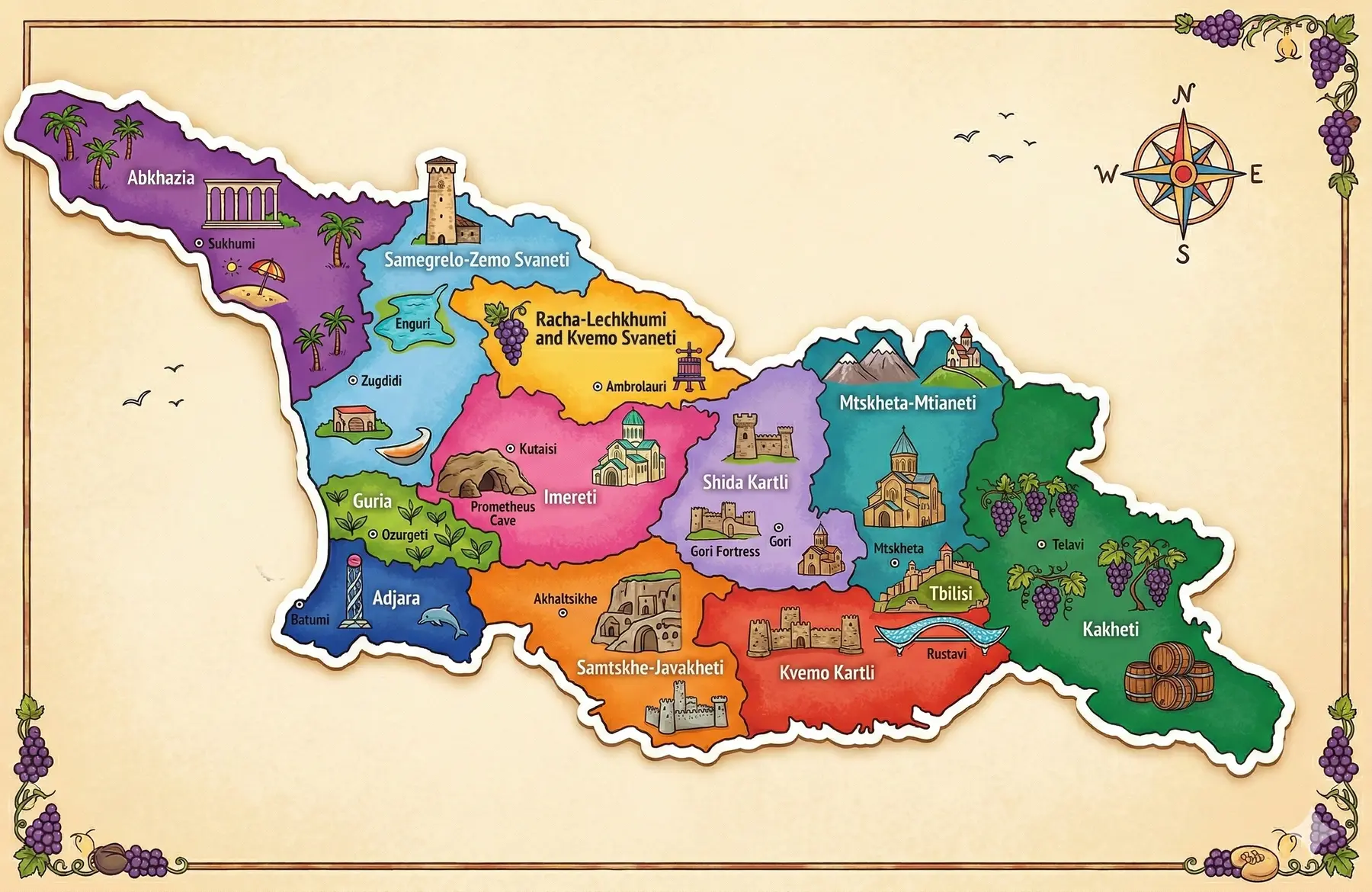
Dmanisi is located in the Kvemo Kartli region of southern Georgia, approximately 93 km southwest of Tbilisi (about 1 hour 15 minutes by car). The site sits on a promontory at the confluence of the Mashavera and Pinezauri rivers, at an elevation of approximately 1,250 meters.
Getting There
By Car: The most practical option. Take the main road toward Bolnisi, then follow signs to Dmanisi. The road is paved but winding in places.
By Tour: Several Tbilisi-based tour operators offer day trips combining Dmanisi with Bolnisi Sioni Cathedral and other sites in Kvemo Kartli.
Opening Hours
The museum operates seasonally, from May through October. During the rest of the year, the outdoor site may be accessible but the exhibition hall and facilities are closed.
Typical hours: 10:00 AM – 6:00 PM (confirm locally as hours may vary).
Admission
Modest entry fee. Reduced rates for students. Photography generally permitted.
Time Needed
Plan 1.5 to 2 hours to explore both the excavation area and medieval ruins, plus time for the exhibition hall.
Tips for Visitors
- Wear sturdy shoes—the terrain is uneven and can be muddy after rain
- Bring water and sun protection—shade is limited on the exposed promontory
- Summer visits offer the best weather and guaranteed access
- Combine with Bolnisi (35 km away) for a full day exploring Georgia’s oldest sites
The Original Fossils
While the open-air museum displays excellent replicas, the original Dmanisi skulls and fossils are housed at the Simon Janashia Museum of Georgia (Georgian National Museum) on Rustaveli Avenue in Tbilisi. Visitors to the capital can see the actual specimens that rewrote human evolutionary history.
Some fossils are also periodically loaned for international exhibitions.
Combining with Other Sites
Dmanisi pairs naturally with other attractions in Georgia’s southern regions:
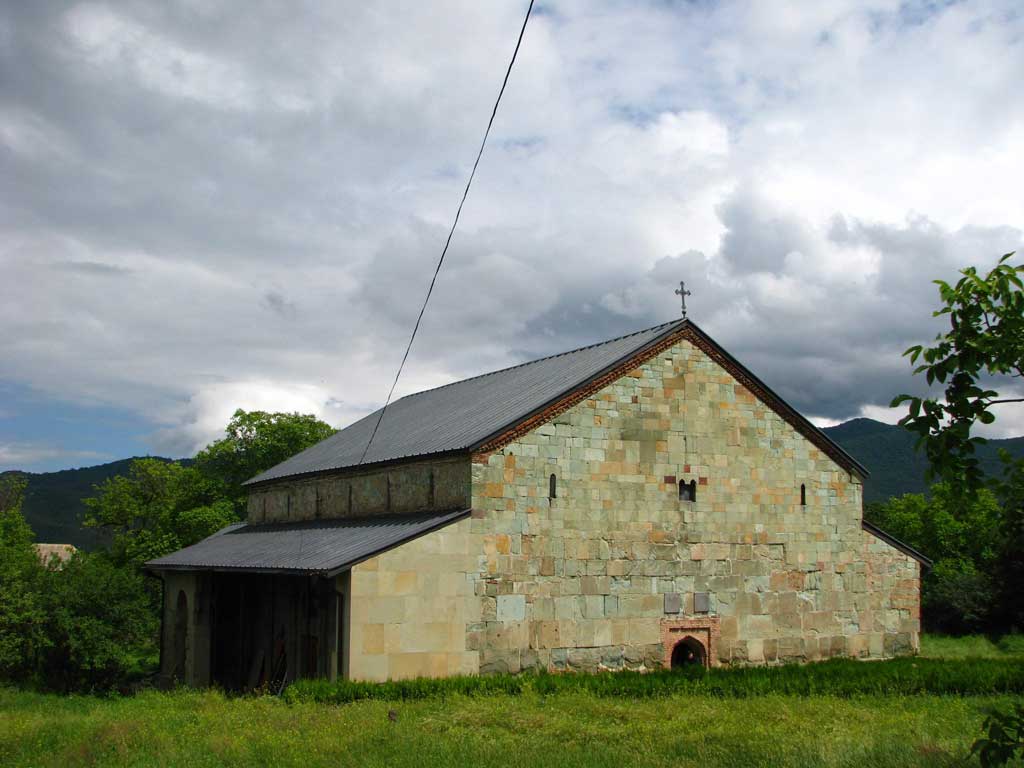
Bolnisi Sioni Cathedral (35 km, 40 minutes): Georgia’s oldest standing church (478–493 AD), with the earliest known inscriptions in the Georgian alphabet. An essential companion to Dmanisi.
Tsughrughasheni Church (near Bolnisi): A beautiful 13th-century domed church with elaborate carved ornamentation.
Betania Monastery (route to/from Tbilisi): A 12th–13th century monastery with outstanding frescoes, including portraits of Queen Tamar.
A typical day trip from Tbilisi can include Bolnisi, Tsughrughasheni, and Dmanisi, covering both Georgia’s earliest Christian heritage and its prehistoric significance.
Why Dmanisi Matters
Dmanisi is not just another archaeological site. It’s a place that fundamentally changed scientific understanding of human origins.
Before Dmanisi, the story of human migration out of Africa was relatively simple: big-brained, technologically advanced Homo erectus left Africa around 1 million years ago, armed with Acheulean handaxes, and colonized Eurasia.
Dmanisi proved this story was wrong. Humans left Africa 800,000 years earlier than previously thought. They were smaller and had smaller brains than expected. Their tools were more primitive than expected. And yet they survived—even thrived—in a new continent.
The toothless “old man” suggests something even more profound: these early humans may have cared for each other. In a world of saber-toothed cats and harsh winters, they looked after their elderly and vulnerable. Compassion, it seems, is not a recent innovation but may be nearly as old as humanity itself.
And the diversity of the five skulls suggests that what we call “species” in the fossil record may often be nothing more than normal variation within a single, evolving lineage. We are not descended from a dozen different species of early humans but perhaps from one remarkably variable population that spread across the world and changed as it went.
Standing at Dmanisi, looking across the same river valleys where our ancestors walked 1.8 million years ago, you’re standing at one of the most important crossroads in human history—a place where the deepest questions about who we are and where we came from are still being answered.
Frequently Asked Questions
How old are the Dmanisi fossils? The hominin fossils date to approximately 1.85 to 1.77 million years ago, making them the oldest well-dated human remains outside Africa.
What species were the Dmanisi hominins? The classification is debated. They are most commonly referred to as Homo erectus georgicus or early Homo erectus, though some researchers previously proposed a separate species, Homo georgicus.
How many skulls have been found at Dmanisi? Five skulls (plus four mandibles, isolated teeth, and over 100 postcranial bones) have been discovered at the site.
What is the “toothless skull”? Skull 4 (D3444) belonged to an elderly male who had lost all but one tooth years before death. The survival of this individual suggests possible care from others in the group—the earliest known evidence of such behavior.
Why is Skull 5 important? Skull 5 is the most complete adult hominin skull from the Early Pleistocene. Its discovery suggested that multiple supposed early human “species” might actually be a single variable lineage.
Can I see the original fossils? The originals are at the Simon Janashia Museum in Tbilisi. The Dmanisi site museum displays high-quality replicas.
When is the site open? The museum operates May through October. The outdoor ruins may be accessible year-round but facilities are closed in winter.
How long should I spend at Dmanisi? Plan 1.5 to 2 hours to explore the excavation site, medieval ruins, and exhibition hall.
What should I combine with Dmanisi? The site pairs well with Bolnisi Sioni Cathedral (35 km away), Georgia’s oldest standing church. A combined day trip from Tbilisi is recommended.