
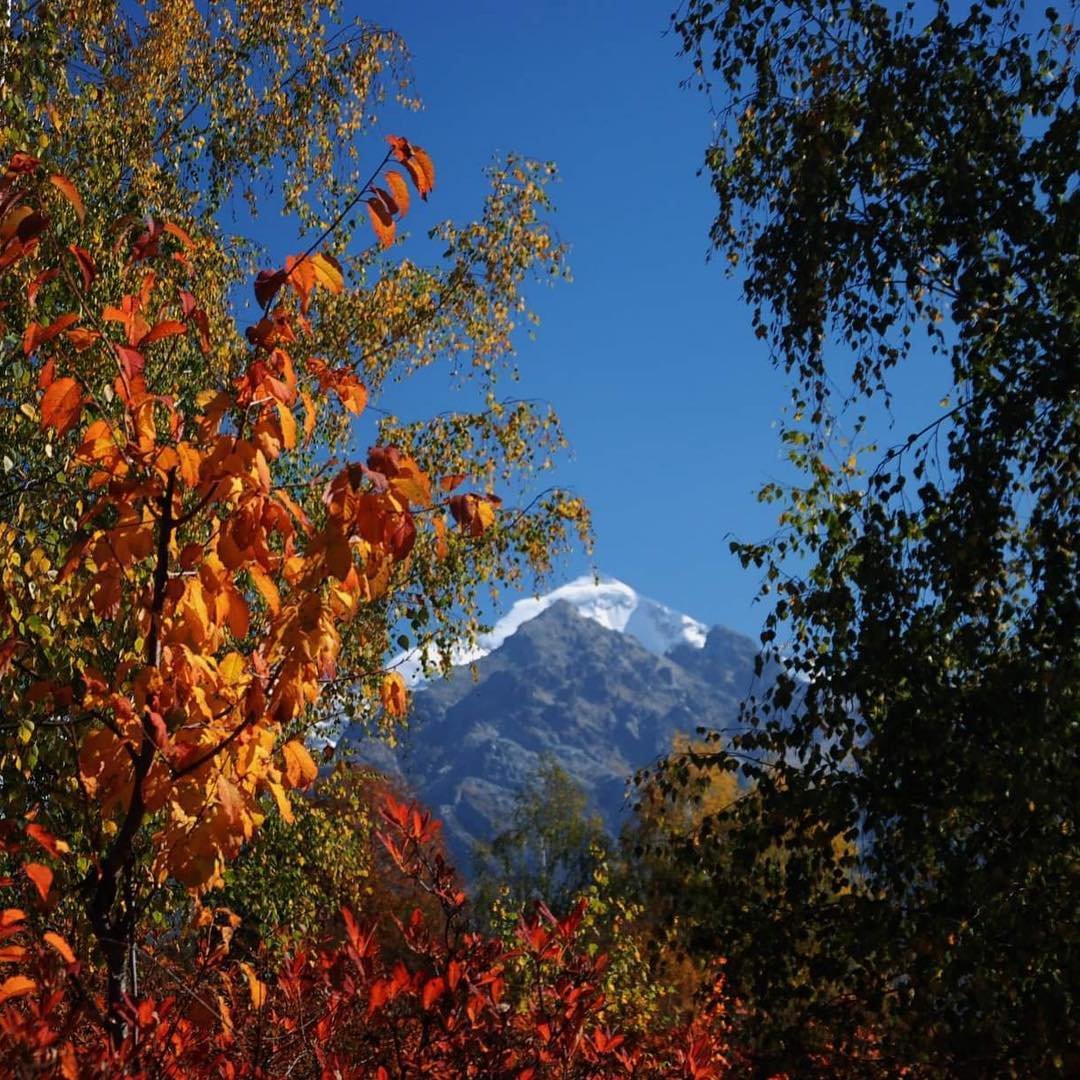
Why Svaneti Matters
I need to be direct about something. Svaneti is not a convenient destination. Getting there takes a full day from Tbilisi. The mountain roads will test your nerves. In winter, entire villages become unreachable for months. And August brings crowds to Mestia and Ushguli that can feel oppressive after you’ve traveled so far for wilderness.
Go anyway.
Svaneti is the one place in Georgia where medieval life didn’t just leave monuments behind. It left descendants. The stone towers that dominate every village weren’t built by forgotten kingdoms. They were built by families whose great-great-grandchildren still live in their shadows, still speak a language that diverged from Georgian four thousand years ago, still sing polyphonic songs that UNESCO calls a masterpiece of human heritage.
The towers number in the hundreds. Chazhashi village in Ushguli alone had over 200 of them packed into an area you could walk across in ten minutes. They rise 20-25 meters, built between the 9th and 12th centuries, with their walls 1.5 meters thick. Families lived in them, fought from them, died defending them during blood feuds that could consume generations. The feuds ended within living memory. The towers remain.
And then there are the mountains themselves. Shkhara at 5,193 meters is Georgia’s highest peak. Ushba’s twin summits have killed enough climbers to earn the name “Matterhorn of the Caucasus.” The glaciers are retreating but still massive, feeding rivers that carved these valleys when humans first arrived.
Key Facts
- Location: Northwestern Georgia, Greater Caucasus
- Main towns: Mestia (1,500m), Ushguli (2,200m), Lentekhi (800m)
- Highest peak: Shkhara, 5,193m (Georgia’s highest)
- UNESCO status: Upper Svaneti inscribed 1996
- Languages: Svan, Georgian, limited Russian/English
- ATMs: Mestia only. Bring cash.
- Mobile coverage: Good in Mestia, poor elsewhere
Tours in Svaneti
The Golden Fleece Connection
Here’s something the short guides don’t mention: Svaneti may be where the Golden Fleece legend originated.
The ancient Greeks knew this region as part of Colchis, the kingdom where Jason and the Argonauts sought the fleece. For centuries, Svans used sheepskins stretched across wooden frames to pan for gold in mountain streams. The wool trapped gold flakes. When the fleece was full, they hung it to dry and shook the gold loose. A fleece heavy with gold.
A golden fleece.
Gold still exists in Svaneti’s rivers. The tradition died out, but the connection between myth and method seems too close for coincidence. When you see the Enguri River catching the afternoon light, the gold-colored glint is just a reflection. Probably.
Upper Svaneti vs Lower Svaneti
Most visitors don’t realize Svaneti has two parts. The Svaneti Range, topped by Laila Peak at 4,008 meters, splits the region in half.
| Feature | Upper Svaneti | Lower Svaneti |
|---|---|---|
| Main town | Mestia (1,500m) | Lentekhi (800m) |
| Tourist traffic | High (especially July-August) | Very low (1% of Upper) |
| Tower density | Hundreds, concentrated | Fewer, scattered |
| UNESCO status | Yes (since 1996) | No |
| Infrastructure | Developed (hotels, restaurants, ski lifts) | Basic (guesthouses only) |
| Best for | First-time visitors, trekking, skiing | Experienced travelers seeking authenticity |
| Key villages | Mestia, Ushguli, Adishi, Mazeri, Latali | Lentekhi, Choluri, Lakhushdi |
Upper Svaneti (Zemo Svaneti)
This is the Svaneti of photographs. The postcards. The Instagram posts. Mestia, with its towers and modern airport. Ushguli claims to be Europe’s highest village. The Mestia-Ushguli trek appears on “world’s best hikes” lists.
Upper Svaneti contains roughly 90 village communities spread across the Enguri River valley. Tourism infrastructure arrived after 2010: paved roads, ski lifts, hotels, restaurants, and reliable transport. You can visit comfortably now. That comfort comes with trade-offs. In August, Ushguli feels like a theme park. Mestia’s central square could be anywhere in tourist Georgia.
The villages between the main stops remain authentic. Adishi. Mulakhi. Latali. Walk an hour from Mestia in any direction, and you’ll find families living much as they did fifty years ago.
Lower Svaneti (Kvemo Svaneti)
South of the Svaneti Range, Lower Svaneti receives maybe one percent of Upper Svaneti’s visitors. The landscape is lower and more forested. Lentekhi, the main town, sits at just 800 meters. Fewer towers survive here, and those that do get no tour buses.
Lower Svaneti is for travelers who’ve already seen Upper Svaneti and want something deeper. The route from Lentekhi to Ushguli via Latpari Pass (3,200m) is one of Georgia’s great treks: four to five days through terrain where you won’t see another tourist. You need a guide. You need experience. You need to be comfortable with genuine remoteness.
The village of Lakhushdi in the Choluri valley deserves specific mention. The Chamgeliani family there are professional musicians who have dedicated their lives to preserving Svan musical traditions. They accept visitors interested in authentic Svan music, offering not performances but participation. If traditional instruments and polyphonic singing matter to you, contact them in advance. This is not a tourist show. It’s a living tradition shared by people who consider it sacred.
Getting to Svaneti
The Fastest Route: Zugdidi to Mestia
Distance: 130 km. Time: 3-4 hours. Road: Paved, winding, some rough sections.
Most visitors reach Svaneti through Zugdidi. The road follows the Enguri River valley north, passes the massive Enguri Dam (271 meters high, worth a stop), and climbs toward Mestia. Marshrutkas depart Zugdidi station at 7am, 9am, and 11am. Fare: 25-30 GEL. Confirm schedules locally because they change.
The drive is spectacular. The reservoir appears as an improbable turquoise gash in the mountains. Gorges narrow until the road seems carved from cliff faces. Then the valley opens and Mestia appears, towers rising among modern buildings.
From Tbilisi
- Best option (train + marshrutka): Overnight train to Zugdidi leaves Tbilisi around 9pm, arrives around 6am. Cost: 25-35 GEL for a sleeper. Walk to Zugdidi station, catch the morning marshrutka to Mestia. Total journey: 10 hours. Arrives Mestia: early afternoon. This is how most independent travelers do it.
- Direct marshrutka: Departs Tbilisi Didube station around 7am. Arrives Mestia 8-9 hours later. Cost: 50-60 GEL. Long, tiring, not recommended unless you enjoy minivan endurance tests.
- Flight: Vanilla Sky operates Tbilisi-Mestia flights, 45 minutes, around 80 GEL one-way. Here’s the problem: flights get canceled constantly. Mountain weather is unpredictable. The Mestia airstrip requires visual approaches. Do not book tight connections assuming this flight will operate. I’ve seen travelers stranded for three days waiting for the weather to clear. Use the flight as a bonus if it works, not as your plan.
- Private transfer: 750-950 GEL for the vehicle, up to 4 passengers. Arrange through hotels or tour operators. Allows stops at Enguri Dam, Martvili Canyon, or Samegrelo attractions.
From Kutaisi
Kutaisi to Zugdidi: 1.5 hours. Zugdidi to Mestia: 3-4 hours. Total: 5-6 hours with connection time. Works well if you’re exploring western Georgia.
Summer Route: Zagari Pass from Lentekhi
From late June through early October, a mountain road connects Lower Svaneti to Upper Svaneti via Zagari Pass at 2,623 meters. The route runs Kutaisi → Tsageri → Lentekhi → Zagari Pass → Ushguli → Mestia.
This road is not for everyone. It’s unpaved, narrow, steep, with drops that will make you religious if you weren’t before. River crossings required. 4×4 mandatory. Experienced mountain driver strongly recommended. I’ve driven it. My knuckles were white the entire time.
But the scenery. The approach to Ushguli from the south reveals the full Shkhara massif in a way the northern approach cannot. If you have the vehicle and the nerves, this is the route.
When to Visit
- Best months for trekking: July and August. All passes open, warmest weather, longest days.
- Best months for fewer crowds: June and September. Good conditions, tourist numbers drop significantly.
- Best months for skiing: January through March. Reliable snow, both resorts are operating.
- Best time for festivals: Late July (Kvirikoba), late February (Lamproba).
Summer (June-September)
June brings wildflowers to alpine meadows, but some high passes still hold snow. Weather improving, tourists arriving. The Ushguli road may be difficult early in the month.
July and August are peak season. Everything is accessible. Everything is crowded. Book accommodation in advance or you’ll be sleeping in your car. Mestia fills with tour groups. Ushguli becomes a parking lot by midday. Despite this, walk an hour from any trailhead, and you’ll have mountains to yourself.
September is my favorite month. The European holiday crowds leave. The weather stays stable. Autumn colors begin. Guesthouses have space. Prices sometimes drop.
Winter (December-April)
Ski season. Hatsvali and Tetnuldi operate. Mestia stays accessible because the road is kept clear. Ushguli becomes unreachable by road. Some villages can only be accessed by helicopter or a multi-day ski tour. Temperatures drop to -20°C. The landscape transforms into something from a different planet.
If you’re here to ski, January through March offer the most reliable conditions. December and April are transitional.
Mestia: The Capital
Mestia is where most Svaneti trips begin and end. Around 2,600 people live here permanently, though the population swells in summer with tourists and returning Svans who maintain second homes. The town sits at 1,500 meters in a broad valley where several rivers meet, mountain walls rising on every side.
The historic center clusters around Seti Square. Medieval towers rise among modern buildings. Cafes serve tourists where livestock markets happened a generation ago. The juxtaposition is jarring and somehow appropriate.
Government investment since 2010 has transformed the town. Paved streets. A modern police station designed by a German architect. Infrastructure that actually works. Some longtime visitors grumble that Mestia has lost its character. I understand the complaint, but I also appreciate hot showers and reliable electricity.
Northeast of the center, the old residential neighborhoods preserve the authentic atmosphere. The paths are unpaved, climbing slopes through clusters of towers. Walk here early morning or late evening when tour groups are eating breakfast or dinner. This is the Mestia that existed before the airport opened.
Svaneti Museum of History and Ethnography
This museum exists because the Svans hid things.
When Soviet atheism campaigns targeted churches across Georgia, authorities demanded that communities surrender religious objects. Most regions complied or had their treasures confiscated. Svan villages said no. They hid icons in towers, buried manuscripts in fields, and passed gold liturgical objects between families. Officials who pushed too hard sometimes found themselves facing clans with long memories and few scruples about violence.
After independence, these objects emerged from hiding. The museum now houses what amounts to a rescued medieval treasury. Eleventh-century gospel manuscripts illuminated with gold. Silver processional crosses that village priests carried for eight hundred years. Gold jewelry from archaeological excavations. Weapons used in blood feuds.
What makes this museum exceptional isn’t just the quality of the objects. It’s that nearly every piece has a story of survival. These icons weren’t collected by scholars. They were saved by villagers who risked punishment to protect them.
The building itself is modern glass and stone, designed to complement rather than compete with the towers visible from its terrace.
Hours: 10am-6pm, closed Mondays. Entry: 15 GEL. Time needed: 1-2 hours.
Margiani Tower House
If the museum shows you what Svans made, the Margiani compound shows you how they lived.
This family complex includes a residential machubi (traditional house), a defensive tower, and outbuildings preserved as they functioned for centuries. Tours led by Margiani family members explain the architecture: ground floors for livestock during winter, upper floors for family living, top floors as defensive positions with arrow slits for shooting at attackers.
The guide demonstrates traditional implements, explains clan structure, and shares family history connected to the building. This isn’t a museum presentation. It’s a family showing you their home.
Location: Laghami neighborhood, uphill from the center. Entry: 10 GEL with guided tour. Time needed: 45-60 minutes.
Khergiani House Museum
Mikheil Khergiani (1932-1969) was the greatest mountaineer in Soviet history and Mestia’s most famous son. They called him the Tiger of the Rocks for his ability to attack difficult routes with almost supernatural speed. He pioneered climbs across the Caucasus, Pamirs, Alps, and Dolomites.
In July 1969, on Monte Civetta in Italy, a rockfall broke his rope. He fell 600 meters to his death. He was 37 years old.
This museum in his family home displays climbing equipment, photographs, medals, personal effects. For non-climbers, it illuminates a life shaped entirely by these mountains. For climbers, it’s a pilgrimage.
Hours: 10am-5pm. Entry: 5 GEL.
Churches in Mestia
Svaneti’s churches look nothing like churches elsewhere in Georgia. They’re tiny, often single-room structures small enough to fit inside a modest apartment. What they lack in size they compensate in artistic density. The frescoes and icons inside these cramped spaces represent some of the finest medieval Georgian art that survives.
Transfiguration Church (Matskhvarishi): In Mestia center, recently restored. This church has an unusual feature: two floors. The lower level served the congregation. The upper level, accessed by external stairs, housed the most precious icons and manuscripts. The design reflects Svan thinking, combining spiritual function with defensive practicality. If attackers came, the treasures could be defended from above.
St. George’s Church (Jgrag): In Laghami neighborhood, 12th century. Exceptional frescoes depicting biblical scenes. Houses a silver-covered icon of St. George that villagers carried in processions for centuries.
Lamaria Church: On a hill overlooking Mestia. Steep 30-minute climb. Even when locked, the panoramic views reward the effort.
Where to Eat in Mestia
The town now has many cafes and restaurants. Too many, arguably. Here’s what actually works:
Cafe Laila: Consistently good. Central location. Reliable Kubdari. Reasonable prices. When in doubt, eat here.
Cafe Buba: Another solid choice. Menu covers Svan specialties and general Georgian dishes. Portions are enormous. Both Laila and Buba handle tour group volume efficiently, which means busy atmospheres in peak season but food that comes quickly.
Zuruldi: At Hatsvali ski lift top station. You come for the view of Ushba, not the food. Quality is acceptable. Location is unbeatable.
Here’s the truth though: for authentic Svan cooking, guesthouse meals are better than restaurants. The best kubdari comes from family ovens where someone’s grandmother made it the way her grandmother taught her. Restaurant kubdari is fine. Guesthouse kubdari is an experience.
Where to Stay in Mestia
Guesthouses (60-100 GEL per person, full board): The traditional option. Family homes with private or shared rooms, enormous breakfasts and dinners included, local knowledge on demand. Quality varies wildly. Book through Booking.com or Google Maps reviews, or ask us for recommendations.
Hotels (150-300 GEL per room): Several mid-range options with private bathrooms, heating, hotel-style service. Hotel Panorama Mestia is a reliable choice. Good views, comfortable rooms, helpful staff, convenient location for both the town center and the trailheads.
Top end (300+ GEL): A few properties approach boutique hotel standards.
Ushguli: Europe’s Highest Village
The claim needs qualification now. Ushguli (2,100-2,200 meters) held the “highest inhabited village in Europe” title for decades. In 2014, the village of Bochorna in Tusheti (2,345 meters) disputed it after a census found one permanent resident there. The debate continues. Both villages are in Georgia, so the country wins either way.
What’s not debatable: Ushguli’s medieval tower ensemble has no equivalent. Over 200 towers in Chazhashi village alone. Four tiny communities (Zhibiani, Chvibiani, Chazhashi, Murkmeli) totaling maybe 200 permanent residents clustered at the foot of Georgia’s highest mountain. UNESCO protection since 1996. Isolation that preserved what development elsewhere destroyed.
Shkhara (5,193m) dominates the view south. Its glaciers feed the rivers flowing through the villages. The scale makes human habitation seem accidental, tiny stone clusters against the mountain’s enormity.
Getting to Ushguli
Distance from Mestia: 47 km. Time: 2-3 hours by 4×4. Road: Rough, unpaved, river crossings required. Standard cars cannot make it.
Shared jeep: Drivers in Mestia offer transfers for 40-50 GEL per person one-way. Typically depart around 10am when the vehicle fills. Arrange return transport in advance or find a shared jeep in Ushguli.
Private 4×4: Around 250 GEL round-trip including waiting time.
On foot: The Mestia-Ushguli trek takes 3-4 days. See trekking section.
What to See
Chazhashi tower complex: The iconic ensemble. Wander freely among the towers. The main path offers the classic viewpoint with Shkhara as backdrop.
Lamaria Church: Above Zhibiani village. Twelfth century, remarkable frescoes, panoramic views. Twenty-minute climb. Worth it.
Queen Tamar’s Tower: Above Chazhashi. Local legend claims Queen Tamar stayed here. The historical evidence is thin, but the tower is real and the views are genuine.
Ushguli Ethnographic Museum: In Zhibiani, housed in a 16th-century building. This small museum preserves something the Mestia museum cannot: context. Household items, furniture, and tools displayed in the actual rooms where Svans used them. Carved wooden utensils on tables where families ate. Agricultural tools leaning against walls. A separate icon collection. Hours are irregular. Ask at any guesthouse and someone will find the keyholder.
Shkhara glacier approach: Continue beyond Ushguli on foot, 2-3 hours one-way toward the glacier tongue. Spectacular but strenuous at this altitude.
Staying in Ushguli
Stay overnight if you can. Once the day-trip jeeps leave around 4pm, silence returns. The evening light on the towers is worth the basic accommodation.
Expect simple guesthouses with basic rooms, shared bathrooms, generator electricity (limited hours), little or no WiFi. Full board (dinner, bed, breakfast): 70-100 GEL per person.
Book ahead in July and August.
Other Villages Worth Visiting
Mulakhi Community
Between Mestia and Ushguli, the Mulakhi villages spread across the valley: Muzhali, Zhabeshi, Chuber. These names appear on no tourist itinerary. That’s the point.
Mulakhi works as an alternative base to Mestia. Quieter. Cheaper. Closer to trailheads for the Ushguli trek. Several guesthouses operate here offering the same hospitality without Mestia’s tourist concentration.
Kaldani Church contains medieval frescoes among Svaneti’s finest. Ask locally for the keyholder.
Adishi
If Ushguli feels too crowded, Adishi is the answer.
About 15 families live here at 2,040 meters with direct Tetnuldi views. The village appears on the Mestia-Ushguli trekking route, so hikers pass through, but few day visitors make the effort. No paved road. 4×4 only.
Adishi looks like Svaneti did fifty years ago. Stone houses, grazing livestock, fields worked by hand. The Church of St. George holds a silver-covered icon that ranks among Svaneti’s artistic treasures.
Several guesthouses operate here. Same hospitality as elsewhere, fewer tourists sharing it.
Mazeri and the Becho Valley
Southwest of Mestia, the Becho valley runs toward Ushba’s twin peaks. Mazeri village sits at the end of the road, the last settlement before the mountain.
Climbers use Mazeri as their Ushba base camp. Day hikers come for the Ushba glacier approach (6-7 hours round trip). Everyone comes for the views. Ushba from Mazeri is Ushba at its most intimidating.
Several excellent guesthouses operate here. Quieter than Mestia, closer to serious mountain scenery.
Latali
On the main road east of Mestia, Latali stretches along the valley with numerous sub-villages. The area contains exceptional medieval churches with well-preserved frescoes:
Jonah the Prophet’s Church: 10th-11th century, houses a famous icon of Archangel Michael.
Matskhvarishi Savior’s Church: Medieval frescoes of Christ and apostles.
The Latali churches represent Svaneti’s greatest cultural treasures. Medieval art surviving in situ, in active community use, not in museum collections.
If you are seriously interested in folk music, then you definitely have to visit Latali.
The Chamgelianis are professional musicians who have devoted their lives to preserving Svan musical traditions. They accept visitors interested in authentic Svan music. This is not a performance for tourists. This is a family sharing traditions they consider sacred with people who genuinely want to learn. They can teach you about traditional instruments, demonstrate polyphonic singing techniques, and explain the role of music in Svan rituals and daily life.
If Svan music interests you seriously, contact them in advance to arrange a visit. If you just want entertainment, look elsewhere. This is the real thing.
Kala
Site of the Kvirikoba festival, Svaneti’s most important annual celebration. The Church of Saints Kvirike and Ivlita serves as the spiritual center, housing a revered icon collection in a 12th-century structure. The adjacent Church of St. Barbara contains exceptional medieval paintings.
Unless you’re here for Kvirikoba in late July, Kala sees few visitors. The churches can be visited with local permission.
Svan Culture
The Towers
Svan towers (koshki in Georgian) served two purposes: home and fortress. Families lived in the lower floors with livestock at ground level for warmth. Upper floors served as living quarters. The highest floors, with walls 1.5 meters thick and narrow arrow slits, became defensive positions when attackers came.
Construction peaked between the 9th and 12th centuries, a period of invasions, civil wars, and blood feuds. Several hundred towers survive today. The blood feuds deserve explanation because they shaped everything about Svan architecture and social organization. An insult to family honor — a killing, a theft, sometimes a perceived slight — triggered a cycle of retaliatory violence between clans that could persist for generations. Entire families lived in a state of siege, retreating to their towers when threatened, shooting from arrow slits at adversaries who might be their neighbors.
The feuds were governed by elaborate rules. Certain neutral spaces were recognized by all parties. Women and children were generally spared. Mediators from unrelated clans could negotiate truces. But the violence was real and persistent enough to require every household to maintain a fortified tower capable of withstanding attack.
Soviet authorities suppressed feuding with harsh penalties. The tradition has largely disappeared, though older Svans remember its end within their lifetimes. The towers remain as evidence of what daily life once required.
The Svan Language
Svan belongs to the Kartvelian language family alongside Georgian, Megrelian, and Laz. It diverged from the common ancestor roughly four thousand years ago. Svan and Georgian are mutually unintelligible — they are as different from each other as English is from German, if not more so.
Unlike Megrelian, which competes with Georgian in daily use, Svan remains the primary language in villages. Children grow up bilingual, speaking Svan at home and Georgian at school. The language has no written tradition; Georgian script is used when writing is needed.
UNESCO classifies Svan as “definitely endangered.” Perhaps 30,000 speakers remain, concentrated in Svaneti and diaspora communities in Tbilisi and Zugdidi. The young generation still speaks it, but the pull of Georgian media, education, and urban migration works against transmission. Every fluent elder who dies takes vocabulary, idioms, and oral traditions that exist nowhere else.
Polyphonic Singing
Svan polyphonic singing belongs to the broader Georgian polyphonic tradition that UNESCO inscribed as a Masterpiece of Intangible Heritage in 2001. But Svan polyphony is distinct — older, stranger, more rhythmically complex than the lowland traditions.
Georgian polyphony elsewhere uses three voices in relatively consonant harmony. Svan singing adds dissonances, trills, and rhythmic patterns that sound archaic even to Georgian ears. The effect is haunting — voices weaving and clashing in ways that feel simultaneously ancient and modern. In 1977, a Georgian song (the Chakrulo) was included on the Voyager Golden Record sent into interstellar space. The choice was deliberate: of all human music, Georgian polyphony was considered among the most complex and distinctive.
You can hear polyphonic singing at festivals (Kvirikoba in July, Lamproba in February), sometimes at guesthouses, and occasionally at Mestia restaurants. For serious engagement, the Chamgeliani family in Lakhushdi and the Pilpani family in Mestia area accept visitors interested in traditional instruments and singing. Contact in advance.
Svan Food
Svan cuisine is mountain food — heavy, caloric, designed for people who spend their days working steep terrain in cold weather. It’s also delicious.
- Kubdari: The signature dish. A round bread pie filled with spiced meat (usually beef and pork), sealed and baked. Every family has its own spice blend, but the base includes Svan salt — a mix of garlic, coriander, fenugreek, dried marigold petals, and chili that varies from household to household. Kubdari from a guesthouse oven, eaten with your hands while it’s still too hot, is one of the defining food experiences of Georgia.
- Tashmijabi: Mashed potatoes mixed with young Svan cheese until the cheese pulls in long strings. Simple, rich, addictive. The ratio of potato to cheese is a matter of family tradition and personal conviction.
- Chvishtari: Cornmeal bread with cheese baked or fried inside. Denser than khachapuri, more rustic, and well-suited to cold mornings.
- Lukne: Svaneti’s version of khachapuri, made with local cheese and a thicker dough. Less famous than the Adjarian or Imeretian versions, but worth trying for the difference.
- Svan salt (სვანური მარილი): Not just salt. A spice blend that Svan families prepare themselves, combining dried garlic, blue fenugreek, coriander, dried marigold, caraway, and chili with salt. Every family’s blend is different. Bags of it are sold in Mestia — buy some. It transforms any Georgian dish and keeps for months.
Festivals
Svan festivals are not performances arranged for tourists. They are living religious and cultural practices that happen whether or not outsiders are present. Attending one is a privilege, not a right.
- Kvirikoba (late July): Svaneti’s most important annual festival, honoring Saints Kvirike and Ivlita. Celebrated at Kala with communal feasting, animal sacrifice, traditional round dances, and polyphonic singing. The combination of Orthodox Christian ritual and pre-Christian elements makes Kvirikoba unlike any celebration elsewhere in Georgia.
- Lamproba (mid-February): The festival of torches. Families carry blazing birch-bark torches to ancestors’ graves, planting them in the snow. Polyphonic hymns rise in the darkness. The boundary between the living and the dead feels thin. Witnessing Lamproba in Ushguli, with the towers silhouetted against firelight, is one of the most powerful cultural experiences available in Europe.
- Lipanali (winter): A winter festival particularly associated with Latali village, involving rituals, traditional songs, and games. Like Lamproba, it blends Christian and pre-Christian elements.
- Village saint’s day festivals (summer): Individual villages celebrate their patron saints with round dances, feasting, and gatherings in alpine meadows. Less structured and less predictable than Kvirikoba, but sometimes more intimate.
Trekking in Svaneti
Svaneti offers some of the finest trekking in Europe. The combination — 5,000-meter peaks, glaciers, medieval tower villages, guesthouse-to-guesthouse walking — has no real equivalent outside the Caucasus.
Mestia to Ushguli (3-4 days)
Georgia’s signature trek. Four days through Upper Svaneti connecting two UNESCO-recognized communities, with glacier views, wildflower meadows, and medieval tower villages at every overnight stop. The Adishi River crossing on Day 3 is the crux — thigh-deep glacial meltwater, best attempted before 10am when water levels are lower. We offer this as a guided trek with all logistics handled.
Koruldi Lakes (day hike)
Steep climb from Mestia to alpine lakes at nearly 3,000 meters. Ushba views from the ridge are among the finest in the Caucasus. Half-day to full day depending on pace. Can be done independently with good fitness.
Chalaadi Glacier (day hike)
12 km round trip from Mestia along the Mestiachala valley to the glacier snout. Relatively flat approach, dramatic payoff. The glacier is retreating visibly year over year. Suspension bridges add excitement.
Ushba Glacier (from Mazeri, day hike)
6-7 hours round trip from Mazeri village to the foot of Ushba’s north face. Shdugra waterfalls along the way. Serious mountain scenery. Guide recommended.
Latpari Pass (Lower to Upper Svaneti, 4-5 days)
The expedition route. Lentekhi to Ushguli via Latpari Pass at 3,200 meters. Guide mandatory. Almost zero tourist traffic. For experienced trekkers who want genuine wilderness.
For complete trail descriptions, gear lists, and booking, see our trekking in Georgia page.
Skiing in Svaneti
Two resorts operate near Mestia, both relatively new and both offering something different from the Alpine norm.
Hatsvali: 6 km from Mestia center. One gondola, one chairlift. Elevation 1,865-2,348m. Mostly intermediate runs. The top station (Zuruldi) has a restaurant with direct Ushba views that justify the lift ticket alone. Good for a day or two. Not a destination ski resort, but a remarkable setting.
Tetnuldi: 15 km east of Mestia. Higher elevation (2,260-3,160m), more vertical, more challenging terrain. Three chairlifts. Better snow, longer season. Significant off-piste potential for experienced skiers with avalanche training. The resort is still developing — don’t expect Chamonix-level infrastructure, but the terrain is genuinely impressive.
Lift tickets for both resorts are inexpensive by European standards: 30-50 GEL per day. Equipment rental available in Mestia. For details on winter tours in Svaneti including skiing packages, see our winter tour page.
Frequently Asked Questions
How many days do I need in Svaneti?
Minimum three nights to see Mestia and Ushguli without rushing. Five to seven days if you want to trek Mestia-Ushguli. Two weeks if you want to include Lower Svaneti, side valleys, and slower exploration.
Is Svaneti safe?
Yes. Crime is very rare. The main risks are road conditions (especially the Ushguli road), weather changes in the mountains, and river crossings on trekking routes. Use a guide for multi-day treks.
Can I visit Svaneti in winter?
Mestia is accessible year-round. Hatsvali and Tetnuldi ski resorts operate January-March. Ushguli is unreachable by road in winter. The Lamproba festival in February offers a unique cultural experience.
Is Ushguli really Europe’s highest village?
Disputed since 2014 when Bochorna in Tusheti (2,345m) claimed the title. Ushguli sits at 2,100-2,200m. Both are in Georgia. Ushguli’s medieval tower ensemble remains unique regardless of altitude ranking.
What should I eat?
Kubdari (meat pie) is essential. Also: tashmijabi (cheesy potatoes), chvishtari (cheese cornbread), anything with Svan salt. Guesthouse meals beat restaurants.
What’s the difference between Upper and Lower Svaneti?
Upper Svaneti (Mestia, Ushguli) has tourism infrastructure, UNESCO status, tower concentrations. Lower Svaneti (Lentekhi area) has almost no tourists, basic facilities, more authentic atmosphere. Upper for first visits; Lower for experienced travelers.
Where can I hear Svan polyphonic singing?
At festivals (Kvirikoba in July, Lamproba in February), sometimes at guesthouses. For serious engagement, the Chamgeliani family in Lakhushdi accept visitors interested in traditional instruments and singing. Contact in advance.
Can you help me plan a Svaneti trip?
We’ve been running tours in Svaneti since 2011. From day trips to multi-week trekking expeditions, we handle logistics, accommodation, guides, and transport. Get in touch and we’ll build an itinerary that fits your time, budget, and interests.
Blog about Svaneti
Nothing Found