Winter in Svaneti: The Complete Guide to Georgia’s Mountain Wonderland
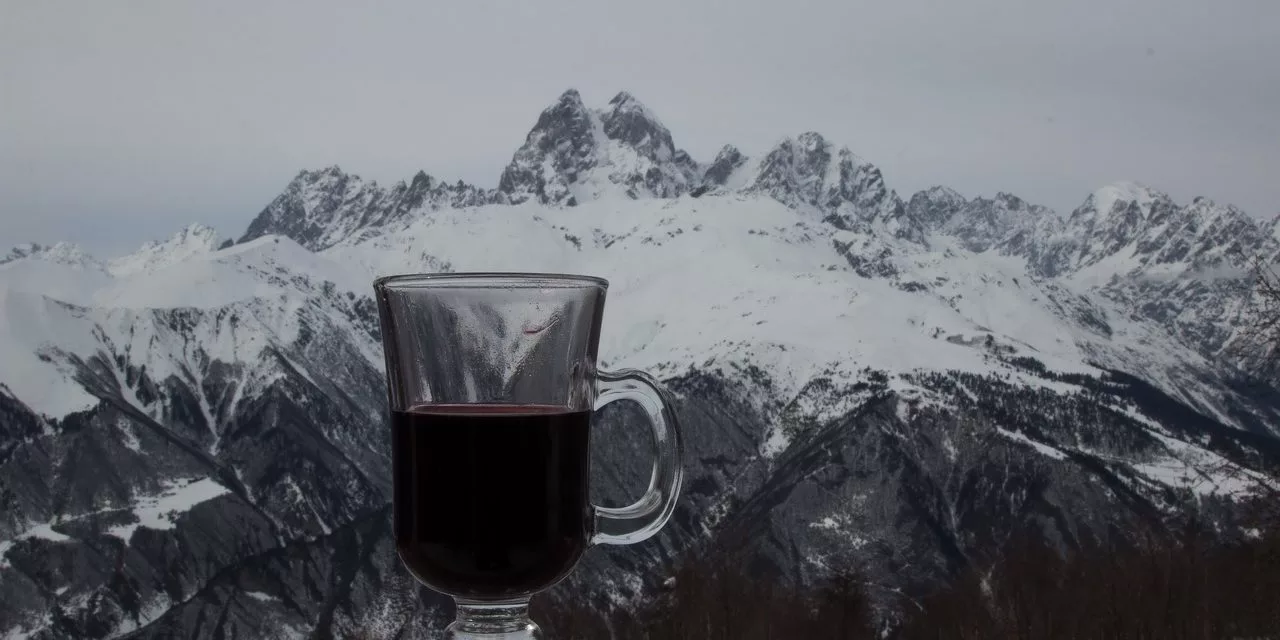
Medieval stone towers rising from deep snow, empty ski slopes beneath 5,000-meter peaks, ancient torch-lit festivals, and a culture that has endured Caucasus winters for millennia — Svaneti in winter offers something no other destination can match.
Most travelers visit Svaneti in summer, trekking between tower villages under blue skies. They miss something extraordinary. In winter, this UNESCO-protected region transforms into a snow-covered realm where the famous defensive towers look like they belong in a fantasy novel, ski resorts offer uncrowded slopes with spectacular views, and the Svan people celebrate ancient festivals that have survived unchanged for centuries.
Winter in Svaneti isn’t for everyone. The roads can be challenging, the cold is serious, and services are more limited than in summer. But for travelers seeking authentic mountain culture, world-class skiing without the crowds, or simply landscapes unlike anywhere else on earth, Svaneti between December and March delivers an unforgettable experience.
Why Visit Svaneti in Winter?
The Scenery
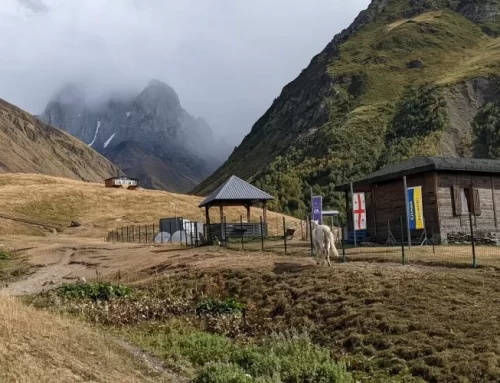
Svaneti is dramatic in any season, but winter adds a dimension that photography cannot fully capture. The famous stone towers of Mestia, Ushguli, and surrounding villages — built between the 9th and 12th centuries — stand against backgrounds of pristine white snow and glacier-clad peaks. Mount Ushba (4,710m) and Tetnuldi (4,858m) dominate the horizon, their flanks gleaming with ice.
The Enguri Valley, normally a patchwork of green meadows and forest, becomes a continuous white expanse broken only by the dark stone of ancient architecture. At sunset, the peaks turn pink and gold while the valleys fill with blue shadow. It’s one of Europe’s most photogenic winter landscapes.
The Skiing
Georgia’s two highest ski resorts — Hatsvali and Tetnuldi — operate in Svaneti, offering terrain from beginner-friendly groomers to challenging off-piste descents. Unlike the crowded slopes of the Alps or even Georgia’s more accessible Gudauri resort, Svaneti’s ski areas remain remarkably uncrowded. Lift lines are rare, and on powder days, you may find yourself making fresh tracks well into the afternoon.
The setting surpasses most European resorts. You’re skiing in the shadow of 5,000-meter peaks, with medieval towers visible in the valley below. The combination of serious mountains, reliable snow, developing infrastructure, and minimal crowds creates conditions that experienced skiers increasingly seek out.
The Culture
Svaneti has always been isolated — by design. The towers that define the landscape were built for defense, protecting families and villages during centuries of invasions and blood feuds. This isolation preserved traditions that disappeared elsewhere in Georgia.
Winter intensifies this cultural experience. With fewer tourists and longer evenings, there’s time for conversation with Svan families, meals around wood stoves, and stories about the old ways. The Svan language (distinct from Georgian), traditional polyphonic singing, and customs around hospitality feel more accessible when you’re not part of a summer tourist stream.
The Festivals
Svaneti’s most distinctive winter experience is Lamproba, the torch festival held on the first or second weekend of February. Families craft torches from birch bark, carry them in procession through villages to cemeteries, and plant them at ancestors’ graves while offering prayers and food. The sight of dozens of torches moving through snow-covered villages at dusk, flames reflected on stone towers, is unlike anything else in Europe.
Lamproba represents the survival of pre-Christian traditions within an Orthodox framework — a celebration of ancestors and the coming spring that Svans have observed for longer than anyone can remember.
Ski Resorts in Svaneti
Hatsvali Ski Resort
Location: 8 km from Mestia center
Elevation: 1,865m – 2,347m
Vertical drop: 482m
Skiable terrain: Approximately 25 km of marked runs
Lifts: 4 (1 gondola, 2 chairlifts, 1 surface lift)
Season: December – April (snow dependent)
Hatsvali is Svaneti’s more accessible resort, just a short drive from Mestia’s hotels and guesthouses. The terrain suits intermediate skiers best, with well-groomed blue and red runs offering consistent conditions. The views are spectacular — on clear days, Ushba’s twin peaks dominate the horizon.
Trail difficulty:
- Green (beginner): 1 run
- Blue (intermediate): 3 runs
- Red (advanced): 2 runs
Facilities:
- Ski rental available at the base
- Café at base station
- Ski school with English-speaking instructors available
- Night skiing on select evenings (check current schedule)
2025-2026 Prices (approximate):
- Day pass: 50-70 GEL ($18-25)
- Half-day pass: 35-50 GEL ($12-18)
- Equipment rental: 50-80 GEL/day ($18-29)
- Lessons: 100-150 GEL/hour ($36-55)
Prices change seasonally; confirm current rates locally.
Best for: Intermediate skiers, families, those staying in Mestia who want convenient access, first-time visitors to Svaneti’s ski scene.
Tetnuldi Ski Resort
Location: 15 km from Mestia
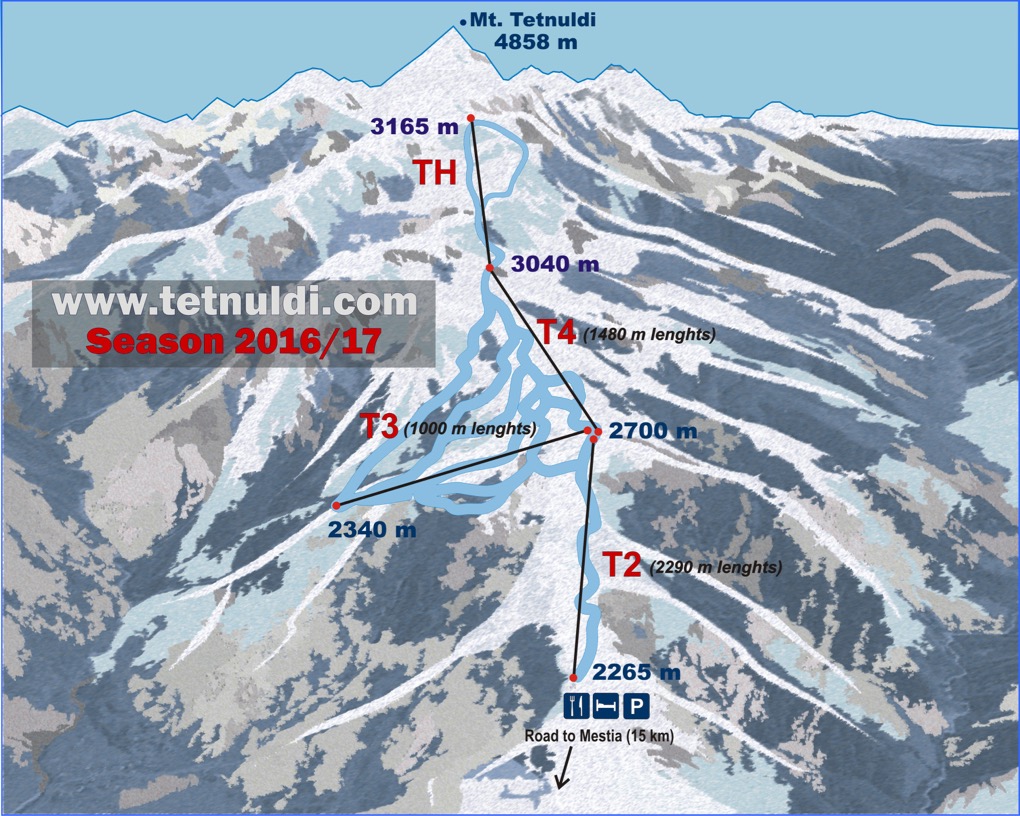
Elevation: 2,265m – 3,165m
Vertical drop: 900m
Skiable terrain: Approximately 35 km of marked runs
Longest run: 9.5 km
Lifts: 4 chairlifts
Season: December – May (longer season due to higher elevation)
Tetnuldi is the larger, higher, and more serious resort. The terrain is more varied and challenging, the snow more reliable, and the setting even more dramatic — you’re skiing on the flanks of Tetnuldi peak (4,858m) with views across the entire Greater Caucasus range.
The 9.5 km top-to-bottom run is one of the longest continuous descents in the Caucasus. Above the lift-served terrain, experienced ski tourers access backcountry routes that rival anything in the Alps.
Trail difficulty:
- Blue (intermediate): 4 runs
- Red (advanced): 5 runs
- Black (expert): 2 runs
- Plus extensive off-piste terrain
Facilities:
- Ski rental at the base
- Café at the base and mid-station
- Ski school
- Ski touring guides available
2025-2026 Prices (approximate):
- Day pass: 60-80 GEL ($22-29)
- Half-day pass: 40-55 GEL ($15-20)
- Equipment rental: 60-100 GEL/day ($22-36)
- Backcountry guide: 300-500 GEL/day ($110-180)
Prices change seasonally; confirm current rates locally.
Best for: Intermediate to advanced skiers, those seeking longer runs and more vertical, backcountry enthusiasts, skiers who prioritize terrain over convenience.
Svaneti vs. Gudauri: Which Georgian Resort?
|
Factor |
Svaneti (Hatsvali/Tetnuldi) |
Gudauri |
|
Distance from Tbilisi |
8-9 hours drive / 45 min flight |
2 hours drive |
|
Total skiable terrain |
~60 km combined |
~70 km |
|
Maximum elevation |
3,165m (Tetnuldi) |
3,279m |
|
Crowds |
Minimal |
Moderate to busy |
|
Nightlife/après-ski |
Limited |
More developed |
|
Off-slope attractions |
Towers, villages, culture |
Limited |
|
Accommodation |
Guesthouses, small hotels |
Hotels, apartments |
|
Best for |
Adventure, culture, and uncrowded skiing |
Convenience, variety, social scene |
Choose Svaneti if: You want a complete mountain experience combining skiing with cultural immersion, prefer uncrowded slopes, and don’t mind the longer journey.
Choose Gudauri if: Skiing is the primary goal, you have limited time, or you prefer more developed resort infrastructure.
Beyond Skiing: Winter Activities in Svaneti
Snowshoeing and Winter Hiking
When ski slopes aren’t your priority, Svaneti’s winter landscape rewards exploration on foot. Snowshoe routes around Mestia offer accessible adventures:
- Mestia to Lakhiri: 2-3 hours, moderate difficulty, views of tower villages
- Chalati Glacier approach: 4-5 hours, moderate difficulty, dramatic ice formations
- Koruldi Lakes route (lower section): 3-4 hours, moderate difficulty, mountain panoramas
Guided snowshoe excursions can be arranged through local operators. Trails that are popular summer hikes become peaceful winter routes with proper equipment and guidance.
Tower Village Exploration
The defensive towers that define Svaneti’s landscape are arguably more photogenic in winter than summer. Snow softens the valleys while emphasizing the stark vertical lines of medieval architecture.
Villages accessible in winter:
- Mestia: The regional center, with numerous towers and the excellent Svaneti Museum of History and Ethnography
- Ushguli: The highest continuously inhabited village in Europe (2,100m), accessible by 4×4 in winter (road conditions permitting)
- Latali and Lenjeri: Smaller villages with well-preserved towers, easier winter access than Ushguli
Note that winter access to remote villages depends on road conditions and recent snowfall. Some routes that are easy drives in summer become serious 4×4 adventures or temporarily impassable in winter.
Svaneti Museum of History and Ethnography
Located in Mestia, this excellent museum provides essential context for understanding Svan culture. Collections include medieval icons, traditional weapons and armor, ethnographic displays, and archaeological finds. A winter visit offers unhurried exploration without summer crowds.
Hours: 10:00-18:00 (closed Mondays)
Entrance: 10 GEL
Photography
Winter transforms Svaneti into one of Europe’s most photogenic destinations. Key subjects and considerations:
Best subjects:
- Towers against snowy peaks at golden hour
- Traditional wooden houses with smoke rising from chimneys
- Frozen waterfalls in side valleys
- Village life: wood-splitting, animal care, daily routines
- Night photography of towers under stars
Tips:
- Golden hour comes early in winter (around 4:00-5:00 PM in December)
- Cold drains batteries quickly; keep spares warm in pockets
- Protect equipment from condensation when moving between cold outdoors and warm interiors
- Permission before photographing people; Swans are generally welcoming, but appreciate being asked
Lamproba Festival (Late February)
The highlight of Svaneti’s winter calendar, Lamproba, occurs on the last weekend of February. This torch festival honors ancestors and welcomes spring through rituals that predate Christianity.
What happens:
- Families spend days preparing torches from birch bark wrapped around wooden poles
- On the festival evening, families gather for a meal, then carry lit torches in procession through villages
- Processions wind to cemeteries where torches are planted at family graves
- Prayers, toasts, and food offerings honor the dead
- Celebrations continue with feasting and traditional songs
Best locations:
- Mestia: Largest gathering, most accessible
- Ushguli: Most dramatic setting, if roads permit
- Latali/Lenjeri: More intimate, authentic village atmosphere
For visitors: Lamproba is a community celebration, not a tourist event, but visitors are welcomed warmly. Respectful observation is appropriate; photographs during prayers should be done discreetly or after asking. If invited to join a family’s celebration, accept graciously — this hospitality is genuine and represents Svan values.
Getting to Svaneti in Winter
By Air
Mestia Airport receives flights from Tbilisi operated by Vanilla Sky (approximately 45 minutes). Winter flights are weather-dependent and may be cancelled or delayed due to mountain conditions. Book with flexibility and have backup plans.
Schedule: Typically 2-4 flights weekly
Cost: 80-150 GEL one-way
Booking: Vanilla Sky or through travel agents
The flight itself is spectacular — low over the Greater Caucasus with views of glaciers and peaks.
By Road
The drive from Tbilisi to Mestia takes 8-9 hours in good conditions. Winter adds considerations:
Route: Tbilisi → Kutaisi → Zugdidi → Mestia
Winter road conditions:
- Tbilisi to Zugdidi: Lowland highway, generally clear year-round
- Zugdidi to Mestia: Mountain road that climbs significantly. In winter:
- Road is maintained but can be snow-covered
- Chains may be required
- 4×4 strongly recommended
- Drive during daylight hours
- Check conditions before departing
From Kutaisi: 5-6 hours, same conditions apply for the mountain section
From Batumi: 6-7 hours via Zugdidi
Organized Transfers
Private transfers and shared jeeps can be arranged:
|
Route |
Private Transfer (approximate) |
Duration |
|
Tbilisi – Mestia |
600-800 GEL |
8-9 hours |
|
Kutaisi – Mestia |
350-450 GEL |
5-6 hours |
|
Zugdidi – Mestia |
200-300 GEL |
3-4 hours |
|
Batumi – Mestia |
400-500 GEL |
6-7 hours |
Winter prices may be higher than summer due to road conditions.
Getting Around Svaneti
Mestia to ski resorts:
- Hatsvali: 8 km, taxis available (~20-30 GEL), some hotels offer shuttles
- Tetnuldi: 15 km, taxis (~40-50 GEL), organized transport from ski operators
Mestia to Ushguli:
- Summer: 2.5 hours by regular vehicle
- Winter: 3-4+ hours by 4×4, road conditions permitting
- Not always possible after heavy snowfall
Local 4×4 drivers know winter conditions and can be hired through guesthouses.
Where to Stay
Mestia
The regional center offers the widest accommodation range:
Hotels:
- Tetnuldi Hotel: Modern comfortable hotel, restaurant, central location (200-350 GEL/night)
- Hotel Mestia: Good mid-range option with restaurant (120-200 GEL/night)
Guesthouses: Traditional family guesthouses offer warmth, home-cooked Svan meals, and cultural immersion. Expect:
- Simple but clean rooms
- Shared or private bathrooms
- Breakfast and dinner are included
- Wood stove heating
- Prices: 60-120 GEL per person, including meals
Booking: In winter, advance booking is wise but less critical thanin summer. Contact guesthouses directly or through booking platforms.
Ushguli
Limited winter accommodation as some guesthouses close. Those that remain open offer basic but authentic experiences:
- Expect simple rooms, wood heating, and home-cooked meals
- Prices: 100-150 GEL per person, including meals
- Confirm winter availability before traveling
Near Ski Resorts
Some accommodation has developed near the Hatsvali base area. Options remain limited compared to established European resorts, but new development continues each season.
What to Pack for Winter Svaneti
Essential Clothing
- Insulated jacket: Temperatures regularly drop below -10°C; proper winter insulation is mandatory
- Waterproof outer layer: For skiing and snow activities
- Thermal base layers: Wool or synthetic, avoid cotton
- Warm mid-layers: Fleece or down
- Insulated pants: For outdoor activities
- Warm hat and gloves: Multiple pairs recommended
- Neck gaiter or balaclava: Wind protection essential
- Warm socks: Wool or synthetic, multiple pairs
- Waterproof boots: Insulated, suitable for snow walking
For Skiing
- Ski clothing if not renting full kits
- Goggles and sunglasses (UV is intense at altitude)
- Sunscreen (SPF 30+ minimum)
- Helmet (can also rent locally)
General Items
- Headlamp: Power outages occur; essential for Lamproba attendance
- Camera gear: Extra batteries (cold drains them fast)
- Cash: ATMs exist in Mestia but can run low; bring sufficient Lari
- Medications: Pharmacies have limited selection
- Snacks: For travel days and emergencies
- Power bank: Useful backup
- Sunglasses: Essential for snow glare
Electronics
- Universal adapter (Georgia uses European Type C/F plugs)
- Portable charger
- Offline maps downloaded (Google Maps, maps.me)
Weather and Best Time
Winter Weather in Svaneti
|
Month |
Avg. High |
Avg. Low |
Snow Conditions |
Crowds |
|
December |
-1°C |
-8°C |
Building; early season |
Very low |
|
January |
-2°C |
-10°C |
Good; reliable coverage |
Low |
|
February |
0°C |
-8°C |
Peak; best overall |
Low-Moderate (Lamproba) |
|
March |
4°C |
-4°C |
Good; spring skiing begins |
Moderate |
|
April |
9°C |
0°C |
Variable; high altitude still good |
Low |
Temperature notes:
- At ski resort elevations (2,000-3,000m), temperatures are 5-10°C colder than Mestia
- Wind chill can make conditions feel significantly colder
- Sunny days can feel warm despite cold air temperatures
Best Time to Visit
For skiing, January through March offers the most reliable conditions. February and March provide a balance of good snow and longer days.
For Lamproba: Last weekend of February — plan specifically around this if the festival is a priority.
For photography and culture, January and February offer the most dramatic winter landscapes with deep snow. March brings slightly easier conditions but potentially less pristine snow cover.
Avoid: Late December can have inconsistent early-season snow; late April may see rapidly melting conditions at lower elevations.
Practical Information
Money
- ATMs available in Mestia (Bank of Georgia, TBC Bank)
- Cash is preferred in villages and smaller establishments
- Some hotels accept cards; guesthouses typically are cash-only
- Bring sufficient Lari; ATMs can run out during busy periods
Connectivity
- Mobile coverage is good in Mestia, variable in the surrounding villages
- Most hotels offer WiFi (quality varies)
- Consider offline maps and downloads before arriving
Language
- Georgian is official; Svan language spoken locally
- Russian widely understood by older generation
- English limited but growing among tourism workers
- Download translation apps; basic Georgian phrases appreciated
Health and Safety
- Nearest hospital in Mestia (basic facilities)
- Serious medical issues require evacuation to Tbilisi or Kutaisi
- Travel insurance with mountain rescue coverage essential
- Altitude: Mestia sits at 1,500m; ski resorts reach 3,000m+ — acclimatize appropriately
- Avalanche awareness required for off-piste skiing; hire local guides
Power and Utilities
- Electricity reliable in Mestia; occasional outages in villages
- Heating typically wood stoves in guesthouses; hotels have central heating
- Hot water available but may be limited in basic guesthouses
Sample Winter Itineraries
Weekend Ski Trip (3 days)
Day 1: Fly Tbilisi to Mestia (or drive from Kutaisi); settle into accommodation; explore Mestia town and towers; dinner at guesthouse
Day 2: Full day skiing at Tetnuldi (more terrain) or Hatsvali (closer); après-ski in Mestia
Day 3: Morning skiing or snowshoeing; visit Svaneti Museum; afternoon flight or drive out
Cultural Winter Week (7 days)
Day 1: Arrive Mestia; orientation walk; tower exploration; guesthouse dinner with Svan family
Day 2: Day trip to Ushguli (weather permitting); UNESCO towers; traditional lunch; return to Mestia
Day 3: Skiing at Hatsvali or snowshoeing around Mestia; Svaneti Museum
Day 4: Skiing at Tetnuldi; longer runs and higher terrain
Day 5: Rest day in Mestia; visit local churches; photography; cooking demonstration
Day 6: Explore Latali and Lenjeri villages; traditional tower visit; local wine tasting
Day 7: Morning activity; departure via flight or road
Lamproba Festival Experience (4-5 days)
Days 1-2: Arrive Mestia mid-week before festival; explore region; skiing; cultural sites
Day 3: Lamproba preparation day; observe torch-making in villages; pre-festival meal with host family
Day 4 (Festival): Rest during day; evening: join torch procession; cemetery ceremony; feasting and singing; photography opportunities
Day 5: Recovery; late departure; reflect on extraordinary experience
Frequently Asked Questions
Is Svaneti accessible in winter?
Yes. The road from Zugdidi to Mestia is maintained year-round, though snow and ice are common. Flights operate weather permitting. 4×4 vehicles are strongly recommended for winter driving; some rental companies restrict mountain travel in winter.
How cold does it get in Svaneti in winter?
Mestia (1,500m) sees temperatures from -10°C to +5°C typically. At ski resort elevations (2,000-3,000m), expect -15°C to -5°C. Wind chill can make it feel significantly colder. Proper winter clothing is essential.
Can I visit Ushguli in winter?
Often yes, but not always. The road to Ushguli is passable by 4×4 in normal winter conditions but may close temporarily after heavy snowfall. Check locally before attempting the trip.
When is the Lamproba festival?
Lamproba occurs on the last weekend of February each year. The exact dates vary slightly; confirm with local sources or tour operators when planning.
How do Svaneti’s ski resorts compare to European resorts?
Terrain and snow are excellent — comparable to good Alpine conditions. Infrastructure is more basic: fewer lifts, simpler base facilities, limited ski-in/ski-out accommodation. The tradeoff is minimal crowds, dramatic scenery, and significantly lower costs.
Do I need ski equipment or can I rent?
Full equipment rental is available at both Hatsvali and Tetnuldi, including skis, boots, poles, and helmets. Quality is decent but not top-tier. Bringing your own boots ensures fit; renting skis locally is practical.
Is winter a good time to see the tower villages?
Excellent. The towers are arguably more dramatic against winter snowscapes than summer greenery. Fewer tourists mean more authentic interactions with locals. Some remote villages have limited winter access, but Mestia, Ushguli (conditions permitting), and nearby villages are accessible.
What’s the ski season in Svaneti?
Typically, December through April. January-March offers the most reliable conditions. Tetnuldi’s higher elevation extends the season; skiing is sometimes possible into May.
How long should I spend in Svaneti in winter?
Minimum 3 days to experience skiing and basic cultural elements. 5-7 days allows a more complete experience, including multiple ski days, village exploration, and cultural immersion. For Lamproba specifically, plan 4-5 days.
Is winter in Svaneti suitable for non-skiers?
Absolutely. Snowshoeing, winter hiking, village exploration, photography, museum visits, and cultural experiences provide plenty for non-skiers. The winter atmosphere and reduced crowds make cultural interactions more meaningful than summer visits.
Experience Winter in Svaneti
Svaneti in winter is not a sanitized resort experience. It’s a living mountain culture that happens to have ski slopes nearby. The combination of medieval architecture under snow, ancient festivals by torchlight, uncrowded slopes beneath spectacular peaks, and genuine Svan hospitality creates something unique in European winter tourism.
We’ve been bringing travelers to Svaneti since 2011, in every season. We know which guesthouses serve the best kubdari, which drivers handle winter roads with confidence, and how to position you for Lamproba’s most memorable moments.
Contact us to plan your winter Svaneti journey, or explore our winter tour packages designed around the experiences that make this season special.
Georgia Tours operates year-round throughout Georgia, with special expertise in Svaneti’s unique culture and landscapes. Get in touch to start planning.
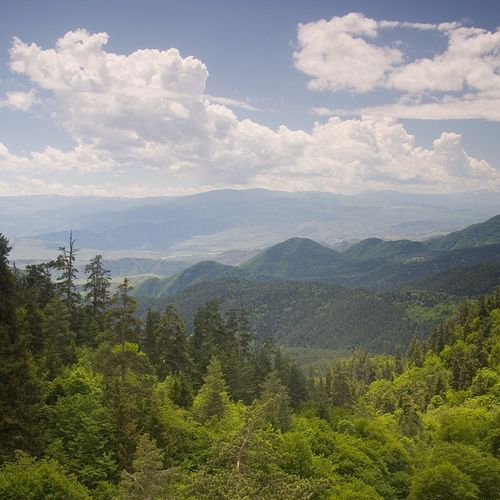 12 hiking trails in Borjomi-Kharagauli national park