Seven days through Georgia’s wine heartland—qvevri cellars with 8,000 years of tradition, cave monasteries carved into cliffsides, supra feasts with endless toasts, and the golden vineyards of the Alazani Valley
There’s a reason wine lovers time their Georgia trips for spring and autumn. In April and May, the Alazani Valley transforms into a sea of blossoming vineyards backed by snow-capped Caucasus peaks. Come September and October, the same landscapes turn golden as families gather for rtveli—the ancient grape harvest that has defined Georgian life for 8,000 years.
This 7-day journey takes you through three of Georgia’s most captivating regions: the cosmopolitan streets of Tbilisi, the legendary wine country of Kakheti, and the dramatic fortress-dotted valleys of Samtskhe-Javakheti. You’ll taste wines made in clay qvevri vessels—a UNESCO-protected tradition—share meals with local families, and explore cave monasteries that cling to cliffsides.
Unlike rushed day trips, this tour gives you time to slow down. Linger over a multi-course supra feast. Watch a sunset paint the Caucasus pink from Signagi’s fortress walls. Learn about chacha distillation from a family who’s been making it for generations. This isn’t just sightseeing—it’s immersion into a culture where hospitality is sacred and every meal becomes a celebration.
This tour suits: Wine enthusiasts wanting to understand qvevri winemaking traditions, food lovers seeking authentic Georgian cuisine and supra experiences, culture travelers interested in UNESCO sites and ancient monasteries, couples looking for romantic vineyard landscapes and charming towns, and anyone who appreciates slowing down to savor a destination.
This tour doesn’t suit: Travelers seeking adventure sports or strenuous hiking, visitors who don’t enjoy wine culture (though non-drinkers are welcome), anyone uncomfortable with long meals and social dining, tourists wanting beach vacations or nightlife, or those with very tight schedules who prefer fast-paced itineraries.
Tour highlights
7 days • 6 nights • 5+ wineries • 15+ wines • UNESCO sites • Vardzia • Traditional supra feast
Why Spring and Autumn?
This tour is specifically designed for spring (April–May) and autumn (September–October)—the two ideal seasons for exploring Georgia’s lowlands and wine regions.
Spring advantages: Blossoming vineyards create carpets of green across the Alazani Valley, wildflowers cover the meadows, snow-capped Caucasus peaks provide dramatic backdrops, mild temperatures (18–25°C) make walking pleasant, and fewer crowds than summer mean more intimate winery visits.
Autumn advantages: Golden vineyard colors transform the landscape, grape harvest season (rtveli) means you can participate in traditional winemaking activities, perfect weather (15–22°C) for exploring cave monasteries and fortress walls, and harvest festivals bring communities together in celebration.
Summer (June–August) can be very hot in the lowland wine regions, making spring and autumn the ideal seasons for wine tourism.
What Makes Georgian Wine Different
Georgia isn’t just a wine country—it’s the wine country. Archaeological evidence shows winemaking here dates back 8,000 years, making this the oldest wine-producing region on Earth. But it’s not just age that sets Georgian wine apart.
Qvevri winemaking is the heart of the tradition. These large clay vessels—often holding 1,000+ liters—are buried underground to ferment and store wine. The process produces amber-colored wines with complex flavors you won’t find anywhere else. UNESCO recognized this method as Intangible Cultural Heritage in 2013.
Indigenous grape varieties number over 500, though about 40 are commonly cultivated today. You’ll taste Saperavi (the king of Georgian reds), Rkatsiteli (crisp and aromatic whites), and rare varieties like Mtsvane and Kisi that most wine lovers have never encountered.
Family traditions matter more than commercial production. Many of the cellars you’ll visit have been making wine for generations—not for export, but for family gatherings and celebrations. The difference in taste and authenticity is immediate.
Beyond Wine: Culture and History
This tour balances wine immersion with Georgia’s remarkable cultural heritage. Vardzia Cave Monastery rivals any historical site in Europe—a 12th-century city carved into volcanic cliffs where 2,000 monks once lived. Uplistsikhe takes you back 3,000 years to a Silk Road trading post carved from rock.
The UNESCO World Heritage churches of Mtskheta connect you to Georgia’s spiritual foundations—these are places where Christianity took root in the 4th century and shaped a nation’s identity. And throughout the journey, you’ll experience Georgian hospitality through food: khinkali dumplings, khachapuri cheese bread, walnut-stuffed vegetables, and the endless generosity of the supra feast.
Tour Itinerary
Arrive at Tbilisi International Airport
Your driver meets you at the airport and transfers you to your hotel in the heart of the old city. After settling in, we begin with a leisurely walking tour through Tbilisi’s atmospheric streets.
What You’ll See
Metekhi Plateau: A 13th-century church overlooks the Mtkvari River, offering your first panoramic view of the city’s famous blend of old and new architecture.
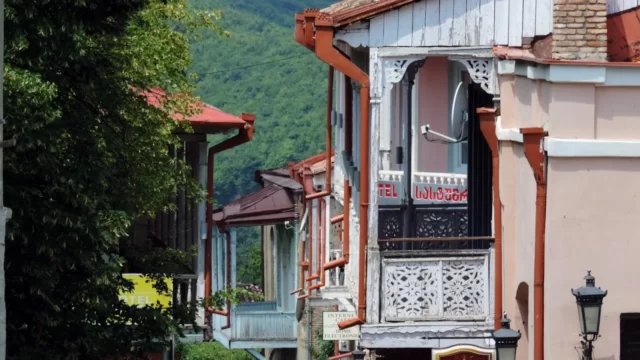
Sulfur Bath District (Abanotubani): Tbilisi literally means “warm place” in Georgian, named for the hot springs that bubble beneath the streets. The distinctive domed roofhouses mark baths that have operated since the city’s founding.
Narikala Fortress: The ancient citadel walls visible from everywhere in the old town. Cable car available for panoramic city views.
If you’d like to experience a traditional scrub-down at the historic Orbeliani Baths, we can arrange an evening session (optional, not included).
Evening
Welcome dinner at a local restaurant, where you’ll taste your first Georgian wines alongside classics like khinkali (soup dumplings), khachapuri (cheese bread), and fresh herb-laden salads.
Overnight: Tbilisi (3-star hotel or boutique guesthouse)
Meals: Welcome dinner
Route: Mtskheta → Gori → Uplistsikhe → Borjomi | Driving: ~3.5 hours total
We leave Tbilisi early and drive 20 minutes north to Mtskheta—Georgia’s ancient capital and spiritual heart.
Morning: Mtskheta (UNESCO World Heritage Site)
Two monuments here are non-negotiable:
Jvari Monastery (6th century): Perched on a hilltop with commanding views of where the Aragvi and Mtkvari rivers meet. This is where Christianity was established in Georgia, and the architecture influenced church building across the Caucasus for centuries.
Svetitskhoveli Cathedral (11th century): The burial place of Georgian kings and, according to tradition, the robe of Christ. The current structure replaced earlier churches on the same site going back to the 4th century.
Midday: Gori and Uplistsikhe
From Mtskheta, we head west to Gori, birthplace of Joseph Stalin. The controversial Stalin Museum offers a fascinating glimpse into Soviet history (optional visit).
More compelling for most visitors is Uplistsikhe—a cave city carved into volcanic rock over 3,000 years ago. Walking through its ancient streets, theaters, and temple chambers, you’ll understand why this was once a major stop on the Silk Road.
Afternoon: Borjomi
We arrive in Borjomi by late afternoon. This elegant spa town, nestled in a forested gorge, has been famous for its mineral water since the 19th century. Stroll through Borjomi Central Park and taste the naturally carbonated water straight from the spring—an acquired taste, but one that Georgians swear by for its healing properties.
Overnight: Borjomi (guesthouse)
Meals: Breakfast, dinner
Route: Vardzia → Khertvisi → Rabati Castle → Akhaltsikhe | Driving: ~2.5 hours total
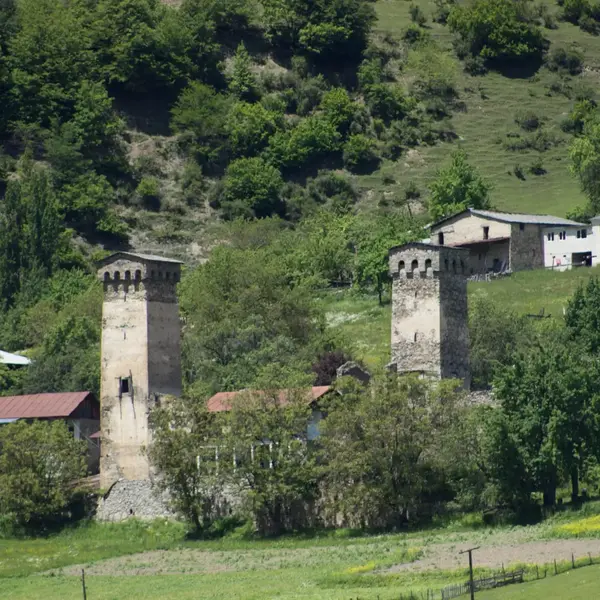
Today we venture into Samtskhe-Javakheti—a region of dramatic gorges, highland plateaus, and layered history where Georgian, Armenian, Turkish, and Russian influences intertwine.
Morning: Vardzia Cave Monastery
The morning’s highlight is Vardzia—a 12th-century cave monastery that once housed 2,000 monks across 13 levels carved into a sheer cliff face. Queen Tamar herself used this as a stronghold during Georgia’s Golden Age.
Your guide leads you through the labyrinthine tunnels, past the Church of the Dormition with its original frescoes, and explains how this complex functioned as a self-sufficient city with bakeries, wine cellars, and an irrigation system.
Afternoon: Khertvisi and Rabati
We stop at Khertvisi Fortress—one of the oldest fortresses in Georgia, guarding the confluence of the Mtkvari and Paravani rivers since at least the 2nd century BC.
In Akhaltsikhe, the restored Rabati Castle complex showcases the region’s multicultural heritage: a Georgian church, a Turkish mosque, and a synagogue stand within the same walls.
Evening
Dinner tonight features Meskhetian cuisine—distinct from the rest of Georgia, with influences from centuries of Turkish rule.
Overnight: Akhaltsikhe (hotel or guesthouse)
Meals: Breakfast, dinner
Route: Akhaltsikhe → Tbilisi → Signagi | Driving: ~4 hours total
We retrace our route through Borjomi and Tbilisi, but the real destination today is Kakheti—the cradle of wine civilization.
Crossing to Wine Country
As we cross the Gombori Pass, the landscape transforms: terraced vineyards stretch toward the horizon, backed by the snow-dusted peaks of the Greater Caucasus. This is the Alazani Valley—where Georgian winemaking began 8,000 years ago.
Signagi: City of Love
Our destination is Signagi, the “City of Love.” This small hillside town is famous for its fully preserved 18th-century defensive walls (you can walk the entire 4km circuit) and its 24-hour wedding registry—couples from across Georgia elope here on a whim.
We check into our guesthouse and take an evening stroll through Signagi’s cobblestone streets.
Evening
From the town walls, you’ll watch the sun set over the Alazani Valley—an ocean of vineyards stretching to the mountains. This is the view that has inspired Georgian poets for centuries.
Overnight: Signagi (boutique guesthouse with valley views)
Meals: Breakfast, dinner
Route: Signagi → Velistsikhe → Pheasant’s Tears → Tsinandali | Wine tastings: 15+ wines across 4 locations
This is the day wine lovers have been waiting for. After breakfast overlooking the valley, we begin our deep dive into Kakhetian winemaking.
Signagi Museum
First stop: the Signagi Museum, home to an excellent collection of archaeological artifacts and—most importantly—a wine cellar offering tastings of local varieties like Saperavi and Rkatsiteli.
Pheasant’s Tears Winery
Next, we visit Pheasant’s Tears in Signagi—one of Georgia’s most celebrated natural wine producers. American-born painter John Wurdeman founded this winery after falling in love with Georgian winemaking traditions.
Here you’ll taste wines fermented in qvevri (clay vessels buried underground) using methods unchanged for 8,000 years. UNESCO recognized this tradition as Intangible Cultural Heritage—and one sip tells you why.
Family Wine Cellar in Velistsikhe
In Velistsikhe village, we explore a 16th-century wine cellar that’s been in the same family for generations. This isn’t a commercial winery—it’s a working family cellar where you’ll taste homemade wines and learn the difference between Kakhetian and European styles.
Tsinandali Estate
Our final stop is Tsinandali Estate—the ancestral home of the Chavchavadze princes, who pioneered European-style winemaking in Georgia. The cellar contains bottles from as far back as 1841. We tour the romantic gardens, taste their signature white blend, and learn how this estate shaped Georgia’s wine history.
Overnight: Telavi area (guesthouse or boutique hotel)
Meals: Breakfast, wine-paired lunch, dinner
Route: Gremi → Nekresi → Ikalto → Telavi
Today we explore Kakheti’s rich cultural heritage beyond the wineries.
Morning: Gremi Citadel
We start at Gremi, the former capital of the Kakhetian Kingdom. The 16th-century royal citadel and Archangel Church stand as reminders of the Silk Road wealth that once flowed through this valley. Merchants from Persia, India, and China passed through these gates carrying spices, silk, and gems.
Nekresi Monastery
Nekresi Monastery requires a short shuttle ride up a steep mountain, but the 6th-century complex and sweeping valley views make it worthwhile. This is one of Georgia’s oldest Christian sites—and one of the least crowded.
Ikalto Academy
At Ikalto Academy, you’ll walk the grounds where 12th-century scholars developed the world’s first formal curriculum for winemaking. Some historians believe the legendary poet Shota Rustaveli studied here. The atmospheric ruins include the original wine presses.
Chacha Masterclass
Lunch today is special: at Nikala Restaurant in Telavi, you’ll be introduced to chacha—Georgian grape brandy. Your host explains the distillation process while you sample different strengths and ages. (Don’t worry—we pace the tastings carefully, and dinner will soak everything up.)
Farewell Supra
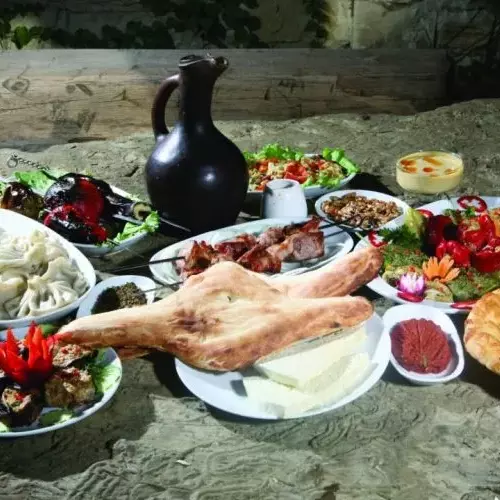
Tonight is the highlight of Georgian hospitality: a traditional supra feast. Expect a table overflowing with dishes—khachapuri, grilled meats, fresh salads, stews, cheeses—accompanied by wine and heartfelt toasts led by a tamada (toastmaster). Polyphonic folk songs often break out spontaneously.
Overnight: Telavi area (same guesthouse)
Meals: Breakfast, lunch with chacha tasting, farewell supra dinner
Route: Telavi → Ujarma → Tbilisi | Driving: ~2.5 hours
After a leisurely breakfast, we begin our return to Tbilisi via the scenic Gombori Pass.
Ujarma Fortress
Our final cultural stop is Ujarma Fortress—a 5th-century stronghold where King Vakhtang Gorgasali once ruled. The atmospheric ruins offer a quiet moment of reflection before we rejoin modern life.
Afternoon in Tbilisi
We arrive in Tbilisi by early afternoon, giving you time for last-minute shopping at the Dry Bridge Flea Market, a final stroll through the old town, or a relaxing meal before your departure.
Transfer to Tbilisi International Airport for your onward journey—or extend your stay to explore more of Georgia.
End of tour: Tbilisi International Airport
Meals: Breakfast
Price details
Contact us for current pricing—rates vary by season, group size, and accommodation preferences. Private tours available for couples, families, and small groups. Join scheduled departures for the best value.
Deposit: 30% at booking, remainder due 30 days before departure
Cancellation: Full refund (minus admin fee) if cancelled 30+ days before departure
What’s Included
Tour map
Tbilisi Airport
Tbilisi (Night 1)
Jvari Monastery
Svetitskhoveli Cathedral
Uplistsikhe Cave City
Borjomi (Night 2)
Borjomi Mineral Springs
Vardzia Cave Monastery
Khertvisi Fortress
Rabati Fortress
Akhaltsikhe (Night 3)
Signagi (Night 4)
Pheasant's Tears Winery
Tsinandali Estate
Telavi (Nights 5-6)
Gremi Citadel
Nekresi Monastery
Ikalto Academy
Ujarma Fortress
Tour gallery
Practical Information
Duration: 7 days / 6 nights
Start/End: Tbilisi International Airport
Difficulty: Easy—suitable for all fitness levels, primarily paved surfaces
Best Season: April–May (spring) and September–October (autumn)
Language: English guide (German and Polish available on request)
What to Pack
Comfortable walking shoes, layers (mountain weather can be unpredictable), light jacket or cardigan for evenings, sun protection (hat, sunscreen, sunglasses), modest clothing for monastery visits (covered shoulders and knees; headscarves provided for women), camera with extra batteries, reusable water bottle.
Dietary Requirements
Georgian cuisine is naturally vegetarian-friendly, with many bean, vegetable, and cheese dishes. Vegan, gluten-free, and other dietary needs can be accommodated with advance notice.
Tour FAQ
Why This Tour Works
Georgia is the cradle of wine civilization—8,000 years of continuous winemaking tradition, UNESCO-protected methods, over 500 indigenous grape varieties. This tour immerses you in that heritage properly, with time to taste, learn, and understand.
The timing matters. Spring brings blossoming vineyards and wildflower meadows; autumn brings the grape harvest and winemaking activities. Both seasons offer mild temperatures, fewer crowds, and landscapes at their most beautiful. This tour is specifically designed for these optimal windows.
Balance between wine and culture. You’ll taste 15+ wines at 5+ wineries, including Pheasant’s Tears (one of Georgia’s most celebrated natural wine producers) and family cellars that have operated for generations. But you’ll also explore Vardzia’s cliff-carved monasteries, Mtskheta’s UNESCO churches, and the Silk Road heritage of Kakheti.
The supra experience. A Georgian feast isn’t just a meal—it’s the heart of the culture. The farewell supra on Day 6, with a tamada leading toasts and folk musicians playing, captures what makes Georgian hospitality legendary. You can’t understand Georgia without experiencing this.
This tour runs April–May and September–October. Contact us with your preferred dates and group size.