Trekking in Georgia: The Complete Guide to Hiking the Caucasus Mountains (2026)
By Rusudan Tsiskreli, founder of Highlander Travel. We’ve been guiding treks in the Georgian Caucasus since 2011.
There’s a moment on the Atsunta Pass, 3,431 meters up, wind tearing sideways, clouds racing below you, when you can see two of Georgia’s most remote regions spread out in opposite directions. Behind you, Khevsureti’s fortress villages. Ahead, Tusheti’s tower-studded valleys. Between them, nothing but sky and stone and the narrow trail you just spent three days climbing to reach.
That moment is what trekking in the Caucasus mountains of Georgia is about. Not the Instagram shots, though those come too. The physical reality of crossing mountains that most people in Europe never hear about, through landscapes where medieval villages still function as communities, where your guesthouse host kills a sheep because you showed up, and where the trails connect places that roads still haven’t reached.
Georgia the country (not the US state, we get asked this more than you’d think) packs extraordinary mountain terrain into a space smaller than South Carolina. The Greater Caucasus along the northern border includes peaks above 5,000 meters, glaciated valleys, and high-altitude plateaus that rival anything in the Alps with a fraction of the foot traffic. You can leave Tbilisi after breakfast and be hiking at 2,000 meters by lunch. Flights from European capitals take three to four hours. No expensive permits, no week-long approaches. Just mountains.
We’ve guided treks across every region covered in this guide. Some of what follows is practical information you can verify anywhere. Some is opinion earned from 14 years of watching people succeed and struggle on these trails. We’ll try to be clear about which is which.
Georgia’s Trekking Routes at a Glance
| Trek | Days | Distance | Difficulty | Season | Region | Guide Needed? |
|---|---|---|---|---|---|---|
| Mestia to Ushguli | 4 | 58 km | Moderate | Jun-Oct | Svaneti | No (recommended) |
| Gergeti Trinity & Kazbek Glacier | 1 | 8-14 km | Easy-Moderate | May-Oct | Kazbegi | No |
| Chaukhi Pass (Juta to Roshka) | 2 | 21 km | Challenging | Jul-Sep | Kazbegi/Khevsureti | Recommended |
| Atsunta Pass (Shatili to Omalo) | 5-6 | 70 km | Difficult | Jul-Sep | Khevsureti/Tusheti | Essential |
| Omalo-Dartlo-Shenako Loop | 3-4 | 35 km | Moderate | Jun-Sep | Tusheti | Helpful |
| Truso Valley | 1 | 14 km | Easy | May-Oct | Kazbegi | No |
| Tobavarchkhili Lakes | 4-5 | 70 km | Difficult | Jul-Sep | Samegrelo | Essential |
| Borjomi-Kharagauli Trails | 1-4 | Various | Easy-Moderate | May-Oct | Central Georgia | No |
| Lagodekhi Black Rock Lake | 2 | 28 km | Moderate | Jun-Sep | Kakheti | No |
| Racha: Ghebi to Chiora | 3-4 | 40 km | Moderate-Challenging | Jul-Sep | Racha | Recommended |
| Javakheti Plateau & Abuli | 3-5 | Various | Moderate | Jun-Sep | Javakheti | Recommended |
Why Georgia for Trekking?
The short answer: mountains this dramatic shouldn’t be this accessible or this empty.
The Greater Caucasus forms Georgia’s northern border, a wall of jagged, glaciated peaks stretching from the Black Sea to the Caspian. Mount Shkhara tops out at 5,193 meters. These are young mountains, geologically speaking, which means they’re steep, raw, and visually aggressive in a way that older, more weathered ranges can’t match. The Alps are beautiful. The Caucasus is fierce.
What makes Georgia unusual among trekking destinations is the combination. The mountains are serious: 3,000-meter passes, unpredictable weather, real remoteness in some regions. But the access is easy. Tbilisi to the Kazbegi trailhead: three hours on a paved road. Tbilisi to Mestia: one hour by plane or a day’s drive through some of the most dramatic scenery in the country. No porters, no base camp acclimatization weeks, no permits costing hundreds of dollars.
And unlike pure wilderness destinations, Georgian mountain regions are inhabited. Svaneti, Tusheti, Khevsureti: these are living cultures with roots stretching back millennia. Trails connect villages with medieval defensive towers, Byzantine-era churches, and families who’ve worked the same land for generations. You trek from guesthouse to guesthouse, eating khinkali and drinking chacha with your hosts, hearing stories about the valley in a mix of Georgian, Russian, and hand gestures.
Then there’s the value. Guesthouse accommodation in mountain villages starts at around 80 GEL ($30) for a room, or 120 GEL ($45) with dinner and breakfast included. A week of trekking in Georgia costs what two nights in a Swiss mountain hut would run you.
And the solitude. Even on the country’s most popular trekking route, Mestia to Ushguli, you’ll see other hikers but never crowds approaching Alpine levels. Step off the main routes and you may trek for days seeing only shepherds and their flocks.
For practical information on Georgia’s national parks and protected areas, we maintain a separate guide.
The Classic Treks
1. Mestia to Ushguli: Svaneti Trekking
Quick reference: 4 days | 58 km | Moderate | 1,500m-2,700m elevation | Jun-Oct | Guesthouses throughout
This is Georgia’s signature trek, and it earns the reputation. Four days through Upper Svaneti connecting two UNESCO-recognized communities, with glacier views, flower-filled meadows, and medieval tower villages at every overnight stop.
We’ve sent more clients on this route than any other, and the feedback is remarkably consistent: people arrive expecting good hiking and leave talking about the guesthouses, the food, the Svan families who hosted them. The walking is excellent, no question, but it’s the cultural texture that makes this trek linger.
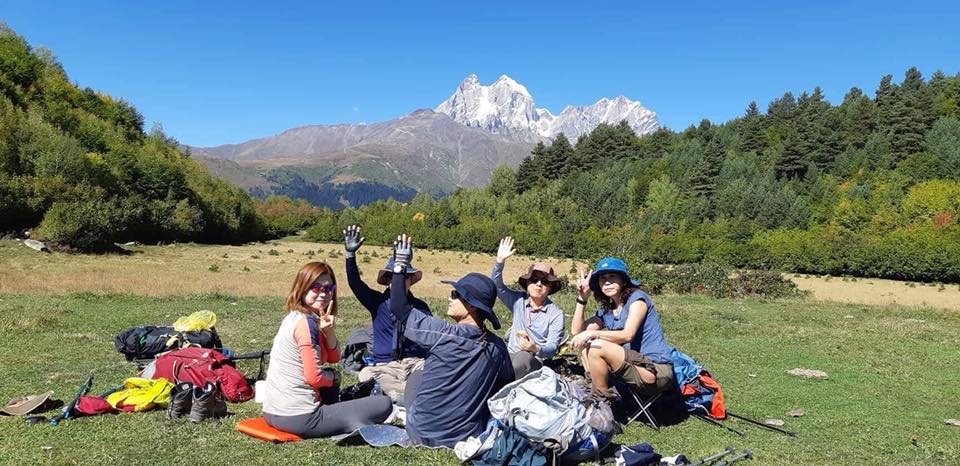
Day 1: Mestia to Zhabeshi (12 km, 4-5 hours). A gentle start through farmland and forest, with Ushba’s twin peaks dominating the horizon. Ushba is the mountain that stops you in your tracks: 4,710 meters of sheer rock and ice, often called the “Matterhorn of the Caucasus,” and arguably more intimidating. Overnight in a Svan guesthouse where dinner probably includes kubdari, the spiced meat pie that Svaneti does better than anywhere.
Day 2: Zhabeshi to Adishi (11 km, 5-6 hours). You cross the Chkhunderi Pass at 2,700 meters and descend to Adishi village, sitting beneath the Adishi Glacier. The glacier is retreating visibly year over year. We’ve been bringing groups here for over a decade and the change is striking. If you have energy after arrival, the short walk toward the glacier snout is worth it.
Day 3: Adishi to Iprali (17 km, 7-8 hours). The longest day and the one that separates this trek from a casual walk. The Adishi River crossing is the crux: thigh-deep glacial meltwater that’s coldest and highest in the morning. Counterintuitively, we recommend crossing before 10am when the water level is actually lower, before the day’s sun accelerates glacier melt. This is the day where having a guide earns its cost. After the river, you climb to a second pass before descending to Iprali.
Day 4: Iprali to Ushguli (18 km, 6-7 hours). The final stretch delivers what the trek has been building toward: arrival at Europe’s highest continuously inhabited village, the towers of Chazhashi arranged against the backdrop of Mount Shkhara, Georgia’s tallest peak. It’s a view that works even in bad weather, and in clear conditions it’s something you remember for years.
Practical notes: July through August is optimal; June and September work but expect more rain and possibly snow on the pass. Guesthouses in every village, but book ahead in July-August as they fill. Guide not required for experienced hikers, but recommended for the river crossing and weather judgment.
Tour options: We run this as a dedicated 4-day Mestia to Ushguli trek and as part of a longer 7-day Svaneti tour that adds the Chalaadi Glacier hike and cultural stops. For Mestia-Ushguli specifically, the guided version makes the biggest difference on Day 3 with that river crossing.
2. Chaukhi Pass Trek: Juta to Roshka (Kazbegi Hiking)
Quick reference: 2 days | 21 km | Challenging | Up to 3,338m | Jul-Sep | Camping + guesthouse
Two days, one 3,338-meter pass, and some of the most dramatic rock scenery in the Caucasus. The Chaukhi massif, seven jagged peaks arranged like a row of broken teeth, creates an alpine landscape so striking that locals call it the “Georgian Dolomites.” The comparison understates it.
We rate this as the best short trek in Georgia for experienced hikers. It packs an extraordinary amount of visual impact into two days, crosses between two distinct mountain regions (Kazbegi and Khevsureti), and visits the three Abudelauri Lakes, blue, green, and white, which are genuinely different colors depending on mineral content and season.
Day 1: Juta to Abudelauri Lakes via Chaukhi Pass (11 km, 6-8 hours). From Juta village at 2,200 meters, you climb steadily toward the pass. The final approach crosses loose scree that demands attention and trekking poles. The pass itself is a wind tunnel; we’ve had groups waiting 30 minutes for a weather window to cross safely. On the far side, you descend to camp near the three lakes. The green lake at sunset is worth every meter of the climb.
Day 2: Abudelauri Lakes to Roshka (10 km, 4-5 hours). An easier morning descent through alpine meadows into Roshka village, where a guesthouse, hot food, and the satisfaction of having crossed that pass are waiting.
The catch: This trek is weather-dependent in a way the Mestia-Ushguli route isn’t. Snow can block the pass well into July. Afternoon storms build fast, and being caught on or near the pass in a thunderstorm is genuinely dangerous: exposed ridge, no shelter, lightning. We start early and aim to be across by early afternoon. A guide is strongly recommended for weather judgment and navigation on the scree sections.
We run this as a guided 2-day trek that includes transport from Tbilisi, camping equipment, meals, and a guide who knows this pass intimately.
3. Atsunta Pass: Shatili to Omalo (Khevsureti to Tusheti)
Quick reference: 5-6 days | 70 km | Difficult | Up to 3,431m | Jul-Sep | Camping | Guide essential
This is the big one. Five to six days crossing from Khevsureti to Tusheti over a 3,431-meter pass through some of the wildest terrain in the Caucasus. Medieval fortress villages bookend the route. In between: river valleys, high camps, and a pass crossing that we’ve turned groups back from three times in the last five seasons because the weather window closed.
I’ll be direct about this: the Atsunta is not a trek to take lightly. It’s not technically difficult in the mountaineering sense, no ropes, no glacier travel. But it’s remote, the weather is unpredictable, the pass is exposed, and you’re camping for multiple nights at altitude with no bailout options for two to three days in the middle.
Day 1: Shatili to Ardoti (14 km, 5-6 hours). Begin at the fortress village of Shatili, a cluster of stone towers so densely packed they look like a single organism growing from the rock. Trek upstream through the Ardoti Gorge. Dramatic and narrow and green.
Day 2: Ardoti to high camp (12 km, 6-7 hours). Continue ascending toward the pass, setting up camp at approximately 3,000 meters. This is where you feel the altitude for the first time. Drink water. Eat well. Sleep poorly. That last part isn’t a joke; nearly everyone reports rough sleep the first night above 2,800m. It’s normal.
Day 3: Atsunta Pass crossing (15 km, 8-10 hours). The crux day. You leave camp early, 5 or 6am, because weather windows on this pass are morning affairs. The climb to 3,431 meters is steady and exposed. The descent into Tusheti on the far side is steep and long. This is a full 10-hour day.
Days 4-5: Through Tusheti to Omalo (29 km total). Descend through Tusheti’s upper villages: Girevi, Parsma, Dartlo, and finally Omalo. The contrast between the high pass and the pastoral Tusheti valleys below is one of the great transitions in mountain trekking. You’ve entered through the “back door,” the way Tushetians themselves traveled for centuries before the road over Abano Pass was built.
Important cultural note from the Atsunta trek product page: it is strictly prohibited to bring any pork products or anything made from pig’s skin into Tusheti. This is a deeply held local tradition, not a suggestion.
Who this trek is for: Experienced mountain trekkers with multi-day backgrounds. Good fitness. Comfort with altitude and camping. Not for first-timers in Georgia or in mountains.
A guide is essential. We require verified insurance with helicopter evacuation coverage for every participant on our 7-day Atsunta Pass trek ($1,100 per person, all-inclusive from Tbilisi). Horse support carries gear. This isn’t something we upsell; it’s a safety standard for this particular route.
4. Tusheti Trekking: Omalo to Dartlo Loop
Quick reference: 3-4 days | 35 km | Moderate | 1,800m-2,600m | Jun-Sep | Guesthouses throughout
If the Atsunta sounds like more than you’re ready for, this is Tusheti without the suffering. A 3-4 day circuit through the region’s heartland connecting its most significant villages, staying in guesthouses each night, eating homemade food, and walking through pastoral landscapes where the pace of life hasn’t fundamentally changed in centuries.
This has become our best-selling trekking tour in the Tusheti region, and the reason is simple: it delivers the cultural immersion and mountain scenery that people come to Georgia for, without requiring expedition fitness or camping equipment.
Day 1: Omalo to Diklo (12 km, 5-6 hours). Start at Keselo Fortress above Omalo, the most impressive surviving example of Tushetian defensive architecture, then traverse to the largely abandoned village of Diklo. The emptied village, still structurally intact, is one of the more haunting sights in the Georgian mountains.
Day 2: Diklo to Shenako (8 km, 4-5 hours). Through high pastures to Shenako village. Shorter day, leaving time to explore the village church with its unusual exterior frescoes.
Day 3: Shenako to Dartlo (10 km, 4-5 hours). Dartlo is Tusheti’s most photogenic village, slate-roofed towers along a river valley. The guesthouse here typically serves the best food of the trek. Ask about the local cheese.
Day 4: Dartlo to Omalo (10 km, 4-5 hours). Return via the valley floor.
Getting to Tusheti is itself an adventure. The only road crosses Abano Pass at 2,926 meters: a narrow, unpaved track carved into cliffs with no guardrails. Most travelers arrange 4×4 transport. Our 4-day Hiking in Tusheti tour ($450 per person) includes the drive over Abano plus two summit hikes: Unagira Mountain (3,050m) and Oreti Lake (2,850m).
Not a hiker? We also run a 3-day Jeep Tour in Tusheti ($440) that covers the key villages and viewpoints without the multi-day walks. And for something completely different, our horse riding tour in Tusheti (4 days) and 11-day horse riding expedition across Georgia both pass through this region.
Day Hikes and Shorter Walks
5. Gergeti Trinity Church and Kazbek Glacier (Kazbegi Hiking)
Quick reference: 1 day | 8-14 km | Easy to Challenging | Up to 3,000m+ | May-Oct
The most-hiked trail in Georgia, and it deserves to be. The 14th-century Gergeti Trinity Church perched on its hilltop with Mount Kazbek (5,047m) towering behind is the image on every Georgia travel poster. The hike to reach it is short, steep, and rewarding even in mediocre weather.
From Stepantsminda (Kazbegi town), climb about 500 meters over 3-4 kilometers. Allow 1.5-2 hours up, an hour down. The trail is obvious and well-worn.
But here’s what most visitors miss: the church is not the destination. It’s the starting point. Continue beyond Gergeti toward the Kazbek glacier viewpoint and the hike transforms from a tourist walk into a proper mountain day. The extended route adds 4-5 hours and significant altitude, taking you into terrain where the crowds vanish and the glacier fills your entire field of vision.
No guide needed for the church. Recommended for the glacier extensions.
6. Truso Valley
Something completely different. Where most Georgian treks aim for altitude and adrenaline, the Truso Valley offers a flat walk through a landscape that looks like it belongs on another planet. Mineral springs stain the ground orange and turquoise. Travertine terraces build up in formations that seem both geological and architectural. Abandoned fortress villages dot the valley floor. And the mountains of the Russia-Georgia border close in on both sides.
From the roadhead at Kvemo Okrokana, walk 7 kilometers up the valley to the abandoned fortress of Zakagori. Return the same way. Four to six hours total, almost entirely flat.
A note: the valley approaches the Russian border. Stay on the main trail and don’t proceed past the established turnaround point. Border guards patrol and will firmly redirect you.
7. Abudelauri Lakes (Day Trip from Juta)
If the full Chaukhi Pass crossing isn’t in your plans, you can reach the three colored lakes as a tough day hike from Juta village. The round trip is about 16 kilometers with roughly 1,000 meters of elevation gain. That’s a serious day, especially at altitude.
The reward is the same lake basin you’d camp at on the Chaukhi trek: three alpine lakes in blue, green, and white, surrounded by the Chaukhi massif’s jagged peaks. July to September only. Start early, as afternoon clouds frequently obscure the views.
Regional Trekking Beyond the Classics
8. Lagodekhi National Park: Black Rock Lake (Kakheti Hiking)
Quick reference: 2 days | 28 km | Moderate | Up to ~2,800m | Jun-Sep
Georgia’s eastern wilderness doesn’t get the attention that Svaneti and Kazbegi do, which is precisely the appeal. Lagodekhi, on the Azerbaijan border, protects the most intact forest ecosystem in the country: dense, dripping, alive with birds and wildlife in a way that the heavily grazed Caucasus highlands are not.
The trek to Black Rock Lake (Shavi Klde) is the park’s signature route: 14 kilometers in through increasingly dense forest to an alpine lake at approximately 2,800 meters, overnight at a basic shelter or campsite, then return the same way. Register at the park entrance (small fee, mandatory). June to September.
9. Racha: Georgia’s Quiet Mountain Region
Quick reference: 3-4 days | ~40 km | Moderate-Challenging | Jul-Sep
Ask ten people about trekking in Georgia and nine will mention Svaneti. Almost nobody mentions Racha, and that’s what makes it interesting. Located east of Svaneti, Racha is one of the least-visited mountain regions with some of the most rewarding terrain. Alpine forests, no tourist infrastructure to speak of, and the Ghebi to Ushguli route which crosses from Racha into Svaneti and is arguably the most challenging multi-day walk in the country.
The region around Shovi village offers gentler options for those who want mountain walking without expedition commitment. And Racha has something the northern Caucasus regions don’t: wine. The village of Khvanchkara produces some of Georgia’s most prized semi-sweet reds. Finishing a trek with a glass of Khvanchkara is a distinctly Rachan experience.
Trail marking in Racha ranges from minimal to absent. A guide is recommended unless you have strong GPS navigation skills and comfort with route-finding in unmarked terrain.
10. Javakheti Plateau and Abuli Fortress
Quick reference: 3-5 days | Various | Moderate | Jun-Sep
The terrains in South Georgia are completely different from the dramatic peaks of the north. Javakheti is a high-altitude plateau region: wide open grasslands, volcanic lakes, and a sense of space that the narrow Caucasus valleys don’t offer. The landscape has more in common with the Armenian highlands to the south than with Svaneti to the north.
The trekking here is about distance across open terrain rather than vertical ascent. Highland lakes, bird-watching (the plateau is one of the most important birding areas in the Caucasus), and megalithic fortresses at Abuli and Shaori with architecture that predates anything in the mountain villages.
We run an 8-day Javakheti and Borjomi trek that combines the plateau’s open spaces with the forested trails of Borjomi-Kharagauli National Park, Georgia’s largest protected area. It’s a fundamentally different experience from the Caucasus high passes, and one of the best options for trekkers who prefer gentler gradients and wider horizons.
11. Tobavarchkhili Lakes (Silver Lakes)
Quick reference: 4-5 days | 70 km | Difficult | Jul-Sep | Camping only | Guide essential
This is the trek for people who’ve done the classics and want something wilder. The Tobavarchkhili basin in the Samegrelo region, a cluster of glacial lakes on the Egrisi Range, remains genuinely remote. No guesthouses. No trail markers in any conventional sense. No phone signal for five days. Just wilderness, your tent, and pristine alpine scenery.
The approach from Mukhuri village takes 4-5 days through forest and increasingly rugged terrain. Camping throughout, no infrastructure whatsoever. A guide is essential for navigation, water source knowledge, and emergency response in an area where helicopter evacuation is the only way out.
We honestly considered not including this route in a general trekking guide. It’s not for most visitors. But it’s the trek that our most experienced clients come back asking about after they’ve done everything else. We run it as a guided expedition with all logistics, equipment, and food handled. Previous multi-day trekking experience is a firm requirement.
12. Borjomi-Kharagauli National Park
Quick reference: 1-4 days | Various | Easy-Moderate | May-Oct
No 3,000-meter passes here. Instead: Georgia’s largest national park, dense forest trails, well-marked routes, and established shelters. This is where you go if you want to walk in the woods rather than fight the mountains, or if you’re visiting outside peak summer when the high routes are closed.
The St. Andrew’s Trail (54 km, 2-3 days) is the flagship route. The Nikoloz Nature Trail (15 km, 1 day) offers a gentler introduction. Registration at ranger stations is required; book shelter accommodation in advance. The park meets international trail-marking standards, a rarity in Georgia.
For a complete overview of all 12 trails, see our dedicated Borjomi-Kharagauli guide.
Which Trek Should You Choose?
Choosing a route depends on three things: how many days you have, how fit you are, and whether you want to camp. Here’s a practical decision guide:
“I have 1-2 days and I’m based in Tbilisi” Gergeti Trinity/Kazbek Glacier (Kazbegi, 3 hours from Tbilisi) or Truso Valley. Both are day trips. Add the Chaukhi Pass trek if you have two days and solid fitness.
“I have 4 days and want the best overall experience” Mestia to Ushguli. This is our default recommendation for first-timers and repeat visitors alike. Guesthouses every night, no camping gear needed, and the scenery builds beautifully each day.
“I want cultural immersion more than physical challenge” The Tusheti loop (Omalo-Dartlo-Shenako). The villages and the people are the main attraction. Moderate walking, guesthouse stays, and the unforgettable drive over Abano Pass to get there.
“I’m experienced and want a real challenge” Atsunta Pass (Shatili to Omalo) or Tobavarchkhili Lakes. Both require camping, a guide, and serious fitness. The Atsunta is the better overall experience; Tobavarchkhili is purer wilderness.
“I don’t want to camp at all” Mestia-Ushguli, Tusheti loop, Kazbegi day hikes, Borjomi-Kharagauli (shelters), Truso Valley. You can spend two weeks trekking in Georgia without pitching a tent once.
“I’m visiting outside July-August” Borjomi-Kharagauli (May-October), Kazbegi day hikes (May-October), Mestia-Ushguli (June, September-October with weather risk). High passes are July-September only.
Our Trekking Tours: Comparison
| Tour | Days | Price/Person | Difficulty | Region | Includes |
|---|---|---|---|---|---|
| Mestia to Ushguli Trek | 4 | On request | Moderate | Svaneti | Guide, guesthouses, meals |
| Tour to Svaneti | 7 | On request | Moderate | Svaneti | Transport, guide, accommodation, Chalaadi Glacier |
| Chaukhi Pass Hike | 2 | On request | Challenging | Kazbegi | Transport from Tbilisi, guide, camping, meals |
| Hiking in Tusheti | 4 | $450 | Moderate | Tusheti | 4×4 transport, guide, guesthouses, 2 summit hikes |
| Atsunta Pass Trekking | 7 | $1,100 | Difficult | Khevsureti/Tusheti | Transport, guide, camping, horse support, meals |
| Tobavarchkhili Lakes | 5 | On request | Difficult | Samegrelo | All logistics, camping equipment, guide, meals |
| Javakheti & Borjomi Trek | 8 | On request | Moderate | South Georgia | Transport, guide, accommodation, park fees |
| Jeep Tour in Tusheti | 3 | $440 | Easy (driving) | Tusheti | 4×4, driver/guide, guesthouses |
| Horse Riding in Tusheti | 4 | On request | Moderate | Tusheti | Horses, guide, guesthouses |
| Horse Riding Across Georgia | 11 | On request | Moderate | Multiple | Horses, guide, full logistics |
All tours include transport from Tbilisi unless noted. Browse all trekking tours or request a custom itinerary.
Practical Planning
When to Trek in the Georgian Caucasus
| Region | Earliest Start | Best Window | Latest | Notes |
|---|---|---|---|---|
| Kazbegi (day hikes) | May | Jul-Aug | October | Military Highway open year-round |
| Svaneti (Mestia-Ushguli) | June | Jul-Sep | October | Flights to Mestia weather-dependent |
| Tusheti | Mid-June | Jul-Aug | Mid-Sep | Abano Pass road closes with first snow |
| Khevsureti | June | Jul-Aug | September | |
| High passes (Atsunta, Chaukhi) | July | August | Early Sep | Narrow window; snow possible any month |
| Racha | July | Jul-Aug | September | Limited infrastructure |
| Javakheti/South Georgia | June | Jul-Sep | September | Less altitude-dependent |
| Borjomi-Kharagauli | May | Jun-Sep | October | Lower elevation, longer season |
Weather reality: Mornings are typically clear in summer. Clouds build through the day; afternoon thunderstorms are common. Start early and plan to be off exposed ridges by mid-afternoon. Temperatures drop sharply at altitude even in July. Nights near freezing above 3,000m are normal. Snow is possible on high passes in any month of the trekking season.
For a month-by-month breakdown, see our guide: When to Travel to Georgia.
What Trekking in Georgia Costs (2026 Prices)
Georgia remains exceptional value, but prices have risen 30-40% since 2022. Budget realistically.
Guesthouse accommodation in mountain villages: 80 GEL ($30) for a room, or 120 GEL ($45) with dinner and breakfast. Popular villages in Svaneti charge more in peak season. Book ahead in July-August.
Independent trekking costs (per day): roughly 120-180 GEL ($45-65) including guesthouse with meals, marshrutka transport, and basic supplies. A 4-day Mestia-Ushguli trek runs roughly 500-700 GEL ($185-260) all-in for a budget-conscious independent hiker.
Guided trekking costs depend on route and group size. Our group treks typically run $50-120 per person per day, covering guide, accommodation, meals, and transport. For reference: the Atsunta Pass trek, 7 days all-inclusive from Tbilisi, is $1,100 per person.
What guides actually provide: route-finding (trail marking in Georgia ranges from adequate to nonexistent), village accommodation bookings (many guesthouses don’t appear online and only take phone reservations in Georgian), meals, emergency communication, horse support for gear transport, cultural context, and the kind of weather judgment that comes from years on these specific mountains.
Getting to the Trailheads
Mestia (for Svaneti treks): Fly from Tbilisi with Vanilla Sky (1 hour, weather-dependent, book early) or take a marshrutka from Tbilisi’s Samgori station (10-12 hours, ~30 GEL). Breaking the journey overnight in Zugdidi is more comfortable.
Stepantsminda/Kazbegi (for Kazbegi and Chaukhi treks): Marshrutka from Tbilisi’s Didube station, roughly 3 hours, ~15 GEL. The road follows the famous Georgian Military Highway. For Juta (Chaukhi trailhead), arrange local transport from Stepantsminda, about 30 minutes on an unpaved road.
Tusheti (Omalo): No public transport. 4×4 only, over Abano Pass from Alvani. We arrange 4×4 transport for all our Tusheti tours. Independent travelers can hire vehicles in Alvani, but negotiate the price before leaving.
Shatili (for Atsunta trek): Rough road from Tbilisi, 5-6 hours. No regular public transport. Arranged vehicle necessary.
Mukhuri (for Tobavarchkhili): Drive from Zugdidi, then 4×4 to the trailhead. Transport included in our Tobavarchkhili expedition.
Borjomi (for Borjomi-Kharagauli): Regular trains and marshrutkas from Tbilisi. The most accessible trailhead in the country.
Racha: Marshrutka from Kutaisi to Ambrolauri, then local transport. Limited and infrequent.
Travel Insurance: Non-Negotiable
Georgia requires all visitors to carry health and accident insurance with minimum coverage of 30,000 GEL (roughly $11,000). This applies to everyone, including visa-free travelers.
For trekkers, standard travel insurance isn’t enough. Your policy must explicitly cover hiking and trekking at altitude, emergency helicopter evacuation (critical for remote areas like Tobavarchkhili, the Atsunta corridor, and Tusheti where road access doesn’t exist), and medical treatment with repatriation.
We require verified insurance documentation from every participant on our trekking tours. No exceptions. Mountain rescue infrastructure in the Georgian Caucasus is limited compared to the Alps or Pyrenees. Proper insurance is the difference between an expensive inconvenience and a catastrophe.
For full details on insurance requirements, see our Georgia travel tips guide.
Guided vs. Independent: An Honest Assessment
We’re a tour operator. You should factor that bias in. But here’s what we’ve genuinely observed over 14 years:
Trek independently if:
- You have significant mountain experience in similar terrain (think Scotland, Norway, Pyrenees, Alps)
- You’re comfortable navigating without marked trails and carry GPS
- You’re doing established, well-traveled routes: Mestia-Ushguli, Kazbegi day hikes, Borjomi-Kharagauli
- You speak some Russian or Georgian (English is rare in village guesthouses)
Use a guide if:
- You’re attempting high passes (Atsunta, Chaukhi)
- You’re entering remote areas (Tobavarchkhili, upper Khevsureti, Racha)
- You want logistics handled: accommodation bookings, meals, transport, gear
- You want cultural context, someone who knows the people, the history, the stories behind the towers
- You’re new to multi-day mountain trekking or to Georgia
Here’s the thing we probably shouldn’t say as a tour company: for Mestia-Ushguli, if you’re an experienced hiker with reasonable fitness and can handle basic route-finding, you probably don’t need us. The trail is well-traveled, guesthouses are findable, and the route is the most documented in the country. Save your money and spend it on a guide for the Atsunta or Tusheti, where the difference between guided and unguided is much bigger.
Essential Gear
Every trek, no exceptions: sturdy broken-in hiking boots (we see tourists in brand-new boots at the Atsunta trailhead and we already know we’ll be dealing with blister stops by Day 2), rain jacket and pants, warm layers including insulated jacket for altitude, sun protection (hat, sunscreen, sunglasses; mountain UV is deceptive), headlamp with spare batteries, basic first aid kit, water bottles (minimum 2 liters), and trekking poles.
Multi-day camping treks add: sleeping bag rated to 0C or colder (-5C for Atsunta/Tobavarchkhili), sleeping mat, tent, cooking system and food.
If using guesthouses, skip the sleeping and cooking gear entirely, which makes a dramatic difference to pack weight. On our guided treks with horse support, you walk with a daypack while the horses carry the heavy equipment. It changes the experience fundamentally.
Fitness: Be Honest With Yourself
| Rating | What It Means in Practice | Treks |
|---|---|---|
| Easy | 4-6 hours walking, moderate climbs, clear trails. You hike occasionally and enjoy it. | Truso Valley, Gergeti church, Borjomi day trails |
| Moderate | 6-8 hours, significant elevation gain, possibly rough terrain. You hike regularly and can handle a full day with a pack. | Mestia-Ushguli, Tusheti loop, Lagodekhi, Javakheti |
| Challenging | 8+ hours, altitude above 3,000m, steep or loose terrain. Multi-day experience required. | Chaukhi Pass, Abudelauri day trip, Racha |
| Difficult | Multiple consecutive demanding days, remote areas, altitude, weather exposure. Previous expedition experience strongly recommended. | Atsunta Pass, Tobavarchkhili |
We’ve seen fit 25-year-olds struggling on the Atsunta and 55-year-olds cruising Mestia-Ushguli without complaint. Fitness level matters more than age. If you can hike 6-8 hours with a loaded pack on hilly terrain at home, the moderate Georgian treks are within reach. For difficult routes, train specifically: stairs with a weighted pack, altitude exposure if possible.
Altitude in the Georgian Caucasus
Most Georgian treks stay between 1,500m and 3,500m. The highest common pass (Atsunta) reaches 3,431m. Serious altitude illness is rare at these elevations for healthy people, but mild symptoms, headache, unusual fatigue, poor sleep, are common above 2,500m.
Ascend gradually when you can. Drink more water than feels necessary. Watch for symptoms in yourself and your hiking partners. Don’t push through a persistent headache at altitude. It’s your body telling you to slow down or descend. If symptoms worsen, go down. This is not a suggestion.
Frequently Asked Questions
What is the best trek in Georgia for a first-timer? The Mestia to Ushguli trek in Svaneti. Moderate difficulty, guesthouse accommodation every night, and scenery that builds beautifully over four days. If you only have time for a day hike, the Gergeti Trinity Church hike in Kazbegi is the single most rewarding short walk in the country.
When is the best time for trekking in Georgia? July and August give the most reliable conditions and access to all routes including high passes. June and September are excellent for lower routes with fewer people. High passes (Atsunta, Chaukhi) are only safe from roughly mid-July to early September.
How much does trekking in Georgia cost? Independent: roughly 120-180 GEL ($45-65) per day for guesthouse with meals and basic transport. Guided: $50-120 per person per day depending on route and group size. See the tour comparison table above for specific tour prices.
Do I need a guide for trekking in Georgia? For Mestia-Ushguli and Kazbegi day hikes, experienced hikers can go independently. For high passes, remote areas, and anywhere requiring camping, we strongly recommend a guide. See our honest assessment section above.
Is trekking in Georgia safe? Georgia’s mountains are safe in terms of crime. The risks are terrain and weather. Solo trekking on established routes is manageable for experienced hikers. The single most important safety measure is realistic self-assessment: don’t attempt routes beyond your experience level, and carry proper insurance.
Can I trek in Georgia without camping? Yes. Mestia-Ushguli, the Tusheti loops, and Kazbegi day hikes all use village guesthouses. Borjomi-Kharagauli has shelters. You can easily spend two weeks trekking without pitching a tent.
How does Georgia compare to the Alps/Nepal/Patagonia for trekking? Georgia offers comparable mountain scenery to the Alps at roughly a third of the cost, with far fewer people on the trails. Compared to Nepal, the Caucasus doesn’t reach the same extreme altitudes (no 8,000m peaks) but requires no acclimatization weeks and no expensive permits. Unlike Patagonia, the cultural element, villages, guesthouses, local food, is woven into every trek. The biggest difference: Georgia’s trekking infrastructure is less developed than all three, which is both the appeal and the challenge.
Plan Your Trek
Georgia’s mountains reward those who respect them and who plan around the geography rather than fighting it. The accessible routes in Svaneti and Kazbegi work well for independent travel. The remote regions, Tusheti, Khevsureti, Samegrelo highlands, Racha, are where guides, proper vehicles, and advance arrangements make the difference.
We’ve been organizing treks through these mountains since 2011. Long enough to know which trails are in good condition this season, which guesthouse in Adishi serves the best food, which river crossing is running high, and when to turn a group around because the pass weather isn’t cooperating.
Browse all our trekking tours | Request a custom itinerary | Contact us
Last updated: March 2026. Trail conditions, prices, and access change between seasons. If you spot anything outdated, let us know.