Sioni Cathedral, Tbilisi: Home of St. Nino’s Cross & Visitor Guide
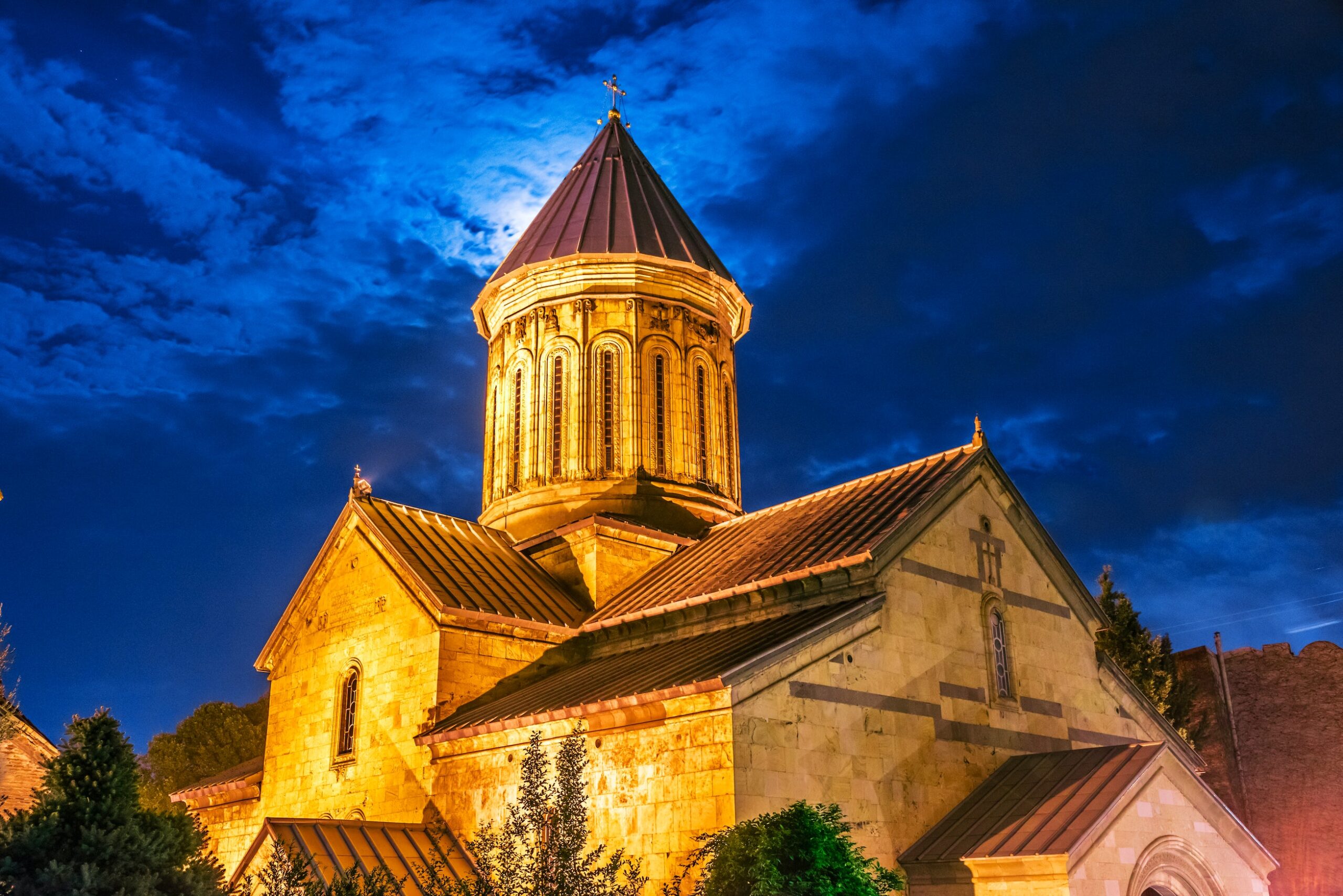
Sioni Cathedral stands at the heart of Old Tbilisi, a few steps from the Mtkvari River on the street that bears its name. For over a thousand years, this was the main cathedral of the Georgian Orthodox Church and the seat of the Catholicos-Patriarch. Today, Sioni remains one of the most spiritually significant churches in the country – and for one reason above all others: it houses the Cross of St. Nino, Georgia’s holiest relic.
The cross, made from grapevine branches and bound with St. Nino’s own hair, was carried by the woman who converted Georgia to Christianity in the 4th century. For Georgians, this simple wooden cross represents the foundation of their national identity and faith. Pilgrims travel from across the country to venerate it, and no visit to Tbilisi’s churches is complete without seeing it.
Beyond the cross, Sioni Cathedral offers layers of history spanning fourteen centuries – from its 6th-century origins through Mongol destruction, Persian occupation, and Russian-era restoration. The graves of Georgian patriarchs line its walls, and the painted interior reflects centuries of artistic tradition.
The Cross of St. Nino
The Cross of St. Nino is the most sacred object in Georgian Christianity. Understanding its significance helps explain why Sioni Cathedral holds such an important place in Georgian spiritual life.
Who Was St. Nino?
St. Nino (Nino of Cappadocia) was a 4th-century Christian woman, possibly of Greek or Roman origin, who traveled to the Kingdom of Iberia (ancient eastern Georgia) around 320 AD. According to tradition, she converted the Georgian king and queen to Christianity, leading to the declaration of Christianity as the state religion in 337 AD — making Georgia one of the earliest Christian nations in the world.
The Cross Itself
Unlike the ornate crosses of later Christianity, St. Nino’s cross is deliberately simple. According to tradition, when Nino arrived in Georgia, the Virgin Mary appeared to her in a dream and gave her a cross made from grapevine branches. Nino bound the cross with her own braided hair to hold it together. The resulting shape is distinctive: a cross with drooping arms, unique to Georgian Christianity.
This grapevine cross became her instrument of conversion, and she carried it throughout her missionary work in Georgia. After her death (around 340 AD), the cross became a national treasure, eventually finding its way to Sioni Cathedral.
Where to Find the Cross
The Cross of St. Nino is displayed in a special shrine inside Sioni Cathedral, typically located to the left of the main iconostasis (the icon screen separating the nave from the altar). The cross is encased in an ornate silver reliquary adorned with precious stones, though the original grapevine structure remains visible.
Worshippers approach the shrine to venerate the cross, often kissing the reliquary and making the sign of the cross. Visitors are welcome to observe or participate, respecting the reverent atmosphere.
The Cross’s Journey
The cross has traveled widely over the centuries, reflecting Georgia’s turbulent history. At various times, it was kept in different Georgian churches for safekeeping. During the Russian Imperial period in the early 19th century, the cross was briefly taken to Russia before being returned to Georgia in 1802 and installed at Sioni Cathedral. It has remained here ever since, surviving Soviet anti-religious campaigns and Georgian independence.
History of Sioni Cathedral
Origins (6th–7th Century)
Sioni Cathedral’s origins reach back to the late 6th or early 7th century, during the reign of the early Georgian kings. The original church was built on the banks of the Mtkvari River in the area that would become Tbilisi’s Old Town. The name “Sioni” derives from Mount Zion in Jerusalem — a common naming practice for Georgian churches dedicated to the Virgin Mary.
Destruction and Rebuilding
The cathedral’s history is marked by repeated destruction and reconstruction. The most devastating blow came in 1226, when the Khorezmian army of Jalal ad-Din invaded Georgia. Tbilisi was sacked, and Sioni Cathedral was destroyed. The invaders are said to have thrown icons from the church into the river and forced Georgians to walk across them as a test of faith. Those who refused were martyred.
The cathedral was rebuilt in the following centuries, though the exact timeline is unclear. Arab, Mongol, and Persian occupiers all left their marks on the city, and Sioni was damaged and repaired multiple times.
The Current Structure
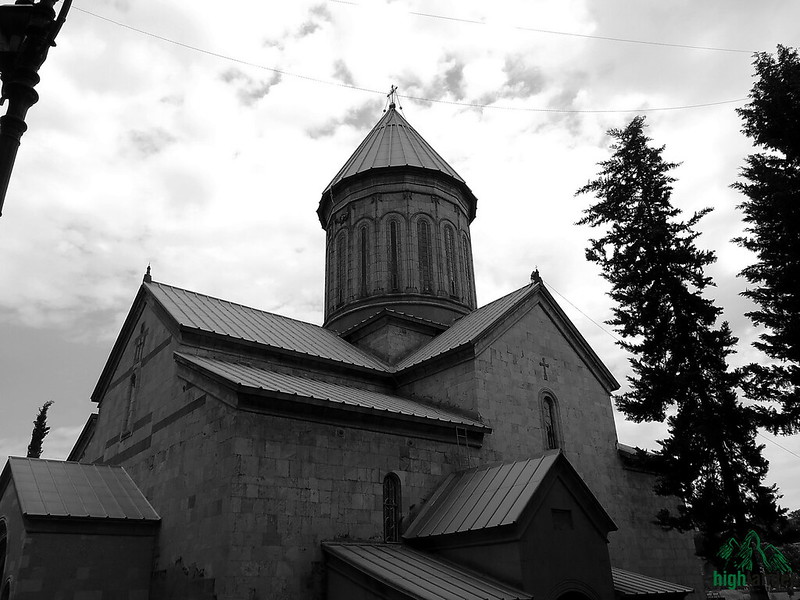
The current building reflects primarily 17th and 18th-century reconstruction, with significant modifications from later periods. King Vakhtang VI ordered major restoration work in 1710, when the dome and upper walls were rebuilt using yellow tuff stone decorated with carved ornamental patterns. The lower sections were re-faced in the 19th century with similar stone but in a different style.
The floor plan follows the traditional Georgian “inscribed cross” design: from outside, the building appears rectangular, but inside, the space extends into a cross shape with arms projecting from beneath the central dome. The dome rests on a pair of columns and the edges of the apse.
Russian Period and Modern Era
The Russian Imperial period (1801–1917) brought both prestige and changes to Sioni. In the 1850s, the Russian artist and military officer Gregory Gagarin painted the interior frescoes in the sanctuary, dome, and arms of the cathedral. Gagarin also designed the original iconostasis in Byzantine style.
During the Soviet period, Georgian churches faced repression, but Sioni continued to function as a cathedral. In the 1980s, the Gagarin iconostasis was replaced with a traditional Georgian stone iconostasis with arched openings, and the Georgian artist Levan Tsutskiridze painted new frescoes in the inner sections of the cathedral.
Sioni served as the main cathedral of the Georgian Orthodox Church until 2004, when the newly constructed Holy Trinity Cathedral (Sameba) assumed that role. Sioni remains an active parish church and a site of major religious significance.
What to See Inside Sioni Cathedral
The Cross of St. Nino
The primary draw for most visitors. Located to the left of the iconostasis, the cross is housed in an ornate silver shrine. Even non-religious visitors find the historical significance compelling — this simple grapevine cross represents seventeen centuries of Georgian Christian identity.
The Iconostasis
The current stone iconostasis, installed in the 1980s, features the traditional Georgian design with multiple tiers of icons separated by stone arches. Look for icons of Christ, the Virgin Mary, and Georgian saints. The iconostasis replaced Gagarin’s 19th-century Byzantine-style version.
Frescoes and Wall Paintings
The cathedral interior features paintings from multiple periods:
- Gagarin’s 1850s frescoes in the sanctuary, dome, and arms of the cross — Russian-influenced religious art depicting biblical scenes
- Tsutskiridze’s 1980s work in the inner arm spaces — Georgian artistic tradition applied to church decoration
The layering of artistic periods reflects the cathedral’s history of destruction and restoration.
Patriarchal Tombs
All Catholicos-Patriarchs of the Georgian Orthodox Church who died after 1917 are buried within the cathedral. Their tombs are marked with inscriptions along the walls. These include important figures in modern Georgian religious history who guided the church through Soviet repression and into independence.
The Southern Chapel
A smaller chapel attached to the southern side of the cathedral dates to the 17th century, built by the Archbishop of Tbilisi, Elyse. It was later restored based on remains of an earlier 13th-century chapel discovered during renovation work. The chapel was refaced with stone during restoration in the 1980s.
The Bell Tower
Sioni’s separate bell tower stands in the courtyard adjacent to the main cathedral building. The tower dates to the 15th century, with later modifications. It offers a good example of Georgian ecclesiastical architecture and provides a focal point for exterior photographs.
Visiting Sioni Cathedral: Practical Information
Address: 3 Sioni Street, Old Tbilisi
How to get there:
- On foot from Freedom Square: 5-minute walk down Pushkin Street, then left onto Sioni Street
- From Anchiskhati Church: 2-minute walk east along Shavteli/Sioni Street
- From Metekhi: 8-minute walk via Metekhi Bridge
- Nearest metro: Avlabari (Line 1), then a 10-minute walk; or Freedom Square (Line 1/2), then a 5-minute walk
Opening hours: Daily, approximately 9:00–19:00. The cathedral may open earlier for morning services.
Entrance fee: Free
Time needed: 15–30 minutes
Photography: Generally permitted without flash, but be respectful during services. Do not photograph worshippers without permission.
Services: Sunday liturgy is held in the morning (typically 9:00 or 10:00). Weekday services may also occur. Visitors are welcome to observe but should remain quiet and unobtrusive.
Dress Code and Etiquette
As an active Orthodox church, Sioni Cathedral requires appropriate dress and behavior:
For everyone:
- Cover shoulders (no tank tops or sleeveless shirts)
- Cover knees (no shorts or short skirts)
- Remove hats (men)
For women:
- Cover your head with a scarf or shawl (available at the entrance if you forget)
- Long skirts preferred over trousers (though trousers with covered knees are generally acceptable)
Behavior:
- Speak quietly or not at all
- Turn off phone sounds
- Do not walk in front of people who are praying
- Do not cross between a worshipper and the iconostasis
- Ask before photographing anyone
- Observe, don’t interrupt — the church is a place of active worship, not a museum
Best Time to Visit
For quiet exploration: Weekday mornings (10:00–12:00) or late afternoons (after 16:00) are typically quietest. You’ll share the space with a few worshippers rather than tour groups.
For atmosphere: Sunday morning liturgy (typically 9:00–11:00) offers the most immersive experience, with chanting, incense, and the church filled with worshippers. However, this is not the time for sightseeing — observe respectfully from the sides and rear.
For photography, Early morning light illuminates the interior most beautifully. The cathedral faces east, so morning sun enters through the apse windows.
Avoid: Large tour groups often arrive between 11:00 and 14:00.
Nearby Attractions
Sioni Cathedral sits at the center of Old Tbilisi’s historic church district. You can easily combine it with other sites:
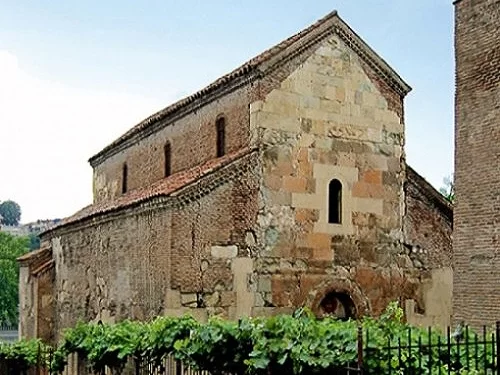
Anchiskhati Church — Tbilisi’s oldest surviving church (6th century), a 2-minute walk west along Sioni/Shavteli Street.
Shardeni Street — The Old Town’s main café and restaurant street, immediately adjacent to Sioni. Good for coffee after your visit.
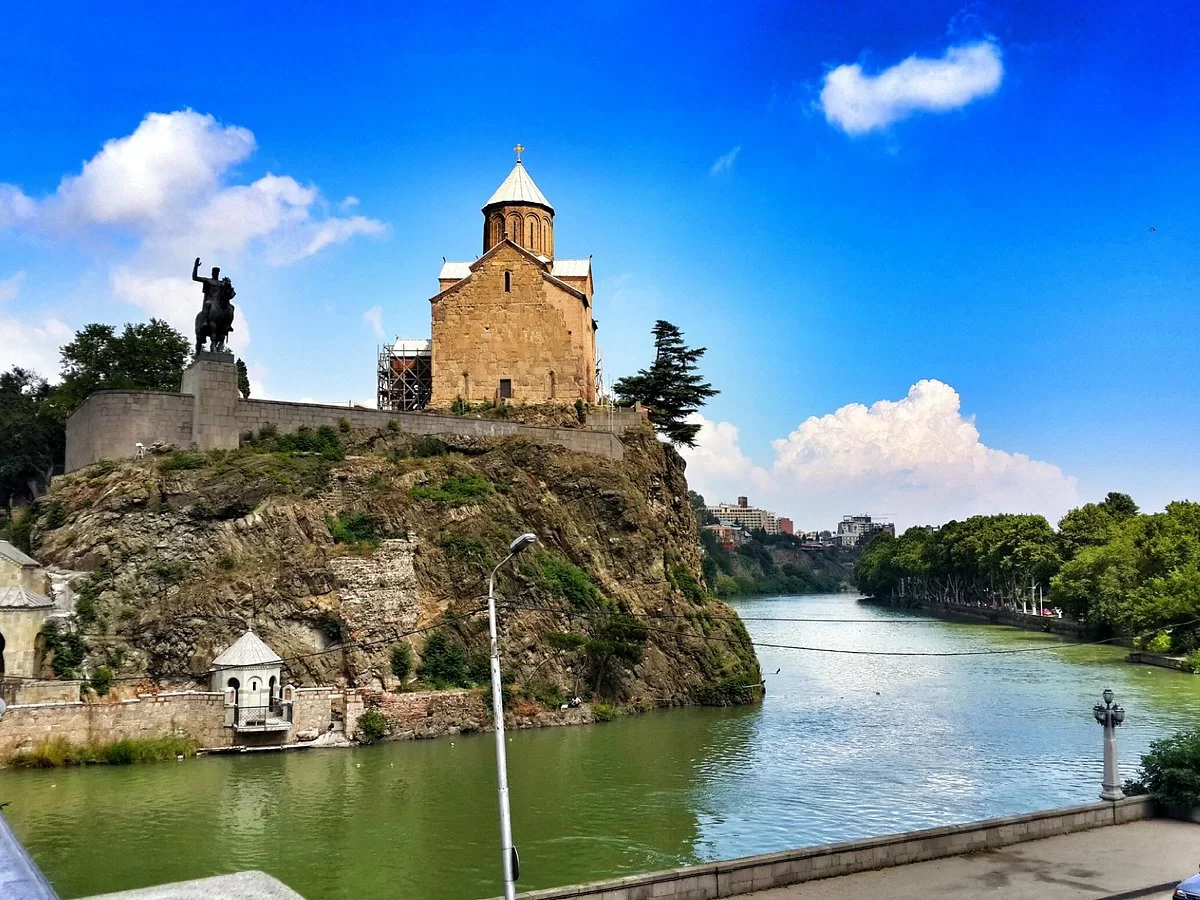
Metekhi Church — The cliff-top church with the Vakhtang Gorgasali statue, 8-minute walk via Metekhi Bridge.
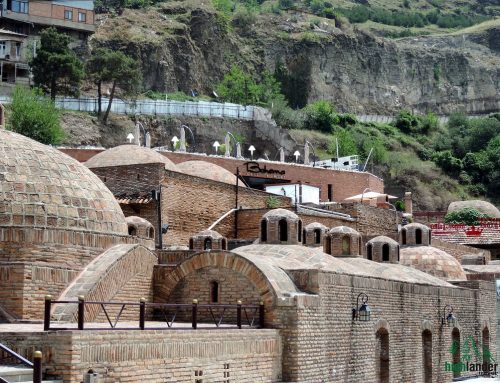
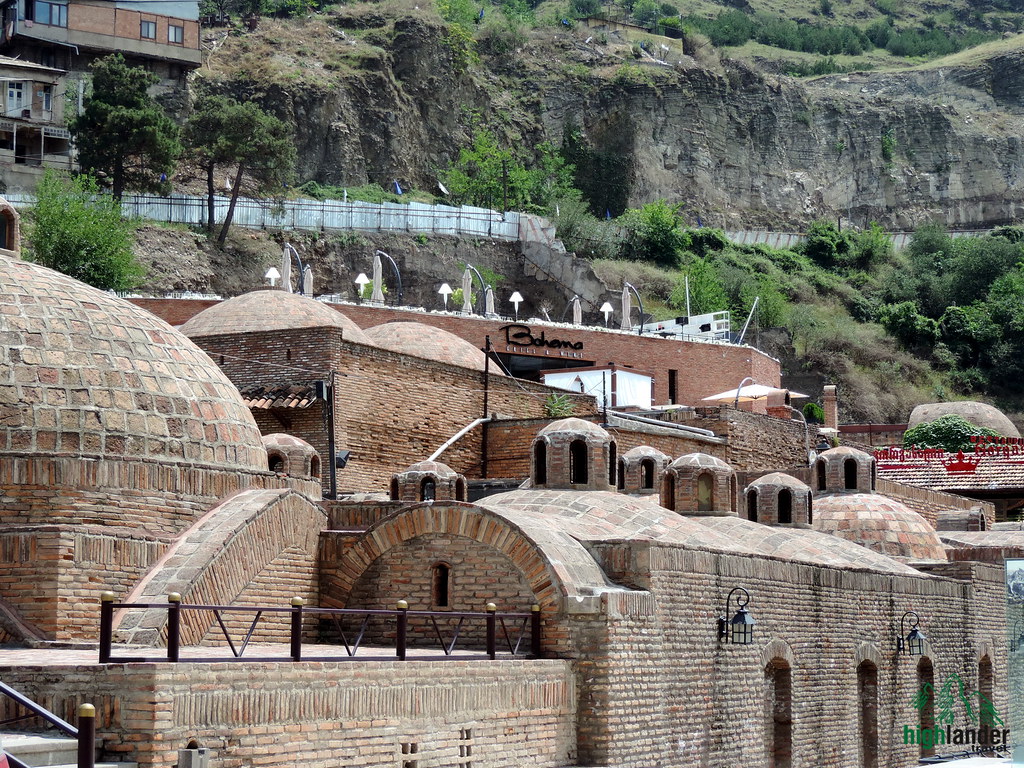
Abanotubani (Sulfur Baths) — The historic bathhouse district, 5-minute walk south.
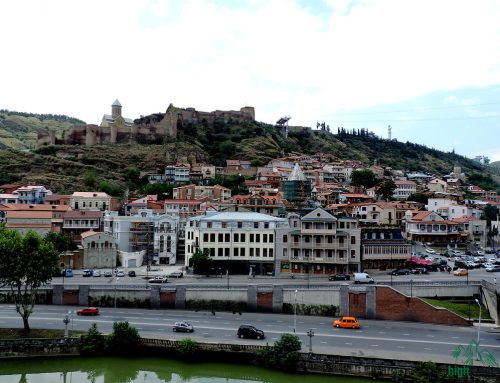
Narikala Fortress — The ancient citadel overlooking the Old Town, visible from outside Sioni. 15-minute walk or cable car from Rike Park.
Gabriadze Puppet Theatre — The charming clock tower performs brief shows at noon and 7pm, 3-minute walk.
Sioni in Context: Tbilisi’s Churches
Sioni Cathedral occupies a unique place in Tbilisi’s ecclesiastical landscape:
Age: It’s one of the oldest churches in Tbilisi, though not the oldest — Anchiskhati Church (6th century) holds that distinction.
Status: Until 2004, Sioni was the main cathedral of the Georgian Orthodox Church. That role now belongs to the massive Holy Trinity Cathedral (Sameba) in Avlabari. However, Sioni retains immense historical and spiritual significance.
The Cross: Most importantly, Sioni houses the Cross of St. Nino. This makes it arguably the most spiritually significant church in Georgia, regardless of its official status.
For visitors: If you have limited time and can only visit one church in Tbilisi, Sioni offers the most complete experience — important history, beautiful interior, and Georgia’s most sacred relic.
Planning Your Visit
Sioni Cathedral is included in our Old Tbilisi City Tour, which covers the major churches and landmarks on both banks of the Mtkvari River.
Suggested Walking Route: Old Tbilisi Churches
Combine Sioni with the other major churches in a morning walk:
- Start at Freedom Square metro (5-minute walk to Sioni)
- Sioni Cathedral — See the Cross of St. Nino (20 minutes)
- Anchiskhati Church — Tbilisi’s oldest church (10 minutes)
- Walk to Metekhi Bridge — Cross the river
- Metekhi Church — Cliff-top church and Vakhtang Gorgasali statue (15 minutes)
- Optional: Continue to Narikala Fortress via cable car or walk
Total time: 2–3 hours, depending on pace.