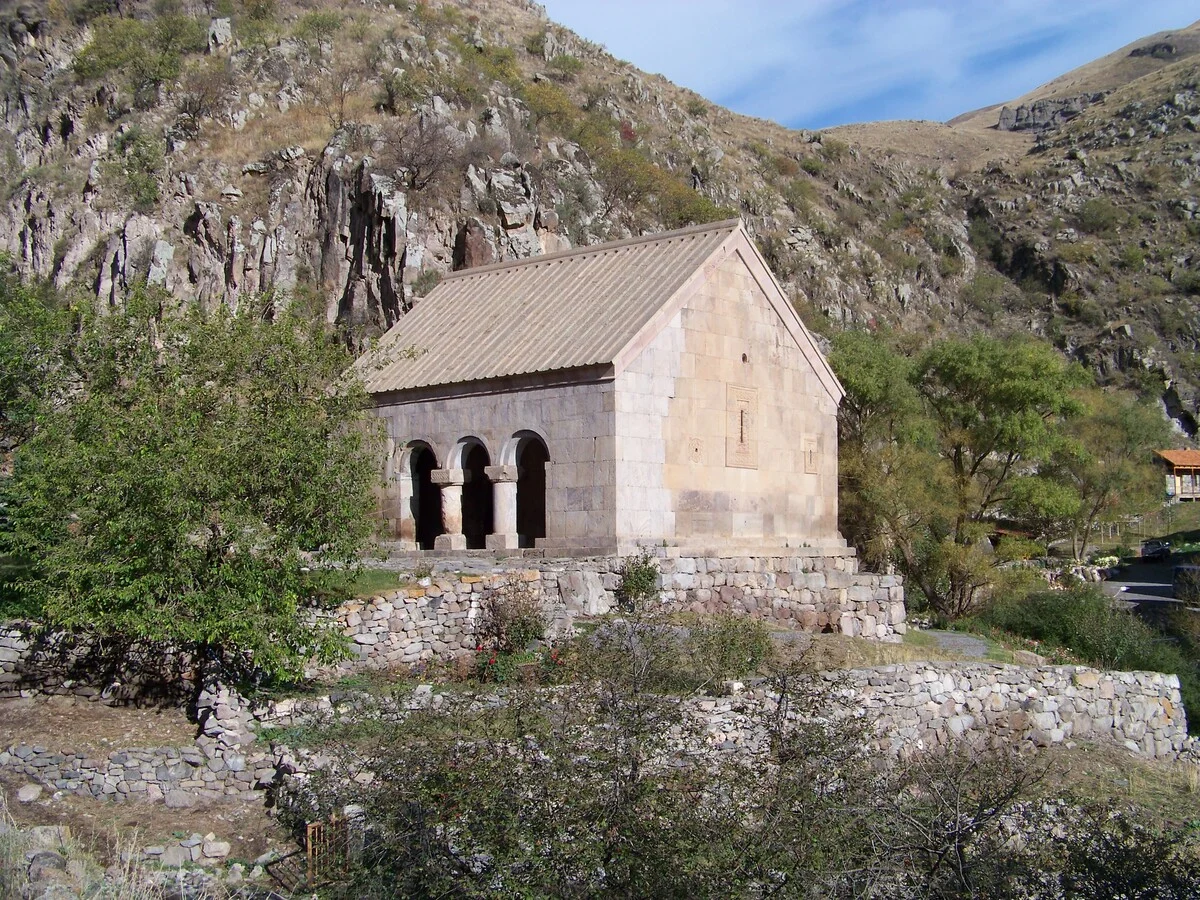
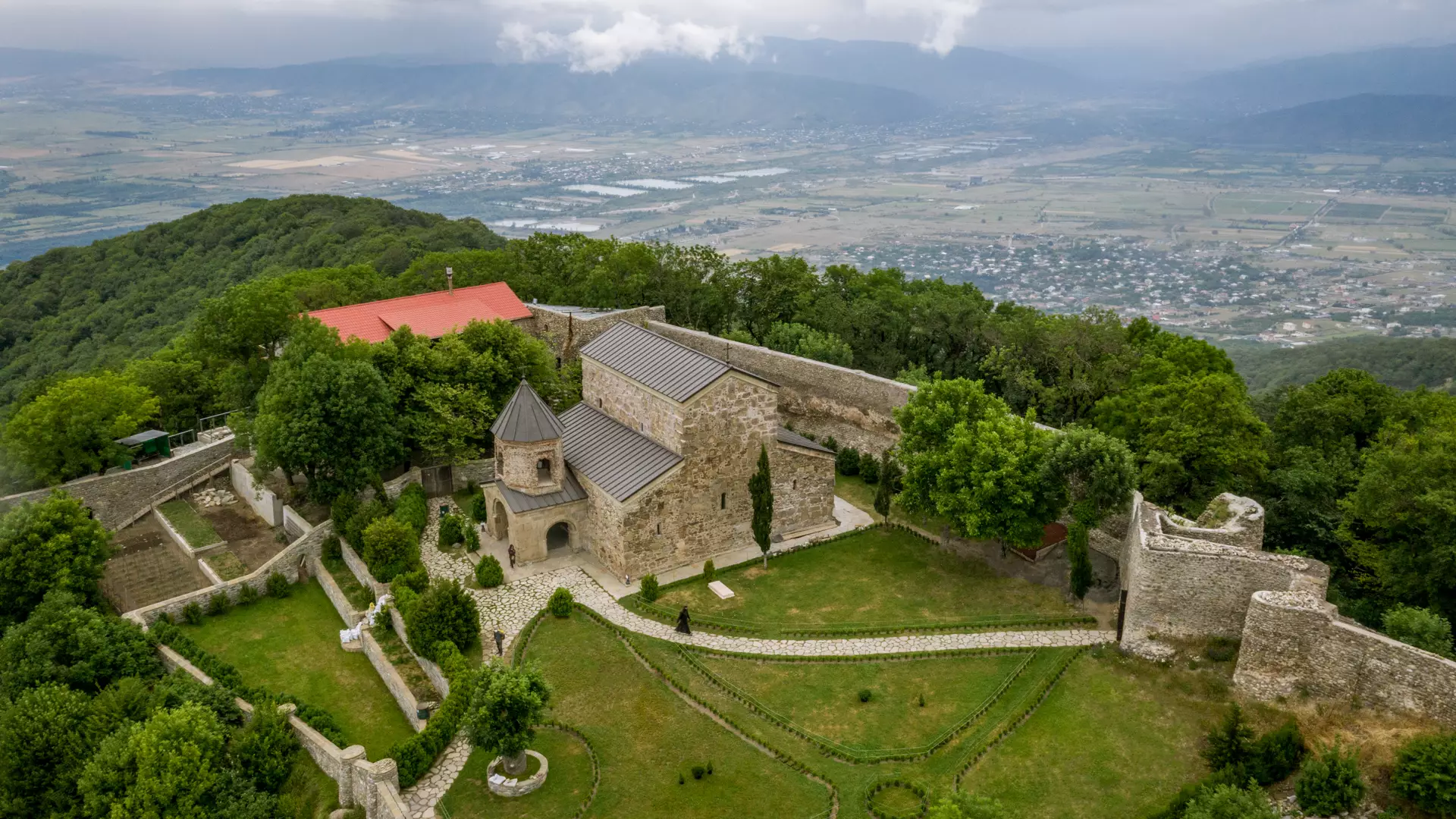
High on the forested Saguramo Range, northeast of Mtskheta, Zedazeni Monastery is one of Georgia’s oldest monastic centres.
Founded in the 6th century by St John Zedazneli, leader of the Thirteen Assyrian Fathers, the monastery occupies a site traditionally associated with an earlier pagan sanctuary dedicated to the deity Zaden.
Today Zedazeni combines early Christian history, medieval architecture and one of the finest elevated viewpoints around Mtskheta.
For travellers who have already visited the better-known churches in the ancient capital, it is one of the most rewarding extensions into the wider Mtskheta-Mtianeti region.
Where Is Zedazeni Monastery?
Zedazeni stands on the Saguramo Range, north of Mtskheta and roughly 30 km from Tbilisi.
The monastery lies within a heavily forested landscape associated with Saguramo Reserve and Tbilisi National Park.
Its elevated position gives visitors wide views across:
- Mtskheta;
- the Mtkvari and Aragvi valleys;
- the Mukhrani plain;
- the surrounding Saguramo landscape;
- the Greater Caucasus on clear days.
This setting is a major part of the experience.
Unlike Svetitskhoveli Cathedral or Samtavro Monastery, Zedazeni feels physically separated from the urban environment of Mtskheta.
A Sacred Site Before Christianity
According to Georgian tradition, the mountain was already sacred before the foundation of the monastery.
A sanctuary dedicated to the pre-Christian deity Zaden is believed to have stood here.
Georgia Travel describes Zaden as a fertility or harvest deity worshipped before Georgia’s conversion to Christianity.
After Christianity became the dominant religion, the old pagan sanctuary disappeared.
The later establishment of a monastery on the same mountain reflected a pattern seen elsewhere in Georgia, where Christian sacred sites sometimes developed in places already associated with earlier religious traditions.
St John Zedazneli and the Thirteen Assyrian Fathers
Zedazeni’s Christian history begins with St John Zedazneli.
In the 6th century, John arrived in Georgia with the group traditionally known as the Thirteen Assyrian Fathers.
These monks became associated with the expansion of monastic life across eastern Georgia.
According to tradition, Zedazeni served as an initial gathering point before John’s disciples established monasteries in different regions.
Among them were figures associated with:
- Shio-Mgvime;
- Tsilkani;
- Alaverdi;
- Nekresi;
- David Gareja;
- Martkopi.
This gives Zedazeni exceptional importance in the history of Georgian monasticism.
Travellers interested in this period should also visit Shio-Mgvime Monastery, founded by St Shio, one of John Zedazneli’s disciples.
The Hermitage of St John
Tradition holds that St John chose a modest cave or cell on the mountain and continued to live there even as a larger monastic community developed around him.
After his death, he was buried at Zedazeni.
The monastery therefore became both a monastic centre and a pilgrimage site connected directly with its founder.
Georgia Travel confirms that St John Zedazneli is buried within the monastery complex.
Church of St John the Baptist
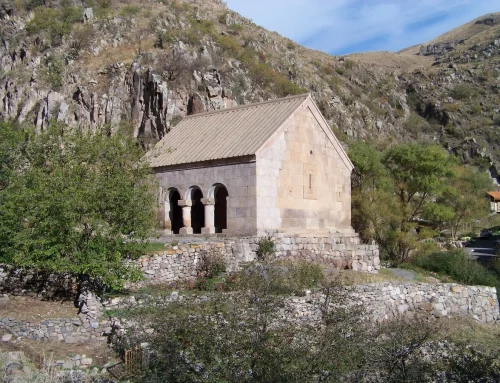
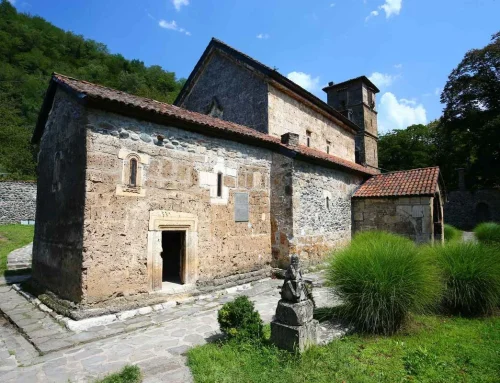
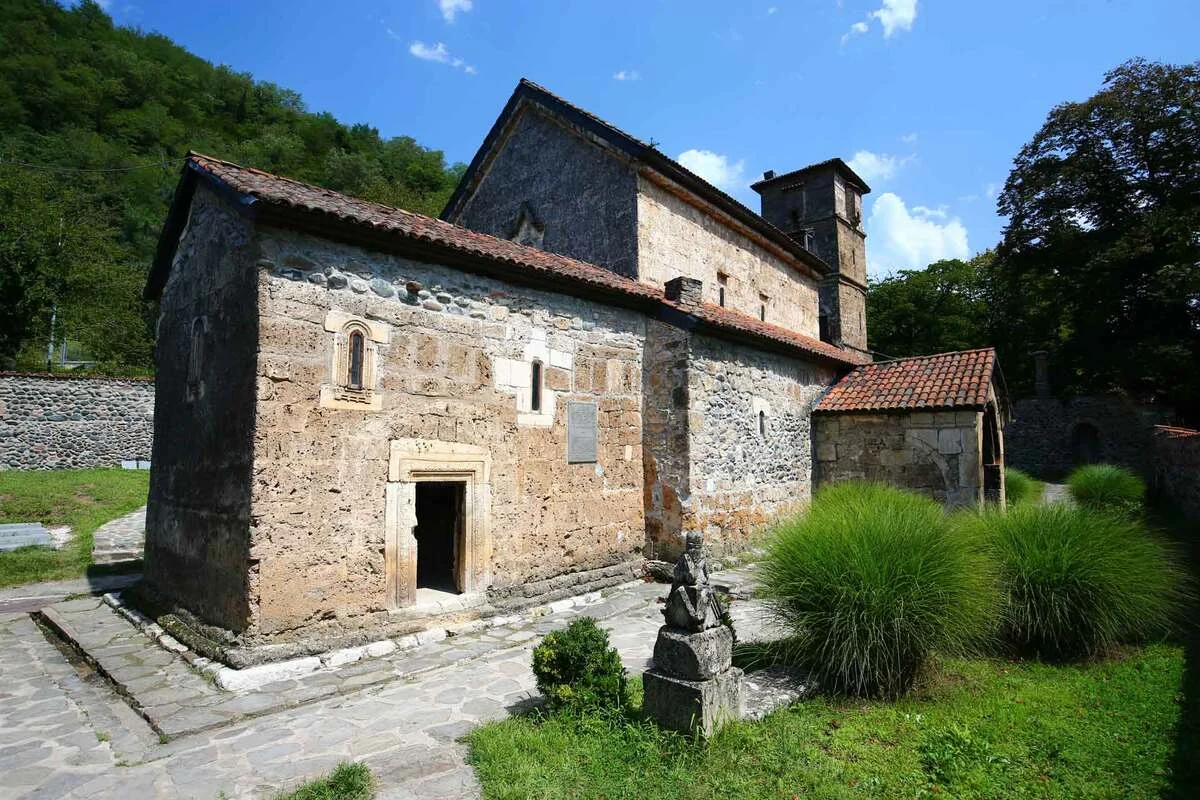
The principal surviving building is the Church of St John the Baptist, dating mainly to the 8th century.
The church is a three-aisled basilica built from mixed masonry.
Its exterior is relatively austere, which suits the isolated monastic setting.
The central nave is higher and better illuminated than the side aisles, giving it the character of a separate hall within the larger structure.
The side spaces are darker and more enclosed.
This contrast creates a surprisingly complex interior for a building that appears plain from outside.
Earlier Architectural Remains
Parts of an earlier structure are incorporated into the later basilica.
These remnants preserve carefully dressed stonework and horseshoe-shaped arches, indicating earlier phases of construction at the site.
This layering is important because Zedazeni did not develop as one single building project.
Like many major Georgian monasteries, it evolved through repeated construction, rebuilding and adaptation.
The Grave of St John Zedazneli
The grave of St John is located inside the monastery.
Its presence reinforces Zedazeni’s role as a pilgrimage destination rather than simply an architectural monument.
For Georgian Orthodox visitors, the monastery remains closely associated with the saint and the wider tradition of the Assyrian Fathers.
This spiritual continuity distinguishes Zedazeni from many archaeological religious sites where monastic life has disappeared entirely.
The Holy Spring
One of the best-known traditions at Zedazeni concerns a spring associated with St John.
A well or spring is located within the church complex, and religious tradition attributes its appearance to the saint’s prayers.
The spring remains an important element of the pilgrimage tradition at Zedazeni.
Visitors should understand this primarily within the context of Orthodox religious belief rather than as a historical claim that can be independently documented.
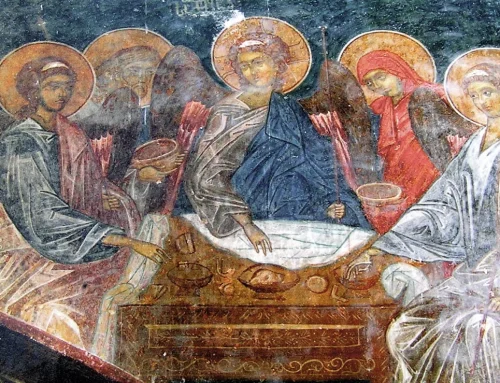
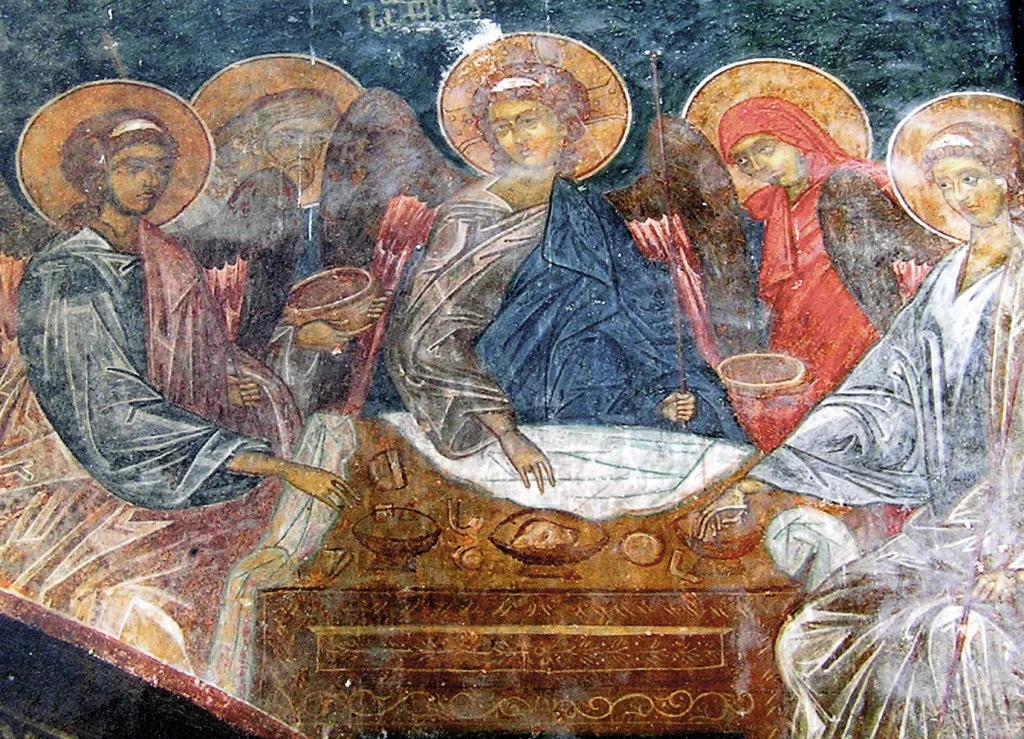
Wall Paintings
Only fragments of later wall painting survive at Zedazeni.
These are generally associated with later medieval or early modern phases of the monastery rather than its original 6th- or 8th-century construction.
The surviving paintings are not the principal reason to visit Zedazeni.
Its greater importance lies in:
- early Georgian monastic history;
- its association with St John Zedazneli;
- architectural layering;
- the surrounding landscape.
The Medieval Iconostasis
Zedazeni once possessed an important carved stone iconostasis.
Surviving elements were eventually transferred to museum collections for preservation.
This is another reminder that the relatively austere church visitors see today once contained richer medieval liturgical decoration.
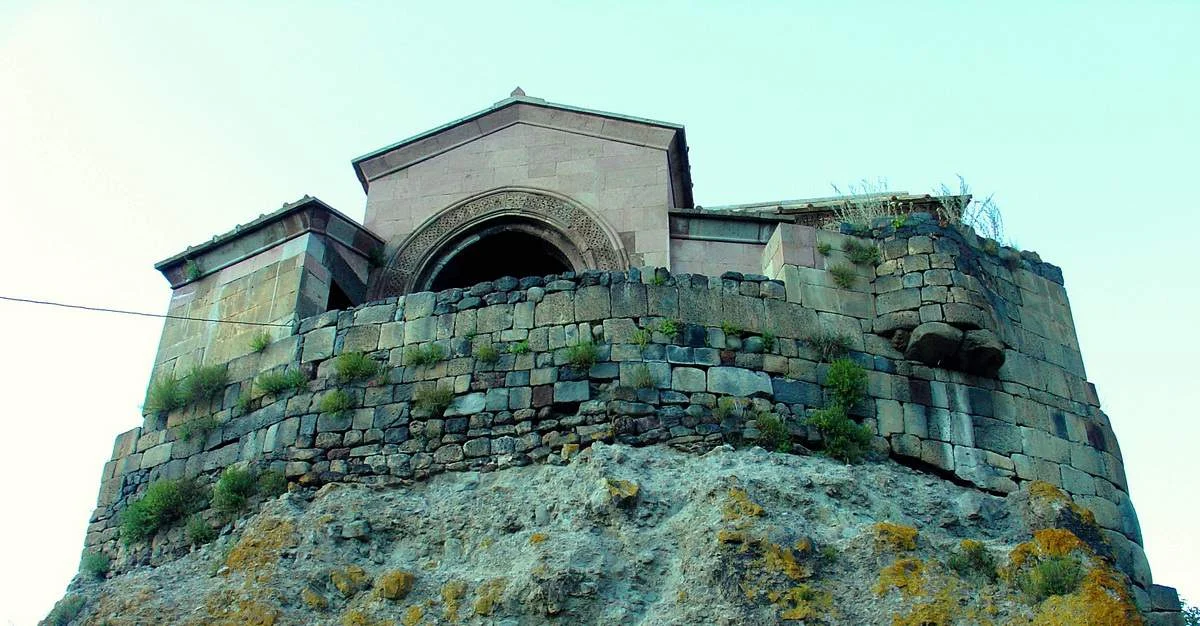
Bell Tower and Defensive Walls
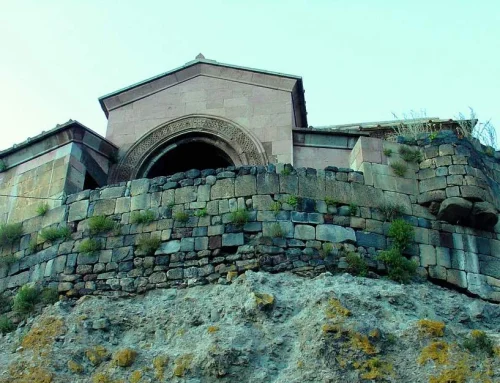
Zedazeni developed not only as a monastery but also as a fortified site.
Remains of defensive walls survive around the complex, indicating that the monastery could serve as a refuge during periods of conflict.
A later bell tower was added above the entrance area.
These structures reflect the difficult political history of central Georgia, where monasteries frequently needed some degree of physical protection.
Zedazeni and Shio-Mgvime
The strongest thematic connection from Zedazeni is Shio-Mgvime Monastery.
St Shio was a disciple of St John Zedazneli and one of the Thirteen Assyrian Fathers.
While Zedazeni stands high on the Saguramo Range, Shio-Mgvime developed in a secluded gorge west of Mtskheta.
The landscapes are completely different, but the monasteries belong to the same early movement in Georgian Christianity.
Visiting both gives travellers a much better understanding of 6th-century monasticism than visiting only the royal churches in central Mtskheta.
Zedazeni and Mtskheta
Zedazeni also works naturally as an extension of a visit to Mtskheta.
The standard monuments in Mtskheta focus mainly on the establishment and development of Christianity at royal and national level:
Zedazeni adds a different perspective.
It tells the story of monastic expansion into the mountains, away from the royal and urban centre.
Your existing Mtskheta travel guide already recommends Zedazeni for travellers with a car and extra time. (georgia-tours.eu)
Add Zedazeni to a Private Mtskheta Itinerary
Our standard Mtskheta Tour from Tbilisi focuses on Jvari, Svetitskhoveli and the principal monuments of the ancient capital. (georgia-tours.eu)
Zedazeni is not currently listed as a standard stop, so it should be presented as a possible extension rather than automatically included.
For travellers particularly interested in:
- early Georgian Christianity;
- the Assyrian Fathers;
- monasteries away from the main tourist route;
- forest scenery and viewpoints;
Zedazeni can make an excellent addition to a longer private Mtskheta itinerary.
Zedazeni and the Saguramo Forest
Part of the attraction is the journey itself.
Zedazeni stands within the forested Saguramo landscape, an area known for beech, hornbeam, oak and other native woodland.
Visitors can approach by road or incorporate walking through the forest, depending on conditions and preferred route.
The setting is especially attractive during autumn when the Saguramo Range changes colour.
Spring is also pleasant, with cooler temperatures and dense vegetation.
Views from Zedazeni
The mountain position provides some of the best broad views in the Mtskheta area.
Georgia Travel highlights views toward Mtskheta, Jvari, the Mukhrani Valley, Aragvi and Mtkvari valleys, and the Caucasus.
On a clear day, the viewpoint helps visitors understand the geography that made Mtskheta such an important political centre.
The convergence of river valleys, agricultural plains and mountain routes becomes much more obvious from above.
Explore Mtskheta-Mtianeti
Zedazeni belongs to a much broader network of religious and historical monuments across Mtskheta-Mtianeti.
Other important sites include:
- Jvari Monastery
- Svetitskhoveli Cathedral
- Samtavro Monastery
- Shio-Mgvime Monastery
- Ananuri Fortress
- Gergeti Trinity Church
- Tsilkani Cathedral
This makes Zedazeni especially useful as part of a deeper regional content cluster rather than as an isolated monastery page.
Practical Information
Zedazeni is an active Orthodox monastery.
Visitors should dress modestly and behave quietly around monks and worshippers.
Road conditions can vary, particularly in wet or winter weather.
Your current Mtskheta guide notes that the final approach is steep and advises checking conditions before driving.
Comfortable shoes are useful even if arriving by car because the terrain around the monastery is uneven.
Allow around 45–60 minutes at the site, or longer if you plan to walk and enjoy the views.
Best Time to Visit
Spring
Spring brings fresh forest growth and comfortable temperatures.
Summer
Summer provides easier road conditions, although the forest makes Zedazeni cooler than the lower valleys.
Autumn
Autumn is arguably the most attractive season because of the colours across the Saguramo forest.
Winter
Winter visits depend heavily on road conditions.
Snow, ice and mud can make the final approach more difficult.
Why Visit Zedazeni?
Zedazeni is one of the best places near Mtskheta to understand a chapter of Georgian Christian history that is often overshadowed by the great cathedrals.
Its story connects:
- a pre-Christian sacred mountain;
- St John Zedazneli;
- the Thirteen Assyrian Fathers;
- the growth of Georgian monasticism;
- medieval architecture;
- centuries of pilgrimage.
The monastery is also unusually rewarding because history and landscape are inseparable here.
The forested mountain, wide views and relative isolation help explain why monks chose this location in the first place.
For travellers who want to go beyond the standard Mtskheta Tour, Zedazeni is one of the strongest additions in the surrounding region.
Frequently Asked Questions
Where is Zedazeni Monastery?
Zedazeni stands on the Saguramo Range near Mtskheta in Georgia’s Mtskheta-Mtianeti region.
Who founded Zedazeni Monastery?
The monastery was founded in the 6th century by St John Zedazneli, leader of the Thirteen Assyrian Fathers.
What stood at Zedazeni before the monastery?
According to Georgian tradition, the site was previously associated with a pagan sanctuary dedicated to the deity Zaden.
How old is the main church?
The main Church of St John the Baptist dates mainly to the 8th century.
Is St John Zedazneli buried there?
Yes. His burial place is within the monastery complex.
What is the connection with Shio-Mgvime?
St Shio, founder of Shio-Mgvime Monastery, was one of St John Zedazneli’s disciples and one of the Thirteen Assyrian Fathers.
Can I visit Zedazeni from Mtskheta?
Yes. It is a natural extension for travellers exploring Mtskheta and the Saguramo area.
Is Zedazeni included in the standard Mtskheta tour?
Not currently. The standard Mtskheta Tour from Tbilisi focuses on the principal monuments of Mtskheta, so Zedazeni is better presented as an optional extension.
Is Zedazeni good for views?
Yes. Its elevated position provides broad views across the Mtskheta region, river valleys and surrounding mountains.