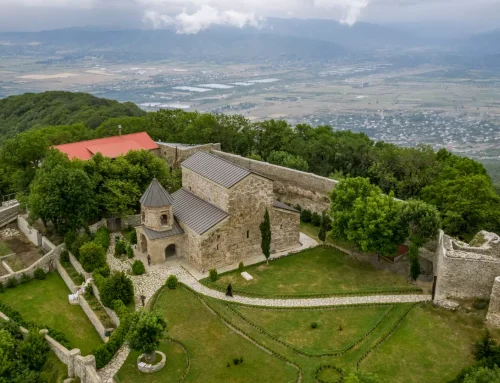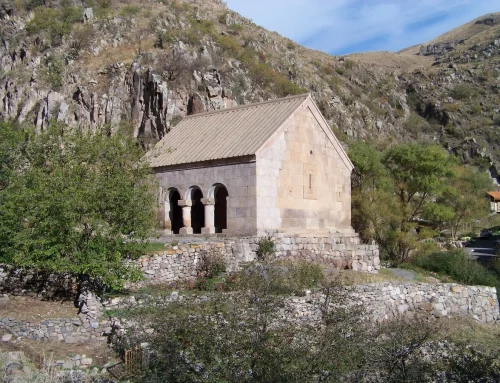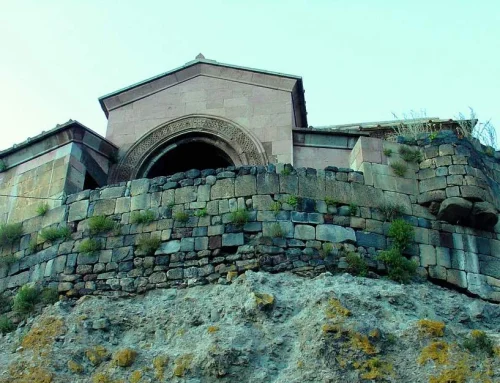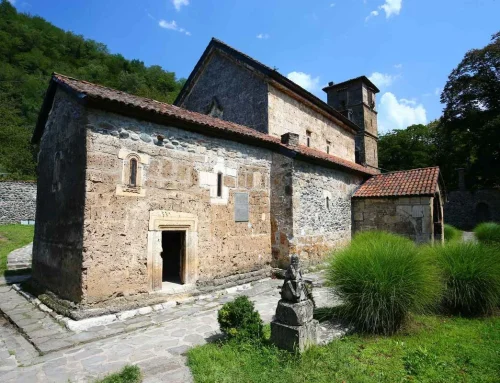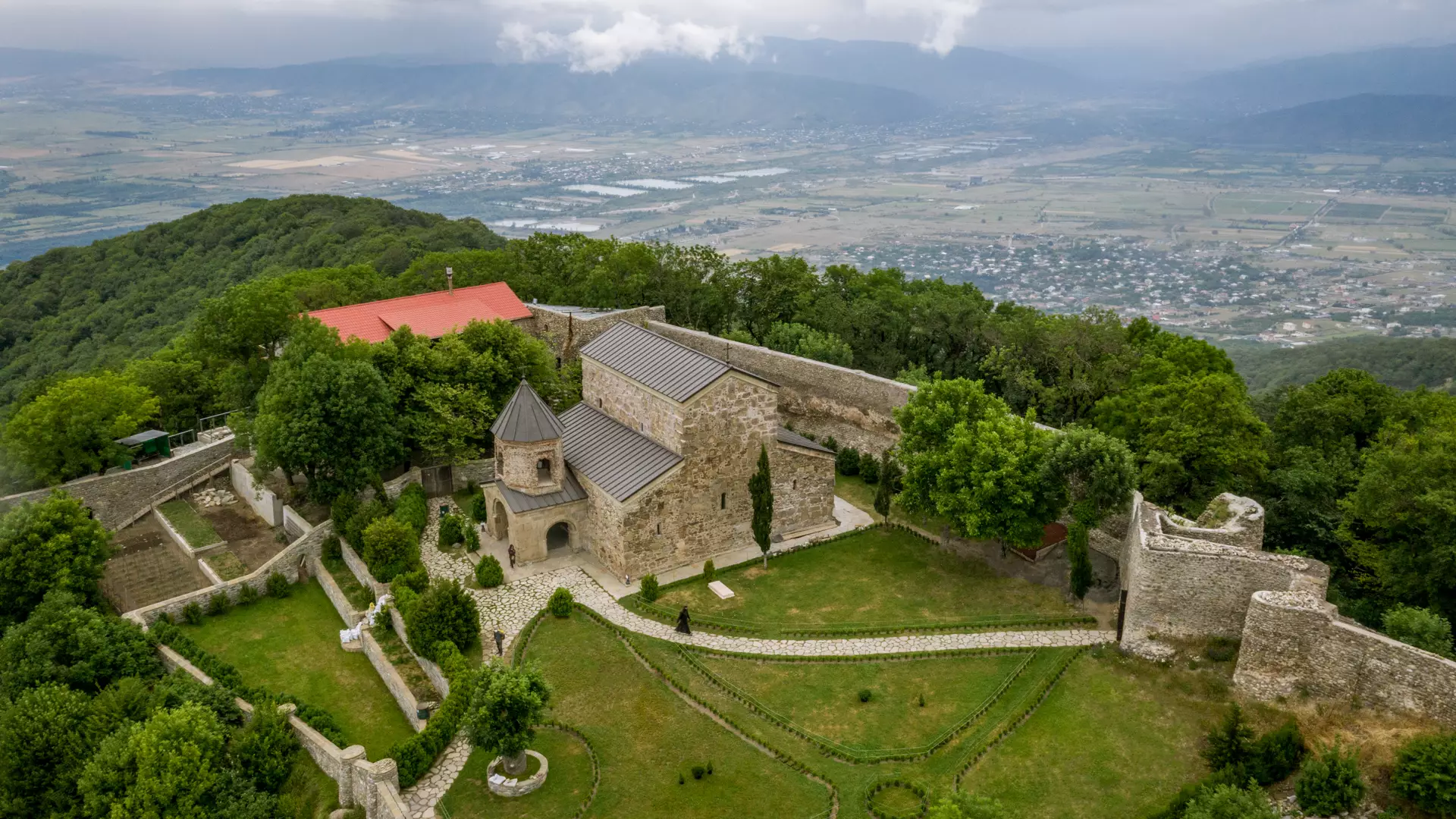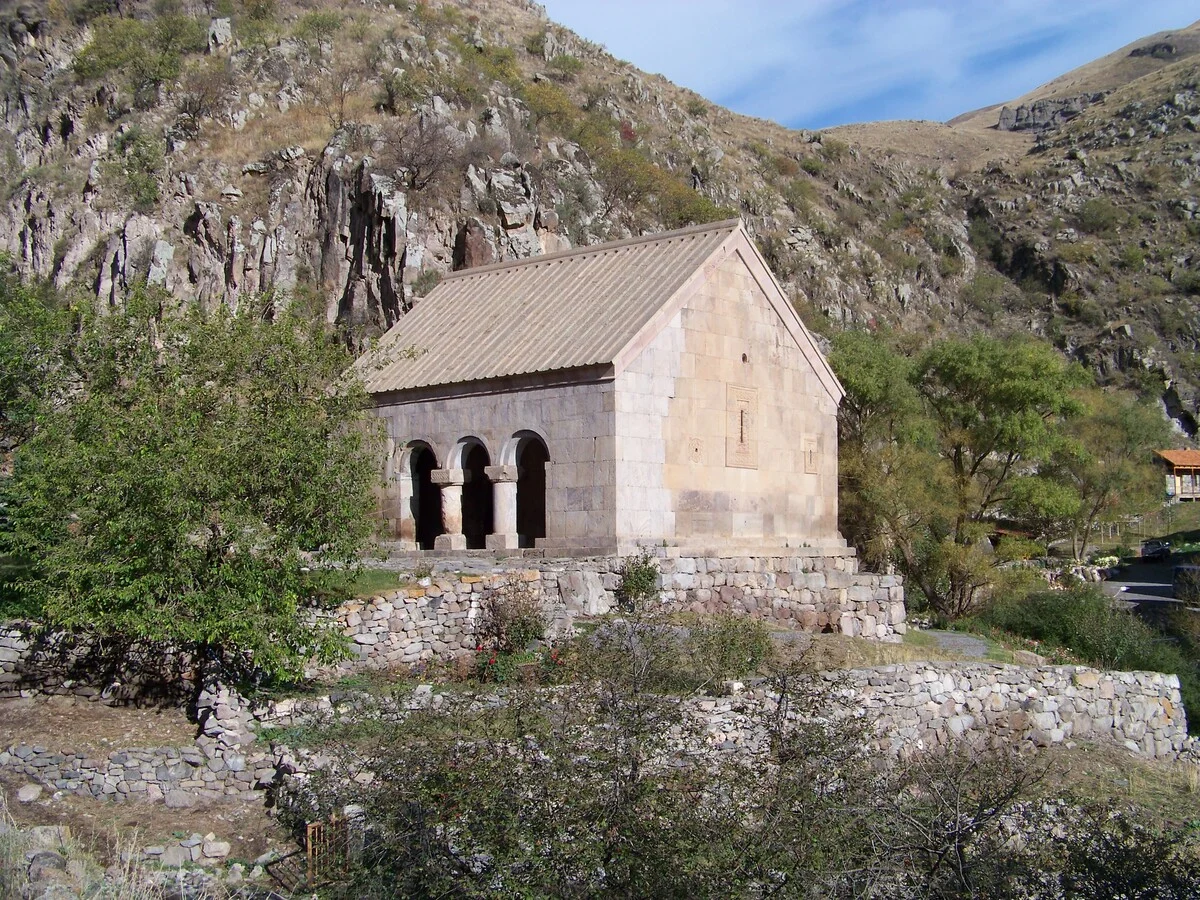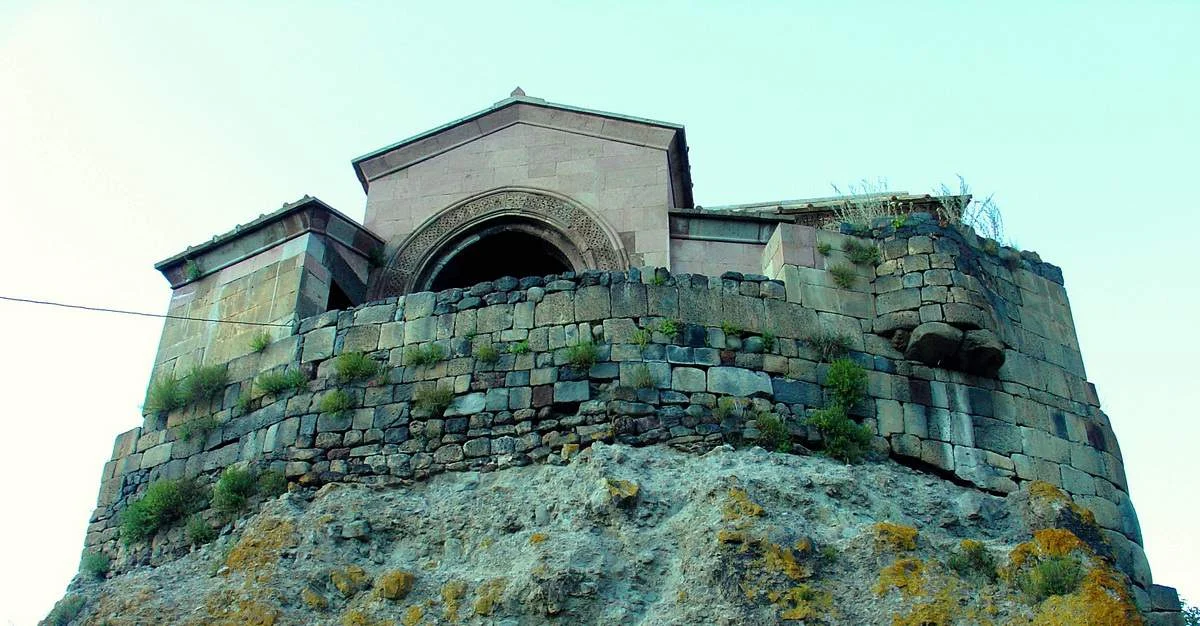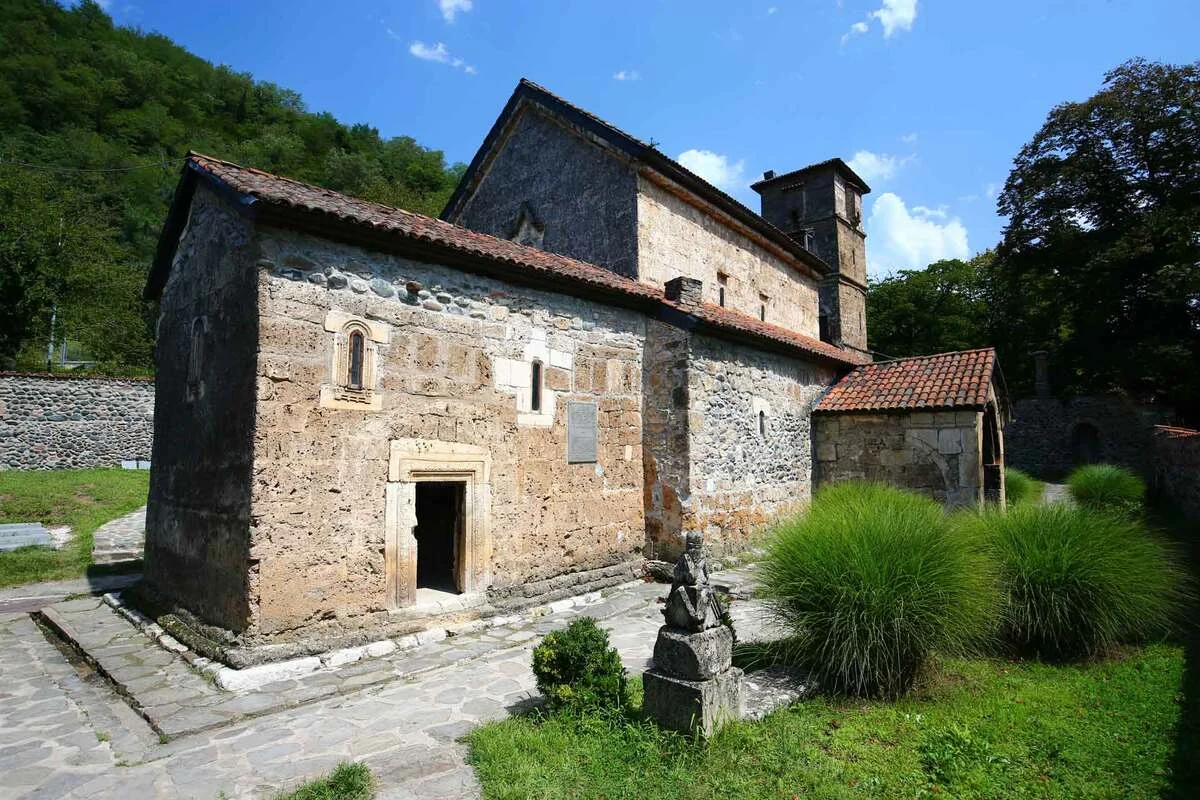
Deep in the green Kvabliani Valley of Samtskhe-Javakheti, Zarzma Monastery is one of southern Georgia’s most important medieval religious monuments.
Its history stretches back to the early Middle Ages, while the impressive church and bell tower visible today belong mainly to the early 14th century, when the powerful Jaqeli dynasty ruled Samtskhe.
For travellers interested in medieval architecture, dynastic history and Georgian fresco painting, Zarzma is one of the region’s most rewarding cultural sites.
Unlike the monumental cave complex of Vardzia or the forest-hidden buildings of Sapara, Zarzma combines a large domed church, one of Georgia’s most important medieval bell towers and an exceptional collection of historical portraits.
Where Is Zarzma Monastery?
Zarzma is located in Adigeni Municipality, west of Akhaltsikhe, in the Kvabliani River valley.
The monastery stands within the wider historical region of Samtskhe-Javakheti, an area particularly rich in monasteries, fortresses and medieval settlements.
Its location makes Zarzma a natural addition to a longer exploration of southern Georgia that may also include Akhaltsikhe, Sapara, Vardzia and Abastumani.
The Foundation of Zarzma
The monastery was founded in the 9th century by St Serapion of Zarzma.
Much of what is known about the early monastery comes from the medieval hagiographic work The Life of Serapion of Zarzma, written by Basil of Zarzma.
Serapion was assisted by the local nobleman Giorgi Chorchaneli, reflecting the close relationship between monastic foundations and aristocratic patronage in early medieval Georgia.
The original monastery buildings did not survive in their early form, but the religious community established by Serapion created the foundation for Zarzma’s later importance.
The Legend of the Name Zarzma
The origin of the name is connected with one of the monastery’s traditional legends.
According to the story, local residents initially opposed Serapion and his fellow monks.
After a catastrophic event in which the ground shook and floodwaters destroyed the settlement, the terrified inhabitants associated the event with the saint’s warnings.
The story became part of the spiritual identity of the monastery and was preserved in the hagiographic tradition surrounding St Serapion.
As with many medieval foundation legends, the narrative belongs to religious tradition rather than modern historical documentation, but it remains an important part of how Zarzma has been understood for centuries.
The 10th-Century Historical Inscription
One of Zarzma’s oldest surviving historical objects is an inscription dating from the late 10th century.
The inscription records the role of David III Kuropalates in the Byzantine struggle against the rebel Bardas Skleros.
This makes the stone far more than a decorative survival.
It provides direct evidence of Georgia’s political connection with the Byzantine Empire during one of the most important periods in the formation of the medieval Georgian state.
The inscription survives near the later bell tower and chapel complex.
Rebuilding under Beka I Jaqeli
The main architectural transformation of Zarzma took place at the beginning of the 14th century.
The present main church and bell tower were constructed during the rule of Beka I Jaqeli, one of the most powerful rulers of medieval Samtskhe.
The Jaqeli family also played an important role at nearby Sapara Monastery, making these two monuments particularly valuable for understanding the political and cultural world of medieval southern Georgia.
Travellers interested in this dynasty should therefore combine Zarzma with Sapara Monastery.
Church of the Transfiguration
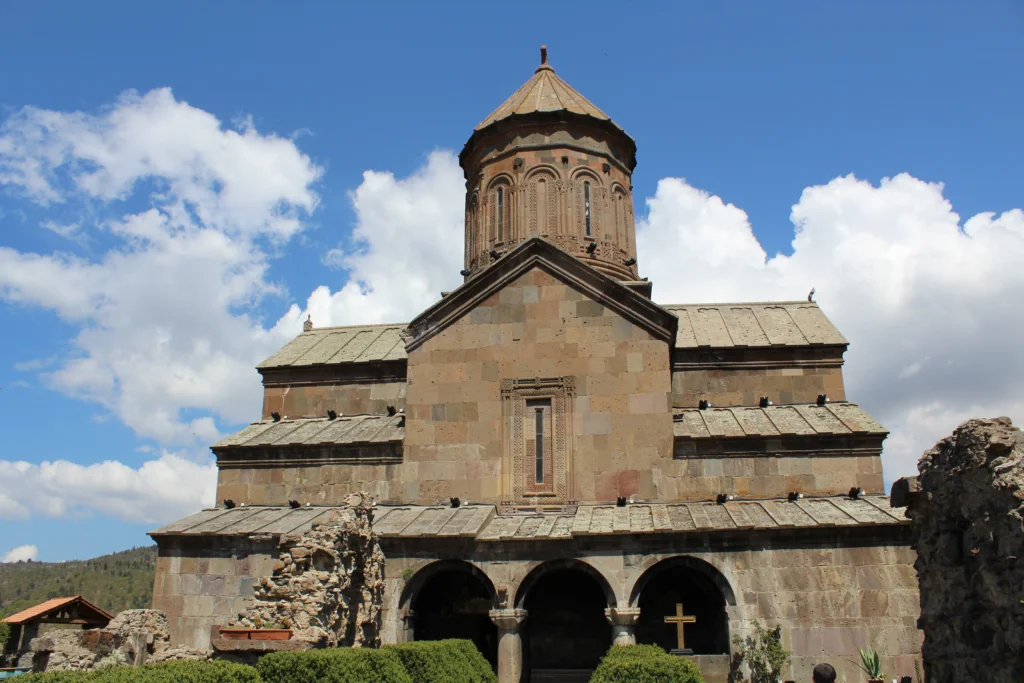
The principal building at Zarzma is the Church of the Transfiguration.
Constructed in the early 14th century, it represents one of the major examples of Georgian architecture from this period.
The church is built from carefully dressed stone and crowned by a dome.
Its façades are richly articulated with:
- carved crosses;
- ornamental window surrounds;
- decorative stone bands;
- blind architectural elements;
- geometric and vegetal motifs.
One of the most striking features is the large carved cross positioned above the main window of the eastern façade.
Compared with earlier Georgian churches, Zarzma reflects changes in both proportions and decorative treatment characteristic of late medieval architecture.
A Link with Sapara Architecture
Zarzma and Sapara share some unusual architectural characteristics.
One particularly interesting detail is the treatment of the dome drum, where alternating windows are real and blind.
The Georgian Encyclopedia notes this feature specifically at Zarzma and Sapara, making the two churches particularly interesting to compare.
Visitors travelling through Samtskhe can therefore gain much more from seeing both monasteries rather than treating them as isolated monuments.
Sapara Monastery represents the late 13th-century Jaqeli world, while Zarzma reflects its continuation into the early 14th century.
Zarzma’s Bell Tower
Beside the church stands one of Zarzma’s most distinctive structures: its monumental bell tower.
It was constructed in the early 14th century at approximately the same time as the main church.
The Georgian Encyclopedia describes it as one of the largest and oldest bell towers in Georgia and one of the finest surviving examples of its architectural type.
The lower level is particularly impressive because of its star-shaped vaulting.
Above it rises the open belfry.
The tower is not simply an accessory to the church—it is one of the architectural highlights of the entire complex.
The Church of St John the Apostle
The lower level of the bell-tower complex was later adapted during another important phase of Zarzma’s history.
In the 16th century the Khursidze family became significant patrons of the monastery.
A chapel dedicated to St John the Apostle was incorporated into the complex during this later period.
These additions demonstrate that Zarzma remained an active and prestigious religious centre long after the age of the Jaqelis.
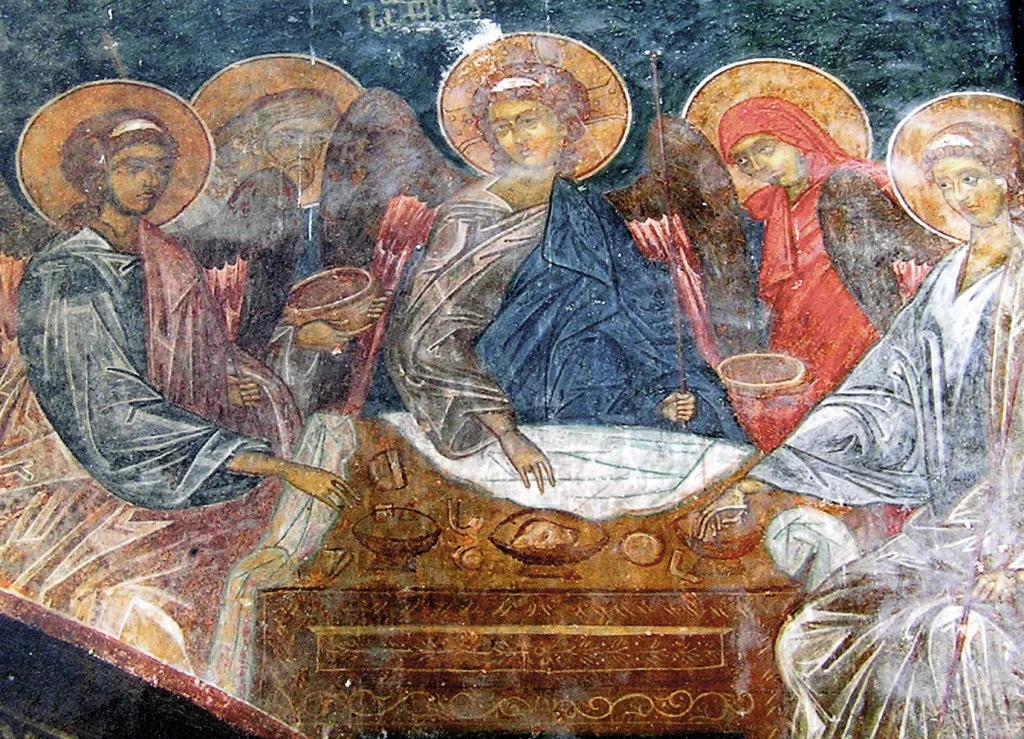
The Frescoes of Zarzma
The interior wall paintings are among Zarzma’s greatest treasures.
The church preserves medieval frescoes alongside later painting from the 16th century.
What makes Zarzma especially important is the large number of historical portraits incorporated into the painted programme.
These paintings turn the monastery into an invaluable visual record of medieval and early modern Georgian political society.
Portraits of the Jaqeli Dynasty
Among the most significant frescoes are portraits associated with the Jaqeli ruling family.
These include members of the dynasty connected with medieval Samtskhe.
Unlike purely biblical imagery, donor portraits allow visitors to encounter identifiable historical individuals.
Their clothing, posture and placement inside the church provide valuable information about medieval ideas of political status, patronage and dynastic identity.
This makes Zarzma particularly valuable for travellers who have already visited Sapara Monastery, where members of the same wider ruling dynasty also appear in the frescoes.
Later Historical Portraits
Zarzma also contains portraits of important figures from the 16th century.
These include members of the Khursidze family and other political figures associated with the later history of the region.
The Georgian Encyclopedia specifically notes portraits of King Bagrat III of Imereti, Serapion Khurtsidze and other historical personalities.
This combination of religious painting and documented historical portraiture is one of the monastery’s most distinctive features.
Restoration of the Frescoes
Zarzma underwent substantial restoration during the late 19th and early 20th centuries.
The interventions helped preserve the monument but also altered parts of the original painted surface and architectural appearance.
Visitors should therefore understand the interior as a combination of surviving medieval material and later conservation work.
This layered history is common in Georgian churches that remained important across many centuries.
Zarzma’s Medieval Treasures
The monastery once possessed an important collection of icons, crosses and liturgical objects.
Among the most famous was the medieval Transfiguration icon of Zarzma.
As Zarzma declined, treasures from the monastery were transferred elsewhere for protection.
The surviving objects are now held primarily in the Shalva Amiranashvili Museum of Fine Arts in Tbilisi.
The medieval Zarzma icon is therefore no longer kept at the monastery itself.
Decline of the Monastery
The political transformation of Samtskhe and the expansion of Ottoman influence dramatically affected Zarzma.
By the 18th and 19th centuries, the monastery had declined and suffered from long periods of neglect.
The surrounding population had also changed significantly, leaving the old monastic centre increasingly isolated.
Buildings deteriorated, and important church treasures were removed to safer locations.
Later restoration efforts prevented the complete loss of the monument.
Zarzma Today
Today Zarzma is once again an active Georgian Orthodox monastery.
Visitors should therefore approach it both as a major architectural monument and as a functioning religious community.
The combination of:
- early medieval foundation history;
- 14th-century Jaqeli architecture;
- monumental bell tower;
- medieval and later frescoes;
- historical portraits;
- quiet valley setting
makes Zarzma one of the most important cultural sites in western Samtskhe.
Zarzma and Sapara
The strongest historical comparison is with Sapara Monastery.
Both monasteries are closely associated with the Jaqeli rulers of Samtskhe.
Sapara developed as an important Jaqeli residence and dynastic monastery, while Zarzma was comprehensively rebuilt under Beka I Jaqeli.
Both also preserve significant medieval frescoes and historical portraits.
Seeing them together gives travellers a much clearer picture of the political and artistic culture of medieval Samtskhe.
Zarzma and Akhaltsikhe
Zarzma lies west of Akhaltsikhe, making the regional capital a convenient base for visiting.
Akhaltsikhe itself is dominated by Rabati Fortress, whose architecture reflects the later multicultural history of southern Georgia.
Combining Rabati, Sapara and Zarzma creates an especially strong historical route:
Akhaltsikhe and Rabati → Sapara → Zarzma
The three sites represent very different aspects of the region:
- urban and political history;
- Jaqeli monastic patronage;
- medieval Georgian church architecture;
- Ottoman-era transformation.
Zarzma and Vardzia
Zarzma can also be included in a longer journey toward Vardzia.
The two monuments belong to different periods and different landscapes.
Vardzia represents Georgia’s 12th-century royal Golden Age and is closely associated with King Giorgi III and Queen Tamar.
Zarzma’s surviving architecture belongs primarily to the beginning of the 14th century and reflects the power of the regional Jaqeli rulers.
Together they help illustrate how political and artistic power shifted in southern Georgia after the great royal period.
Explore Samtskhe-Javakheti
Zarzma belongs within a much wider network of historical sites in Samtskhe-Javakheti.
Important nearby and regional monuments include:
- Sapara Monastery
- Vardzia
- Khertvisi Fortress
- Tsunda Church
- Upper Vardzia
- Vanis Kvabebi
- Tmogvi
- Rabati Fortress
- Abastumani
This concentration of sites makes southern Georgia one of the strongest regions in the country for travellers interested in medieval history.
Zarzma and the Mystic South Georgia Tour
Our 4-Day Mystic South Georgia Tour explores many of the same historical landscapes, including Vardzia, Vanis Kvabebi, Upper Tmogvi, Khertvisi, Sapara, Borjomi and Abastumani.
Zarzma is not currently listed as a standard stop on the published itinerary, so it should not be presented as automatically included.
However, because the tour already travels through the Akhaltsikhe–Abastumani area, Zarzma is a relevant site to discuss for travellers interested in a customized monastery- and architecture-focused version of the journey.
Practical Information
Zarzma is an active Orthodox monastery.
Visitors should:
- dress modestly;
- keep voices low;
- ask before photographing inside;
- avoid disturbing religious services.
Allow around 45–60 minutes for a relaxed visit.
Travellers particularly interested in frescoes and architecture may want longer.
Best Time to Visit Zarzma
Spring and autumn are especially attractive.
The Kvabliani Valley becomes green in spring, while autumn brings changing forest colours and softer light.
Summer is also suitable, although midday temperatures can become warm.
Winter conditions in Samtskhe can be much colder, and snow may affect regional roads.
Why Visit Zarzma Monastery?
Zarzma is one of the best places in southern Georgia to see how religion, politics and art intersected during the medieval period.
The monastery began with St Serapion in the 9th century.
Its surviving monumental architecture reflects the ambitions of Beka I Jaqeli in the early 14th century.
Its frescoes preserve the faces of Georgian nobles and rulers.
Its bell tower remains one of the most impressive medieval examples in the country.
And unlike Georgia’s busiest monuments, Zarzma still feels closely tied to the rural landscape in which it developed.
For travellers exploring Samtskhe-Javakheti, it deserves a place alongside Sapara and Vardzia rather than being treated as a minor detour.
Frequently Asked Questions
Where is Zarzma Monastery?
Zarzma is located in Adigeni Municipality in Georgia’s Samtskhe-Javakheti region.
When was Zarzma Monastery founded?
The monastery was founded in the 9th century by St Serapion of Zarzma.
When was the present church built?
The existing main church and bell tower were constructed at the beginning of the 14th century, during the rule of Beka I Jaqeli.
What is Zarzma famous for?
Zarzma is particularly known for its medieval architecture, monumental bell tower, frescoes and portraits of Georgian historical figures.
Is Zarzma associated with the Jaqeli family?
Yes. Beka I Jaqeli was the principal patron associated with the early 14th-century rebuilding of the complex.
Are there medieval frescoes at Zarzma?
Yes. The monastery preserves important medieval paintings as well as later historical portraits from the 16th century.
Is the bell tower important?
Yes. It is considered one of the largest and oldest surviving medieval bell towers in Georgia.
Can I combine Zarzma with Sapara?
Yes. Sapara Monastery is one of the best sites to combine with Zarzma because both are closely connected with Jaqeli patronage and medieval Samtskhe.
Is Zarzma included in the Mystic South Georgia Tour?
Not on the current published itinerary. The 4-Day Mystic South Georgia Tour visits Sapara, Vardzia, Vanis Kvabebi, Upper Tmogvi, Khertvisi and Abastumani, so Zarzma is better presented as a potential customized addition rather than a standard stop.