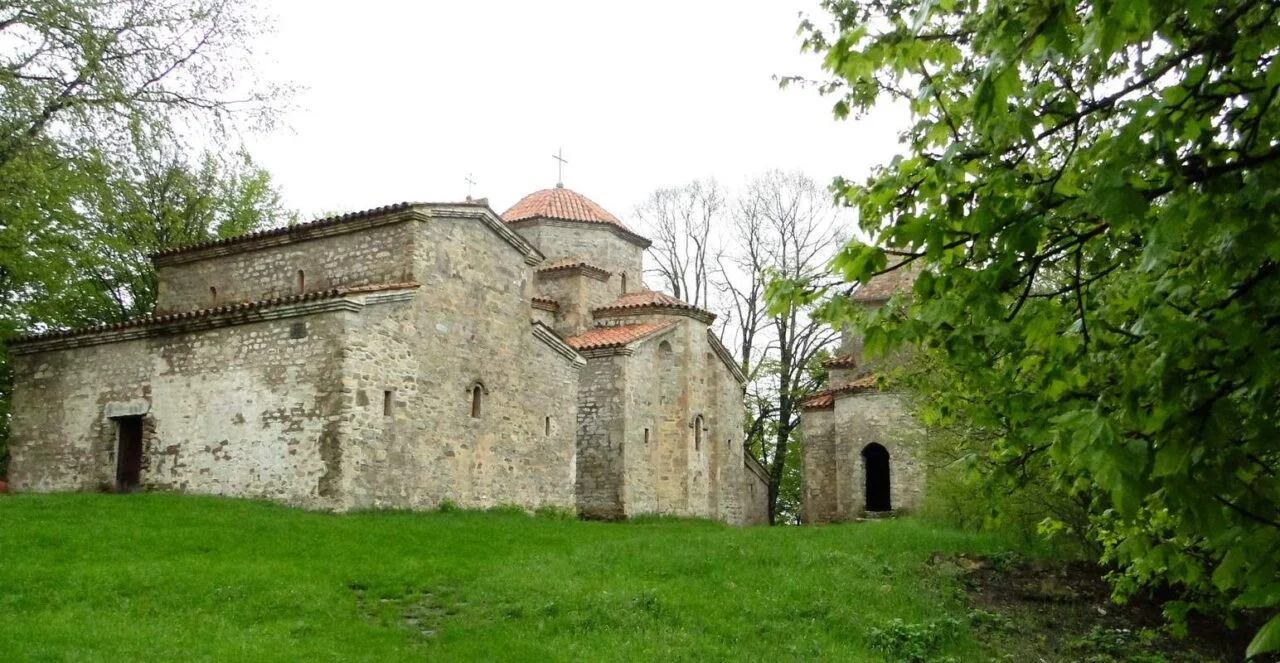
Hidden among the wooded slopes of the Gombori Mountains, Old Shuamta Monastery is one of the most atmospheric early Christian sites in Kakheti. Located only a short drive from Telavi, the monastery feels remarkably secluded despite its proximity to Kakheti’s regional capital.
Unlike many of Georgia’s better-known monasteries, Old Shuamta does not impress through monumental scale or elaborate decoration. Its importance lies in the simplicity of its architecture and in the opportunity to see several stages in the development of early Georgian church design within a single compact complex.
The monastery consists of three churches dating from the 5th and 7th centuries, making Old Shuamta an especially interesting stop for travellers interested in Georgian history, architecture and early Christianity.
Travellers exploring the region on a private itinerary can easily combine the monastery with Telavi and other important historical sites. Our 2-Day Kakheti Private Tour from Tbilisi already travels through the Gombori–Telavi area and can be adapted to include Old Shuamta on request.
Why Is It Called Old Shuamta?
The Georgian name Shuamta — შუამთა — means approximately “among the mountains.”
The name is particularly appropriate. The monastery stands in a quiet forested setting at the foot of the Tsiv-Gombori range, surrounded by mountains and dense vegetation.
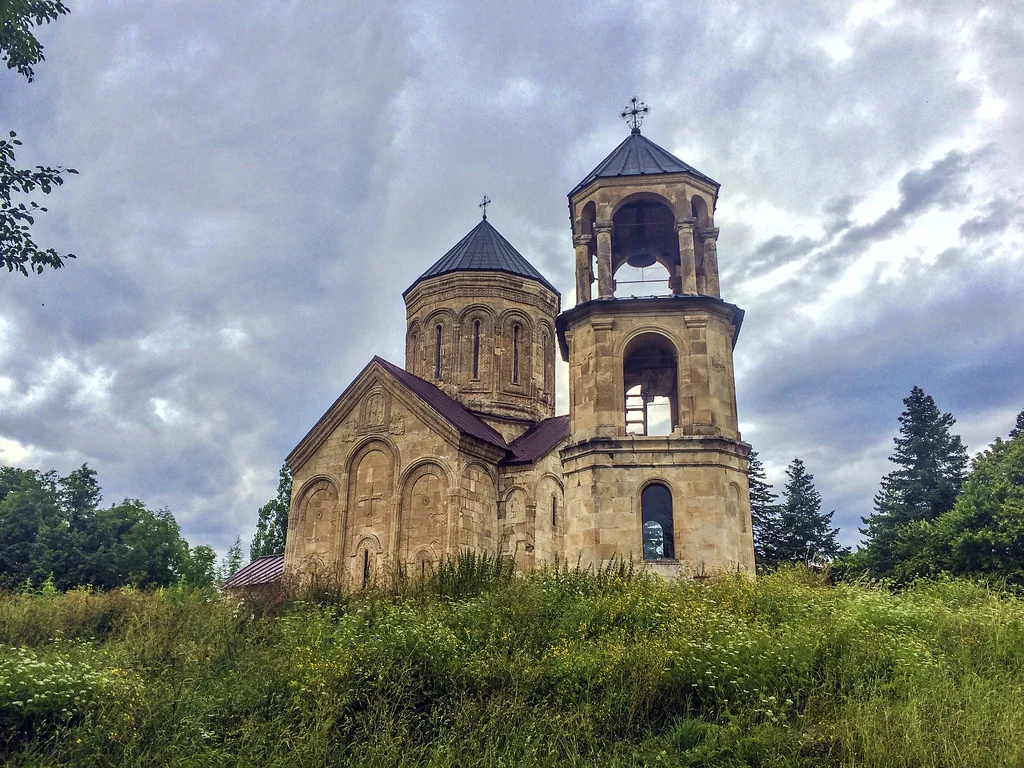
Today there are two Shuamta monasteries in the area: Old Shuamta (Dzveli Shuamta) and New Shuamta (Akhali Shuamta).
Old Shuamta represents the earlier monastic complex. It was eventually abandoned in the 16th century, after which the nearby New Shuamta Monastery developed approximately 2 km away.
Visiting both monasteries is particularly worthwhile because they represent very different periods in the development of Georgian ecclesiastical architecture.
The 5th-Century Basilica
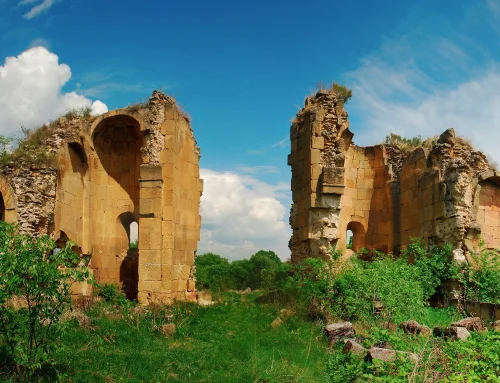
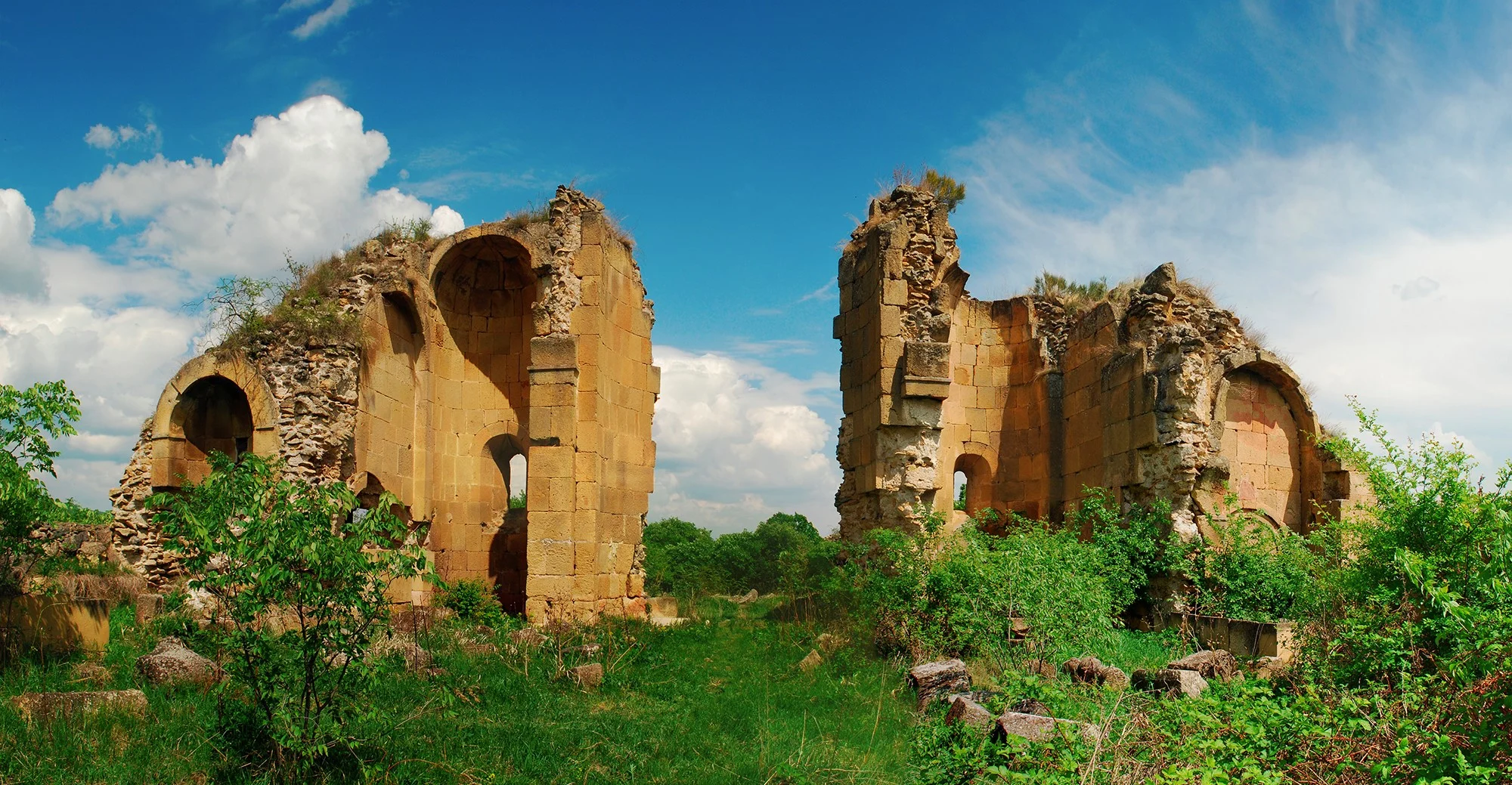
The oldest building at Old Shuamta is a three-aisled basilica dating from the 5th century.
It is one of the early surviving examples of basilica architecture in Georgia and offers an interesting glimpse into the formative period of Georgian Christian architecture.
The building differs noticeably from the long, strongly east–west-oriented basilicas that developed later. Its proportions are comparatively compact, while the interior is divided into a broad central nave and narrower side aisles.
Arches supported by columns separate the spaces, creating an interior that feels more like a high central hall bordered by narrow passages than a conventional later basilica.
For visitors who have already explored larger medieval Georgian churches, this modest building can be particularly interesting. It demonstrates how Georgian architects experimented with forms that would gradually develop into a distinctive national architectural tradition.
The Main 7th-Century Domed Church
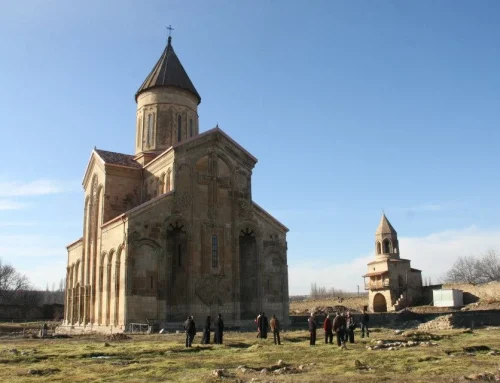
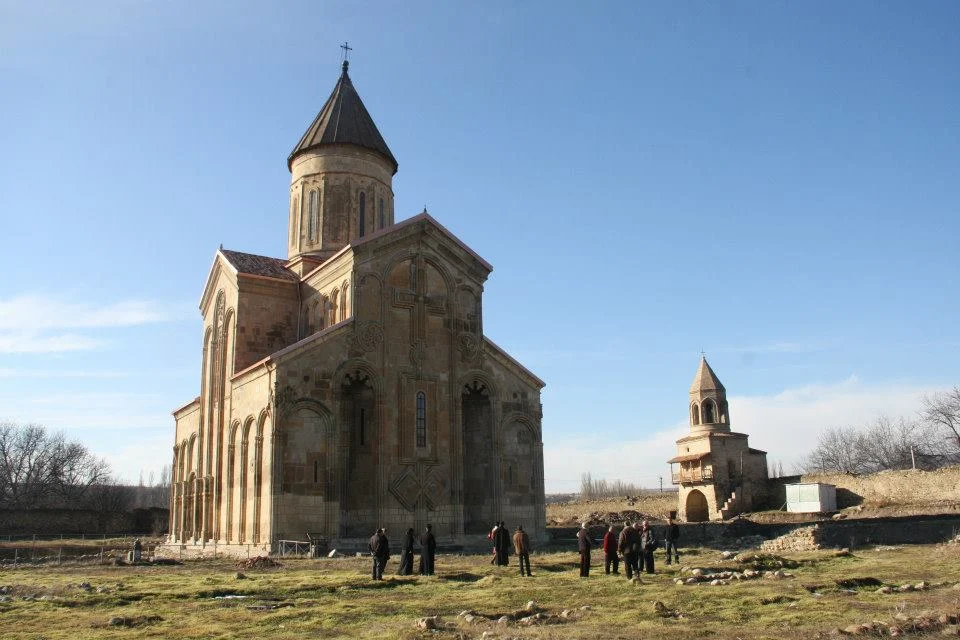
The largest of Old Shuamta’s two domed churches dates from the 7th century.
Architecturally, it belongs to the same broad tradition as the famous Jvari Monastery overlooking Mtskheta, one of the defining monuments of early medieval Georgian architecture.
The church follows a centralised plan in which the space is organised around the dome. Compared with Jvari, however, the proportions and arrangement are somewhat simplified.
The apses are relatively shallow, giving greater visual importance to the central domed space. Rectangular corner chambers accompany the main structure rather than the more complex forms found at Jvari.
The result is a compact but harmonious building in which the dome dominates both the architectural composition and the visitor’s perception of the interior.
The Smaller 7th-Century Church
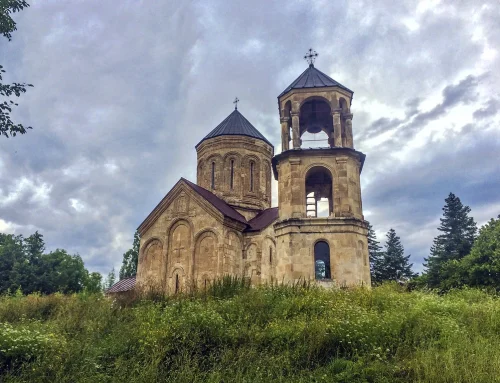
The third church is another small domed building dating from the 7th century.
Its design again reflects architectural ideas associated with the Jvari-type churches, but in a significantly reduced form.
Four apses are arranged around a central square, creating a symmetrical composition beneath the dome. Niches between the apses further articulate the interior.
Unlike larger churches of this architectural family, however, the building does not contain substantial corner chambers. The niches therefore function primarily as elements dividing and shaping the central space.
The church is small, but its proportions reveal the ability of early Georgian architects to create complex spatial effects within limited dimensions.
Architecture Without Excessive Decoration
One of the most striking characteristics of Old Shuamta is its restraint.
The churches are constructed primarily from cobblestone, with carefully selected stone used for important architectural details. Their façades are largely undecorated apart from simple accents around some windows.
There are none of the elaborate carved façades that became characteristic of many Georgian churches in later centuries.
Instead, Old Shuamta relies on proportion, geometry and balance.
That simplicity is an important part of the monastery’s character. The buildings seem closely connected to the surrounding forest rather than designed to dominate the landscape.
Visitors particularly interested in Georgian monastic architecture can combine Old Shuamta with Ikalto Monastery and Academy, another important historical complex situated close to Telavi.
Old Shuamta and New Shuamta
Visitors sometimes confuse Old Shuamta with nearby New Shuamta Monastery.
The two complexes belong to very different periods.
Old Shuamta contains churches dating mainly from the 5th–7th centuries, while New Shuamta was established centuries later, in the 16th century, with the support of Queen Tinatin, wife of King Levan of Kakheti.
If you have enough time, it is worth visiting both.
Together they illustrate two very different periods in Georgian religious architecture: the austere early medieval architecture of Old Shuamta and the later brick architecture, frescoes and monastic traditions of New Shuamta.
Visiting Old Shuamta from Telavi
Old Shuamta is an easy addition to a stay in Telavi or a longer journey through Kakheti.
The monastery lies in the forested foothills of the Gombori Mountains, making it particularly convenient for travellers entering Kakheti via the scenic Gombori road.
Because the complex is relatively compact, you do not need several hours to explore it. However, it is worth allowing enough time to walk around all three churches and appreciate the differences between their architectural plans.
Include Old Shuamta in a Kakheti Tour
Old Shuamta works particularly well as part of a wider historical itinerary rather than as a standalone excursion from Tbilisi.
Our 2-Day Kakheti Private Tour from Tbilisi is the easiest itinerary to adapt. The first day already crosses the Gombori Range and explores the Telavi area, allowing Old Shuamta and New Shuamta to be included on request, depending on the preferred pace of the tour.
Travellers with only one day can also consider our Kakheti in One Day tour. Its standard itinerary focuses on Ujarma, Ikalto, Gremi and Sighnaghi, but because it is operated as a private tour, travellers particularly interested in early Christian architecture can ask about adapting the route.
For travellers spending more time in Georgia, the 7-Day Spring and Autumn Tour includes an extensive Kakheti section with Telavi, Ikalto, Gremi and Nekresi. Old Shuamta can therefore be discussed as an additional architectural stop when planning a customized version of the itinerary.
The monastery can also be incorporated into a longer tailor-made journey based on our 12-Day Around Georgia Tour, which already dedicates a full day to Kakheti.
What to Combine with Old Shuamta
A particularly logical cultural route around Telavi combines:
- Old Shuamta Monastery
- New Shuamta Monastery
- Telavi
- Ikalto Monastery and Academy
- Alaverdi Cathedral
Travellers continuing farther through the Alazani Valley can then visit Gremi, Nekresi, Kvareli and Sighnaghi.
This creates a route focused on Kakheti’s history, monasteries and royal heritage, rather than the wine-centred itinerary for which the region is usually known.
Why Visit Old Shuamta?
Old Shuamta is not the type of attraction that overwhelms visitors with size or decoration.
Its appeal is subtler.
You come here for the quiet forest, centuries-old stone walls and the opportunity to stand inside buildings created during some of the earliest stages of Georgian Christian architecture.
For travellers exploring Kakheti beyond its vineyards and wine estates, Old Shuamta provides valuable historical context. It is also an excellent complement to Georgia’s better-known medieval monasteries, showing what Georgian ecclesiastical architecture looked like before the great decorated cathedrals of later centuries appeared.
If Georgian history and architecture are an important part of your trip, ask us to include Old Shuamta in a private Kakheti itinerary or explore our Kakheti tours from Tbilisi to build a longer journey through eastern Georgia.
Frequently Asked Questions
How old is Old Shuamta Monastery?
The oldest church in the complex dates from the 5th century. The two domed churches were built in the 7th century.
Where is Old Shuamta located?
The monastery is located in Kakheti, near Telavi, in the forested foothills of the Gombori Mountains.
How many churches are at Old Shuamta?
The complex contains three historic churches: one 5th-century basilica and two 7th-century domed churches.
Is Old Shuamta the same as New Shuamta?
No. They are two separate monastery complexes located close to one another. Old Shuamta is considerably earlier, while New Shuamta dates mainly from the 16th century.
Can Old and New Shuamta be visited together?
Yes. The two monasteries are located close to one another and are naturally combined during a trip from Telavi.
Can Old Shuamta be included in a Kakheti tour from Tbilisi?
Yes. It is particularly easy to include in a private Kakheti itinerary travelling through the Gombori and Telavi area. The 2-Day Kakheti Private Tour from Tbilisi is the most suitable existing itinerary to customize with an Old Shuamta visit.