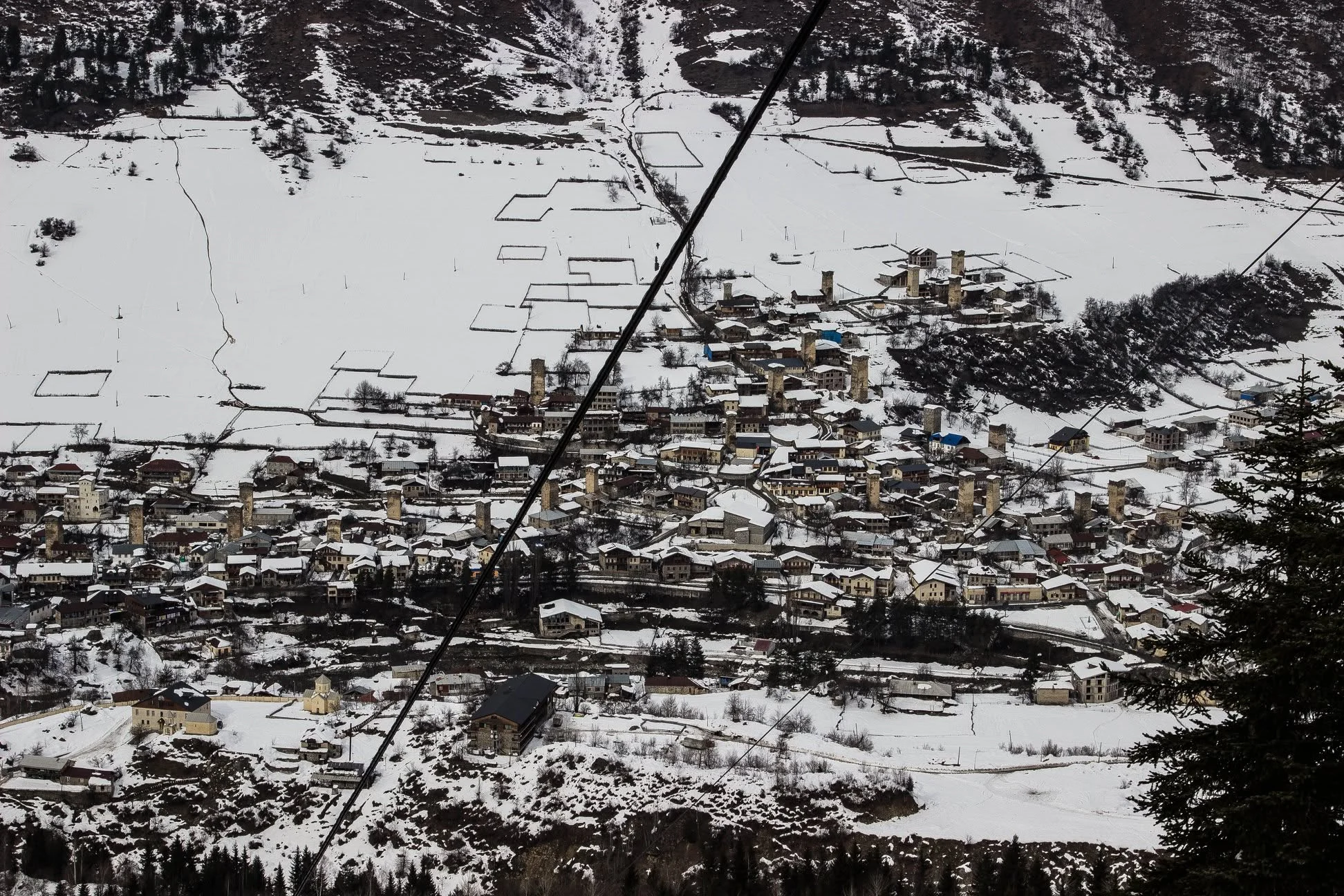
Georgia has four main ski resorts, all run by the state Mountain Trails Agency (MTA) and all opening on 20 December 2026: Mestia (Hatsvali and Tetnuldi) in Svaneti, Gudauri, Bakuriani and Goderdzi. Choose Mestia for freeride terrain and medieval Svan villages, Gudauri for the biggest ski area two to three hours from Tbilisi, Bakuriani for families and beginners, and Goderdzi for deep snow and the lowest prices near Batumi. In 2026/27 a day pass for foreign adults costs 70–120 GEL, and a season pass valid at all four resorts costs 1,000 GEL.
Four mountains, four very different winters
Morning in Mestia starts slowly. Smoke drifts from the chimneys, the stone defence towers throw long blue shadows across the snow, and somewhere above town the Hatsvali chairlift creaks into motion. Forty minutes up the valley, the lifts at Tetnuldi climb toward 3,160 metres, where the white pyramid of Mount Tetnuldi fills the whole sky. Few ski regions in Europe let you spend the morning in thigh-deep powder and the afternoon inside a medieval tower.
Mestia is the most remarkable of Georgia’s four ski resorts, but it is not the only good one, and the four could hardly be more different. Gudauri is a high, treeless freeride area just two to three hours from Tbilisi. Bakuriani is a pine-forest spa town where Georgians have learned to ski since the 1930s. Goderdzi is a small, snowy pass resort above the Black Sea, still growing.
So which one suits you? That depends on how well you ski, who you travel with, how much road you can stomach and what you want to do when the lifts close. This guide compares all four for the 2026/27 season: snow and terrain, the new lift pass prices, transport, where to stay and what a ski day actually costs.
What’s new for winter 2026/27
Three things have changed since last season, and two of them affect your budget.
- One opening day for everyone. The Mountain Trails Agency (MTA), the state company that runs the lifts at all four resorts, has set 20 December 2026 as the official opening at Gudauri, Bakuriani, Goderdzi and Mestia. Which lifts actually turn on that day depends on the snow. Closing dates are announced in spring; last season Bakuriani, Goderdzi and Hatsvali closed on 29 March, Tetnuldi on 9 April and Gudauri on 19 April.
- Two prices for the same lift. For the first time, foreign visitors pay more than Georgian citizens and residence permit holders, roughly a third more on day and multi-day passes. Day passes also rose sharply across the board: a foreign adult now pays 120 GEL at Gudauri, up from 70 GEL. The all-resort season pass costs the same for everyone.
- Insurance at the border. Since 1 January 2026, foreign visitors must hold health and accident insurance to enter Georgia, in English or Georgian, printed or on your phone. Your ski pass does not include it, and a standard policy may exclude winter sports or off-piste riding, so check the small print before you pack your skis.
Even at the new prices, a day on Georgian slopes still costs a fraction of a day in the Alps. The gap has narrowed, though, and the mental arithmetic of the past (“a lift pass for less than lunch”) no longer quite works.
The four resorts at a glance
| Mestia (Hatsvali + Tetnuldi) | Gudauri | Bakuriani | Goderdzi | |
|---|---|---|---|---|
| Region | Svaneti, Greater Caucasus | Mtskheta-Mtianeti, Greater Caucasus | Samtskhe-Javakheti, Lesser Caucasus | Adjara, near the Black Sea |
| Altitude | Hatsvali 1,870–2,350 m; Tetnuldi 2,265–3,160 m | approx. 1,990–3,280 m | approx. 1,700–2,700 m | approx. 1,720–2,370 m |
| Groomed slopes | about 37 km combined | up to 80 km advertised (about 35 km of marked pistes, plus freeride routes) | about 33 km across Didveli, Kokhta and Mitarbi | about 8 km |
| Getting there | 450 km from Tbilisi; 135 km (about 4 hours) from Zugdidi | 120 km from Tbilisi, 2–3 hours | 180 km from Tbilisi, about 3–3.5 hours | 109 km from Batumi, 2.5–3 hours |
| Adult day pass, foreigners | 100 GEL | 120 GEL | 100 GEL | 70 GEL |
| Best for | Advanced skiers, freeride, culture lovers | Intermediates, freeriders, après-ski | Families, beginners, non-skiers | Powder hunters on a budget, Batumi side trips |
| Biggest drawback | Long journey, unreliable flights | Highest costs, purpose-built feel | Crowded at holidays, spread out | Tiny, few facilities, tricky access |
Mestia (Hatsvali and Tetnuldi): skiing among the Svan towers
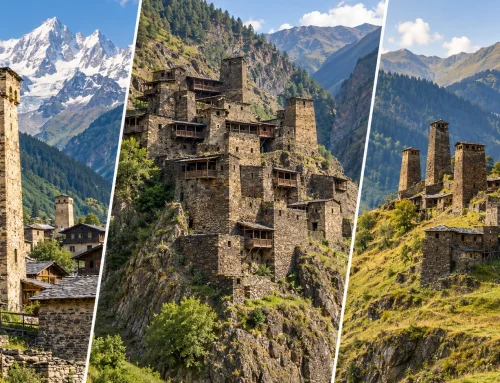
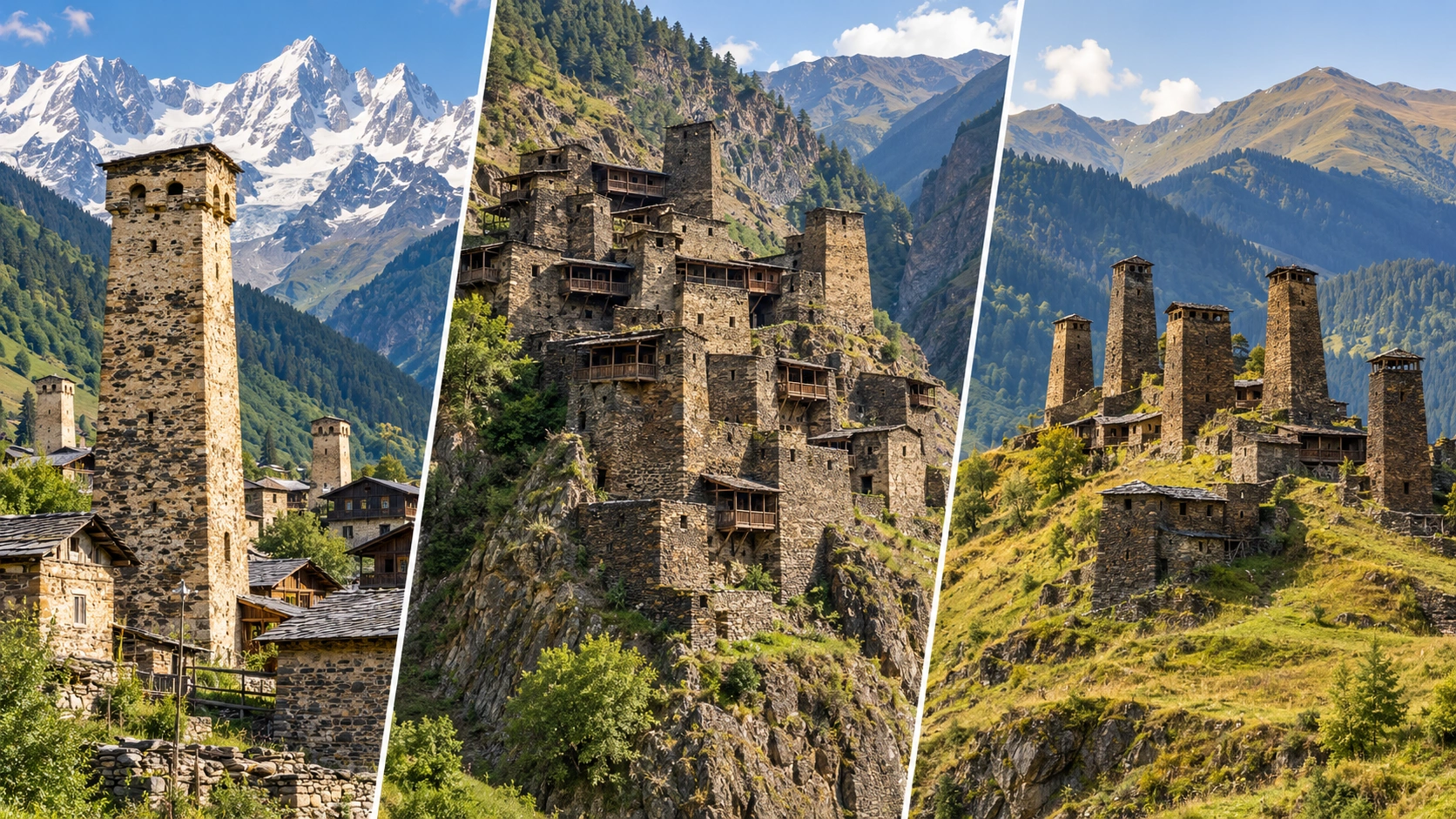
Nowhere else in Europe do you ride a chairlift out of a town where medieval stone towers rise between the houses like chess pieces left on a board. The Svans built these towers to defend their families from raiders and blood feuds, and in winter, with snow piled on their flat roofs and smoke rising from the houses below, Mestia looks less like a ski base than a set from a medieval saga. Then you look up and see the lift pylons marching up the slope.
Mestia serves two separate ski areas on one pass. Hatsvali sits right above town, reached by lift, with around 6 kilometres of short, steep runs between about 1,870 and 2,350 metres. It’s sheltered and good on stormy days. Tetnuldi is the real prize: a 15–20 kilometre drive up the valley (about 40 minutes, the road now largely paved), with lifts climbing to roughly 3,160 metres beneath the white pyramid of Mount Tetnuldi. Its long runs and huge open faces have hosted Freeride World Tour events, and the Tour’s Georgia Pro stop is scheduled again for 20–21 February 2027.
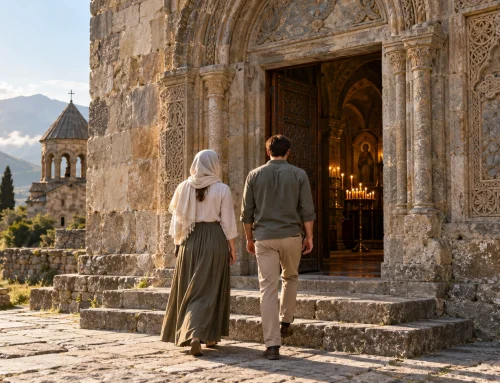
There is no accommodation at the Tetnuldi lift base, so everyone sleeps in Mestia. That’s no hardship. The town has dozens of family guesthouses, many serving home-cooked dinners: try kubdari, a pie stuffed with spiced meat, and anything seasoned with Svanetian salt, a blend of salt, garlic and blue fenugreek (more in our region-by-region guide to Georgian cuisine). On a rest day, visit the Svaneti Museum’s icons and manuscripts, climb inside a defence tower, or, if the road allows, drive toward Ushguli, one of the highest permanently inhabited villages in Europe. Our Svaneti travel guide covers the region in more depth.
Pros
- The best freeride terrain in Georgia, with high, long, uncrowded runs at Tetnuldi.
- Culture and scenery you won’t find at any other ski resort.
- Quiet slopes, even in peak season.
- Good-value guesthouses, usually with meals included.
Cons
- A long way from anywhere. About 8–10 hours by road from Tbilisi; 4 hours from Zugdidi. Plan at least five ski days to make the journey worthwhile.
- Unreliable flights. Small Vanilla Sky planes fly from Natakhtari (near Tbilisi) and Kutaisi, but winter cancellations are routine and strict baggage limits make carrying skis impractical.
- Daily transfers to Tetnuldi add cost and time; Bolt and other ride apps don’t work here. Shared 4×4 transfers start at roughly 40 GEL per person.
- Not ideal for first-timers. Hatsvali is short and steep, and Tetnuldi’s gentler blue runs sit 40 minutes from town. Complete beginners learn more easily in Bakuriani or Gudauri.
Gudauri: big, high and built for skiing
Gudauri is Georgia’s largest and highest ski area, and it feels like it. The top lifts reach above 3,200 metres, the treeline is somewhere far below, and the terrain opens out into broad, rolling bowls with almost nothing to stop you except your own legs. On a clear February morning the whole massif looks like a sheet of paper someone forgot to write on.
The resort splits into three parts. Old Gudauri, lower down the highway, has the older hotels and the cheapest rentals. New Gudauri is a cluster of apartment towers with gondola access and most of the restaurants. Higher still, the Recreation Zone is where the snow parks, upper lifts and slope-side bars sit. A gondola also runs down the far side to the village of Kobi, opening a long valley run that intermediates love.
Gudauri’s real reputation, though, is freeride. Wide, treeless faces drop off the marked runs in every direction, and the Freeride World Tour has used the Kobi area for qualifier events. Local guiding outfits run off-piste days, ski touring and heliskiing from here. Treat that terrain with respect: the avalanche risk on these open slopes is real, and nobody should leave the pistes without a guide and transceiver.
New this season: the operator plans two new T-bar lifts, a covered moving carpet for beginners, two new runs (Kobi 3 and Tatra 3), more snowmaking on the Soliko and Kikilo slopes, and lighting for night skiing in New Gudauri. Night passes cost 80 GEL for foreign adults. Non-skiers can ride the Kobi View gondola both ways for 90 GEL.
What else to do: tandem paragliding over the valley (weather permitting), a snowmobile ride, or a half-day trip to Kazbegi and the Gergeti Trinity Church when the road beyond the Jvari Pass is open (see our Mtskheta-Mtianeti guide).
Pros
- The most terrain in the country. Long, varied runs and easy lift-accessed off-piste keep strong skiers busy for a week.
- Closest to Tbilisi. Fly in, and you can be on snow the same afternoon.
- Best ski schools and infrastructure. English-speaking instructors and modern rental shops are easy to find.
- A real après-ski scene, at least by Caucasus standards.
Cons
- The most expensive resort in Georgia, for passes, rooms, taxis and food.
- Little character. New Gudauri is concrete towers on a hillside, not an alpine village.
- Wind and whiteout. Above the treeline there is no shelter when the weather turns, and upper lifts close often in storms.
- One road in. The highway can close in heavy snow or avalanche risk, especially between Gudauri and Kobi. Build a buffer day into your flight plans.
Bakuriani: the family resort among the pines
Where Gudauri is all open sky, Bakuriani is spruce forest, wood smoke and children in snowsuits being towed along on plastic sledges. This was Georgia’s first ski resort, with a ski school running since the 1930s, and It still feels more like a mountain town that happens to have lifts than a resort built around them.
The skiing is split between three state-run areas. Didveli is the biggest, topping out around 2,700 metres, with a gondola, chairlifts and the country’s only officially green run, the gentle Half Pipe, where most beginners take their first turns. Kokhta and Mitarbi, redeveloped in 2015, have no green runs and suit confident skiers who want quieter slopes. Two private areas, Crystal and 25 Ski Park, sell their own tickets and have a more improvised, local feel. Didveli also offers night skiing until 10 pm.
Bakuriani’s other strength is everything that isn’t skiing. Take the gondola up to the Skyline café at sunset, walk the forest paths of Amirani Park, or go tubing on the slopes by the village. Borjomi, the spa town famous for its salty mineral water, is 30 kilometres down the road and makes an easy half-day trip. The narrow-gauge “Kukushka” train from Borjomi, closed since 2020, is expected to restart this winter, though no timetable has been confirmed.
The main event worth timing a trip around: Bakuriani hosts a FIS Ski Cross European Cup on 12–13 February 2027.
Pros
- The best choice for families and beginners, with the gentlest learning slopes in Georgia.
- Plenty for non-skiers. Partners or grandparents who don’t ski won’t be bored.
- Better value for rooms and rentals than Gudauri; full rental kits start around 40 GEL a day.
- Sheltered, easier roads. The route via Borjomi is far less exposed to closures than the Jvari Pass.
Cons
- Lower altitude and shorter season. Snow can be thin early and late; lifts usually stop at the end of March.
- Holiday crowds. The New Year weeks (roughly 30 December to 13 January), mid-February and early March get very busy.
- Spread out. The ski areas are separate, so you will use shuttles or taxis between them.
- Fewer English-speaking instructors than in Gudauri; book lessons in advance.
Goderdzi: deep snow above the Black Sea
Goderdzi catches weather the way a sponge catches water. Moist air rolls in off the Black Sea, hits the mountains of upper Adjara and dumps it as snow, which is why this small pass resort often has the deepest cover in Georgia while Bakuriani, a few valleys east, is still waiting for its first proper storm.
It is also the youngest of the four. The first lifts opened in the 2015/16 season, and today there are three lifts and about 8 kilometres of marked runs, mostly blue and red. That sounds tiny, and on the pistes it is. What makes Goderdzi interesting is what lies between them: open bowls and snowy pine glades that hold powder for days after a storm, because so few people come to ski it out. Guided cat-skiing trips also operate here.
The resort area itself has a handful of hotels and cottages near the Zanka gondola base. For a more local stay, the village of Danisparauli, about 3–4 kilometres below, has family guesthouses where dinner and breakfast are usually included. Expect Adjaruli khachapuri, the boat-shaped bread filled with molten cheese and a raw egg yolk you stir in at the table. Adjara is its home region, and after a powder day it tastes like the best decision you’ve made all year.
Goderdzi works well as an add-on to a Batumi trip: two or three days of skiing, then back to the coast, where it might be 10°C and sunny.
Pros
- Reliable, heavy snowfall and excellent off-piste for its size.
- The cheapest lift pass in Georgia: 70 GEL a day for foreign adults.
- No queues. Even at weekends it rarely feels busy.
- Easy to combine with Batumi and the Black Sea coast.
Cons
- Very small. Strong piste skiers will cover everything in a day.
- Limited facilities. Few restaurants, few rental shops, no real nightlife.
- Tricky access in winter. The road from Batumi via Khulo is the only practical route; the pass road from Akhaltsikhe is normally closed in winter. A 4×4 is strongly recommended.
- Far from Tbilisi. It makes more sense if you fly into Batumi or Kutaisi.
Lift pass prices for 2026/27
The official MTA price list for 2026/27 was published in November 2026. Prices are in Georgian lari (GEL); euro figures are rough, at about 3.1 GEL to €1.
| Pass (foreign visitors) | Mestia | Gudauri | Bakuriani | Goderdzi |
|---|---|---|---|---|
| 1 day, adult | 100 GEL (approx. €32) | 120 GEL (approx. €39) | 100 GEL (approx. €32) | 70 GEL (approx. €23) |
| 1 day, child 6–12 | 50 GEL | 60 GEL | 50 GEL | 35 GEL |
| Multi-day, adult | 490 GEL for 7 days | 545 GEL for 6 days | 490 GEL for 7 days | 340 GEL for 7 days |
| 1 day, adult, Georgian citizens and residents | 70 GEL | 90 GEL | 75 GEL | 50 GEL |
The Mestia pass is valid at both Hatsvali and Tetnuldi. At Gudauri, intermediate options cost 215 GEL for 2 days, 305 GEL for 3 and 390 GEL for 4 (foreign adults). Night skiing in Gudauri is 80 GEL.
Passes valid at all four resorts (MultiSki)
| Pass | Foreign adult | Foreign child 6–12 |
|---|---|---|
| 7 ski days, any time in the season | 630 GEL | 315 GEL |
| 10 ski days, any time in the season | 865 GEL | 435 GEL |
| Season pass (same price for residents) | 1,000 GEL | 500 GEL |
The 7- and 10-day MultiSki passes count ski days, not calendar days, so they suit a touring trip, for example three days in Gudauri and four in Mestia. Children under 6 ski free. Every pass is loaded onto a physical MultiCard that costs 5 GEL; hand it back for a refund or keep it for next season. Buy at resort ticket offices or online at mta.ski.
Getting there
| Resort | Public transport | Private driver or transfer | Watch out for |
|---|---|---|---|
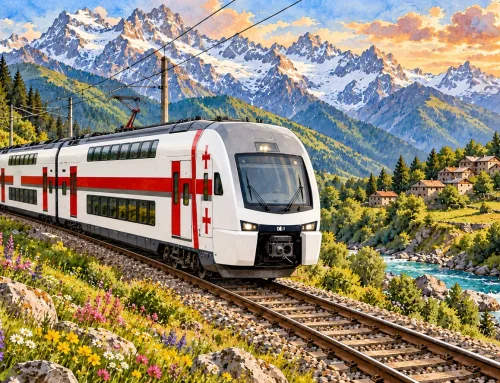
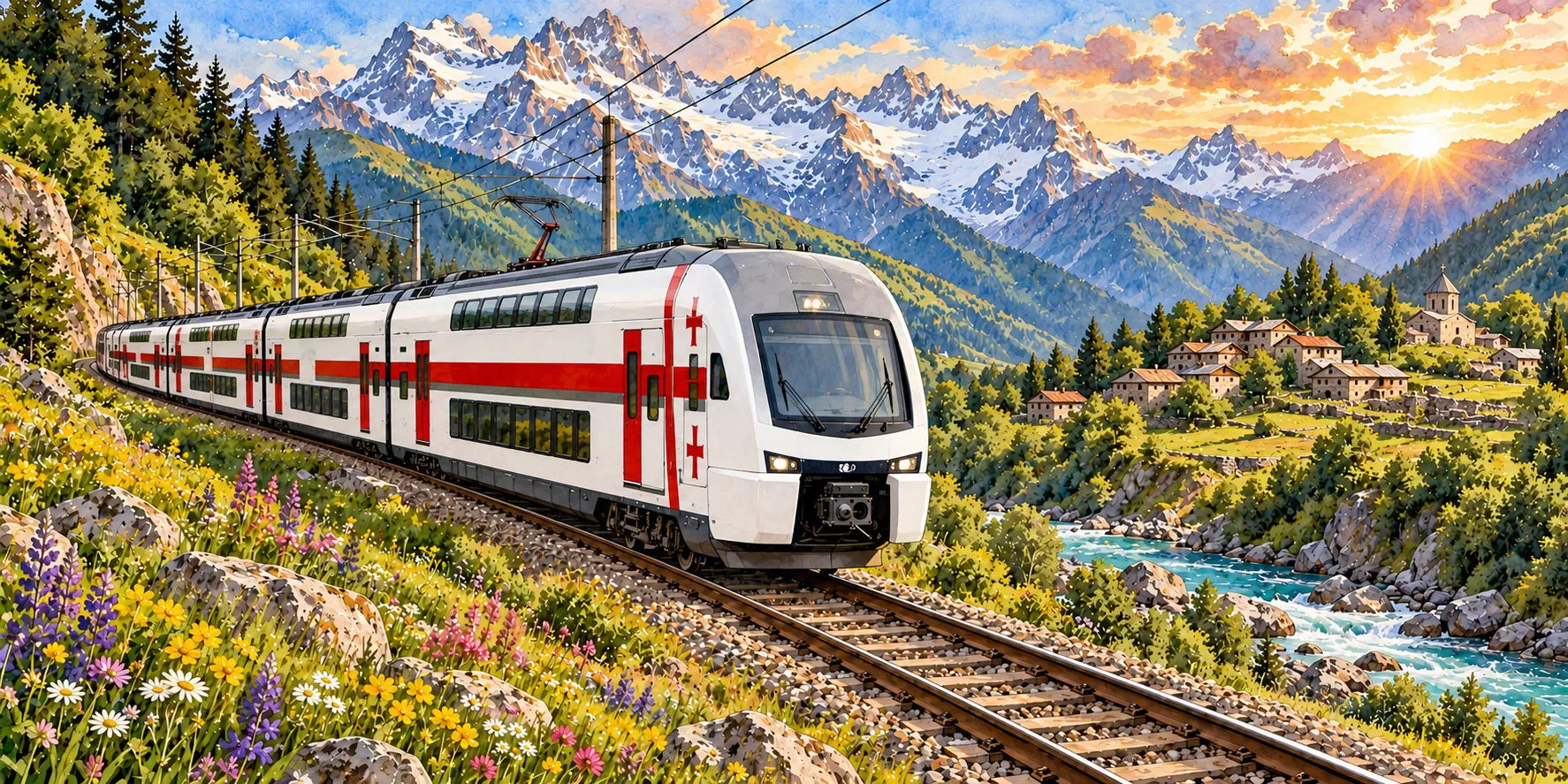
| Mestia | Night train Tbilisi–Zugdidi (how Georgian trains work), then a minibus (about 4 hours) | From about 330 GEL per car from Kutaisi, about 600 GEL from Tbilisi | Flights often cancelled; a 4×4 is close to essential |
| Gudauri | Minibus from Tbilisi’s Didube station, about 15 GEL, 2.5 hours | From about 200 GEL per car from Tbilisi, about 2 hours | Highway closures in heavy snow |
| Bakuriani | Direct vans from Didube (mornings), about 20 GEL; or train or van to Borjomi, then a local van | From about 220 GEL per car from Tbilisi | Winter tyres are mandatory if you drive |
| Goderdzi | Bus from Batumi to Danisparauli, then a local jeep to the lifts | 2.5–3 hours from Batumi by 4×4 | Only the Batumi–Khulo road is open in winter |
If you are flying in, Tbilisi suits Gudauri and Bakuriani, Kutaisi suits Mestia and Bakuriani, and Batumi suits Goderdzi.
When to go
- 20–31 December: the season opens, but lower runs can be thin. Quiet until the New Year rush begins.
- 1–13 January: Georgian New Year and Orthodox Christmas (7 January). The busiest, most expensive fortnight everywhere; book rooms months ahead.
- Late January to early March: the sweet spot. Snow is deepest, weekdays are quiet and room rates drop. February brings the most reliable cover and the Freeride World Tour.
- March: long sunny days and spring snow. Bakuriani, Goderdzi and Hatsvali usually close at the end of the month.
- April: only Gudauri and Tetnuldi keep running, often until mid-April, with soft afternoon snow and very few people.
What a ski day costs
A realistic daily budget per adult, excluding accommodation, looks like this: lift pass 70–120 GEL, rental 40–70 GEL for a standard ski or board set (new premium gear up to 120 GEL in Gudauri), and 30–60 GEL for lunch on the mountain. A private two-hour lesson at a Gudauri ski school costs around 220 GEL.
Accommodation varies more than anything else. In New Gudauri, a studio apartment in mid-January can run 340–360 GEL a night. Bakuriani has plenty of mid-range hotels and apartments at around 200 GEL. Mestia’s family guesthouses are the best value, often 120–200 GEL for a double room, usually with breakfast and sometimes dinner. Goderdzi’s Danisparauli guesthouses are cheaper still.
Practical tips before you go
- Bring proof of insurance that covers skiing. Georgia’s mandatory entry insurance is a medical minimum; check that your policy also covers winter sports and helicopter evacuation, which you pay for yourself.
- Carry cash in lari. Card payments work at ticket offices and most hotels, but village guesthouses, minibuses and small rental shops often take cash only.
- Keep a buffer day. Mountain roads close, flights to Mestia get cancelled, and a missed international connection is far more expensive than one extra night.
- Rent locally, but inspect the gear. Older shops in Old Gudauri and Bakuriani are cheap; ask for newer skis and check the bindings before you leave the counter.
- Never go off-piste alone. The open slopes of Gudauri and Tetnuldi are avalanche terrain. Hire a certified guide with a transceiver, shovel and probe.
- Pack for real cold. Temperatures in Gudauri can drop well below −15°C in January, and wind at the top makes it feel colder. Goggles, a buff and layered mittens matter more than style.
- Book New Year and February weekends early. Gulf and regional visitors fill Bakuriani and Gudauri in mid-February, and Georgian families fill everything in early January.
Winter in Georgia beyond the slopes
Not everyone comes for the skiing, and Georgia in winter rewards non-skiers too. Tbilisi rarely gets heavy snow, and its old town is at its best on a cold, clear day, followed by an hour in the sulphur baths of Abanotubani. On 7 January, Orthodox Christmas, Alilo processions of singers in costume walk through Tbilisi’s streets. In Kakheti the harvest is over and the new wine is resting in its buried clay qvevri, so cellars are quiet and winemakers have time to talk.
- Tbilisi: sulphur baths, wine bars and winter festivals. Start with our Tbilisi guide or a one-day tour from Tbilisi.
- Kakheti: tastings in family cellars without the autumn crowds. See our Kakheti guide, wine tours and how a qvevri is made.
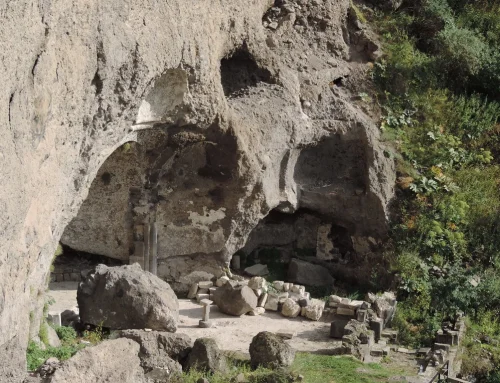
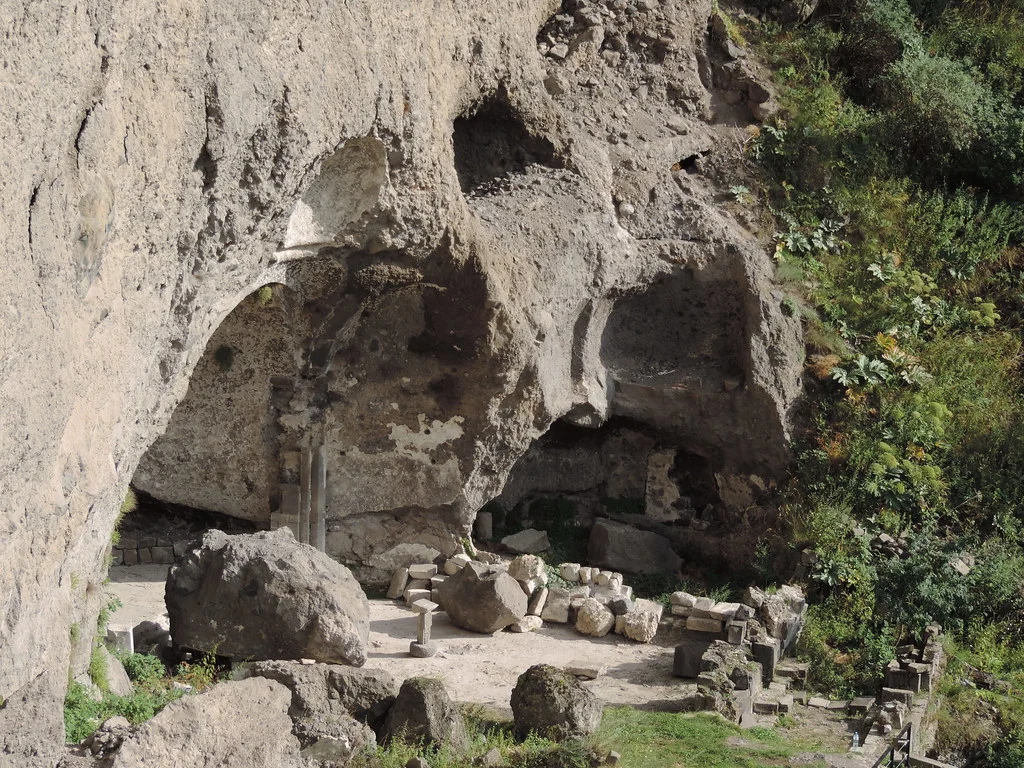
- Borjomi and Vardzia: snow-covered spa parks and the cave city carved into a cliff, both easy to pair with Bakuriani. Our Mystic South Georgia tour covers the route.
- Kutaisi and Imereti: the gateway to Mestia, with monasteries and canyons a short drive away. See the Imereti guide and tours from Kutaisi.
So which resort should you choose?
- Chasing powder, steep empty faces and something more than a ski town? Mestia. Ski Tetnuldi with a guide, rest among the Svan towers, and give it at least a week.
- A confident intermediate with one week and one base? Gudauri gives you the most kilometres, the best ski schools and the shortest transfer from Tbilisi.
- First time on skis, or travelling with young children? Bakuriani. The green run at Didveli is the gentlest start in Georgia, and there is plenty to do when little legs give out.
- Powder on a budget? Goderdzi after a big Black Sea storm, ideally combined with a few days in Batumi.
- A mixed group where half the party doesn’t ski? Mestia or Bakuriani. One has towers, museums and some of the most memorable villages in the Caucasus; the other has forests, a gondola café and Borjomi nearby.
- Want two resorts in one trip? A 7-day MultiSki pass makes a Gudauri–Mestia combination easy on the wallet, if not on the road.
Whatever you pick, the day ends the same way: boots off by a stove, a clay jug of Saperavi on the table, and someone at the next table insisting you try their chacha. It’s poured with the same generosity as the snow, and with roughly the same consequences for tomorrow morning.
Highlander Travel has been organising private tours in Georgia since 2011, and in winter we arrange transfers and multi-day trips to all four resorts, including routes that combine Mestia’s slopes with Tbilisi or the wine villages of Kakheti. Tell us your dates and your level and we’ll plan the route.
Frequently asked questions
What is the best ski resort in Georgia for advanced skiers? Mestia, specifically Tetnuldi, with lifts to about 3,160 metres and huge open faces that have hosted the Freeride World Tour. Gudauri is the alternative if you want more groomed runs and an easier journey from Tbilisi.
When does the ski season in Georgia start in 2026/27? All four state-run resorts officially open on 20 December 2026. Gudauri and Tetnuldi usually run until mid-April; Bakuriani, Goderdzi and Hatsvali close around the end of March.
How much is a ski pass in Georgia this winter? For foreign adults, a day pass costs 120 GEL in Gudauri, 100 GEL in Bakuriani and Mestia, and 70 GEL in Goderdzi. Georgian citizens and residents pay less. A season pass for all four resorts costs 1,000 GEL.
Do foreigners really pay more than locals now? Yes. From 2026/27, day and multi-day passes have separate prices for foreign visitors, roughly a third higher. Season passes cost the same for everyone.
Which Georgian ski resort is best for beginners? Bakuriani, thanks to the gentle green run at Didveli and its family-friendly town. Gudauri also has good beginner areas and the most English-speaking instructors.
Do I need travel insurance to ski in Georgia? Health and accident insurance has been mandatory for entry since 1 January 2026. Make sure your policy also covers winter sports and mountain rescue.
Can I fly to Mestia for skiing? Small planes fly from Natakhtari and Kutaisi, but winter cancellations are frequent and baggage limits make skis difficult. Most skiers travel by road via Zugdidi.