Premium & Incredible Tour Packages with Hotel Stays!
Kutaisi city tour including Gelati monastery and Sataplia
Price for one tour per person
$75
tour features
Tour Duration: 1 day
Tour Location:Imereti
Tour highlights: Kutaisi city center, Bagrati cathedral, "Okros Chardakhi", Gelati monastery, Sataplia natural reserve
Tour is available whole year
This full-day Kutaisi city tour takes you through 3,000 years of Georgian history – from the legendary kingdom of Colchis to medieval monasteries and Soviet-era curiosities. You’ll explore Georgia’s second capital with a local guide, visit a UNESCO World Heritage Site, walk among 120-million-year-old dinosaur footprints, and end the day with authentic Imeretian wine at a family vineyard. Kutaisi makes the perfect introduction to western Georgia. Unlike busy Tbilisi, this relaxed city on the Rioni River preserves its historic character: tree-lined boulevards, ornate bridges, colorful bazaars, and monuments that tell the story of a city that was Georgia’s capital long before Tbilisi existed.
Detailed Itinerary
Your guide picks you up from your hotel in Kutaisi (or Kutaisi Airport if arriving that morning). We begin with a walking tour through Kutaisi’s historic center.
Kutaisi Old Town – Stroll along the Rioni River, crossing the elegant White Bridge (Tetri Khidi) with its views of traditional houses climbing the hillsides. We’ll walk through streets that have seen traders for millennia – this was the heart of ancient Colchis, where Greek myths placed the Golden Fleece.
Colchis Fountain – The city’s central square features this striking fountain adorned with golden animal sculptures representing archaeological artifacts from the Colchian period. It’s a modern celebration of Kutaisi’s ancient heritage.
Kutaisi Green Bazaar – Experience the colors and flavors of a working Georgian market. Your guide will introduce you to local cheeses (especially the stretched Imeretian cheese), churchkhela (walnut and grape candy), fresh herbs, and seasonal fruits. This is where Kutaisi residents shop – a window into daily life.
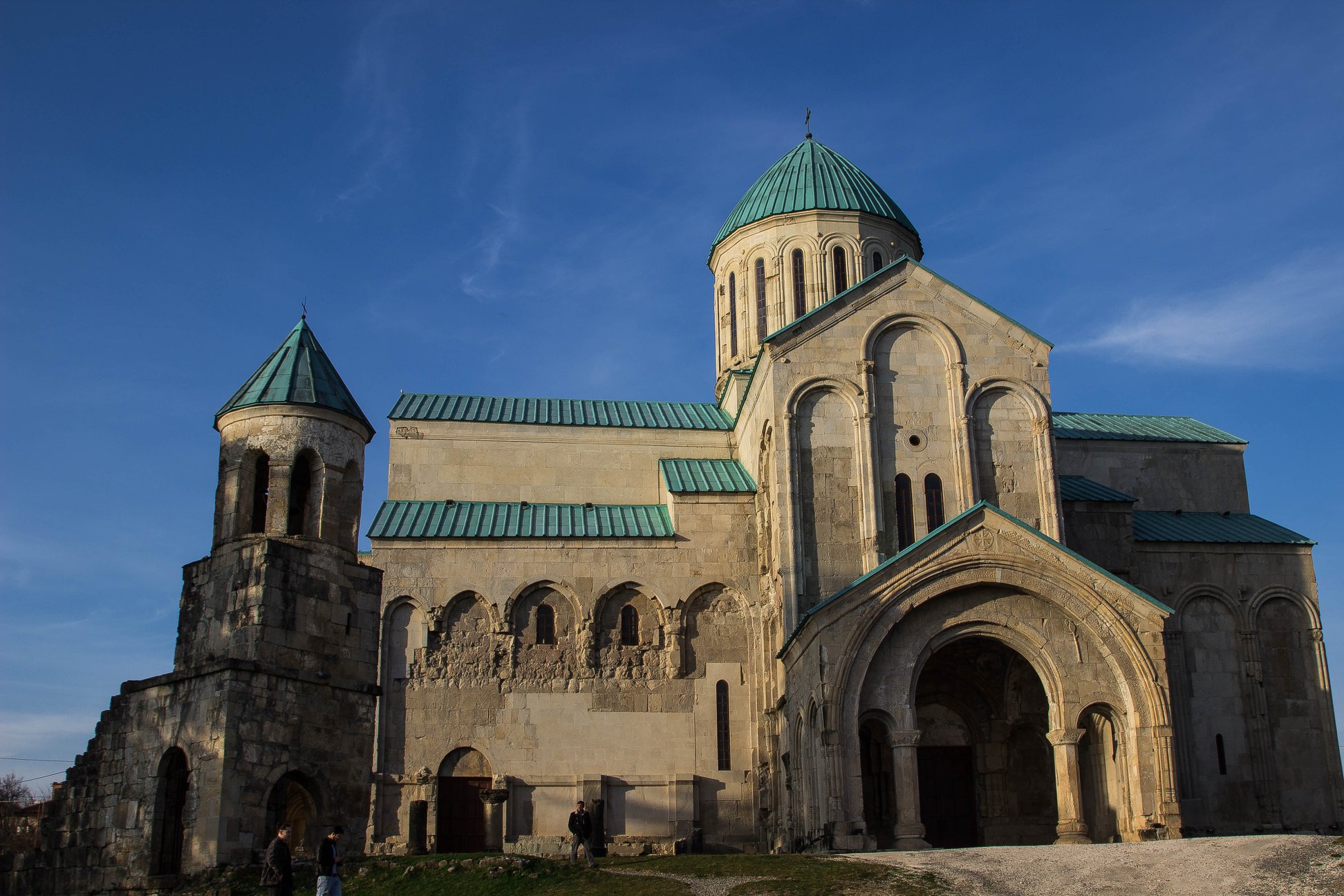
Bagrati Cathedral – We drive up Ukimerioni Hill to this masterpiece of medieval Georgian architecture. Built in 1003 by King Bagrat III during Georgia’s unification, the cathedral stood partially ruined for centuries after the Ottoman invasion. The controversial reconstruction was completed in 2012. From the terrace, panoramic views stretch across the city and surrounding hills.
Okros Chardakhi (Golden Canopy) – Near Bagrati, this historic royal pavilion offers another excellent viewpoint. The name comes from the golden decorations that once adorned it when Georgian kings held court here.
A short 10 km drive through the Imereti countryside brings us to one of Georgia’s most important monuments.
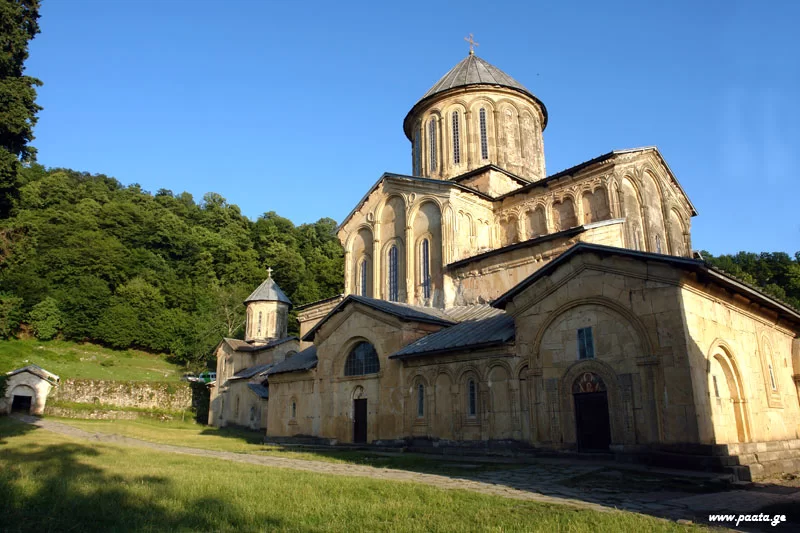
Gelati Monastery was founded in 1106 by King David IV (David the Builder), Georgia’s greatest medieval ruler. It was not merely a monastery but a major center of learning – the Gelati Academy was one of the most significant educational institutions in the medieval Christian world, comparable to European universities of its time. The complex includes three churches adorned with exceptional frescoes and mosaics. The main cathedral houses a magnificent 12th-century mosaic of the Virgin Mary that has survived intact for 900 years. King David himself is buried at the entrance gate – he requested to be placed where every visitor would step over him, an act of humility. Gelati was inscribed as a UNESCO World Heritage Site for its outstanding medieval architecture and its role as a center of Georgian cultural and intellectual life. Your guide will explain the symbolism in the frescoes, the academy’s history, and the stories of the kings buried within.
Optional: The nearby Motsameta Monastery (3 km) perches dramatically on a cliff above the Tskaltsitela River. If time permits and you’re interested, we can make a quick stop here.
After a lunch break (at your expense, recommendations provided), we head to Sataplia Nature Reserve, just 9 km from central Kutaisi.
Dinosaur Footprints – The reserve’s most famous attraction: actual fossilized footprints left by dinosaurs approximately 120 million years ago. The tracks are preserved under a protective shelter and represent one of the most significant paleontological sites in the Caucasus. You’ll see multiple footprints from different dinosaur species, with informative displays explaining what we know about these ancient creatures.
Sataplia Cave – Walk through an illuminated karst cave system with spectacular stalactites and stalagmites formed over millions of years. The cave maintains a constant cool temperature, making it refreshing on hot summer days. The lighting creates a magical atmosphere as you walk the developed pathway through chambers of different sizes.
Glass Observation Platform – The highlight for many visitors: a transparent glass walkway extending over the edge of a cliff, offering vertigo-inducing views of the canyon and surrounding Colchis forest below. The platform provides panoramic views of the Imereti landscape – on clear days, you can see for miles.
Colchis Forest – The reserve protects rare endemic flora, including ancient boxwood groves that are remnants of the subtropical forests that once covered this region. A short walking trail takes you through this unique ecosystem.
We end the day in the village of Obcha, near Kutaisi, where a local family welcomes us to their vineyard and winery.
Imeretian Wine Tradition – While Kakheti gets most attention, Imereti has its own distinct winemaking tradition. The Tsolikouri and Tsitska grape varieties produce crisp, refreshing white wines unlike anything from eastern Georgia. You’ll learn how Imeretian winemaking differs from Kakhetian methods – particularly in the use of clay qvevri vessels and shorter skin contact times.
Wine Tasting & Dinner – The family will explain their winemaking process, from vineyard to qvevri, then pour several wines for you to taste. The tasting is accompanied by traditional Imeretian dishes prepared by the family – expect fresh salads, local cheese, perhaps khachapuri Imeruli (the region’s famous cheese bread), and other homemade specialties. This is a genuine family experience, not a commercial operation. You’ll taste authentic wines and food while learning about rural life in western Georgia. After the tasting, we return you to your hotel in Kutaisi (approximately 18:30-19:00).
Pricing and booking
Price per person depends on group size:
| Group Size | 2 persons | 4 persons | 6 persons | 8 persons | 10 persons |
|---|---|---|---|---|---|
| Price/person | 95 $ | 85 $ | 80 $ | 75 $ | 70$ |
Solo travelers: Contact us for pricing. Children under 6: Free. Children 6-12: 50% discount.
Book the tour
Best Time to Visit: Year-round. Spring (April-May) and autumn (September-October) offer pleasant temperatures. Summer can be warm, but the cave provides relief. Winter is mild in Kutaisi.
What to Wear: Comfortable walking shoes. Modest clothing for Gelati Monastery (women should cover shoulders; scarves available if needed). Light jacket recommended for Sataplia Cave (constant 14°C inside).
Physical Requirements: Easy tour with minimal walking. Sataplia involves approximately 1 km of paved walking paths. Suitable for all ages.
Photography: Allowed at all locations. Tripods may have restrictions inside Sataplia Cave.
Dietary Requirements: Please inform us of any dietary restrictions for the wine tasting dinner.
Airport Pickup Option: If arriving at Kutaisi Airport the morning of the tour, we can pick you up directly. Please provide flight details when booking.
How long is the Kutaisi city tour?
The full tour runs 7-8 hours, typically from 9:00 to 18:30. We can adjust timing for early/late flights.
Can you pick me up from Kutaisi Airport?
Yes! If your flight arrives in the morning, we can start the tour directly from the airport. Provide your flight number when booking.
Is lunch included in the tour?
Lunch is not included, but your guide will recommend good local restaurants. The wine tasting at the end includes dinner with traditional dishes.
Is the glass platform at Sataplia safe?
Absolutely. The reinforced glass platform is professionally engineered and regularly inspected. However, if you’re uncomfortable with heights, you can enjoy the views from the regular observation area nearby.
What if I don’t drink alcohol?
No problem! The winery visit includes fresh grape juice, homemade lemonade, and mineral water. The dinner and cultural experience are enjoyable regardless of wine consumption.
Is this tour suitable for children?
Yes, it’s excellent for families. Children especially love the dinosaur footprints and cave at Sataplia. Children under 6 are free; ages 6-12 receive a 50% discount.
Can the tour be customized?
Yes. We can add Motsameta Monastery, the Kutaisi Ethnographic Museum, or extend to Prometheus Cave or Martvili Canyon (additional time and cost). Contact us with your interests.
What’s the difference between Sataplia and Prometheus Cave?
Both feature karst caves, but Sataplia is smaller and also includes dinosaur footprints and the glass platform. Prometheus Cave is much larger and more spectacular underground, but doesn’t have the other features. They can be combined in a longer tour.
Do I need to book in advance?
We recommend booking at least 24-48 hours ahead, especially in peak season (May-September), to ensure guide and vehicle availability.
What languages do guides speak?
Our Kutaisi guides speak English and Russian. Other languages may be available on request.
About Kutaisi
Kutaisi is one of the world’s oldest continuously inhabited cities, with archaeological evidence of settlement dating back to the Bronze Age. Ancient Greeks knew this region as Colchis – the legendary destination of Jason and the Argonauts in their quest for the Golden Fleece. Whether the myth has historical basis or not, Kutaisi was certainly a major trading center in antiquity. The city served as capital of the medieval Kingdom of Georgia during its golden age. King David IV united the Georgian lands from here, and his successors built the magnificent monasteries and churches that still stand. For centuries, Kutaisi remained the most important city in western Georgia, rivaling Tbilisi in influence. Today, Kutaisi is Georgia’s third-largest city and the administrative center of the Imereti region. It retains a distinctly different character from Tbilisi – more relaxed, more traditional, with a cuisine and wine culture all its own. The opening of Kutaisi International Airport has made it the gateway to western Georgia for travelers from across Europe.