Four days in the saddle across Tusheti’s most spectacular terrain — climbing to 3,000-meter ridges, visiting alpine lakes, and exploring medieval tower villages accessible only by horse or foot.
Tusheti is unlike anywhere else in Georgia. Cut off from the outside world for eight months each year by Abano Pass, this high mountain region has preserved its traditions, architecture, and way of life virtually unchanged for centuries. The stone defense towers still stand, the shepherds still move their flocks across the high pastures, and the hospitality remains as genuine as it was generations ago.
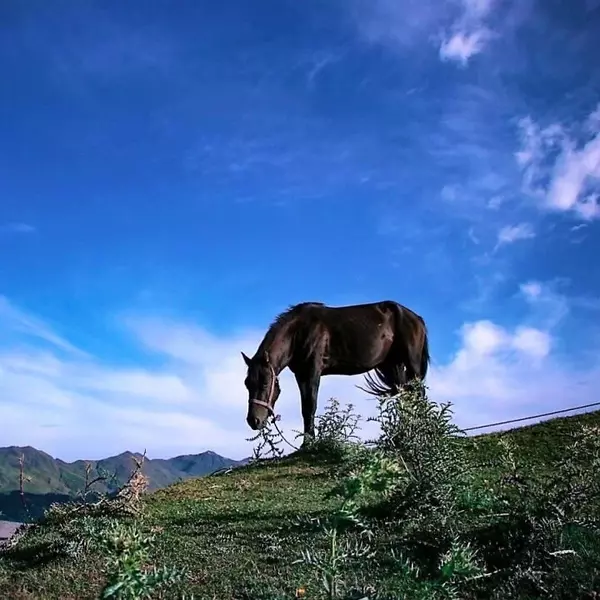
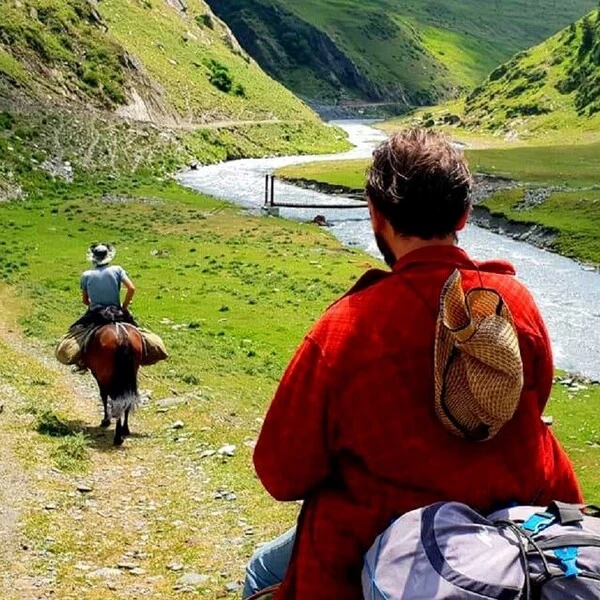
Two days of riding across this landscape – from flowering alpine meadows to glacial lakes to the ridge viewpoints overlooking multiple valleys – will show you why experienced riders consider Tusheti one of the finest horse riding destinations in the Caucasus. The Tushetian horses are a distinct local breed, smaller and nimbler than their lowland cousins, evolved over centuries for this terrain. They’re sure-footed on steep slopes, comfortable at altitude, and unbothered by the rocky trails that would challenge other horses.
Tour at a Glance
Tour Highlights
Who This Tour Is For
This tour suits: Intermediate riders comfortable at walk and trot who can control a horse independently on varied terrain. Those with reasonable fitness who can handle two consecutive days of 5-6 hours in the saddle at altitude. Travelers seeking an immersive introduction to Tusheti without committing to a longer expedition. Anyone drawn to remote mountain landscapes, medieval architecture, and authentic pastoral traditions.
This tour doesn’t suit: Complete beginners or very nervous riders – while the horses are extremely experienced, the terrain includes steep climbs and descents. Those requiring luxury accommodation – guesthouses are simple with shared bathrooms and variable hot water. Anyone uncomfortable with long mountain drives (7-8 hours over Abano Pass each way). Travelers who need reliable mobile phone coverage – expect to be largely offline for three days.
Detailed Day-by-Day Itinerary
We depart Tbilisi early, heading northeast through the Kakheti wine region. First stop is Alaverdi Monastery, one of Georgia’s most important religious sites. This 11th-century cathedral – over 50 meters tall – was the tallest building in Georgia for centuries. The monastery still functions today, and monks produce their own wine using traditional qvevri methods.
After a lunch break in the lowlands, the adventure begins: the drive over Abano Pass. At 2,926 meters, this is the highest drivable pass in the Caucasus, and the unpaved road clinging to cliffsides is legendary among overland travelers. We take our time, stopping for photos as the landscape transforms from green valleys to alpine meadows to rocky moonscape near the summit.
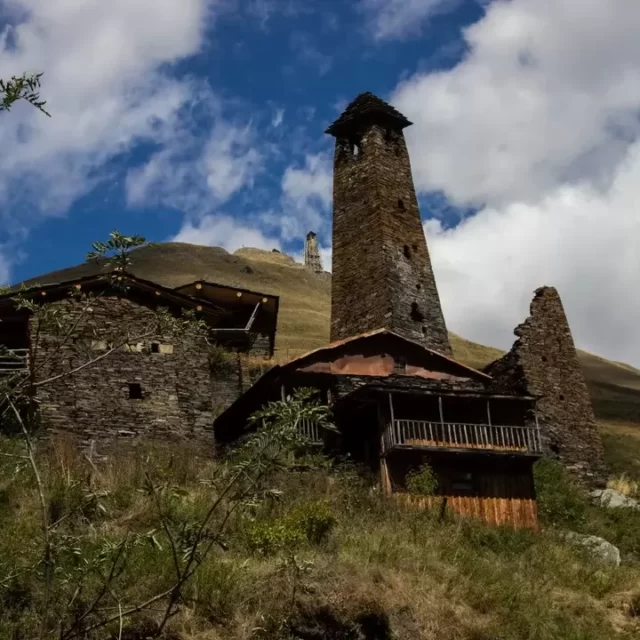
Descending into Tusheti, we make our way to the fortress villages of Shenako and Diklo. Shenako features a beautiful 19th-century church with surviving frescoes, while Diklo sits dramatically on a ridge near the Russian border. Here we walk to Pichekhi Castles, the main fortification that once guarded against Dagestani raids. The history here is poignant – these towers saw real conflict, and some were destroyed as recently as the 19th century.
We arrive at our guesthouse in Upper Omalo by evening, where a traditional Tushetian dinner awaits. The village sits at nearly 2,000 meters, and on clear evenings, the sunset views across the valley are spectacular.
Your first full day of riding takes you to the highest point of the tour – the 3,001-meter summit of Unagira Mountain. After breakfast, we meet the horses and riding guides at the guesthouse. The Tushetian horses are smaller than you might expect, but their sure-footedness on these mountain trails is immediately apparent.
The trail climbs steadily through alpine meadows, gaining over 1,100 meters of elevation over the course of the ride. If you’re visiting between mid-June and mid-July, the hillsides are covered with flowering rhododendrons – masses of pink and white blooms against the dark green of the meadow grass. A small seasonal lake near the summit adds to the scenery.
From the top of Unagira, the views are extraordinary. You can see both the Pirikiti and Gometsari valleys spreading below, with villages visible as clusters of stone towers on distant hillsides: Bochorna, Dartlo, Kvavlo, Chesho. On clear days, the peaks of the Greater Caucasus ridge seem close enough to touch.
We take our time at the summit, enjoying a packed lunch and photographing the panorama, before beginning the descent back to Omalo. The return route offers different perspectives on the landscape, and you’ll appreciate your horse’s ability to navigate the steep downhill sections.
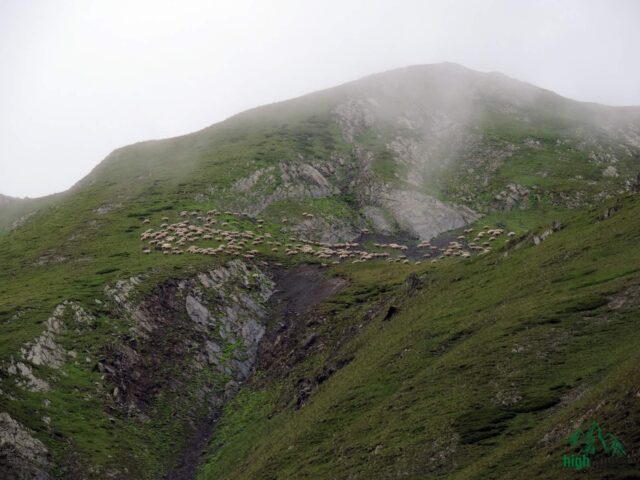
Your second riding day takes a different direction – toward the alpine Oreti Lake at 2,650 meters. The trail follows a different valley, passing through high summer pastures where you’re likely to encounter Tushetian shepherds with their flocks.
The shepherds here practice transhumance – seasonal migration that has continued for millennia. In June, they drive their sheep up from the lowland winter pastures in Kakheti, crossing Abano Pass to reach these high meadows. In September, they return. Meeting them at their summer camps offers a window into a way of life that’s nearly vanished elsewhere in Europe.
The lake itself is a classic glacial tarn – cold, clear, and reflecting the peaks that rise above it. From the ridge viewpoint, you can see all of Tusheti’s main gorges spread below. This is one of the most photographed spots in the region, and the riding to reach it makes the view even more satisfying.
We return to Omalo by a slightly different route, arriving in time for a final evening in the guesthouse. The third night’s dinner often features khinkali (Georgian dumplings) – reward for two days of solid riding.
Before leaving Tusheti, we explore two final sites. The Keselo Castle complex above Upper Omalo is the most impressive surviving example of Tushetian defensive architecture – a cluster of stone towers on a dramatic ridge that once served as the region’s last line of defense. The short hike up offers final panoramic views.
In Lower Omalo, the ethnographic museum provides context for everything you’ve seen: traditional crafts, clothing, tools, and artifacts that illustrate Tushetian life across the centuries. It’s a small but excellent collection that brings together the cultural threads of the region.
Then begins the long descent: back over Abano Pass (dramatic views in the other direction), through the Kakheti lowlands, and on to Tbilisi. We stop for lunch along the way. Arrival in Tbilisi is typically late afternoon or early evening – end of tour.
Price Information
Photo Gallery
Tour Route Map
Tbilisi
Alaverdi Monastery
Abano Pass
Shenako
Diklo
Upper Omalo
Unagira Mountain
Oreti Lake
Keselo Castles
Practical Information
Riding Experience Required
This tour is suitable for intermediate riders. You should be comfortable at walk and trot, able to control a horse independently, and have some experience with trail riding. The terrain includes steep climbs and descents, but the Tushetian horses are extremely sure-footed and experienced on these trails. If you’re a nervous rider or complete beginner, please contact us to discuss – we can sometimes adjust the routes or provide extra support.
Physical Fitness
Two consecutive days of 5-6 hours in the saddle is demanding. You should be reasonably fit and prepared for some muscle soreness. The altitude (up to 3,001m) may cause mild breathlessness but rarely causes problems for healthy adults.
Best Time to Visit
The tour runs from late June to early October. Peak rhododendron season is mid-June to mid-July. September offers more stable weather and golden autumn colors. The road over Abano Pass typically opens in late May/early June and closes with the first heavy snows in October.
What to Bring
Riding gear: comfortable boots with heel, long pants, riding gloves. Layering system: temperatures can vary 20°C between valley and summit. Rain jacket (mountain weather is unpredictable). Sun protection (altitude increases UV exposure). Personal medications. Camera with good battery (limited charging in Tusheti).
Accommodation
Three nights in a traditional guesthouse in Upper Omalo. Rooms are simple but clean with basic beds. Bathrooms are shared. Hot water is available but may be limited. The warmth of Tushetian hospitality and excellent home-cooked food compensate for the rustic conditions.
The Horses
Tushetian horses are a distinct mountain breed – smaller (13-14 hands), nimble, and incredibly sure-footed. They’ve been bred for this terrain for centuries. Saddles are traditional Georgian style. Helmets are available on request.
Mobile Coverage
Very limited in Tusheti. Some signal in Omalo (Magti works best), but expect to be largely offline for three days.
Frequently Asked Questions
Experience Tusheti on Horseback
Four days is enough to fall in love with Tusheti. The dramatic drive over Abano Pass, the panoramic rides to mountain summits and alpine lakes, the medieval tower villages, the warm hospitality of the guesthouses – it’s an immersive introduction to one of Europe’s last truly remote mountain regions.
This tour is ideal for riders who want to experience Tushetian horse culture without committing to a longer expedition. Two full riding days at altitude, reaching over 3,000 meters and visiting one of the region’s most beautiful lakes, give you a genuine taste of what makes this landscape special.
Ready to ride? Contact us to check availability or discuss your experience level.