Cave monasteries carved into desert cliffs, amber wines aged in 8,000-year-old traditions, and Georgia’s most romantic hilltop town—experience Kakheti at the pace it deserves
Picture this: You’re standing in a 1,500-year-old monastery carved into a cliff face, looking out over endless valleys that have been producing wine since 6,000 BC. In your hand is a glass of amber wine made in a clay vessel buried underground, using the exact same method your ancestors used millennia ago. This isn’t just a tour—it’s a journey through time.
Kakheti is Georgia’s wine heartland, and honestly? It’s one of the most beautiful regions you’ll ever visit. Over two incredible days, we’ll explore ancient cave monasteries that’ll make your jaw drop, wander through the cobblestone streets of Sighnaghi (Georgia’s most romantic town), taste wines that’ll spoil you forever, and soak in mountain views that look like they’ve been painted by someone who couldn’t decide if they preferred Italy or Switzerland, so just combined both.
The best part? You’ll spend the night in Sighnaghi, which means you get to experience the town at sunset when the tour buses have left and it’s just you, the locals, and the most spectacular evening light you’ve ever seen. We’ve had guests tell us this was the highlight of their entire Georgia trip.
Most day tours rush through Kakheti, cramming everything into exhausting hours of driving. Our 2-day format lets you actually absorb the history, savor the wine, and return home with memories instead of fatigue. You’ll visit the remarkable David Gareja monastery complex—caves carved into desert cliffs on the Azerbaijan border—taste UNESCO-heritage qvevri wines at family wineries, and explore medieval monasteries that predate most European countries.
This tour suits: Wine lovers wanting authentic Georgian wine culture, history enthusiasts interested in early Christianity, couples seeking romantic destinations, photographers chasing spectacular landscapes, and anyone who appreciates the finer things without rushing.
This tour doesn’t suit: Those wanting a quick “greatest hits” tour (this is immersive, not rushed), travelers uncomfortable with some walking and stair climbing, visitors expecting luxury resort accommodation (guesthouses are charming but simple), and anyone with severe mobility limitations (David Gareja involves optional uphill walking).
Tour highlights
Wine, history, and romance in Georgia’s most beautiful region
Understanding Kakheti
Kakheti occupies eastern Georgia, stretching from the Greater Caucasus mountains to the Azerbaijan border. The region produces over 70% of Georgia’s wine and contains some of the country’s most significant religious sites. The Alazani Valley—a fertile plain flanked by mountains on both sides—has been cultivated for wine since at least 6,000 BC, making this arguably the oldest wine-producing region on Earth.
The Birthplace of Wine
When we say Georgia invented wine, we’re not exaggerating. Archaeological evidence from Kakheti shows winemaking here 8,000 years ago—predating European wine culture by millennia. The traditional qvevri method, where wine ferments and ages in large clay vessels buried underground, has been practiced continuously since those ancient times. UNESCO recognized this tradition as Intangible Cultural Heritage in 2013.
What makes Georgian wine different? The qvevri method. White grapes ferment with their skins, seeds, and sometimes stems for months, creating amber-colored wines with complex flavors unlike anything from France or Italy. The buried clay vessels maintain constant temperature naturally, and the wine develops tannins and depth that conventional white wines lack. Some describe it as “white wine for red wine lovers.”
David Gareja: Desert Monastery
David Gareja seems impossible. Georgia has everything—mountains, forests, sea coast—and also a proper desert. On the Azerbaijan border, rocky cliffs rise from semi-arid landscape, and carved into those cliffs are hundreds of cave cells, churches, and chapels dating from the 6th century.
The complex was founded by David, one of the thirteen Assyrian monks who brought Christianity to Georgia. At its peak, thousands of monks lived here, creating one of the largest monastery complexes in the Orthodox world. The Udabno section (across the ridge, literally overlooking Azerbaijan) contains remarkable frescoes that survived despite everything—Mongol invasions, Soviet persecution, border disputes.
Sighnaghi: The Town of Love
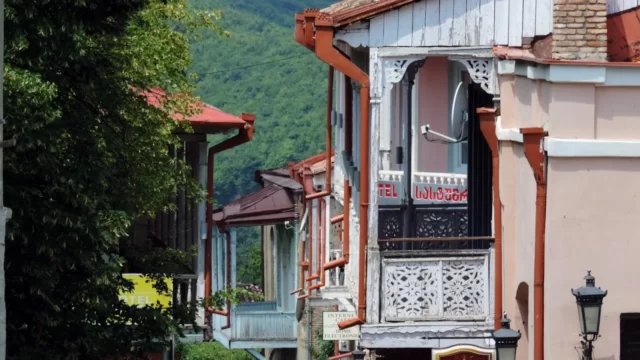
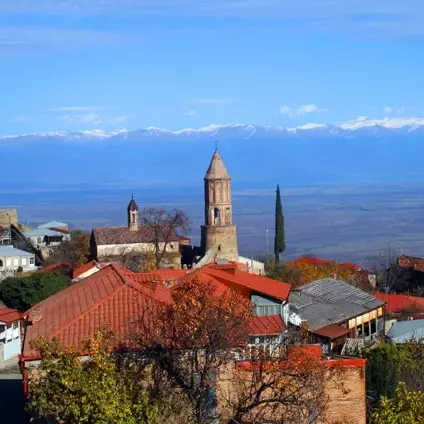
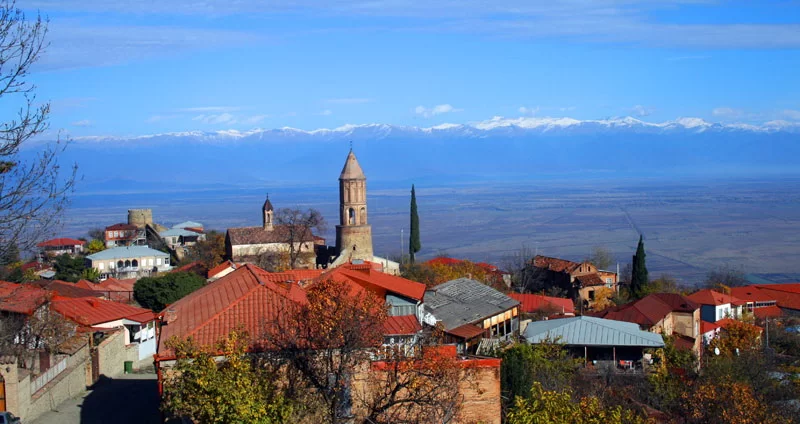
Sighnaghi earned its romantic nickname for a practical reason: the town registry office operates 24 hours a day, allowing couples to marry any time. But the nickname stuck because the town itself is genuinely enchanting—cobblestone streets, Italian-built defensive walls, wooden balconies overflowing with flowers, and views over the Alazani Valley that make everyone pause mid-sentence.
The town was largely rebuilt in the 18th century by King Erekle II, who hired Italian architects to design the defensive walls (23 towers, still standing). Today it’s small enough to walk end-to-end in 20 minutes but charming enough that you’ll want to stay for hours.
Why Two Days Matter
Day tours to Kakheti exist, but they’re exhausting—4+ hours of driving leaves little time to actually experience anything. Our 2-day format means you can climb to Udabno monastery without checking your watch, watch sunset from Sighnaghi’s walls instead of from a car window, linger at a winery instead of rushing through, and wake up in wine country rather than commuting from Tbilisi.
The overnight in Sighnaghi is key. After the day-trippers leave, the town transforms. Evening light turns the buildings golden, locals emerge for their evening stroll, and you can actually hear yourself think. Many guests tell us this quiet evening was their favorite part of the entire trip.
Tour Itinerary
Morning: Pickup & Journey to David Gareja (09:00)
We pick you up from your Tbilisi accommodation in a comfortable, air-conditioned vehicle. The drive to David Gareja takes about 1.5 hours—time to chat about Georgian history, culture, and answer any questions you have. The landscape transforms as you leave Tbilisi, becoming increasingly arid and dramatic.
Late Morning: David Gareja Monastery Complex (10:30-13:00)
Here’s where things get absolutely wild. David Gareja is a monastery complex carved into desert cliffs starting in the 6th century. Yes, desert—Georgia has everything, including proper desert landscape that looks like you’ve somehow ended up in Arizona or Jordan.
The main monastery, Lavra, sits at the base of the cliffs and is still functioning today. You’ll see monks going about their daily routines, ancient frescoes (some over a thousand years old), and cave dwellings that’ll blow your mind.
But the real magic? The hike up to Udabno monastery. It’s a 20-30 minute climb up the cliff face (with amazing steps cut into the rock), and when you reach the top, you’re rewarded with two things: caves filled with medieval frescoes that are shockingly well-preserved, and views that’ll make you forget you’re supposed to be taking photos because you’re too busy staring.
On one side, you’ve got the desert valley of Georgia. Turn around, and you’re looking into Azerbaijan—the border literally runs along the ridge. It’s surreal, spiritual, and unlike anywhere else you’ve ever been.
Midday: Lunch Break (13:30-14:30)
After all that exploring, you’ll be hungry. We stop at a local restaurant where you can try authentic Kakhetian cuisine—mtsvadi (Georgian BBQ), khinkali (soup dumplings), churchkhela (the Georgian “Snickers”—grape juice and walnuts). Lunch is not included, giving you flexibility to choose what you want. Budget around 20-30 GEL ($8-12) for a feast.
Afternoon: Bodbe Monastery (15:00-16:00)
From the desert, we head to the complete opposite—a monastery surrounded by lush gardens and forests. Bodbe is one of Georgia’s most important pilgrimage sites because it’s where St. Nino, the woman who brought Christianity to Georgia in the 4th century, is buried.
The monastery itself is beautiful, but honestly, the views are what’ll get you. From here, you can see the entire Alazani Valley spreading out below, with the Greater Caucasus mountains rising in the background. On clear days (especially spring and autumn), it’s so beautiful it almost doesn’t look real.
There’s also a holy spring down a series of steps (around 3km round trip if you want to do it), which pilgrims believe has healing properties. We’ll give you time to explore at your own pace.
Late Afternoon: Sighnaghi Town Exploration (16:30-18:00)
Welcome to Georgia’s “Town of Love!” Sighnaghi is the kind of place that makes everyone’s Instagram jealous. Picture this: cobblestone streets winding up and down hills, wooden balconies overflowing with flowers, pastel-colored houses, defensive walls you can walk along with 360-degree views, and cute little wine bars everywhere.
The Italians built the defensive walls in the 18th century (they were hired by the Georgian king), and you can still walk along sections of them. The views over Alazani Valley and the Caucasus mountains are spectacular, especially as the sun starts getting lower.
We’ll give you a walking tour of the main sights, tell you the stories (including why it’s called the “Town of Love”), and then give you free time to wander. There are great little shops selling local wine, honey, churchkhela, and handicrafts.
Evening: At Leisure in Sighnaghi
Here’s where this tour gets special. Most tours visit Sighnaghi, take a few photos, and leave. You? You get to stay. We’ll check you into your guesthouse (charming, family-run, absolutely lovely), and the rest of the evening is yours.
Watch the sunset from the town walls (pro tip: the southwest corner has the best views). Have dinner at one of the local restaurants—we’ll give you our recommendations, from fancy spots with tasting menus to family places where grandma is still cooking everything herself.
After dinner, take a stroll through the empty streets. Sighnaghi at night is magical—quiet, romantic, with street lamps casting warm light on the cobblestones. If you’re lucky and the weather’s clear, the stargazing is phenomenal.
Accommodation: Traditional guesthouse in Sighnaghi with comfortable rooms, private bathrooms, Wi-Fi, and usually incredible terrace views.
Morning: Breakfast & Morning in Sighnaghi (09:30)
Sleep in a bit (you’re on vacation!), then enjoy breakfast at your guesthouse. Georgian breakfasts are serious business—fresh bread, local cheese, tomatoes, cucumber, often homemade pastries, and always strong tea or coffee. Take your time, maybe take a morning stroll if you want to catch different light for photos.
Late Morning: Nekresi Monastery (10:30-12:00)
After breakfast, we head to Nekresi, perched high on a hilltop overlooking the Alazani Valley. This place is old—we’re talking 4th century. It started as a pagan temple, became one of Georgia’s earliest Christian churches, and has been watching over the valley ever since.
The monastery complex has several churches from different periods, including a tiny basilica from the 4th century (one of the oldest churches in Georgia) and a main church from the 9th century. But honestly, people come for the views. From up here, you can see the entire Alazani Valley, vineyards stretching as far as you can see, little villages dotting the landscape, and the Caucasus mountains forming an incredible backdrop.
There’s a short shuttle ride from the parking area (included in entrance fee), and then a bit of walking around the complex, but it’s not strenuous. The setting is incredibly peaceful.
Midday: Wine Tasting at a Traditional Winery (12:30-13:30)
Now for the part you’ve been waiting for! We visit a family-run winery that still makes wine the traditional way—in qvevri (large clay vessels buried underground). This method is over 8,000 years old and is recognized by UNESCO as Intangible Cultural Heritage.
You’ll get to see the qvevri (they’re impressive—some hold 1,500+ liters), learn how the traditional method works, and taste several wines. Usually, you’ll try at least 3-4 varieties, including the famous amber/orange wines that Kakheti is known for. These are white wines made like red wines (with skin contact), and they’re unlike anything you’ve tasted.
The family will often have homemade snacks too—cheese, fresh bread, maybe some churchkhela. And you can buy wine directly from them at prices that’ll make you want to ship bottles home (which is totally possible, by the way).
Afternoon: Telavi Town & Lunch (14:00-15:00)
Telavi is the main city of Kakheti and has a completely different vibe from Sighnaghi. It’s bigger, more bustling, less touristy. We’ll show you the main sights—the giant plane tree (supposedly 900 years old), the statue of King Erekle II (Kakheti’s most famous king), and the old town area.
This is also a great lunch stop. There are plenty of restaurants here, or if you prefer, we can grab something quick so we have more time at the next stops. Your call!
Mid-Afternoon: Gremi Architectural Complex (15:30-16:30)
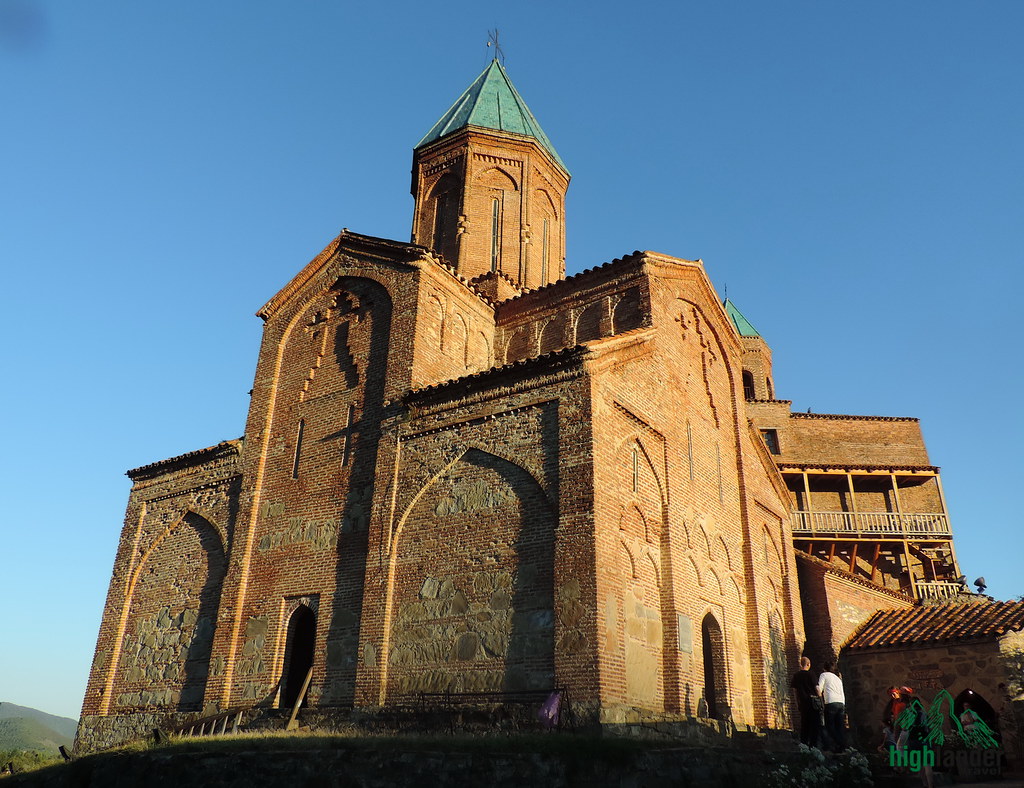
Gremi is like something out of a fantasy novel. This 16th-century complex was once the capital of Kakheti kingdom, but after it was destroyed by Shah Abbas, all that remains is this beautiful church and tower sitting on a hill.
The church is stunning, with frescoes and tilework, but the real treat is climbing the tower. From the top, you get 360-degree views of the surrounding countryside. It’s the perfect last stop before heading back—a chance to reflect on everything you’ve seen and take in the landscape one more time.
There’s also a small museum here with artifacts from the old royal residence.
Late Afternoon: Ikalto Monastery & Academy (17:00-17:30)
Our final stop is Ikalto, a 7th-century monastery famous because it once housed one of Georgia’s most important medieval academies. The famous 12th-century poet Shota Rustaveli (think Georgian Shakespeare) is said to have studied here.
It’s a beautiful, peaceful place with ancient stone buildings, a wine press from centuries ago, and that special kind of quietness you only find in really old religious sites. It’s also usually pretty empty, which means you can take your time and really soak in the atmosphere.
Evening: Return to Tbilisi (18:00-19:30)
We head back to Tbilisi, arriving at your hotel around 7:00-7:30 PM. The drive is about 1.5 hours, which gives you time to nap if you need, or chat with your guide about your trip, get recommendations for the rest of your stay in Georgia, or just watch the landscape roll by.
Arrival in Tbilisi: Evening—tired but happy, probably with several bottles of wine, definitely with hundreds of photos, and absolutely with memories that’ll last forever.
Price details
[wptb id=17401]
What’s Included
Tour map
Tbilisi
David Gareja Monastery
Bodbe Monastery
Sighnaghi
Nekresi Monastery
Family Winery
Telavi
Gremi
Ikalto Monastery
Tour gallery
Practical Information
Duration: 2 days / 1 night
Difficulty: Easy (suitable for most fitness levels)
Best Season: Year-round (each season has its charm)
Starting Point: Tbilisi
Group Size: Small groups for personalized experience
What to Bring
Comfortable walking shoes: You’ll walk on cobblestones in Sighnaghi and climb steps at David Gareja. Nothing strenuous, but proper shoes matter.
Modest clothing for monasteries: Shoulders and knees covered. We can provide scarves if needed.
Sun protection: Sunglasses and sunscreen—even in winter, that mountain sun is strong.
Light jacket or sweater: Monasteries are cool inside, evenings can be chilly.
Camera/phone fully charged: You’ll take SO many photos.
Cash in Georgian Lari: Some places don’t take cards. Budget 40-60 GEL per meal at nice restaurants, 20-30 GEL at casual places.
Physical Requirements
This tour is rated EASY and suitable for most fitness levels. The David Gareja climb to Udabno is optional (you can stay at the lower monastery if you prefer), but it’s only 20-30 minutes at a gentle pace with plenty of rest spots. If you can walk around a city for a few hours, you’ll be absolutely fine.
Ages: Suitable for children 6+ and seniors. We’ve had guests from 8 to 78 years old love this tour!
Best Time to Visit
Spring (March-May) ⭐⭐⭐⭐⭐: Blooming landscapes, fresh greenery, comfortable temps (15-25°C). Probably the most photogenic season.
Summer (June-August) ⭐⭐⭐⭐: Hot but beautiful. Long days, lush vineyards, perfect wine-tasting weather. Can hit 30-35°C, so bring sunscreen!
Autumn (September-November) ⭐⭐⭐⭐⭐: Harvest season! See grapes being picked, autumn colors, perfect weather (18-25°C). Most authentic time for wine culture.
Winter (December-February) ⭐⭐⭐: Fewer tourists, cozy winery visits, sometimes snow-covered landscapes (magical!). Cold (0-10°C) but totally doable and atmospheric.
Tour FAQ
Why Book This Tour
Two days in Kakheti will give you stories you’ll tell for years, wines you’ll dream about, and probably make you want to plan your next Georgia trip before this one even ends.
The overnight in Sighnaghi changes everything. While day-trippers rush through, you get to watch sunset from the town walls, dine at restaurants the tour buses never see, and wake up in Georgia’s most romantic town instead of commuting from Tbilisi. This single difference transforms a good tour into an unforgettable experience.
We’ve been running tours in Kakheti since 2011 and know every winery, every viewpoint, every grandmother making the best khinkali in the valley. Our guides aren’t just drivers who point at things—they’re storytellers who make history come alive and know exactly where to stop for the perfect photo.
Small group sizes mean we can be flexible. Want to spend more time at the winery? Done. Fascinated by those frescoes at David Gareja? Let’s linger. Discovered a cute cat in Sighnaghi? We’ll wait while you take twenty photos. This is your trip, not an assembly line.
Kakheti combines everything Georgia does best: ancient history, genuine spirituality, world-class wine, spectacular scenery, and hospitality that makes you feel like family. You’ll visit the birthplace of wine, stand in monasteries older than most European countries, and experience Georgian culture in its purest form.
Don’t overthink it. Book it. You won’t regret it.