Tbilisi paintings by Oleg Timchenko
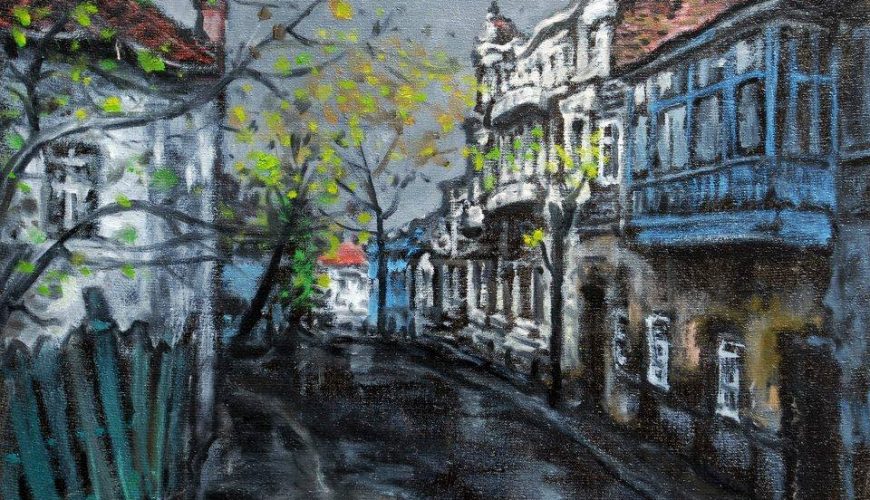
Oleg Timchenko: A Son of Old Tbilisi Who Paints Its Soul
Born on December 25, 1957, in the winding streets of Old Tbilisi, Oleg Timchenko grew up surrounded by the weathered balconies, hidden courtyards, and faded grandeur that would later become the emotional core of his art. He graduated from Tbilisi State Academy of Arts in 1982 and has since become one of Georgia’s most celebrated contemporary painters, with works exhibited across Europe, America, and Russia, held in museums and private collections worldwide. But Timchenko is more than just a painter of cityscapes—he is a visual poet whose family history of migration and displacement echoes through every brushstroke.
A Family Marked by Migration
Timchenko’s artistic DNA runs deep. His grandfather, Evgenyi Gulitskii, was a businessman and painter who supported Russia’s first aviators and progressive technological projects. His father, Ivan Timchenko, was also a painter who traveled from Vitebsk, Belarus, to work in the Caucasus, where he met Oleg’s mother. Her family had fled to Georgia in 1917, escaping repressions during the Russian Revolution due to their noble origins.
This layered family history of resettlement—from St. Petersburg, from Vitebsk, through revolution and upheaval—infuses Timchenko’s work with a profound sense of displacement and belonging. Migration is not just biography for him; it has become his artistic fate, embodied in paintings that traverse countries, epochs, and cultural layers through personal and genetic memory.
The 10th Floor Group and Georgian Contemporary Art
In the late 1980s, while working as a painter at the prestigious Marjanishvili Theater, Timchenko founded the “10th Floor Group” with fellow students from the Academy of Arts. This avant-garde collective became pioneers of Georgian Happening and performance art during the turbulent Perestroika era. Their most iconic work, “Stand Against” (1991), saw Timchenko and artist Niko Tsetskhladze standing motionless with gold-painted faces behind a shop window in an underground passage at Tbilisi’s Kolkhoz Square—like human mannequins—before suddenly breaking the glass and walking away. In a society that associated even abstract art with political dissent, this performance delivered a powerful message: a stagnating society needed to break barriers to move forward.
His Artistic Style: Between Expressionism and Poetry
Timchenko’s early works from the 1980s display an ascetic expressionism—stark, bold, urgent. Over time, this evolved into what critics describe as “firework expression,” characterized by intense color and dynamic brushstrokes. He moves fluidly between these two modes, creating works that can be brusque and aggressive in one moment, then deeply romantic and sentimental in the next.
He cites diverse influences: Marc Chagall’s dreamlike imagery, the raw emotion of the German Expressionist KG Brücke Group, Joseph Beuys’s conceptual performances, and Andy Warhol’s pop art sensibility. Yet his voice remains distinctly his own—grotesque yet tender, childlike but never naïve, nostalgic for innocence while fully aware of life’s complexities.
Timchenko populates his canvases with characters drawn from history, literature, and mythology: Ophelia floating in water, infantas befriending dolls, princes with leopards, sad angels, dancing gnomes with tragic expressions, and forest spirits decorated with roses and precious stones. His famous “Ophelia” (1996) captures what he sees as the central paradox of existence—the intersection of beauty and transitoriness.
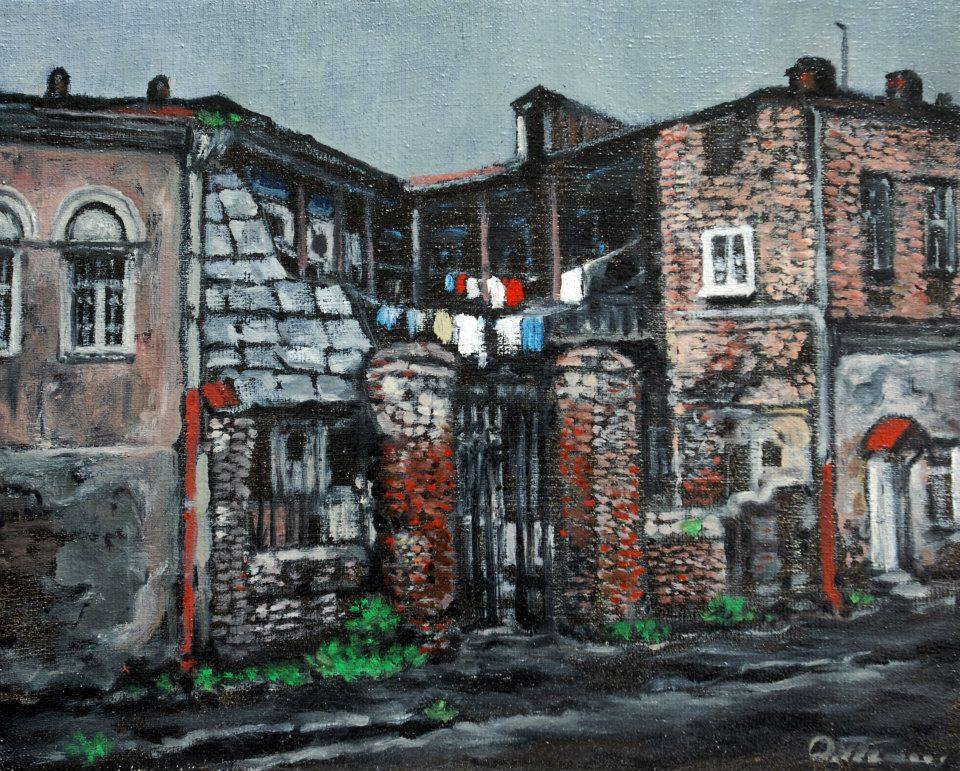
The “Nostalgia” Series: Love Letter to Old Tbilisi
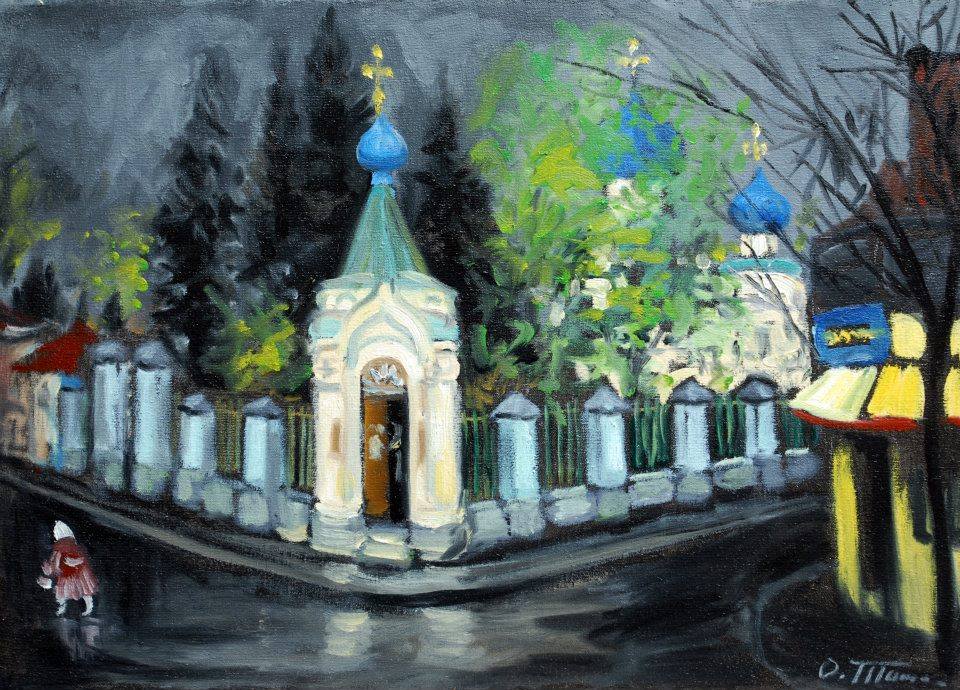
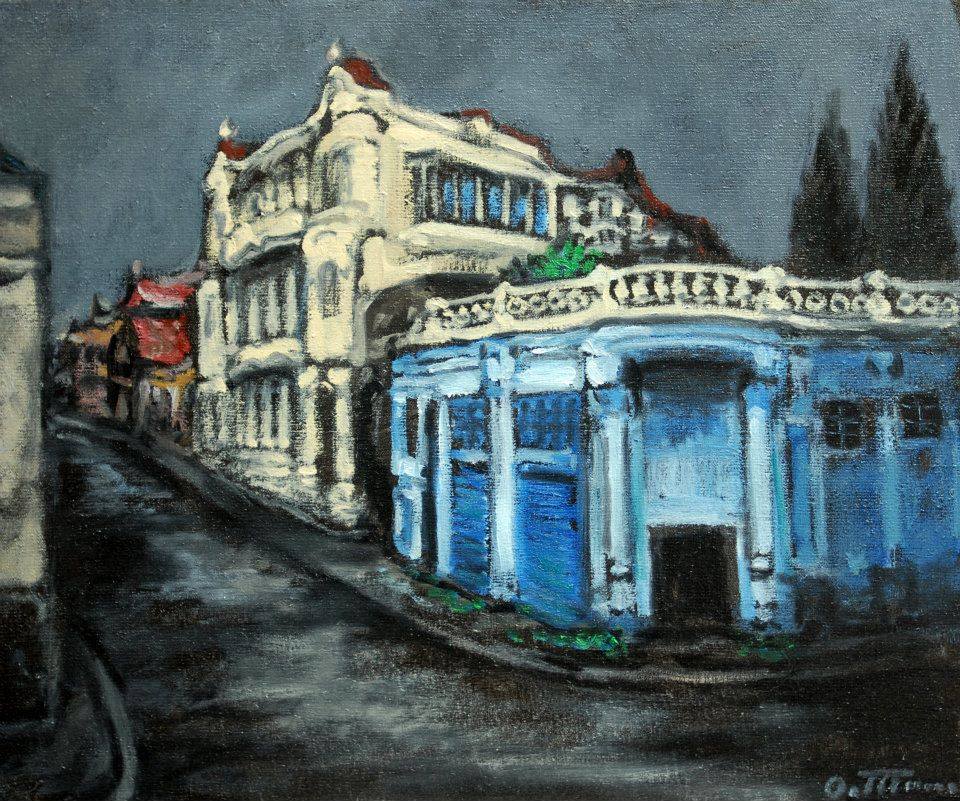
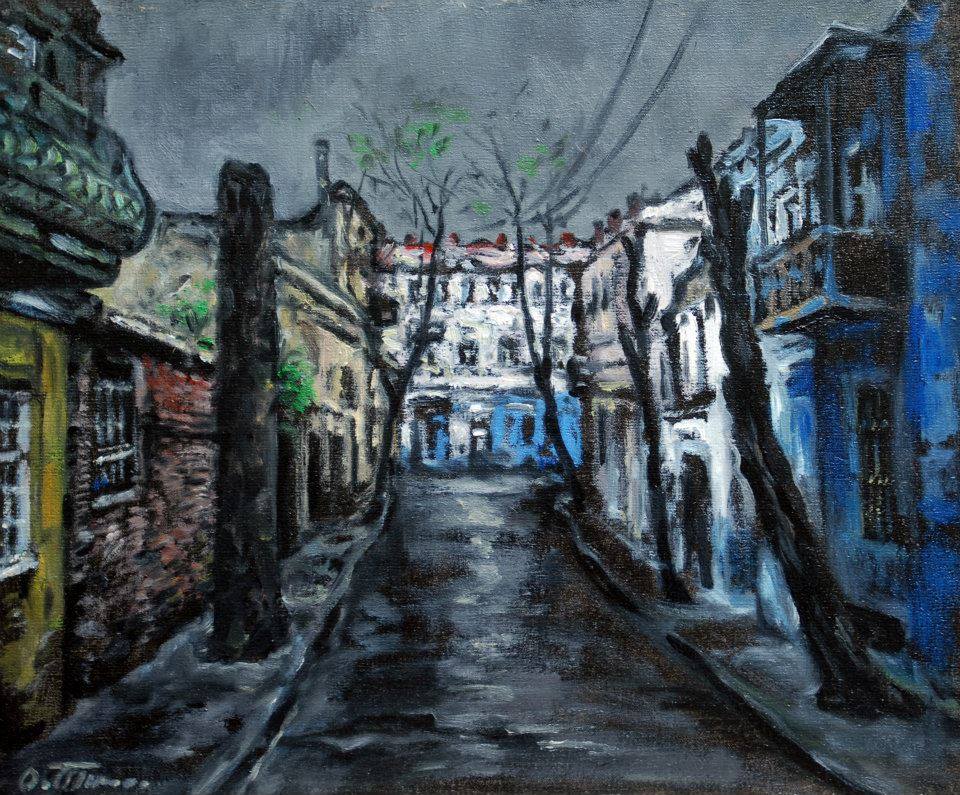
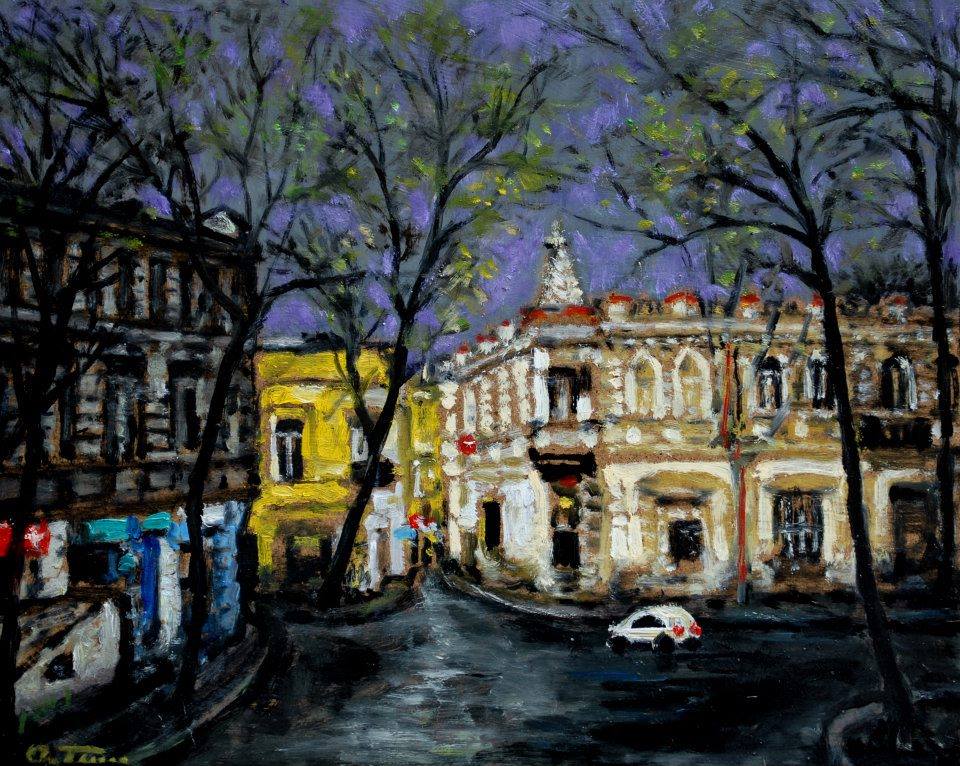
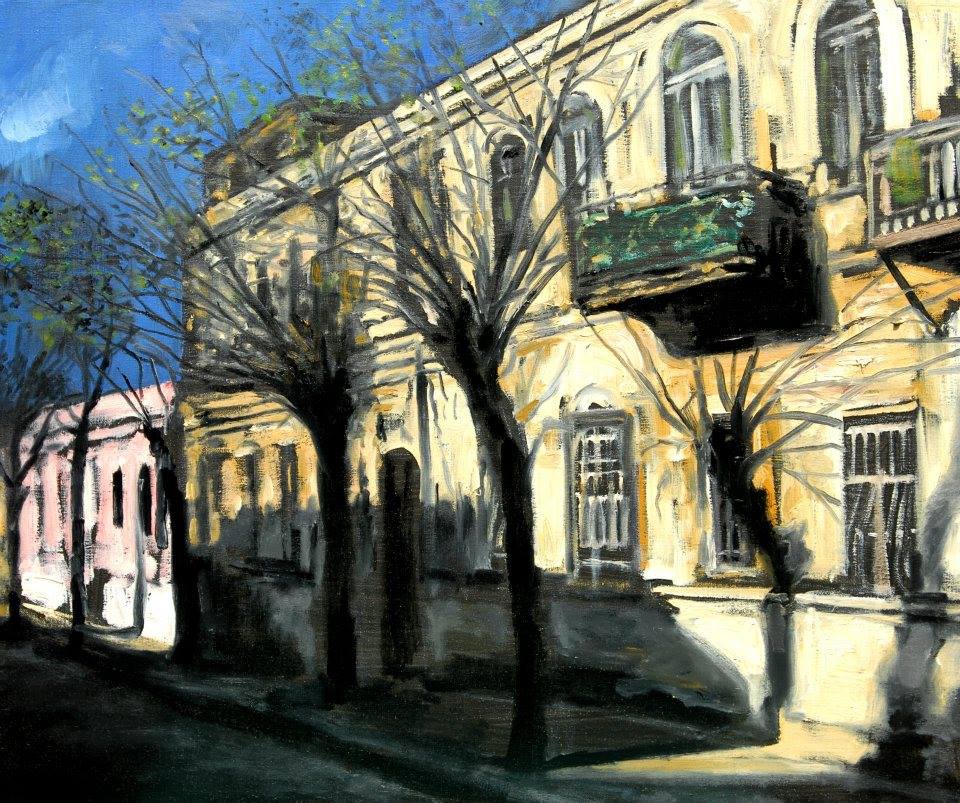
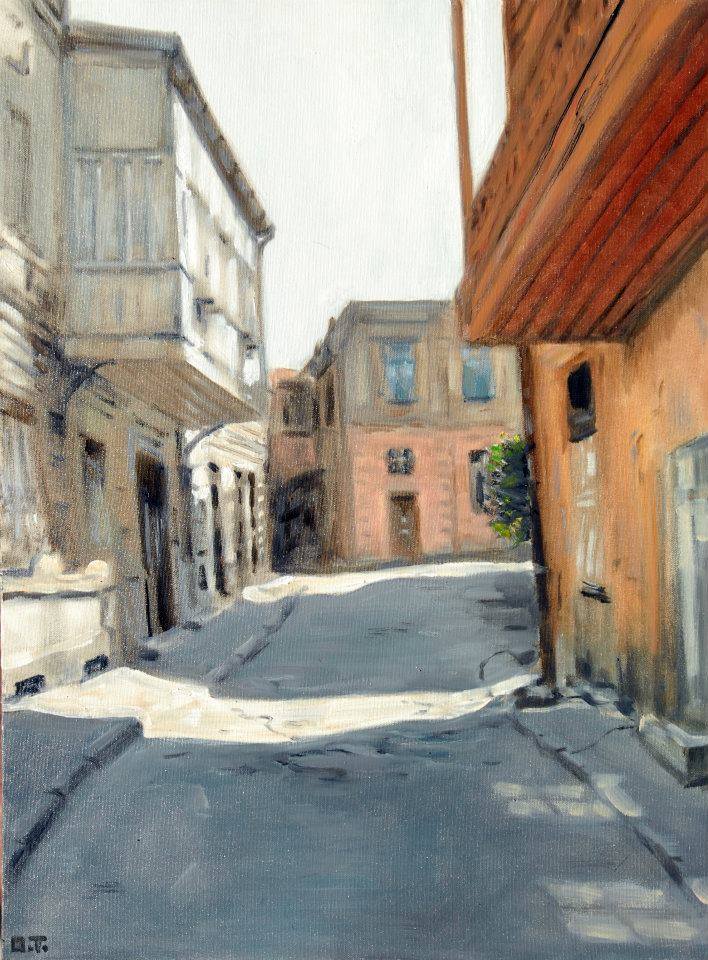
The paintings featured in this gallery belong to Timchenko’s beloved “Nostalgia” series, first exhibited at Tbilisi’s Botanical Garden in 2004 and later shown at Gallery Baya in 2007. This collection of small, deeply emotional canvases depicts the old quarters of Tbilisi—the neighborhood where the artist was born and that shaped his artistic soul.
In these works, Timchenko captures something that photographs cannot: the feeling of these ancient streets. The warm terracotta of crumbling walls, the intimate scale of wooden balconies leaning toward each other across narrow lanes, the peculiar quality of light filtering through grapevines in hidden courtyards. Each painting is less a documentation of place and more an attempt to preserve an emotional atmosphere—the warmth, the melancholy, the particular magic that Old Tbilisi residents recognize instantly but struggle to put into words.
For anyone who has wandered through Tbilisi’s Old Town—past the sulfur baths, through the artisan quarters, beneath the Narikala Fortress—these paintings speak directly to the heart. They remind us why this city, built at the crossroads of empires and cultures, continues to capture the imagination of all who encounter it.
Timchenko Today
Now serving as Associate Professor at Tbilisi State Academy of Arts, Timchenko continues to create and teach. His works can be found at Gamrekeli Gallery in Tbilisi and have been featured at venues including the National Georgian Museum, MOMA Tbilisi, and galleries across Europe.
When asked about his hopes for Georgian art, Timchenko’s answer is characteristically poetic: “I wish Georgian art to remain art. And I wish Georgian artists good exhibitions and appreciative audiences.”