Khevsureti Travel Guide: Fortress Villages, Warrior Culture, and Georgia’s Wildest Mountains
In the spring of 1915, a group of armed men in chainmail rode horses down Tbilisi’s main boulevard, carrying broadswords and round shields marked with crosses. They walked into the governor’s palace and asked a single question: “Where’s the war?”
They were Khevsurs, mountain people from the highland region northeast of Tbilisi, and the news that Russia had declared war on Turkey had taken seven months to reach their villages. The story, recounted by the American travel writer Richard Halliburton in his 1935 book Seven League Boots, became one of the most repeated anecdotes about Georgia. Whether every detail is accurate is debatable. What it captures about Khevsureti — remote, fierce, and operating by its own rules — is not.
The region still feels that way. A four-hour drive from Tbilisi on roads that turn to gravel and cross mountain streams delivers you into a landscape of deep gorges, stone tower-villages built as unified fortresses, and an almost total absence of modern infrastructure. No ATMs, no shops, mobile signal that cuts out beyond Shatili. This is not Georgia’s polished wine-country tourism. This is the raw version. The mountains in their original format.
Where Exactly Is Khevsureti?
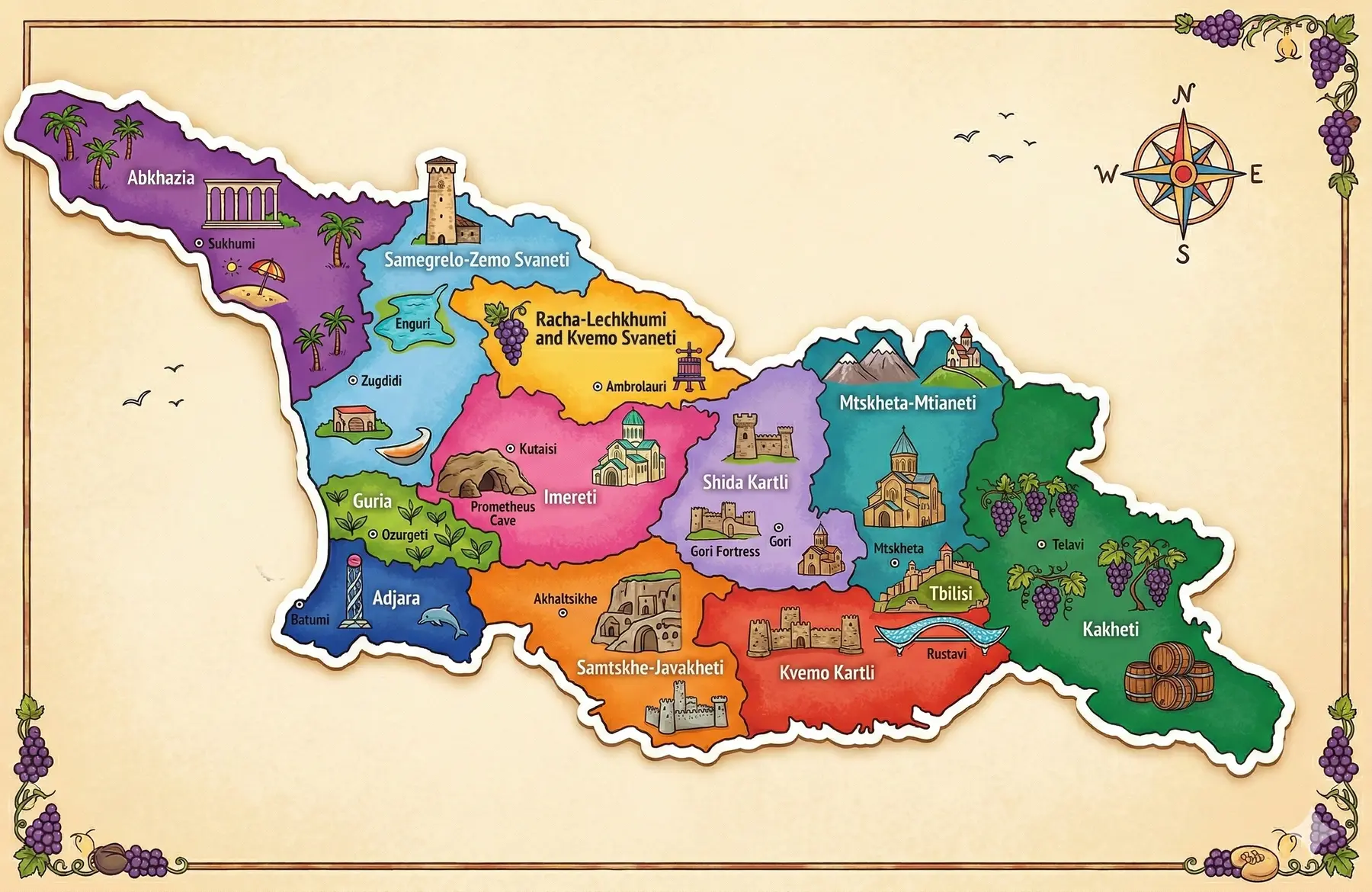
Khevsureti occupies roughly 1,050 square kilometers of the Greater Caucasus Mountains in northeastern Georgia, straddling the main watershed ridge that conventionally separates Europe from Asia. The region falls within the Dusheti Municipality of the Mtskheta-Mtianeti administrative region.
The Caucasus ridge divides Khevsureti into two distinct halves. Southern Khevsureti, called Piraketa (“hither”), sits on the Georgian side, at elevations between 650 and 2,000 meters, with a relatively milder climate. Northern Khevsureti, Pirikita (“thither”), perches on the north-facing slopes, reaching altitudes of 2,800 to 4,500 meters, with harsh alpine conditions and winters that drop to -18°C. The two are connected by the Datvisjvari Pass (2,676 m), historically the only route between them.
The region borders Chechnya and Ingushetia to the north. The Argun River gorge that defines much of Khevsureti’s geography continues across the border into Chechen territory. To the west lies Kazbegi, to the east Pshavi and Tusheti.
The main settlements, roughly following the Argun gorge and its tributaries, are: Barisakho (the administrative center in Lower Khevsureti), Shatili (the region’s cultural heart), Mutso, Ardoti, and the largely abandoned villages of the Arkhoti gorge. Shatili sits at approximately 1,400 meters above sea level; Mutso at around 1,800 meters.
A Brief History of the Khevsurs
Understanding who built those towers and why makes the visit a fundamentally different experience. Without context, Shatili is photogenic stone architecture. With it, the place acquires weight.
The Khevsurs are an ethnographic subgroup of the Georgian people, not a separate ethnic group. Their name derives from khevi, the Georgian word for gorge, literally the people of the gorges. Their own tradition traces their origin to a man named Gudaneli, a Kakhetian peasant who fled to the Pshav village of Apsho to escape unjust punishment and whose two sons, Arabuli and Chinchara, founded the families that populated the region.
For centuries, Georgia’s kings stationed the Khevsurs as border guards on the kingdom’s northern frontier. In exchange for defending the passes against raids from the North Caucasus, they were exempted from taxation. This arrangement, military service in return for autonomy, shaped their entire society. Every village was a fortification. Every man trained in combat from childhood. The Khevsurs developed their own martial art, Khridoli, and a distinct fighting style involving straight swords, small round shields called phari, and chainmail armor (javsani). Their warrior dance, the Khevsuruli, remains one of the most dramatic in the Georgian national repertoire — a performance of simulated combat with swords and shields that looks less like dancing and more like choreographed warfare.
The Crusader Myth
There is a persistent legend that the Khevsurs are descendants of European Crusaders who lost their way and settled in the Caucasus. The theory was popularized in the 19th century by Russian ethnographer Arnold Zisserman, who noted the chainmail, the crosses embroidered on clothing, and the straight-bladed swords that superficially resembled European designs.
It makes for an excellent story. It is also thoroughly debunked. Georgian scholars have universally rejected the claim. The Khevsurs speak a dialect of Georgian that has barely changed since the medieval period, their customs have deep roots in Caucasian (not European) traditions, and their chain-making techniques, while unusual in Georgia, are native to the broader Caucasus. Herodotus noted in the 5th century BC that Caucasian highlanders were already skilled knitters and embroiderers of their own armor — roughly two thousand years before the First Crusade.
What Khevsurs actually practiced was something more interesting than borrowed identity: a unique religious syncretism combining Georgian Orthodox Christianity with pre-Christian animist beliefs. Sacred groves, shrine-priests called khevisberi, animal sacrifice, and rituals addressed to local deities named Gudani Cross, Lashari Cross, and Khakhmati Cross all coexisted with Christian prayer. Some of these practices survived into the 20th century and traces remain today.
The Soviet Deportation and Depopulation
In 1951, Soviet authorities forcibly relocated much of the Khevsur population to the lowlands, officially to “improve their living conditions,” in practice to punish resistance to Soviet ideology and to weaken communities whose fierce independence the state found inconvenient. Many highland villages were abandoned entirely. After Georgian independence in 1991, economic hardship further accelerated the exodus. Today, only a handful of villages retain permanent year-round inhabitants, and even Shatili — the largest settlement — empties to a single caretaker family during winter, with supplies airlifted in by helicopter.
The irony is that this depopulation preserved what mass habitation would have destroyed. The fortress architecture, the burial traditions, the sacred sites. They survive because nobody was around to modernize them.
What to See in Khevsureti
Shatili — The Living Fortress
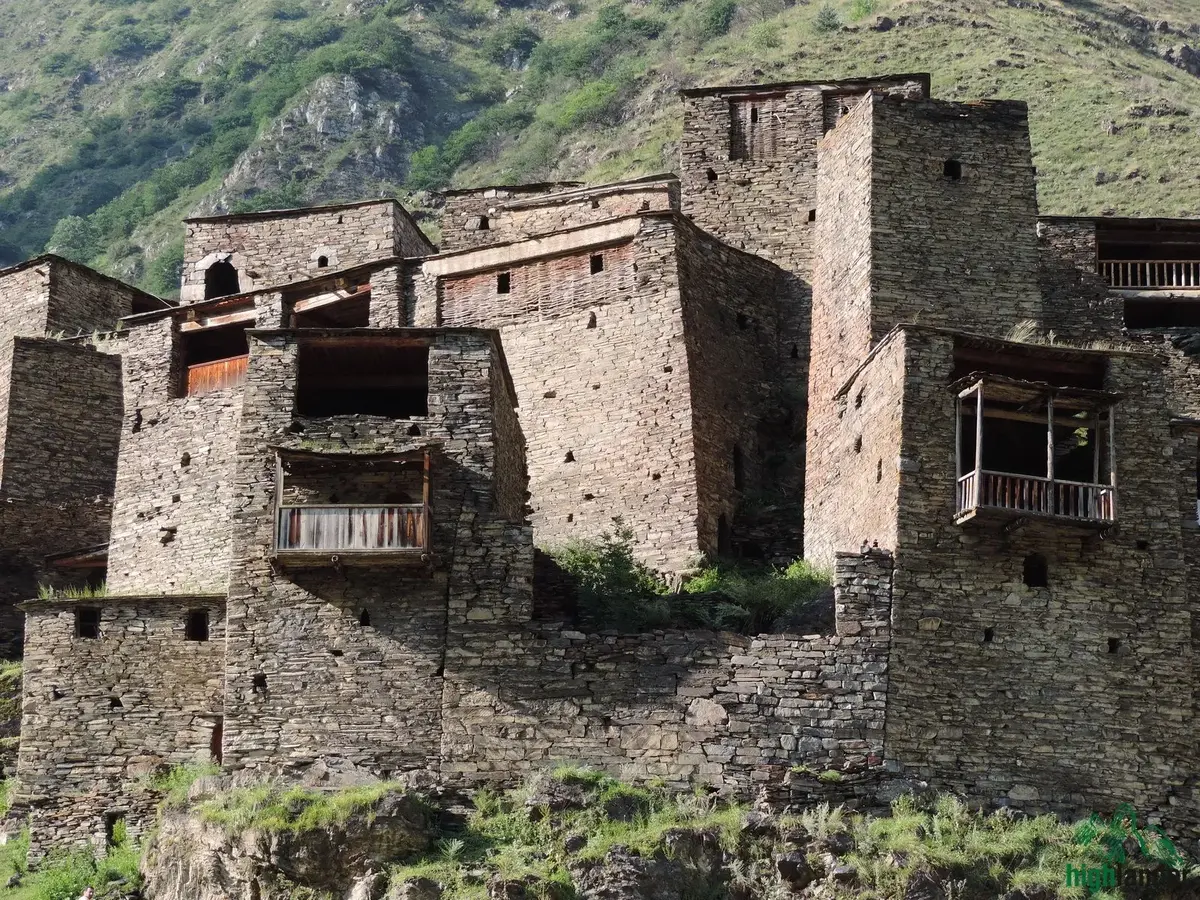
Shatili is not a village that happens to have towers. It is a fortress that people lived in. Approximately 60 stone towers, built between the 7th and 18th centuries, are interconnected by rooftop walkways, interior passages, and hidden corridors that allowed entire communities to move defensively without exposing themselves to an attacker. The complex clings to a ridge above the Argun River, and from below it looks like a single organism, a mass of dark stone growing out of the rock.
Each family occupied its own tower, but the structure was communal: a siege on one tower was a siege on all of them. During an attack by 5,000 Chechen and Dagestani fighters in the early 19th century (the numbers likely embellished over time), 50 Shatili defenders reportedly held the fortress. The architecture made it possible.
Today, the old fortress section is largely uninhabited. A few towers have been restored as guesthouses, and you can sleep inside one. The inhabited “New Shatili” sits adjacent, with modern houses, a handful of guesthouses, and a few seasonal cafes. Walking through the old fortress in the evening, when the stone absorbs the last light and the gorge below drops into shadow, is one of those experiences that stays with you whether you photograph it or not.
Shatili is included on UNESCO’s Tentative World Heritage List.
Mutso — The Clifftop Fortress
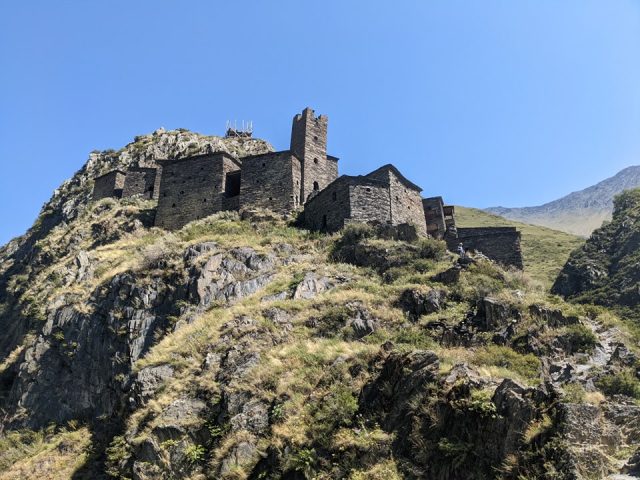
Twelve kilometers beyond Shatili, where the Ardotistskali River meets the Argun, the abandoned fortress village of Mutso rises on a near-vertical cliff at 1,880 meters. Around 40 medieval towers, defensive structures, and household buildings, all abandoned over a century ago, occupy a ridge so steep that reaching the top requires a 20-minute climb up a trail that qualifies more as a scramble.
The reward is proportional. From the top, the gorge opens beneath you in a panorama of green slopes, river confluence, and mountains disappearing into distance. Sacred shrines dot the fortress, places where the Khevsurs still leave offerings. Mutso has been partially restored in recent years, stabilizing the most fragile structures, but the overall atmosphere remains that of a place that people left a long time ago and the mountains have been slowly reclaiming.
Anatori — The Plague Crypts
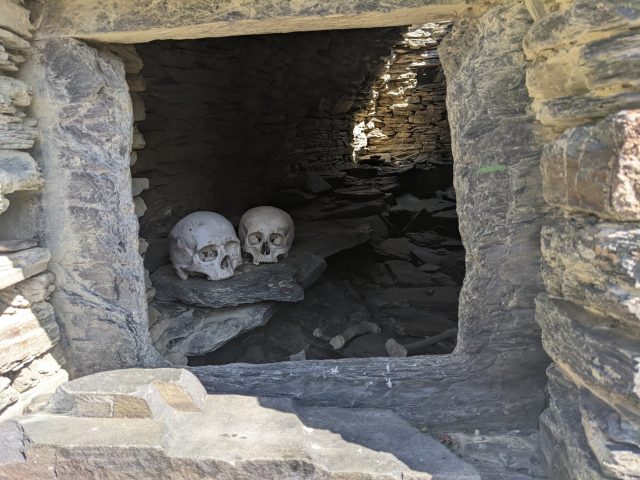
Three kilometers north of Shatili, at the confluence of the Argun and Ardoti rivers, a cluster of small stone structures stands on a bluff overlooking the water. They have no doors. Only small barred windows. Peer through one, and you will see piles of human bones: skulls, femurs, vertebrae, stacked to the ceiling.
These are the Anatori burial vaults, known in Georgian as akladama. According to local oral history, when plague, called zhami in Georgian, swept through the region (the date is debated; sources cite the 14th century, others 1850), the villagers of Anatori took drastic measures to prevent the disease from spreading. Three men were posted to guard the village’s exits with orders to shoot anyone who tried to escape. The infected walked voluntarily into these stone huts, lay down on stone shelves along the walls, and waited to die. When the shelves filled, each new arrival would move the most recent dead onto the floor to make room. The entire Sisauri clan perished except for a single boy who was tending livestock in the mountains at the time.
The Georgian poet Giorgi Arabuli dedicated a verse to Anatori, written from the perspective of someone waiting for death inside the crypt: “My children are here too. I do not breathe anymore, so the air is enough for them.”
Anatori is not a tourist attraction in any conventional sense. It is a place that requires quiet and respect. If you visit, leave it exactly as you found it.
Abudelauri Lakes
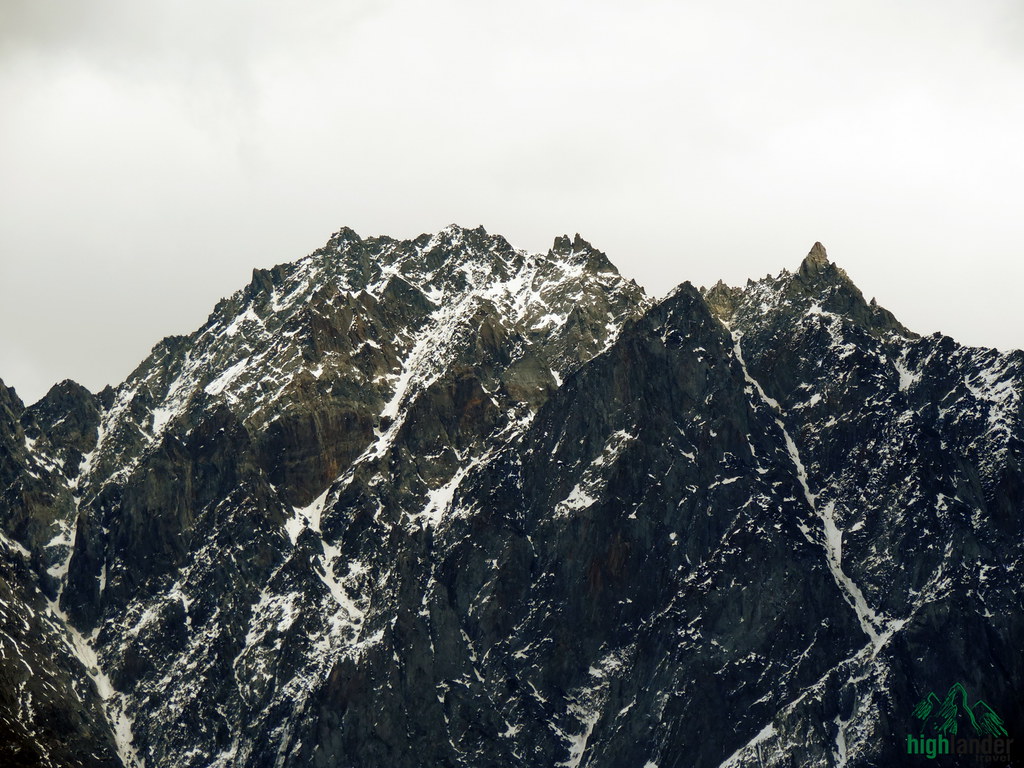
On the southwestern edge of Khevsureti, at the foot of the Chaukhi Massif at approximately 2,600 meters, three glacial lakes sit in a single valley, each a different color. The White Lake, nearest to the glaciers of Chaukhi, is milky with suspended minerals. The Blue Lake reflects deep cobalt. The Green Lake, in a sheltered depression surrounded by alpine meadow, glows emerald. The colors shift with the season, the light, and the mineral composition of meltwater feeding each pool.
The standard hike starts from the village of Roshka, roughly 7 km to the Blue and Green lakes, which sit close together, and a longer push to the White Lake at the base of Chaukhi itself. The Blue and Green lakes are reachable by anyone in reasonable hiking shape. The White Lake adds difficulty and is better suited to experienced hikers. This hike can be done as a standalone day trip or as part of the multi-day Chaukhi Pass trek from Juta to Roshka — one of Georgia’s classic mountain routes that connects the Kazbegi region to Khevsureti via a 3,338-meter pass through rock formations sometimes called the “Georgian Dolomites.”
Ardoti and the Arkhoti Valley
Beyond Mutso, the road continues to Ardoti, a half-abandoned village built on a rocky hilltop above the Andaki valley. In summer, a handful of families still live here, and you can buy fresh bread and beer from the one occupied house at the very top. The climb up past silent ruins toward a single lit window at dusk has been compared, by more than one visitor, to approaching a castle in a Gothic novel. A curiosity sits in the valley below: during the Chechen wars of the 1990s, a military Mi-8 helicopter crashed in the area. The locals have since converted its fuselage into a livestock barn.
The Asa Gorge and Arkhoti Valley
Arkhoti is the most isolated inhabited area in Georgia. Located in northern Khevsureti, the valley follows the Asa River (locally called Arkhotistskhali), which flows north into Ingushetia and eventually joins the rivers of the North Caucasus. Until 2017, no vehicle road existed here at all — the only connection to the rest of Georgia was a network of footpaths over high passes. Even now, the dirt track from Roshka via the Arkhoti Pass (nearly 3,000 meters) is suitable only for serious off-road vehicles. Three villages survive: Chimgha (depopulated), Akhieli, and Amgha, with a combined permanent population of roughly 15 people. Akhieli is the most remarkable — a settlement powered by a small hydroelectric plant, lit by street lights, yet completely without phone or internet coverage. The hospitality here is intense in the way that only truly remote places produce: guests are treated as events.
The Asa gorge itself is spectacular hiking territory. Tanie Lake, tucked into the Taniestskhali tributary valley at the foot of the main Caucasus range, is the primary trekking objective — though reaching it involves repeated river crossings and some challenging navigation. The valley is flanked by ruins of ancient fortifications: Kaviskari fortress guards a narrow canyon south of Amgha, and several shrine complexes (the Akhieli Michael Archangel’s Cross being the most important) dot the surrounding slopes. For trekkers who have already done the Atsunta Pass route and want something with less foot traffic and more genuine wilderness, the Arkhoti circuit represents the next level. It is not a casual undertaking.
The Datvisjvari Pass and Lebaiskari Tower
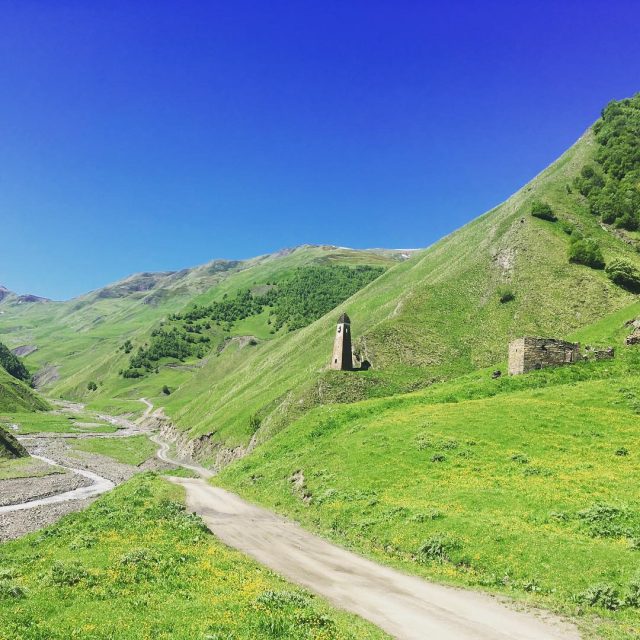
Even the road into Khevsureti is worth the trip. The Datvisjvari Pass (“Bear’s Cross” in Georgian), at 2,676 meters is the dividing line between the Aragvi and Argun drainages, and the view from the top encompasses both gorges. Fog rolls in without warning, particularly in the cooler months, and the road can be genuinely dangerous in poor visibility.
Before reaching Shatili, the road passes two abandoned settlements worth stopping at. Lebaiskari has one of the best-preserved medieval towers in Khevsureti, built without mortar, stones fitted so precisely that the structure has stood for centuries through earthquakes and weather. Kistani, slightly further, has two old fortresses on a hilltop above the road, reachable by a short hike, with views into the narrow gorge below. Further along the Argun gorge beyond Shatili, the road toward Mutso passes Khakhabo, a village-fortress 25 km from Shatili where the ruins of over 30 house-fortresses are preserved on terraces above the gorge. Khakhabo is less visited than Mutso or Shatili but architecturally just as striking.
Pshav-Khevsureti National Park
The entire region falls within the Pshav-Khevsureti National Park, which encompasses the valleys of the Asa, Arghuni, Andakistskali, and Pshavi Aragvi rivers. The park protects alpine meadows, forests, and a range of endemic flora alongside the historic and cultural monuments. Several marked trekking routes run through the park.
Khevsur Traditions: What’s Still Alive
Khevsureti is not a museum. Some traditions survived the Soviet deportation and the depopulation of the highlands, carried by the people who returned or who visit their ancestral villages each summer.
Shatiloba, the annual festival of Shatili, takes place on the first or second weekend of September. It involves horse racing, traditional wrestling, music, and communal feasting. The Mountain Days Festival, a newer initiative rotating across Georgia’s highland regions, has also been held in Shatili (in 2024, on the second weekend of July).
Sacred shrines (khati) still function in some villages. The Gudani Cross, the principal shrine of Khevsureti, traditionally served as a place where warriors gathered before battle, where customary law was proclaimed, and where predictions for the coming year were made. The shrine-priests (khevisberi) who managed these rituals were elected by the community and served as both spiritual and civic authorities. A system that ran parallel to Orthodox Christianity and often overlapped with it.
Khevsur beer is worth trying if you get the chance. Unlike the wine and chacha that dominate Georgian drinking culture elsewhere, the highland tradition here is brewing. Khevsur beer is made from barley or wheat flour, brewed, filtered, mixed with mountain herbs, and brewed again. A double-fermented process that produces a distinctive aromatic flavor. It is nothing like commercial beer.
Kadiskveri, the local meat pie, is similar to Svaneti’s famous kubdari but distinguished by wild garlic that grows in the high meadows. If your guesthouse host makes one, clear your schedule.
Dastaqari: The Folk Healers Who Performed Brain Surgery
Among the more extraordinary aspects of Khevsur culture is the tradition of the dastaqari (დასტაქარი) — folk healers who practiced medicine in an environment where the nearest doctor was weeks of travel away. The dastaqari combined herbal knowledge, bone-setting, and wound treatment with a procedure that would astonish modern physicians: trepanation, the deliberate drilling or scraping of a hole into a living person’s skull. This is not legend or speculation — trepanned skulls have been found in the region, and the practice was documented by ethnographers who studied Khevsureti in the 19th and early 20th centuries.
The Khevsurs were a warrior society, and head injuries from sword combat, falls on mountain terrain, and other traumas were common. The dastaqari treated these by opening the skull to relieve pressure, remove bone fragments, or drain accumulated blood — essentially the same rationale that drives modern craniotomy, performed with handmade tools in stone towers at 1,400 meters elevation, without anesthesia. Evidence of healed bone growth around the trepanation holes on recovered skulls indicates that patients frequently survived. Trepanation was practiced in many ancient cultures worldwide, but the Khevsur tradition is notable for how recently it persisted — well into the modern era, in a community where the practice was a living medical skill rather than an archaeological artifact.
Stsorfroba: The Love Ritual That Forbade Consummation
Perhaps the most intimate and least understood Khevsur tradition is stsorfroba (სწორფრობა), sometimes translated as “sworn brotherhood” between a young man and woman — though “brotherhood” barely scratches the surface. When young Khevsurs came of age, they chose a stsorperi, a companion of the opposite sex, based on mutual attraction and personal affinity. The young man would declare “brotherhood” to the woman, and from that point, a formalized romantic relationship would begin — with one extraordinary condition: physical consummation was absolutely forbidden.
The stsorperi couple would meet at night, lie together under a shepherd’s cloak, exchange gifts and intimate conversation, but were bound by an unbreakable taboo against sexual intercourse. Breaking this rule meant exile from the community. In one documented case, a couple who violated the prohibition were expelled and fled to Chechnya. The more stsorperi a young man or woman had, the more respected they were; having none was considered shameful. In Khevsureti, unlike the related tsatsloba custom in neighboring Pshavi, the woman visited the man rather than the other way around. The ethnographer Sergi Makalatia documented this practice extensively in his 1925 study. It had largely died out by the 1950s, but it remains one of the most distinctive courtship traditions ever recorded — a codified system of romantic love that elevated emotional intimacy above physical union and enforced it through communal law.
Getting to Khevsureti
Almost every trip to Khevsureti starts in Tbilisi, regardless of where you arrived in Georgia. The road infrastructure simply does not offer convenient alternatives.
By private car or hired driver: The standard route heads north from Tbilisi along the Georgian Military Highway as far as Zhinvali, then branches northeast through the Pshavi Aragvi valley, passing the village of Barisakho (last reliable mobile signal, last ATM nearby at Zhinvali) and climbing to the Datvisjvari Pass before descending to Shatili. Total distance: approximately 150 km. Driving time: 4–5 hours. A 4×4 is strongly recommended beyond Barisakho and essential beyond Shatili. The road is not as bad as the Abano Pass road to Tusheti, but it is unpaved, narrow, prone to mudslides after rain, and crosses several stream fords. On the way, stop at the village of Korsha — the last settlement before the pass with mobile phone coverage. Locals here assembled a small ethnographic museum from their own family collections: old weapons, household tools, textiles, and ritual objects that give an introduction to Khevsur daily life before you encounter the architecture itself.
By marshrutka: A direct minivan runs from Tbilisi’s Didube bus station to Shatili twice a week, Wednesdays and Saturdays, departing at 10:00 AM. This is your only direct public transport option. It goes only to Shatili; reaching Mutso and Ardoti requires hiring a local driver or walking. If you miss the Shatili departure, a daily marshrutka leaves Didube at 5:00 PM for Barisakho (about 20 GEL, 2.5 hours). From Barisakho, you can hire a local driver with a 4×4 for the remaining leg to Shatili over the Datvisjvari Pass — expect to pay 150–200 GEL. Barisakho has basic guesthouses if you need to overnight before continuing.
By guided tour: This is the simplest option and the one that makes logistics disappear. We offer a 2-day tour to Khevsureti covering Shatili, Mutso, Ardoti, and Anatori with 4×4 transport and an experienced driver-guide. For those who want the full mountain experience combining Khevsureti with neighboring regions, the 4-day Caucasus Mountains tour adds the Chaukhi trek and Abudelauri Lakes, while our Grand Trek in Eastern Caucasus, a 13-day expedition from Kazbegi through Khevsureti into Tusheti and down to Kakheti — is the most complete mountain journey in this part of Georgia.
When to Go
| Period | Conditions | Best For | Drawbacks |
|---|---|---|---|
| Late May – mid-June | Pass recently opened, some snow at altitude, wildflowers beginning | Early-season photography, solitude | Guesthouses may not be fully open yet; high-altitude trails still snowy; unpredictable road conditions |
| Late June – July | Warm days (10–14°C in Pirikita, warmer in Piraketa), longest daylight, alpine meadows in full bloom | Trekking, multi-day routes, Abudelauri Lakes at their most colorful | Weekends get busy with domestic tourists in Shatili |
| August | Peak summer, warmest temperatures, stable conditions | Atsunta Pass crossing to/from Tusheti; camping; extended exploration of Arkhoti | Highest number of visitors; accommodation in Shatili can fill up on weekends |
| September | Autumn colors, cooling temperatures, shorter days | Photography, Shatiloba festival, fewer visitors | Higher chance of early snowfall on the pass; shorter window of good weather |
| October – mid-October | Cold nights, pass may close without warning | Complete solitude, end-of-season atmosphere | High risk of being stranded if weather turns; most guesthouses closed |
| November – May | Pass closed, region inaccessible by road | — | Not an option. The road is blocked by snow. |
Hiking in Khevsureti
Khevsureti is trekking territory. The region connects to neighboring Kazbegi via the Chaukhi Pass and to Tusheti via the Atsunta Pass, making it a natural waypoint on multi-day routes that link Georgia’s highland regions.
Day Hikes From Shatili
Shatili to Mutso: 12 km by road (walkable in 3 hours), or a shorter trail along the gorge. Combine with a hike up to the Mutso fortress and the Anatori crypts. A full day, moderate difficulty.
Shatili to Ardoti: Continue past Mutso on the road. The last village reachable by car, with a steep climb to the hilltop settlement. Add 2–3 hours beyond Mutso.
Multi-Day Routes
Juta – Chaukhi Pass – Roshka – Abudelauri Lakes: A 2-day trek crossing the 3,338-meter Chaukhi Pass from the Kazbegi side into Khevsureti, ending at the glacial lakes. One of Georgia’s most rewarding mountain routes. We offer this as a guided 2-day trek.
Shatili – Mutso – Atsunta Pass – Omalo (or reverse): The classic 5-day trek connecting Khevsureti and Tusheti via the 3,431-meter Atsunta Pass. Two nights camping, two or three nights in guesthouses. Requires solid fitness and good equipment. The route follows ancient shepherd paths through some of the most dramatic and empty mountain terrain in the Caucasus. It can be done in either direction; starting from the Tusheti side offers more gradual elevation gain. This trek is the centerpiece of our Grand Trek in Eastern Caucasus.
Shatili – Arkhoti (via Isirtghele Pass): A rarely attempted route into Georgia’s least populated region. Multi-day, requires full camping gear, serious navigation skills, and a tolerance for genuine remoteness. Not commercially guided often. Ask us about feasibility for your dates.
Where to Stay and Eat
Accommodation in Khevsureti is guesthouse-based. In Shatili, several family-run guesthouses operate during the summer season, offering private rooms (most with shared bathrooms), hot water via hydropower, and enormous home-cooked meals. A few guesthouses occupy restored towers in the old fortress. Sleeping inside a 12th-century stone tower is not a common hotel experience. Expect to pay 60–100 GEL per person for a night including dinner and breakfast.
Beyond Shatili, options are more limited. Mutso has basic accommodation; Ardoti has one or two households that may take guests. On multi-day treks, you will need a tent and supplies for camping nights.
Food in Khevsureti is whatever your guesthouse host prepares, and it tends to be excellent. Expect roasted meat, fresh bread baked on the spot, cheese, pickled vegetables, beans, and local beer. Bring your own snacks and anything else you might want between meals. There are no shops in Upper Khevsureti.
Practical Tips: What to Know Before You Go
Cash is the only currency. No ATMs exist in Upper Khevsureti. The closest cash point is in Zhinvali. Bring enough Georgian lari for your entire stay: accommodation, food, any local transport or guide fees.
Mobile signal vanishes. Magti and Geocell have some coverage in Shatili itself, unreliable but present. Beyond Shatili, expect nothing. Barisakho is the last village with consistent mobile and data service. Download offline maps before you leave Tbilisi.
Pack for mountain weather. Even in August, nights are cold and rain can arrive without forecast. Layered clothing, a waterproof jacket, warm fleece, and sturdy hiking boots are not optional. If you are camping, bring a sleeping bag rated for near-freezing temperatures.
Bring a headlamp. Power cuts happen, and if you are walking through the old Shatili fortress after dark, you will need light.
No pharmacy, no doctor. The nearest medical facilities are in Tbilisi. Carry a personal first-aid kit, any medications you need, and consider travel insurance with evacuation coverage.
Respect sacred sites. The shrines you encounter in villages are not museum pieces. They are active places of worship. Do not enter without permission. At Anatori, do not touch or disturb the remains. Leaving coins or lighting candles at the crypt windows is a traditional gesture of remembrance.
Tell someone your plans. If you are hiking independently, let your guesthouse know your route and expected return time. Trails are not always marked, weather can change fast, and you will not have phone signal to call for help.
Fuel up in Tbilisi. There are no gas stations in Khevsureti. Fill your tank before leaving the lowlands.
Weekdays are quieter. Shatili sees a noticeable influx of domestic tourists on weekends, particularly in July and August. If solitude matters to you, time your visit for midweek.
Khevsureti vs. Georgia’s Other Mountain Regions
Georgia has four major highland destinations, and choosing between them depends on what matters to you.
| Khevsureti | Tusheti | Svaneti | Kazbegi | |
|---|---|---|---|---|
| Access | 4 hrs from Tbilisi, unpaved road, seasonal | 6–7 hrs, most dangerous road in Georgia, seasonal | 8–9 hrs from Tbilisi (flight or drive), year-round | 3 hrs, paved highway, year-round |
| Architecture | Fortress-villages (Shatili, Mutso): towers as unified defensive structures | Free-standing defensive towers, stone houses | Svan towers (tall, standalone defensive towers) | Limited historic architecture (Gergeti Church) |
| Crowds | Low to moderate; weekends busier | Low; isolation keeps numbers down | Moderate to high; Mestia-Ushguli trail is popular | High; most visited mountain area in Georgia |
| Trekking | Excellent multi-day routes connecting regions | Remote, challenging, spectacular | Well-marked trails, hut-to-hut possible | Day hikes; limited multi-day options |
| Infrastructure | Basic: guesthouses, no shops or ATMs | Very basic, similar to Khevsureti | Better developed: hotels, restaurants, airport | Good: hotels, restaurants, paved roads |
| Best for | Architecture enthusiasts, cultural depth, serious hikers, people who want genuine remoteness without Tusheti’s road terror | Hardcore adventurers, shepherding culture, maximum isolation | First-time trekkers, photography, accessible mountain culture | Short trips from Tbilisi, accessible high mountains, Mount Kazbek |
Khevsureti sits in a specific sweet spot: less accessible than Kazbegi or Svaneti, but less punishing to reach than Tusheti. More architecturally dramatic than any of them. And, for now, significantly less visited. If you want medieval Georgia with the volume turned up and the crowds turned down, this is the place.
Connecting Khevsureti to Your Wider Georgia Trip
Khevsureti works well as part of a broader itinerary rather than a standalone destination. The natural connections run in two directions:
West to Kazbegi: The Chaukhi Pass trek links Juta (in the Kazbegi district) to Roshka in Khevsureti via the Abudelauri Lakes. You can combine a Kazbegi tour with two or more days in Khevsureti for a comprehensive Greater Caucasus experience.
East to Tusheti: The Atsunta Pass trek connects Shatili to Omalo in Tusheti over 5 days. This is one of the great multi-day walks of the Caucasus and a core section of our Grand Trek in Eastern Caucasus.
Back to Tbilisi: The drive back through the Pshavi Aragvi valley passes the Zhinvali Reservoir and the Ananuri fortress, both worth a stop. From there, you are on paved road and roughly 90 minutes from the capital.
For an overview of all our trekking options in Georgia (including routes in Svaneti, Tusheti, Kazbegi, and Khevsureti), see our trekking hub page. If your time in Georgia is limited and you are weighing options, our guide to short tours from Tbilisi can help you decide what fits.
The Sound of Khevsureti
Here is the thing no guidebook adequately conveys: the silence. Not the absence of noise. The rivers are loud, the wind on the pass can be fierce, and the guesthouse dog will bark at 3 AM. But there is no background hum of civilization — no traffic drone, no machinery, none of the ambient noise you have trained yourself to tune out. At night in Shatili, the darkness is total. The Milky Way is not a metaphor; it is a physical stripe across the sky, detailed enough to look textured.
Stand inside one of the old towers, where the only light comes through a narrow window slit. Someone stood in this exact space eight hundred years ago, looking out at the same gorge, listening to the same river. The mountains have not moved. The stone has not changed. That continuity is what Khevsureti offers, and it is why people keep coming back.
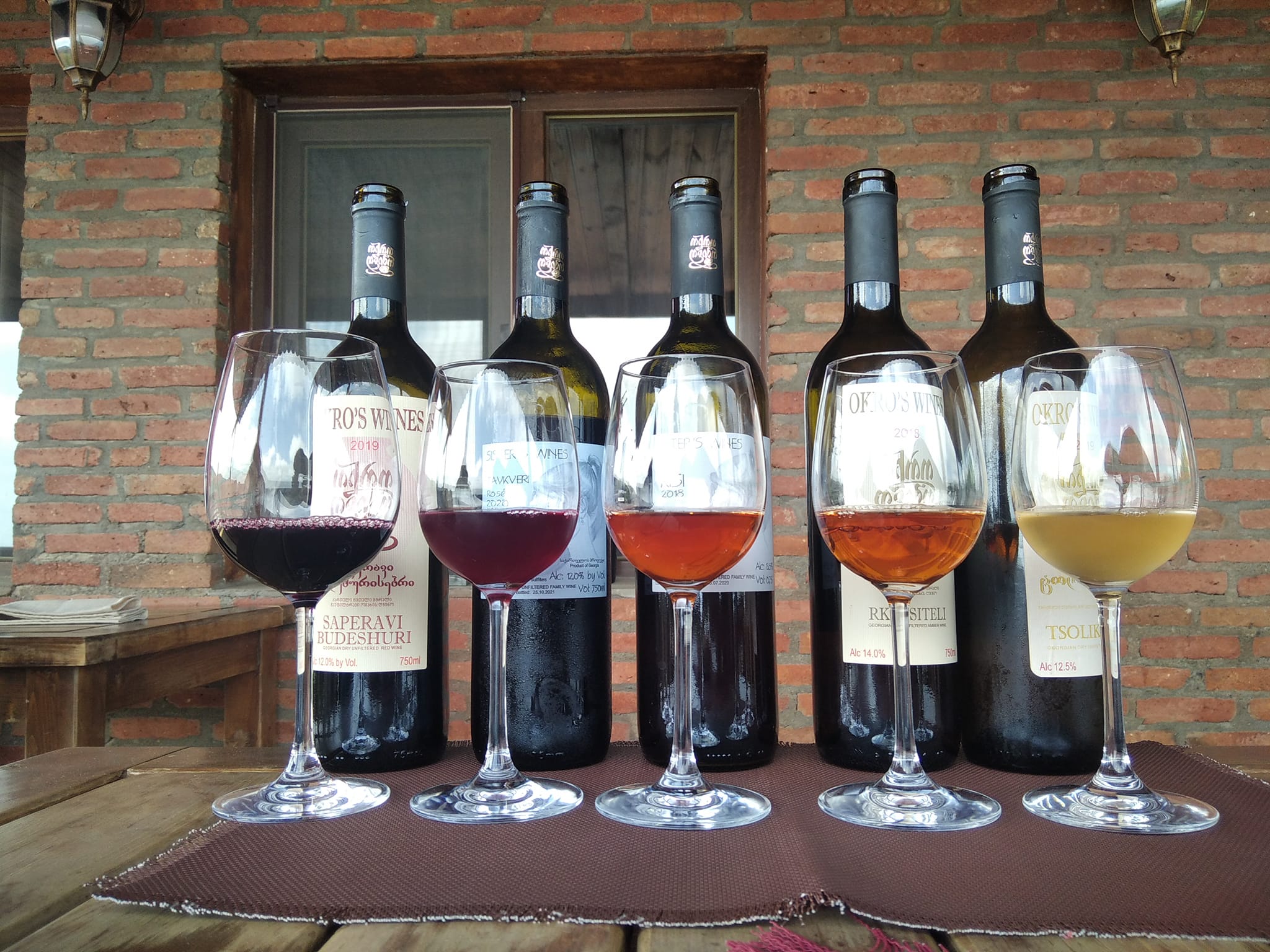
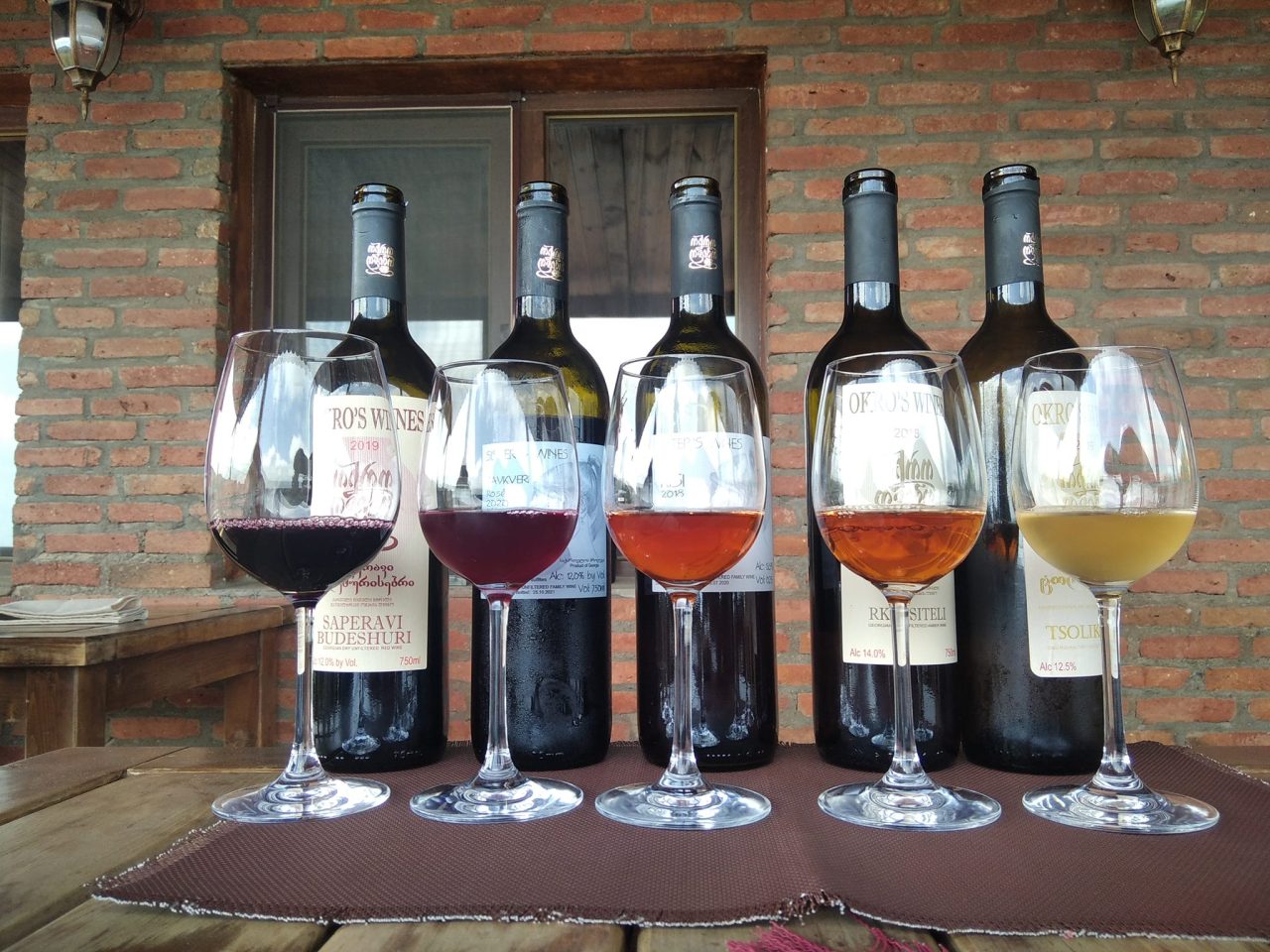 Georgian Wine Varieties: From Saperavi to Rkatsiteli and the Rare Grapes You've Never Heard Of