Few places in Georgia demonstrate the age and ecological richness of the Caucasian forests quite like the Batsara-Babaneuri and Ilto Protected Areas.
Located around Akhmeta in Georgia’s Kakheti region, this protected-area complex contains ancient yew forests, relict Caucasian Zelkova groves, remarkably intact beech woodland, mountain rivers, and habitat for animals ranging from roe deer and chamois to brown bears, wolves, and lynx.
Yet this is not a conventional national park designed around hiking trails and visitor attractions. Batsara and Babaneuri are Strict Nature Reserves, where access is tightly controlled to protect sensitive ecosystems. Ilto, by contrast, is a Managed Reserve, where certain educational and ecotourism activities are possible. Georgia’s Agency of Protected Areas confirms that visits to the strict reserves are limited to educational, non-manipulative scientific research, and monitoring purposes, while Ilto can accommodate botanical, educational, and adventure-oriented eco-tours.
That distinction is important when planning a trip. The real appeal of this part of Kakheti is not simply “visiting a park.” It is discovering one of Georgia’s most valuable forest landscapes while combining nature with the historical villages, monasteries, fortresses, and wine culture of northern Kakheti.
Batsara-Babaneuri and Ilto at a Glance
The protected areas lie within Akhmeta Municipality and are administered together. The modern protected-area complex was created in 2003, although individual reserves have a longer conservation history: Batsara was first protected in 1935 and Babaneuri in the early 1960s.
| Protected area | Protection type | Best known for | General visitor access |
|---|---|---|---|
| Batsara | Strict Nature Reserve | Ancient European yew forest | Restricted |
| Babaneuri | Strict Nature Reserve | Relict Caucasian Zelkova forest | Restricted |
| Ilto | Managed Reserve | Beech forests, mountain habitats and wildlife | Eco-tour activities possible |
Published area figures for these reserves vary between sources and periods because boundaries have been amended over time. For example, national reporting documents record later extensions to Babaneuri and Ilto after their initial establishment.
For travellers, the more useful distinction is therefore not the exact number of hectares but the different conservation rules applying to the three territories.
Batsara Strict Nature Reserve: The Ancient Yew Forest
Batsara lies in the valley of the Batsara River near the Pankisi Gorge, on the southern slopes of the Greater Caucasus.
Its defining feature is an exceptional stand of European yew (Taxus baccata). Georgia’s Agency of Protected Areas describes almost 270 hectares of yew stands in the Batsara Gorge and notes their exceptional scale.
These are not young plantation trees. Many of the yews are centuries old. Georgia’s national tourism portal reports that numerous trees are estimated to be between 500 and 1,000 years old, with some considerably older.
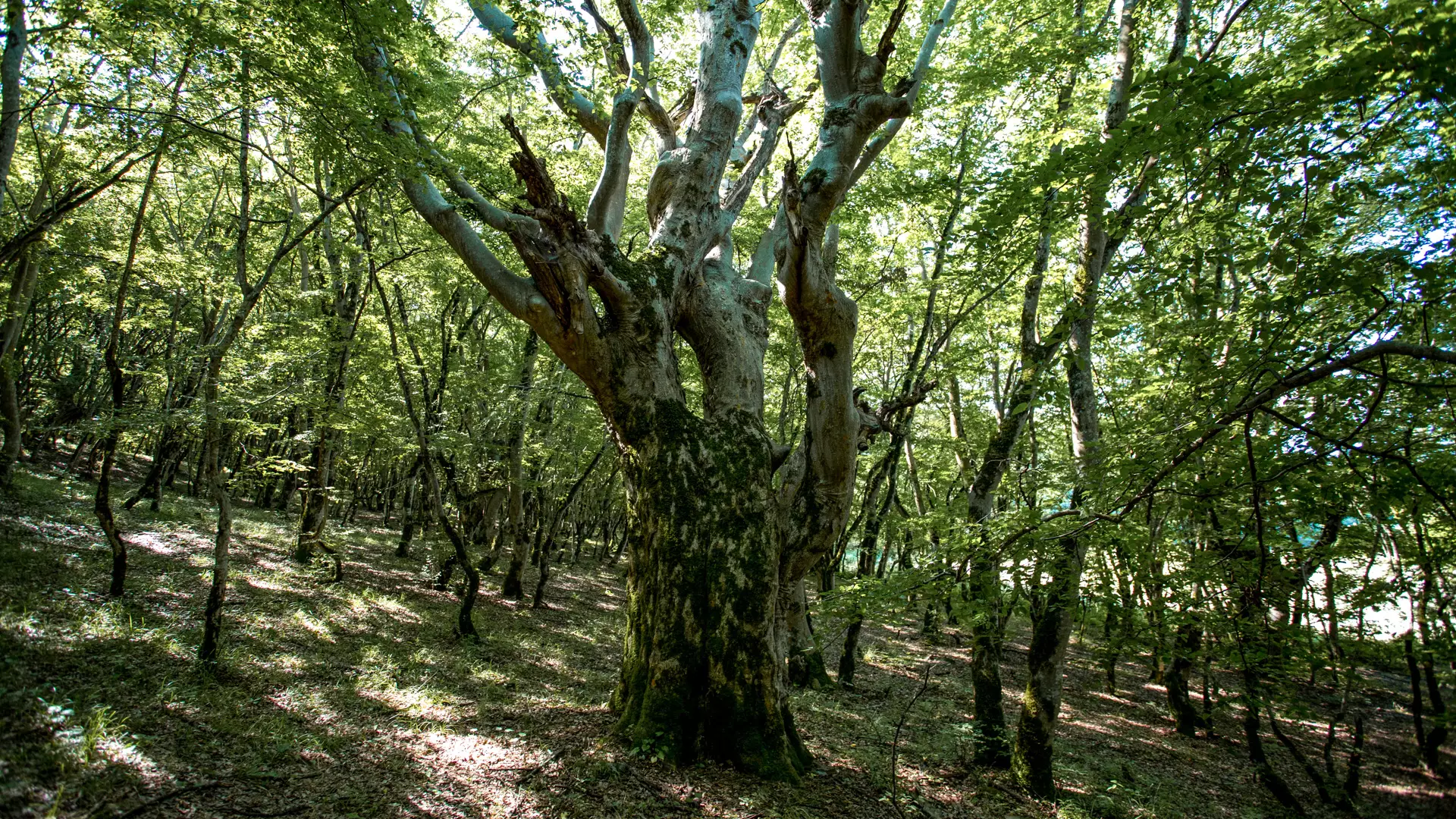
The result is a forest with an atmosphere quite different from a typical Caucasian woodland. Slow-growing yews rise among Oriental beech, maple, alder and other broadleaf species, while climbers and lianas add another layer to the vegetation.
Pastuchov’s ivy (Hedera pastuchovii) and Smilax excelsa are among the characteristic climbing plants associated with the forest.
The wider Batsara ecosystem is dominated by woodland. The Agency of Protected Areas reports that beech forest accounts for a large part of the reserve, alongside hornbeam, chestnut and yew-dominated forest communities.
Can tourists enter Batsara Nature Reserve?
Not in the same way they would enter a national park.
Because Batsara is classified as a Strict Nature Reserve, ordinary recreational access is restricted. The Agency of Protected Areas states that entry is permitted for educational purposes, non-manipulative scientific research, and monitoring.
Travellers interested specifically in Batsara should contact the protected-area administration in Akhmeta before making plans rather than assuming that independent hiking is permitted.
Babaneuri Strict Nature Reserve: A Relict Zelkova Forest
Babaneuri protects a very different but equally valuable forest ecosystem.
Located near the villages of Babaneuri, Lower Alvani and Laliskuri, the reserve occupies the foothills of the Greater Caucasus. Its principal conservation feature is the Caucasian Zelkova, Zelkova carpinifolia.
This tree belongs to an ancient group of plants whose wider distribution has contracted dramatically over geological time. The surviving forests of the Caucasus therefore provide something close to a living botanical archive.
The Agency of Protected Areas reports that Zelkova woodland accounts for a substantial proportion of Babaneuri’s vegetation, accompanied by Georgian oak, hornbeam, beech, floodplain woodland and shrubs.
Other plants recorded in the reserve include walnut, wingnut, boxwood, medlar and rosehip.
Like Batsara, Babaneuri is a Strict Nature Reserve. Recreational access is consequently limited, and the official Georgia Travel portal states that entrance is permitted only for educational and non-manipulative scientific research purposes.
Ilto Managed Reserve: The Most Accessible Side of the Protected Area
For travellers primarily interested in nature-based activities, Ilto Managed Reserve is particularly relevant.
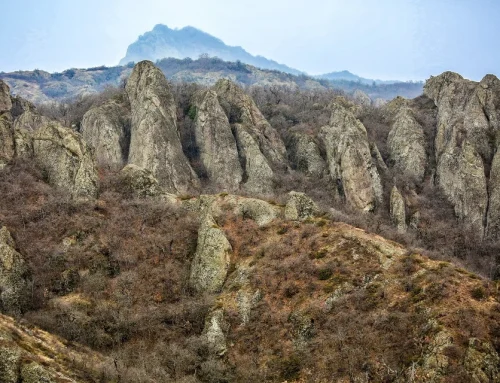
The reserve protects the upper parts of the Ilto River valley and adjoins the Batsara landscape. The terrain rises through forested mountain country, with well-preserved Oriental beech woodland forming one of its characteristic habitats.
Hornbeam, maple, lime and Georgian oak occur alongside the beech, while shrubs such as cornel, hazel, hawthorn and honeysuckle contribute to the forest understory.
Unlike the adjoining strict reserves, Ilto is managed under a conservation category that allows a broader range of controlled activities.
The Agency of Protected Areas specifically identifies botanical, educational and adventure eco-tours as possibilities in Ilto.
Access can nevertheless be demanding. Official visitor information describes Ilto as considerably farther from central Akhmeta than Babaneuri and notes that reaching it may require an off-road vehicle. Travellers should check arrangements with the protected-area administration before departure.
Wildlife in Batsara-Babaneuri and Ilto
The forests are important not only because of their trees. They also form habitat for an unusually rich range of Caucasian wildlife.
The Agency of Protected Areas records mammals including brown bear, wolf, lynx, wild boar, deer, chamois, fox, jackal, badger and martens within the wider protected-area system. Otters occur as well, although they are considered uncommon.
Smaller mammals associated with the Caucasus include Radde’s shrew and the Caucasian or Persian squirrel.
Birdlife is equally varied. Raptors recorded in the area include golden eagles, hawks, Eurasian sparrowhawks and bearded vultures. The Batsara area also supports species such as cinereous and griffon vultures, black storks and forest birds.
For visitors, however, wildlife watching should be approached realistically. These are large, densely forested habitats, not safari parks. A bear or lynx may inhabit the forest without ever being visible to a visitor. Tracks, bird calls, forest structure and the knowledge that these species still survive here are often a larger part of the experience than direct sightings.
Plant Diversity Beyond the Famous Yews
It would be easy for the famous yew forest to overshadow everything else, but the botanical diversity of Batsara-Babaneuri is impressive in its own right.
The Agency of Protected Areas reports 733 species of higher plants across the protected area. Forest communities contain beech, chestnut, hornbeam, alder, Georgian oak, elm, maple, lime, wingnut, yew and Zelkova, among numerous other species.
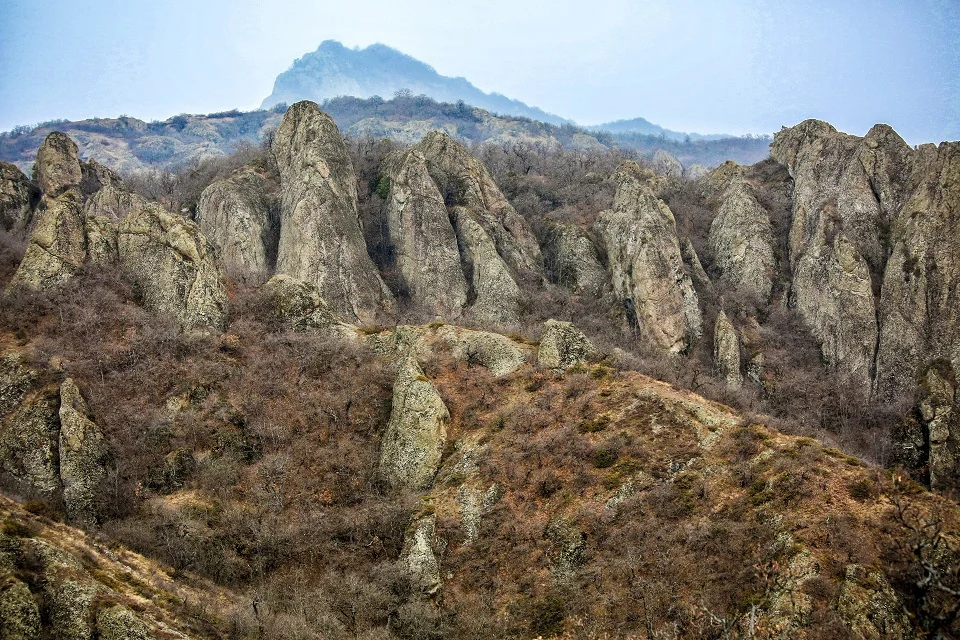
That diversity is one reason the area matters well beyond Georgia. At relatively short distances, the landscape moves between riverine woodland, foothill forests, ancient relict tree communities and higher mountain ecosystems.
It is a compact demonstration of why the Caucasus is considered such an important region for biodiversity conservation.
How to Get to Batsara-Babaneuri Protected Areas
Akhmeta is the practical gateway to the protected areas.
The Batsara-Babaneuri Protected Areas Administration is located at 105 Chavchavadze Street in Akhmeta, according to the Agency of Protected Areas.
From Tbilisi, there are two broad road approaches to Akhmeta: through the Gombori Pass or by the longer route through inner Kakheti. Official protected-area visitor information lists the Gombori route as the shorter option but warns that winter snow can affect the road.
Once in Akhmeta, the destinations spread in different directions:
- Babaneuri lies roughly 20 km from Akhmeta, while Batsara is approximately 25 km away according to official visitor information. Ilto lies deeper into mountain terrain, and the Agency of Protected Areas recommends off-road transport for access.
- Public transport can get travellers to Akhmeta and villages in the surrounding area, but a private vehicle, taxi or pre-arranged transfer is generally more practical if the trip involves several sites.
- Contact the protected-area administration before attempting to enter Batsara or Babaneuri, since their strict-reserve status means access is not equivalent to an ordinary hiking destination.
- Check road and weather conditions before travelling into the mountains, particularly outside the warmer months.
Driving times can vary considerably with traffic, road conditions and the exact destination, so it is better to plan around Akhmeta rather than treating the protected areas as a quick roadside stop.
Best Time to Visit
For exploring the surrounding Kakheti countryside and arranging permitted nature activities, late spring through autumn is generally the most practical period.
Spring brings fresh forest vegetation and strong river flow. Summer provides long daylight hours, although the lower parts of Kakheti can become hot. Early autumn is particularly attractive as forests begin changing colour while Kakheti enters its traditional harvest season.
Winter offers a very different landscape, but mountain access can become more complicated. Snow and poor road conditions may affect routes through higher terrain, so current conditions should always be checked before departure. Official protected-area guidance specifically cautions about winter conditions on the Gombori route.
What Else to See Nearby
One of the advantages of visiting Akhmeta is that the protected areas can be combined with some of Kakheti’s most important historical and cultural sites.
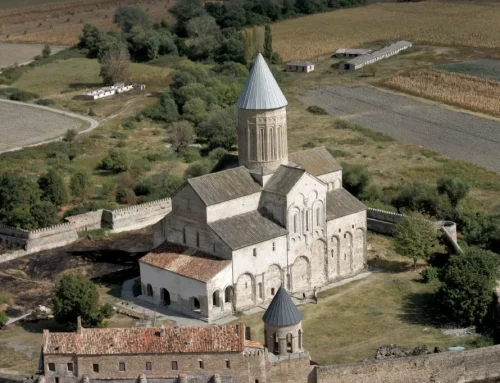
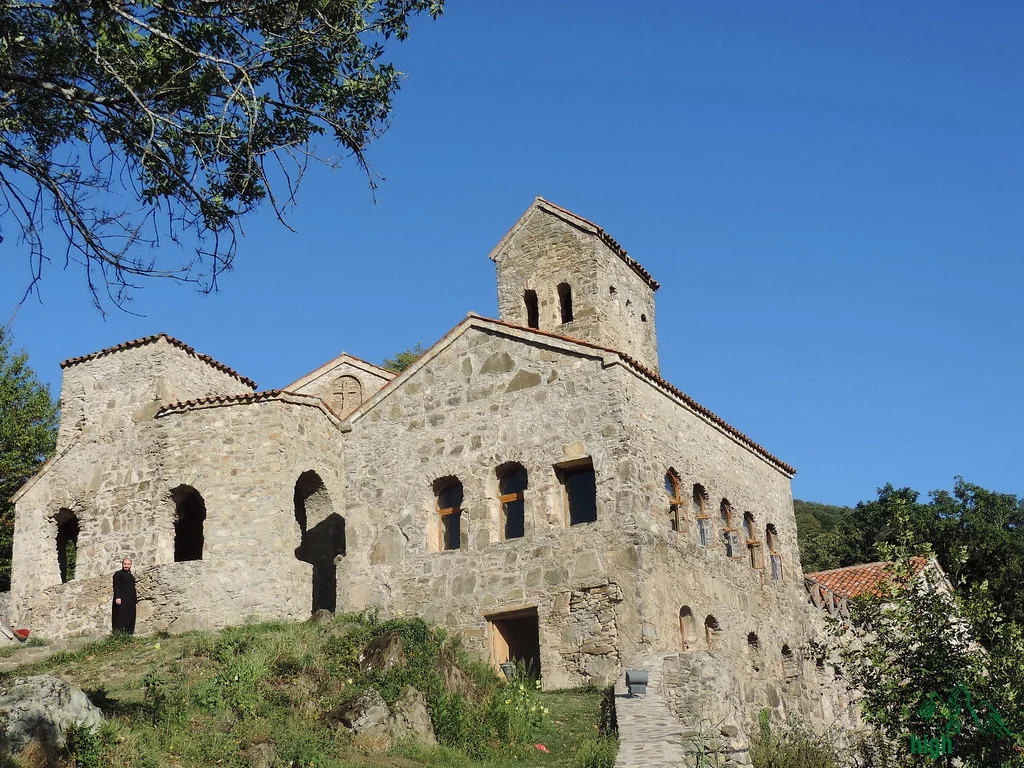
Alaverdi Cathedral is one of the region’s major medieval monuments and stands within easy reach of Akhmeta. The villages of the Alazani Valley also provide access to Kakhetian food and wine traditions.
Farther south, Telavi makes a convenient larger base, while Tsinandali combines aristocratic history, landscaped gardens and wine culture.
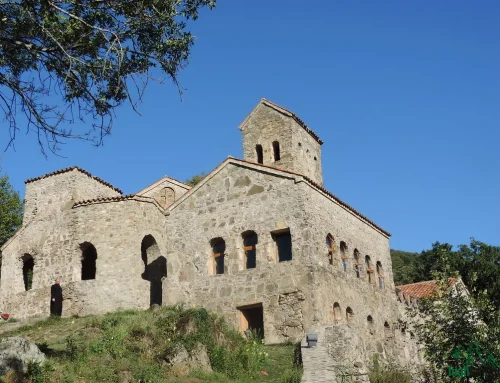
Other worthwhile historical sites in the wider region include Ikalto, the Old and New Shuamta monasteries, and Gremi, once an important royal centre of Kakheti.
The result is an itinerary with unusual variety. A single trip can move from prehistoric forest ecosystems to medieval architecture and then to a traditional Kakhetian wine cellar without requiring a journey across the country.
Responsible Travel in a Strictly Protected Landscape
The rules around Batsara and Babaneuri are not inconvenient formalities. They are part of the reason these ecosystems remain so well preserved.
Visitors should therefore treat the conservation status itself as part of the destination.
Do not assume that a road, path or visible forest track is open for recreational use. Avoid entering restricted areas without authorization, do not collect plants or natural materials, keep disturbance to wildlife to a minimum, and follow instructions given by reserve staff.
For travellers who want a more conventional hiking experience with marked visitor routes, other protected areas in Georgia may offer greater freedom. Batsara-Babaneuri is valuable precisely because some places are allowed to remain primarily for nature rather than recreation.
Where to Stay
Akhmeta provides the most convenient base for direct access to the protected areas and the Pankisi side of northern Kakheti.
Travellers wanting a larger selection of accommodation and restaurants can base themselves in Telavi, while rural guesthouses throughout the Alazani Valley provide another option.
Staying locally also makes it easier to turn the journey into a two- or three-day trip rather than attempting to combine the forests, historical monuments and wineries in a rushed day excursion from Tbilisi.
Frequently Asked Questions
Where are the Batsara-Babaneuri Protected Areas?
They are located in Akhmeta Municipality in the Kakheti region of eastern Georgia. Batsara lies near the Pankisi Gorge, Babaneuri is closer to the Alazani Valley foothills, and Ilto covers mountain terrain in the upper Ilto River valley.
Can tourists visit Batsara Nature Reserve?
Batsara is a Strict Nature Reserve, so ordinary recreational access is restricted. Official rules permit entry for educational purposes, non-manipulative scientific research and monitoring. Travellers should contact the administration in Akhmeta before planning a visit.
Can tourists enter Babaneuri Nature Reserve?
Access is similarly restricted because Babaneuri is also a Strict Nature Reserve. Georgia’s official tourism portal states that entrance is permitted for educational and non-manipulative scientific research.
Can you visit Ilto Managed Reserve?
Ilto has a different protection category and offers more possibilities for controlled nature tourism. The Agency of Protected Areas mentions botanical, educational and adventure eco-tours, although access to the mountain terrain may require a suitable vehicle and advance arrangements.
Why is Batsara famous?
Batsara is best known for its exceptional old-growth European yew forest. Many trees are estimated to be hundreds of years old, and the yew stands are considered among the reserve’s most important natural features.
What is special about Babaneuri?
Babaneuri protects extensive stands of Caucasian Zelkova (Zelkova carpinifolia), a relict tree associated with ancient Caucasian-Iranian forest vegetation.
How far are the protected areas from Tbilisi?
Akhmeta is the main gateway. Official visitor information lists a shorter approach from Tbilisi via Gombori and a longer alternative through Kakheti, with the exact driving distance depending on the route chosen. From Akhmeta, travellers continue separately toward Batsara, Babaneuri or Ilto.
Final Thoughts
Batsara-Babaneuri and Ilto are different from many of Georgia’s better-known nature destinations.
There are no famous summit selfies or heavily promoted hiking circuits at the heart of their appeal. Instead, their significance comes from forests that have survived for centuries, rare tree communities that preserve traces of an ancient Caucasian landscape, and large stretches of habitat where natural processes still take priority over tourism.
For travellers exploring Kakheti, that makes the area especially interesting. Batsara’s ancient yews, Babaneuri’s Zelkova groves and Ilto’s mountain forests reveal a side of the region that is easily missed if a journey focuses only on vineyards and churches.
Combine them with Akhmeta, Alaverdi, Telavi and the wider Alazani Valley, and northern Kakheti becomes much more than a wine destination. It becomes a meeting point of deep natural history, biodiversity, medieval culture and modern conservation.
Travel note: Access regulations and road conditions can change. Before travelling, check the latest information with Georgia’s Agency of Protected Areas or the Batsara-Babaneuri Protected Areas Administration in Akhmeta.