Christmas in Georgia: Why Georgians Celebrate on January 7
Christmas in Georgia falls on January 7th. Not December 25th.
If you’re planning a winter trip expecting holiday festivities on the 25th, you’ll find ordinary business days instead. The Christmas magic happens two weeks later – and honestly, it’s worth the wait.
So why does Georgia celebrate Christmas on January 7th? The short answer: the Georgian Orthodox Church follows the Julian calendar for religious holidays, and December 25th on the Julian calendar equals January 7th on the Gregorian calendar we use today. The gap is exactly 13 days.
But there’s much more to this story than calendar math.
The Julian Calendar and Orthodox Christmas
Georgia didn’t randomly pick January 7th. This date connects directly to how early Christians calculated time.
The Julian calendar, introduced by Julius Caesar in 46 BCE, was the standard across the Christian world for over 1,500 years. Every church, everywhere, celebrated Christ’s birth on December 25th — Julian December 25th.
Then, in 1582, Pope Gregory XIII noticed a problem. The Julian calendar was slightly off – about 11 minutes per year. Doesn’t sound like much, but over centuries it added up. By the 1500s, the calendar had drifted 10 days from astronomical reality.
The Catholic Church adopted Gregory’s corrected calendar. Protestant nations eventually followed. But Orthodox churches said no.
Why refuse a more accurate calendar? It wasn’t stubbornness. For Orthodox Christians, the liturgical calendar wasn’t just a scheduling tool – it was sacred tradition handed down from the Church Fathers. Changing it meant breaking continuity with centuries of saints, martyrs, and councils who had used the Julian system.
The Georgian Orthodox Church held firm. Still does. And because the Julian-Gregorian gap grows by one day every 128 years, what was a 10-day difference in 1582 is now 13 days. Julian December 25th lands on Gregorian January 7th.
That’s the technical explanation. The human story is more interesting.
Why This Date Matters to Georgians
Georgia became officially Christian in 337 CE – one of the first nations in history to do so. That’s not just a historical fact Georgians mention at dinner parties. It’s central to national identity.
Through Persian invasions, Ottoman pressure, Russian imperialism, and 70 years of Soviet atheism, the Georgian Orthodox Church survived. Often, it was the only institution that survived. When everything else was stripped away, the Church remained.
During Soviet times, celebrating Christmas at all was risky. The government promoted the New Year as the acceptable winter holiday — tree, gifts, festivities, but no Christmas. Many families quietly kept Christmas anyway, attending secret services, maintaining traditions behind closed doors.
After independence in 1991, Orthodox Christmas on January 7th became a powerful symbol. Georgians weren’t just celebrating a holiday. They were reclaiming something that authorities had tried to erase.
Today, even Georgians who rarely attend church will tell you that January 7th feels different from the New Year. December 31st is for fireworks and champagne. January 7th is for family, church, and something deeper.
How Christmas in Georgia Actually Looks
Forget the Western Christmas template. No Santa Claus. No gift-giving frenzy. No shopping panic in the weeks before.
Georgian Christmas – called Shoba (შობა) is quieter, more reflective, and centered entirely on faith and family.
Christmas Eve (January 6th)
The celebration begins on the evening of January 6th. Georgians call this night Kvelaperoba. Families attend evening church services, and devout believers stay for the all-night liturgy.
Sameba Cathedral in Tbilisi draws thousands on Christmas Eve. Candles everywhere, polyphonic hymns echoing off the walls. It’s genuinely moving, even if you’re not Orthodox. The service runs late into the night, and the most dedicated stay until the Christmas morning liturgy ends.
Smaller village churches offer a different experience — more intimate, everyone knows everyone, and the priest might be someone’s uncle. If you want authentic over impressive, head to the regions.
Alilo Procession (January 7th Morning)
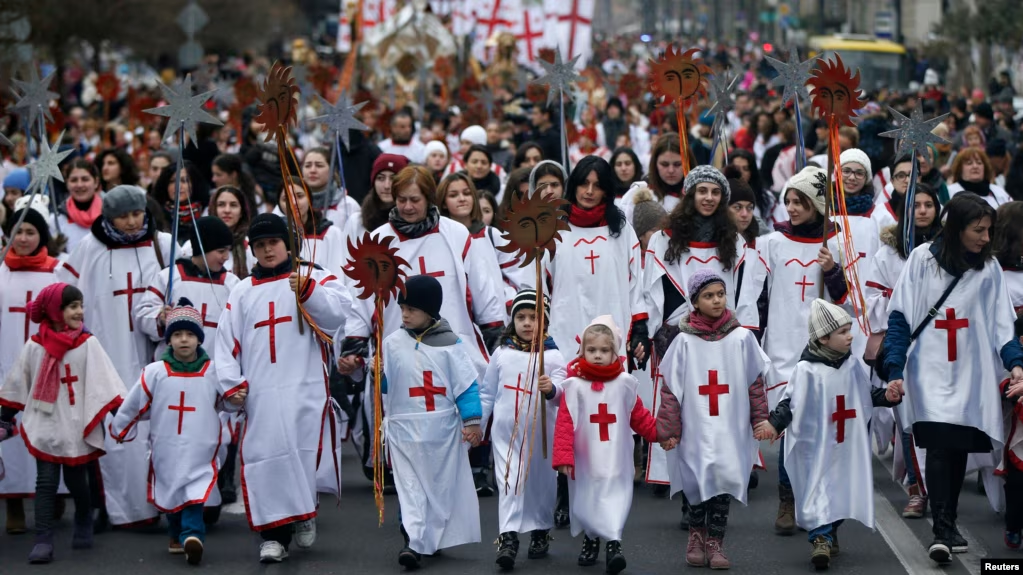
Alilo is the tradition that surprises most visitors. On Christmas morning, processions move through cities and villages across Georgia. Participants wear white robes, carry icons and crosses, and sing Christmas hymns as they walk.
But Alilo isn’t just ceremonial. The processions collect donations — food, clothes, money — for orphanages, elderly care homes, and struggling families. Children often lead the processions, and locals hand them treats and small gifts along the route.
Watching Alilo wind through Tbilisi’s Old Town or a Kakhetian village is one of the most authentic winter experiences in Georgia. No tourist buses. No staged performances. Just Georgians doing what they’ve done for generations.
The Christmas Meal
Georgians don’t do small meals, and Christmas dinner is no exception.
Expect satsivi — chicken or turkey in walnut sauce, served cold. It’s the iconic Christmas dish, and every family has their own recipe. Gozinaki (fried walnuts in honey) and churchkhela (the candle-shaped walnut-and-grape strings) appear on every table.
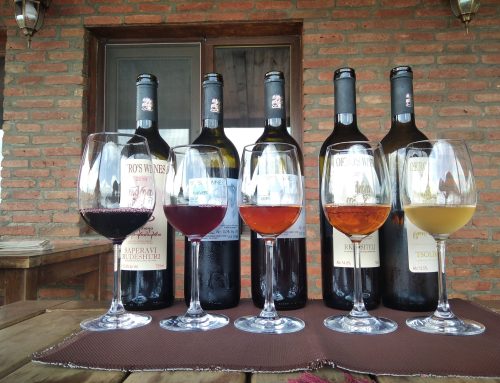
The meal typically starts after morning church and stretches through the afternoon. A tamada leads toasts – to Christ, to family, to ancestors, to Georgia. Wine flows. Stories are told. Nobody’s checking their watch.
If you’re lucky enough to score an invitation to a Georgian Christmas table, clear your schedule. You’ll be there a while.
Visiting Georgia During the Christmas Season
If you’re planning a trip around Georgian Christmas, here’s what actually happens on the ground:
December 25th: Normal day. Shops open. No celebrations. Some international hotels offer Christmas dinners for Western guests, but the country isn’t celebrating.
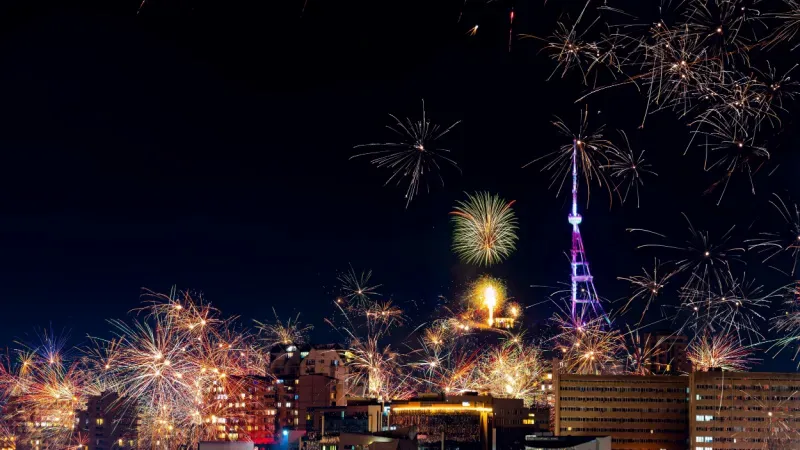
December 31st – January 1st: This is the big secular celebration. Fireworks, street parties, family gatherings, gift exchanges, and decorated trees. Tbilisi goes all out. Most Georgians take several days off.
January 2nd – 6th: Relaxed holiday atmosphere. Decorations still up, people in good spirits, but calmer. Good time to explore — fewer crowds, festive vibe remains.
January 7th: Orthodox Christmas. Many businesses are closed or have limited hours. Church services in the morning, Alilo processions, and family meals. Not a day for tourist activities — it’s a day to observe and respect.
Practical tip: Book accommodations and any special experiences well in advance. Georgians travel to visit family during this period, and transport can be busy. If you want to attend Christmas services at major churches, arrive early – they fill up.
Other Countries That Celebrate Christmas on January 7th
Georgia isn’t alone. Several Orthodox-majority nations maintain the Julian calendar for religious holidays:
- Russia — Largest January 7th celebrant
- Serbia — Strong Orthodox traditions
- North Macedonia — Julian calendar maintained
- Belarus — Follows Russian Orthodox practice
- Ethiopia — Owns an ancient calendar, with similar timing
- Egypt (Coptic Christians) — January 7th observance
Greece, Romania, and Bulgaria switched to a revised calendar and now celebrate December 25th, though they calculate Easter using the old method.
Frequently Asked Questions
Is December 25th a holiday in Georgia?
No. December 25th is a regular working day. Georgia doesn’t recognize Western Christmas as a public holiday.
Can tourists attend Georgian Christmas church services?
Yes. Georgian Orthodox churches welcome respectful visitors. Dress modestly, women traditionally cover their heads (though it’s not strictly enforced for obvious tourists), and be prepared to stand — services are long, and seating is minimal.
Do Georgians exchange Christmas gifts?
Gift-giving happens atthe New Year, not Christmas. Christmas focuses on church attendance, charity through Alilo, and family meals rather than presents.
What should I eat for Georgian Christmas?
Satsivi (walnut chicken), gozinaki (honey walnuts), churchkhela, various breads, and plenty of wine. The meal is large and leisurely.
Will restaurants be open on January 7th?
Many close or have reduced hours. Hotel restaurants usually operate. Plan ahead or stock up on supplies.
When is the best time to visit Georgia for Christmas?
Arrive by January 5th to experience the build-up. January 6th evening and January 7th morning are the highlights. Staying through January 8th lets you catch the end of celebrations without rushing.
The Future of January 7th Christmas in Georgia
Will Georgia ever switch to December 25th? Almost certainly not.
The Georgian Orthodox Church has no interest in calendar reform, and public opinion strongly supports tradition. If anything, globalization has made Georgians more attached to distinctive practices. As Western influence grows in business and culture, traditional observances become identity markers — things that make Georgia Georgia.
For tourism, January 7th Christmas is increasingly an asset. Visitors seeking authentic cultural experiences find exactly that. No manufactured “cultural shows.” No sanitized folklore performances. Just real people practicing real traditions that stretch back centuries.
That authenticity can’t be faked. And it’s precisely why Christmas in Georgia, on its own calendar and its own terms, remains something worth experiencing.