
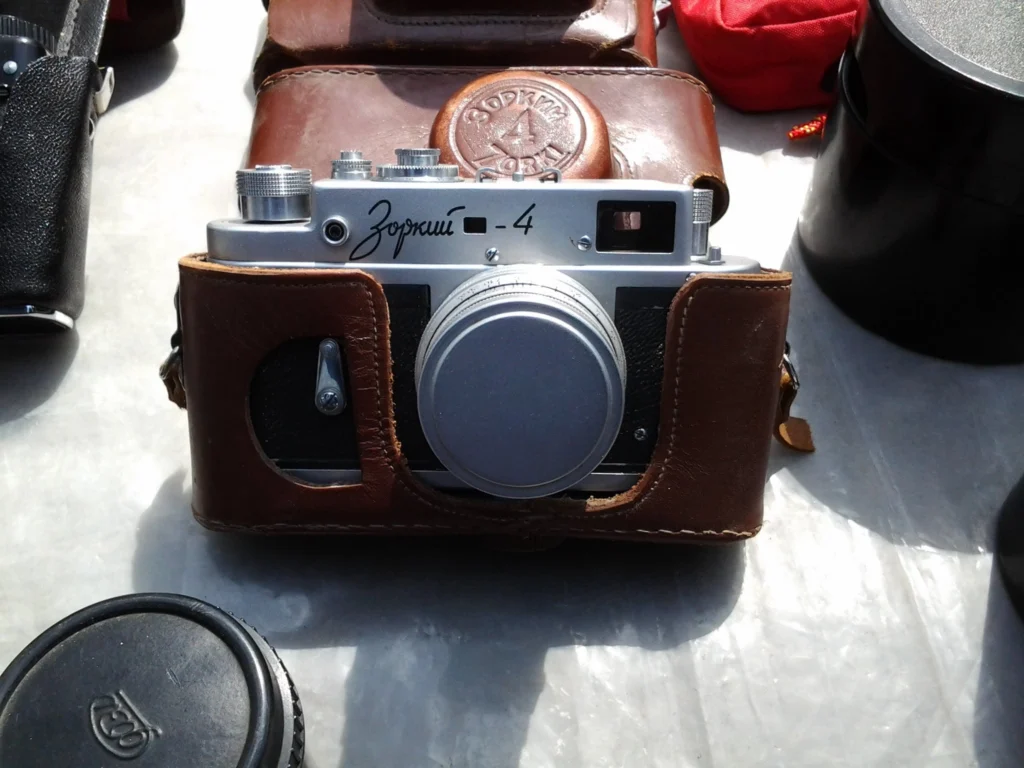
A Soviet pilot’s watch lies next to a 1970s Zenit camera, a tin of Lenin badges and a silver-rimmed drinking horn. The seller, wrapped in a coat on a folding chair, doesn’t look up from his backgammon. A few metres along, a painter is laying out oil paintings of Old Tbilisi balconies against the park railings, and somebody’s grandmother is selling hand-knitted socks in every colour of the rainbow. Welcome to the Dry Bridge, where Tbilisi empties its attics.
The Dry Bridge Market (Mshrali Khidi) is Tbilisi’s open-air flea market, held every day on and around the Dry Bridge in the city centre. It’s the best place in Georgia for Soviet memorabilia, vintage objects, antiques, local paintings and handmade crafts. It’s busiest and best at weekends, from late morning. Bring cash and patience, and bargain politely.
Dry Bridge Market at a glance
- Where: the Dry Bridge and the neighbouring Dedaena and 9 March parks by the Mtkvari river, a 10–15 minute walk from Freedom Square.
- When: daily, roughly 10:00–17:00, depending on the weather. Saturday and Sunday are best.
- What to buy: Soviet medals and badges, old cameras, vinyl, porcelain, jewellery, paintings, felt and knitwear, drinking horns.
- Payment: cash only, in lari, in small notes.
- Time needed: 1–2 hours, more if you love browsing.
- Watch out for: export rules on genuine antiques (see below).
A short history of the Dry Bridge Market
The market was born out of hardship in the early 1990s, when the Soviet Union collapsed and Georgians sold what they owned to get by. With salaries unpaid and the economy in free fall, families brought out medals, cameras, books, silverware and heirlooms to sell by the roadside. The Dry Bridge became the place to do it.
The bridge itself explains its name. It once crossed a channel of the Mtkvari river, but the channel was filled in during the Soviet period. The bridge now stands over dry ground, so Tbilisi calls it mshrali khidi, the dry bridge.
Three decades later the market has turned from survival into something closer to a living museum. Today’s sellers are a mix of families clearing out flats, serious collectors, artists and craftspeople. Many of the Soviet objects are genuine, some are reproductions, and part of the fun is learning to tell them apart.
What you’ll find at the Dry Bridge
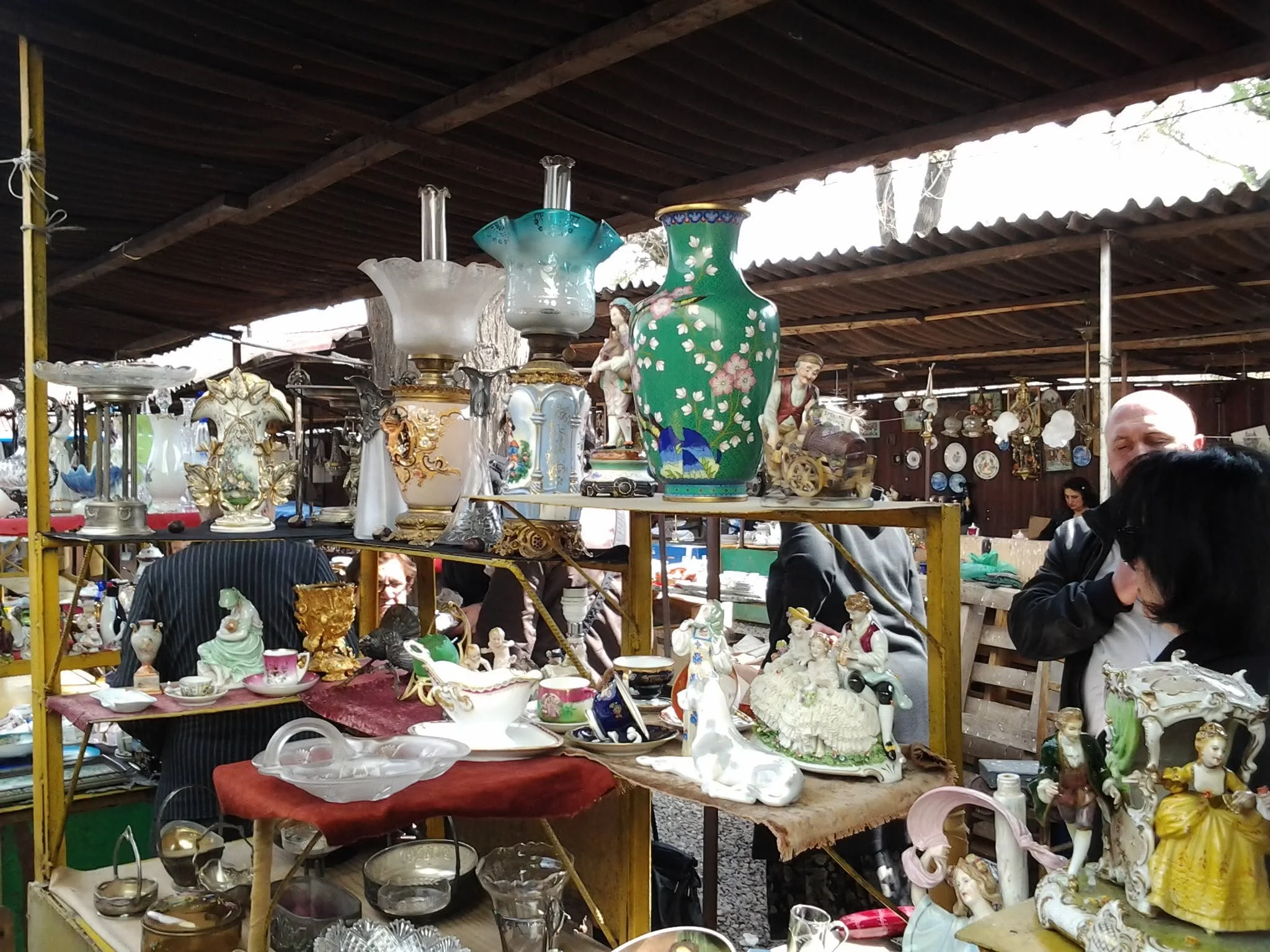
The market splits into four loose zones: Soviet memorabilia on the bridge, paintings and crafts in 9 March Park, antiques downstairs, and books in Dedaena Park. Here’s what to look for.
| Category | What’s typical | Good to know |
|---|---|---|
| Soviet memorabilia | Medals, badges, military insignia, Lenin and Stalin busts, propaganda posters | Plenty of reproductions; genuine orders and medals cost far more |
| Cameras and electronics | Zenit and FED cameras, Soviet lenses, radios, watches | Check that shutters and mechanisms actually work |
| Vinyl and books | Soviet-era records, Georgian and Russian books, old postcards, maps | The book stalls in Dedaena Park are the cheapest browsing in town |
| Antiques and homeware | Porcelain, chandeliers, brass door handles, samovars, cutlery | Genuine old pieces may need an export permit (see below) |
| Jewellery | Silver rings, enamel (minankari) pieces, old brooches | Ask whether pieces are new or antique, since that changes the price |
| Paintings | Oil paintings of Old Tbilisi and the Caucasus, copies of Pirosmani | Original works by living artists are generally fine to take home |
| Crafts and textiles | Felt hats and slippers, knitted socks, carpets and kilims, drinking horns (kantsi) | The most practical souvenirs, and easy to pack |
| Instruments | Panduri and chonguri (Georgian lutes) | Decorative ones are cheaper. Ask if it’s playable |
If you buy one thing, make it something only this market sells: a Soviet-era camera or a hand-painted view of Old Tbilisi from the artist who painted it.
Market zones in one look: the bridge itself is for Soviet memorabilia and bric-a-brac. 9 March Park has paintings and handicrafts. The lower level holds antiques and porcelain. Dedaena Park is for books, posters and postcards.
Practical information
Opening hours and the best time to go
The market runs every day, roughly 10:00–17:00, but the weekend is when it’s full. On Saturdays and Sundays from about 11:00 the bridge and both parks are lined with stalls. On weekdays, especially Mondays, it’s much thinner. Heavy rain or snow shrinks it too, since everything is outdoors.
How to get there
- On foot: about 12 minutes from Freedom Square (Liberty Square metro), downhill toward the river.
- By taxi: a short Bolt or Yandex ride from the Old Town, usually a few lari.
- By bus: several city buses stop nearby. Use Google Maps or the Tbilisi transport app for live routes.
It combines easily with a walk across the Bridge of Peace and Rike Park, or through the Old Town.
How to bargain at the Dry Bridge
Bargaining is expected, but it’s a conversation, not a fight. Some ground rules:
- Look before you ask. Walk the whole market once before buying. The same Soviet badge can cost three times more at one stall than another.
- Ask the price, then counter at about two-thirds. Most sellers start high for visitors, and meeting in the middle is normal.
- Buy more than one thing. A bundle (two badges, a postcard set) is the easiest way to a better price.
- Keep it friendly. A smile and a few Georgian words (gamarjoba, hello, and madloba, thank you) go further than hard haggling.
- Walk away politely. If the price doesn’t work, say thank you and move on. Sometimes you’ll be called back.
Pay in cash
Almost every stall is cash only, in Georgian lari. Bring small notes (5, 10 and 20 GEL), because sellers often can’t change a 100. There are ATMs on the streets around Freedom Square.
Taking antiques home: Georgian export rules
This is the part most visitors don’t know about. Georgian law restricts the export of “cultural valuables”: items of historical, artistic or cultural significance, such as old icons, archaeological finds, rare coins and seals, old manuscripts and books, rare instruments and furniture over 100 years old.
- What needs a permit: genuine antiques of cultural value. There’s no single age limit, so the National Agency for Cultural Heritage Preservation assesses items case by case.
- What usually doesn’t: new crafts, modern paintings by living artists, reproduction Soviet badges, and everyday Soviet-era objects of no special value.
- How to get a permit: apply to the Ministry of Culture with the item’s photos and a copy of your passport. Expect about 15 days and a small fee. It’s not something you can arrange the day before your flight.
- The risk: exporting a cultural valuable without permission is a criminal offence in Georgia.
If a seller tells you something is very old or very rare, take that as a sign to ask about the paperwork. For an icon or anything that looks museum-worthy, don’t buy it without a permit.
More tips
- Check what you’re buying. Many medals and badges are modern copies. That’s fine if the price reflects it.
- Test the mechanics. Wind the watch, click the camera shutter and look through the lens.
- Ask before photographing sellers. Most are happy to chat, but it’s polite to ask.
- Mind your pockets. It’s a safe, friendly place, but crowded weekends are crowded weekends.
- Toilets: there are public toilets in the underpass by Dedaena Park.
Near the Dry Bridge
- Bridge of Peace and Rike Park: the glass footbridge across the Mtkvari, a 10-minute walk away, leads to the cable car up to Narikala Fortress.
- Rustaveli Avenue: Tbilisi’s grand boulevard of theatres and museums starts just uphill. Read our Rustaveli Avenue guide.
- Old Tbilisi and the sulphur baths: walk on to Abanotubani and the Metekhi church on the cliff above the river.
- Sioni and Anchiskhati: two of the city’s oldest churches, both a short walk through the Old Town. See Sioni Cathedral and Anchiskhati.
Want someone to show you the Old Town and point out the best stalls? Our Tbilisi city tour can include the Dry Bridge, especially on a weekend. For more ideas, see our Tbilisi travel guide and things to do in Tbilisi in autumn and winter.
Frequently asked questions
When is the Dry Bridge Market open?
Every day, roughly 10:00–17:00, weather permitting. It’s busiest and most interesting on Saturdays and Sundays from about 11:00.
What can you buy at the Dry Bridge Market?
Soviet medals, badges and posters, vintage cameras and watches, vinyl records, porcelain and antiques, silver and enamel jewellery, paintings of Tbilisi, Georgian felt and knitwear, carpets, drinking horns and traditional instruments.
Can you bargain at the Dry Bridge Market?
Yes. Bargaining is normal. Start at about two-thirds of the asking price, buy several items for a better deal, and keep it friendly.
Do sellers accept cards?
Rarely. Bring cash in Georgian lari, ideally in small notes.
Can I take antiques out of Georgia?
Genuine antiques and items of cultural value need an export permit from the National Agency for Cultural Heritage Preservation, and exporting them without one is a criminal offence. New crafts, modern paintings and reproductions generally don’t need a permit.
Where exactly is the Dry Bridge Market?
On the Dry Bridge in central Tbilisi and in the adjoining Dedaena and 9 March parks, about 12 minutes on foot from Freedom Square.


