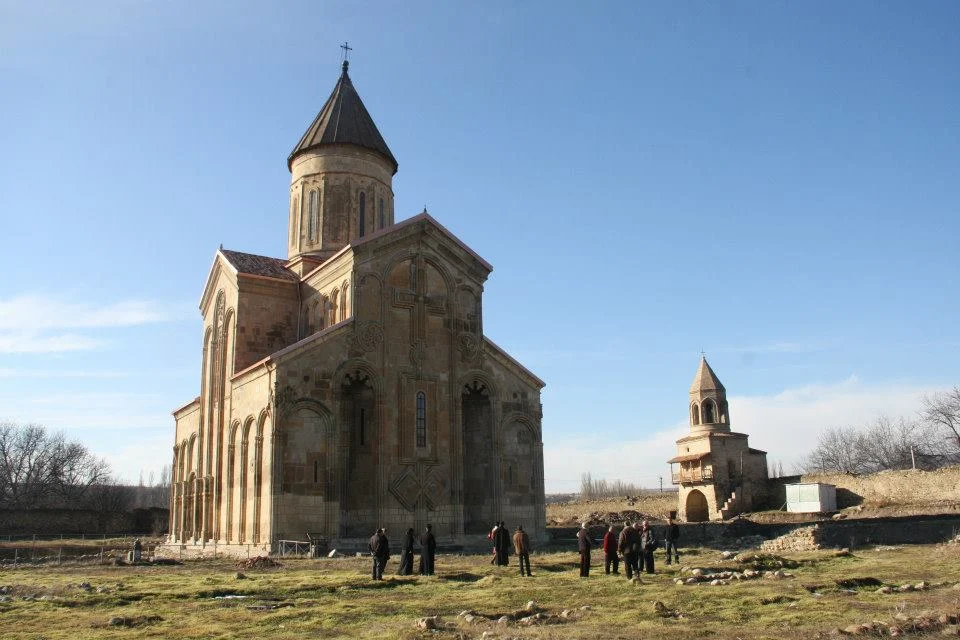
Standing in the village of Samtavisi, near Kaspi in Shida Kartli, Samtavisi Cathedral is one of the finest examples of medieval Georgian church architecture.
Built in 1030, the cathedral is especially important for the elegance of its proportions and the highly influential decorative composition of its eastern façade. Its architectural ideas were later repeated in numerous Georgian churches.
Although travellers often pass nearby while driving between Tbilisi and western Georgia, Samtavisi deserves more than a quick roadside glance. Up close, the precision of the stone carving, monumental cross on the eastern façade and compact but harmonious form of the church become much more apparent.
For travellers exploring central Georgia, Samtavisi can also be included in a private itinerary alongside Gori and Uplistsikhe.
Where Is Samtavisi Cathedral?
Samtavisi Cathedral stands in the village of Samtavisi in the Kaspi Municipality of Shida Kartli.
It lies east of Gori and is easily accessible from Georgia’s main east–west highway. The cathedral is around 30 km from Gori, making it a practical additional stop for travellers exploring Shida Kartli.
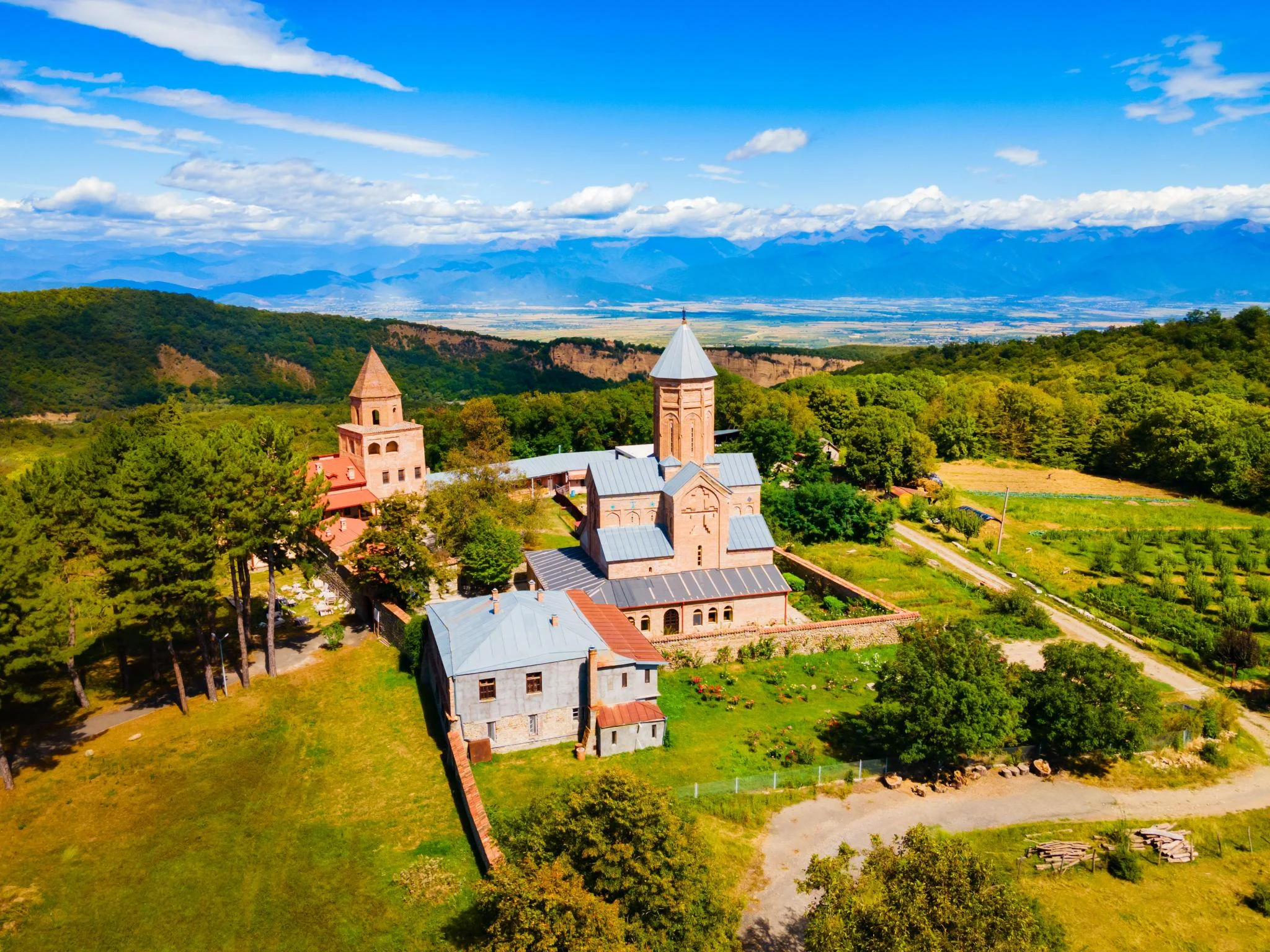
The church stands inside a walled ecclesiastical complex that also contains a bell tower, remains of the former episcopal residence and traces of earlier religious structures.
The Earlier Church at Samtavisi
The religious history of Samtavisi began long before the present cathedral was built.
In the 6th century, Isidore Samtavneli, one of the Thirteen Assyrian Fathers associated with the strengthening of monastic Christianity in Georgia, settled here.
His grave is preserved inside the present cathedral near the altar.
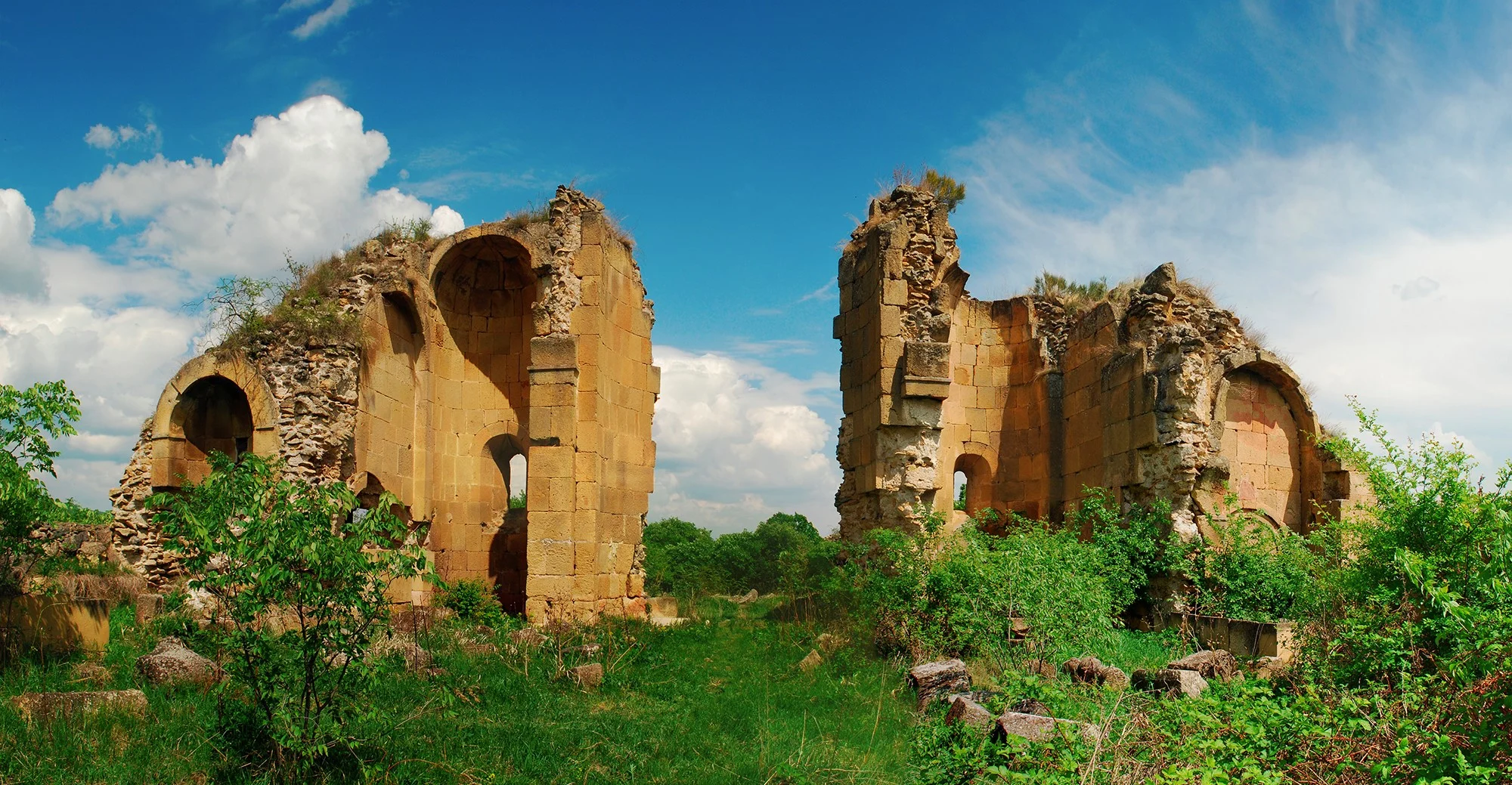
Archaeological remains south of the church include foundations associated with an earlier cathedral, showing that Samtavisi was already an important Christian centre several centuries before the construction of the existing building.
Travellers interested in Georgia’s earliest Christian architecture can compare this history with the churches and monasteries around Mtskheta, Georgia’s ancient religious capital.
The Cathedral Built in 1030
The present Samtavisi Cathedral was built in 1030.
Hilarion Samtavneli is traditionally associated with the construction and architectural design of the cathedral.
The church belongs to the mature Georgian medieval tradition of domed architecture.
Its exterior plan is relatively compact and close to square, while the central dome rises above the crossing and creates a strong sense of vertical movement.
The result is architectural rather than simply monumental: Samtavisi is not among Georgia’s largest cathedrals, but its carefully calculated proportions make it appear exceptionally balanced and elegant.
Why Samtavisi Is Important in Georgian Architecture
Samtavisi occupies an important position in the development of medieval Georgian church architecture.
The cathedral represents a mature form of the Georgian cross-in-square, or inscribed-cross, domed church and became particularly influential because of the way its exterior decoration was organised.
The eastern façade became a model for later Georgian churches.
Instead of treating crosses, windows, arches and ornament as separate decorative elements, the architect combined them into one unified composition.
This architectural language can be better appreciated when Samtavisi is visited alongside other important churches in Shida Kartli, including Ateni Sioni, Kintsvisi and Kvatakhevi.
The Famous Eastern Façade
The eastern façade is the artistic highlight of Samtavisi.
A large decorated cross dominates the centre of the wall. Beneath it is a tall window surrounded by intricate carved ornament, while geometric motifs and decorative lozenges complete the composition.
Five blind arches organise the façade visually and unite its individual decorative elements.
The result is unusually coherent.
The decoration does not merely cover the wall. It follows and reinforces the structure of the building.
That close relationship between architecture and ornament is one of the reasons Samtavisi became so influential in Georgian medieval architecture.
The Carved Ornament
The stone carving at Samtavisi is among the cathedral’s greatest artistic achievements.
Window frames, crosses and upper sections of the façades are decorated with highly controlled vegetal and geometric patterns.
The carving has considerable depth, creating changing contrasts of light and shadow throughout the day.
This type of ornamental stonework reached an exceptionally high level in Georgian architecture between the 10th and 12th centuries.
Travellers interested in medieval Georgian decoration can also compare Samtavisi with the churches of Mtskheta and other major monuments along the historical routes of eastern Georgia.
The Griffin Relief
One of Samtavisi’s most memorable details is a carved griffin on the eastern façade.
The mythical creature, combining features of an eagle and lion, was widely used in medieval symbolic art.
At Samtavisi it forms a small but highly expressive sculptural accent within the otherwise carefully ordered architectural composition.
Look closely when walking around the eastern end of the cathedral: some of Samtavisi’s most interesting artistic details are easy to miss from a distance.
The Interior of Samtavisi
The interior is more restrained than the elaborate eastern façade.
Massive piers support the dome, while intersecting arches create changing perspectives as visitors move through the cathedral.
The surviving wall paintings mainly date from the 17th century, when the church was repainted under Bishop Meliton of Samtavisi.
Fragments survive in the dome and sanctuary and include traditional Orthodox subjects such as Christ, angels, prophets and liturgical scenes.
Damage and Reconstruction
Samtavisi has not survived unchanged since the 11th century.
The cathedral suffered significant damage during the late medieval period, including destruction affecting the dome and western part of the church.
These sections were subsequently reconstructed, with further restoration interventions taking place during later centuries.
Despite these changes, the cathedral still preserves the fundamental character of the 11th-century design, particularly its famous eastern façade and decorative programme.
The Bell Tower and Episcopal Complex
The cathedral stands inside a defensive stone enclosure.
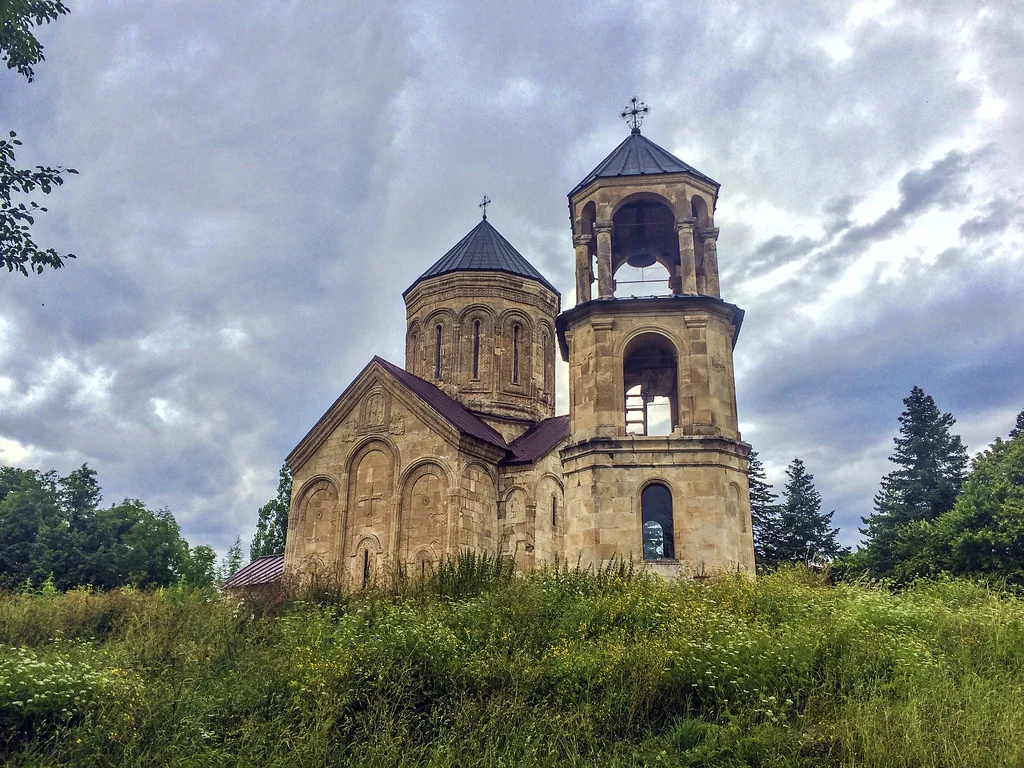
At the entrance is a multi-storey bell tower dating from a later period than the main cathedral.
Within the enclosure are also remains of the former bishop’s residence, reflecting Samtavisi’s long role as an important ecclesiastical centre.
These additional structures make the site more than a single medieval church. Together they form a historical episcopal complex developed over several centuries.
St George’s Church
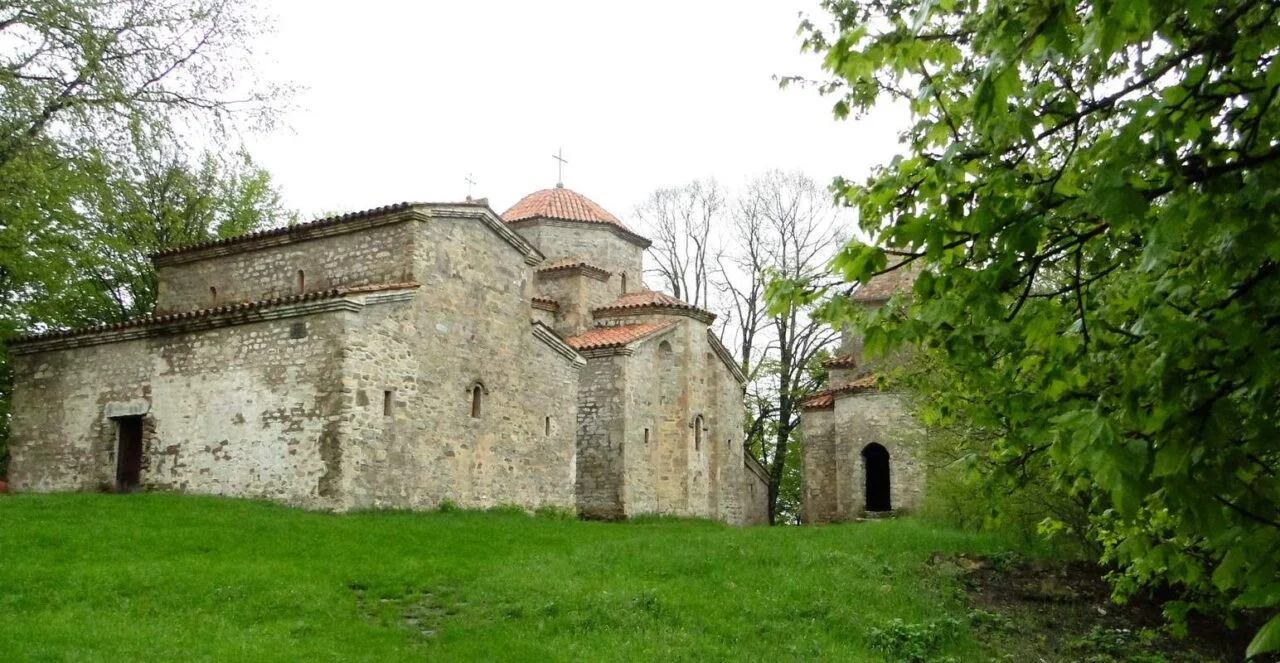
South of the main cathedral stands a smaller church dedicated to St George, dating from a later period.
Nearby are archaeological remains of earlier ecclesiastical structures.
Together they demonstrate that Samtavisi functioned as a religious centre continuously over many centuries rather than being created as a single isolated monument in 1030.
Visiting Samtavisi from Tbilisi
Samtavisi is well positioned for travellers exploring central Georgia from Tbilisi.
It is particularly suitable for visitors interested in Georgian church architecture who want to go beyond the famous monuments of Mtskheta.
Because Samtavisi lies close to Georgia’s principal east–west route, it can be incorporated into a private Shida Kartli itinerary without requiring a major geographical detour.
Combine Samtavisi with Gori and Uplistsikhe
One of the most logical ways to visit Samtavisi is as part of a wider historical journey through central Georgia.
Our Mtskheta, Gori and Uplistsikhe Tour from Tbilisi explores several major periods of Georgian history in one day, from the early Christian monuments of Mtskheta to Gori and the ancient cave city of Uplistsikhe.
Travellers with a particular interest in medieval Georgian architecture can ask about adapting a private itinerary to include Samtavisi Cathedral.
Because Samtavisi lies east of Gori, it fits particularly well into a route through the central section of Shida Kartli.
Samtavisi and Uplistsikhe
Samtavisi and Uplistsikhe offer an especially interesting contrast.
Uplistsikhe represents a much earlier phase of Georgian history: an ancient rock-cut city containing pagan, Hellenistic and later Christian layers.
Samtavisi, by contrast, represents the mature medieval period when Georgian ecclesiastical architecture had developed a highly sophisticated architectural and decorative language.
Visiting both helps travellers understand how dramatically Georgian architecture evolved over more than a millennium.
What to Combine with Samtavisi
Travellers with more time can create a broader historical route through Shida Kartli combining:
- Samtavisi Cathedral
- Uplistsikhe Cave City
- Gori and Gori Fortress
- Ateni Sioni
- Kintsvisi Monastery
- Kvatakhevi Monastery
- the historic churches around Kaspi
If you are travelling from Tbilisi, Mtskheta can also be incorporated into the journey.
Together, these sites reveal different stages in the development of Georgian religious architecture, from early Christian churches to the sophisticated domed cathedrals of the medieval period.
For more ideas, see our complete Shida Kartli travel guide.
Why Visit Samtavisi?
Samtavisi is particularly rewarding for travellers who want to understand how Georgian church architecture developed beyond the country’s most famous cathedrals.
Its importance lies not only in its age.
The cathedral represents a period when Georgian architects refined the relationship between structure and decoration into a highly recognisable architectural style.
The monumental cross of the eastern façade, ornamental window frames, blind arcades and carved griffin all work together as one composition.
For architecture enthusiasts, Samtavisi is therefore not simply another medieval cathedral. It is one of the monuments that helped shape the visual language of Georgian church architecture.
Travellers exploring this part of the country can combine Samtavisi with Uplistsikhe, Gori and other sites featured in our Shida Kartli guide, or ask about adding the cathedral to a private Mtskheta, Gori and Uplistsikhe tour.
Frequently Asked Questions
When was Samtavisi Cathedral built?
The present cathedral was built in 1030.
Who built Samtavisi Cathedral?
Hilarion Samtavneli is associated with the construction of the 11th-century cathedral and is traditionally identified with its architectural design.
Who was Isidore Samtavneli?
Isidore Samtavneli was one of the Thirteen Assyrian Fathers associated with strengthening Christian monastic life in Georgia during the 6th century. His grave is preserved inside Samtavisi Cathedral.
What is Samtavisi Cathedral famous for?
It is particularly famous for its 11th-century architecture and richly decorated eastern façade with a monumental carved cross, ornamental window surrounds, geometric motifs and a griffin relief.
Are the frescoes original?
The principal surviving frescoes visible today date mainly from the 17th century, although the cathedral itself is considerably older.
Can Samtavisi be visited from Tbilisi?
Yes. Samtavisi is located in Shida Kartli and can be included in a private day trip from Tbilisi.
Can Samtavisi be combined with Uplistsikhe and Gori?
Yes. Samtavisi combines particularly well with Uplistsikhe and Gori for travellers interested in Georgian history and architecture. A customized version of the Mtskheta, Gori and Uplistsikhe tour is the most relevant existing itinerary.