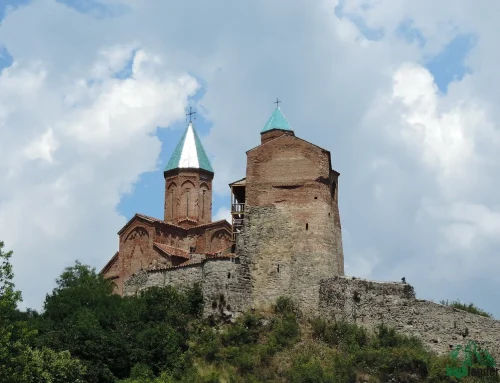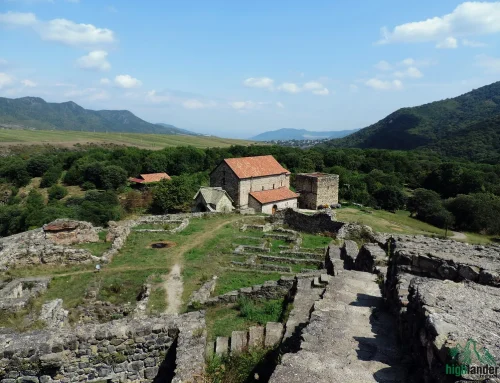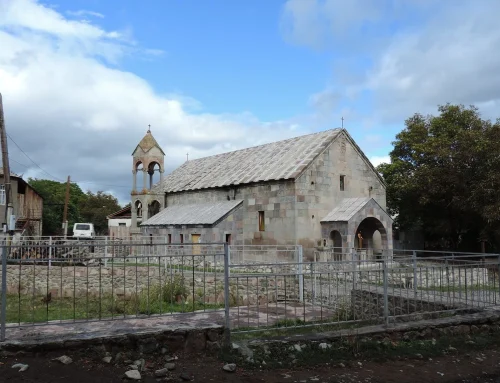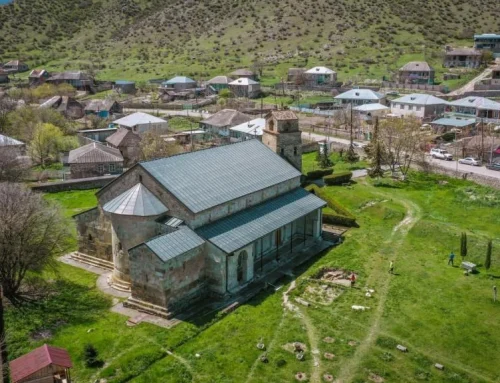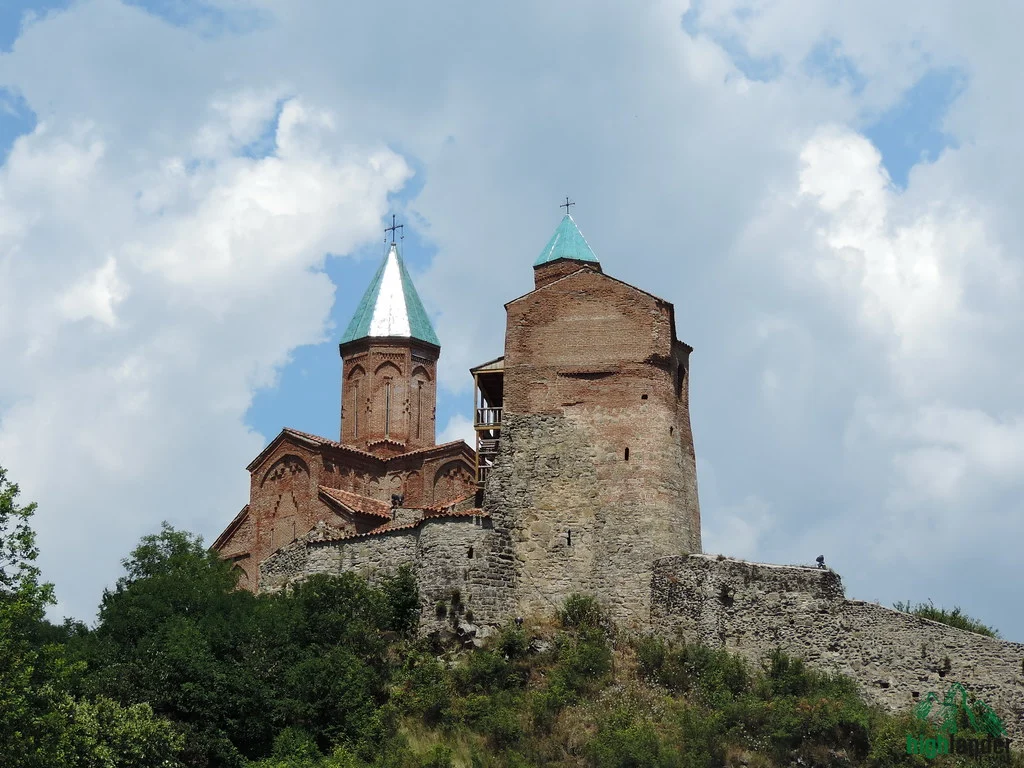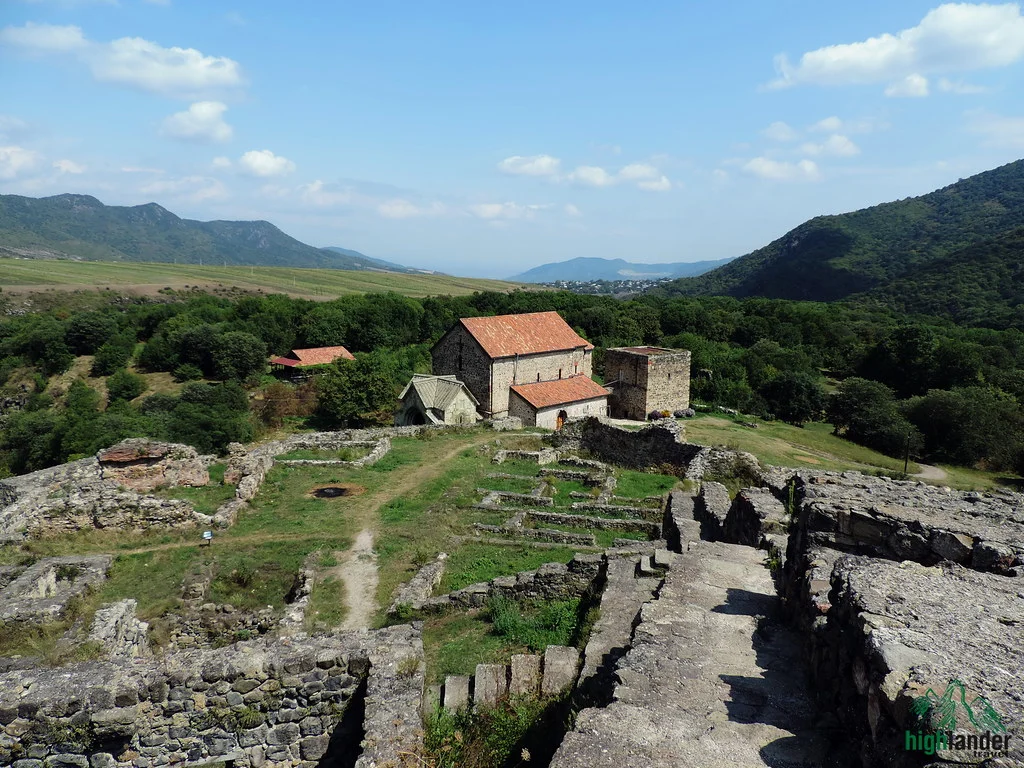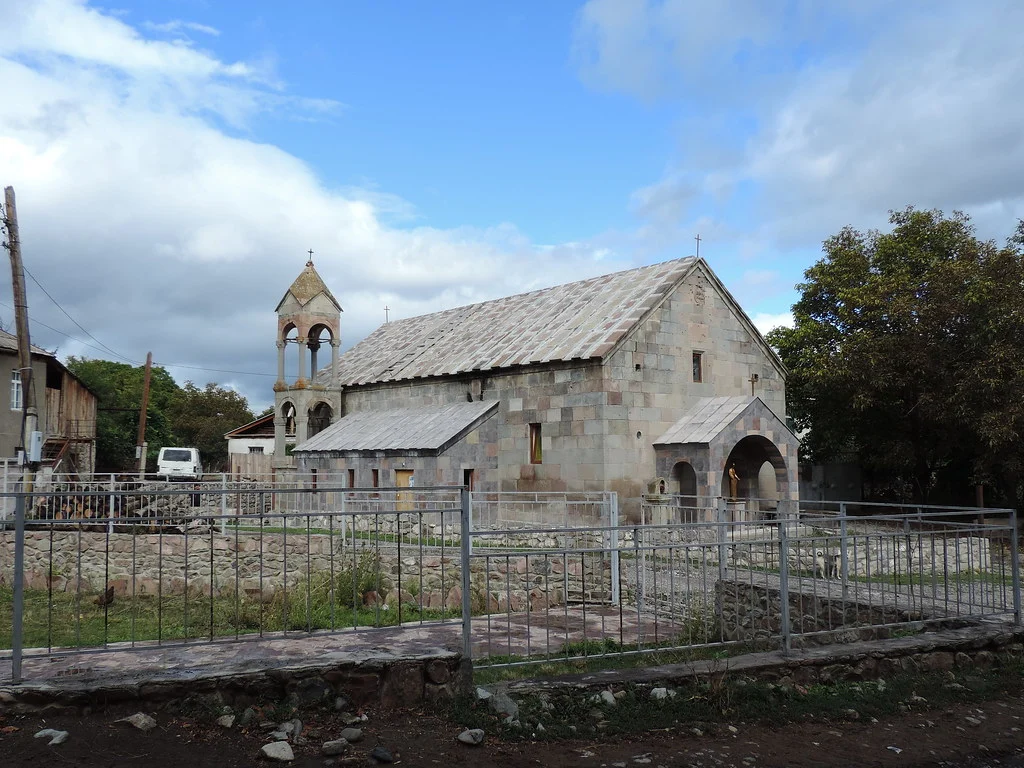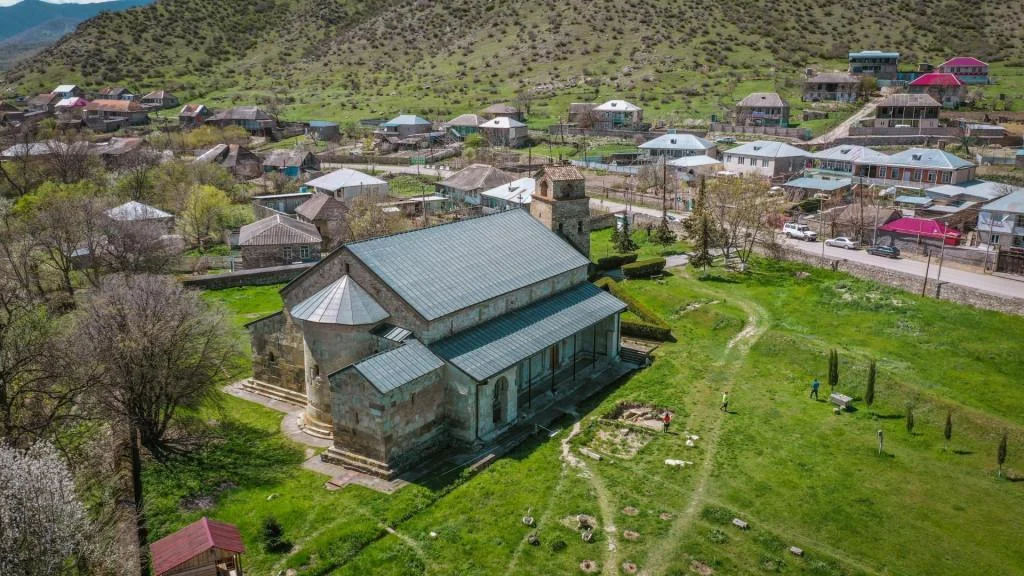
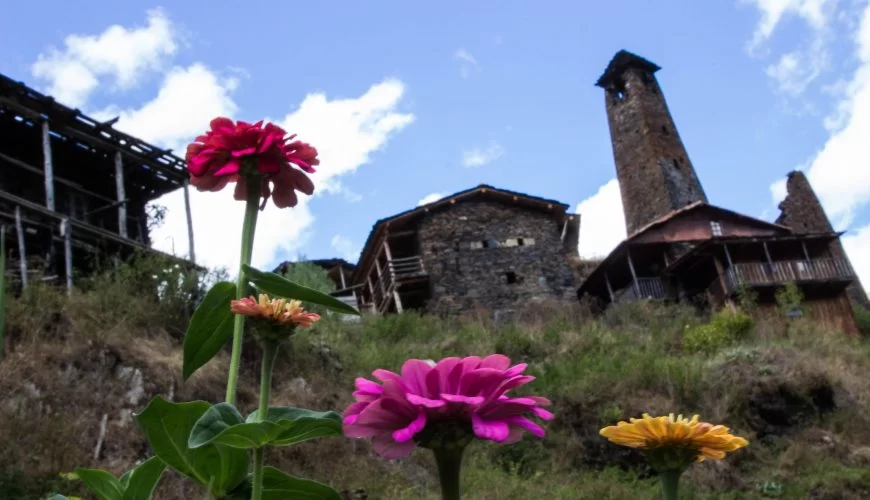
Remote, atmospheric and strikingly well preserved, Dartlo is one of the most memorable villages in Georgia’s high-mountain region of Tusheti.
Set among the northern slopes of the Greater Caucasus, the village is defined by dark stone houses, slate roofs, medieval defensive towers and narrow paths climbing across a green mountainside. From a distance, Dartlo looks almost like a natural extension of the landscape.
Dartlo belongs to Tusheti, a historical-geographical region administratively associated with Kakheti. It lies in the Pirikita Alazani Valley at an elevation of around 2,000 metres above sea level. Georgia’s official tourism portal describes the village as one of Tusheti’s most culturally significant settlements, with an unusually dense concentration of historic monuments.
Dartlo at a Glance
| Region | Tusheti, Kakheti |
| Valley | Pirikita Alazani |
| Elevation | About 2,000 metres |
| Known for | Stone houses, towers, courthouse and traditional architecture |
| Main access point | Omalo |
| Best season | Usually late spring to early autumn |
| Recommended vehicle | 4WD |
Traditional Architecture of Dartlo
Dartlo’s greatest visual attraction is its vernacular Tushetian architecture.
Traditional buildings were constructed primarily from local stone using dry-masonry techniques. Their roofs were covered with flat slate, creating the dark, layered appearance that gives the village much of its character.
Many houses were connected with defensive structures. Fortress-houses and tall stone towers were not decorative additions; they were part of a practical system developed for life in a historically vulnerable mountain region.
The World Bank’s account of Dartlo’s restoration project specifically highlights its dry-stone masonry, stone-slate roofs and traditional fortress-houses as essential elements of the village’s heritage value.
The tall towers rising between Dartlo’s houses are among the most recognizable features of Tushetian architecture.
Similar towers are found elsewhere in the high Caucasus, but Dartlo’s compact collection is particularly impressive because the buildings remain closely integrated with the historic village fabric.
These structures served defensive purposes during periods of conflict and helped protect families and communities. Their narrow stone profiles also became one of the enduring visual symbols of Tusheti.
Dartlo’s Historic Courthouse
One of Dartlo’s most unusual monuments is its traditional meeting hall or courthouse.
Georgia’s official tourism portal dates the structure to around the 16th century. Inside are stone seats traditionally associated with jurors and a larger chair used by the presiding judge.
According to local tradition recorded by Georgia Travel, a woman served as the presiding member of the Dartlo court for around ten years during the 18th century and became known for her intelligence and eloquence. The traditional court is also said not to have imposed death sentences, with exile representing its harshest punishment.
This surviving judicial space makes Dartlo more than an architectural attraction. It offers a glimpse into the customary social institutions that once governed isolated mountain communities.
Sacred Places and Petroglyphs
Dartlo contains numerous cultural and religious sites within a surprisingly small area.
Georgia Travel lists among them the Iakhsari sacred site, Mariamtsminda or Maghaloeli place of worship, a 19th-century hall church, historic towers, fortress-houses, residential complexes and petroglyphs. Some carvings on tombstones and towers depict astronomical forms connected with older Tushetian belief systems.
This mixture of Christian monuments and older local traditions is characteristic of Tusheti, where religious practices developed in relative isolation and preserved distinctive regional features.
Restoring Dartlo’s Heritage
By the early 21st century, the survival of Dartlo’s traditional buildings had become a major conservation concern. Harsh weather, depopulation and the difficulty of maintaining stone-and-slate structures in such a remote location placed increasing pressure on the historic village.
Dartlo was consequently included in a major Regional Development Project for Kakheti. The project was financed with US$60 million from the World Bank and US$15 million from the Government of Georgia and implemented through Georgia’s Municipal Development Fund. :contentReference[oaicite:6]{index=6}
The wider programme aimed to support tourism-based economic development while preserving cultural heritage. Restoration in Dartlo concentrated on maintaining the visual character of traditional houses, fortress structures and stone-slate roofing rather than replacing them with architecture unrelated to the village.
Life in a High-Mountain Village
Life in Dartlo has always been shaped by altitude and climate.
Tusheti experiences long, severe winters, and many mountain settlements historically followed seasonal patterns of habitation. Georgia Travel notes that harsh conditions led many Dartlo residents to spend winters at lower elevations and return to the mountains during the warmer part of the year.
Today, restored houses and family-run guesthouses have given the village a new role as one of Tusheti’s main visitor destinations. Even so, Dartlo retains a distinctly seasonal character.
How to Get to Dartlo
Reaching Dartlo is part of the experience.
Most visitors first travel to Omalo, the principal settlement and gateway to Tusheti. The road into the region crosses the high Abano Pass and is one of Georgia’s most demanding mountain routes.
Georgia Travel states that the road across Abano Pass normally opens from around the end of May and remains passable until approximately September, depending on weather and snow conditions. The roughly 72-kilometre mountain section can take at least four hours in a suitable 4WD vehicle. Outside the road season, overland access is generally impossible. :contentReference[oaicite:9]{index=9}
From Omalo, Dartlo is reached by another mountain road through the Pirikita Valley. Travellers should not treat the journey like an ordinary paved-road drive: high-clearance 4WD transport and an experienced local driver are strongly advisable.
Best Time to Visit Dartlo
The practical visiting season is short.
July and August generally offer the most reliable access, warmer daytime temperatures and the greatest availability of guesthouses and transport. June and September can also be excellent, but conditions are more variable.
Even in summer, mountain weather can change quickly. Warm clothing, rain protection and sturdy footwear are worth carrying regardless of the forecast.
What to Do in Dartlo
- Walk through the historic village and examine the dry-stone houses, slate roofs and defensive towers.
- See the traditional courthouse and its stone seating.
- Explore the surrounding valley on foot for views over Dartlo and the Pirikita Alazani landscape.
- Look for historic carvings and sacred sites associated with traditional Tushetian beliefs.
- Stay in a local guesthouse and experience Tushetian food and hospitality.
- Continue toward other Pirikita villages for a longer trek or 4WD journey.
Dartlo and Tusheti Protected Areas
Dartlo lies within the wider landscape of Tusheti Protected Areas, one of Georgia’s most important mountain conservation regions.
The surrounding landscape combines alpine meadows, forested slopes, deep river valleys and high Caucasus peaks. Traditional villages and towers form an unusually strong cultural layer within this natural environment. Georgia Travel describes Tusheti as a region of distinctive architecture, historic monuments, pastoral traditions and protected mountain landscapes. :contentReference[oaicite:10]{index=10}
Where to Stay
Accommodation in Dartlo consists mainly of family-run guesthouses.
Facilities are generally simpler than in lowland tourist destinations, but staying overnight is one of the best ways to appreciate the village. After day visitors leave, the mountains become quieter and the evening light over the slate roofs can be one of the highlights of a trip to Tusheti.
During July and August, booking accommodation in advance is sensible because the operating season is short.
Responsible Travel in Dartlo
Dartlo is a living heritage settlement rather than an open-air theme park.
- Do not climb historic towers or damaged structures unless access is clearly permitted.
- Ask before entering private houses, courtyards or sacred places.
- Respect local rules surrounding shrines and traditional religious sites.
- Take rubbish out of the mountains with you.
- Use established paths where possible to reduce erosion.
- Support local guesthouses, guides and drivers when practical.
The village’s appeal depends on precisely the qualities that can be damaged by careless tourism: traditional architecture, a small community and an exceptionally fragile mountain setting.
Frequently Asked Questions
Where is Dartlo?
Dartlo is in the Pirikita Valley of Tusheti, in northeastern Georgia. Tusheti is administratively part of the Kakheti region. :contentReference[oaicite:11]{index=11}
How high is Dartlo?
The village stands at approximately 2,000 metres above sea level. :contentReference[oaicite:12]{index=12}
What is Dartlo famous for?
Dartlo is best known for its traditional stone-and-slate architecture, medieval defensive towers, historic courthouse, sacred sites and dramatic setting in the Greater Caucasus.
Can you drive to Dartlo?
Yes, during the seasonal road-opening period, but the journey requires mountain roads and is best undertaken in a suitable 4WD vehicle. The main route into Tusheti crosses Abano Pass, which is normally closed by snow for much of the year. :contentReference[oaicite:13]{index=13}
How far is Dartlo from Omalo?
Dartlo is roughly a dozen kilometres from Omalo by mountain road, although travel time is considerably longer than the short distance might suggest because of the terrain.
Can you stay overnight in Dartlo?
Yes. Family-run guesthouses operate in and around the village during the main summer travel season.
Why Dartlo Is Worth Visiting
Dartlo is one of those rare places where architecture and landscape are difficult to separate.
The stone used to build its houses came from the surrounding mountains. Slate roofs echo the dark rock of the valley. Towers rise almost like natural outcrops above the settlement, while footpaths still follow the contours of a village created long before roads reached Tusheti.
Its value is not simply that the buildings are old. Dartlo preserves evidence of how a remote Caucasian community defended itself, administered justice, worshipped, built homes and adapted to an exceptionally demanding environment.
For travellers prepared to make the long journey over the mountains, Dartlo is one of the clearest expressions of Tusheti’s distinctive culture and one of Georgia’s most memorable highland villages.