
On one night in February, every family in Svaneti walks to the cemetery carrying a burning torch. Birch bark, wrapped around a pole, lit at the door and carried through snow to a grave. From a distance the processions look like rivers of light moving between the towers. Nobody organised it for you. Nobody is selling tickets.
That is the argument for coming to Svaneti in winter, compressed into one image. The summer version of this region is a trekking destination with a lot of other trekkers in it. The winter version is a working mountain community with two ski resorts attached, roughly a tenth of the visitors, and a cold that means business.
Here is what you actually need to know to plan it.
Winter in Svaneti: The Short Version
-
- Where: Upper Svaneti, north-western Georgia (the country), in the Greater Caucasus. The main town is Mestia, at 1,500 m.
-
- Ski season: roughly late December to early April at Hatsvali; Tetnuldi’s higher terrain can run into May.
-
- Lift pass: one Mestia day ticket covers both resorts. In the 2025/26 season it was 50 GEL (about €16) for adults, 25 GEL for children 6–12, free under 6.
-
- Getting there: 8–9 hours by road from Tbilisi, 5–6 from Kutaisi, 3–4 from Zugdidi. Flights to Mestia are short, cheap and weather-dependent.
-
- Temperatures: −10°C to +5°C in Mestia; 5–10°C colder at the top of the lifts.
-
- Lamproba, the torch festival, falls in mid-February. The date moves and varies by village — confirm locally before booking flights around it.
-
- Insurance is a legal entry requirement for Georgia and must cover winter sports if you intend to ski.
Why Come in Winter Rather Than Summer
Three reasons, in order of how often they turn out to matter.
The skiing is genuinely good and almost nobody is on it. Tetnuldi’s top station sits at about 3,160 m on the flank of a 4,858-metre peak. On a powder day you can still be finding untracked snow at three in the afternoon, which has not been true in the Alps for thirty years.
The towers look different under snow. Svaneti’s defensive towers went up between roughly the ninth and twelfth centuries, built so that a family could shut itself in during a raid or a blood feud. In summer they sit in green meadows and read as picturesque. In winter, with the meadows gone white and the stone almost black, they read as what they were: the architecture of people who expected trouble.
You get talked to. This is the real difference. In August a guesthouse host is feeding sixteen people and turning rooms around. In January there are four of you, the stove is lit, dinner takes three hours, and somebody’s grandfather starts explaining the tower outside. Svan is a separate language from Georgian, not a dialect, and winter is when you actually hear it spoken across a table rather than into a phone.
The counter-argument is real too. Roads close. Ushguli is sometimes unreachable for days. Half the guesthouses shut. If your trip has one fixed day in it and no slack, winter Svaneti will find that out.
Skiing in Svaneti: Hatsvali and Tetnuldi
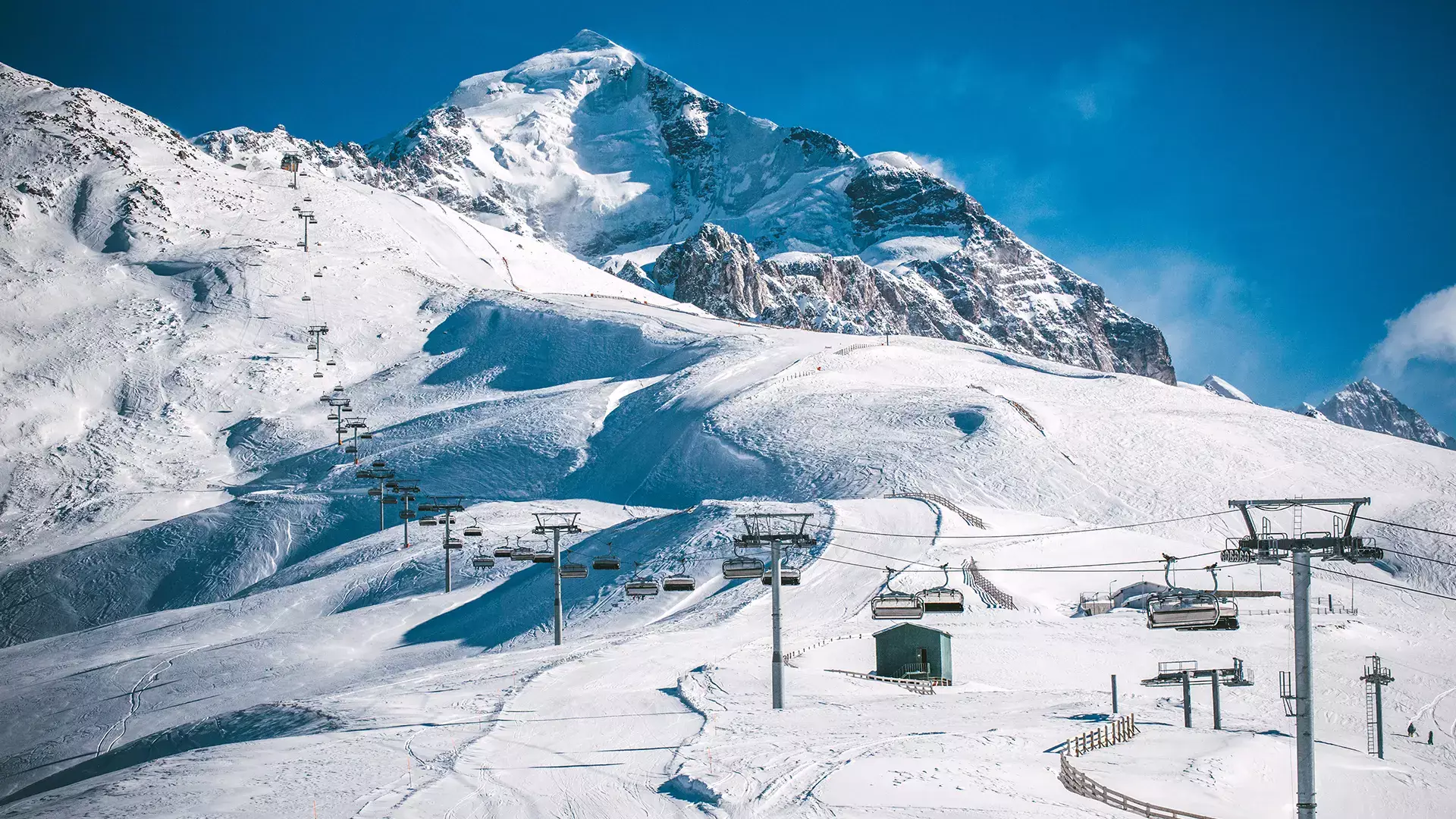
The single most useful thing to know, and the thing most articles get wrong: you do not buy separate passes. One Mestia lift ticket is valid at both Hatsvali and Tetnuldi. If you are skiing several days, the Georgian season multipass covers Mestia, Gudauri, Bakuriani and Goderdzi on one card.
| Hatsvali | Tetnuldi | |
|---|---|---|
| Distance from Mestia | 8 km, or ride the chairlift from town | 15 km, road access only |
| Elevation | 1,865–2,347 m | 2,265–3,160 m |
| Vertical | ~480 m | ~900 m |
| Longest run | ~2.6 km | 9.5 km |
| Lifts | Gondola plus surface lifts | Four chairlifts (Poma) |
| Terrain | Beginner to intermediate, tree-lined | Intermediate to expert, above treeline |
| Season | Dec–Apr | Dec–May |
| Best for | Learning, short days, bad weather | Vertical, off-piste, ski touring |
Hatsvali: The Convenient One
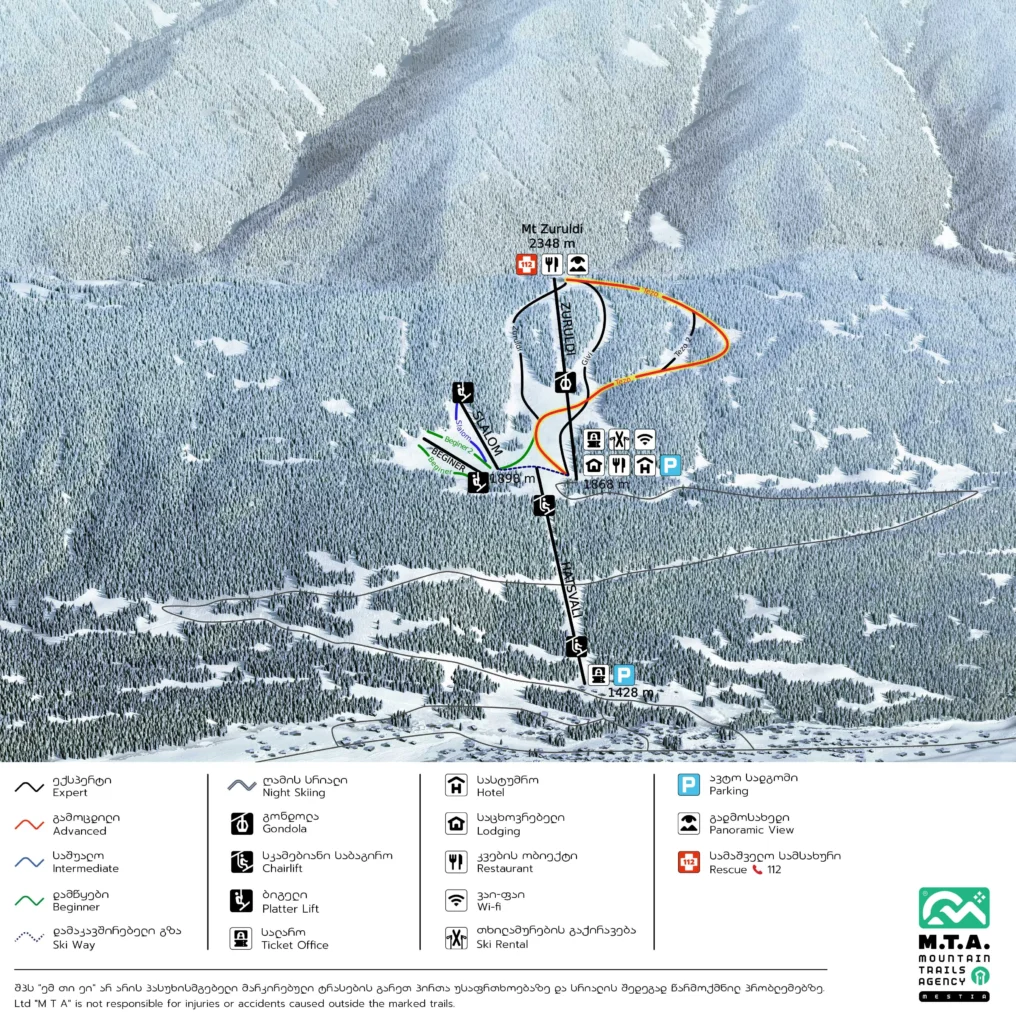
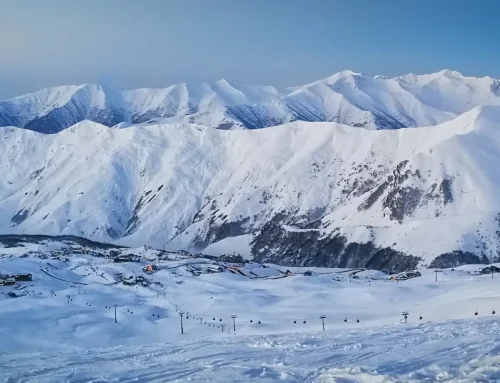
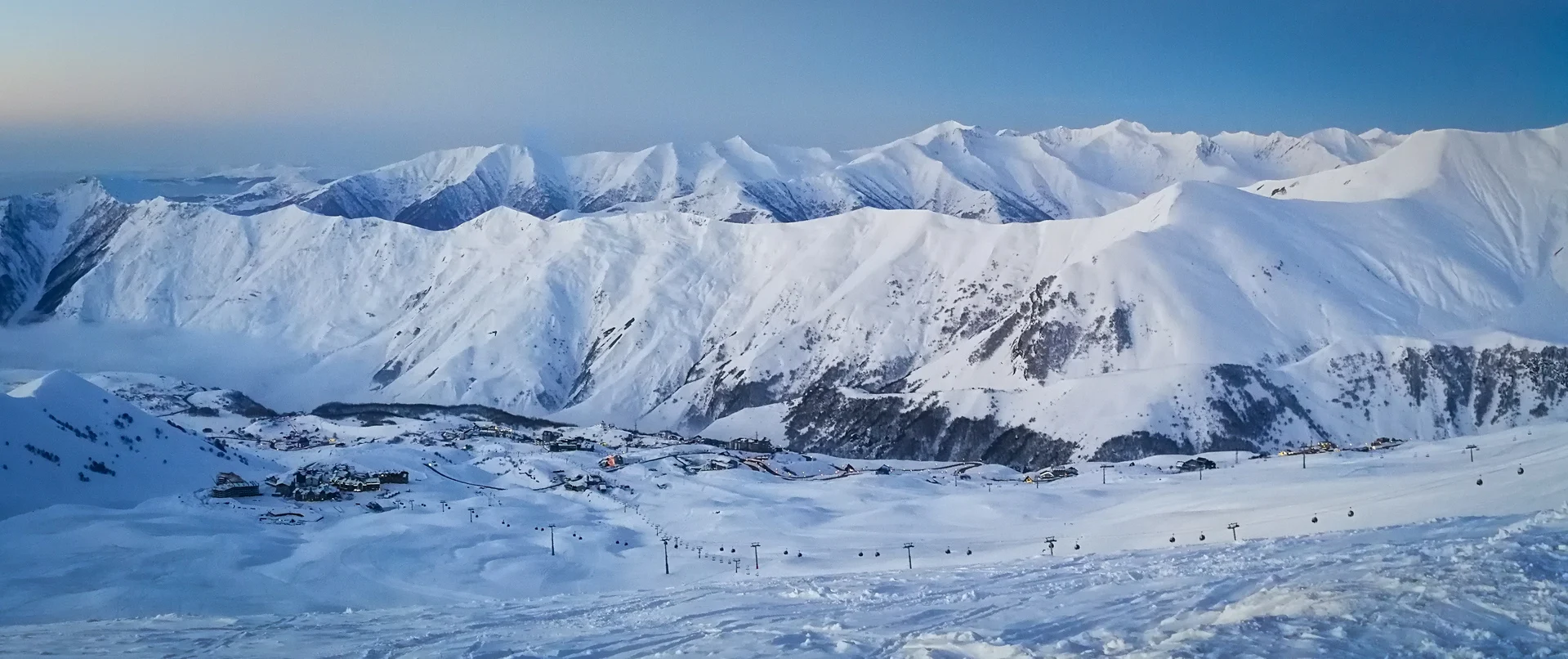
Since a six-seat chairlift was built from the edge of Mestia in 2017, you can go from breakfast to the top of Zuruldi in about fifteen minutes without a car. That changes what Hatsvali is for. It is no longer a place you commit a day to; it is a place you ski for three hours when Tetnuldi is closed for wind, or when the light is flat and you want trees for reference.
The runs are modest and well groomed. The Zuruldi café at the top does kubdari — the Svan meat pie, heavy with onion and spice — on a terrace facing Ushba’s twin summits. On a clear day it is the best-value lunch view in the Caucasus.
Tetnuldi: The Reason Skiers Come
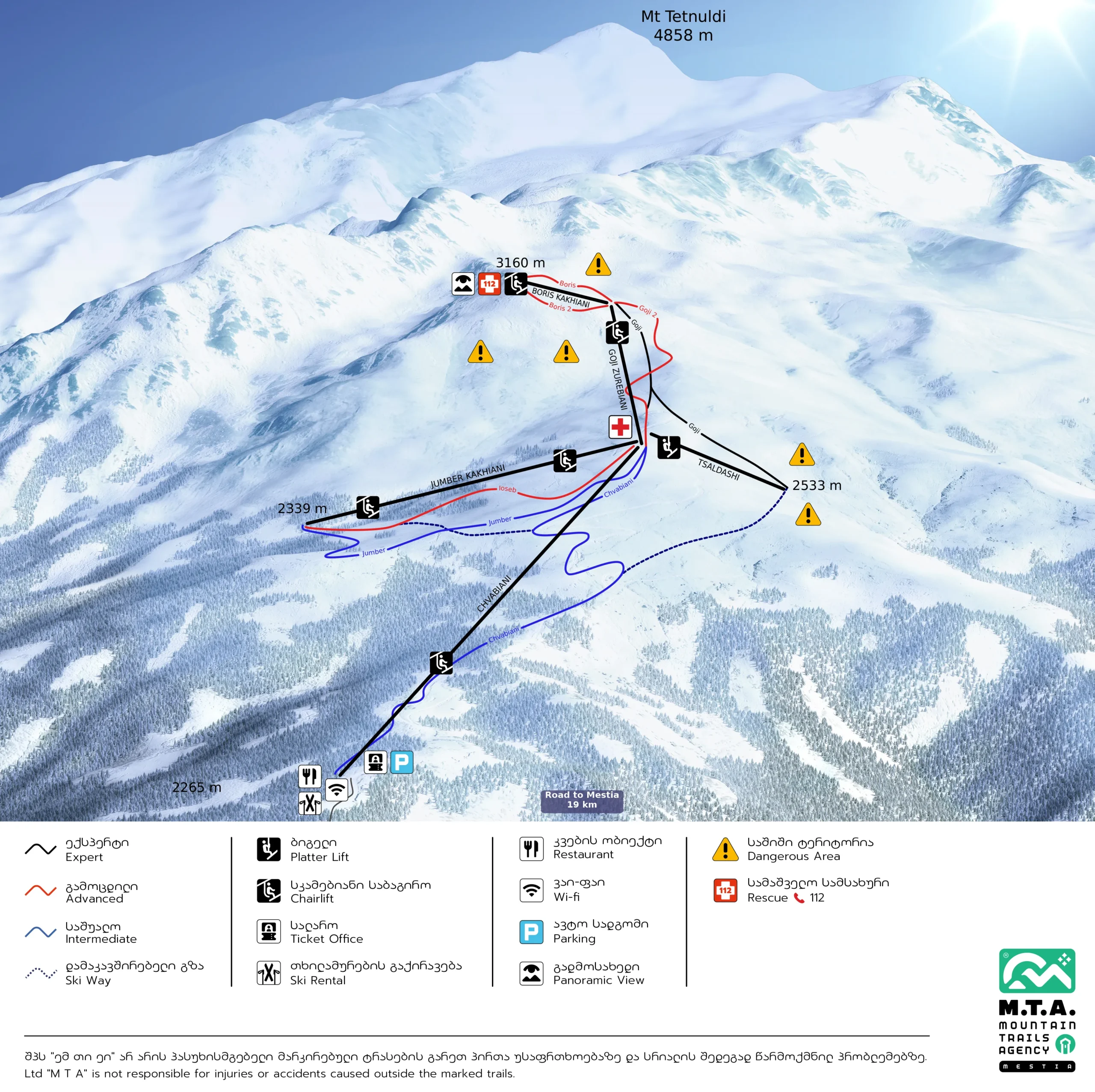
Tetnuldi opened in 2016 and is still not finished, which is part of its character. The base facilities are thin: a couple of cafés and a rental shop, no resort village, no après-ski. What it has instead is 900 metres of vertical, a 9.5-kilometre top-to-bottom run, and open bowls above the treeline that drop away in every direction from the top station.
Freeriders and ski tourers are the people who fly here specifically. The terrain off the upper lifts is serious — long, committing, and entirely unpatrolled beyond the marked runs. Avalanche forecasting in Svaneti is nothing like the Alpine system, and rescue is hours away at best. Take a local guide, carry a transceiver, shovel and probe, and know how to use all three. Every winter somebody finds out the hard way that a wide-open bowl with no rope across it is still avalanche terrain.
Getting up there is its own small operation: 15 km of mountain road, no lift from town. Shared transfers run from Mestia in the morning and back in the late afternoon, and a seat costs roughly 20–25 GEL each way in a full vehicle.
Svaneti or Gudauri? An Honest Comparison
| Svaneti (Hatsvali + Tetnuldi) | Gudauri | |
|---|---|---|
| From Tbilisi | 8–9 hours by road, or a short flight | 2 hours by road |
| Top elevation | 3,160 m | ~3,276 m |
| Marked terrain | Smaller | Larger, around 70 km |
| Crowds | Minimal | Moderate, busy at weekends |
| Off-slope interest | Towers, museums, villages, festivals | Limited |
| Après-ski | A guesthouse table and a wood stove | Bars, clubs, hotels |
| Weather risk to your trip | High — road and flight closures | Lower, though the pass does close |
Choose Gudauri if skiing is the whole point, you have four days, or you want to be back in Tbilisi for dinner. Our Gudauri ski day from Tbilisi exists precisely for that trip.
Choose Svaneti if you want the mountains and the culture in the same week, you have at least five days, and you can absorb a lost day to weather without the trip collapsing.
Lamproba: Svaneti’s Torch Festival
Lamproba is a pre-Christian festival of fire and ancestors that survived inside an Orthodox framework and is still observed across Svaneti every February. Families make torches from birch bark, carry them after dark to the village cemetery, plant them beside family graves, and stay to pray, sing and eat. The polyphonic singing alone is worth the trip.
On the date, be careful. Lamproba is a moveable feast tied to the old Svan calendar and it does not fall on a fixed weekend. In 2026 it was observed around 14 February. Individual villages celebrate on slightly different nights, and published dates online contradict each other constantly. If the festival is the reason you are coming, confirm the date with a Svan contact or a local operator before you book flights, and build a spare day around it.
Mestia gives the largest and most accessible gathering. Ushguli gives the most dramatic setting, if the road cooperates. Latali and Lenjeri are smaller and quieter. Visitors are welcomed, but this is a community observance, not a performance: ask before photographing at the graves, and if a family invites you to their table, say yes.
We have written about the ritual and its origins in more depth in our guide to Lamproba.
What to Do in Svaneti in Winter Besides Ski
-
- Snowshoe to Lakhiri. Two to three hours from Mestia through forest to a small tower village. The most rewarding short winter walk in the region, and manageable for anyone reasonably fit.
-
- Walk towards the Chalaadi Glacier. Four to five hours return. The summer approach becomes a snow route in winter — worth doing with a guide, and the ice formations at the snout are better than in August.
-
- The Svaneti Museum of History and Ethnography, Mestia. Medieval icons, illuminated manuscripts, weapons and armour, much of it recovered from village churches. An hour here makes the towers outside legible. Open 10:00–18:00, closed Mondays; entry around 10 GEL.
-
- Get to Ushguli if the road allows. A community of four hamlets at about 2,100 m, among the highest continuously inhabited settlements in Europe and UNESCO-listed. In winter it is a 3–4 hour drive by 4×4 rather than the summer 2.5, and after heavy snow it is simply not on. Hire a local driver, not a rental car.
-
- Photograph at the right hour. Golden light arrives around 16:00–17:00 in midwinter and does not last. Keep spare batteries against your body, and let your camera warm up inside a bag before opening it indoors or you will spend an hour waiting for condensation to clear.
-
- Visit Latali and Lenjeri. Lower, closer and far more reliably reachable than Ushguli, with well-preserved towers and almost no visitors in January.
How to Get to Svaneti in Winter
By Air
Queen Tamar Airport in Mestia takes small aircraft from Tbilisi and, seasonally, Kutaisi and Natakhtari. The flight runs under an hour and is spectacular in a way that makes people forget to be nervous. It is also the first thing weather cancels. Treat a Mestia flight as a bonus rather than a plan: book it, and have a road option you are willing to take at short notice. Schedules and operators change from season to season, so check current listings rather than an article from last year.
By Road
The route is Tbilisi → Kutaisi → Zugdidi → Mestia. Everything as far as Zugdidi is straightforward lowland highway. The last 130 km, Zugdidi to Mestia, is the mountain section, and in winter it is maintained but frequently snow-covered, with chains sometimes required. Drive it in daylight, in a 4×4, having checked conditions that morning.
| Route | Private transfer | Winter duration |
|---|---|---|
| Tbilisi – Mestia | 800–1000 GEL | 8–9 hours |
| Kutaisi – Mestia | 550–700 GEL | 5–6 hours |
| Zugdidi – Mestia | 300–500 GEL | 3–4 hours |
| Batumi – Mestia | 800–1000 GEL | 6–7 hours |
Flying into Kutaisi rather than Tbilisi cuts three hours off the drive, and low-cost carriers serve it from across Europe. It is the underused option for a Svaneti winter trip.
Where to Stay in Mestia
Mestia has the full range; everywhere else in Svaneti has guesthouses or nothing. Hotels run roughly 120–350 GEL a night depending on standard. Family guesthouses run about 60–120 GEL per person including dinner and breakfast, and dinner is the reason to choose one — tashmijabi, the cheese beaten into mashed potato until it pulls in ropes, is not something you will be served in a hotel restaurant.
Expect wood-stove heating, shared or private bathrooms depending on the house, and hot water that is plentiful in the evening and theoretical at seven in the morning. In Ushguli, winter options shrink to a handful of houses and you must confirm they are open before setting off. Advance booking matters less than in summer, except around Lamproba, when Mestia fills.
Weather and When to Go
| Month | Avg high | Avg low | Snow | Visitors |
|---|---|---|---|---|
| December | −1°C | −8°C | Building; early season | Very few |
| January | −2°C | −10°C | Reliable cover, coldest air | Few |
| February | 0°C | −8°C | Deepest base of the season | Few, more around Lamproba |
| March | 4°C | −4°C | Good snow, longer days | Moderate |
| April | 9°C | 0°C | Patchy low down, good high up | Few |
For snow and atmosphere together, February is the month. For the best balance of conditions and daylight, take March. December is a gamble on early-season cover, and April is spring skiing at the top of Tetnuldi and mud at the bottom. Our month-by-month breakdown for the whole country is in when to travel to Georgia.
What to Pack
-
- A proper insulated jacket and thermal base layers. Merino or synthetic, never cotton. Mestia regularly drops below −10°C and the lifts are colder again.
-
- Waterproof insulated boots with grip. Village paths are packed ice by late afternoon and stay that way until March.
-
- Goggles, sunglasses and high-factor sunscreen. UV at 3,000 m on snow is brutal, and it is the thing visitors most reliably underestimate.
-
- A headlamp. Power cuts happen in the villages, and Lamproba is an after-dark event in a cemetery.
-
- Cash in lari. Mestia has ATMs from the major banks, and they do run empty in busy weeks. Guesthouses are cash-only as a rule.
-
- Any medication you actually need. The pharmacy selection in Mestia is limited and there is nothing at all in the smaller villages.
-
- Offline maps and a power bank. Coverage is decent in Mestia and patchy to absent elsewhere, and cold flattens batteries fast.
-
- Your own ski boots, if you ski seriously. Skis and boards rent perfectly well locally; boot fit is the thing rental stock cannot solve.
Practical Matters
Insurance is mandatory and the standard policy is not enough. Since 1 January 2026, everyone entering Georgia must hold health and accident cover of at least 30,000 GEL, as set out in the published entry requirements. For Svaneti specifically, your policy needs to name winter sports, and if you plan to go off-piste or ski tour it needs to name that too. Add mountain rescue and evacuation. The nearest hospital is in Mestia and it handles basics; anything serious means evacuation to Kutaisi or Tbilisi, in winter, from a mountain valley.
Money. Bank of Georgia and TBC have ATMs in Mestia. Hotels take cards, guesthouses generally do not, villages certainly do not.
Language. Georgian is official, Svan is spoken at home, Russian is widely understood by older people, and English is growing among younger people in tourism. Learn gamarjoba and madloba and you will be treated well.
Altitude. Mestia at 1,500 m asks nothing of you. The top of Tetnuldi at 3,160 m occasionally does — a headache, breathlessness on the stairs at the lift station. Drink more water than you want to and do not go straight from the car to the top lift on day one.
Three Winter Itineraries
Long Weekend, Skiing (3 days)
Fly or drive in and settle into Mestia, walking the towers in the afternoon. Full day at Tetnuldi on day two. Day three: a short morning at Hatsvali on the chairlift from town, the museum, then out. Tight but workable — and only if your travel days have flexibility built in.
A Proper Week (7 days)
Two ski days at Tetnuldi with a Hatsvali half-day between them. One day driving to Ushguli if conditions allow, with the weather-contingency day spent in Latali and Lenjeri if they do not. A snowshoe day towards Chalaadi. An unscheduled day in Mestia for the museum, the churches and the guesthouse kitchen. This is the length at which winter Svaneti stops being a logistics exercise.
Lamproba (5 days)
Arrive at least two days before the festival, because arriving the day before leaves you no margin if the road shuts. Ski and explore while you wait. Spend the festival afternoon resting, because the evening runs late. Keep the day after entirely free.
Frequently Asked Questions
Is Svaneti accessible in winter?
Yes. The Zugdidi–Mestia road is maintained year-round and Mestia is reachable all winter, though snow and ice are normal and a 4×4 is strongly recommended. Flights to Mestia operate when weather allows. Access to outlying villages, particularly Ushguli, is the part that becomes unreliable.
How much is a ski pass in Svaneti?
One Mestia day ticket covers both Hatsvali and Tetnuldi. In the 2025/26 season it was 50 GEL for adults, 25 GEL for children aged 6–12, and free for under-6s. A season multipass valid at Mestia, Gudauri, Bakuriani and Goderdzi was 650 GEL. Confirm current rates before you travel.
When is the Lamproba festival?
Lamproba falls in February, but the date moves from year to year and varies between villages — in 2026 it was observed around 14 February. It is tied to the traditional Svan calendar rather than a fixed weekend, so confirm the date locally before booking travel.
How cold does Svaneti get in winter?
Mestia, at 1,500 m, typically ranges from −10°C to +5°C. At ski resort elevations between 2,000 and 3,160 m, expect −15°C to −5°C before wind chill.
Can I reach Ushguli in winter?
Often, but not dependably. The road is passable by 4×4 in normal winter conditions and takes 3–4 hours from Mestia, but it closes temporarily after heavy snowfall. Hire a local driver and ask on the morning rather than the week before.
Is winter in Svaneti worth it if you do not ski?
Yes. Snowshoeing, tower villages, the Mestia museum, photography and Lamproba fill a week without going near a lift, and the winter versions of all of them are quieter and more personal than the summer equivalents.
How long should a winter trip to Svaneti be?
Five to seven days. Three is possible but leaves no room for the weather, and weather is the single largest variable in a Svaneti winter itinerary.
Plan Your Winter in Svaneti
We have been running trips to Svaneti in every season since 2011. That mostly means we know which guesthouses stay open in January, which drivers will tell you honestly that the Ushguli road is a bad idea today, and how far ahead of Lamproba you need to be in Mestia.
Send us your dates and we will tell you what is realistic, including when the honest answer is to come in March instead. Tell us what you have in mind and a real person replies within 24 hours.