
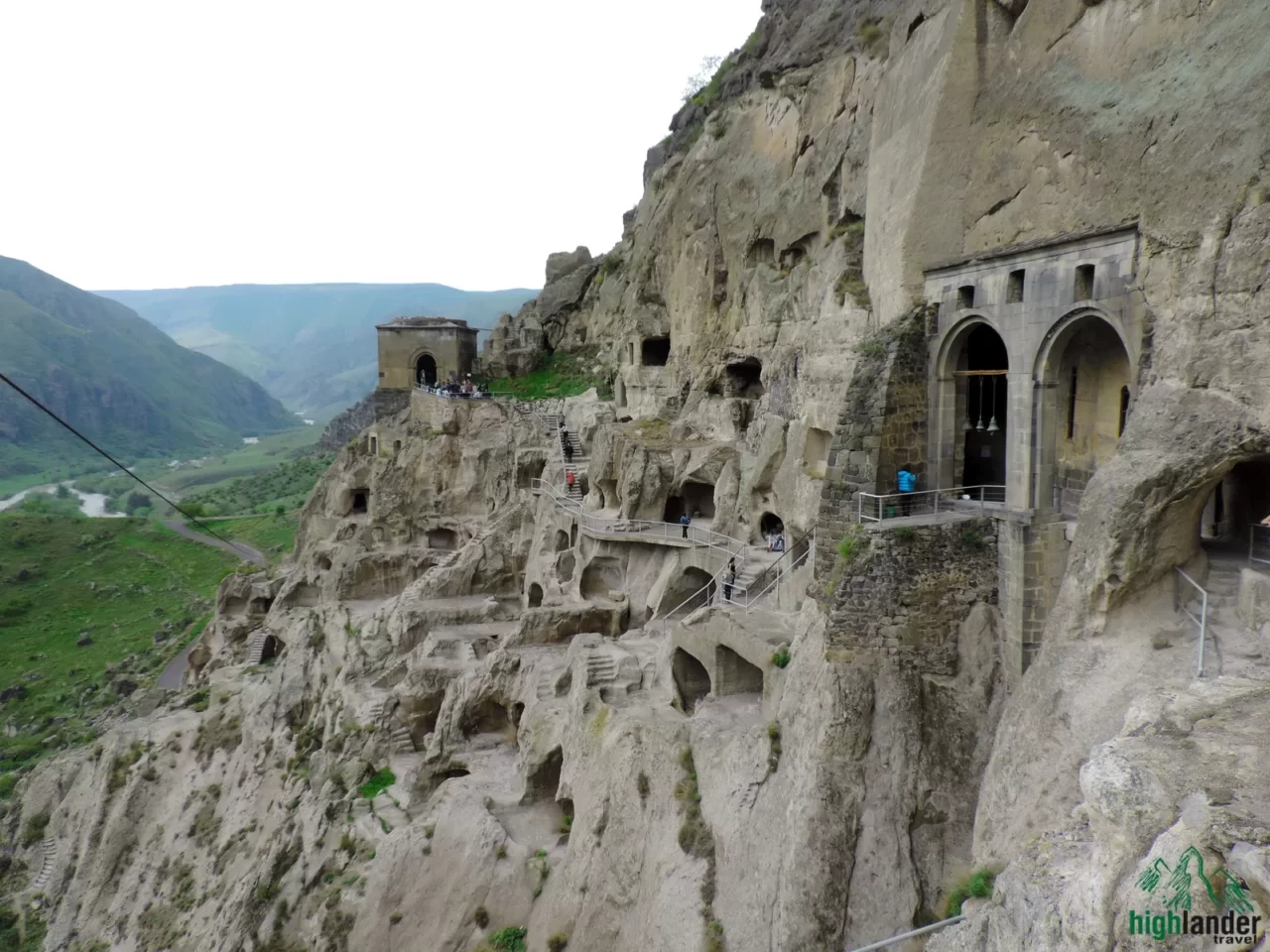
Vardzia at a Glance
| Location | Aspindza Municipality, Samtskhe-Javakheti, southern Georgia |
|---|---|
| Period | Mainly 12th century; construction continued into the early 13th century |
| Associated rulers | King Giorgi III and Queen Tamar |
| Main monument | Church of the Dormition and its medieval frescoes |
| Site layout | A 13-level rock-cut complex with hundreds of chambers and passages |
| Time needed | About 2–3 hours |
| Adult ticket | 15 GEL |
| Best season | April–June and September–October |
What Is Vardzia?
Vardzia is best understood as a royal monastery with residential, defensive and administrative functions—not simply as a hidden underground city. Its position above the river gave the complex strategic value, while its churches and monastic spaces made it an important religious centre during Georgia’s Golden Age.The official Georgian tourism portal describes a 900-metre cliff complex, while the National Agency for Cultural Heritage Preservation identifies 13 levels and hundreds of rooms, halls, corridors and tunnels. Only part of the original ensemble survives. The dramatic claims sometimes repeated online—6,000 rooms, a capacity of 50,000 people and one secret entrance—should be treated as popular storytelling rather than established fact.Vardzia’s History
A Royal Foundation
King Giorgi III began the main phase of construction in the second half of the 12th century. Queen Tamar—often styled King Tamar in Georgian tradition—continued and expanded the project after succeeding him in 1184. Vardzia became a powerful expression of the medieval Georgian kingdom’s faith, engineering and political ambition.The cliff contained monastic cells, chapels, communal rooms, storerooms, bakeries and wine cellars. Ceramic channels carried water through the complex, while interconnected passages helped residents move between different levels. The official national tourism portal records 28 historic wine cellars and 235 qvevri, the large clay vessels traditionally used for Georgian winemaking.The Church of the Dormition
The Church of the Dormition is the artistic and spiritual centre of Vardzia. Its 12th-century wall paintings include biblical scenes and portraits of Giorgi III and Tamar, the royal patrons responsible for the monastery’s construction. The portrait of Tamar is one of the most important surviving images of Georgia’s celebrated medieval ruler.The church remains sacred. Dress modestly, speak quietly and follow the instructions displayed at the entrance. Photography rules can change; never use flash on the frescoes and do not take photographs when staff or clergy prohibit it.Earthquake, Invasion and Decline
A major earthquake in 1283 tore away sections of the cliff face and exposed rooms that had previously been protected by the rock. Vardzia continued to function, but later invasions brought further destruction. Persian forces attacked the monastery in 1551, and Ottoman control of the region from 1578 ended its medieval monastic life.Monks returned in the late 20th century. Today, Vardzia is both a protected museum-reserve and an active Georgian Orthodox monastery, so visitors are exploring a living religious place rather than an archaeological attraction alone.Where Does the Name Vardzia Come From?
A beloved folk story links the name to the young Tamar. After becoming separated from her uncle in the caves, she supposedly called, “Ak var, dzia!”—“I am here, uncle!” The phrase is an evocative part of Vardzia’s legend, although it should not be presented as a proven etymology.What to See at Vardzia
- Church of the Dormition: The essential stop for its medieval fresco cycle and royal portraits.
- Rock-cut chambers: Cells, halls, storerooms and wine-making spaces reveal how the monastery functioned as a community.
- Passages and stairways: The interconnected route demonstrates the scale and engineering of the complex.
- Bell tower: One of the most recognisable structures and a good place to appreciate the Mtkvari Valley setting.
- Water system: Channels and a spring supplied the cliff settlement. Do not drink untreated water unless site staff confirms that it is safe.
Vardzia Opening Hours and Ticket Prices in 2026
| Period | Official opening hours |
|---|---|
| 1 March–30 April | 10:00–18:00 |
| 1 May–30 September | 10:00–19:00 |
| 1 October–14 November | 10:00–18:00 |
| 15 November–end of February | 10:00–17:00 |
- Adult admission: 15 GEL
- Georgian citizens who are school pupils, students or pensioners: 1 GEL with qualifying identification
- Children under six: free
- Audio guide: 15 GEL
- Uphill electric minibus: 2 GEL per person
Important Route Update
A rockfall on 27 May 2026 damaged part of the path and safety barrier near the so-called Secret Tunnel. The affected section was temporarily closed, and later visitor reports indicated that the final tunnel route could still be altered. Follow museum staff directions and check current access conditions when you arrive.How Much Time Do You Need?
Allow about two hours for a standard visit and closer to three if you want to move slowly, listen to an audio guide and examine the frescoes and rock-cut spaces in detail. Arrive at least two hours before closing; the site is much less enjoyable when you have to rush through the one-way route.How to Get to Vardzia
From Tbilisi by Car
Vardzia is approximately 250–300 kilometres from Tbilisi, depending on the route, and the drive normally takes around four to five hours each way. The usual road passes through Borjomi, Akhaltsikhe and Aspindza. Roadworks, winter weather and sightseeing stops can make the journey longer.By Public Transport
The usual independent route is a minibus from Tbilisi to Akhaltsikhe, followed by a local minibus or taxi to Vardzia. Direct regional schedules are limited and can change without notice, so confirm the return connection locally before setting out. Staying overnight in Akhaltsikhe or near Vardzia makes the journey far more practical.By Guided Tour
A same-day return from Tbilisi can involve more than ten hours in a vehicle. For a more comfortable pace, choose a two-day Vardzia tour from Tbilisi with an overnight stay and time for Borjomi, Rabati and Khertvisi. Travellers planning a longer itinerary can also include Vardzia on a seven-day cultural tour of Georgia or a ten-day Svaneti and Vardzia tour.Know Before You Go
- Wear shoes with good grip. The route includes worn stone, steep stairs and uneven surfaces.
- Dress for an active monastery. Cover shoulders and knees; wraps may be available, but it is better to arrive prepared.
- Carry water. Summer afternoons can be hot and exposed.
- Follow photography rules. Never use flash on frescoes and respect restrictions during services.
- Expect limited accessibility. The historic route is not suitable for wheelchairs or strollers and can be difficult for visitors with knee, balance or mobility problems.
- Stay within open areas. Rockfall is a natural risk at the cliff, so barriers and staff instructions must be taken seriously.
Best Time to Visit Vardzia
Late spring and early autumn offer the best balance of mild temperatures, green or colourful landscapes and manageable visitor numbers. Summer provides long opening hours but can be hot on the exposed paths. Vardzia remains open in winter, although snow and ice can affect roads and walking conditions.Morning is usually the most comfortable time to explore. Staying nearby allows you to enter early, before long-distance groups arrive and before the cliff warms in summer.Places to Visit Near Vardzia
- Khertvisi Fortress: A dramatic medieval stronghold above the meeting point of the Mtkvari and Paravani rivers.
- Vanis Kvabebi: An older and less developed cave-monastery complex a short drive from Vardzia.
- Tmogvi Fortress: Ruins occupying a strategic ridge above the river valley.
- Akhaltsikhe: The regional centre and home of the restored Rabati Fortress.
- Borjomi: A convenient stop for mineral water, parks and access to the hiking routes of Borjomi-Kharagauli National Park.
Is Vardzia Worth Visiting?
Yes. Vardzia brings together medieval architecture, sacred art, dramatic landscape and the story of Queen Tamar in a way no other Georgian site does. The long journey from Tbilisi is the main challenge, but a well-paced overnight trip turns it into one of southern Georgia’s most memorable experiences.Frequently Asked Questions About Vardzia
What is Vardzia?
Vardzia is a 12th-century rock-cut monastery complex in southern Georgia. It contains churches, cells, halls, storerooms, wine cellars, passages and a historic water system carved into the Erusheti cliffs.
Where is Vardzia located?
Vardzia is in Aspindza Municipality in Georgia’s Samtskhe-Javakheti region, above the Mtkvari River. It is roughly 250–300 kilometres from Tbilisi, depending on the route.
How much is the Vardzia entrance ticket?
As checked on 1 September 2026, adult admission costs 15 GEL. The optional audio guide costs 15 GEL and the uphill electric minibus costs 2 GEL per person.
Is Vardzia open on Mondays?
Yes. The official heritage agency lists Vardzia as open every day, including Mondays. Seasonal closing times vary from 17:00 in winter to 19:00 in summer.
How long do you need at Vardzia?
Allow about two hours for a standard visit and up to three hours for a slower exploration with an audio guide. Arrive at least two hours before closing.
Can you visit Vardzia as a day trip from Tbilisi?
It is possible, but the return journey can require more than ten hours of driving. A two-day trip with an overnight stay is more comfortable and leaves time for Vardzia and nearby sites.
What should I wear at Vardzia?
Wear sturdy shoes and clothing that covers shoulders and knees. Vardzia is an active Orthodox monastery as well as a museum-reserve, so modest dress and quiet behaviour are expected.
Is Vardzia accessible for visitors with limited mobility?
Accessibility is very limited. The route includes steep stairs, uneven stone, narrow passages and significant climbing, making it unsuitable for wheelchairs and difficult for people with mobility or balance problems.
Can you take photos inside Vardzia?
Photography is generally possible in the complex, but restrictions can apply inside churches or during services. Follow staff instructions and never use flash on the medieval frescoes.
What else can you see near Vardzia?
Nearby highlights include Khertvisi Fortress, Vanis Kvabebi cave monastery, Tmogvi Fortress, Rabati Fortress in Akhaltsikhe and the mineral-water town of Borjomi.
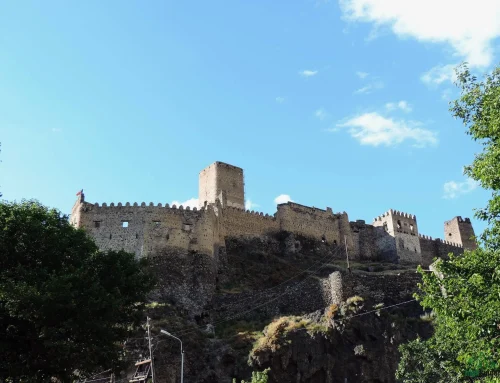



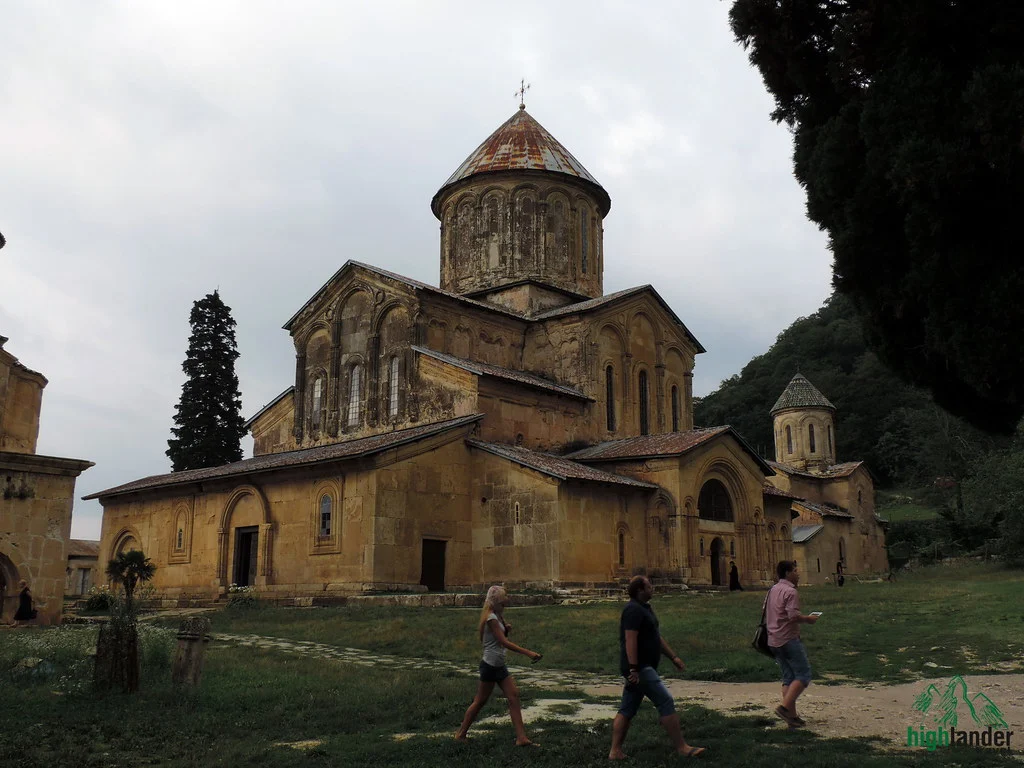
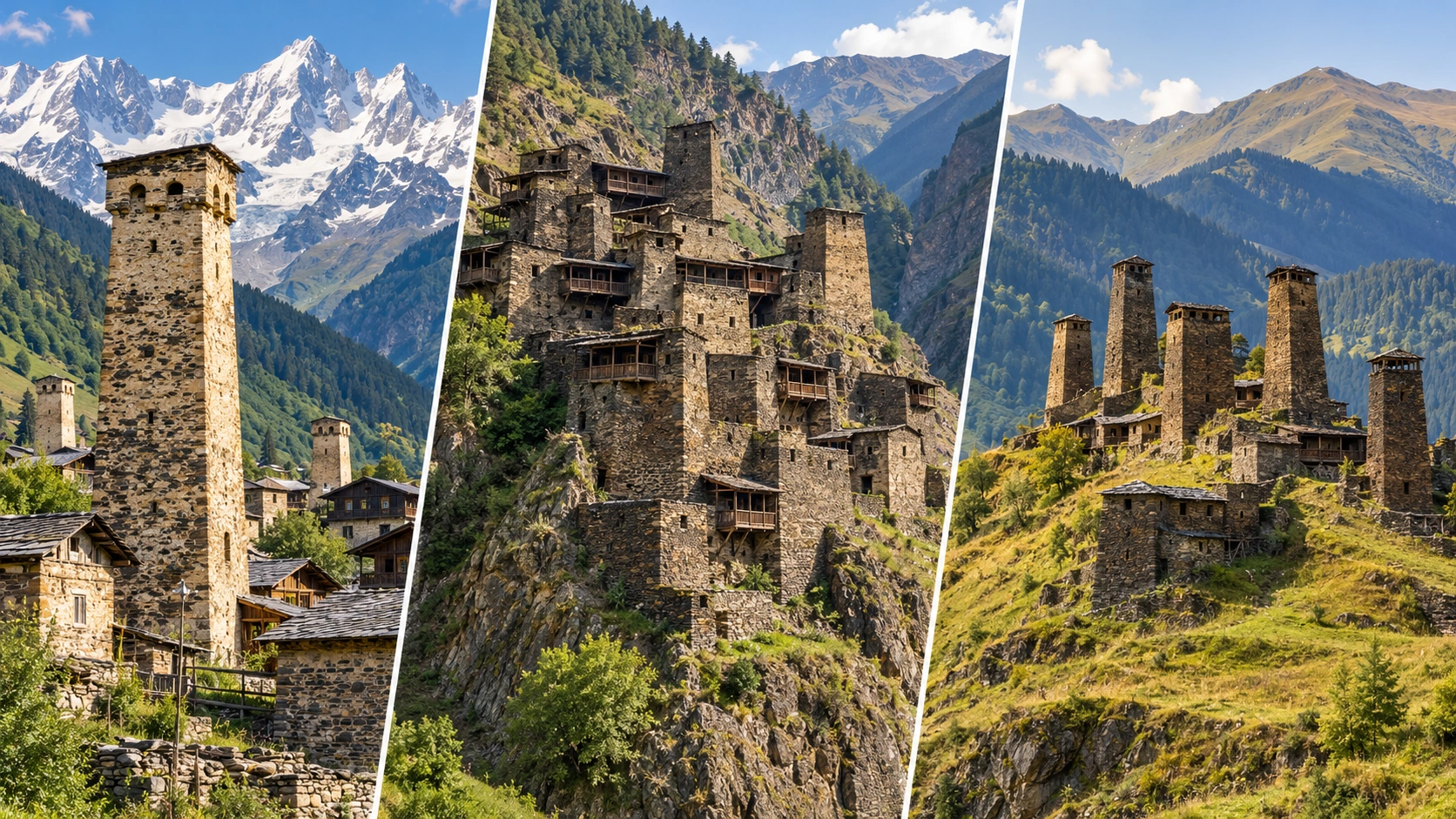
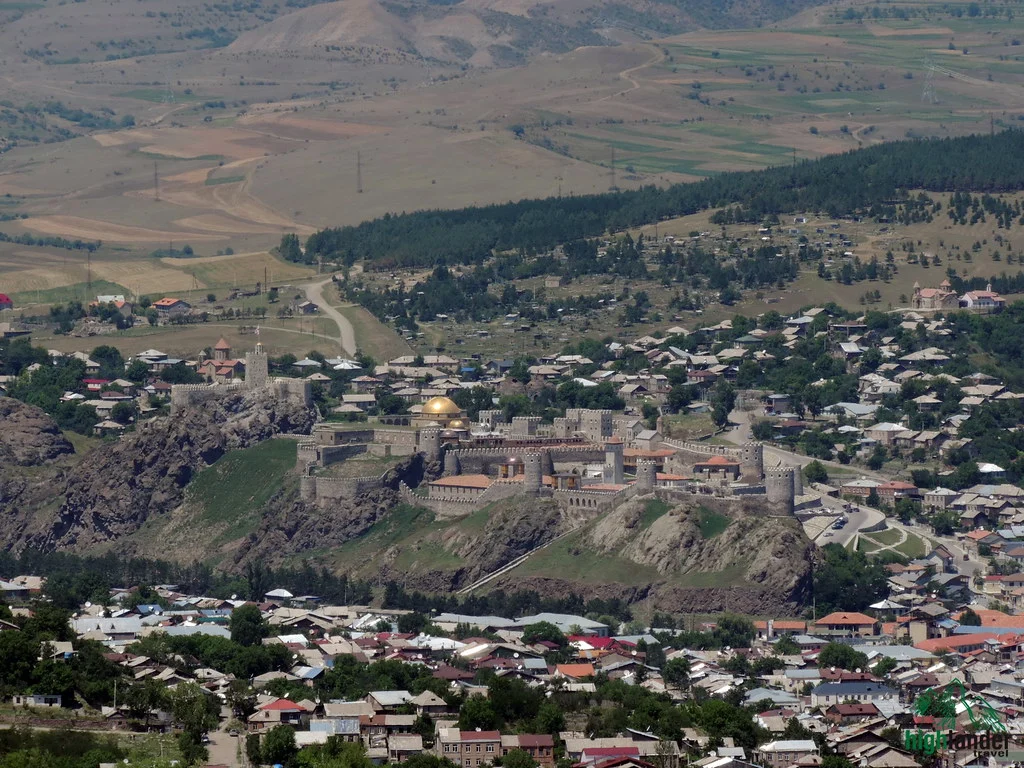
[…] uneven surfaces and passages cut into the cliff. Wear shoes with grip and take drinking water. Our Vardzia monastery guide explains the main sights and visitor […]
[…] travellers coming to southern Georgia visit Vardzia — and they should. But those who make the detour to Sapara discover something very different: […]
[…] Home » Architecture of Georgia » Tsunda Church – A Medieval Treasure near Vardzia […]
[…] few kilometres from the famous Vardzia cave monastery, in a quiet side valley of Samtskhe-Javakheti, stands a much smaller and older religious site: […]
[…] the monumental cave complex of Vardzia or the forest-hidden buildings of Sapara, Zarzma combines a large domed church, one of […]
[…] Vardzia […]
[…] no passenger train to Kakheti (Telavi, Sighnaghi), to Kazbegi in Mtskheta-Mtianeti, to Mestia or to Vardzia. For those, you are on the road, whether by marshrutka, shared taxi or on one of our one-day tours […]