
Understanding Tusheti
Geography and protected areas
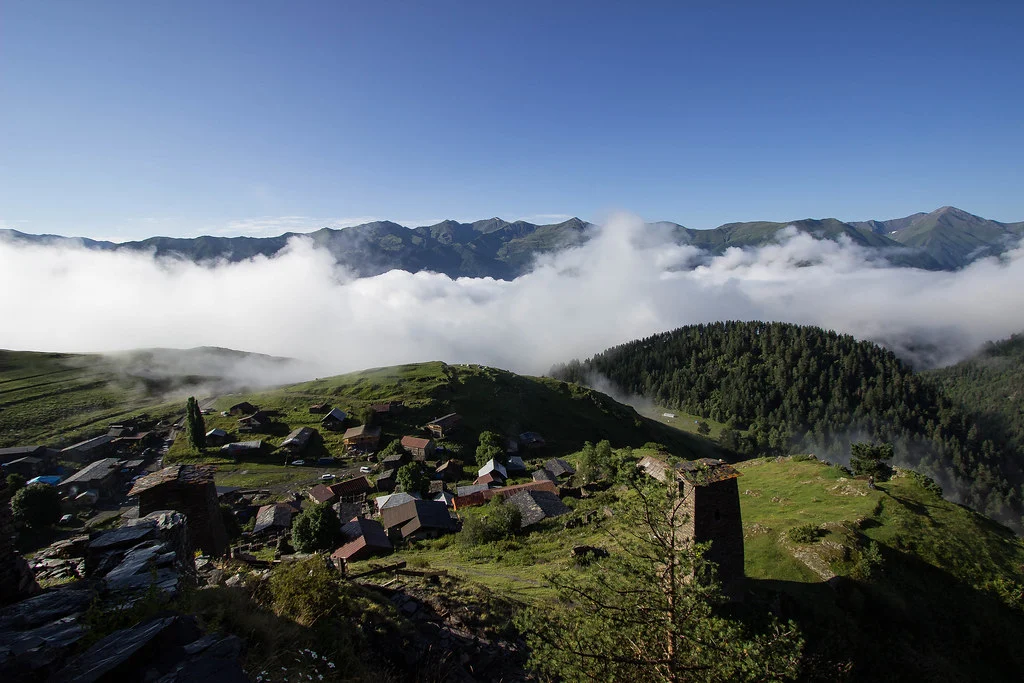
Tusheti lies in northeastern Georgia, within the administrative region of Kakheti, on the northern side of the Greater Caucasus. Tusheti National Park is commonly listed at about 83,000 hectares. The wider protected-area system also includes a strict nature reserve and protected landscape; published totals vary because boundaries and management categories have changed.Historically, Tusheti is divided into four communities:- Chaghma: Omalo, Shenako, Diklo and nearby settlements
- Pirikiti: Dartlo, Chesho, Parsma, Girevi and the Pirikiti Alazani Valley
- Gometsari: Dochu, Jvarboseli, Verkhovani and villages along the Tushetis Alazani Valley
- Tsovata: the historic Tsova-Tush settlements in the western part of Tusheti
A seasonal mountain community
Most Tushetian families spend winter in the Kakheti lowlands and return to the mountains during the road season. Guesthouses, cafés and transport services therefore operate mainly in summer. A very small number of residents may remain through winter, but visitors should treat Tusheti as a seasonal destination.This seasonal movement is part of a long pastoral tradition. Shepherds still move flocks between winter grazing areas and high summer pastures, and sheep farming remains central to Tushetian identity.The Abano Pass Road
What the journey is like
The Pshaveli–Abano–Omalo road is the only road into Tusheti. It is roughly 72 kilometres from Pshaveli to Omalo and crosses the Abano Pass at about 2,900–2,950 metres. The trip from the Kakheti lowlands usually takes four hours or more in good conditions; delays are normal.The road is being rehabilitated in phases during 2026–2027. The lower section is planned for asphalt surfacing, while much of the mountain route remains gravel, narrow and exposed. Construction may create additional delays or temporary restrictions.- Use a high-clearance 4×4 in sound mechanical condition.
- Travel with a driver who regularly works on the Tusheti road.
- Allow a full day for the journey from Tbilisi.
- Expect rough surfaces, sharp bends, stream crossings and changing visibility.
- Do not continue during heavy rain, snow, landslides or official road restrictions.
When does the road open?
There is no guaranteed annual opening date. Access commonly begins around mid-June and can continue into late September or early October, but snow, landslides and road works may shorten the season. Even after an opening announcement, weather can close the route temporarily.Confirm the road status with your driver or tour operator immediately before departure and check official restrictions. Do not build a fixed Tusheti itinerary around an assumed May opening or late-October return.Should you self-drive?
Only experienced mountain-road drivers with an appropriate vehicle should consider it. Many rental agreements specifically prohibit the Tusheti road, even for vehicles marketed as SUVs. Driving in breach of the contract can invalidate insurance and roadside assistance.For most visitors, hiring a local driver from Kvemo Alvani or joining an organized tour is the safer and simpler option.Villages to Visit in Tusheti
Omalo
Omalo is the main visitor base and the best place to begin. Lower Omalo contains the protected-areas visitor centre and many guesthouses, while Upper Omalo is crowned by the Keselo tower complex.- Walk to Keselo for panoramic views across the Chaghma Valley.
- Visit the small ethnographic collection when it is open.
- Arrange local drivers, horses or guides through your guesthouse.
- Use Omalo as a base for short hikes to nearby villages and viewpoints.
Dartlo
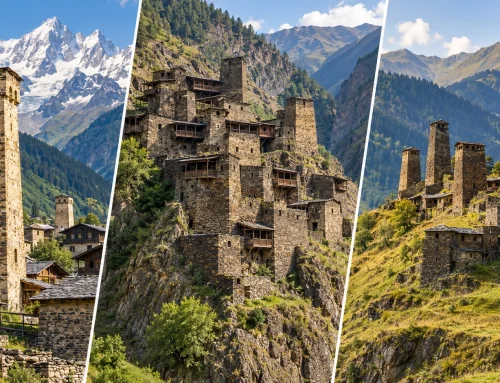
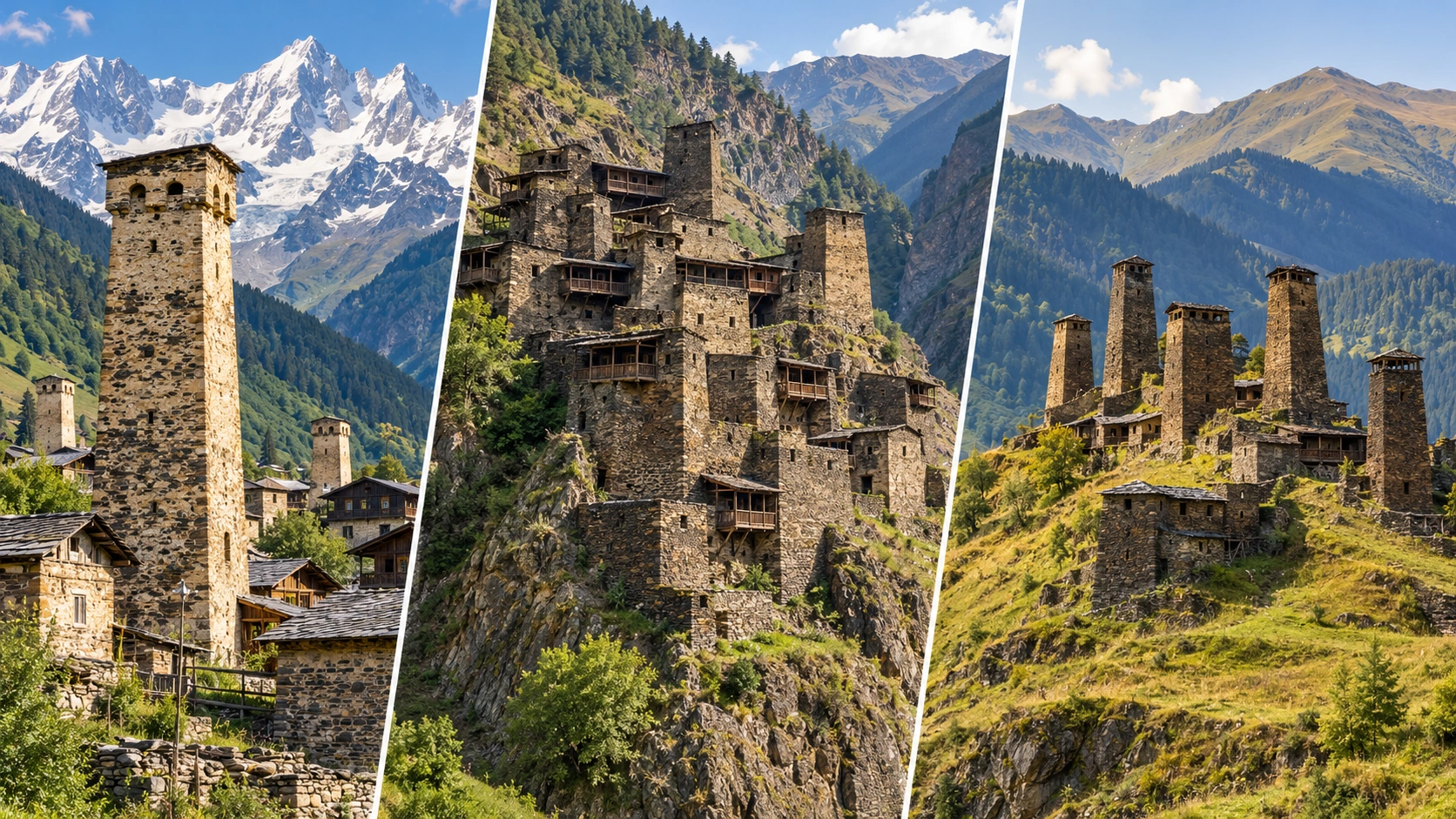
Dartlo is one of Tusheti’s finest ensembles of slate houses, defensive towers and narrow lanes. It lies in the Pirikiti Valley, about 18 kilometres from Lower Omalo by the protected areas’ route description.Look for the sabcheo, the stone setting associated with the community’s traditional court, as well as the nineteenth-century church and the walking route toward Kvavlo. Dartlo is attractive as a day trip, but an overnight stay gives you the village after most vehicles leave.Shenako
Shenako sits in the Chaghma Valley and is known for its nineteenth-century Holy Trinity church and broad mountain views. It is reachable by high-clearance vehicle or on foot from Omalo and combines naturally with Diklo.Diklo and Old Diklo
Diklo is one of the easternmost villages on the usual visitor circuit. The ruins commonly called Old Diklo fortress stand beyond the present village, close to the border area, and require a separate walk. Carry your passport and follow current local advice because access near the frontier can change.Dochu, Girevi and other villages
Dochu is a striking Gometsari village built on a steep slope. Girevi is the last village reached by the Pirikiti road and a gateway to longer walks toward Chontio or the Atsunta Pass route. Jvarboseli, Verkhovani, Chesho, Parsma and Tsaro reward travellers with more time and suitable logistics.Some routes enter border-controlled areas. Requirements can change, so confirm whether you need identification, registration or a permit before setting out.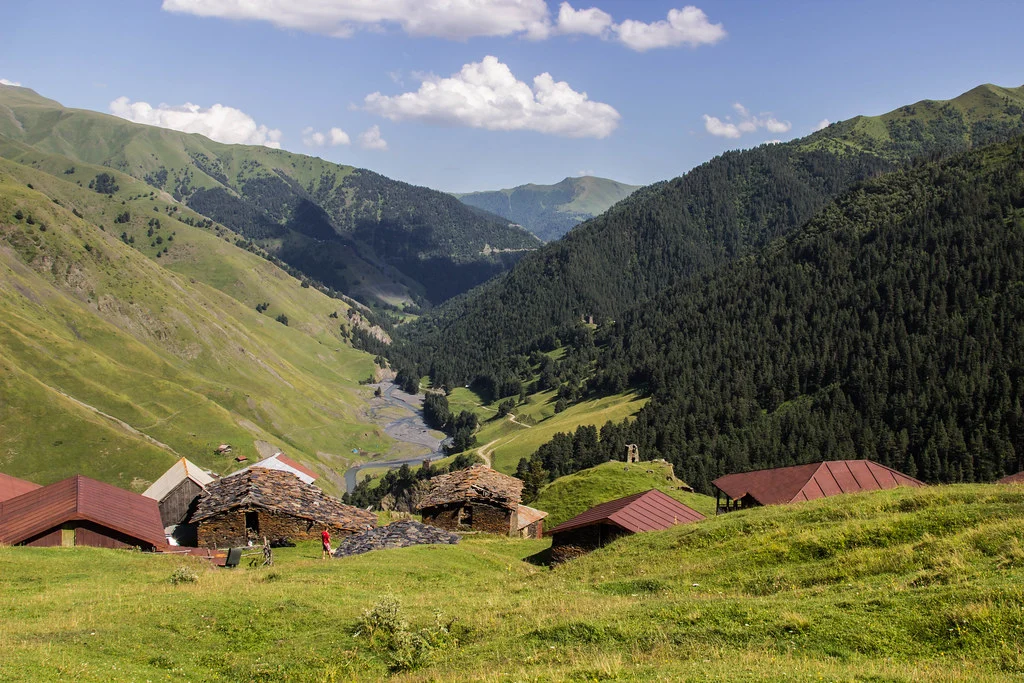
Tush Culture and Local Customs
The Tush people
Tusheti’s culture combines Georgian Orthodox Christianity with older highland practices. Most Tushetians speak Georgian and a local Georgian dialect. The Tsova-Tush, or Batsbi, also have a distinct endangered Nakh language called Bats; the two traditions should not be treated as the same language.Hospitality, pastoral life, music, wool work and food traditions remain important. Visitors are welcome, but the region is not an open-air museum: ask before photographing people, homes, rituals or sacred places.The pork taboo
Do not bring pork or pork products into Tusheti. The prohibition is a deeply rooted local rule and applies even if the food is sealed. Leave it in the lowlands before crossing the pass.Sacred sites
Small stone shrines and sacred enclosures can be easy for outsiders to miss. Local rules may restrict who can enter particular areas, including restrictions affecting women at some traditional shrines. Do not cross a boundary, touch offerings or enter a site unless a host or guide confirms that it is appropriate.Festivals
Tusheti’s summer calendar includes local religious celebrations, village festivals and public cultural events. Dates vary by year and community; do not rely on a fixed mid-July date for “Tushetoba.” Confirm the announced programme locally before booking transport or accommodation around a festival.
Trekking in Tusheti
Tusheti Protected Areas lists eleven tourist trails ranging from one to six days. Conditions and waymarking vary, and a route that looks short on a map may involve steep climbs, loose slopes, river crossings or long sections without shelter.For a broader comparison of regions and difficulty levels, see our guides to trekking in Georgia and the best hiking trails in the Caucasus.Short walks and day hikes
| Route | Typical time | Notes |
|---|---|---|
| Lower Omalo–Upper Omalo–Keselo | 2–3 hours | Best introductory walk; steady climb and open views |
| Omalo–Shenako–Diklo | Full day | Long day on foot; sections can also be reached by 4×4 |
| Omalo–Dartlo | Full day | Demanding as a return walk; many visitors arrange a vehicle one way |
| Diklo–Old Diklo | Half to full day | Check border-area access and weather before leaving |
Multi-day routes
- Pirikiti Valley: link Dartlo, Chesho, Parsma and Girevi over several days, using guesthouses where available.
- Gometsari circuit: combine Dochu, Jvarboseli and neighbouring villages; expect substantial climbs between valleys.
- Omalo–Shatili over Atsunta Pass: approximately 70 kilometres and usually four to six days. This is a remote, difficult crossing at around 3,431 metres and requires camping, reliable navigation and an experienced guide.
Trekking practicalities
- Use designated campsites rather than camping anywhere in the national park.
- Carry offline maps and a power bank; phone coverage is unreliable.
- Treat or filter water from streams and springs.
- Start early and keep a weather margin.
- Give sheep flocks and guardian dogs a wide berth; do not run, and follow the shepherd’s instructions.
- Pack warm, waterproof layers even in midsummer.
- Hire a guide for remote, unmarked or high-pass routes.
Horse Riding in Tusheti
Horses remain well suited to Tusheti’s terrain and make it possible to reach villages and viewpoints that require long walks. Short rides can often be arranged through guesthouses in Omalo or Dartlo, while multi-day journeys require advance planning, a horse handler and clear expectations about riding experience.A guided day ride in 2026 is commonly advertised around 150–250 GEL per person, depending on duration, route and group size. Confirm whether the price includes a guide, horse handler, meals and transfers. Riders should wear a helmet and disclose their experience honestly.For a fully arranged option from Tbilisi, see the 4-day Tusheti horseback riding tour.Wildlife
 Tusheti protects habitat for East Caucasian tur, chamois, roe deer, brown bear, wolf, lynx and many birds of prey. Bearded vultures, griffon vultures and golden eagles may be seen above the valleys.Wildlife sightings are never guaranteed. Walk quietly at dawn or late afternoon, use binoculars and keep a respectful distance. Do not leave food outside tents or guesthouses, and follow local guidance in bear habitat.Read our overview of the national parks and protected areas of Georgia for more wilderness destinations.
Practical Information for 2026
Getting to Tusheti
The usual independent route is Tbilisi to Telavi or Kvemo Alvani, followed by a local 4×4 to Omalo. Shared vehicles leave when enough passengers have gathered, so departure times are not always fixed. Reserve through a guesthouse or driver during busy periods.| Transport | 2026 estimate | Notes |
|---|---|---|
| Tbilisi–Telavi or Alvani | About 20–25 GEL per person | Marshrutka or shared taxi; price and departure point vary |
| Shared 4×4, Alvani–Omalo | About 100–120 GEL per person, one way | Usually leaves when full |
| Private 4×4, Alvani–Omalo | About 500–650 GEL per vehicle, one way | Confirm capacity, luggage and return plan |
| Organized 3-day trip from Tbilisi | From €590 per person | Current Georgia-Tours.eu listed starting price |
Accommodation
Family guesthouses are the standard accommodation. Rooms are simple, bathrooms may be shared and electricity or hot water can be intermittent. Dinner and breakfast are often included, but always confirm.Budget roughly 60–120 GEL per person per night with meals, depending on the village and room type. Book ahead in Omalo and Dartlo during August and around announced festivals.Food and drink
Guesthouse meals commonly feature bread, potatoes, beans, seasonal vegetables, meat and Tushetian dairy products such as guda cheese. Vegetarian meals can usually be arranged with advance notice; vegan and allergy-specific diets need clearer planning because shops are limited.Carry lunch and snacks on day hikes. Do not bring pork products into the region.Money and supplies
- Bring enough Georgian lari in cash for the entire stay.
- There are no reliable ATMs, banks, pharmacies or fuel stations in Tusheti.
- Buy medicines, specialist food and spare batteries in Tbilisi, Telavi or Alvani.
- Keep a cash reserve for an unplanned extra night or transport change.
Phone and internet
Magti and Silknet may provide intermittent coverage around Omalo and some ridges, but valleys and remote villages often have no signal. Guesthouse Wi-Fi should not be assumed. Download maps, confirmations and emergency details before leaving the lowlands.Health and safety
- Carry a personal first-aid kit and enough regular medication.
- Use travel insurance that explicitly covers trekking, horseback riding and emergency evacuation at your planned altitude.
- Foreign visitors to Georgia must carry valid health and accident insurance with at least 30,000 GEL coverage in 2026.
- Tell your guesthouse or guide where you are going and when you expect to return.
- Allow time to acclimatize before strenuous high-altitude routes.
- Do not drink untreated surface water.
What to pack
- Waterproof jacket and warm layers
- Broken-in hiking footwear
- Sun protection and a warm hat
- Reusable water bottle plus filter or purification tablets
- Offline map, power bank and headlamp
- Cash, passport and insurance details
- Personal medicines and compact first-aid kit
- Dry bags or waterproof covers for electronics and documents
Suggested Tusheti Itineraries
Fast introduction: 3 days
- Day 1: Travel from Tbilisi to Omalo over the Abano Pass; overnight in Omalo.
- Day 2: Visit Upper Omalo and Keselo, then explore Shenako and Diklo or Dartlo with a local driver.
- Day 3: Return to Tbilisi.
Village and hiking trip: 5–7 days
- Day 1: Travel to Omalo.
- Day 2: Keselo and an acclimatization walk.
- Day 3: Shenako, Diklo and Old Diklo.
- Day 4: Transfer or hike toward Dartlo.
- Day 5: Explore Dartlo and Kvavlo, or continue along the Pirikiti Valley.
- Day 6: Return to Omalo with a Gometsari detour if time and road conditions allow.
- Day 7: Return to Tbilisi.
Frequently Asked Questions
When is the best time to visit Tusheti?
July to early September usually offers the most dependable access and the widest choice of guesthouses. The road season varies every year, so confirm conditions before travelling.
Is the road to Tusheti safe?
The Abano Pass road is narrow, exposed and vulnerable to weather and landslides. Travel in a suitable 4×4 with an experienced local driver and never ignore official closures.
Can I drive a rental car to Tusheti?
Many rental agreements prohibit the Tusheti road, including for SUVs. Check the written contract and insurance terms; for most visitors, a local driver is the safer choice.
How many days do I need in Tusheti?
Three days is the minimum from Tbilisi and includes two long travel days. Four to seven days allows a more rewarding mix of villages, hiking and rest time.
How much does a Tusheti trip cost in 2026?
A shared Alvani–Omalo 4×4 is typically about 100–120 GEL per person one way, while a private vehicle is about 500–650 GEL. Guesthouses commonly cost around 60–120 GEL per person with meals; reconfirm all prices before travel.
Do I need a guide for trekking?
A guide is strongly recommended for remote valleys, unmarked routes and the Atsunta Pass crossing. Experienced hikers can manage some established village walks independently with offline maps and current local advice.
Can I camp anywhere in Tusheti National Park?
No. Use designated campsites and follow protected-area rules. Confirm campsite locations and water availability at the visitor centre before starting a multi-day route.
Why can’t I bring pork to Tusheti?
Pork is prohibited by a deeply rooted local religious and cultural tradition. Visitors should respect the rule and leave all pork products in the lowlands.
When is the Tushetoba festival?
There is no dependable fixed date to publish for every year. Festival and village-celebration dates vary, so confirm the current programme before booking transport and accommodation.
Is there mobile phone coverage in Tusheti?
Coverage from Magti or Silknet can be intermittent around Omalo and some ridges, but many valleys have no signal. Download maps and key information in advance.
Do I need travel insurance for Tusheti?
Yes. Georgia requires foreign visitors to carry health and accident insurance in 2026, and a Tusheti policy should also cover hiking or riding, altitude and emergency evacuation.
Can I visit Tusheti as a day trip from Tbilisi?
No. The mountain road alone takes several hours each way, after the drive from Tbilisi to Kakheti. Plan at least two nights, and preferably four or more days.



[…] belongs to Tusheti, a historical-geographical region administratively associated with Kakheti. It lies in the Pirikita […]