The road to Tusheti is less a road than a suggestion scratched into the side of a mountain. Seventy kilometres of it, no barrier on the drop side, climbing to 2,826 metres at the Abano Pass before it tips over and drops you into a region that has no other way in. It is open four months a year. When it closes in October, the handful of families who stay the winter are on their own until spring.
That is the point. Tusheti is not remote in the marketing sense. It is remote in the sense that the ambulance is a helicopter and the nearest supermarket is on the far side of a pass that eats gearboxes.
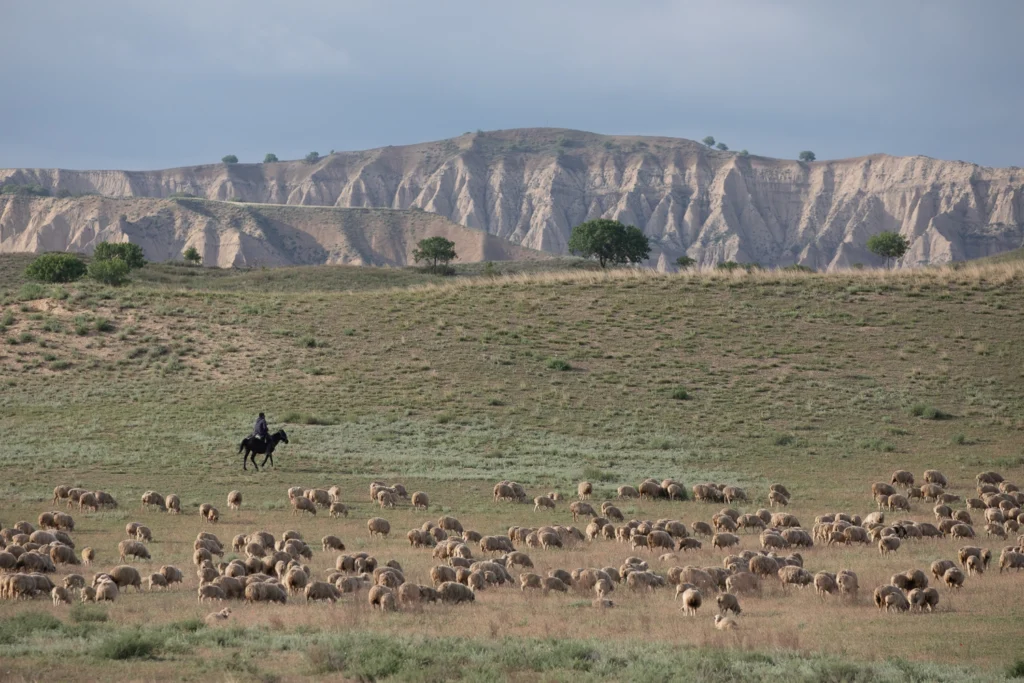
You ride for two of the four days. From Upper Omalo the trails run out along the Chanchakhovani Gorge to Shenako and Diklo, stone villages a few kilometres from the Dagestan border, and up onto the Unagira ridge at a little over 3,000 metres, where the Pirikiti and Gometsari valleys open out below you on both sides at once. Sixteen kilometres one day, twenty-three the next. The horses are Tushetian mountain stock, bred for exactly this ground, and they know the trails better than anyone riding them.
No riding experience is needed. What is needed is a tolerance for long days, thin air and a bed in a family guesthouse rather than a hotel — and if that sounds like a warning rather than a pitch, good. This trip rewards the people who wanted it.
What you’ll see
Tour highlights
- The Abano Pass at 2,826 m. The highest drivable road in the Caucasus, crossed in both directions in a heavy-duty 4WD with a driver who does it for a living.
- Two full riding days, 39 km of trail. Not a demonstration ride — around five hours in the saddle on the second day, with a picnic at the top.
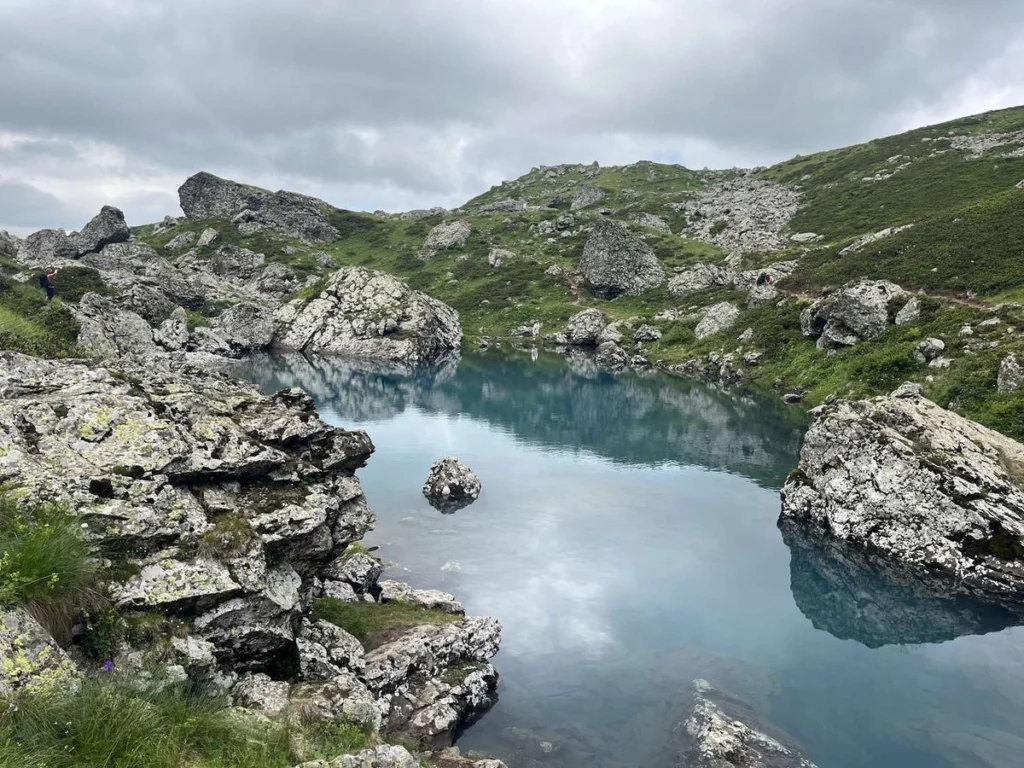
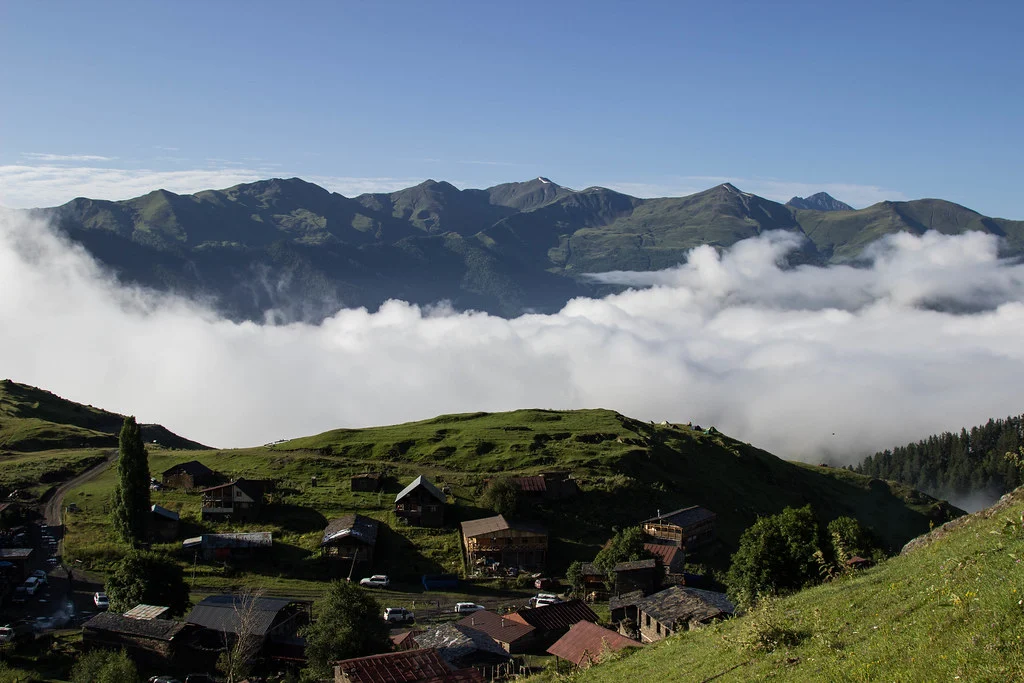
- The Unagira ridge. Pirikiti on one side, Gometsari on the other, Bochorna visible in the distance — the highest permanently inhabited village in Europe, a scatter of roofs on a slope with no road worth the name.
- Shenako and Diklo. Stone-built villages within sight of the Dagestan border, where the houses were designed to be defended and it shows.
- The Keselo towers above Upper Omalo. Thirteenth-century defensive towers that the Tushetians retreated into when the raiders came up the valley. Several have been restored; you can go inside.
- Dartlo. Slate roofs laid like fish scales down the hillside, and the best-preserved tower architecture in the region.
- Three nights at Guesthouse Mgzavri, Upper Omalo. Full board, family kitchen, and the kind of dinner that goes on longer than you planned.
Step by step
Tour itinerary
Day 1 · Tbilisi – Alaverdi – Abano Pass – Omalo · 220 km
An early start out of Tbilisi and over the Gombori Pass into Kakheti, with a stop at Alaverdi Cathedral — eleventh century, forty-two metres to the top of the dome, and for five hundred years the tallest building in Georgia. Then the tarmac ends and the climb begins. The Abano Pass road takes several hours to cover seventy kilometres, and there is a reason people talk about it: switchback after switchback with the valley dropping away beside you, and no guardrail anywhere. We stop for a picnic lunch where the view is worth stopping for. Late afternoon arrival in Upper Omalo, check in at Guesthouse Mgzavri, and dinner with the family. If the timing and the road allow, we take in Dartlo on the way.
Drive: 220 km · Meals: lunch, dinner · Night: Guesthouse Mgzavri, Upper Omalo
Day 2 · Chanchakhovani Gorge, Shenako and Diklo · ~16 km riding
Breakfast, then out to meet the horses. The morning is spent getting the match right — the guides watch how you sit and swap horses around until everyone is on the right one. Then into the Chanchakhovani Gorge, through pine forest and out onto open meadow, climbing steadily towards Shenako and Diklo. Both villages are built in stone, both are a short walk from the Dagestan border, and both were laid out by people who expected trouble to come from over the ridge. Picnic lunch somewhere with a view, then back down to Omalo in the late afternoon.
Riding: ~16 km · Altitude: 1,700–2,250 m · Meals: breakfast, picnic lunch, dinner · Night: Guesthouse Mgzavri
Day 3 · The Unagira ridge and the Gometsari valley · ~23 km riding
The long day, and the one people remember. A steady climb out of Omalo onto the Unagira ridge at a little over 3,000 metres, where the ground falls away on both sides and you can see the Pirikiti and Gometsari valleys at the same time, with Bochorna and Dartlo as small clusters of roof-slate far below. Lunch is eaten up there. The descent runs down into the Gometsari valley and back along it to Omalo, arriving tired. Around twenty-three kilometres and most of the day in the saddle — if you have never ridden before, you will feel this one tomorrow.
Riding: ~23 km · Altitude: 1,700–3,050 m · Meals: breakfast, picnic lunch, dinner · Night: Guesthouse Mgzavri
Day 4 · Keselo towers, then back over the pass · 200–240 km
After breakfast we walk up to the Keselo towers on the rock above Upper Omalo. They were built in the thirteenth century as a place to survive a raid, and standing in one you understand the logic immediately — nobody reaches you except one at a time. If Dartlo was missed on Day 1 we go there instead, for the slate roofs and the tower houses. Weather permitting, there is a view across to Dochu, a village that appears to be growing out of a cliff. A last lunch at the guesthouse, and then the pass again, in the other direction, which is not the same drive at all. Back in Tbilisi in the evening.
Drive: 200–240 km, 7–8 hours · Meals: breakfast, lunch
Starting from
€575
per person
Locally operated since 2011
We reply within 24 hours
What your price covers
What’s included
Included
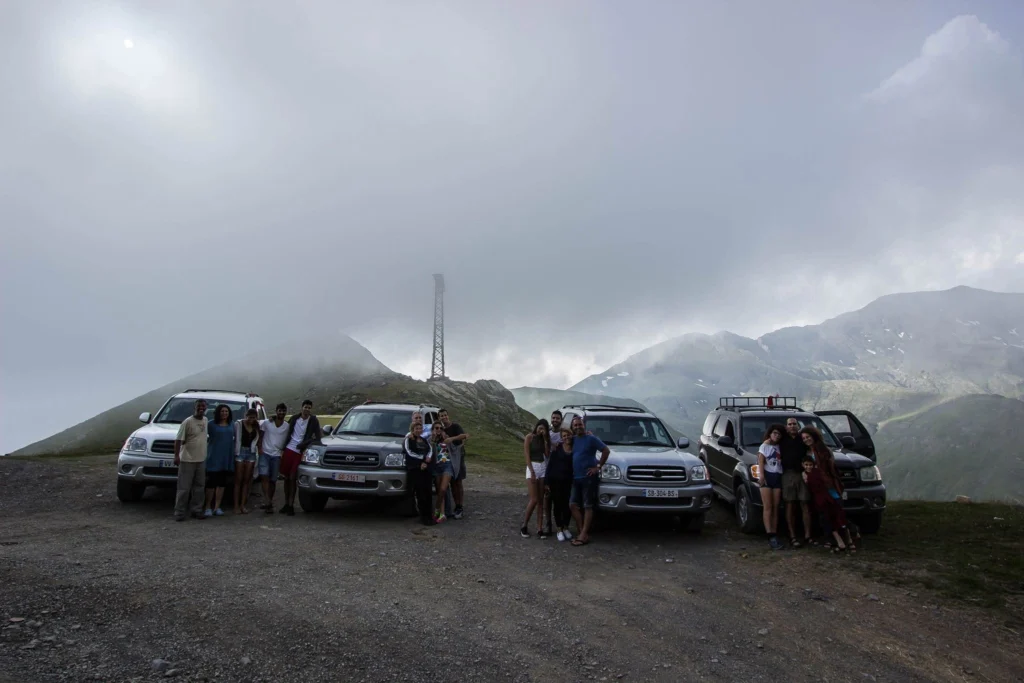
- Private heavy-duty 4WD with an experienced mountain driver for the Tbilisi–Omalo–Tbilisi legs
- English-speaking driver-guide throughout the four days
- Horse hire and professional handlers for both riding days
- Three nights’ full-board accommodation at Guesthouse Mgzavri, Upper Omalo
- All meals as listed in the itinerary — breakfasts, picnic lunches on the trail, dinners at the guesthouse
- Alaverdi Cathedral stop on Day 1
- Mountain logistics and safety coordination arranged in advance
Not included
- Travel and medical insurance — genuinely required here, not a formality. Check that your policy covers horse riding above 3,000 metres and helicopter evacuation, because a road ambulance cannot reach Tusheti
- Drinks beyond what is served with meals, including alcohol
- Accommodation in Tbilisi before or after the tour
- Personal riding equipment — bring your own helmet, gloves or boots if you prefer your own
- Tips for the driver, guides and horse handlers
- Personal expenses and souvenirs
- Anything not listed under “Includes”
Photographs
Gallery
Where you’ll go
Map & route
Tbilisi — city centre
Gombori Pass
Alaverdi Cathedral
Abano Pass
Upper Omalo
Shenako
Diklo
Upper Omalo
Keselo Fortress
Dartlo
Practical details
Good to know before you go
When it runs, and why the window is so narrow
June to October. The Abano Pass is cleared in late spring and closes with the first serious snow, and there is no alternative route — no tunnel, no second road, nothing. Early June can still have snow patches on the higher trails and late October can turn on you overnight. July to September is the reliable middle.
Is this the right Tusheti tour for you?
We run two. They visit some of the same places and they are not the same trip:
| 3-day Tusheti · 4WD and hiking | 4-day Tusheti · horseback | |
|---|---|---|
| How you cover ground | On foot, from the vehicle | On horseback, two full days |
| Physical demand | Walking fitness | Sitting a horse for 4–6 hours, twice |
| Villages reached | More of them, faster | Fewer, but reached the old way |
| Nights | Two | Three |
| Best for | Seeing Tusheti | Spending time in it |
If you want to stand in Dartlo and photograph the towers, take the three-day. If the appeal is being on a horse on a ridge at three thousand metres with nowhere to be, take this one.
The riding, honestly
No experience is required and the horses are calm, well-trained and completely at home on this terrain. What you do need is the willingness to be on one for most of two days. Day 3 is around twenty-three kilometres. Riders who have never sat on a horse manage it every season, and every one of them is stiff on Day 4. Handlers ride with the group throughout and the pace is set by the least confident rider, so nobody is left behind and nobody is pushed.
Altitude
You sleep at roughly 2,000 m and ride to just over 3,000 m. That is high enough for some people to notice — a headache, shortness of breath on the climb, a poor first night’s sleep. It is rarely more than that, and the two nights in Omalo before the high day help. Drink more water than feels necessary and go easy on the wine the first evening. If you have a heart or lung condition, talk to your doctor and then to us.
What to pack
- Long trousers you can ride in. Jeans work, riding breeches work better. Nothing that will rub after four hours.
- Boots or shoes with a closed toe and a small heel. Trainers are acceptable, sandals are not.
- Layers, more than you think. It can be 25°C in Omalo at midday and near freezing on the ridge with the wind up. A windproof outer layer is the one item nobody regrets.
- Sun protection. At 3,000 m with no shade the sun is fierce even when the air is cold. Hat, high-factor cream, sunglasses.
- A power bank. Guesthouse electricity in Tusheti is real but not guaranteed, and there is nothing to charge from on the trail.
- Cash in lari. There is no ATM in Tusheti and no card machine. Bring what you expect to spend on drinks, souvenirs and tips, and a little more.
- Any medication you take, in the quantity you need. The nearest pharmacy is over the pass.
Two local rules worth knowing before you arrive
Pork is not eaten in Tusheti and not brought into the region — this is taken seriously, and it is not a dietary preference but a religious boundary. And the small stone shrines you will see on high ground, called khati, are not open to women; they are not tourist sites for anyone. Your guide will point them out and explain. Following the rule costs nothing and is noticed.
Phone signal and internet
Patchy at best in the valleys and absent on most of the trails. Guesthouse Wi-Fi in Omalo exists and works when it works. A local Magti SIM gives you the best chance of coverage. Tell whoever worries about you that you will be out of contact for a few days — it is easier than explaining afterwards.
Food
Full board at the guesthouse: home cooking, mountain cheese, bread from the family oven, and more of it than you can eat. Vegetarian, vegan and gluten-free all work here — Georgian cooking is generous with beans, walnuts, aubergine and herbs and does not treat meatless eating as a problem. Tell us when you book so the guesthouse can plan, not on arrival.
Group size and customisation
This is a private tour. Dates, pace, accommodation and the balance of riding and driving can all be adjusted — if you want a third riding day or a lighter Day 3, say so and we will price it.
From our travellers
Reviews
Before you book
Frequently asked questions
Do I need riding experience?
No. The horses are Tushetian mountain stock, calm and used to visitors, and experienced handlers ride with the group the whole way. You get a safety briefing before you mount on Day 2. What the tour asks is stamina rather than skill — two long days in the saddle.
How much of the four days is actually on horseback?
Two full days, Day 2 and Day 3, covering roughly 16 km and 23 km. Day 1 and Day 4 are the drive in and the drive out, which take most of those days on their own. We say this plainly because a four-day tour with two riding days is what this is, and nobody should discover that on arrival.
When can this tour run?
June to October, while the Abano Pass is open. Outside those months there is no road into Tusheti at all. July to September is the most reliable window.
How dangerous is the road?
The Abano Pass road is an unsealed mountain track at 2,826 m with long unprotected drops, and it has a reputation. It is driven every day through the summer by drivers who have done it for years, in heavy-duty 4WDs maintained for it, and that is who takes you. The honest answer is that it demands respect and the right vehicle, both of which it gets. If heights genuinely frighten you, sit on the inside and know that it is a few hours out of four days.
Where do we stay?
All three nights at Guesthouse Mgzavri in Upper Omalo, on full board. It is a family guesthouse — clean, warm, simple, and the food is very good. It is not a hotel, and the plumbing and power belong to a village at 2,000 metres.
Is it high enough for altitude sickness?
You sleep around 2,000 m and ride to just over 3,000 m. Some people get a mild headache or sleep badly the first night. Serious altitude sickness at these heights is uncommon, and the two nights in Omalo before the high ridge day help you adjust.
Can you cater for vegetarian or gluten-free diets?
Yes, and well. Georgian cooking has a large repertoire that happens to be meat-free. Tell us your requirements when you book so the guesthouse can shop for them before the road closes behind you.
Will I have phone signal?
Rarely. Coverage in the deep Tusheti valleys is limited and unreliable and there is none on most of the riding routes. Guesthouse Wi-Fi in Omalo works some of the time. A Magti SIM is your best option.
Is this a private tour?
Yes. You travel with your own group, your own vehicle and your own guide, and the itinerary can be adapted to what you want.
How do I book and what do I pay upfront?
A 10% deposit confirms the dates and is non-refundable, with the balance due at the start of the tour. Because summer capacity in Omalo is genuinely limited, dates for July and August are worth confirming well ahead.
Is travel insurance required?
Not required by us, strongly recommended by us. Check that your policy covers horse riding, activities above 3,000 metres and helicopter evacuation — Tusheti cannot be reached by road ambulance, which is the whole reason to check.
Ready when you are
Tell us your dates and how many of you are travelling. We’ll come back within 24 hours with availability, a confirmed price, and your guide’s name.