
Georgia’s most iconic 58-kilometer trek through medieval tower villages, across a 2,740-meter pass, to Europe’s highest continuously inhabited settlement.
The Mestia to Ushguli trek is Georgia’s most iconic hiking route – and for good reason. This 58-kilometer journey through the heart of Svaneti takes you past medieval tower villages, across glacial rivers, over a 2,740-meter mountain pass, and into Ushguli, one of the highest continuously inhabited settlements in Europe. It’s a trek that delivers the full Caucasus experience: massive peaks, ancient culture, and hospitality that hasn’t changed in centuries. Trekking is Svaneti is our best-selling tour for more than 10 years.
Unlike many popular treks that feel increasingly overrun, the Mestia-Ushguli route maintains its magic. Yes, you’ll encounter other hikers – this is Georgia’s most walked trail – but the scale of the landscape absorbs everyone. When you’re standing on Chkhunderi Pass with Shkhara glacier filling the horizon and the towers of four villages scattered below, the crowds simply don’t matter. Svaneti is unlike anywhere else in Georgia – or the Caucasus. This remote highland region developed in isolation for centuries, creating a unique culture with its own language, traditions, and the famous defensive towers that define its skyline.
Tour at a Glance
Trek Highlights
Who This Trek Is For
This trek suits: Hikers seeking Georgia’s most iconic mountain route with the perfect combination of dramatic scenery and living culture. History enthusiasts are fascinated by medieval architecture and isolated communities. Photographers are drawn to the Greater Caucasus’s most photogenic landscapes. Adventure travelers are comfortable with river crossings and multi-day hiking. Anyone who wants to experience authentic Svan hospitality in family guesthouses.
This trek doesn’t suit: Complete beginners — you should be comfortable hiking 12-18 km daily over varied terrain with a daypack. Those uncomfortable with cold water river crossings (though a horse ferry operates in high water). Travelers requiring hotel-standard accommodation – guesthouses are simple with shared bathrooms. Anyone unable to handle approximately 950 meters of elevation gain in a single day on Day 3.
Detailed Day-by-Day Itinerary
The trek begins from Mestia, Svaneti’s main town and the gateway to Upper Svaneti. After a briefing and equipment check, we head southeast along a well-marked trail that climbs gradually through mixed forest and open meadows.
The first views of Mount Ushba (4,710m) appear within the first hour – this double-peaked giant dominates the skyline and will accompany you for much of the trek. The trail passes through several small settlements: Lakhiri, Tskhumar, and Zhabeshi, each with its characteristic stone towers rising above wooden houses.
Today is a warm-up day, the longest in distance but relatively gentle in terms of climbing. You’ll arrive in Zhabeshi in the late afternoon, with time to explore the village before dinner at your family guesthouse. Expect hearty Svan cuisine: kubdari (meat-filled bread), tashmijabi (potatoes with cheese), and endless hospitality.
A shorter day with spectacular scenery. The trail climbs to a high point above Zhabeshi before descending into the Adishischala valley. Mount Tetnuldi (4,858m) comes into view – this massive peak with its distinctive rocky summit will be your companion for the next two days.
The approach to Adishi is stunning: the village’s towers emerge against a backdrop of the Adishi Glacier, a river of ice that seems to pour down from the mountains. Adishi itself is wonderfully remote – no road reaches it, only this trail and a rough 4×4 track. The village has a timeless quality that the more accessible Svan villages have lost.
In the afternoon, there’s time for an optional walk to the 10th-century Church of St. George, which contains medieval frescoes hidden behind a modest exterior. Dinner will be at one of Adishi’s handful of guesthouses, simple places with stunning views where you’ll likely be the only guests outside peak season.
This is the day everyone remembers – the crux of the trek and its absolute highlight. It begins with the famous Adishi River crossing, the section that intimidates first-time trekkers more than anything else. The reality? In normal conditions, it’s knee-to-thigh deep, cold but manageable with trekking poles and proper technique. Your guide knows the best crossing points. In high water (typically early morning after warm nights), a horse ferry operates for a small fee.
After the crossing, the trail climbs steadily through alpine meadows toward Chkhunderi Pass. The gradient is consistent but never brutal, and the views expand with every step. At 2,740 meters, the pass delivers a 360-degree panorama that ranks among the finest in the Caucasus: Shkhara’s glacier-covered mass dominates the east, Tetnuldi rises to the north, and the entire Greater Caucasus ridge stretches in both directions.
The descent to Iprali is long but scenic, passing through flower-filled meadows and eventually reaching this small village perched on a hillside. You’ll have earned tonight’s dinner.
The final hiking day brings you to Ushguli, the crown jewel of Svaneti and the emotional endpoint of the trek. The trail follows the Enguri valley upstream, with Shkhara growing larger with each kilometer. At 5,193 meters, it’s Georgia’s highest peak, and its glacier – one of the largest in the Caucasus – seems to fill the entire valley head.
Ushguli is actually four villages (Murkmeli, Chvibiani, Chazhashi, and Zhibiani) clustered at 2,200 meters. The setting is extraordinary: ancient towers rise from green meadows, cows wander through streets unchanged in centuries, and Shkhara looms overhead like a guardian. The UNESCO World Heritage designation is well-earned.
As an Extra its possible to hike to Shkhara glacier.
And finally return to Mestia by 4×4 vehicle.
Price Information
| Number of Persons | 2 | 4 | 6 | 8 | 10 |
|---|---|---|---|---|---|
| Price per person USD | 650 $ | 450 $ | 380 $ | 340 $ | 310 $ |
Trek Route Map
Mestia
Zhabeshi
Adishi
Chkhunderi Pass
Iprali
Ushguli
Gallery
Practical Information
Fitness Requirements & Difficulty
This trek is rated moderate to challenging. You should be comfortable hiking 12-18 km daily over varied terrain, including steep ascents and descents. Day 3 (the pass crossing) requires approximately 950 meters of elevation gain followed by a similar descent – this is a full mountain day.
No technical climbing or equipment is needed, but good fitness is essential. If you can comfortably hike 8 hours with a daypack over uneven terrain, you’ll manage this trek. Previous high-altitude experience is helpful but not required – the maximum elevation of 2,740m is below where most people experience serious altitude issues.
The Adishi River crossing requires wading through cold, knee-to-thigh-deep water. Trekking poles are strongly recommended. If you’re uncomfortable with river crossings, a horse ferry operates in high water conditions for a small fee.
Best Time to Trek
The season runs from late May to mid-October, with distinct characteristics. Late May to June brings wildflowers carpeting the meadows, but river levels run higher from snowmelt and some snow may remain on Chkhunderi Pass — fewer trekkers, excellent photography conditions, potentially challenging river crossing. July to August is peak season with warmest, most stable weather, though guesthouses fill up and the trail can see 50-100+ hikers daily — river crossing at its easiest. September to October sees crowds thin dramatically with autumn colors appearing in lower sections, weather remaining stable but temperatures dropping — many experienced trekkers’ favorite time.
What to Bring
Essential gear: Sturdy hiking boots (waterproof recommended), trekking poles (vital for river crossing), rain jacket and layers, sun protection, headlamp, basic first aid kit, water bottles/hydration system (1.5-2 liters minimum).
For the river crossing: Sandals or water shoes, quick-dry pants or shorts, and a dry bag for electronics.
Note: Guesthouses provide bedding, but a silk liner adds comfort. Pack light – you’ll carry everything daily, and there’s no need for camping gear or cooking equipment.
Accommodation & Food
All nights are spent in family-run guesthouses. Rooms are simple but clean, usually with shared bathrooms. Hot showers are available in most places, though water pressure and temperature vary.
Meals are hearty and delicious: expect khachapuri (cheese bread), kubdari (meat pie), tashmijabi (cheese-potato mash), fresh vegetables, and endless bread. Vegetarian options are available with advance notice. Packed lunches are provided by guesthouses.
Getting There & Away
To Mestia: The overnight train from Tbilisi to Zugdidi (departs 9 PM, arrives 5:30 AM) connects with morning marshrutkas (minibuses) to Mestia (4 hours, 30-40 GEL). Alternatively, daily marshrutkas run directly from Tbilisi’s Didube station (8-10 hours).
Private transfers available: Tbilisi–Mestia: 300$ | Kutaisi–Mestia: 200$ | Zugdidi–Mestia: 120$ | Batumi–Mestia: 270$ (per minivan, maximum 6 PAX, one-way)
From Ushguli, return transport to Mestia operates daily. We can arrange all transfers as part of your tour package.
Frequently Asked Questions
Experience Georgia’s Most Iconic Trek
The Mestia to Ushguli trek delivers everything the Caucasus promises: soaring peaks, ancient villages, warm hospitality, and landscapes that stay with you long after you’ve returned home. Whether you choose to trek independently or with our experienced local guides, this journey through Svaneti offers an authentic adventure that few places on Earth can match.
The trail passes through the heart of Svan culture, connecting villages where defensive towers still stand and families still live much as their ancestors did. You’ll sleep in family-run guesthouses where dinner means fresh khachapuri, kubdari, and homemade chacha with your hosts. The Greater Caucasus provides the backdrop; Svan hospitality provides the soul.
We’ve been guiding treks in Svaneti since the early days of Georgian tourism, and we know these trails, villages, and families intimately. Our guides are local Svans who grew up beneath these mountains and can share stories and insights no guidebook contains.
Ready to walk the path to Ushguli? Contact us with any questions about the trek or to check availability for your dates.
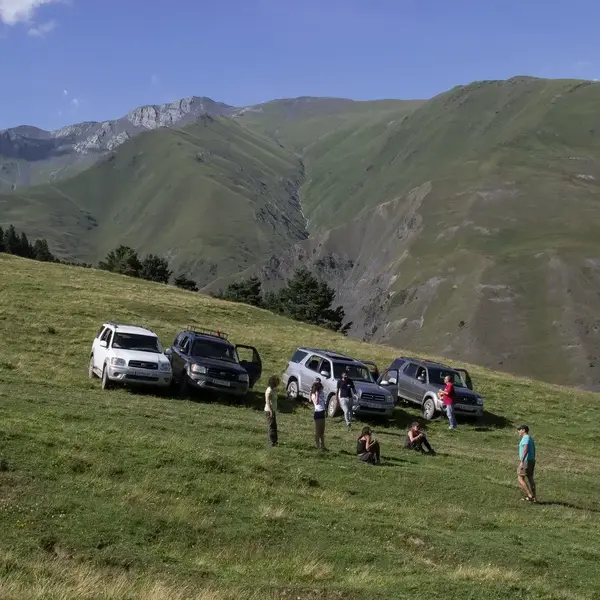
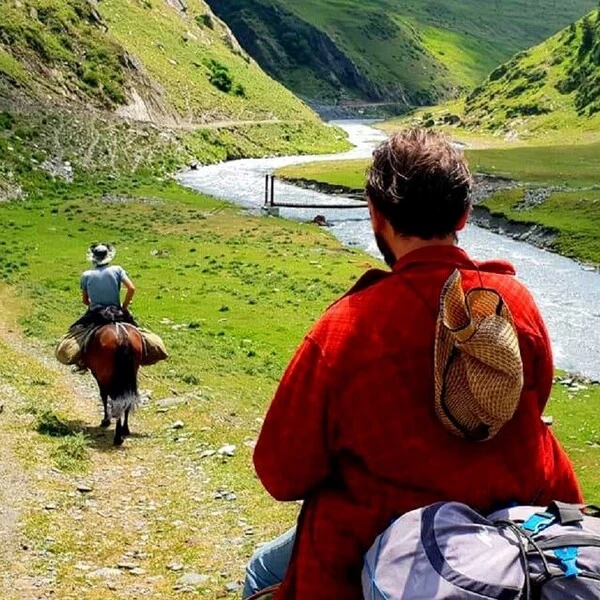

Hiking in Svanetia
Together with three friends I went on a four day hiking trip in Svanetia. This trip was perfectly organised by Highlander Travel / Rusidan. Rusidan also organised all the needed transportation. First of all she choose a very good, experienced guide. He brought us to the best places and really good family guesthouses. He was flexible as well when – due to snow and possibilities of avalanches – our original trip had to be changed. Furthermore she arranged very good all the needed transportation: – taxi from airport to trainstation – traintickets for nighttrain to Zugdidi – taxi from Zugdidi to Mestia – taxi from Mestia back to Tbilisi. All the taxi-drivers were helpful and very accurate. Rusidan knows who she works with: very good and very reliable guides and taxi-drivers.
The finest experience possible with a knowledgeable and well-trained professional guide (Merab), and great communication with Highlander office team
Amazing hike
Amazing hike from Mestia to Ushguli, guide was wonderful. This will be trip you never forget. Amazing views and excellent guide. I highly recommend