Travel through three millennia of Georgian history in a single day from a 2,600-year-old cave city carved into living rock, through medieval spiritual centers recognized by UNESCO, to the controversial legacy of the 20th century’s most powerful dictator. Walk through chambers where pagan priests performed ancient rituals. Stand in the cathedral where Georgian kings were crowned. Explore the surprisingly modest childhood home of Joseph Stalin. Each stop reveals a different chapter in Georgia’s complex, fascinating story.
Perfect for: History enthusiasts, archaeology lovers, photographers, cultural explorers, and anyone seeking to understand Georgia’s layered past from ancient paganism through Christianity to the Soviet era.
Tour highlights
Three eras, one extraordinary journey through Georgian civilization
Itinerary
Departure: 8:30 AM from Tbilisi (hotel pickup)
Return: Approximately 6:30-7:00 PM
8:30 AM – Departure from Tbilisi
Begin your journey west from Tbilisi into the Kartli region – Georgia’s historical heartland, where kingdoms rose and fell, where Christianity first took root, and where some of humanity’s oldest urban settlements were carved from solid rock. The drive takes you through changing landscapes: from Tbilisi’s urban sprawl to the agricultural plains of Shida Kartli, with the Greater Caucasus mountains forming a dramatic northern backdrop.
9:00 AM – Jvari Monastery
Your first stop is the iconic Jvari Monastery, perched on a rocky mountaintop at the confluence of the Aragvi and Mtkvari rivers. Built in the 6th century, this UNESCO World Heritage monument represents the pinnacle of early Georgian church architecture.
In the 4th century, after St. Nino converted King Mirian III to Christianity, the king erected a wooden cross on this hilltop—a former pagan worship site. The cross performed miracles according to tradition, drawing crowds of new converts. Two centuries later, King Stephanoz I built this exquisite church around the original cross site.
Jvari’s perfectly proportioned tetraconch design influenced Georgian church architecture for centuries. From Jvari’s terrace, one of the Caucasus region’s most celebrated vistas unfolds: the rivers merge far below, ancient Mtskheta spreads across the valley, and mountains rise to the horizon.
Duration: 30-40 minutes
9:45 AM – Svetitskhoveli Cathedral
Descending to Mtskheta town, you’ll enter Svetitskhoveli Cathedral – Georgia’s Westminster Abbey, coronation church, and most sacred site.
The Legend: When Christ was crucified, a Georgian Jew named Elias purchased Christ’s robe and brought it to Mtskheta. His sister Sidonia took the robe and died clutching it. From her grave grew a sacred cedar tree. When Georgia converted to Christianity, King Mirian ordered the tree cut to build the first church, but the stump rose into the air, glowing with miraculous light, before descending to become the church’s central pillar—the “living pillar” that gives the cathedral its name.
Inside, you’ll discover the sacred pillar marking Christ’s robe burial site, royal tombs of Georgian kings, medieval frescoes, and intricate stone carvings. Built in the 11th century by architect Arsukisdze, this remains Georgia’s spiritual center.
Duration: 40-50 minutes
11:30 AM – Journey to Gori
Continuing west through the Kartli plains—Georgia’s agricultural heartland, where wheat, corn, and grapes have been cultivated for millennia. Your guide will share stories of Kartli’s strategic importance throughout Georgian history.
12:30 PM – Stalin Museum Complex, Gori (Optional)
The city of Gori is internationally known as the birthplace of Joseph Stalin, who became the Soviet Union’s most powerful—and most controversial—leader.
Important Context: The Stalin Museum presents a complex historical experience. For many, Stalin represents one of history’s most brutal dictators, responsible for millions of deaths. This museum, established during the Soviet era, presents a largely uncritical view of Stalin’s life. We present this site as a historical artifact itself—a window into how Stalin was portrayed during and after the Soviet period. Your guide will provide a balanced historical context.
What you’ll see: Stalin’s modest two-room birth house (1878), three floors of exhibits including personal belongings, photographs, and one of twelve existing death masks, plus Stalin’s armored personal railway carriage.
Photography: Allowed throughout (small fee may apply)
Duration: 60-75 minutes
1:30 PM – Traditional Georgian Lunch (Optional)
Enjoy authentic Kartli regional cuisine at a local restaurant.
Typical menu: Khinkali (Georgian dumplings—Kartli style is renowned), khachapuri, mtsvadi (grilled meat), lobio with mchadi (bean stew with cornbread), fresh seasonal salads, and Georgian wine.
Vegetarian and dietary-specific options available.
Duration: 60 minutes
2:45 PM – Uplistsikhe: The Ancient Rock City
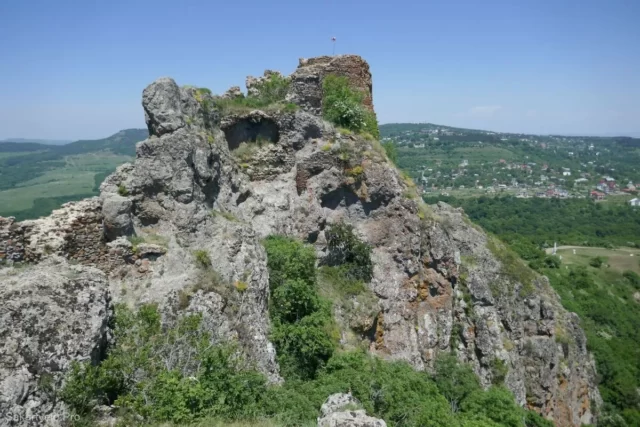
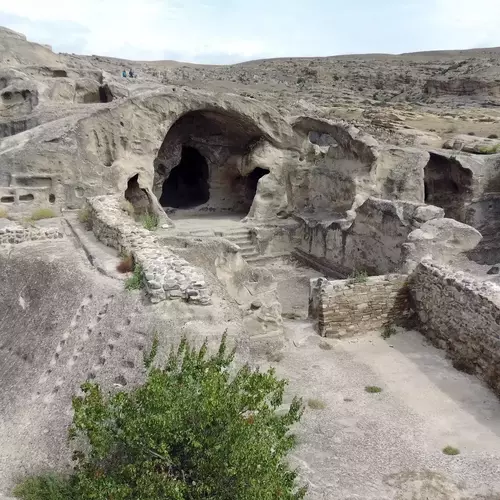
The day’s archaeological crown jewel: Uplistsikhe, one of the oldest urban settlements in the Caucasus and one of the world’s most remarkable rock-hewn complexes.
Founded in the 6th century BC, Uplistsikhe (“the Lord’s Fortress”) served as a major political, religious, and cultural center of pre-Christian Kartli. At its peak (9th-10th centuries AD), up to 20,000 people lived in this rock city, serving as a pagan temple complex, strategic fortress, royal residence, and commercial hub on the Silk Road. The city was abandoned in the 13th century after Mongol invasions.
What you’ll explore:
The Queen’s Hall: The largest chamber featuring a unique barrel-vaulted ceiling, where royal ceremonies and diplomatic receptions were held. Notice the carved wine presses, pillars, and benches—all hewn from solid rock.
The Ancient Theatre: One of Georgia’s oldest performance spaces with acoustics still impressive after 2,600 years.
Temple Complexes: Dedicated to pre-Christian sun deities, with carved altars, ritual spaces, and sun-worship symbols. A small Christian basilica was later carved here.
Ancient Streets & Dwellings: Walk the same pathways used for over a millennium. Peer into residential caves with carved niches, smoke-blackened ceilings, and drainage channels.
Wine Cellars (Marani): Evidence of Georgia’s 8,000-year wine tradition with qvevri burial sites.
The Secret Tunnel: A narrow passage descending to the river—an emergency escape route during sieges.
The 10th-Century Church: Built atop the ancient pagan complex, symbolizing Georgia’s religious transformation.
Photography tip: Endless composition opportunities—dramatic carved doorways, play of light and shadow, panoramic valley views, and textured rock surfaces showing millennia of weathering.
Duration: 90-120 minutes
5:00 PM – Optional Wine Tasting
For wine enthusiasts, we can arrange a stop at a local Kartli region winery on the return journey.
Includes: Tasting of 4-5 Georgian wines (including qvevri-aged wines), tour of traditional wine cellar (marani), explanation of Georgian winemaking traditions, and light snacks.
Cost: Additional $20-25 per person
Duration: 45-60 minutes
6:30-7:00 PM – Return to Tbilisi
Watch the sunset paint the Caucasus mountains as you reflect on a day that spanned from ancient paganism through medieval Christianity to 20th-century totalitarianism. Drop-off at your hotel.
Price details
What’s Included
Tour map
Tbilisi
Jvari Monastery
Svetitskhoveli Cathedral
Gori (Stalin Museum)
Uplistsikhe Cave City
Tour gallery
Practical Information
Duration: 8-9 hours (full day)
Distance: Approximately 200 km round trip
Activity Level: Moderate (climbing stairs and walking on uneven surfaces)
Group Size: Maximum 8 people
What to Wear & Bring
Essential: Comfortable walking shoes with good grip (Uplistsikhe requires sturdy footwear), modest clothing for churches (shoulders and knees covered), sun protection (hat, sunscreen, sunglasses), light jacket or sweater (churches and caves can be cool), camera with charged batteries, small backpack for personal items.
Recommended: Cash (GEL) for personal purchases and optional wine tasting. Headscarf for women (for church visits; can borrow at sites).
Physical Requirements
Walking on uneven stone surfaces and ancient steps, climbing to various levels at Uplistsikhe (numerous stairs), standing for periods while the guide explains sites. Approximately 3-4 km total walking throughout the day.
Accessibility: Uplistsikhe’s ancient rock-cut nature makes it challenging for those with mobility limitations. If you have concerns, please contact us to discuss adaptations or alternative tours.
Age Suitability: Suitable for ages 8+. Children find Uplistsikhe particularly exciting! Children under 12 receive a 30% discount.
Weather Considerations
Summer: The rock absorbs and radiates heat—bring extra water and sun protection.
Wet Weather: Rock surfaces become slippery. We provide honest assessment of conditions and may recommend rescheduling in heavy rain.
Winter: Can be icy. Special caution required; microspikes or crampons recommended.
Stalin Museum Note
We recognize the Stalin Museum is controversial. Some visitors find it essential for understanding 20th-century history; others prefer to skip it. We can adjust the itinerary if you prefer more time at Uplistsikhe and less (or no) time at the Stalin Museum.