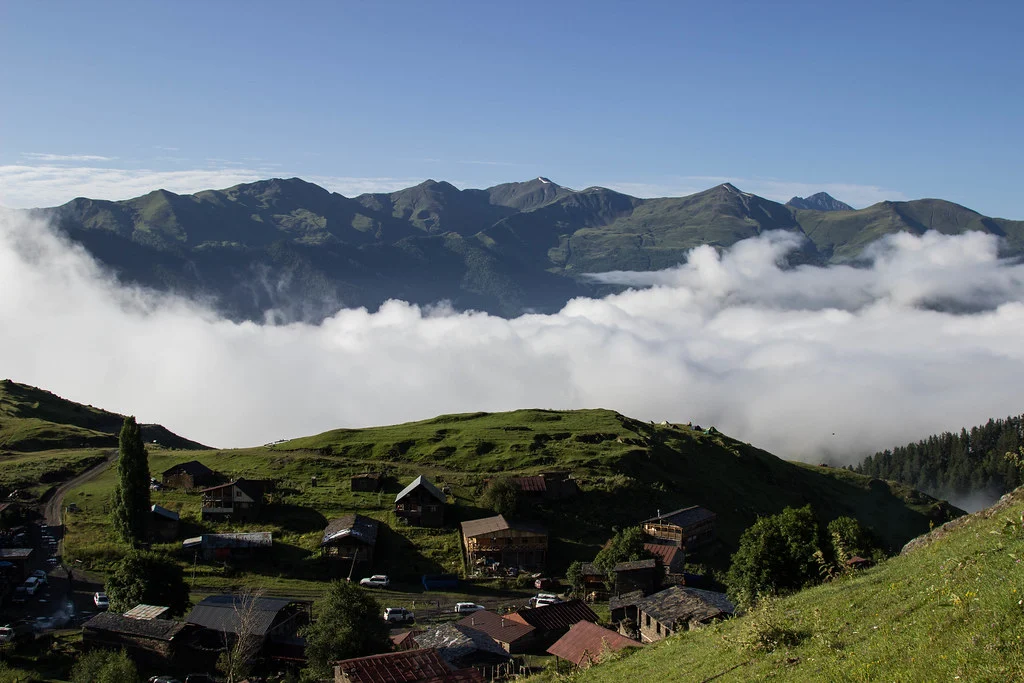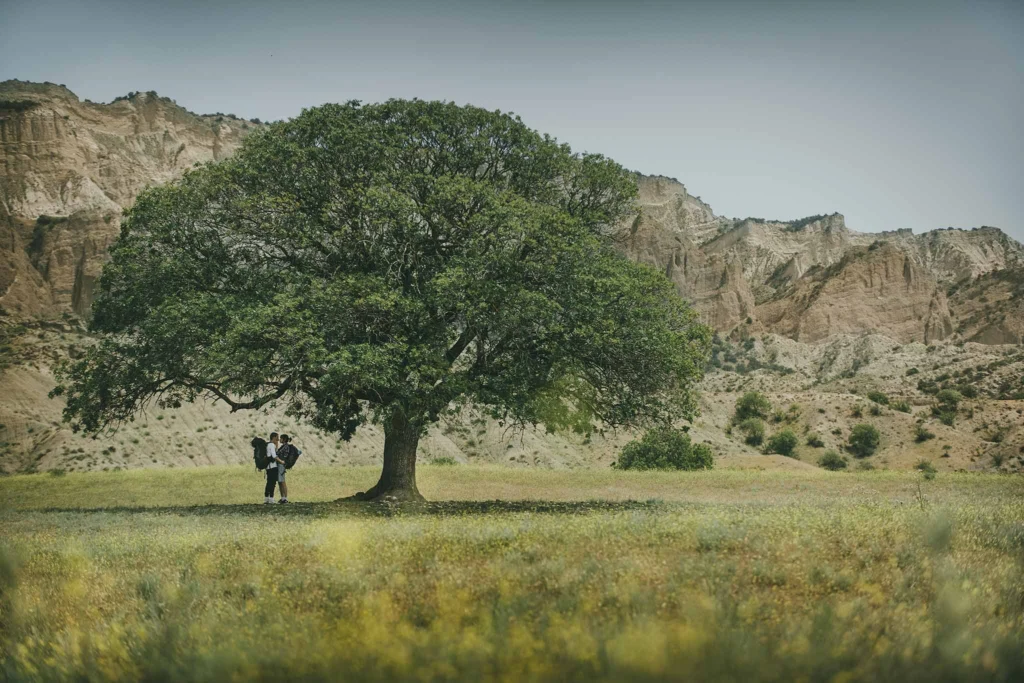
An hour and twenty minutes out of Tbilisi, the asphalt gives up. The last seven kilometres to Ghvevi are a rough climb in four-wheel drive, and by the time the track levels out you are on the Trialeti Ridge with the city gone from view and nothing ahead but grassland, oak forest and the sound of horses.
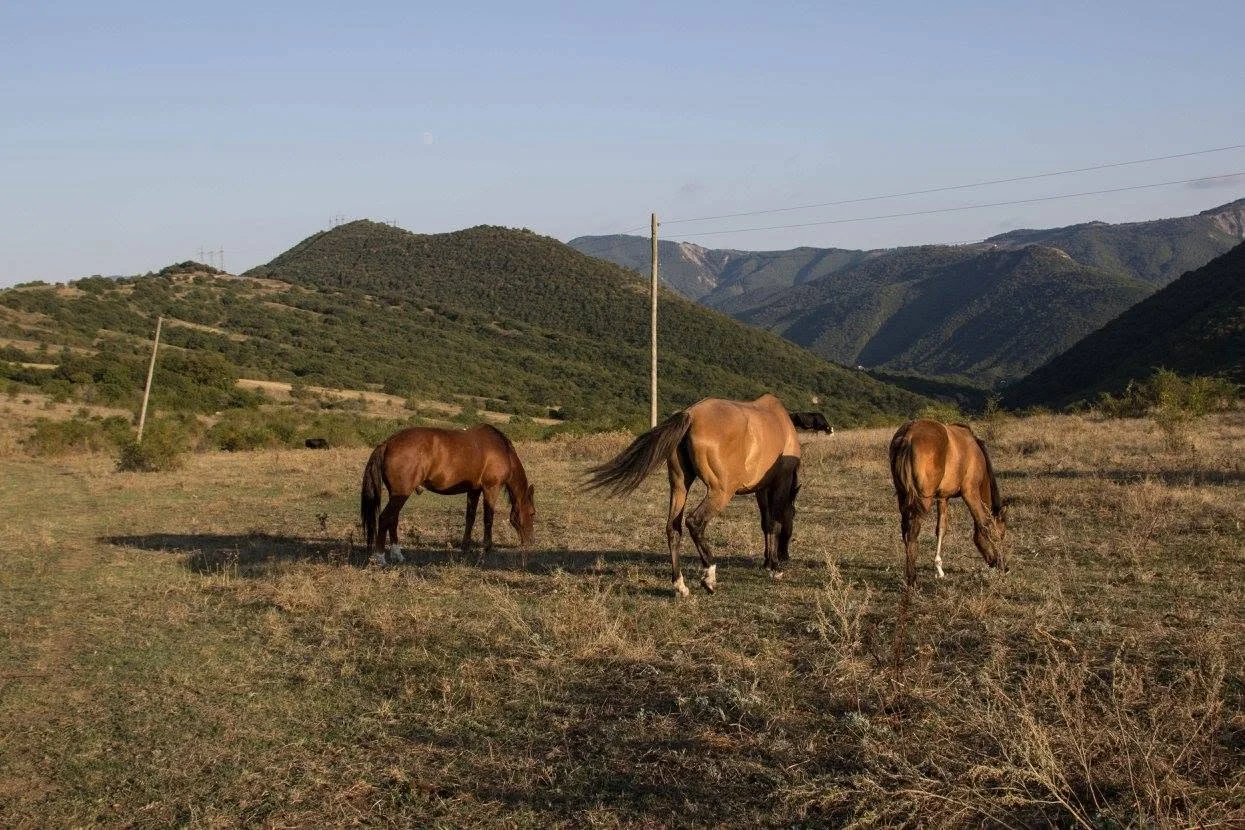
Ghvevi is a working ranch, not a riding school with a fenced arena and a queue. You meet your horse, you help groom and saddle it, and then you ride out — through fields, into the forest, up onto the open ground where the whole ridge opens out in front of you. Guides ride with you the whole way and speak Georgian, English and Russian. If you have never sat on a horse, you start on a lead rope until the guide is satisfied you are comfortable, and only then does the group move off. If you already ride, you skip that part and go.
Two versions run year-round. The half day gives you two hours in the saddle and gets you back to Tbilisi in six or seven hours from door to door. The full day gives you three to four hours of riding and a full-course BBQ dinner with wine at the ranch afterwards, and takes eight to nine. Both include the drive out and back, so you do not need a car, a plan, or any idea where the Trialeti Ridge is.
What you’ll see
Tour highlights
- Genuinely beginner-friendly. Lead-rope training before the trail, a guide riding alongside, and horses used to first-timers — this is not a photo opportunity on a tethered pony.
- Real trail riding, not an arena circuit. Fields, oak forest and open mountain ground on the Trialeti Ridge, at the pace your group can handle.
- Two to four hours actually in the saddle. Most “horse riding tours” from Tbilisi give you forty minutes. This one is built around the ride.
- You handle your own horse. Grooming and saddling with the ranch team before you mount — the part that turns a ride into a day you remember.
- Food is part of it. Tea, coffee and a snack on arrival; lunch or a BBQ dinner with wine afterwards, cooked at the ranch.
- Flexible pick-up. Choose your departure hour rather than fitting into a fixed group schedule.
- Runs all year. Spring wildflowers, summer forest shade, autumn colour on the ridge, and snow-quiet trails in winter.
Step by step
Tour itinerary
Pick-up in Tbilisi
We collect you from your hotel or apartment in central Tbilisi at the hour you choose — any time between 8:00 and 14:00 for the half day, and in the morning for the full day. Tell us your preferred time when you book and we confirm it with the ranch.
The drive out — 1 hour 20 minutes
Forty-five kilometres south-west of the city, climbing steadily onto the Trialeti Ridge. The final seven kilometres are unpaved and done in four-wheel drive; it is a rough, slow, rather enjoyable stretch that makes the arrival feel earned.
Arrival at Ghvevi Ranch — tea and a snack
You are met at the ranch with tea or coffee and something to eat before anything else happens. The guides use this time to ask about your riding experience so the horses can be matched properly.
Meeting the horses — grooming and saddling
You are introduced to the horse you will ride and help groom and saddle it with the ranch team. It takes twenty minutes and it is the reason people leave this tour talking about the horse by name.
Training for beginners
If you have not ridden before, a guide takes you on a lead rope until you are steady in the saddle and can start, stop and turn on your own. Nobody rides out until every beginner in the group is comfortable. Intermediate and advanced riders skip this stage entirely and go straight to the trail.
The trail ride — 2 hours (half day) or 3–4 hours (full day)
Out from the ranch along the field tracks, into the oak forest, and up onto the open ground of the ridge. Guides ride with the group throughout and set the pace to match the least experienced rider. On the full day the longer route reaches higher ground with the wider views over the surrounding mountains, with breaks along the way.
Back at the ranch — lunch or BBQ dinner
An hour or two off the horses, eating. On the half day this is lunch or an early BBQ dinner depending on your pick-up time. On the full day it is the full-course BBQ dinner with wine — Georgian food cooked at the ranch, eaten outside when the weather allows.
Return to Tbilisi
Back down the ridge and into the city, dropped where you were collected. Total door to door: 6–7 hours on the half day, 8–9 hours on the full day.
Starting from
—
per person
Locally operated since 2011
We reply within 24 hours
What your price covers
What’s included
Included
- Return transfer from your accommodation in central Tbilisi, including the off-road section
- Tea, coffee and a snack on arrival at the ranch
- Horse, tack and riding helmet
- Grooming and saddling session with the ranch team
- Lead-rope training for beginners
- Two hours in the saddle (half day) or three to four hours (full day) with guides
- Georgian, English and Russian speaking riding guides throughout
- Lunch or BBQ dinner at the ranch — full-course BBQ dinner with wine on the full-day tour
Not included
- Accommodation in Tbilisi
- Additional alcoholic drinks beyond those served with the meal
- Personal riding equipment — bring your own boots and gloves if you prefer them
- Travel and medical insurance, which we strongly recommend for any riding activity
- Tips for the guides and ranch team
- Anything not listed under “Includes”
Photographs
Gallery
Where you’ll go
Map & route
Practical details
Good to know before you go
Group size
The full-day tour runs for 1 to 10 riders, so solo travellers can book it. The half-day tour needs a minimum of 2 riders. Larger groups are arranged individually — ask us and we will quote.
What to wear
Long trousers, without exception — jeans, riding breeches or anything similar. Shoes with a small heel and a closed toe; trainers are acceptable, sandals and flip-flops are not. Bring a layer more than you think you need, because the ridge sits well above Tbilisi and is several degrees colder, and something to keep the sun off in summer. Helmets are provided.
Fitness and experience
No riding experience is required for either tour. You should be able to mount a horse and stay in the saddle at a walk for the length of the ride, with breaks. If you have a back, neck or joint problem, or you are pregnant, talk to us before booking rather than on the morning.
Weather
The tour runs year-round in most conditions. Heavy rain, thunderstorms or ice on the access track can force a change of date; if the ranch cancels for weather we move you to another day or refund in full.
Getting there
The ranch is in Ghvevi village, on the Trialeti Ridge about 45 km from Tbilisi. The last 7 km are unmade road and require four-wheel drive, which is why the transfer is included rather than optional — you would struggle to reach it in a standard rental car.
Photography
Bring a camera or phone with a strap. There is no signal for most of the ride, which everyone ends up being glad about.
From our travellers
Reviews
Before you book
Frequently asked questions
Do I need any riding experience?
No. Beginners start on a lead rope with a guide beside them and only ride out once they are comfortable in the saddle. Roughly half the people who book this tour have never ridden before.
How long am I actually on the horse?
Two hours on the half-day tour and three to four hours on the full-day tour, not counting grooming, saddling and training. That is saddle time, not total tour time.
What is the difference between the half day and the full day?
Saddle time and dinner. The half day is 6–7 hours door to door with two hours of riding and lunch or an early BBQ. The full day is 8–9 hours with three to four hours of riding on a longer, higher route and a full-course BBQ dinner with wine. The price difference is small enough that most people who can spare the day take the full one.
Can I book as a solo traveller?
Yes, on the full-day tour, which runs from one rider. The half-day tour needs at least two people, so if you are travelling alone either take the full day or tell us your dates and we will see whether another booking can be combined with yours.
What time do we leave Tbilisi?
You choose. Half-day pick-ups run any time between 8:00 and 14:00, and full-day pick-ups in the morning. Give us your preferred hour when you book and we confirm it with the ranch.
Is it suitable for children?
Children who can follow instructions and sit securely on a horse are welcome with a parent, but there is a minimum age and a rider weight limit set by the ranch. Message us with your child’s age before booking and we will confirm.
Does the tour run in winter?
Yes. The ranch operates all year and winter riding on the ridge is quiet and very beautiful. Snow or ice on the access track can occasionally force a change of date, and we tell you the evening before if so.
What if the weather is bad on the day?
Light rain is not a problem — you will get wet and the horses will not care. Heavy rain, thunderstorms or dangerous track conditions mean we reschedule you to another day or refund the tour in full.
Can I ride at a canter or gallop?
If you have the experience for it, yes — the guides assess riders at the ranch and the trail has the open ground for it. Groups with beginners in them are kept to a walk with the occasional trot, because the pace is set by the least experienced rider.
Do you provide helmets?
Yes, helmets are provided and we ask every rider to wear one. Bring your own boots and gloves if you have them and prefer them.
Ready when you are
Tell us your dates and how many of you are travelling. We’ll come back within 24 hours with availability, a confirmed price, and your guide’s name.