
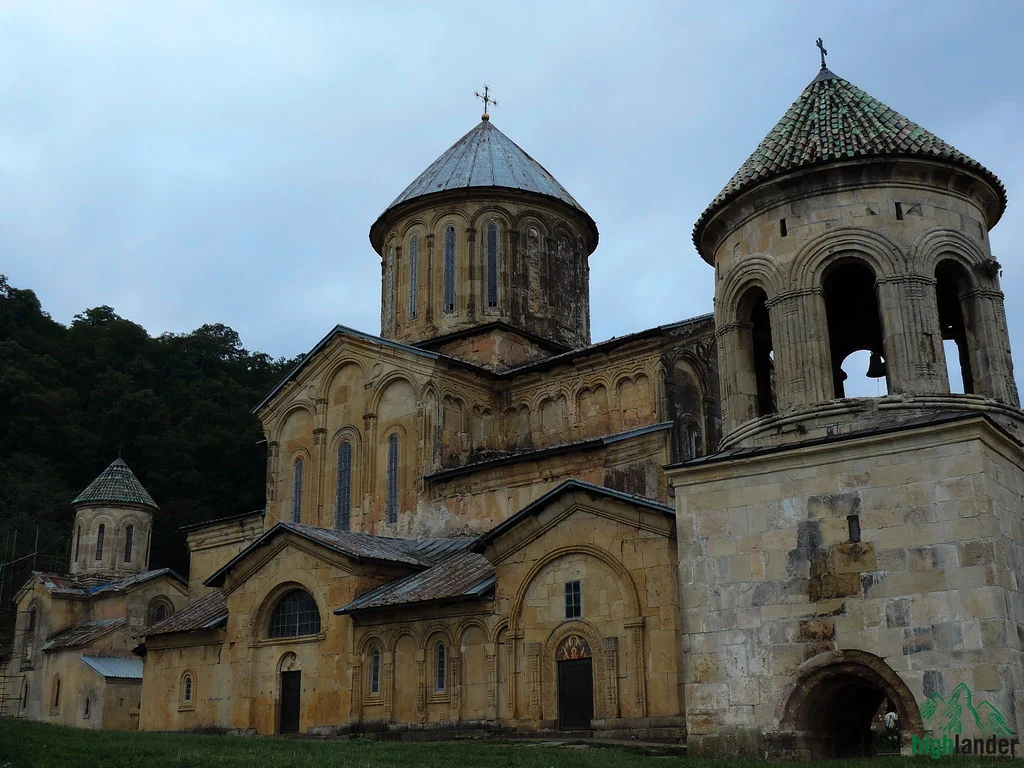
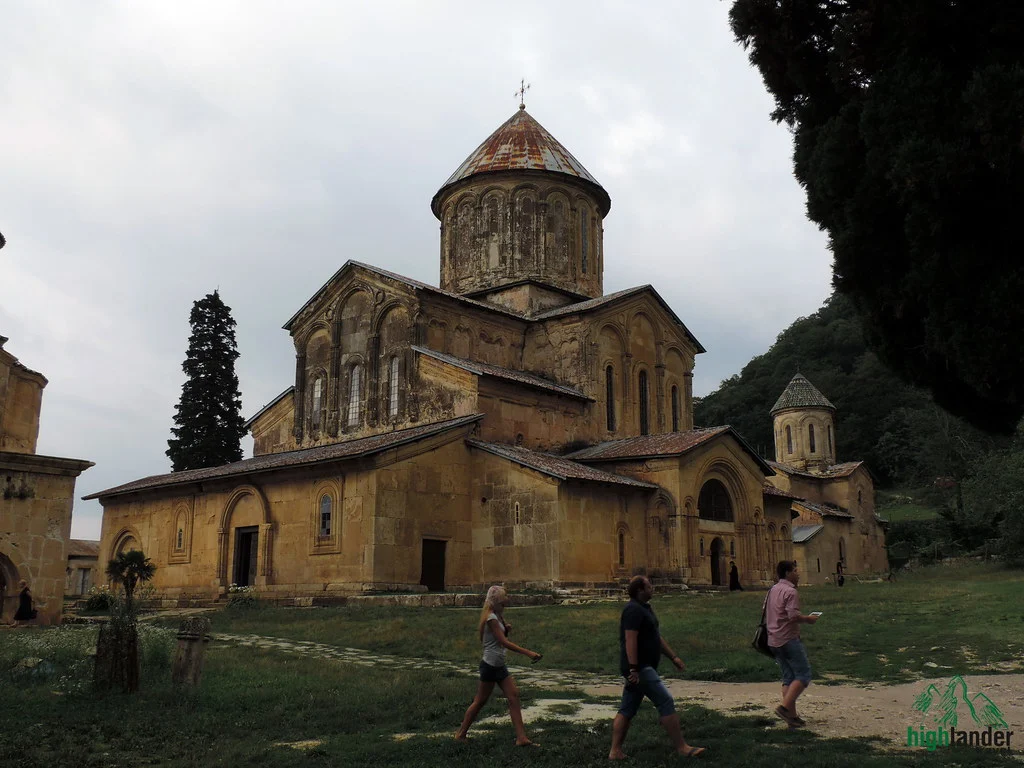
Set on a wooded hillside near Kutaisi, Gelati Monastery is one of the clearest expressions of medieval Georgia’s Golden Age. King David IV “the Builder” founded the complex in 1106 as a monastery, royal burial place and centre of learning; today it remains an active religious site and a UNESCO World Heritage property.
Gelati rewards more than a quick photo stop. Its cathedral preserves a remarkable 12th-century mosaic, layers of wall paintings, royal portraits and architectural details that connect Georgian art with the wider Christian world. This guide explains the monastery’s history, its most important sights and what visitors should know before travelling from Kutaisi.
Why Gelati Monastery Matters
Gelati was created during a period when the Georgian kingdom was becoming stronger politically and culturally. David IV intended it to serve several purposes at once: it was a working monastery, a dynastic mausoleum and an academy where theology, philosophy, translation and manuscript production could flourish.
UNESCO inscribed Gelati on the World Heritage List in 1994. The listing originally also included Bagrati Cathedral, but the property’s boundaries were changed in 2017 and the World Heritage property is now named simply “Gelati Monastery.” UNESCO recognises Gelati for its balanced architecture, relationship with the surrounding landscape, medieval mosaic and exceptional sequence of mural paintings.
- Founded: 1106 by King David IV
- Main church completed: 1130, during the reign of Demetrius I
- UNESCO status: World Heritage Site since 1994
- Location: approximately 11 kilometres northeast of Kutaisi
- Religious status: active Georgian Orthodox monastery
David the Builder and the Founding of Gelati
David IV ruled Georgia from 1089 to 1125. His reign included military victories, administrative reforms and the recovery of territories that had been lost during earlier invasions. The celebrated Battle of Didgori in 1121 helped open the way for the Georgian capture of Tbilisi the following year.
Medieval sources give dramatically different figures for the armies at Didgori, so exact troop numbers should be treated with caution. What is clear is that the victory became a defining event in Georgian history and strengthened the kingdom in which Gelati was being built.
David began Gelati in 1106 near his western capital, Kutaisi. The main cathedral was not finished during his lifetime; his son and successor, Demetrius I, completed it in 1130. Later rulers added churches, chapels, paintings and endowments, turning the complex into a royal and religious centre that remained important for centuries.
The Gelati Academy
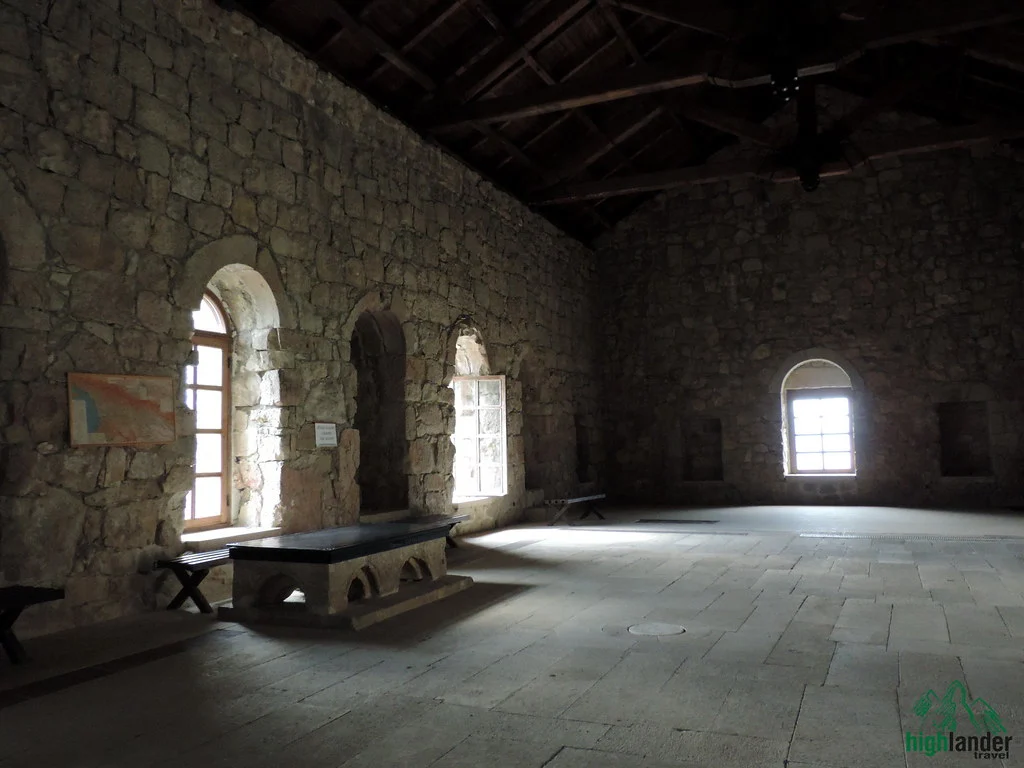
Gelati was more than a monastery. Its academy became one of medieval Georgia’s leading centres of education and scholarship. Scholars associated with the institution translated theological and philosophical works, taught students and helped develop Georgian intellectual vocabulary.
Two names are especially connected with Gelati. Ioane Petritsi was a Neoplatonic philosopher known for his Georgian translation and commentary on Proclus. Arsen Ikaltoeli translated doctrinal and polemical texts that were collected in the Dogmatikon. Gelati also supported manuscript copying, and a richly illuminated 12th-century Gospel produced there is preserved at the National Centre of Manuscripts in Tbilisi.
What to See at Gelati Monastery
The Cathedral of the Nativity of the Virgin
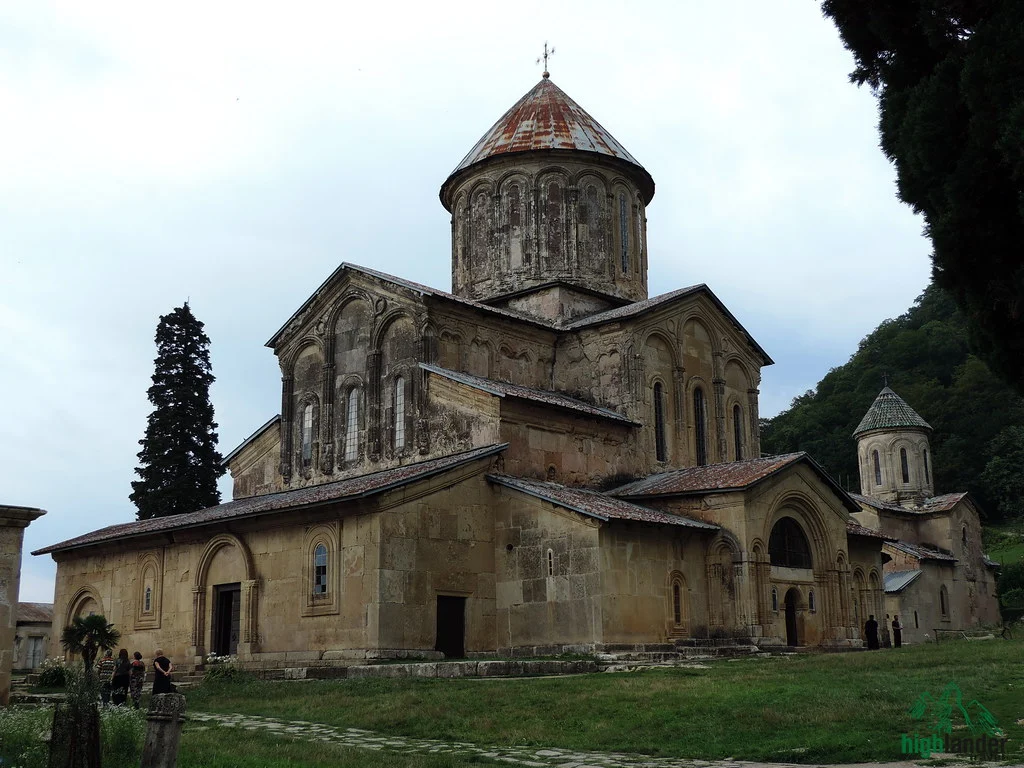
The main cathedral is the centre of the complex. Its cross-in-square design, pale stone walls, balanced proportions and blind exterior arches are characteristic of the architecture associated with Georgia’s Golden Age.
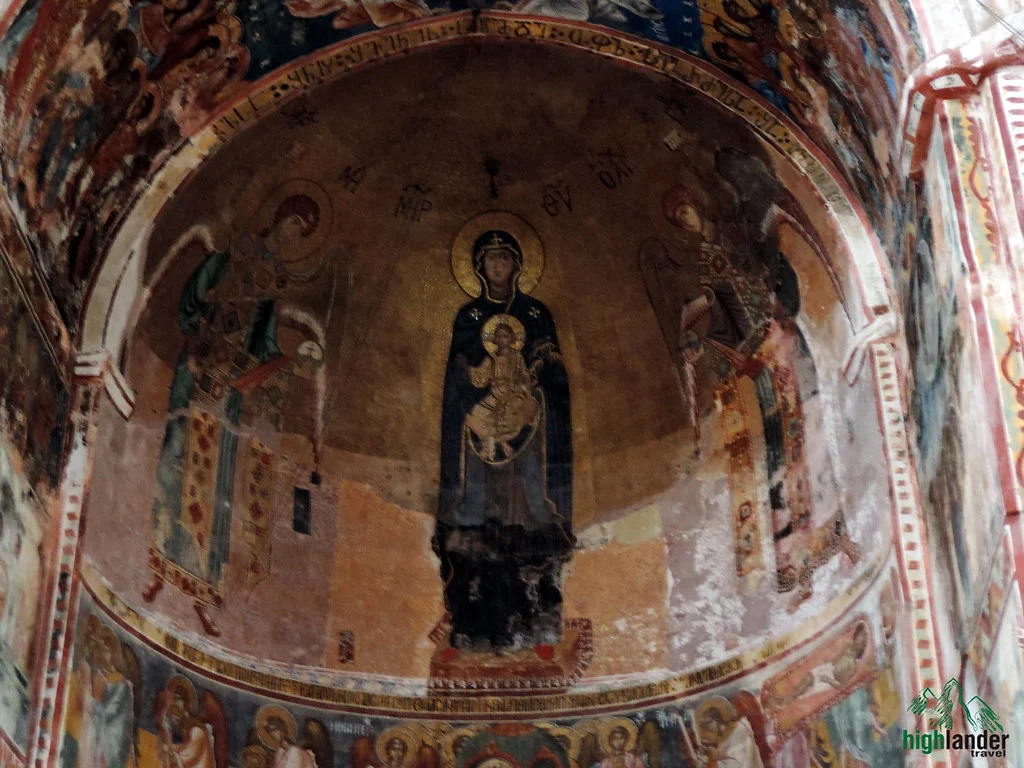
Inside, the most famous work is the 12th-century apse mosaic of the Virgin and Child between the archangels Michael and Gabriel. Gold tesserae create a luminous background, while the scale and position of the figures draw attention toward the sanctuary. It is among the most important surviving medieval mosaics in the Caucasus.
Murals and Royal Portraits
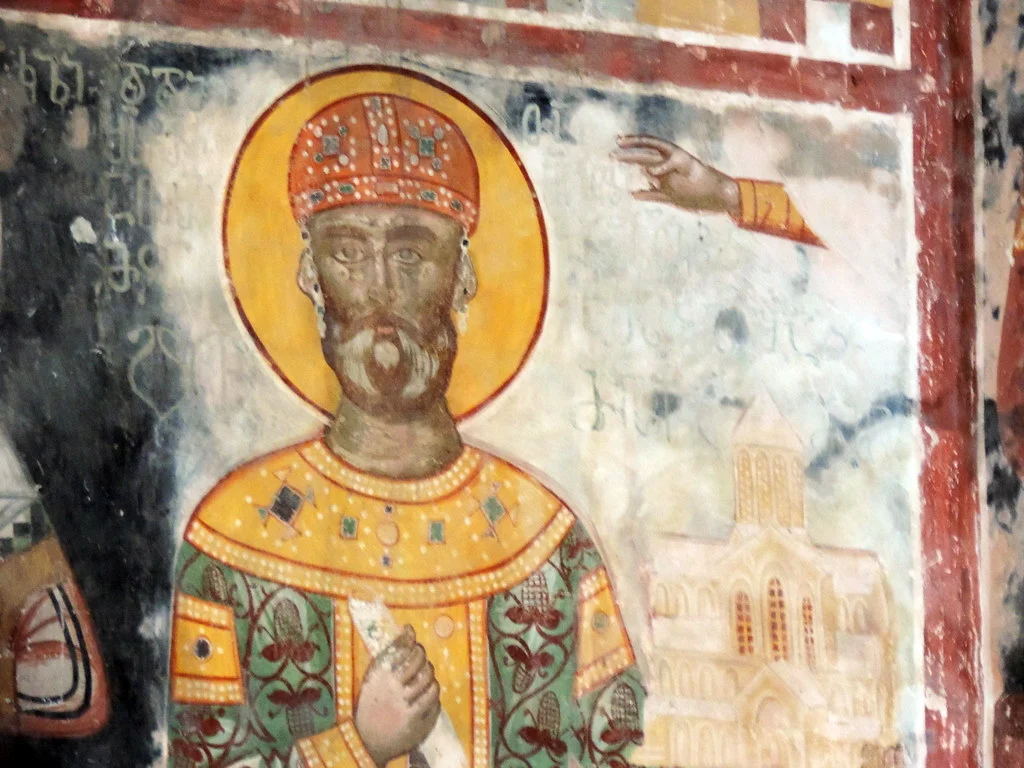
The cathedral contains paintings produced over several centuries, from the medieval period to major campaigns of the 16th and 17th centuries. Look for the representation of the Seven Ecumenical Councils in the narthex and the long group of royal and clerical portraits on the north wall.
Among the portraits is David the Builder holding a model of the church. Together, the images form an unusually rich visual record of Georgian rulers, church leaders and changing artistic styles.
David the Builder’s Tomb
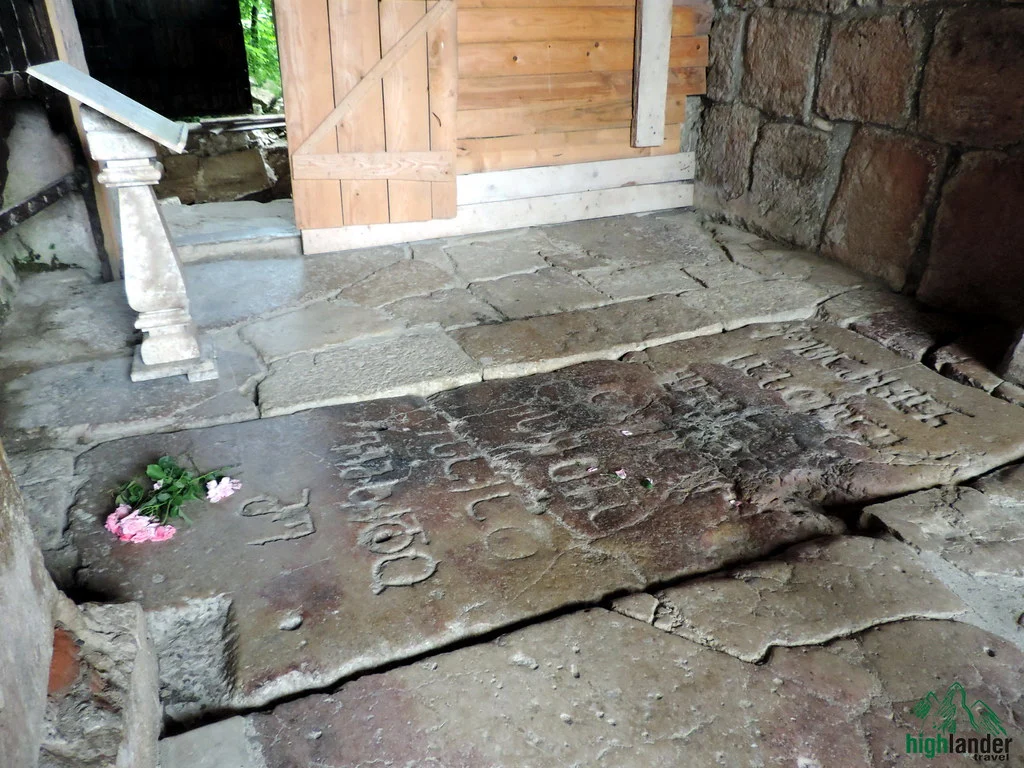
A stone slab beneath the southern gate is traditionally identified as the tomb of David IV. According to a long-standing tradition, the king chose this position as a sign of humility, allowing everyone entering the monastery to pass over his grave. Modern visitors usually step around the slab out of respect.
Gelati became a burial place for members of the Georgian royal family and, later, for rulers of Imereti. Queen Tamar is sometimes included in lists of people buried here, but her burial place has never been established with certainty.
The Ganja Gate Fragment
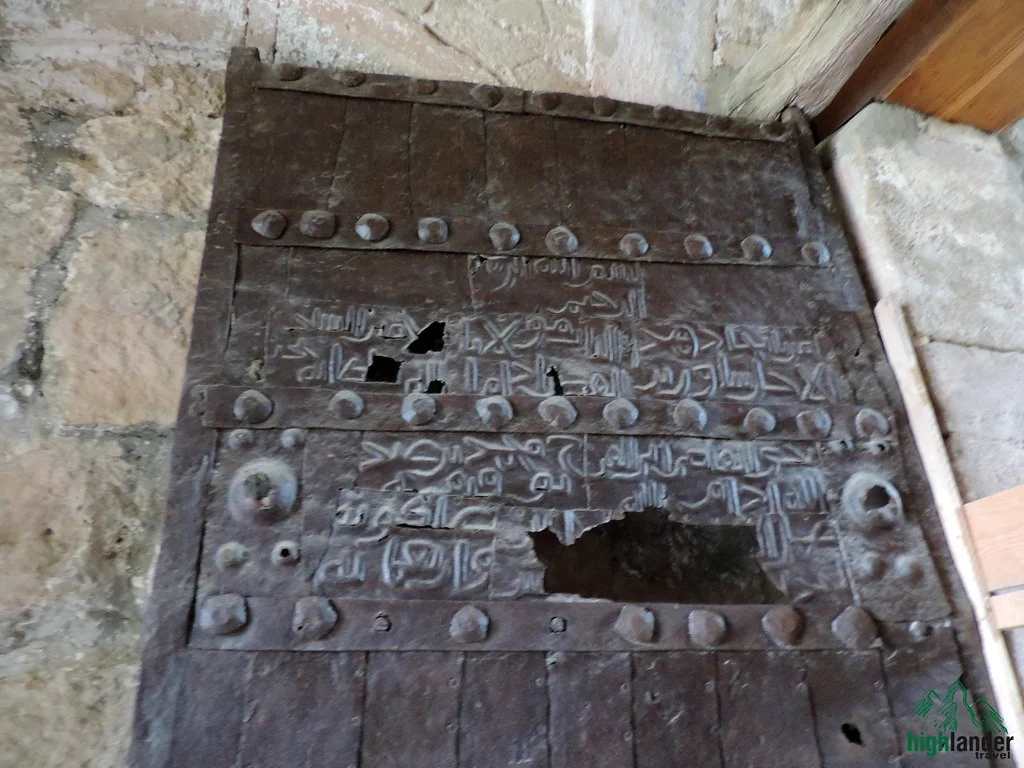
Near the southern entrance is a surviving fragment traditionally associated with the gates of Ganja, in present-day Azerbaijan. An Arabic inscription records that the gate was made in 1063 by Ibrahim ibn Osman. Georgian historical tradition connects its arrival at Gelati with Demetrius I’s campaign following the destructive Ganja earthquake of 1139.
The fragment is an important medieval object, but dramatic stories about how it was transported should be treated as later tradition unless supported by firm contemporary evidence.
St George’s Church, St Nicholas Church and the Bell Tower
The complex contains several structures beyond the main cathedral. The 13th-century Church of St George preserves later mural decoration, while the two-storey Church of St Nicholas is distinguished by an open arched passage on its lower level. The bell tower stands above a spring and reflects the monastery’s historic water system.
The Academy Building
The former academy stands in the western part of the enclosure. Its large hall and stone seating help visitors imagine Gelati as a place of teaching and debate as well as worship. The building lost its roof over time and was later re-roofed with reversible materials as part of conservation work.
The Khakhuli Triptych
Gelati once held the Khakhuli Triptych, one of the masterpieces of medieval Georgian metalwork and enamel. The richly decorated icon incorporates work from different periods and was among the monastery’s most valuable possessions.
The original is no longer at Gelati. It is preserved in the Georgian National Museum in Tbilisi, where visitors can appreciate its enamel plaques, precious materials and complex history in a controlled museum environment.
Conservation and Current Visitor Access
Gelati has faced serious conservation problems. Deficiencies in roofing installed during earlier work allowed moisture to enter the main cathedral and contributed to deterioration of historic wall paintings. International and Georgian specialists have since been involved in monitoring, emergency treatment and plans for a more comprehensive rehabilitation programme.
UNESCO’s latest published decision, adopted in 2025, acknowledged significant conservation efforts but requested a holistic programme, a reviewed permanent roofing project and further monitoring. A new joint monitoring mission was requested for 2026. Scaffolding, protective structures or restricted areas may therefore affect what visitors can see.
How to Visit Gelati from Kutaisi
Gelati lies about 11 kilometres northeast of central Kutaisi. The drive normally takes around 20–30 minutes, depending on traffic and your starting point.
- Taxi: the simplest independent option. Agree on the fare and waiting time before departure or use a registered taxi application.
- Local transport: minibuses may operate from central Kutaisi, but routes and departure times can change. Confirm the same-day schedule locally.
- Guided excursion: a convenient choice if you want historical explanation and plan to combine Gelati with Motsameta or other Imereti sights. See the available tours from Kutaisi.
How Much Time Do You Need?
Allow at least 60–90 minutes for the monastery. Two hours is better if you want to examine the paintings, visit the smaller churches and walk through the grounds without rushing. Conservation barriers may alter the usual visitor route.
Dress Code and Conduct
Gelati is an active Orthodox monastery. Cover shoulders and knees, avoid loud conversation and follow signs or instructions from the monastic community. Women may be asked to cover their hair or wear a wrap skirt, and men should avoid shorts. Do not use flash where photography is permitted, and never photograph a service if asked not to.
Admission and Facilities
Entry has generally been free, although donations are welcome. Bring water and wear shoes suitable for uneven stone surfaces. Facilities are limited compared with a major city attraction, so plan meals and transport before leaving Kutaisi.
What to See Near Gelati
- Motsameta Monastery: a smaller monastery dramatically positioned above the Tskaltsitela River gorge.
- Kutaisi: explore Bagrati Cathedral, the Green Bazaar, Colchis Fountain and the old streets beside the Rioni River.
- Sataplia: combine culture with caves, forest trails and dinosaur footprints using this guide to Sataplia and the Imereti protected areas.
- Prometheus Cave: a popular show cave near Tskaltubo with illuminated chambers and seasonal visitor experiences.
After returning to Kutaisi, try Imeretian khachapuri, local cheeses and other regional dishes. If Georgian dumplings are on your list, read the complete guide to khinkali.
Frequently Asked Questions
When was Gelati Monastery founded?
King David IV ‘the Builder’ founded Gelati Monastery in 1106. The main cathedral was completed in 1130 during the reign of his son and successor, Demetrius I.
Is Gelati Monastery a UNESCO World Heritage Site?
Yes. Gelati was inscribed in 1994. The original property also included Bagrati Cathedral, but its boundaries were modified in 2017 and the listed property is now named Gelati Monastery.
How far is Gelati Monastery from Kutaisi?
Gelati is approximately 11 kilometres northeast of central Kutaisi. The drive usually takes about 20–30 minutes, depending on traffic and your starting point.
Who is buried at Gelati Monastery?
The stone tomb beneath the southern gate is traditionally identified as the burial place of David the Builder. Other members of the Georgian royal family and later rulers of Imereti were also buried at Gelati. Queen Tamar’s burial place remains uncertain.
Can visitors see Gelati’s famous mosaic?
The 12th-century apse mosaic is inside the main cathedral, but conservation structures or temporary access restrictions may affect visibility. Check the current situation before visiting.
Is there a dress code at Gelati Monastery?
Yes. Visitors should cover their shoulders and knees. Women may be asked to cover their hair or use a wrap skirt, while men should avoid shorts. Follow all instructions at this active monastery.
How long should I spend at Gelati?
Allow at least 60–90 minutes. Around two hours is more comfortable if you want to explore the smaller churches, academy building and grounds as well as the main cathedral.
Gelati is not simply a monument to one ruler or one period. Its architecture, scholarship, mosaics, paintings and continuing religious life reveal how faith, royal authority and education came together in medieval Georgia. Even while conservation work is visible, the monastery remains one of the most rewarding historical places to visit in Imereti.
Planning a visit? Explore our private and small-group tours from Kutaisi or contact us to build Gelati into a wider journey through western Georgia.



[…] monastery does not have the monumental scale of Gelati, the dramatic cliff setting of Motsameta, or the skyline presence of Bagrati […]
[…] Gelati Monastery: History, Art and Visitor Guide Gallery […]