Tbilisi With Kids: The Honest Guide for Parents Who Actually Travel With Children
A five-year-old does not care about Narikala Fortress. She does not want to read plaques about medieval architecture or stand quietly in a 6th-century cathedral. What she wants is a waterfall she can splash in, a slide tall enough to make her shriek, and a science experiment where she gets to hold lightning in her hand.
Tbilisi — chaotic, hilly, crumbling-at-the-edges Tbilisi — turns out to be surprisingly good at delivering exactly that. The Georgian capital has more parks per square kilometer than most European cities its size, an amusement park perched on a mountaintop, a waterpark with the tallest toboggan slide in Eastern Europe, and a handful of interactive museums that will actually keep your kids engaged for more than twelve minutes. It also has cobblestone streets that will destroy your stroller wheels and hills steep enough to make you reconsider your fitness level. Both things can be true.
This guide is written for parents who want real, useful information — not marketing copy. Where something is overpriced, we’ll say so. Where a playground is genuinely great, we’ll explain why. Where the staff don’t speak English and communication is going to be tricky, you’ll know before you arrive.
Interactive Museums: Where Rainy Days Get Interesting
Experimentorium — Museum of Entertaining Science
This is the one museum in Tbilisi where your kids are explicitly told not to behave. No hushing, no “don’t touch” signs. The Experimentorium, tucked behind the Georgian Parliament building on Pavle Ingorokva Street, has roughly 70–80 interactive exhibits covering physics, chemistry, biology, and anatomy. Kids can measure the power of their own scream, sit on a bed of nails without injury, charge a ball with their own energy, and hold a simulated lightning bolt.
The museum runs guided tours that include a live science show in the lab — and this is genuinely the highlight. The guides (several visitors specifically praise a guide named Anya) explain concepts patiently and make the demonstrations engaging for children as young as four or five.
The honest take: The experience depends heavily on whether you get an English-speaking guide. Some visitors have reported unfriendly reception staff and a lack of English communication, which made the visit frustrating. Others had outstanding experiences. The safest approach is to call ahead (+995 32 247-57-37 or email experimentoriumge@gmail.com) and book a specific English-guided session.
One critical warning: buy your tickets directly at the museum. Multiple visitors have reported problems with third-party online ticket purchases not being recognized at the door — a maddening experience when you’ve got kids in tow.
Practical details: 17 Pavle Ingorokva Street, Old Tbilisi. Open daily 10:00–20:00. Adults 14 GEL, children 7–17: 12 GEL, children 5–6: 10 GEL, under 4 free. Family ticket (2 adults + 2 children): 39 GEL. Allow 1.5–2 hours. About a 15-minute walk from Freedom Square.
Museum of Illusions + Holloseum
A three-story building on Betlemi Street in the atmospheric Jewish Quarter of Old Town, combining two attractions under one roof. The Museum of Illusions follows the global franchise format — mind-bending rooms, optical tricks, gravity-defying installations, and the Clone Table, where you meet five copies of yourself. The Holloseum on the upper floors is the more interesting half: a digital art space featuring “moving” paintings by beloved Georgian artist Niko Pirosmani, immersive projections, and interactive installations where children’s drawings come alive on screen.
The honest take: Reviews are genuinely split. Families with kids, especially those visiting an illusion museum for the first time, tend to love it. The staff generally speaks English and help guide children through the installations. But travelers who’ve seen similar museums elsewhere (there are now 36 globally) find the illusion section small and overpriced for its size. The Holloseum is what makes the Tbilisi version worth the visit — the Pirosmani digital art is unique to this location.
At approximately 150 GEL for a family of two adults and one child (combined ticket), this is one of the more expensive activities in Tbilisi. Worth it for a rainy afternoon if your kids haven’t been to something similar before. If budget is tight, prioritize the Experimentorium instead.
Practical details: 10 Betlemi Street, Old Town. Closed Mondays. Tuesday–Friday 16:00–22:00, Saturday–Sunday 13:00–22:00. Individual tickets: adults ~19.5 GEL, children 6–17: ~12.5 GEL, under 5 free (Museum of Illusions only; combined tickets with Holloseum cost more). Book via GetYourGuide or at the door.
Mtatsminda Park: The Mountaintop Amusement Park
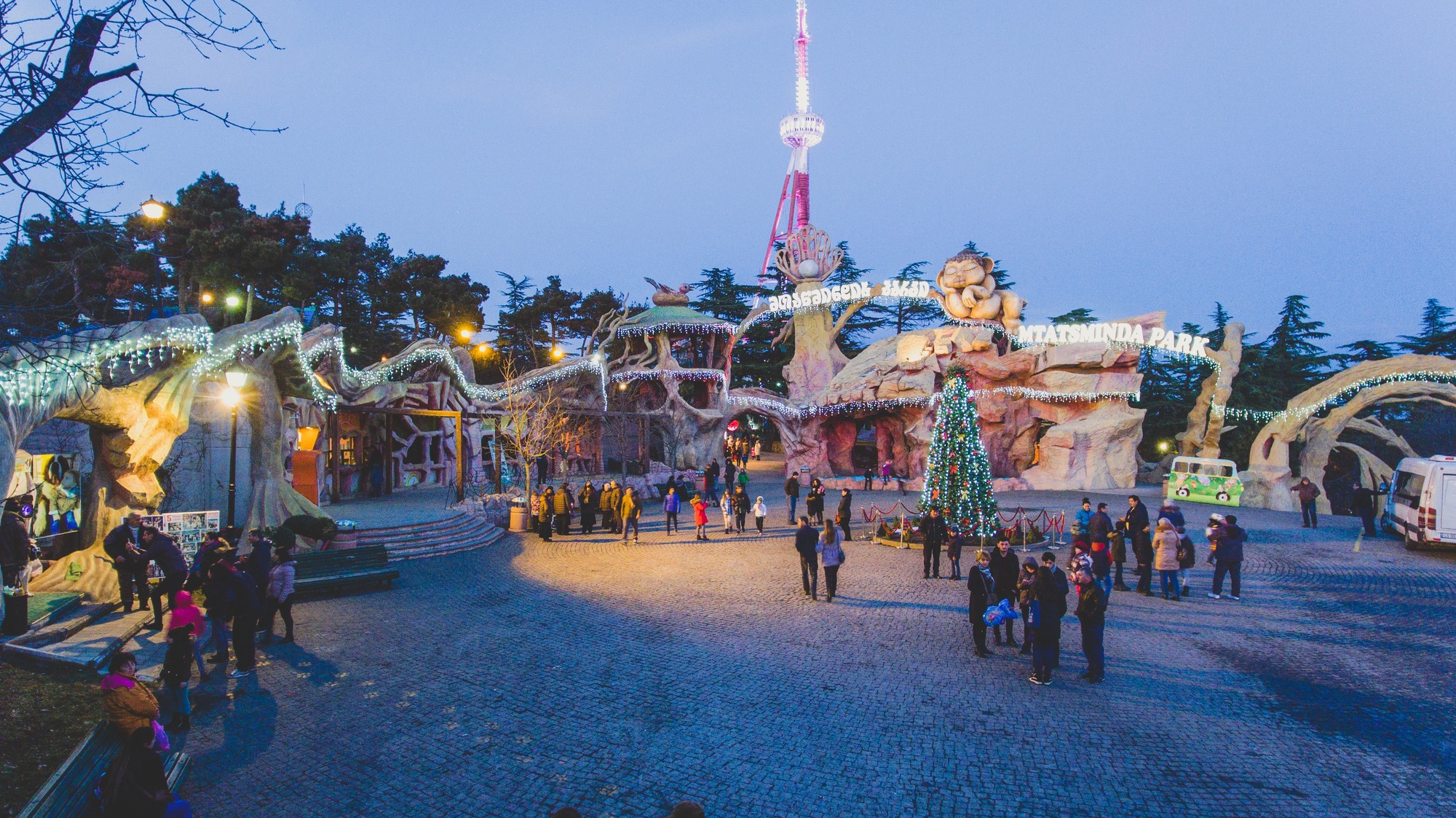
Imagine an amusement park at 770 meters elevation, reachable by a century-old funicular railway, with the entire city of Tbilisi spread out below you and the Caucasus Mountains lining the horizon. That’s Mtatsminda Park, and the journey up is half the fun for kids.
The park is divided into three zones. The Kids Zone has jumping towers, bee jets, a mini pirate ship, a happy train, a carousel, and a water play area. The Family Zone offers bumper cars, a ghost castle, a giant slide, trampolines, and a park train. The Extreme Zone — for older kids and teenagers — has a roller coaster, the Rototechno, and the Giant Ferris Wheel, which at the edge of the hilltop, delivers views that genuinely justify the ride.
Entry to the park grounds is free. You buy a rechargeable card (2 GEL) at the ticket office, load credit onto it, and pay per ride — most cost 1–5 GEL each. There are also all-day passes available through sites like Viator (around $23 USD) that include the funicular and unlimited rides.
Kids may enjoy the contact zoo, which costs 10 GEL per visitor. These kids may pet goats and other animals, including snakes. Zoo workers are attentive to children not to get into trouble. Another spot for kids is Jurastic park with dinos, which kids will definitely love.
The honest take: This park has real character, but it’s not Disneyland — and honest reviewers are divided. Some families report clean facilities, a relaxed atmosphere, and a fantastic half-day outing. Others describe the park as “neglected and outdated,” with rides in poor condition and food that’s overpriced for what you get. Several visitors note that not everything is operational during off-peak seasons, and the staff at some attractions don’t speak English. The consensus seems to be: come for the views, stay for the kids’ rides, don’t expect a polished Western-style theme park.
Weekday afternoons are the sweet spot — smaller crowds, shorter queues.
Getting there: Funicular from Chonkadze Street (lower station near Rustaveli Avenue), 8 GEL per person per way. Cableway from the metro Rustaveli. Bus #124 from Rustaveli Avenue (~20 minutes). Or grab a Bolt taxi. The funicular ride itself is a highlight — kids love it.
Tbilisi Zoo: A Work in Progress
The Tbilisi Zoo, founded in 1927 in the Vere River valley, has had a complicated recent history. The catastrophic flood of June 2015 devastated the lower sections, killing many animals and several staff members. The zoo reopened three months later and has been slowly rebuilding, but visitor opinions vary sharply.
The collection includes around 300 species — white lions, white tigers, a white rhinoceros, hippopotamus, Asian elephants, penguins, and various Caucasian endemic species. There’s also an exotarium with reptiles and fish, and a small amusement area within the zoo grounds with rides for younger children.
The honest take: This zoo is genuinely polarizing. Some visitors enjoy the intimate, old-fashioned scale and the chance to see animals in a relaxed setting. Others are quite critical of the animal enclosures, calling some too small and poorly maintained. The entry price is remarkably cheap (historically around 4 GEL for adults), which some visitors see as a sign of underfunding rather than generosity.
The city has been building a new, modern zoo near Gino Paradise and the Tbilisi Sea, with a promised relocation. Before visiting, confirm the current location and status — the move has been discussed for years but timelines have shifted. If the zoo has indeed relocated by the time you visit, the new facility may offer a substantially better experience.
For a more interactive animal experience without the ethical concerns, consider Zootopia Contact Zoo inside Tbilisi Mall, where children can feed and interact with animals directly. It’s small but well-maintained.
Gino Paradise: The All-Day Water Park
When Tbilisi’s summer heat becomes genuinely oppressive — and it will, with temperatures regularly pushing past 35°C in July and August — Gino Paradise is the family escape valve. Located near the Tbilisi Sea (actually a large reservoir on the city’s outskirts), this 13-hectare water park operates year-round with both indoor and outdoor sections.
The scale is legitimate: nine pools, a wave pool, a lazy river, a dedicated children’s zone with smaller slides and entertainers, and the headline attraction — a 31-meter toboggan slide with six different lane configurations, claimed to be the tallest in Eastern Europe. There’s also a spa and wellness section with 17 types of saunas (for when parents need a break), a fitness room, fishing on a small lake (they’ll cook your catch), and 12 food courts.
Children under 5 enter free. Adult day passes have historically been around 40–50 GEL, with family packages available.
The honest take: Gino Paradise delivers quantity — there’s genuinely a lot to do, and families with kids of mixed ages can keep everyone occupied simultaneously. The cleanliness and maintenance are generally praised. However, recent reviews flag some recurring issues: parts of the park seem to be frequently under construction or closed, the indoor area can feel poorly ventilated on hot days, it gets crowded on weekends and peak season, and some visitors have had negative interactions with staff, particularly at the slides. Go on a weekday if you can.
Getting there: Beshenova Street, near the Tbilisi Sea. About 20–25 minutes by taxi from the city center. Use Bolt or Yandex apps.
The Botanical Garden: Nature Without the Ticket Price
For a family outing that costs almost nothing and rewards you with a genuine sense of discovery, the National Botanical Garden of Georgia is hard to beat. Spanning 161 hectares in the Tsavkisis-Tskali Gorge behind Narikala Fortress, this is less a manicured flower garden and more a forested valley with waterfalls, bamboo groves, a Japanese garden, and panoramic viewing points over the entire city.
The waterfall is the destination for families. About one kilometer into the park from the main entrance (past the mosque in Old Town), a beautiful arched bridge built in 1914 crosses directly above the cascade. On a hot day, this is the single most refreshing spot in central Tbilisi. There are two playgrounds near the main entrance, a children’s route offered by the visitor center, and electric car tours for those who don’t want to climb the hills on foot.
The honest take: The botanical garden is genuinely beautiful, but it involves a lot of walking and a lot of stairs. With a stroller, you’ll be limited in where you can go. Older kids (5+) who can walk independently will get the most out of it. Bring your own snacks and water — food options inside the garden are very limited. The entry fee is absurdly low: just 4 GEL per adult, 1 GEL for students, and a family ticket for 6 GEL. Preschoolers enter free.
You can also enter from the top, near the Mother of Georgia statue, by taking the cable car from Rike Park to Narikala Fortress and walking down. The adventurous approach? A zip-line from the fortress directly into the garden (30 GEL, includes garden entry). Not for toddlers, obviously — but for older kids and parents who want a thrill, it’s a memorable way to arrive.
Parks and Playgrounds: A Comparative Guide
| Park | Best For | Playground Quality | Stroller-Friendly | Shade | Food Options | Free Entry |
|---|---|---|---|---|---|---|
| Mziuri Park | Kids 2–12 | Excellent — climbing walls, swings, multiple play areas | Mostly (stony path at one entrance) | Very good (tall old trees) | Mziuri Cafe inside park | Yes |
| Vake Park | All ages | Good — amusement area with small rides | Yes — wide paved paths | Good | Snack bars, nearby restaurants | Yes |
| Turtle Lake | Families in summer | Basic playground (~5 GEL) | No — hilly terrain | Moderate | Cafes along eastern shore | Yes |
| Lisi Lake | Active kids 5+ | Good — trampolines, climbing wall, go-karts | Partially | Good (forested) | Food shacks near lake | Yes |
| Mushtaidi Park | Younger kids | Traditional rides, mini train | Yes | Good (mature trees) | Limited | Yes |
| Rike Park | Toddlers & short visits | Modern, interactive | Yes | Limited | Nearby restaurants | Yes |
Mziuri Park — The Best All-Round Family Park
If you have time for just one park, make it this one. Named “sunny” in Georgian, Mziuri was originally conceived by writer Nodar Dumbadze in 1982 as a children’s paradise — a “Georgian Disneyland” in the Vere valley. After devastation in the 2015 flood (which also destroyed parts of the nearby zoo), the park was rebuilt with over $2.4 million in restoration funds, and it shows.
Today it’s a multi-level space with two separate play parks, a climbing wall, a skate park, bike paths, a duck-filled lake, an amphitheater that hosts festivals, and scattered sculptures of characters from Dumbadze’s works. The park’s design is genuinely creative — colorful staircases connect different levels, and there are tucked-away picnic spots under tall trees where you can lose an afternoon without trying. The Mziuri Cafe inside the park serves healthy food (Mondays are meat-free), and all profits go to maintaining the park.
The catch: One entrance from Chavchavadze Avenue involves a stony path that’s rough on strollers. Use the other entrances if you have wheels.
Vake Park — Wide Open and Easy
Tbilisi’s largest park on flat ground, Vake Park (Victory Park) is the obvious choice for families staying in the Vake district. Wide paved paths make it ideal for strollers and bikes — several families report this area has the best sidewalks in Tbilisi for children riding bikes. There’s a playground, a small amusement area with kiddie rides, basketball and tennis courts, and a cable car that runs up to Turtle Lake.
The park has been undergoing renovation for what some locals describe as a “seemingly endless” period, so parts may be under construction. But the sheer size means there’s always space to spread out.
Turtle Lake — A Summer Afternoon
Perched above Vake Park at an elevation that gives you a panoramic view of the city, Turtle Lake (Kus-Tba) is the classic Tbilisi summer escape. The walking loop around the lake is just over one kilometer — manageable even for smaller children. There are paddleboats for rent, a zip-line near the top of the cable car station, pebbly beaches with sunbeds, cafes, and a playground.
The honest take: The water is not pristine — several visitors describe it as “not the cleanest” with occasional foam. Swimming is only allowed on one side. It gets very crowded on weekends. Best visited on a weekday afternoon, arriving about an hour before sunset for the light. Getting there: cable car from Vake Park (cheap but Soviet-era and somewhat basic), taxi, or a hike up from Vake Park (~40 minutes uphill, straightforward but steep).
Lisi Lake — Worth the Trip for Active Families
Further out from the center, above the Saburtalo neighborhood, Lisi Lake is where families go for a more active day. A 3-kilometer paved path circles the lake, perfect for biking and rollerblading (bikes and scooters available for rent). Multiple playgrounds sit in the surrounding woods; there’s a trampoline area (paid), go-karts, a climbing wall, and a free playground. It’s windier than other parks — bring layers.
The lake itself isn’t for swimming, but there’s reportedly a traditional Georgian bath nearby. Several food shacks and a cafe or two sit near the lake, though don’t expect fine dining.
Mushtaidi Park — Old-School Charm
Tbilisi’s oldest public park, dating to the 1830s, has a story unlike any other. It was founded by Mir-Fatah-Agha, an Iranian exile who planted roses around his Georgian wife’s grave. The park that grew from that garden now houses the world’s first children’s railway (opened 1935, still running), a puppet theater, a Ferris wheel, and a charmingly retro atmosphere. It also contains the Georgian State Silk Museum, which is more interesting than it sounds.
For kids, the miniature railway is the main draw — a 1.2-kilometer ride that’s been delighting children for nearly a century. The park’s pace is slower and less polished than Mziuri, but that’s part of the appeal.
Family-Friendly City Tours
Dragging children through the Old Town on foot can go either way — the cobblestone streets are murder on strollers, and the hills will exhaust small legs fast. A dedicated family tour helps enormously.
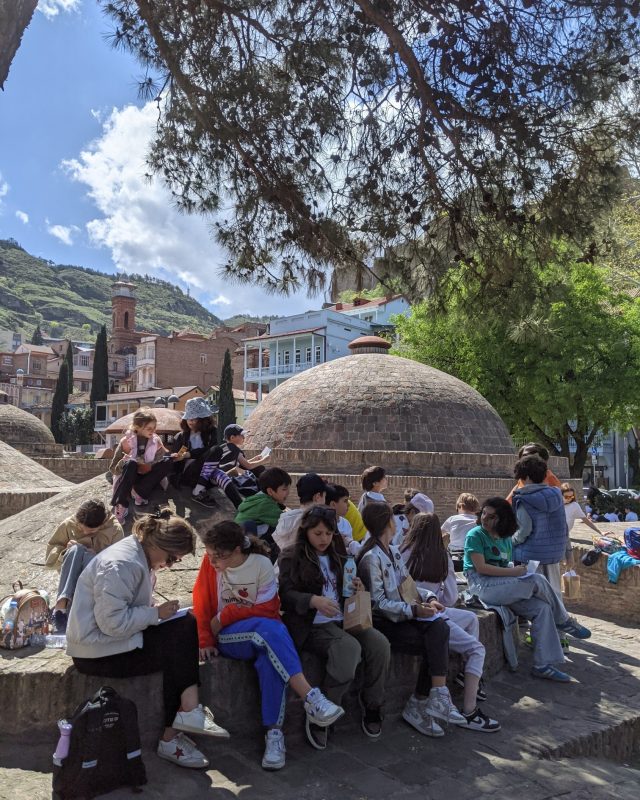
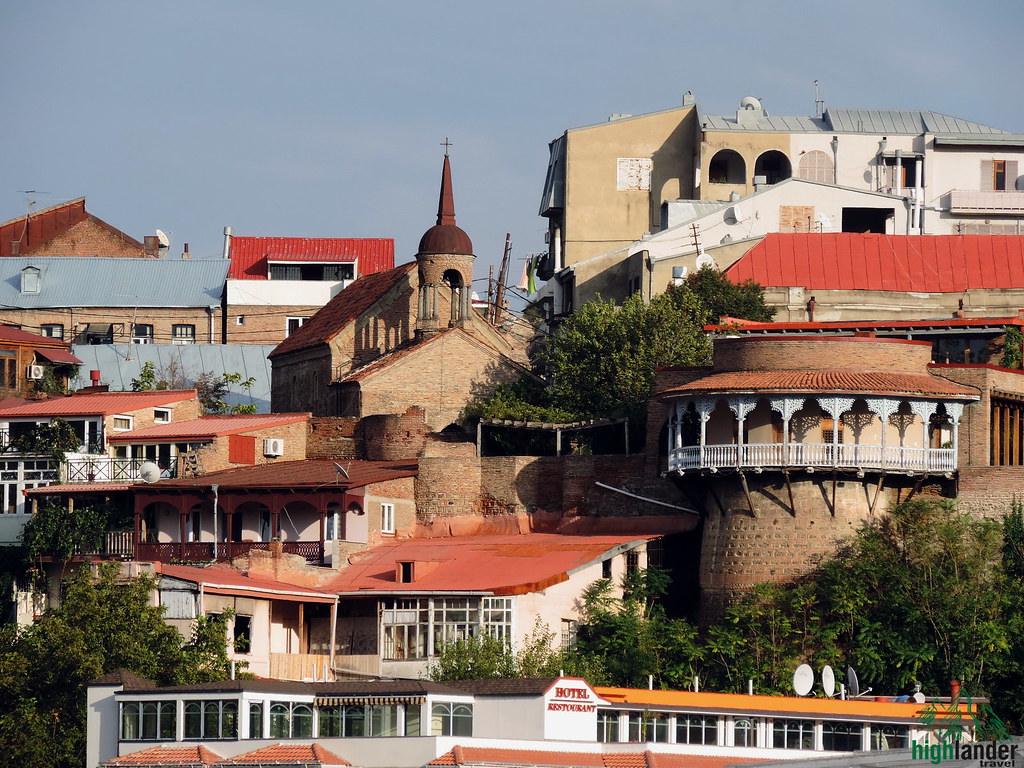
Our friends and colleagues organize kid-friendly city tours. We can help you to book such a tour for your kids. The typical route hits the highlights without the endurance test: starting at Gudiashvili Square in the Old Town, passing the Rezo Gabriadze Clock Tower (kids love the whimsical hourly puppet show), crossing the Bridge of Peace (a glowing, futuristic contrast to everything around it), then taking the cable car from Rike Park up to Narikala Fortress for the views. Tours usually end with a funicular ride on Mtatsminda — giving kids two different cable transport experiences in one day, which is basically paradise if your child is under seven.
The boat rides on the Mtkvari River are another low-effort, high-reward option. Most depart from near Rike Park, last about 30 minutes, pass under the Bridge of Peace and along the cliffside houses and sulphur bath district, and many operators let young children ride free.
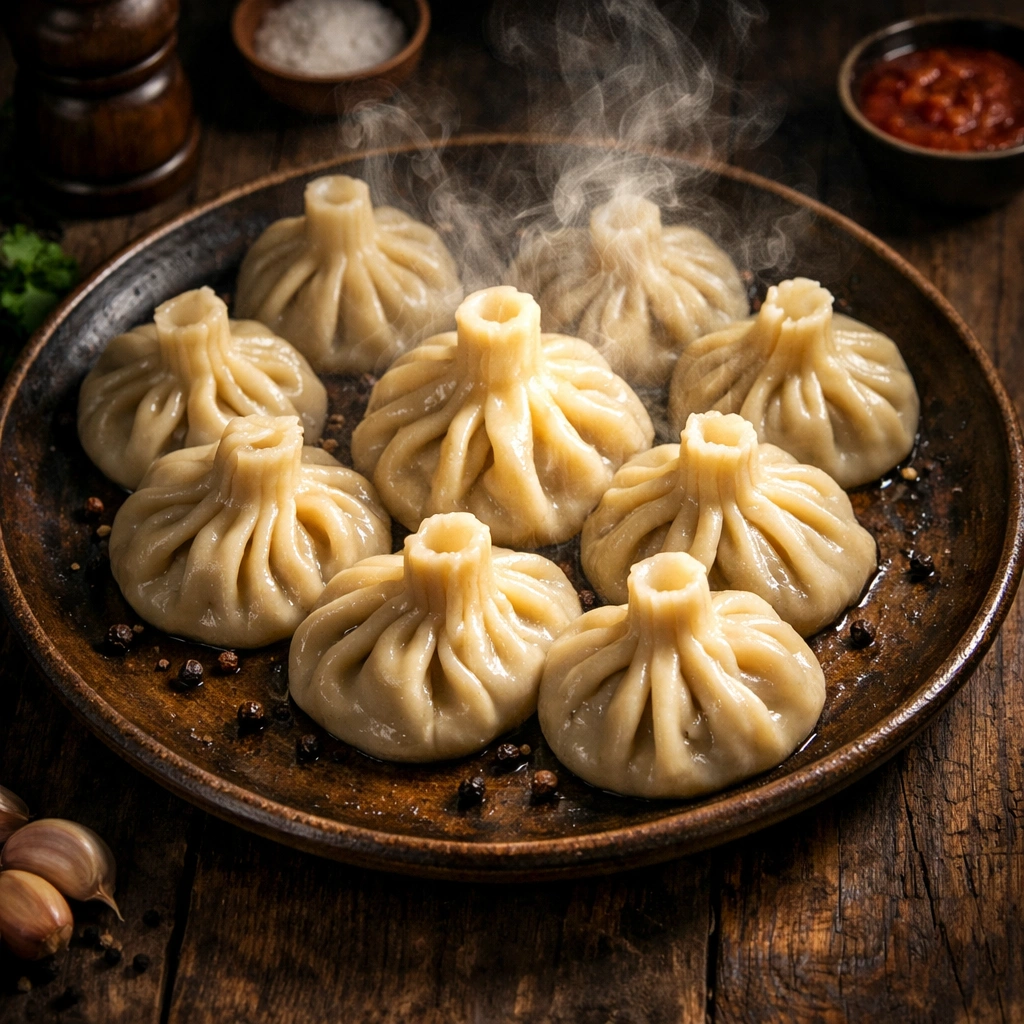
For something more hands-on, a khinkali and khachapuri cooking class (available through multiple operators) doubles as both a meal and an activity. Kids get to fold dumplings and pull cheese bread — messy, delicious, and genuinely engaging.
Indoor Playgrounds and Entertainment Centers: When It Rains or Overheats
Tbilisi summers are hot. Tbilisi winters are damp. Either way, you’ll need indoor options.
Focus Mokus is one of the largest family entertainment centers, with arcade games, carousels, and age-appropriate play areas. Boom Boom suits younger children — it’s quieter, with mazes, playhouses, toy cars, and a ball pit. Madagascar, centrally located, has slides and play areas, though the steep slides may not be safe for under-threes. TbiliKids, on the outskirts, offers the most space — arcade games, themed pretend-play rooms, and workshops — at around 15 GEL for unlimited time. Multiple indoor climbing walls and bouldering clubs (particularly in the Vake area) provide active entertainment for older children.
Most major malls (TbilisiMall, East Point) also have dedicated kids’ zones.
Practical Tips: What Nobody Tells You Before You Go
Getting around with kids: Bolt is your best friend. It works reliably across Tbilisi, drivers arrive fast, and fares are low by European standards. The metro is clean and functional but only has two lines, so it won’t get you everywhere. Buses are cheap (1 GEL) but not always stroller-friendly.
Stroller reality check: Old Town Tbilisi is not stroller territory. Cobblestone streets, steep hills, narrow sidewalks with car traffic, and uneven surfaces will test both your equipment and your patience. A lightweight, rugged stroller or a baby carrier is infinitely better than anything with small wheels. Vake and Saburtalo neighborhoods, by contrast, have the best sidewalks in the city.
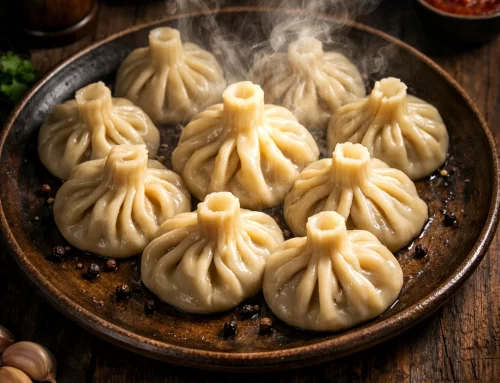
Food for kids: Georgian food is genuinely kid-friendly. Khachapuri (cheese-filled bread) is essentially a child’s dream food. Khinkali (dumplings) work well for kids who’ll eat dumplings. Fresh bread, cheese, fruit from local markets, and churchkhela (grape-and-walnut candy) make excellent snacks on the go. Many central restaurants welcome families and offer high chairs, though dedicated children’s menus are less common than in Western Europe.
Timing: June and October are the sweet months — warm without the brutal summer heat, fewer crowds, fresh fruit everywhere. July and August hit 35°C+ regularly; plan water-based activities. Winter (December–February) is mild but grey and windy, around 2–4°C, requiring warm layers but nothing extreme.
Budget: Tbilisi is remarkably affordable for families. Park entry is free across the board. Museum tickets rarely exceed 15–20 GEL per person. A family taxi ride across the city costs 5–15 GEL. The only genuinely expensive attractions are the Museum of Illusions/Holloseum combo ticket and Gino Paradise — but even those are modest by European standards.
Language: English is increasingly spoken, especially by younger Georgians and in tourist-facing businesses. But don’t expect it everywhere — particularly at the zoo, in parks, and at smaller attractions. Having a translation app ready helps. In museums, always ask about English-guided tours when booking.
Safety: Tbilisi is generally safe for families. Parks are well-monitored (Mziuri has CCTV throughout), public transport is reliable, and violent crime against tourists is rare. The main hazards are chaotic driving (be very careful crossing streets with children) and uneven pavements.
FAQ – Tbilisi with Kids
Is Tbilisi good for traveling with kids?
Yes, Tbilisi is very family-friendly. It offers many parks, playgrounds, interactive museums, and affordable развлечения that keep children engaged.
What are the best things to do in Tbilisi with kids?
Top activities include visiting Experimentorium, Mtatsminda Park, Gino Paradise water park, the Botanical Garden waterfall, and Mziuri Park playgrounds.
Is Tbilisi stroller-friendly?
Not everywhere. Old Town has cobblestones and steep hills, making it difficult. Areas like Vake and Saburtalo are much better for strollers.
What is the best park in Tbilisi for kids?
Mziuri Park is the best overall, with multiple playgrounds, shade, and creative play areas. Vake Park is also great for easy walks and bikes.
Is Gino Paradise worth visiting?
Yes, especially in summer. It has many pools and slides for all ages, though it can get crowded and some areas may be closed occasionally.
How many days do you need in Tbilisi with kids?
A 3–4 day stay is ideal to explore parks, museums, Old Town, and one or two major attractions without rushing.
Is Tbilisi safe for families?
Yes, Tbilisi is generally safe. The main concerns are traffic and uneven sidewalks, so extra care is needed when moving around with children.
Bring comfortable shoes. Leave the fancy stroller at home. And when your five-year-old tells you that holding lightning was the best thing that ever happened to her, you’ll know you picked the right city.
 Kazbegi Travel Guide: Mount Kazbek, Gergeti Church, and Georgia's Wildest Day Trip