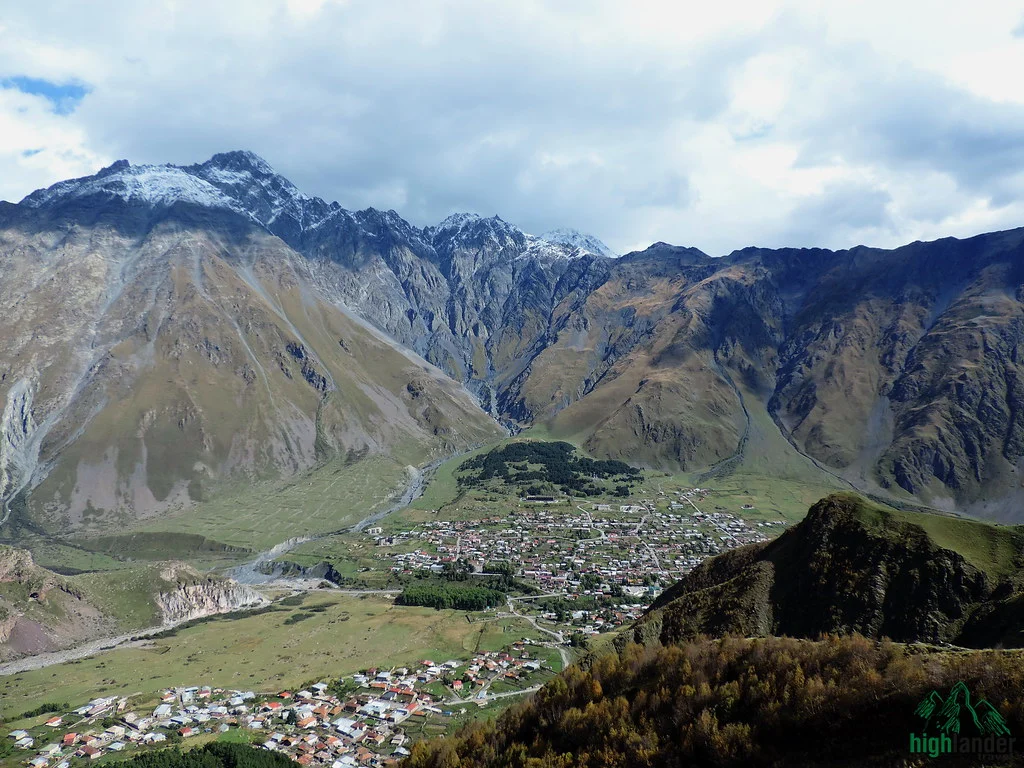
Stepantsminda—still widely known as Kazbegi—is a small mountain town surrounded by some of the most dramatic scenery in Georgia. Set in the Greater Caucasus beneath Mount Kazbek, it is the main base for visiting Gergeti Trinity Church, hiking near Juta, exploring Truso Valley and discovering the waterfalls and gorges of northern Mtskheta-Mtianeti.
This Stepantsminda travel guide explains how to get there, what to see, how many days to stay and what to expect in each season. Mountain weather and road conditions can change quickly, so treat journey times as estimates and check local conditions before setting out.
Stepantsminda quick facts
| Location | Kazbegi Municipality, Mtskheta-Mtianeti, northern Georgia |
|---|---|
| Also known as | Kazbegi |
| Town elevation | Approximately 1,750 metres above sea level |
| Distance from Tbilisi | Approximately 155–160 kilometres by road |
| Typical driving time | About 3–4 hours without long sightseeing stops |
| Recommended stay | At least two nights; three or more for Juta or Truso hikes |
| Main sights | Gergeti Trinity Church, Dariali Gorge, Gveleti Waterfalls, Sno, Juta and Truso Valley |
| Best hiking period | Usually June to September, depending on snow and trail conditions |
What is Stepantsminda?
Stepantsminda is the administrative centre of Kazbegi Municipality, close to Georgia’s northern border. Travellers commonly use the names Stepantsminda and Kazbegi interchangeably, so accommodation listings and road signs may use either name.
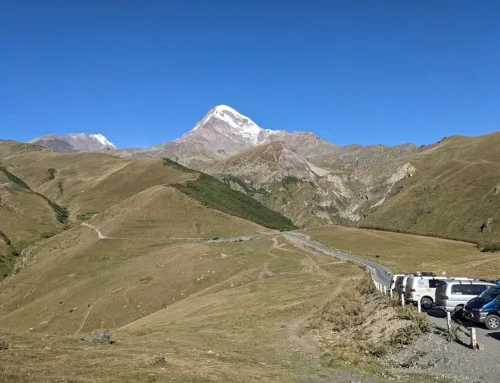
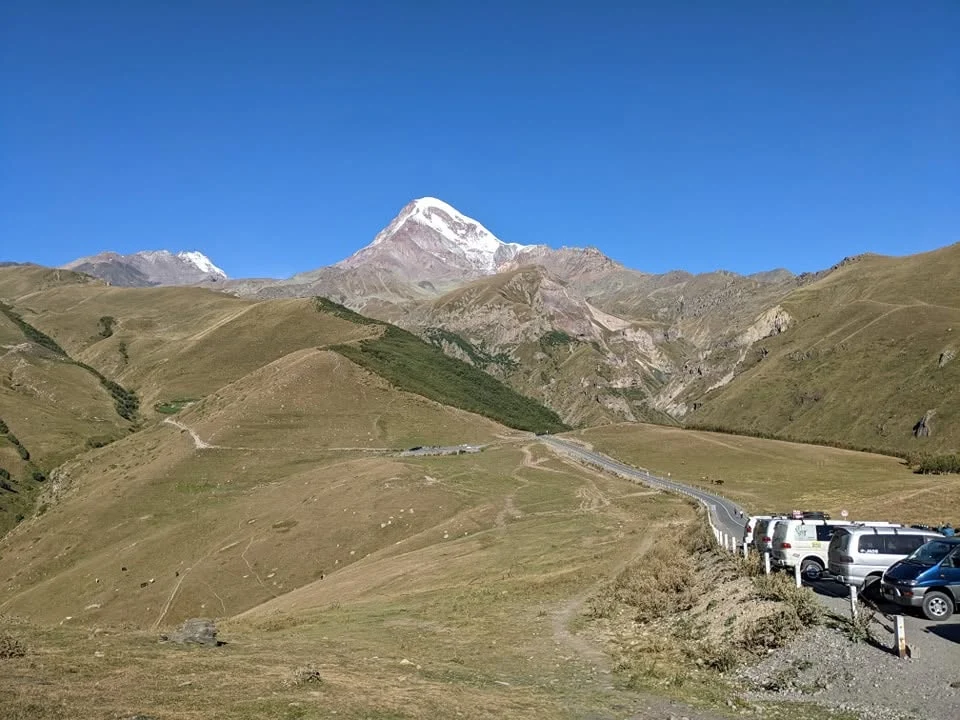
The town stands at roughly 1,750 metres in the Tergi River valley. Its skyline is dominated by Mount Kazbek, or Mkinvartsveri, a 5,054-metre dormant stratovolcano. Stepantsminda is also a convenient gateway to Kazbegi National Park and several of the region’s best-known valleys.
How to get to Stepantsminda from Tbilisi
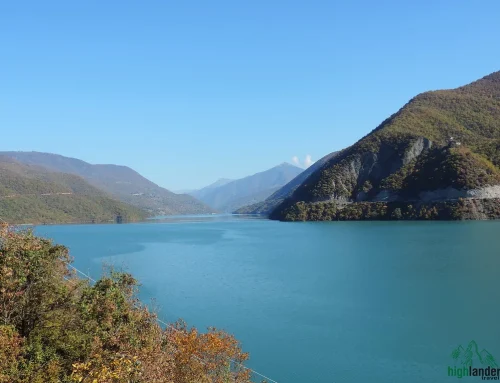
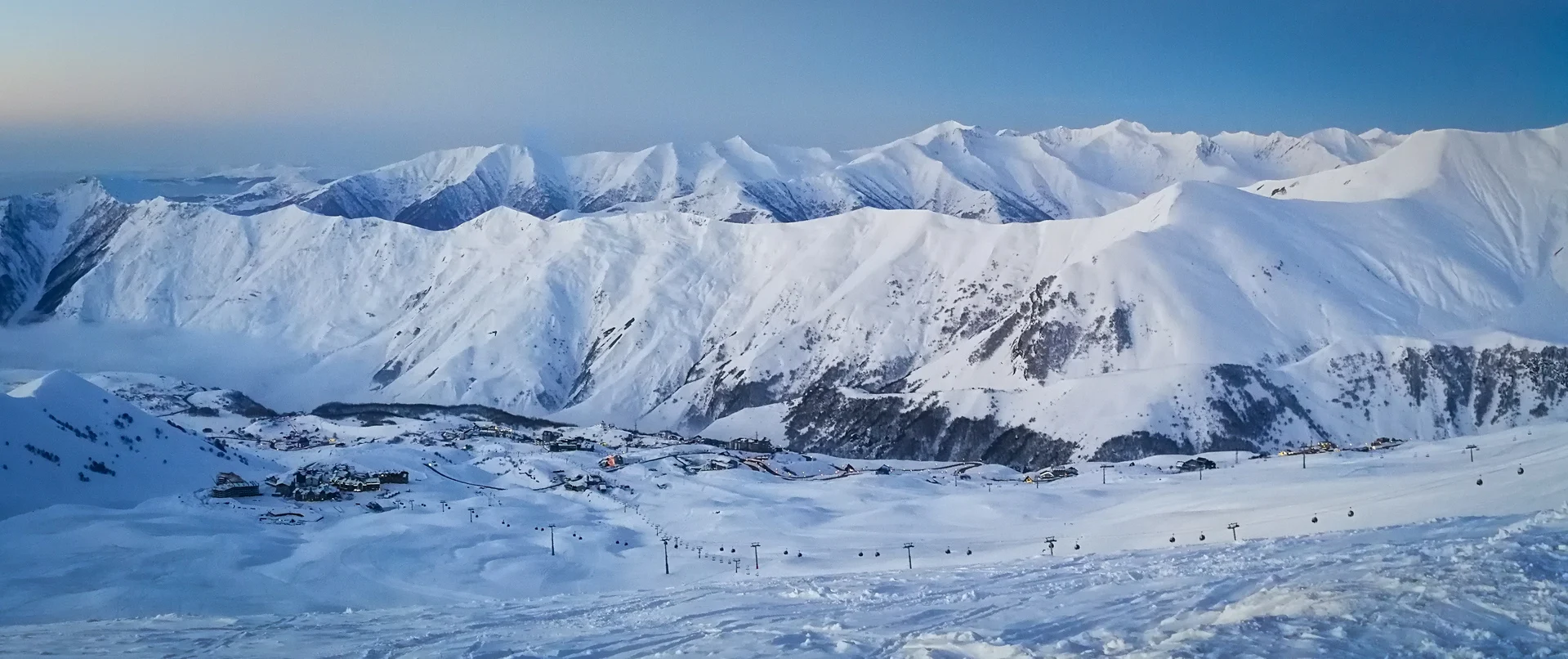
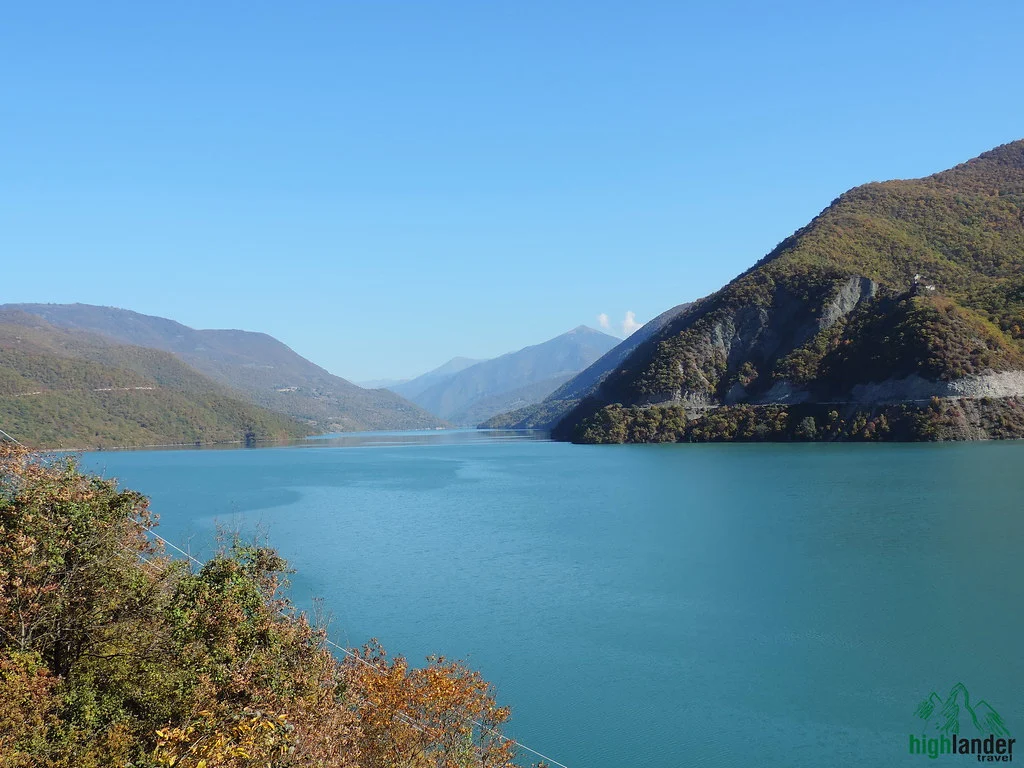
The journey from Tbilisi follows the historic Georgian Military Highway through Ananuri, the Zhinvali Reservoir, Gudauri and the Jvari Pass. The route is a major part of the experience, but fog, snow, roadworks and heavy traffic can increase travel time.
By private car or driver
A private vehicle offers the most flexibility for scenic stops. The main highway is paved, and a standard car is normally sufficient for Stepantsminda in good conditions. Do not assume the same for side roads into Juta or Truso Valley, where conditions can be rough or seasonal.
By marshrutka
Shared minibuses usually leave from Didube in Tbilisi. They are economical but make limited sightseeing stops, luggage space can be tight and schedules may change. Confirm the departure point and final service of the day locally.
By guided tour
A guided trip is the simplest option if you want transport and sightseeing organised together. Choose a Kazbegi day tour from Tbilisi for the main highlights or a two-day Kazbegi tour for a less hurried visit.
Winter note: snow and avalanche-control work can temporarily close the Gudauri–Kobi section of the highway. Check current road conditions before departure and keep your itinerary flexible.
Best things to do in Stepantsminda and Kazbegi
1. Visit Gergeti Trinity Church
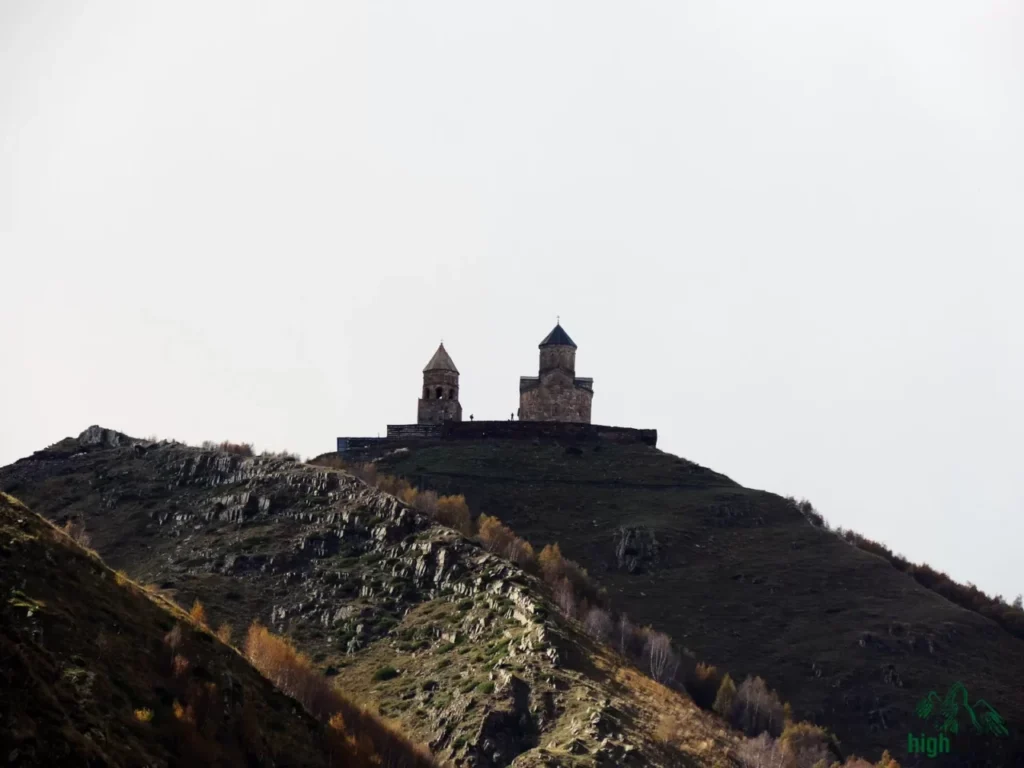
The 14th-century Gergeti Trinity Church is the essential Kazbegi landmark. It stands above Stepantsminda at approximately 2,170 metres, with views across the valley and towards Mount Kazbek when the clouds lift.
You can reach the church by local taxi or walk from town. The paved road makes vehicle access straightforward in normal conditions. Hikers should allow roughly 1.5–2 hours for the uphill walk, depending on the chosen path, pace and weather, plus time for the descent. Wear modest clothing inside the active church and avoid disturbing services.
2. Walk to the Gveleti Waterfalls
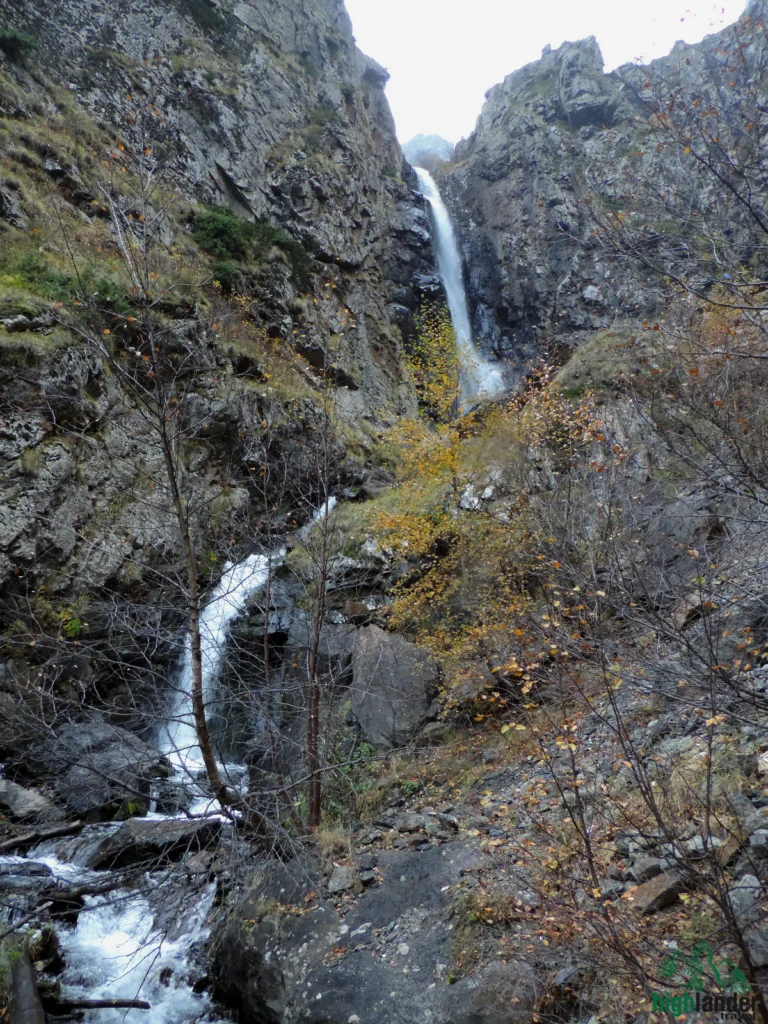
Gveleti lies north of Stepantsminda in the Dariali Gorge. Short walking trails lead to two waterfalls through a rocky side valley. The paths can be slippery after rain, so use shoes with reliable grip and avoid the gorge during storms or periods of high water.
3. Explore Sno and Juta
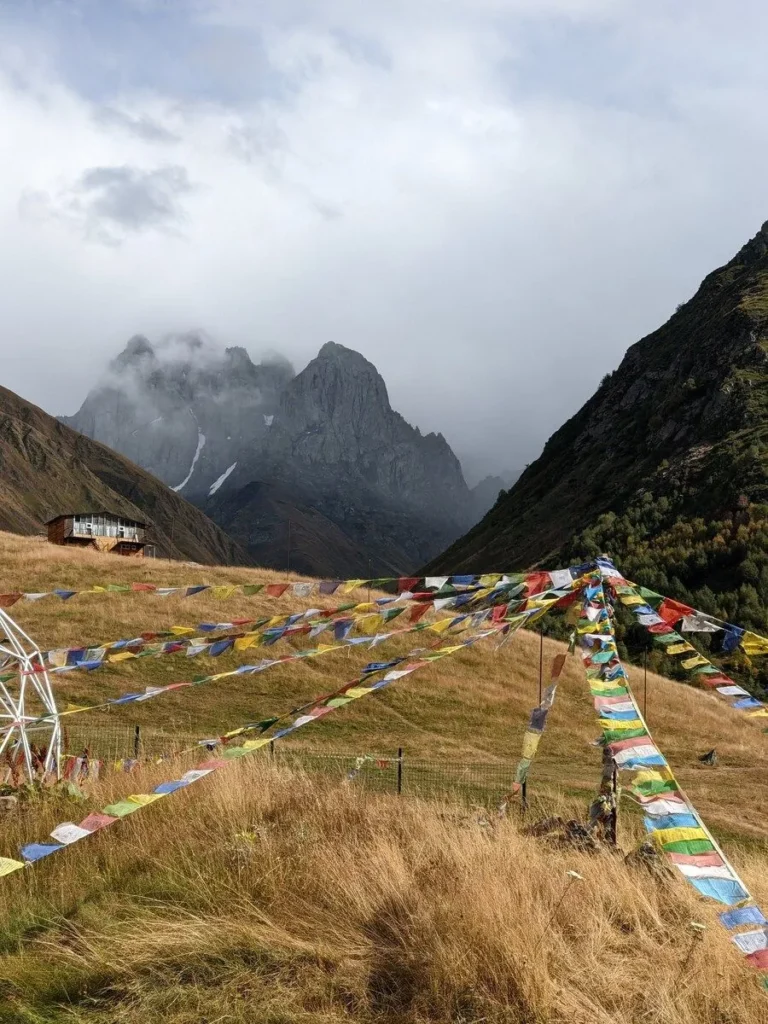
Sno is known for its stone defensive tower and the striking giant stone faces created by local sculptor Merab Piranishvili. Farther up the valley, Juta sits at about 2,200 metres beneath the jagged Chaukhi Massif.
Juta is a rewarding base for short walks and longer mountain routes. Access is seasonal, and road, parking and transfer arrangements can change. Check conditions in Stepantsminda before travelling and book the limited village accommodation well ahead in summer. Experienced hikers can consider a longer trek across the Eastern Caucasus; less experienced visitors should use a qualified guide for high passes.
4. Discover Truso Valley
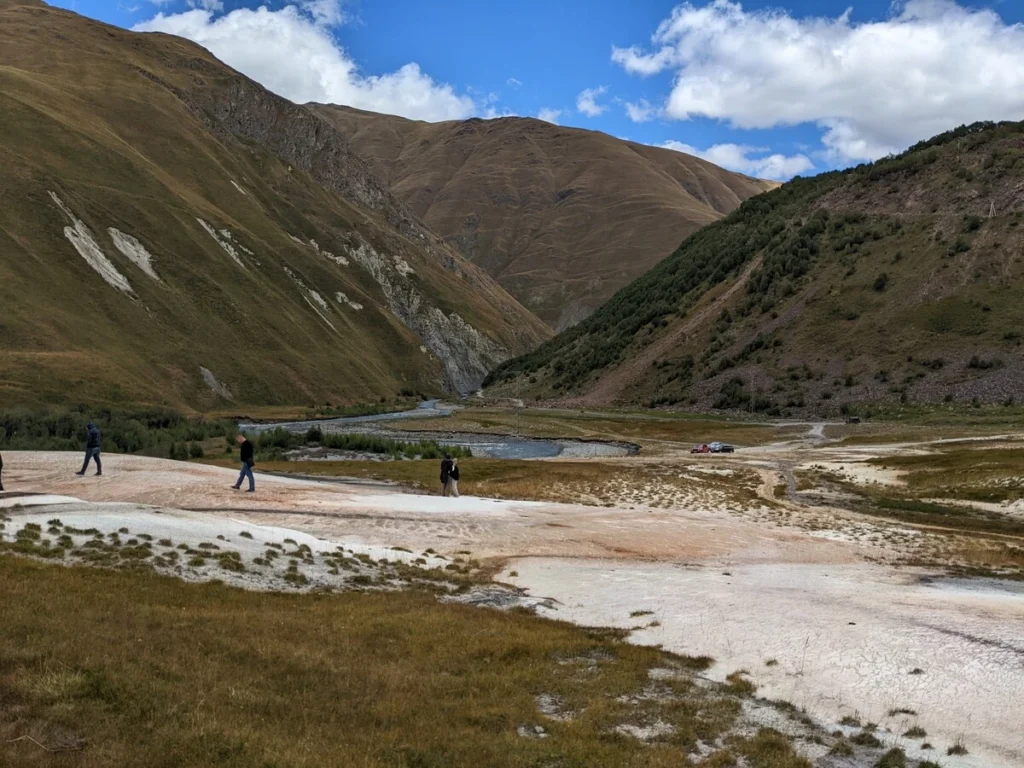
Truso Valley combines mineral springs, colourful travertine formations, the Tergi River, ruined settlements and Zakagori Fortress. It is quieter than central Stepantsminda, but it is not completely uninhabited: there are seasonal residents and active religious sites in parts of the valley.
The usual walking route takes approximately 4–6 hours return, depending on the starting point and turnaround. Vehicle access requires a suitable high-clearance vehicle and an experienced driver. The upper valley is a controlled border area, so carry your passport or official ID, obey Border Police instructions and never cross a barrier or checkpoint without permission.
Protect the landscape: admire the mineral springs and travertines without bathing in them, tasting the water or walking on fragile deposits. Take all rubbish back with you.
5. Drive through Dariali Gorge
The road north from Stepantsminda enters the narrow Dariali Gorge, where steep cliffs rise above the Tergi River. Stops in the area can include the Dariali Monastery Complex and the Gveleti trailheads. The final kilometres lead towards an international border crossing, so follow all signs and do not photograph restricted infrastructure.
6. Choose a suitable Caucasus hike
Options range from short valley walks to demanding high-mountain traverses. Start with the Gergeti, Gveleti or lower Juta routes if you have limited mountain experience. For more ideas, see this guide to hiking trails in Georgia’s Caucasus Mountains.
Download an offline map, start early and carry water, sun protection and a waterproof layer. Snow can remain on higher routes well into summer. Turn back if visibility deteriorates, rivers rise or thunderstorms approach.
7. Check regulated adventure activities
Paragliding in Georgia is regulated and may take place only at approved sites through authorised operators. Availability in the Kazbegi area depends on the certified site, operator and weather. Confirm the launch location, pilot credentials, insurance and cancellation terms directly before booking; do not rely on old listings that describe either unrestricted flights or a nationwide ban.
8. Try local mountain food
Khevi is associated with hearty dishes suited to the mountain climate. Look for khinkali, soups, grilled meat, potatoes and Georgian breads. Vegetarians can order mushroom or potato khinkali where available, along with lobio and different regional styles of khachapuri. Ask about ingredients if you follow a strict vegetarian or vegan diet.
How many days do you need in Stepantsminda?
A day trip covers the Georgian Military Highway and Gergeti Trinity Church, but much of the day is spent driving. Two nights give you one full day for Gergeti and Dariali or Gveleti. Stay three or four nights if you also want to hike in Juta or Truso Valley and keep a spare day for poor weather.
Suggested two-day itinerary
- Day one: travel from Tbilisi along the Georgian Military Highway, stopping at selected viewpoints before reaching Stepantsminda. Visit Gergeti Trinity Church in the afternoon if the mountain is clear.
- Day two: choose Gveleti and Dariali for a shorter outing, or devote the day to Juta or Truso when seasonal access and weather are suitable.
Where to stay in Stepantsminda
Stepantsminda has family-run guesthouses, small hotels, apartments and upscale properties. Staying near the centre is convenient for restaurants, shops and marshrutkas. Rooms on the western side of town or higher slopes may offer excellent views of Gergeti and Mount Kazbek, but check walking distances and gradients before booking.
- Guesthouses: usually the best choice for local hospitality and value; breakfast or dinner may be available.
- Mid-range hotels and apartments: useful for private bathrooms, kitchens or family rooms.
- Upscale hotels: may include restaurants, spa facilities and panoramic terraces, although views always depend on the weather.
- Juta stays: convenient for early hiking starts but limited and highly seasonal; confirm road transfers and luggage arrangements.
Reserve early for summer weekends and public holidays. Before paying, check heating, parking, breakfast, cancellation conditions and whether access involves steep streets or stairs.
Best time to visit Stepantsminda
June to September normally offers the widest choice of hikes and the most reliable access to Juta and Truso, although rain, fog and sudden cold spells are possible in any month. July and August are busiest.
- Spring: green valleys and waterfalls, but snow, mud and high water can restrict mountain routes.
- Summer: the main hiking season, with long days and the greatest choice of accommodation and activities.
- Autumn: cooler, quieter and often colourful; high routes and seasonal roads may close after early snowfall.
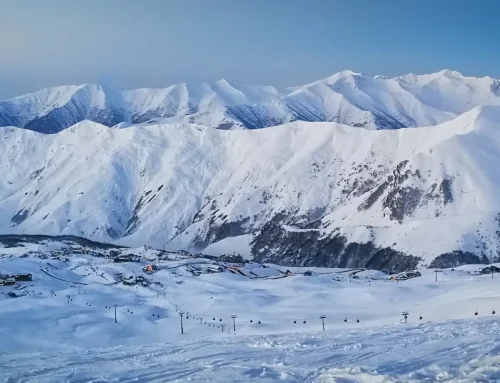
- Winter: dramatic snowy scenery and a peaceful atmosphere, but short daylight hours and temporary highway closures require flexibility.
See the wider seasonal overview in When to Travel to Georgia.
Practical travel tips
- Carry cash: cards are widely accepted at larger businesses, but small guesthouses, taxis and village services may require cash.
- Bring layers: sunshine, rain, wind and cold can arrive on the same day.
- Keep offline maps: mobile coverage may weaken in side valleys.
- Carry identification: a passport or official ID is essential near controlled border areas, especially upper Truso.
- Use suitable footwear: even short paths can be rocky, muddy or slippery.
- Respect churches: dress modestly, keep voices low and follow photography rules.
- Plan fuel and food: fill up before remote valley drives and carry water and snacks.
- Leave no trace: stay on established paths and do not damage travertines, wildflowers or archaeological remains.
Frequently asked questions about Stepantsminda
Are Stepantsminda and Kazbegi the same place?
Yes. Stepantsminda is the official name of the town, while Kazbegi remains widely used by travellers, residents and accommodation platforms.
How far is Stepantsminda from Tbilisi?
Stepantsminda is approximately 155–160 kilometres from Tbilisi by road. The drive usually takes about 3–4 hours without long sightseeing stops, but weather and traffic can add time.
Is one day enough for Kazbegi?
A day trip is enough for the Georgian Military Highway and Gergeti Trinity Church, but it involves considerable driving. Two or three nights are better if you want to explore Juta, Truso or Gveleti.
Do I need a four-wheel-drive vehicle in Stepantsminda?
Not for the paved main road to Stepantsminda or Gergeti in normal conditions. A suitable high-clearance vehicle and experienced driver may be needed for rough or seasonal roads into Truso Valley and Juta.
How do I reach Gergeti Trinity Church?
You can walk from Stepantsminda or take a local taxi on the paved road. Allow roughly 1.5–2 hours for the uphill walk, depending on your route, pace and the weather.
What is the best time to visit Stepantsminda?
June to September is usually best for hiking and access to the side valleys. Spring and autumn are quieter but more variable, while winter visitors should expect snow and possible road delays.
Can I visit Stepantsminda in winter?
Yes, Stepantsminda is a year-round destination, but snow and avalanche-control work can temporarily close the Gudauri–Kobi highway. Check road conditions before travelling and keep your schedule flexible.
Are Juta and Truso Valley accessible all year?
No. Access is seasonal and can be restricted by snow, mud, flooding or road damage. Check locally before departure, use an appropriate vehicle and carry identification for the controlled upper section of Truso Valley.
Is paragliding allowed in Kazbegi?
Paragliding in Georgia is regulated and is allowed only at approved sites through authorised operators. Confirm current Kazbegi availability, pilot credentials, insurance and weather conditions directly before booking.
Plan your Kazbegi trip
Stepantsminda rewards travellers who stay beyond a quick photo stop. Build in enough time for changing mountain weather, choose routes that match your experience and use local guides or drivers for remote valleys. Whether you visit Gergeti, walk beneath the Chaukhi Massif or explore the mineral landscapes of Truso, the Kazbegi region is one of Georgia’s most memorable mountain destinations.