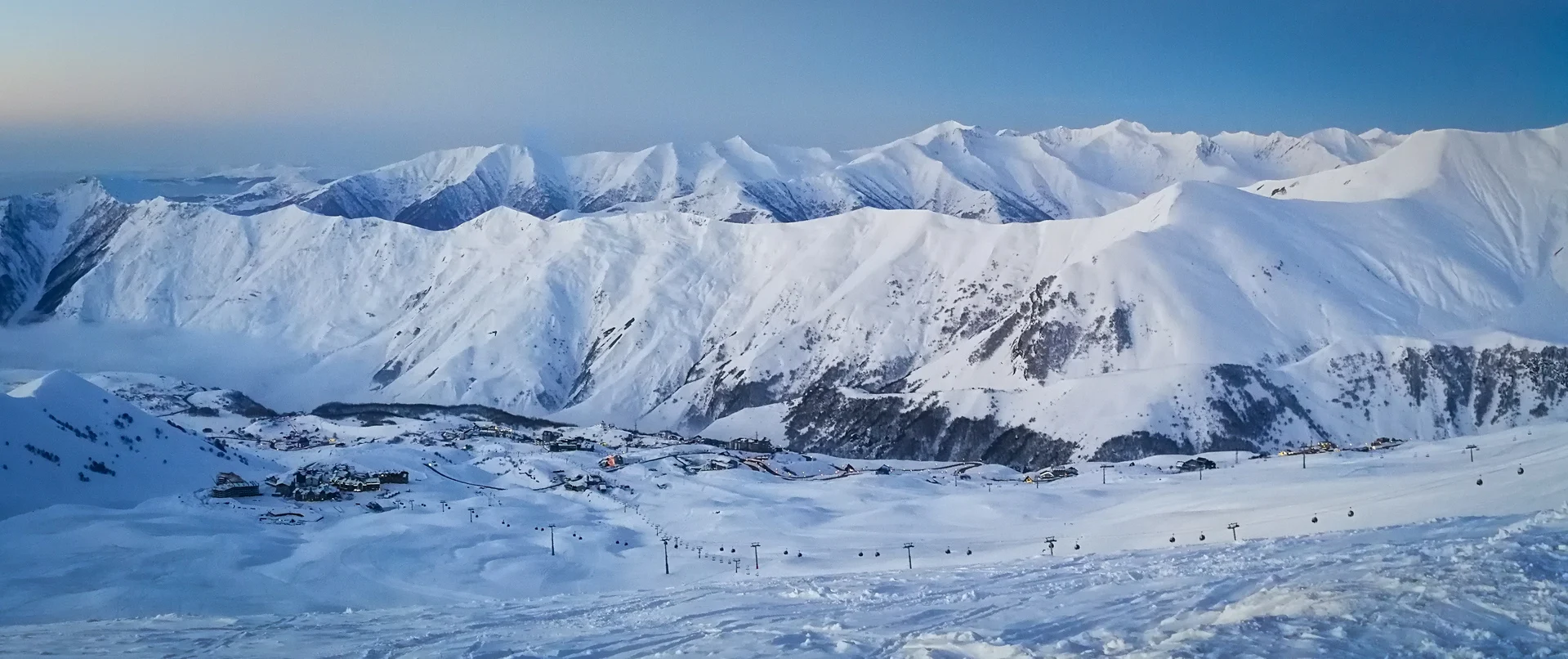
Gudauri’s base station sits at 2,200 metres. Pause on that number for a moment: it is higher than the summit of a good many ski areas in the Alps, and here it is where your day starts rather than where it tops out. Everything people like about skiing in Gudauri follows from that one fact — the snow that stays dry into March, the open bowls above the treeline, the lift queues that mostly do not exist.
This is Georgia the country, not the American state: a resort on the southern slopes of the Greater Caucasus, two hours north of Tbilisi along the Georgian Military Road. Twenty years ago it was two chairlifts and a hotel. Today it is the largest ski area in the Caucasus, and it has quietly become one of the better-value places in the world to spend a week on skis.
Where Gudauri Is, and Why the Altitude Matters
Gudauri lies 120 km north of Tbilisi in the Mtskheta-Mtianeti region, spread along a shelf of mountainside just below the Jvari (Cross) Pass at 2,379 m. There is almost no permanent village here in the ordinary sense. Gudauri is hotels, rental shops, ski schools and lift stations, arranged in three loose clusters that locals call Lower, Central and Upper (or New) Gudauri.
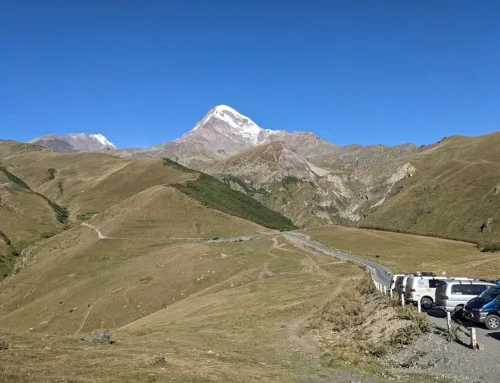
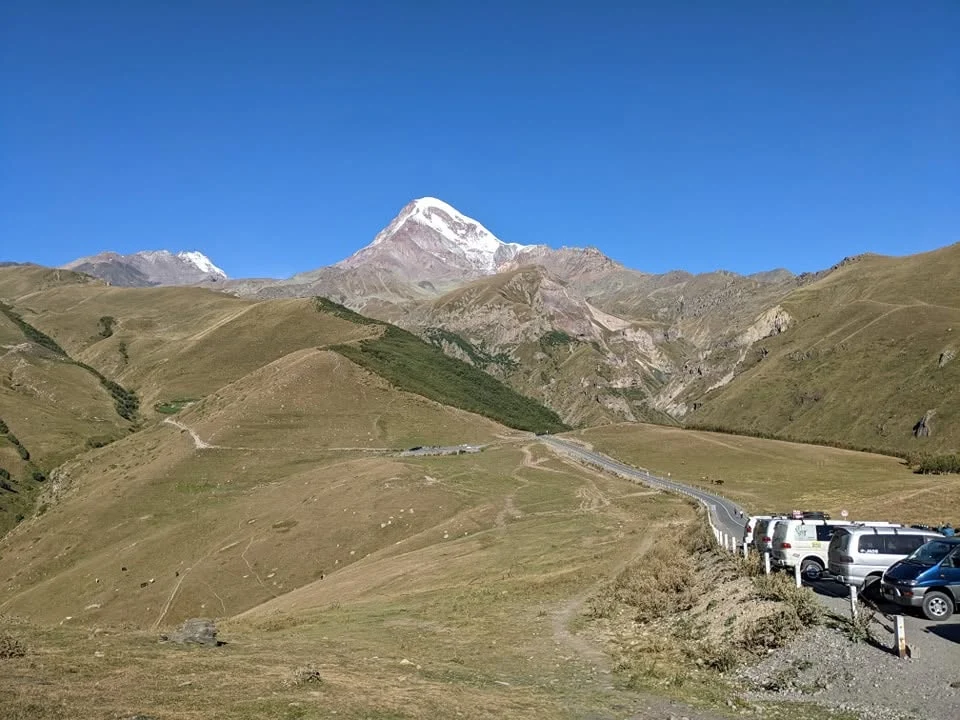
The altitude is the whole argument. Lift stations run from roughly 2,000 m at the lowest point up to just under 3,300 m, giving about 1,200 metres of vertical. The terrain sits above the treeline almost everywhere, which has two consequences you will notice within an hour. The first is that the snow behaves: cold, dry and slow to turn heavy, holding its quality while lower European resorts are watching their base layers soften. The second is that there is nothing to hide behind in a whiteout. On a clear day you can see the entire ski area laid out beneath you from the top stations, with Mount Kazbek’s glacier off to the north. In flat light you can see roughly as far as the tips of your skis.
The Ski Area: Lifts, Pistes and the Kobi Connection
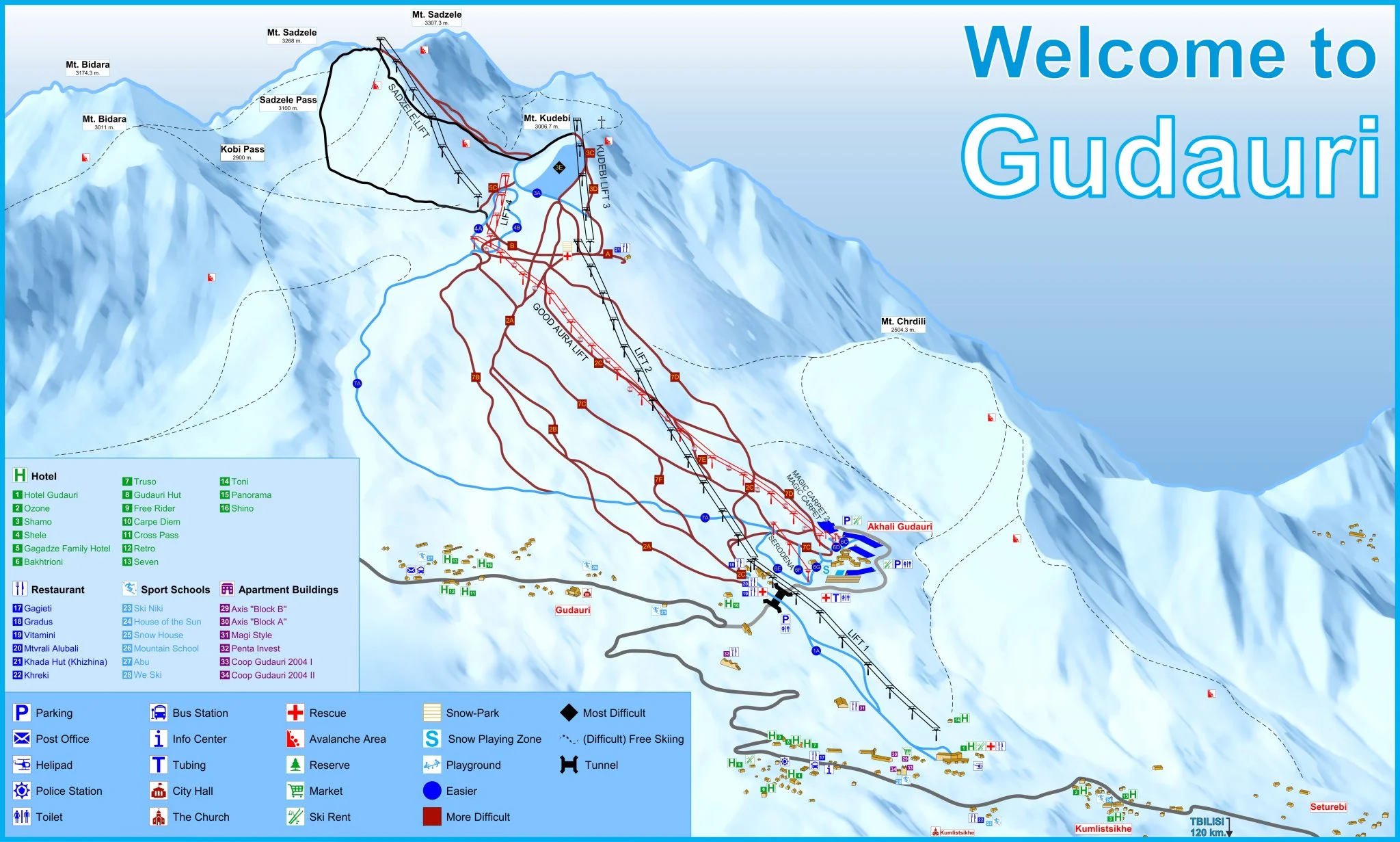
Gudauri now runs more than a dozen lifts — Doppelmayr chairs and gondolas on the Gudauri side, a chain of three Poma gondolas over the ridge to Kobi — plus magic carpets for the ski school. Marked pistes come to roughly 70 kilometres, and closer to 80 if you count everything on the Kobi side. Lifts generally run from 10:00 to about 16:00, which is short by Alpine standards and worth planning around.
| Zone | Roughly | Who it suits |
|---|---|---|
| Pirveli / Lower Gudauri | 2,000–2,150 m | Beginners. Wide, gentle, close to the rental shops and the ski school |
| Soliko, Shino, Gudaura | 2,150–2,700 m | The intermediate core. Long groomed cruising runs, most of the resort’s mileage |
| Kudebi | up to ~3,006 m | Advanced pistes and the launching point for a great deal of off-piste |
| Sadzele | up to ~3,276 m | The high ridge. Steeper, more exposed, unforgiving in bad visibility |
| Kobi side (Firni, Kobi, Truso gondolas) | 1,800–2,900 m | North-facing, colder, holds powder longest. The newest and quietest terrain |
The Kobi link deserves its own paragraph, because it is the single biggest change to this mountain in a generation. Three ten-seat gondolas built by Poma now carry you over the pass and down the far side to the village of Kobi, opening north-facing slopes that keep powder days after the sun has worked over everything else. It also functions as public transport: when the Jvari Pass road closes for avalanche control, the gondolas keep moving people between Gudauri and the Kazbegi side while the highway sits shut.
Freeride and Heliskiing
This is why serious skiers come. Because Gudauri sits above the treeline, you can drop off the shoulder of almost any marked run into untracked snow — no gates, no ropes, no arguments. The obvious lines are the bowls falling away from the Sadzele ridge, the north faces on the Kobi side, and the couloirs that funnel down from the ridgeline. Two days after a storm you can still be finding fresh tracks, which at a resort of comparable quality in western Europe is simply not a thing that happens.
Heliskiing operates from Gudauri from roughly February to April, generally sold as multi-day packages including accommodation, guiding and safety equipment. Prices sit in the low thousands of euros for three to seven days, and the operators book out early.
And now the part that gets left out of resort brochures. Open terrain means there are no trees to anchor the snowpack, and Gudauri kills people most seasons — usually visitors who went off-piste without a guide, without a transceiver, or without either. Treat the boundary rope as advice rather than a fence and you are making an avalanche-terrain decision, whether you meant to or not. Hire a guide, carry a transceiver, shovel and probe, and know how to use all three. Nobody who skis here regularly will think less of you for it.
What Skiing in Gudauri Costs
The short version: a full day on this mountain costs roughly what a single lunch costs in a French resort. Prices below reflect the most recently published season and are paid at the resort in Georgian lari — check current rates before you travel, as they shift a little each winter.
| Item | Approximate | Notes |
|---|---|---|
| Adult lift pass, full day | ~70 GEL (≈ €23) | Half day cheaper; children under 6 free, reduced rates 6–18 |
| Weekly pass | ~370 GEL | Pays for itself on day six |
| Lift card deposit | 5 GEL | Refundable when you return the card |
| Equipment rental, full set | 40–90 GEL/day | Lower Gudauri is cheaper with older kit; Upper Gudauri newer and dearer |
| Helmet | ~10 GEL | Take one. This is not the mountain to be principled about |
| Gondola ride for non-skiers | 20–30 GEL | Up and back to 3,006 m, about half an hour |
| Group ski lesson | from ~80 GEL | Two hours; private instruction costs more, book ahead |
| Marshrutka from Tbilisi (Didube) | ~15 GEL | Around two hours, limited departures |
| Private transfer from Tbilisi | 120–250 GEL | Door to door, winter tyres, no waiting for a full minibus |
When to Go: Month by Month
The season usually opens in the last days of December and runs into early April, though the lifts and the slopes do not always open together — cable cars can be spinning while the lower pistes wait for cover.
| Month | Conditions | Worth knowing |
|---|---|---|
| December | Early season, base variable | Quiet and cheap. Ask what the snow is actually doing before booking |
| January | Cold, dry, reliable | Peak powder season. Also the coldest air of the winter |
| February | Deepest base, best freeride | What the mountain is famous for. Book weekends well ahead |
| March | Excellent snow, longer days | The best all-round month, and the busiest |
| April | Spring skiing | Lower slopes go patchy by afternoon; the high ground stays good |
Average snow depth in midwinter runs somewhere between 1.5 and 2.5 metres. Temperatures at resort level typically sit between −5°C and −15°C, colder at the top of the lifts and colder again in wind.
Getting to Gudauri from Tbilisi
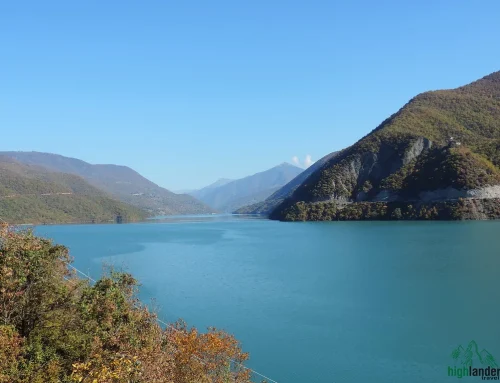
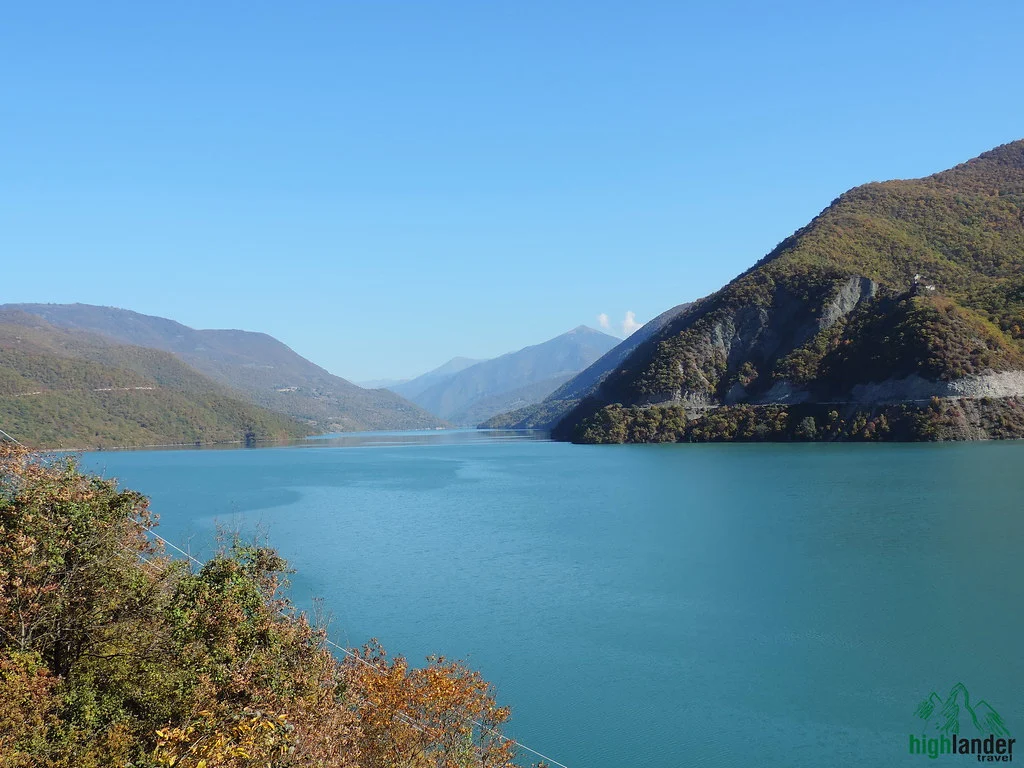
There is one road, and it is a good one: the Georgian Military Road, the old trade route between Georgia and the north Caucasus. It climbs out of Tbilisi through the Aragvi gorge, past the Zhinvali reservoir and Ananuri fortress, then switchbacks up through Pasanauri into serious mountains. In winter the whole route changes character. Plenty of our guests book a ski day and come back talking about the drive.
-
- Private transfer or tour — about two hours door to door, on winter tyres, with a driver who does this road all season. The simplest option if you are carrying skis or travelling as a family.
-
- Marshrutka from Didube station — cheap and functional at around 15 GEL. Departures are limited, the last return leaves in the afternoon, and luggage space is a negotiation.
-
- Self-drive — possible, but winter tyres are mandatory and chains are frequently required on the Mleta–Gudauri section. If you have never driven a mountain pass in snow, this is not the place to learn.
-
- From the north — Gudauri is around 85 km from Vladikavkaz via the Larsi border crossing, roughly two hours when the pass is open.
One caveat that matters: the Gudauri–Kobi section closes several times each winter for avalanche control, sometimes for hours and occasionally for a day or more. Check the Roads Department of Georgia status page on the morning of any mountain drive, and build a buffer day into a tight itinerary.
If You Do Not Ski
Roughly half the people who come here on a day trip never put boots on, and the day works perfectly well. The gondola runs to 3,006 metres for the view alone. There is sledding, snowshoeing, tubing and a good deal of standing on terraces with hot wine made from Saperavi, which has considerably more colour and body than the mulled wine you are probably picturing.
Gudauri is also one of the best tandem paragliding sites in the region — you launch off the ridge and land somewhere near the hotels ten or fifteen minutes later, having seen the whole Devil’s Valley open beneath you. And there is the Russia–Georgia Friendship Monument on the pass above the resort: a Soviet-era concrete drum lined with a mosaic of Georgian and Russian history, standing on the lip of a cliff. It photographs like nothing else in the country.
Practical Things to Know Before You Go
-
- Insurance is now a legal entry requirement. Since 1 January 2026, tourists entering Georgia must hold health and accident cover of at least 30,000 GEL for the full length of their stay. Details are set out by the Georgian authorities’ published guidance. Standard policies routinely exclude winter sports, so check that yours says otherwise in writing.
-
- Bring cash in lari. Rentals, lift tickets and small cafés all take cards in theory. In practice the card machines at 2,200 metres have opinions of their own.
-
- Goggles or sunglasses, always. Snow glare at 3,000 metres is genuinely painful, and it is the item people forget most often. Sunscreen too — you will burn faster here in February than on a beach in June.
-
- Give the altitude a morning. Some people feel 3,000 metres as a mild headache or breathlessness on stairs. Drink water, do not sprint off the top lift on your first run, and drop a stage if you feel poor.
-
- Book weekends ahead in February and March. Tbilisi empties onto this mountain at weekends, and the good hotels in Upper Gudauri fill first.
-
- Lifts close at 16:00. Earlier than you are used to. Plan lunch accordingly rather than losing your last two runs to a long khinkali order.
Where to Stay in Gudauri
-
- Upper Gudauri (New Gudauri) — closest to the lifts, most of the newer apartment towers, the highest prices and the shortest walk in ski boots.
-
- Central Gudauri — the older established hotels along the main road, generally with restaurants attached and a shuttle to the lifts.
-
- Lower Gudauri — cheaper guesthouses and cottages, but you will need the shuttle every morning and evening.
Budgets run from hostel beds around $15 a night through mid-range hotels at $50–80 to design properties well north of $150. Most of the resort shuts down outside the ski season, with a smaller summer opening for hiking and paragliding.
See Gudauri with Highlander Travel
We have been driving the Georgian Military Road since 2011, in every condition it produces. If you want the mountain without the logistics, these are the easiest ways to do it:
-
- Gudauri Ski Day from Tbilisi — a private winter day trip with Ananuri, the frozen reservoir, about four and a half hours on the mountain and help with rentals and lift tickets. From €180 per person, December to April.
-
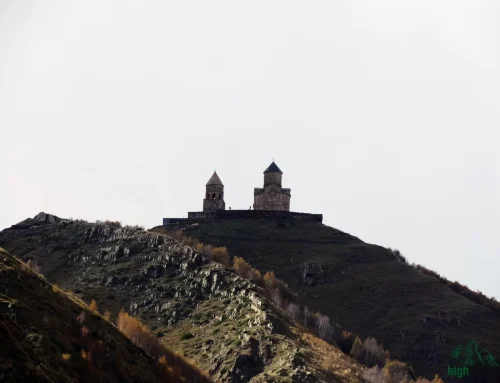
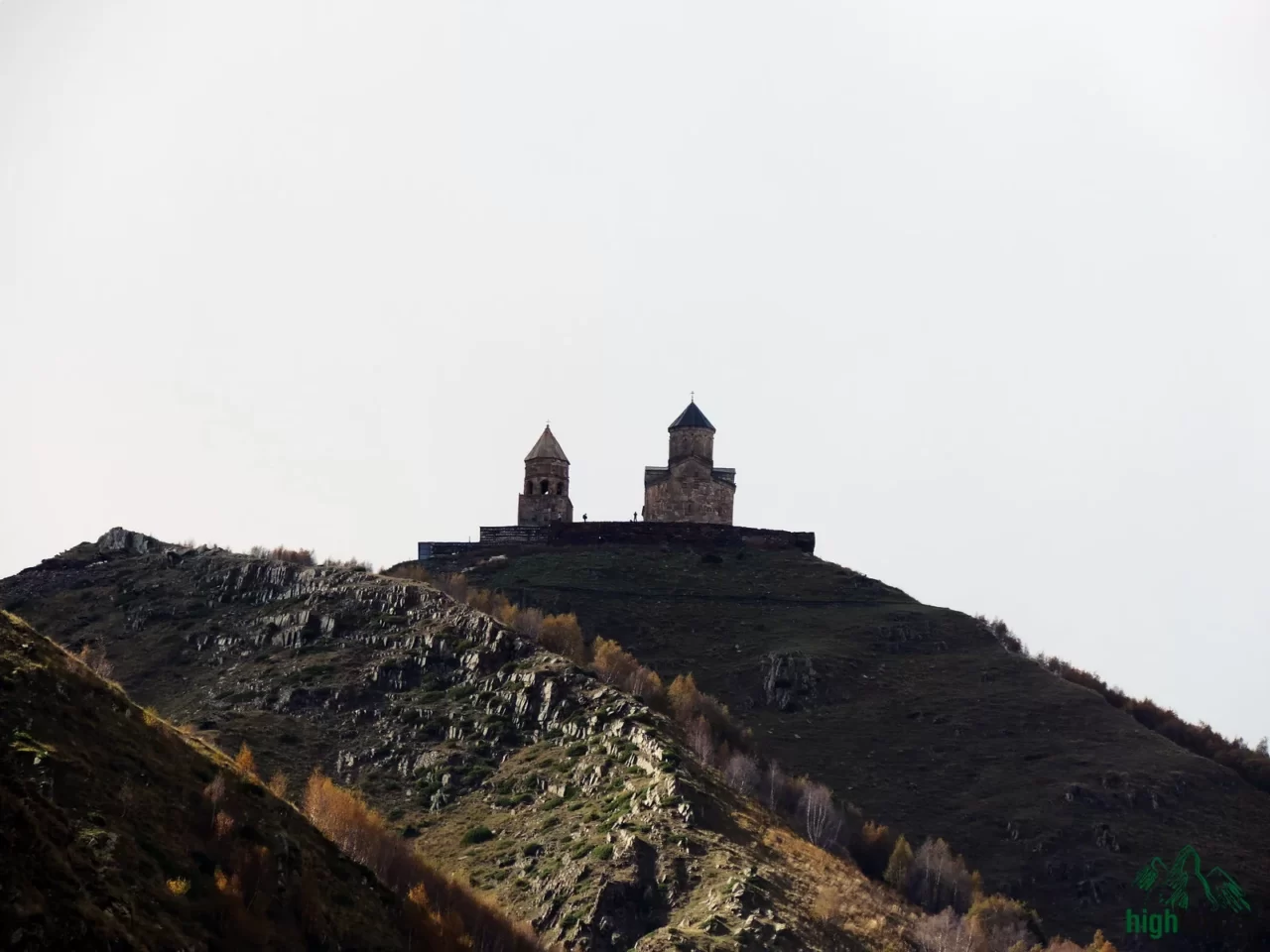
- Kazbegi Tour from Tbilisi — the same road, carried on north to Gergeti Trinity Church beneath a 5,047-metre peak. The scenic option if nobody in your party skis.
-
- Short tours from Tbilisi — two and three-day routes that let you sleep in the mountains rather than driving back at dusk.
-
- All one-day tours from Tbilisi — for the days when the pass is shut and you need a plan B in a different direction.
Prefer something built around your own dates and ability? Tell us what you have in mind and a real person will write back within 24 hours with routes, hotels and a price.
Frequently Asked Questions About Skiing in Gudauri
Is Gudauri good for beginners?
Yes. The lower Pirveli area is wide and gentle, the ski school takes first-timers all season, and lessons cost a fraction of Alpine rates. A surprising number of people learn to ski here on holiday and go home able to do it.
When does the ski season in Gudauri start and end?
Typically from the last days of December until early April, with the most reliable snow between January and March. Opening dates shift year to year with conditions, so confirm before booking flights around December dates.
How much is a ski pass in Gudauri?
Around 70 GEL for a full adult day in the most recent season, roughly €23, with a weekly pass near 370 GEL and reduced rates for children and seniors. Passes are bought at the ticket offices by the lower lift stations or online before you arrive.
Can you do Gudauri as a day trip from Tbilisi?
Comfortably. It is around 120 km each way and about eleven hours door to door, which leaves four to five hours on the mountain. For more than two days of skiing, stay in the resort instead.
Is off-piste skiing in Gudauri safe?
The terrain is superb and the avalanche risk is real, with fatalities most seasons. Go with a qualified local guide, carry a transceiver, shovel and probe, and check the daily avalanche bulletin. The absence of ropes is not the absence of danger.
Do I need special insurance to ski in Georgia?
You need health and accident cover of at least 30,000 GEL simply to enter the country, and if you intend to ski or ride, the policy must say so explicitly. Most standard travel policies exclude winter sports and many exclude off-piste entirely.
The mountains here have been a trade route for two thousand years and a ski resort for about fifty. Come in February, take the gondola to the top of Kudebi, and look north at the wall of the Greater Caucasus with Kazbek sitting white above everything. Then ski down. It costs less than lunch.