Cross Georgia’s highest tourist pass at 3,338 meters, discover three impossibly colored alpine lakes, and camp beneath the dramatic rock spires of the “Georgian Dolomites”
There’s a moment on the Chaukhi Pass when everything changes. You’ve been climbing for hours through wildflower meadows, the rocky spires of the Chaukhi massif growing larger with every step. Then you reach the pass at 3,338 meters, and suddenly two worlds open before you—behind lies the green Juta valley you just crossed, ahead stretches Khevsureti with its mysterious alpine lakes shimmering in impossible colors.
Often called the “Georgian Dolomites” for its dramatic rock formations, the Chaukhi region connects the Kazbegi district with ancient Khevsureti through a high mountain corridor that local shepherds have used for centuries. This 2-day guided trek takes you through stunning landscape, crossing the highest tourist pass in Georgia and discovering the legendary Abudelauri colored lakes—three alpine pools that glow green, blue, and white depending on the minerals in their waters.
This isn’t a walk in the park. The pass climb involves 1,100 meters of elevation gain over rocky terrain, and weather can change quickly at altitude. But for hikers with reasonable fitness who want to experience authentic Caucasus wilderness, there’s nothing quite like standing on Chaukhi Pass with the wind in your face and two ancient regions spread out below you.
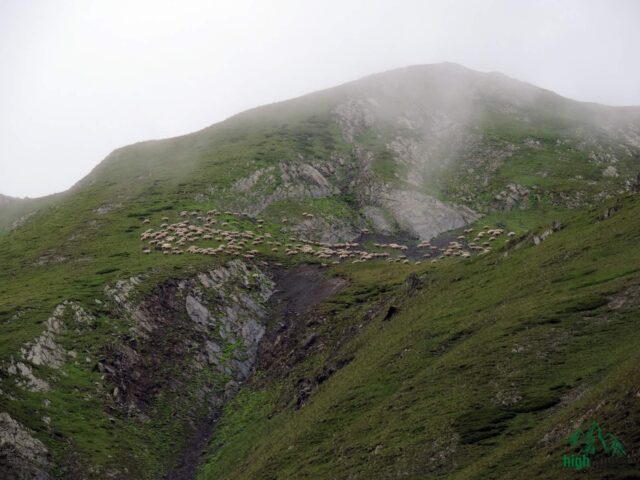
The Juta to Roshka trail via Chaukhi Pass has earned its reputation as one of Georgia’s classic mountain routes. Unlike easier day hikes near Kazbegi, this trek takes you deep into alpine territory where you’ll likely encounter more sheep than other hikers. The reward? Unobstructed views of seven sharp peaks rising above 3,800 meters, morning mist rolling through valleys that haven’t changed in centuries, and the surreal experience of watching sunset paint the Chaukhi massif in shades of orange and pink.
This tour suits: Fit hikers seeking genuine mountain adventure, photographers wanting dramatic Caucasus landscapes, trekkers who’ve done the standard Kazbegi day trips and want more, anyone comfortable with camping and physical challenge, and travelers seeking experiences beyond typical tourist routes.
This tour doesn’t suit: People with significant knee problems or heart conditions, those who haven’t done multi-hour hikes before, anyone uncomfortable with basic camping, travelers seeking comfort over adventure, first-time hikers (this requires previous mountain experience).
Trek highlights
23 kilometers through the heart of the Caucasus—one of Georgia’s classic mountain routes
Understanding the Chaukhi Region
The Chaukhi massif rises along the main Caucasus ridge, forming a natural boundary between two distinct Georgian regions. To the west lies Kazbegi district with its famous mountain and tourist infrastructure; to the east stretches Khevsureti, one of Georgia’s most isolated and culturally preserved highland areas. The pass at 3,338 meters has connected these regions for centuries—a route used by shepherds moving flocks between summer pastures.
The Georgian Dolomites
Seven sharp peaks rise above 3,800 meters in the Chaukhi massif, their jagged silhouettes earning comparisons to Italy’s famous Dolomite mountains. Unlike the massive glaciated peaks of the main Caucasus range, Chaukhi’s towers are composed of volcanic rock eroded into dramatic spires and pinnacles. The rock catches light differently throughout the day—grey and imposing at midday, glowing orange and pink at sunset.
The nickname “Georgian Dolomites” isn’t just marketing. The vertical rock faces, the way the peaks cluster together, the alpine meadows at their base—the visual similarity is striking. But these mountains have their own character: wilder, less visited, with that particular Caucasus quality of feeling genuinely remote even when you’re only a day’s walk from a village.
The Abudelauri Lakes
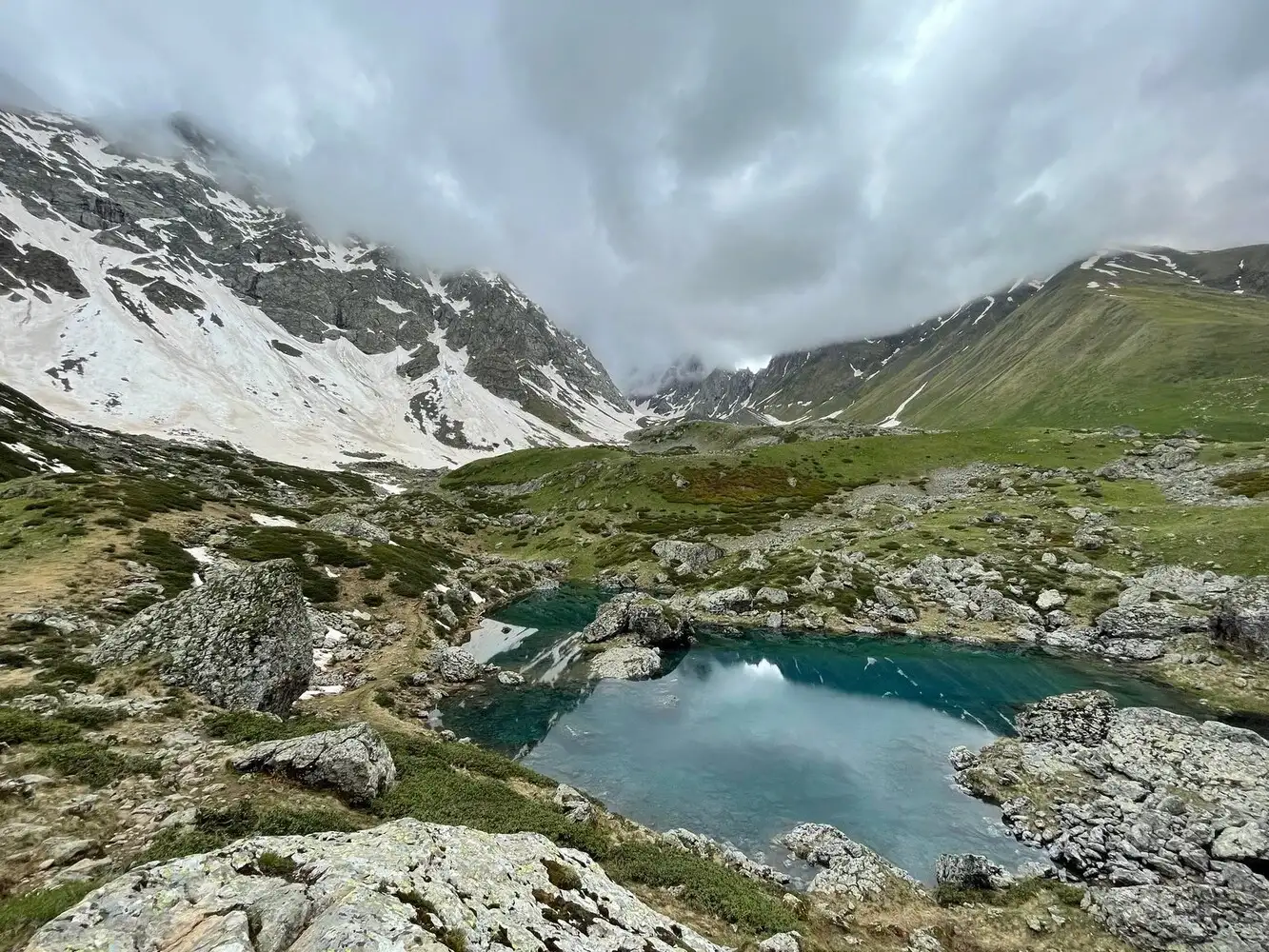
On the Khevsureti side of the pass, three glacial lakes sit in a high valley at approximately 2,800 meters. Each lake has a distinct color created by different mineral compositions and geological conditions:
White Lake sits highest, just below the glacier. Glacial sediment suspended in the water creates its milky, almost opaque appearance.
Blue Lake is perhaps the most striking—an intense turquoise that seems almost artificial against the grey surrounding rock. Mineral content creates this vivid coloration.
Green Lake gets its emerald hue from a combination of algae and minerals. It’s the largest of the three and often the warmest for those brave enough to swim.
The colors are most vivid under direct sunlight. On overcast days, the lakes appear more muted but still distinctly different from each other.
Trek Statistics
Total Distance: 23 kilometers over two days
Day 1: 8 km hiking, 600m elevation gain, 4-5 hours
Day 2: 15 km hiking, +538m gain to pass then -1,388m descent, 7-8 hours
Maximum Elevation: 3,338m (Chaukhi Pass)
Start Point: Juta village (2,200m)
End Point: Roshka village (1,950m)
Camp Elevation: 2,800m at Chaukhi base
Difficulty Assessment
This trek is rated challenging. The pass climb involves navigating loose scree and steep sections where good footwork matters. Day 2 is particularly demanding—7-8 hours of hiking including the 538-meter climb to the pass followed by a long 1,388-meter descent. Weather at altitude can change rapidly, and the pass acts as a wind funnel between valleys.
You should be comfortable with sustained mountain walking and have reasonable cardiovascular fitness. Previous high-altitude hiking experience (above 3,000m) is helpful but not required if you’re generally fit. If you don’t regularly hike, we strongly recommend training walks with elevation gain 2-3 weeks before your trip.
Trek Itinerary
Distance: 8 km hiking | Elevation Gain: 600m | Hiking Time: 4-5 hours
Morning: Georgian Military Road (8:00 AM departure)
We leave Tbilisi early and head north on the legendary Georgian Military Road, one of the most scenic drives in the Caucasus. Our first stop is Jvari Monastery, a 6th-century UNESCO World Heritage site perched above the confluence of the Mtkvari and Aragvi rivers. The views here set the tone for what’s ahead—ancient history meeting dramatic landscape.
Continuing north, we stop at the medieval Ananuri Fortress, its towers reflected in the turquoise waters of the Zhinvali Reservoir. The road then climbs through alpine meadows to Cross Pass (Jvari Pass) at 2,395 meters, where a monument marks the main Caucasus ridge. On clear days, you can already see the snowy peaks we’ll be approaching.
Midday: Gergeti Trinity Church (Optional)
After arriving in Stepantsminda (Kazbegi town), weather permitting, we take a short hike to the iconic Gergeti Trinity Church at 2,170m. This 14th-century church against the backdrop of 5,047-meter Mt. Kazbegi is one of the most photographed spots in Georgia. The 1.5-hour round trip is a perfect warm-up for tomorrow’s bigger challenge.
Lunch in Stepantsminda before continuing to the trailhead.
Afternoon: Sno Valley to Juta Village
We drive through Sno Valley, passing the curious giant head sculptures carved by local artist Merab Piranishvili, before reaching Juta—one of the highest inhabited villages in Georgia at 2,200 meters. From here, the hiking begins.
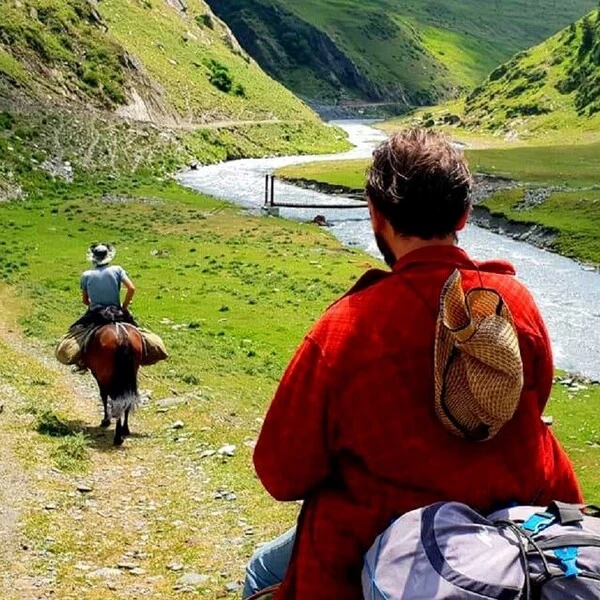
The afternoon trek follows the Snostskali River valley deeper into the mountains. The trail is gentle at first, winding through meadows where shepherds graze their flocks in summer. As we approach our campsite, the Chaukhi massif reveals itself in full glory—seven jagged peaks that truly deserve the “Georgian Dolomites” nickname.
Evening: Camp at Chaukhi Base (2,800m)
We set up camp on alpine meadows at 2,800 meters, directly beneath the Chaukhi towers. Dinner is prepared as the sun sets behind the peaks, and the temperature drops quickly—bring your warm layers! The night sky here, far from any light pollution, is spectacular on clear evenings.
Distance: 15 km hiking | Elevation Gain/Loss: +538m / -1,388m | Hiking Time: 7-8 hours
Early Morning: The Ascent
We start early to tackle the pass before afternoon clouds roll in. Breakfast at camp fuels us for the biggest climb of the trek.
The first section crosses loose scree and requires careful footing—trekking poles are highly recommended. The climb is demanding, but the scenery keeps you motivated: with every switchback, the panorama expands.
Morning: Chaukhi Pass Summit (3,338m)
After approximately 4 hours of climbing, we reach the pass. This is the highest point of the trek and often the windiest—the pass acts as a funnel between the two valleys. On clear days, you can see all the way to Mt. Kazbegi behind you, while ahead the high plateau of Khevsureti stretches toward distant peaks.
Take time to absorb this moment—you’ve earned it.
Midday: Abudelauri Colored Lakes
The descent into Khevsureti brings us to one of Georgia’s natural wonders: the three Abudelauri lakes. Each lake has a distinct color created by different mineral compositions:
White Lake sits highest at 2,812m, just below the glacier. Its milky appearance comes from glacial sediment suspended in the water.
Blue Lake is perhaps the most striking—an intense turquoise that seems almost artificial against the grey rock.
Green Lake gets its emerald hue from algae and minerals, and is the largest of the three.
We take a lunch break near the lakes—a perfect spot to rest tired legs and take photos. The colors are most vivid under direct sunlight.
Afternoon: Descent to Roshka
From the lakes, a well-marked trail leads down through alpine meadows dotted with curious rock formations known as “Roshka stones.” The descent is long but gradual, giving your knees some relief after the steep terrain near the pass. You’ll pass through increasingly green valleys before reaching Roshka village.
Evening: Roshka Village & Return
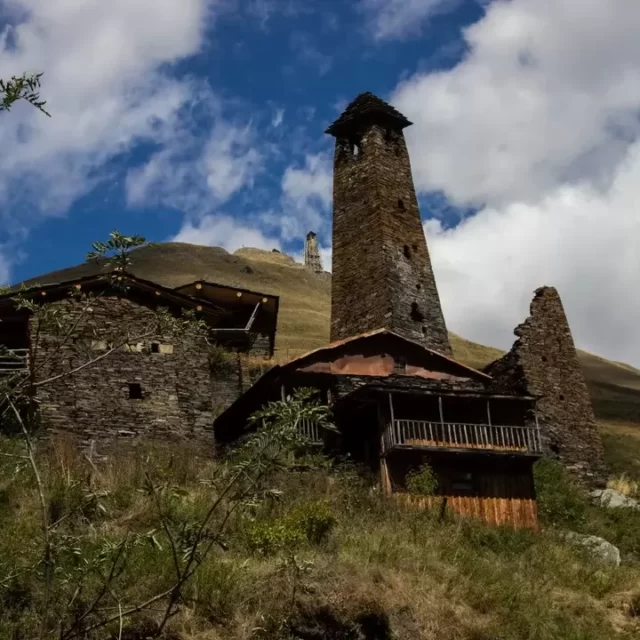
Roshka is a tiny settlement in Khevsureti, a region known for its ancient tower houses and independent spirit. Our vehicle meets us here for the transfer back to Tbilisi (approximately 4 hours by road through Barisakho).
Arrival in Tbilisi: Evening, tired but exhilarated after completing one of Georgia’s classic mountain routes.
For groups continuing to Shatili or other Khevsureti destinations, alternative arrangements can be made.
Price details
[wptb id=17388]
What’s Included
Trek map
Tbilisi
Jvari Monastery
Ananuri Fortress
Cross Pass (2,395m)
Stepantsminda (Kazbegi)
Gergeti Trinity Church
Juta Village (2,200m)
Chaukhi Base Camp (2,800m)
Chaukhi Pass (3,338m)
Abudelauri Lakes
Roshka Village
Trek gallery
Practical Information
Duration: 2 days / 1 night camping
Total Distance: 23 km
Difficulty: Challenging (requires good fitness, previous hiking experience recommended)
Maximum Elevation: 3,338m (Chaukhi Pass)
Best Season: Mid-June to early October
Group Size: Maximum 8 hikers
What to Bring – Essential Gear
Footwear: Sturdy hiking boots (broken in, not new!) with ankle support. This is non-negotiable—the pass terrain is rocky and uneven.
Warm layers: Temperatures drop to 5-10°C at camp and can be near freezing at the pass. Warm fleece or down jacket essential. Hat and gloves required for pass crossing.
Waterproof layer: Weather changes fast at altitude. Waterproof jacket and pants.
Sleeping bag: Rated to at least 0°C. We can rent if needed ($15).
Trekking poles: Strongly recommended for the pass descent. Reduces knee strain significantly on the 1,388m drop.
Sun protection: SPF 50+ sunscreen, sunglasses, hat. UV is intense at altitude.
Water capacity: Bring bottle or hydration bladder (2L minimum).
Headlamp: Essential for early morning start and camp.
Personal first aid: Any personal medications, blister treatment.
Fitness Requirements
You should be comfortable hiking 8-10 km per day on mountain trails and handling 4-5 hours of continuous walking on Day 1, followed by 7-8 hours on Day 2. The pass involves navigating loose scree and steep sections.
Recommended preparation: If you don’t regularly hike, do training walks with elevation gain 2-3 weeks before your trip. Even walking stairs with a daypack helps.
This trek is NOT suitable for: People with significant knee problems, serious heart conditions, or those who haven’t done any multi-hour hikes before.
Best Time to Hike
Mid-June to early July ⭐⭐⭐: Snow patches may remain on pass. Wildflowers at peak. Fewer crowds but more challenging conditions. Rivers can be high from snowmelt.
July to August ⭐⭐⭐⭐⭐: Prime season. Pass generally clear, warmest weather (though nights still cold). Most popular time—you’ll see other trekkers.
September to early October ⭐⭐⭐⭐⭐: Excellent conditions with stable weather. Fewer hikers. Alpine meadows turn golden. Colder nights—good sleeping bag essential. Early snow possible late September.
Trek FAQ
Why Book This Trek
The Chaukhi Pass hike is one of those treks that stays with you long after you’ve returned home. The physical challenge, the raw mountain beauty, the colored lakes that seem painted by an artist—it’s a complete Caucasus experience compressed into two unforgettable days.
This isn’t the easy day trip from Kazbegi that everyone does. This is real mountain trekking—sleeping under the stars at 2,800 meters, crossing a 3,338-meter pass at dawn, descending into a region most tourists never see. You’ll likely encounter more sheep than other hikers, which is exactly the point.
We’ve been guiding this route since 2015 and know every ridge, every viewpoint, and every shepherd along the way. Our small group sizes (maximum 8 hikers) ensure a personal experience, and our guides are certified Wilderness First Responders trained for mountain emergencies.
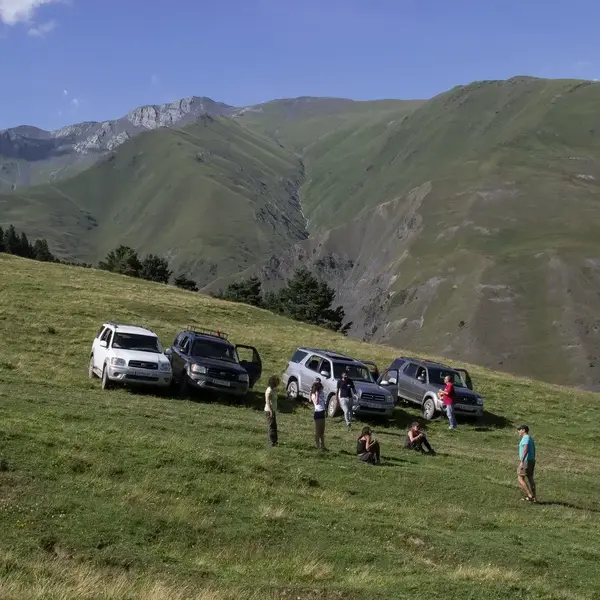
The logistics matter on this trek. The point-to-point route from Juta to Roshka requires vehicle coordination that solo hikers often struggle with. We handle the complicated transfer, the camping equipment, all the meals, and the safety systems—you just need to bring yourself and the fitness to enjoy it.
Standing on Chaukhi Pass with the wind in your face, two ancient regions spread below you, the colored lakes waiting on the descent—this is why you came to the Caucasus. This is Georgia’s mountain soul, earned through effort and rewarded with views that no photograph can capture.
Have questions about the trek or your fitness level? Contact us—we’re happy to chat about whether this adventure is right for you.