Eight days through Europe’s largest virgin forest and Georgia’s volcanic highlands — from primeval Caucasian wilderness to Bronze Age mysteries at 3,305 meters.
Most visitors to Georgia head north to the Great Caucasus. They’re missing something extraordinary in the south. The Javakheti plateau sits at 2,000 meters, a volcanic highland scattered with lakes, Bronze Age fortresses, and mountain peaks that see barely a handful of foreign hikers each year. Combined with a traverse of Borjomi-Kharagauli National Park – home to Europe’s largest untouched forest – this 8-day trek offers something rare: genuine wilderness adventure in a country increasingly on the tourist radar.
This isn’t a typical Georgian tour. You’ll spend three days hiking through pristine forests where bears and wolves still roam, climbing to the “Mountain of the Lion” at 2,198 meters. Then you’ll venture into the volcanic highlands of Javakheti, ascending Didi Abuli (3,305m) — the region’s highest peak — and exploring a mysterious megalithic fortress that has archaeologists puzzled about who built it and why. Along the way, you’ll visit UNESCO World Heritage sites, the stunning cave monastery of Vardzia, and landscapes that feel more like the Scottish Highlands than the Caucasus.
Tour at a Glance
Trek Highlights
Who This Trek Is For
This trek suits: Experienced hikers seeking genuine wilderness adventure away from crowds. History enthusiasts fascinated by ancient mysteries and medieval monuments. Birdwatchers drawn to one of the South Caucasus’s most important wetland areas. Adventurous travelers who want to see a side of Georgia most visitors never experience. Anyone comfortable with basic mountain shelter accommodation and variable weather conditions.
This trek doesn’t suit: Beginners looking for their first multi-day hike — the distance and elevation changes require solid fitness. Those who prefer comfortable hotels every night — you’ll spend two nights in basic mountain shelters. Travelers seeking well-marked tourist trails — the Javakheti section has no marked paths. Anyone unable to hike 15-18 km in a single day with significant elevation gain.
Detailed Day-by-Day Itinerary
We begin with a journey through Georgia’s ancient heartland. Our first stop is Mtskheta, the country’s spiritual capital and a UNESCO World Heritage Site. Here you’ll visit Svetitskhoveli Cathedral, where Georgians believe Christ’s robe is buried, and the hilltop Jvari Monastery overlooking the confluence of two rivers — a view that inspired the national poet Lermontov.
From Mtskheta, we continue to Uplistsikhe, a remarkable rock-hewn town that served as a pagan worship center before Christianity arrived in Georgia. Walking through its carved streets and chambers, you’re stepping back 3,000 years. The site gives fascinating context for the megalithic structures you’ll encounter later in Javakheti.
By evening, we reach the village of Marelisi on the western edge of Borjomi-Kharagauli National Park. Your guesthouse hosts will prepare a traditional dinner while you rest before the trek begins. This is your last night with hot showers for a few days — enjoy it!
After breakfast and a gear check, we enter Borjomi-Kharagauli National Park. The trail today takes us from the Imereti region into Samtskhe-Javakheti, crossing a mountain ridge that separates two distinct climate zones. On the Imereti side, the air is humid and the forest lush with Colchic subtropical species. As we cross to the other side, the vegetation gradually changes.
The hiking is moderate today — a good warm-up for what’s ahead. You’ll walk through mixed forests of beech, hornbeam, and fir, with the possibility of spotting roe deer or hearing the calls of forest birds. Brief rain showers are common on this side of the park, so keep your rain jacket accessible.
We spend the night at Sakhvlari Tourist Shelter, a basic wooden cabin with sleeping platforms. These shelters are part of what makes Borjomi-Kharagauli special — they allow multi-day treks through genuine wilderness without carrying heavy camping gear. Dinner is prepared by your guide using provisions carried from the trailhead.
This is the most demanding day of the Borjomi section — and one of the most rewarding. The trail climbs steadily through increasingly dramatic forest, transitioning from deciduous woodland to dark Caucasian fir groves. In early summer, the upper slopes explode with rhododendron blooms.
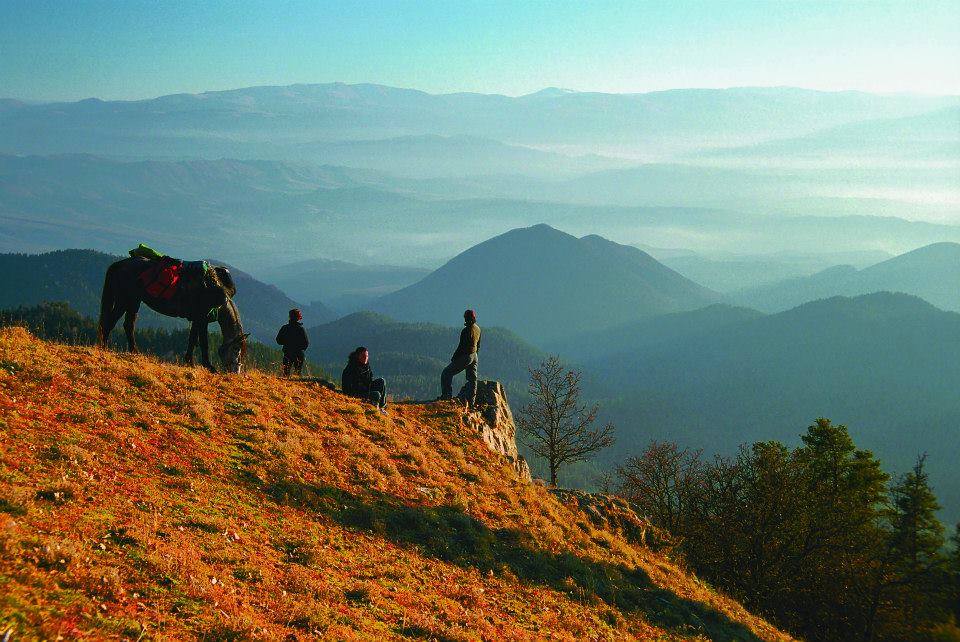
As you gain elevation, gaps in the forest reveal stunning views. To the north, the snow-capped peaks of the Greater Caucasus line the horizon. The landscape feels increasingly alpine, with subalpine meadows appearing between forest patches. Keep an eye out for wildlife — this area is prime habitat for brown bears, though sightings are rare.
The final push to Lomismta shelter takes you to 2,198 meters — the “Mountain of the Lion.” The shelter sits just below the summit, and if you have energy left, your guide can lead a short hike to the peak for sunset views across the park. Dinner at altitude, under stars undimmed by light pollution, is a highlight many trekkers remember long after.
We complete the national park traverse today, descending through pristine forest to the Likani Ranger Station. The trail winds down through increasingly dense vegetation, passing rare yew trees included in Georgia’s Red List of protected species. Keep an eye out for animal tracks — bears, wolves, and wild boar all live in this forest.
The descent is long but steady, dropping over 1,200 meters through some of the park’s most impressive old-growth forest. These trees have never been logged — you’re walking through genuine primeval wilderness, a rarity in modern Europe.
From Likani, we transfer to the village of Atskuri where a guesthouse awaits with hot showers, clean beds, and a proper home-cooked dinner. After three days in the wilderness, these simple comforts feel luxurious. Take time to rest and recover — the Javakheti section of the trek awaits.
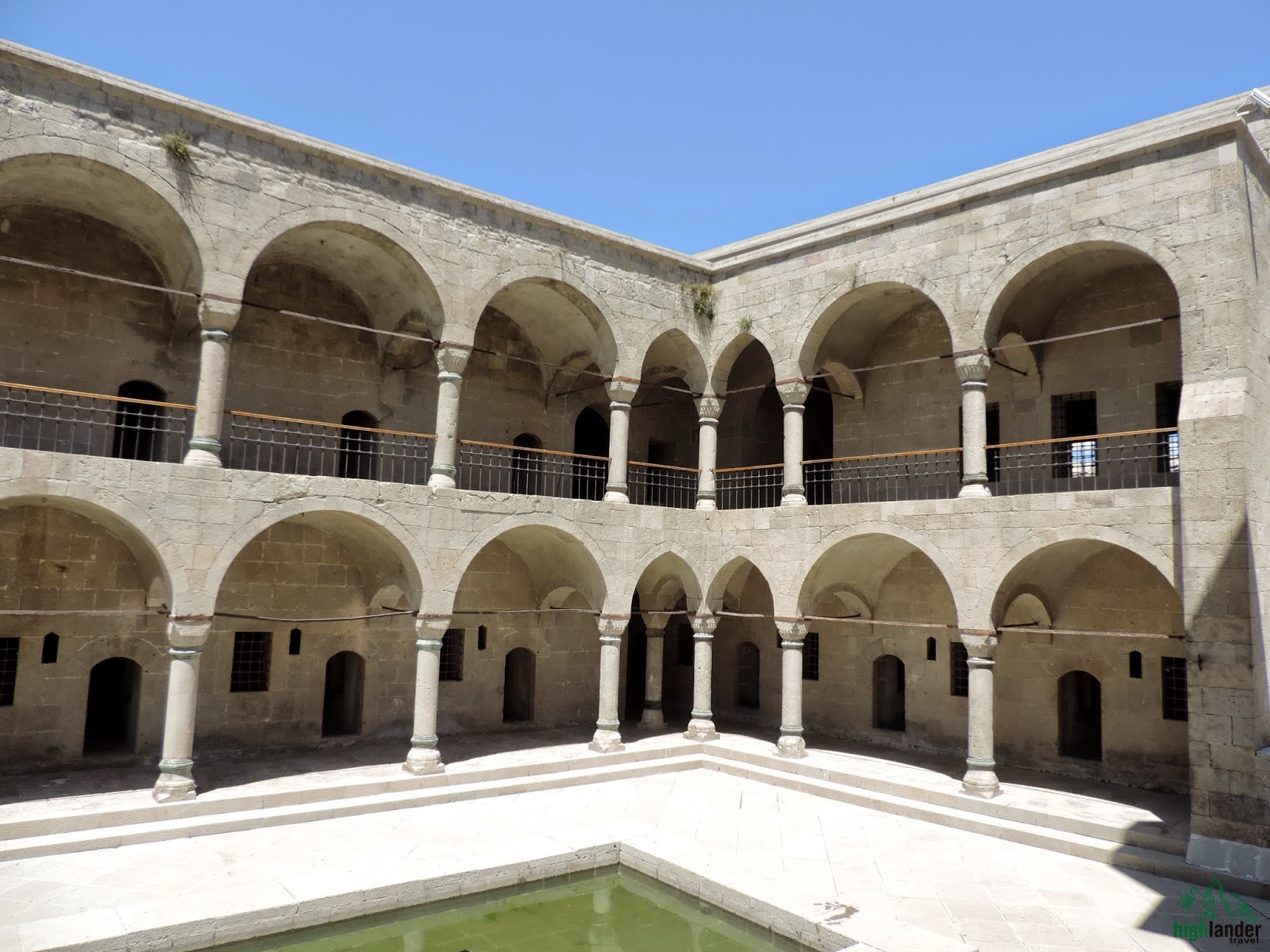
Today is a rest day for your legs but a feast for your eyes. We begin at Rabati Fortress in Akhaltsikhe, a 9th-century citadel that reflects the region’s complex history — Georgian, Ottoman, and Persian influences all visible in its architecture. The recently renovated fortress complex includes a mosque, church, and excellent museum.
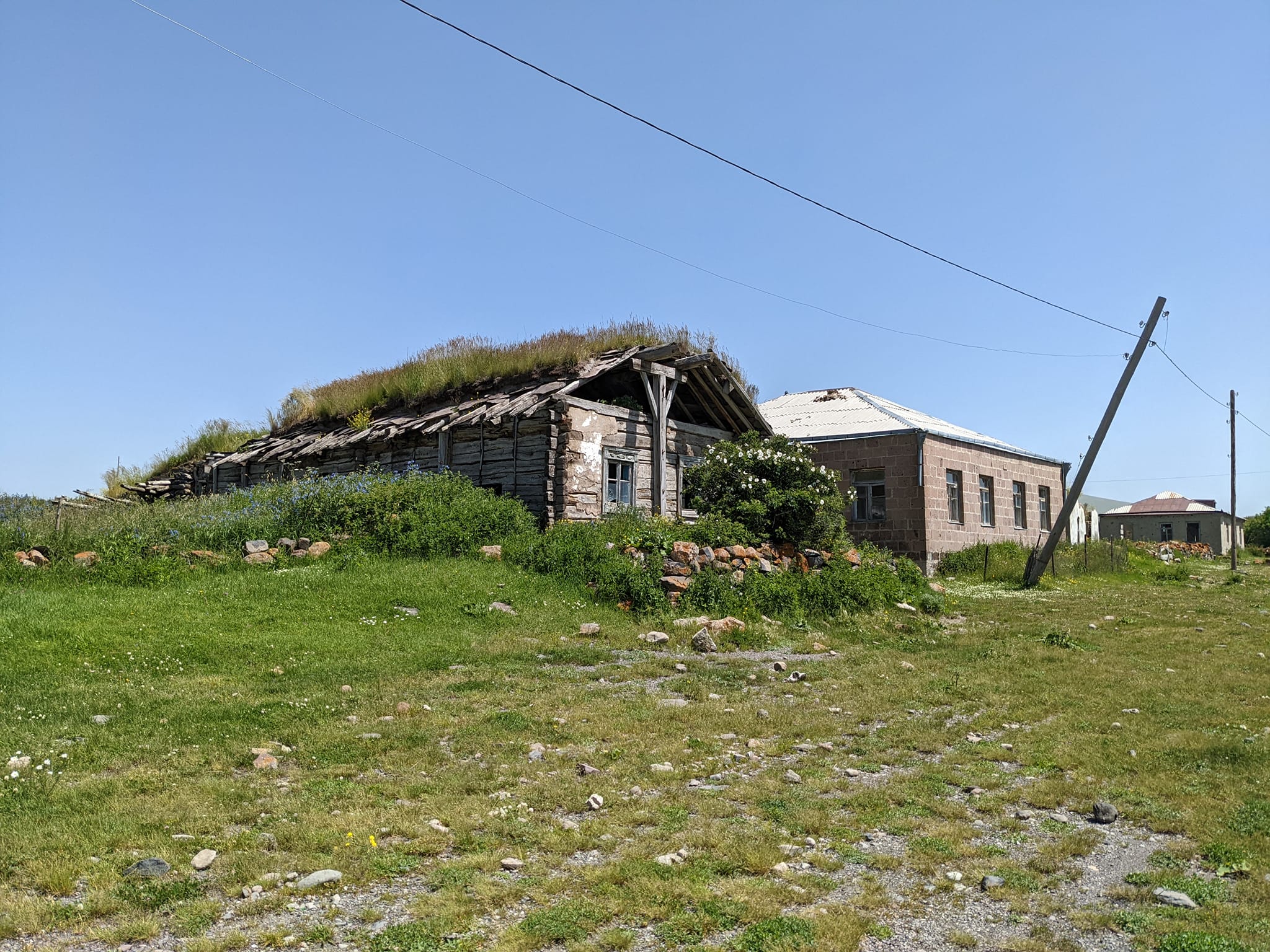
From Akhaltsikhe, we take a detour to the village of Saro — not a tourist destination, but fascinating for those interested in ancient history. The village is home to a megalithic fortress similar to what you’ll see at Abuli, with massive stone walls and commanding views. This is your introduction to the mysterious Bronze Age structures scattered across southern Georgia.
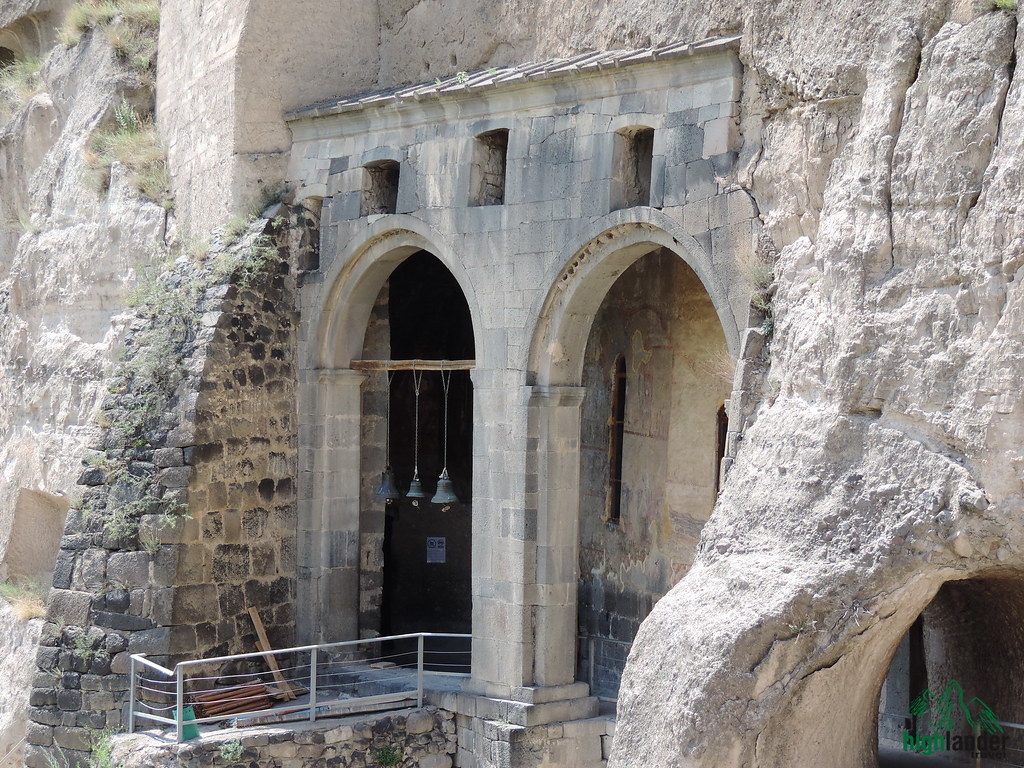
The day’s highlight is Vardzia, one of Georgia’s most impressive monuments. Carved into a cliff face in the 12th century, this cave monastery once housed up to 2,000 monks across 13 levels of tunnels, churches, and living quarters. The frescoes in the Church of the Dormition are among the finest medieval paintings in the Caucasus. Walking through the honeycomb of caves, you’ll understand why this place has captured imaginations for centuries.
We spend the night at a guesthouse near Vardzia, where your hosts will prepare traditional Meskheti cuisine.
Welcome to a different world. The Javakheti volcanic plateau looks nothing like the forests of Borjomi-Kharagauli. Here, above the treeline at 2,000+ meters, you’ll find vast alpine meadows, scattered volcanic rocks, and a horizon punctuated by the cones of extinct volcanoes. The light has a different quality up here — sharper, clearer, almost surreal.
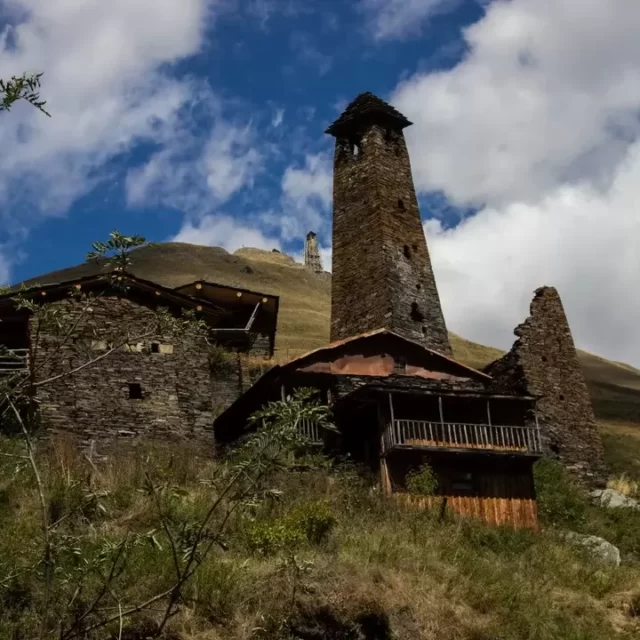
Today’s trek takes us to Patara (“Little”) Abuli at 2,700 meters and the enigmatic Abuli Fortress. Built from massive stone blocks during the Bronze Age (around 2nd millennium BC), this cyclopean structure sits on the mountain’s southern slope at 2,670 meters. The ring-shaped fortress contains what appear to be towers and living quarters, yet there’s no water source nearby, and the current climate makes year-round habitation impossible. Who built it? Why here? These questions remain unanswered.
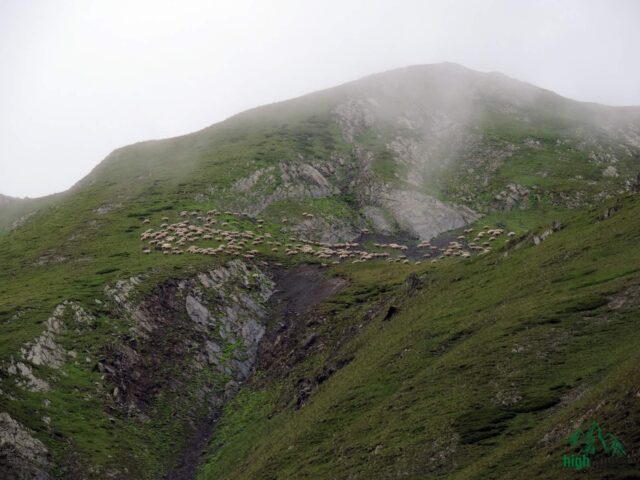
The trail has no marked path — this is truly off-the-beaten-track hiking. You’ll navigate through boulder fields and across alpine meadows, possibly encountering shepherds grazing their flocks in summer. Most shepherds in this region are ethnic Azerbaijanis, and stopping at their camps for tea is one of the trek’s unexpected pleasures.
We descend to the eastern side of the Samsari range and spend the night at a guesthouse near Lake Paravani — Georgia’s largest lake at 2,073 meters elevation.
Summit day. Didi (“Big”) Abuli at 3,305 meters is the highest peak in the Samtskhe-Javakheti region and the culmination of the trek. Like its smaller neighbor, it’s an extinct volcano — the summit is covered with grey volcanic rocks, remnants of its fiery past.
We start early to maximize our chances of clear weather. The ascent involves approximately 1,000 meters of elevation gain over rocky terrain without a marked trail. The final approach crosses loose volcanic scree and requires careful footing. The effort is worth it: from the summit, you can see an astonishing number of lakes — Paravani, Tabatskuri, Abuli, Tsabi, and numerous smaller pools scattered across the volcanic landscape. On clear days, the views extend across most of the Javakheti plateau.
After descending, we return to our guesthouse for a celebratory dinner. You’ve now conquered the highest peak of southern Georgia!
After breakfast, we begin the drive back to Tbilisi. The route passes through the Javakheti highlands with possible stops at Sagamo Lake (excellent for birdwatching) or the Armenian-influenced town of Akhalkalaki. You’ll arrive in Tbilisi by early afternoon, with time to explore the capital or rest before onward travel.
Price Information
| Number of Persons | 2 | 4 | 6 | 8 | 10 |
|---|---|---|---|---|---|
| Price per person USD | 1,361 $ | 869 $ | 704 $ | 622 $ | 573 $ |
Trek Route Map
Marelisi
Sakhvlari
Lomisa mountain
Likani
Rabati fortress
Vardzia
Paravani lake
Sagamo lake
Patara Abuli
Didi Abuli
Gallery
Practical Information
Fitness Requirements & Difficulty
This tour is rated moderate to challenging. The Borjomi-Kharagauli section (Days 2–4) involves sustained hiking of 10–18 km daily through forested terrain with significant elevation changes. The Javakheti section (Days 6–7) adds altitude — you’ll be hiking above 2,500 meters on unmarked trails over rocky volcanic terrain.
You should be comfortable with: hiking 15–18 km in a single day with a daypack, ascending 1,000+ meters of elevation gain, basic mountain shelter accommodation (sleeping platforms, no electricity), and variable weather including rain and cold temperatures.
Previous high-altitude experience isn’t required, but regular hiking experience is essential. If you’re uncertain about your fitness level, contact us for an honest assessment.
Best Time to Trek
The tour runs from May through October, with conditions varying by month. May–June brings wildflowers throughout both regions, rhododendrons bloom on Lomismta, though some snow may remain on Abuli’s upper slopes and rivers can be high. July–August offers warmest and most stable weather with alpine meadows at their greenest, though afternoon thunderstorms are common on the plateau — we plan summit attempts for morning. September–October provides excellent hiking conditions with fewer storms, cooler temperatures especially at altitude, and autumn colors in the forests; October can bring early snow on Abuli.
What to Bring
Essential clothing: Sturdy hiking boots with good ankle support (broken in), warm insulating layer (fleece or down jacket), waterproof jacket and pants, warm hat, gloves, and buff/neck gaiter, moisture-wicking base layers (no cotton), comfortable clothes for guesthouse evenings.
Equipment: Sleeping bag rated to 0°C (required for mountain shelters), trekking poles (highly recommended for descents), daypack (25–35L) for daily essentials, headlamp with spare batteries, water bottle or hydration bladder (2L minimum), sunscreen, sunglasses, and sun hat, personal first aid kit and medications.
Frequently Asked Questions
Discover Georgia’s Hidden South
This trek combines everything that makes Georgian hiking special: pristine wilderness, ancient history, welcoming village culture, and landscapes that few foreigners ever see. The Borjomi forests and Javakheti highlands offer a completely different experience from the popular Caucasus routes — quieter, wilder, and in many ways more authentic.
Georgia’s south remains genuinely off the beaten path. While tour buses crowd Kazbegi and Svaneti, the Javakheti plateau sees almost no foreign visitors. The reasons are practical — there’s limited tourist infrastructure, trails aren’t marked, and you need local knowledge to navigate the volcanic landscape. That’s exactly what makes it special.
This tour combines two distinct wilderness experiences. The first is Borjomi-Kharagauli National Park, 85,000 hectares of primeval forest spanning three Georgian regions. The trees here have never been logged. Bears, wolves, and lynx still hunt in these woods. The second experience is utterly different — the Javakheti plateau is a volcanic highland above the treeline, with vast alpine meadows, countless lakes, and an almost lunar landscape of grey volcanic rock.
We’ve been running treks in southern Georgia since the early days of the country’s tourism development, and we know these trails intimately. Our guides are local experts who grew up in these mountains and can share insights no guidebook contains.
Ready to explore Georgia’s wild south? Contact us with any questions about the trek or to check availability for your dates. The tour runs May through October — contact us with your preferred dates and we’ll confirm availability.