Four days through volcanic plateaus and cliff-carved monasteries—where medieval monks created hidden cities inside mountains, crater lakes reflect alien landscapes, and an observatory searches the cosmos from mountain heights
South Georgia exists in Georgian consciousness as a place apart—a region where volcanic plateaus meet mountain gorges, where medieval monks carved monasteries directly into cliff faces, and where landscapes feel more otherworldly than the country’s better-known routes. This isn’t the Georgia of wine tours and mountain villages, though wine and villages appear here too. This is older, stranger, more mysterious Georgia.
The “mystic” label isn’t marketing exaggeration. Samtskhe-Javakheti region holds some of Georgia’s most spiritually significant and visually dramatic sites. Vardzia’s cave city, hidden inside a cliff, housed thousands of monks in the 12th century. Vanis Kvabebi’s meditation caves cling to vertical rock faces where hermits sought isolation and enlightenment. The volcanic Javakheti plateau, with its crater lakes and basalt formations, creates landscapes that feel almost alien. Abastumani’s century-old astronomical observatory searches the cosmos from mountain heights.
This four-day journey takes you deep into southern Georgia’s dramatic geography and layered history. You’ll explore cave monasteries that predate Europe’s cathedrals, cross volcanic highlands where Armenian culture dominates Georgian territory, visit fortresses that guarded ancient trade routes, taste wines from grapes that grow nowhere else, and ride horses through Europe’s largest untouched forest. The tour balances famous sites like Vardzia and Borjomi with places few tourists reach—Upper Tmogvi accessible only by jeep, Saro village where families still make wine in buried qvevri, and Poka monastery on an island in a volcanic lake.
This tour suits: History enthusiasts fascinated by cave architecture and medieval monasteries, adventure travelers who appreciate dramatic volcanic landscapes, spiritual seekers drawn to contemplative atmosphere, photographers chasing otherworldly scenery, and anyone curious about Georgia beyond its famous wine and mountain regions.
This tour doesn’t suit: Those seeking beach relaxation or urban nightlife, travelers uncomfortable with winding mountain roads, visitors expecting luxury resort accommodations, or people who prefer well-trodden tourist routes over remote exploration.
Tour highlights
4 days • 3 nights • Cave monasteries • Volcanic plateau • Horse riding • Observatory visit • Flexible routing
Why South Georgia Feels Different
Geography creates character. Samtskhe-Javakheti sits where the Lesser Caucasus mountains meet the volcanic plateau, where Georgian Orthodox tradition neighbors Armenian Christian culture, where subtropical valleys transition to continental highlands. The region’s position on historical trade routes between East and West meant successive invasions—Persian, Arab, Seljuk, Mongol, Ottoman—each leaving architectural and cultural traces.
A Landscape Unlike Anywhere Else in Georgia
The result feels distinct from other Georgian regions. Towns show Ottoman influence in their fortress architecture. The Javakheti plateau’s Armenian population means churches follow different traditions and villages speak a different language. The volcanic landscape—crater lakes, basalt cliffs, sparse vegetation—contrasts dramatically with Georgia’s usual lush greenness. Even the wine tastes different, made from grape varieties adapted to volcanic soil and high altitude.
Medieval Engineering Ambition
Medieval Georgia built some of its most ambitious monuments here. When Queen Tamar’s armies controlled the Caucasus in the 12th century, workers carved entire cities into cliff faces—not just churches but libraries, wine cellars, bakeries, living quarters, defensive tunnels. These weren’t small projects but massive undertakings involving thousands of laborers over decades. The engineering ambition rivaled anything in medieval Europe, yet most Western travelers have never heard of Vardzia or Vanis Kvabebi.
Borjomi: Georgia’s Spa Heritage
The region also contains Georgia’s premier spa town. Borjomi’s mineral waters attracted the Russian aristocracy in the 19th century, then became the Soviet elite’s preferred retreat. The surrounding Borjomi-Kharagauli National Park protects the largest intact temperate forest in Europe—over 85,000 hectares of wilderness where bears, wolves, and lynx still roam.
The “Mystic” Explained
Why “mystic”? Because southern Georgia’s character combines elements that create atmosphere beyond ordinary tourist experiences:
Ancient spiritual sites: Monks carved Vardzia and Vanis Kvabebi seeking isolation for spiritual practice. The sites retain that contemplative energy.
Volcanic landscapes: Javakheti’s crater lakes and basalt formations create scenery that feels primordial, almost alien.
Astronomical perspective: Abastumani Observatory’s century of celestial observation connects earthly experience to cosmic scale.
Cultural crossroads: Armenian and Georgian Orthodox traditions, Muslim Ottoman heritage, ancient trade routes—multiple cultures layered over centuries.
Authentic encounters: Villages like Saro maintain traditional life, including ancient wine-making methods, creating connection to practices spanning millennia.
Tour Itinerary
Route: Tbilisi → Dashbashi Canyon → Javakheti Plateau → Paravani Lake → Poka Monastery | Duration: Full day
Your journey into southern Georgia’s mysteries begins with a drive south from Tbilisi, initially following familiar routes before veering into less-traveled territory. The landscape transitions from the Mtkvari (Kura) River valley into higher elevations, the climate becoming noticeably cooler and drier.
Morning: Dashbashi Canyon
Dashbashi Canyon provides your first dramatic stop. This volcanic gorge cuts through basalt formations, creating walls up to 100 meters high. A recently constructed glass bridge and suspended walkway allow you to walk above the canyon floor, where the Khrami River rushes through narrow passages it has carved over millennia. Waterfalls appear at various points, and the volcanic rock formations create shapes that seem almost deliberately sculptural. The canyon demonstrates the region’s volcanic origins—this entire area sits on ancient lava flows that cooled into basalt now carved by water and time.
Afternoon: Javakheti Volcanic Plateau
Continuing south, you climb onto the Javakheti plateau, one of Georgia’s most distinctive landscapes. At over 2,000 meters in elevation, this volcanic highland feels more like Armenia or eastern Turkey than typical Georgia. The climate is continental—cold winters, cool summers, sparse rainfall. Villages here are predominantly ethnic Armenian, creating cultural atmosphere distinct from Georgian Orthodox lowlands.
Paravani Lake, Georgia’s largest natural lake, sits at 2,073 meters. The volcanic crater lake spans 37 square kilometers; its waters are cold even in summer (rarely exceeding 15°C). On clear days, surrounding peaks reflect in mirror-still water. This is one of Georgia’s least-known major landscapes—remote and austere but possessing stark beauty.
Late Afternoon: Island Monastery
Poka Monastery occupies a small island in another volcanic lake, its stone buildings rising from the water like a vision from medieval manuscripts. The monastery’s isolation created ideal conditions for monastic contemplation—monks could row to the island for prayers and meditation, separated from worldly distractions by cold lake water.
Sagamo Lake provides another volcanic crater stop, smaller but equally atmospheric. The lakes and the plateau’s volcanic formations create otherworldly scenery that justifies “mystic” in the tour’s name.
Evening: Stargazing at Altitude
The high altitude and clear air often produce spectacular stargazing; light pollution is minimal this far from cities, and the thin atmosphere at 2,000+ meters makes stars vivid.
Overnight: Javakheti region guesthouse (lunch and dinner included)
Route: Javakheti → Khertvisi Fortress → Vardzia → Vanis Kvabebi → Upper Tmogvi (jeep) → Saro village | Duration: Full day adventure
Today explores southern Georgia’s most remarkable medieval monuments—cave complexes carved directly into living rock. The morning drive follows the Mtkvari River through increasingly dramatic gorges. The landscape here is arid, almost desert-like in summer, with eroded volcanic formations creating surreal shapes.
Morning: Khertvisi Fortress
Khertvisi fortress appears first, perched on a rocky outcrop where the Paravani and Mtkvari rivers meet. The 10th-century fortress commanded this strategic junction for centuries. Multiple invaders fought over and occupied this position—Georgians, Mongols, Ottomans—each adding to the fortifications. From the fortress walls, you understand why control of this position mattered so much.
Midday: Vardzia Cave City
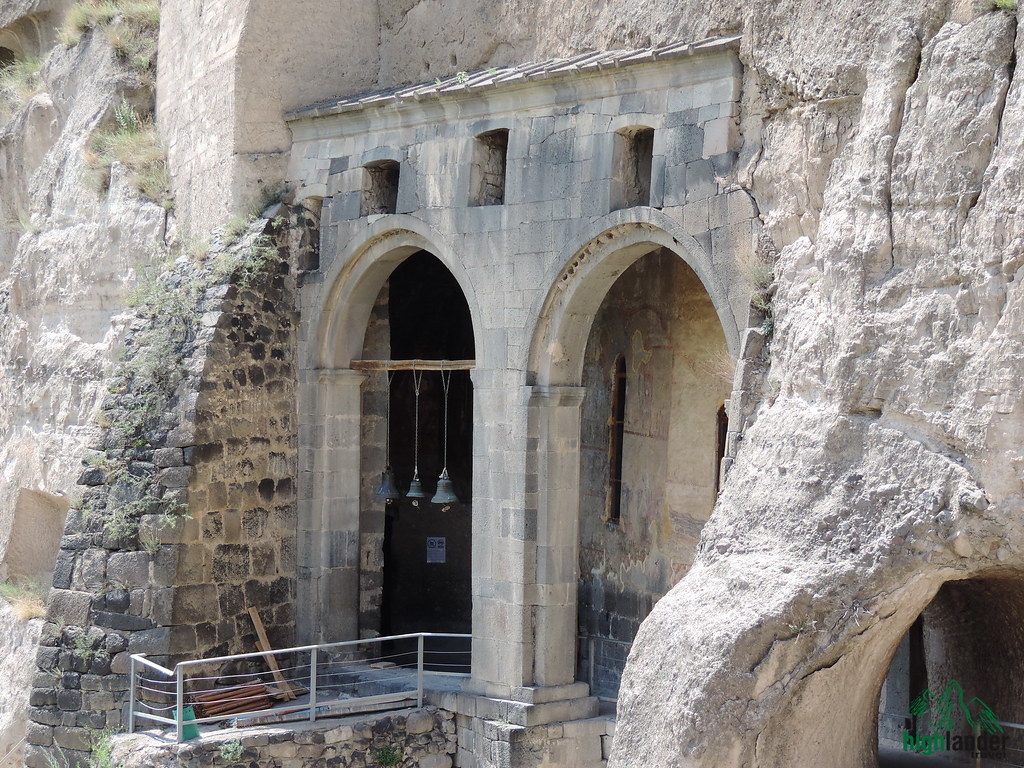
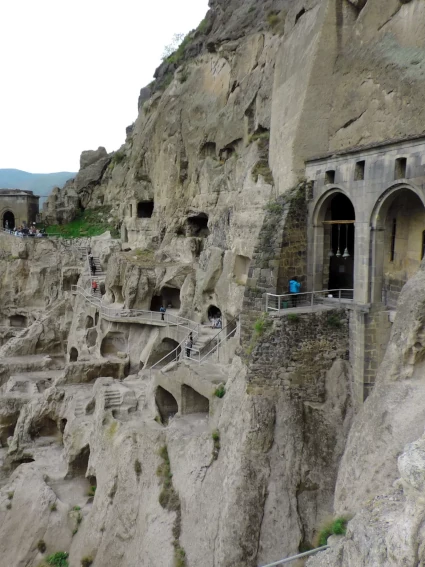
Vardzia represents one of medieval Georgia’s most ambitious projects—a cave city carved into a cliff face during the reign of Queen Tamar in the 12th century. This isn’t a natural cave system but entirely human-made. Workers carved over 600 rooms into the mountain’s interior, creating a complex that extended 13 stories vertically and 50 meters back into the rock.
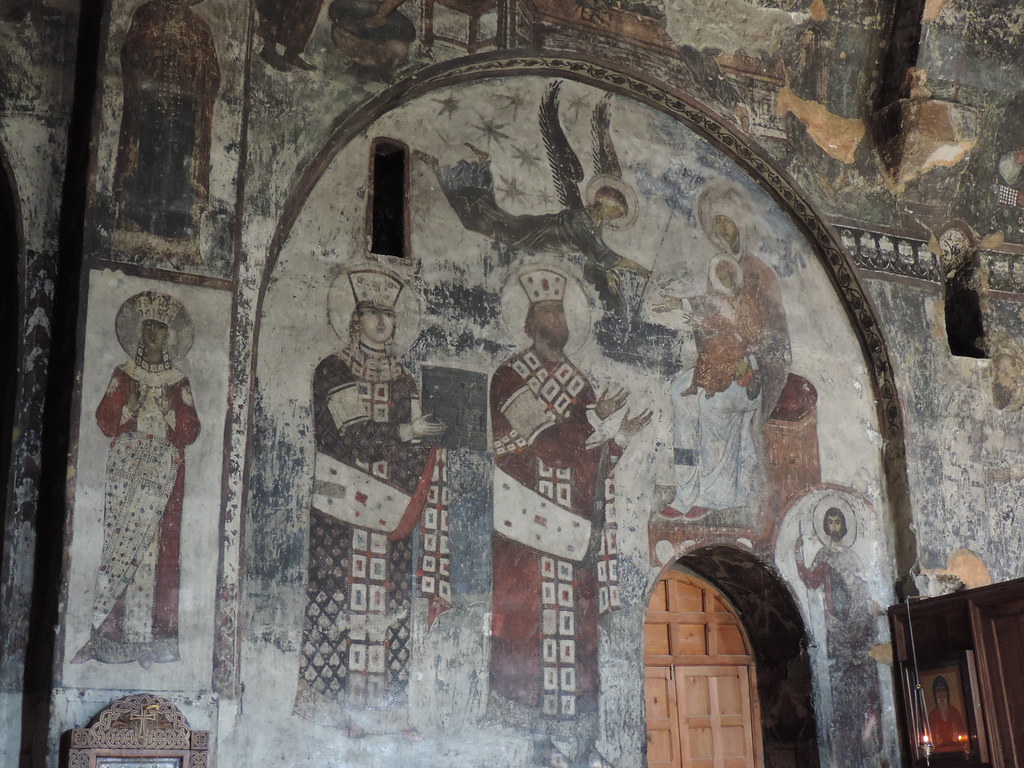
The complex functioned as both monastery and fortress refuge. During Mongol invasions, the population could retreat into Vardzia, defend the few narrow entrances, and survive siege conditions using the sophisticated water supply system that still functions. The cave church contains frescoes of Queen Tamar herself—rare contemporary portraiture of Georgia’s most celebrated monarch. Wine cellars, bakery, library, living quarters, defensive tunnels—all carved from solid rock with 12th-century technology.
An earthquake in the 13th century collapsed much of the cliff’s outer face, exposing rooms meant to remain hidden. This unfortunate catastrophe actually helps modern visitors appreciate the complex’s original scale.
Afternoon: Hermit Caves and Jeep Adventure
Vanis Kvabebi, carved into cliffs downstream from Vardzia, served as hermit monastery—meditation caves for monks seeking extreme isolation. The caves cling to vertical rock faces accessible only by narrow paths. The location’s difficulty was intentional: spiritual progress required physical ordeal.
An off-road jeep excursion takes you to Upper Tmogvi ruins—a fortress village accessible only via rough tracks that regular vehicles can’t manage. The ruins sit on a mountain ridge with dramatic views over the gorge. Few tourists make the effort to reach Upper Tmogvi, meaning you’ll likely have the site to yourself.
Evening: Saro Village Wine Tasting
The day concludes in Saro village, one of southern Georgia’s wine-producing communities. The volcanic soil produces grapes with distinctive character, and local families make wine using traditional methods—fermentation in buried qvevri (clay vessels), varieties adapted to high altitude and volcanic terroir. Your wine tasting and lunch at a family table introduces wines you won’t find in Tbilisi shops.
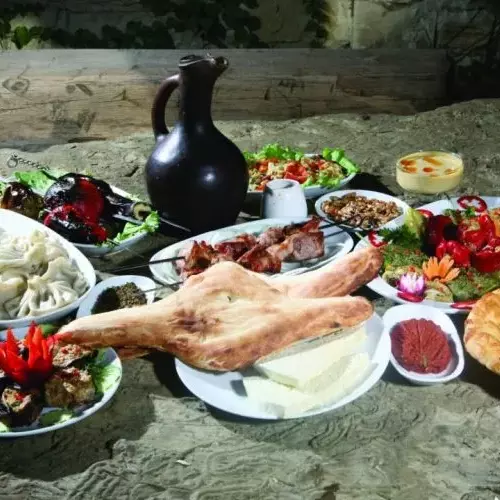
The hospitality in Saro demonstrates Georgian tradition in rural setting—abundant food prepared from garden vegetables, toasting customs, and genuine warmth that transcends language barriers.
Overnight: Akhaltsikhe area or near Vardzia (breakfast, lunch, and dinner included)
Route: Akhaltsikhe → Rabati Fortress → Sapara Monastery → Borjomi → Horse Riding | Duration: Full day
Morning: Rabati Fortress Complex
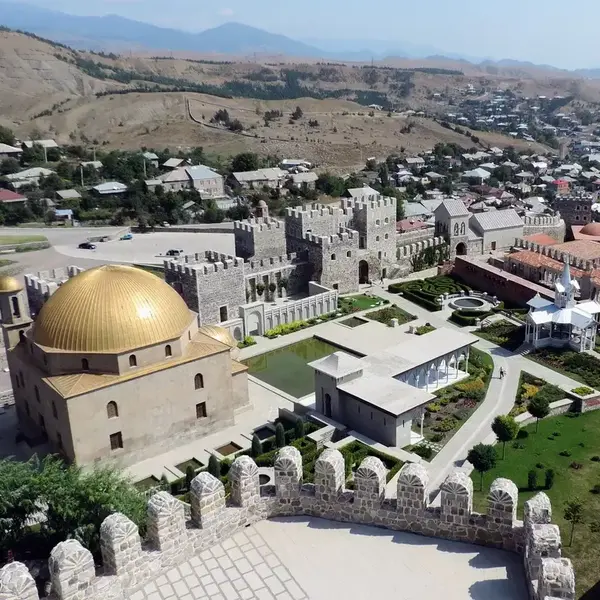
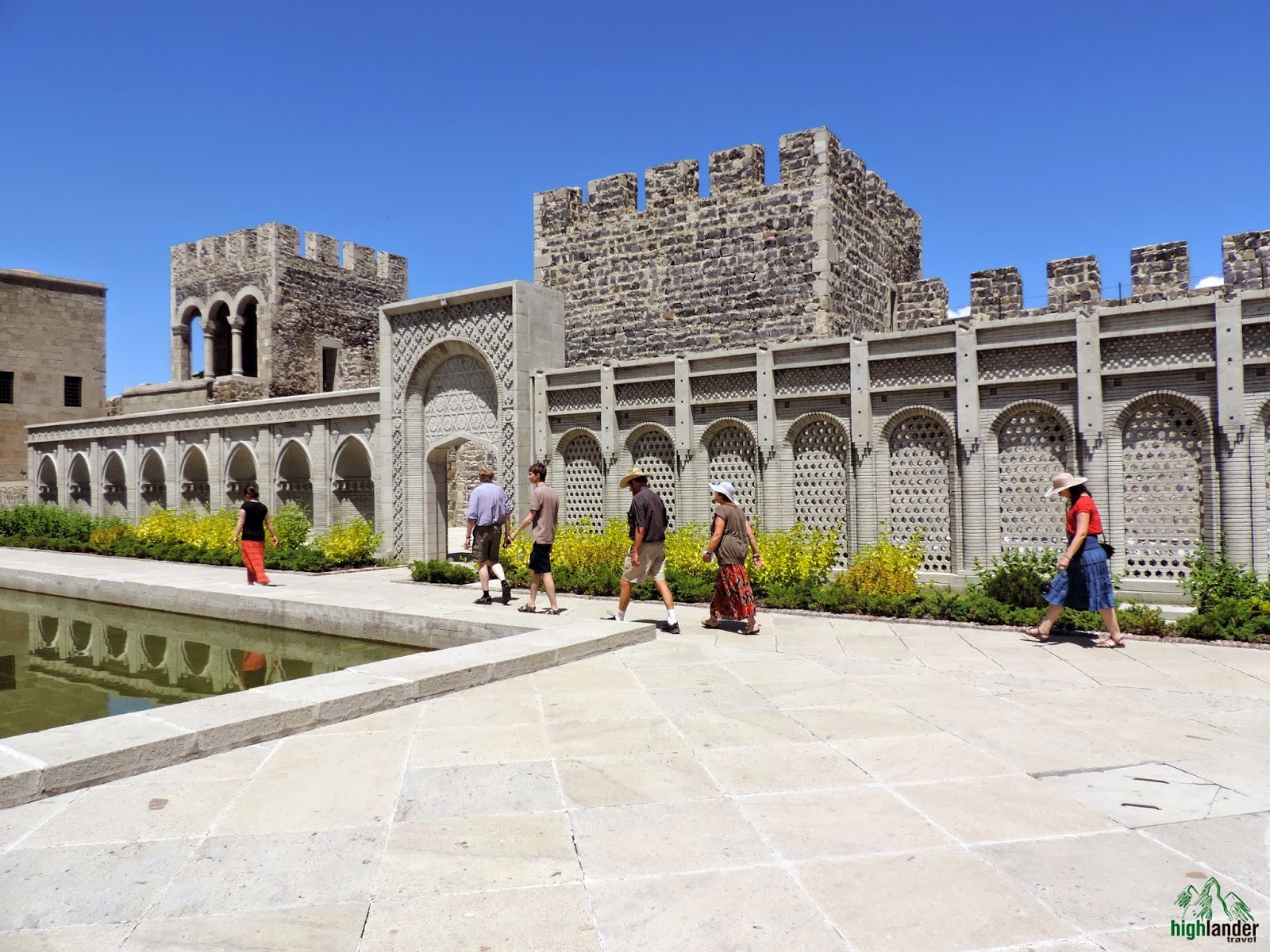
Akhaltsikhe, historically important as Samtskhe region’s capital (the name means “new castle” in Georgian), demonstrates the region’s multicultural history in architectural form. Rabati fortress complex, recently renovated, includes Georgian Orthodox church, Armenian church, mosque, and synagogue—physical evidence of the diverse populations that have called this region home.
Ottoman occupation left strong marks on Akhaltsikhe. The Turks held the town for centuries, and the fortress’s architecture shows that influence. Some historians and preservationists criticize the recent renovation as too complete, but the complex provides context for understanding southern Georgia’s position between empires and cultures.
Midday: Sapara Monastery
A short drive brings you to Sapara Monastery, hidden in forested hills outside Akhaltsikhe. While Rabati may feel over-renovated, Sapara retains authentic medieval character. The monastery’s church contains exceptional frescoes from the 13th-14th centuries—sophisticated composition, rich colors that survive centuries, iconography combining Orthodox tradition with Georgian artistic interpretation.
The monastery’s forest setting creates atmosphere that complements the spiritual architecture. Unlike cliff-face Vardzia, Sapara nestles into landscape rather than dominating it. The approach road winds through dense forest, and the complex feels integrated with natural surroundings.
Afternoon: Into Borjomi
From Sapara, the route climbs north toward Borjomi, passing through mountain forests that grow increasingly lush. The landscape transitions from southern Georgia’s arid volcanic terrain back to the humid forests of the Lesser Caucasus. Borjomi sits at 810 meters elevation in a narrow gorge surrounded by mountains.
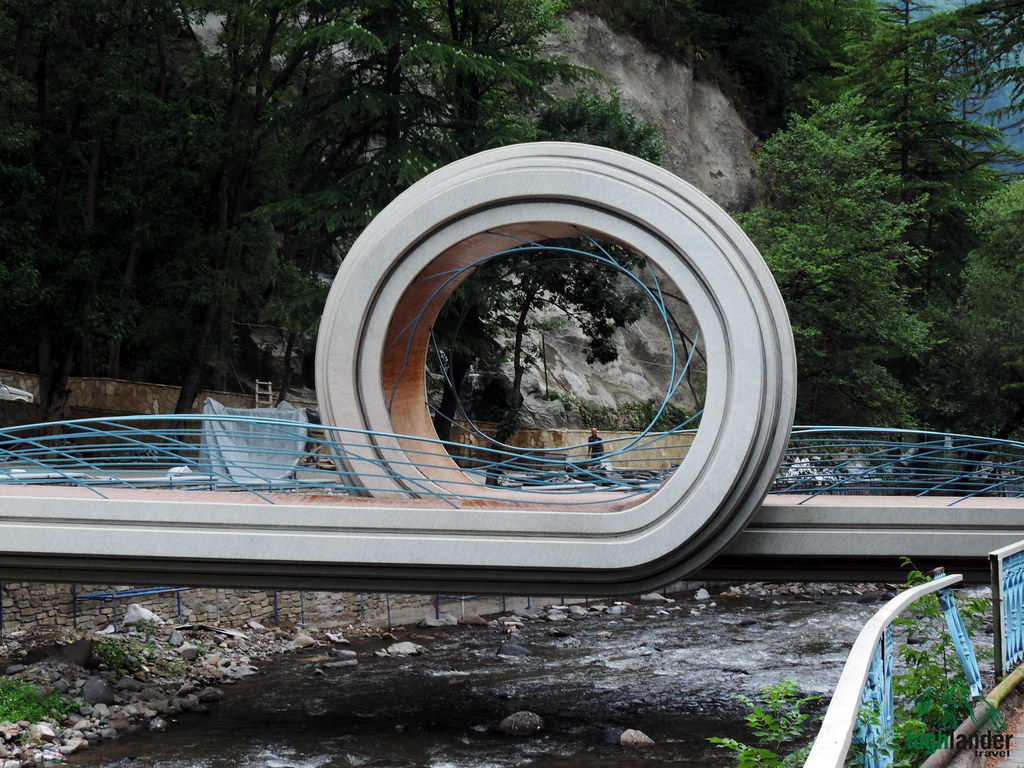
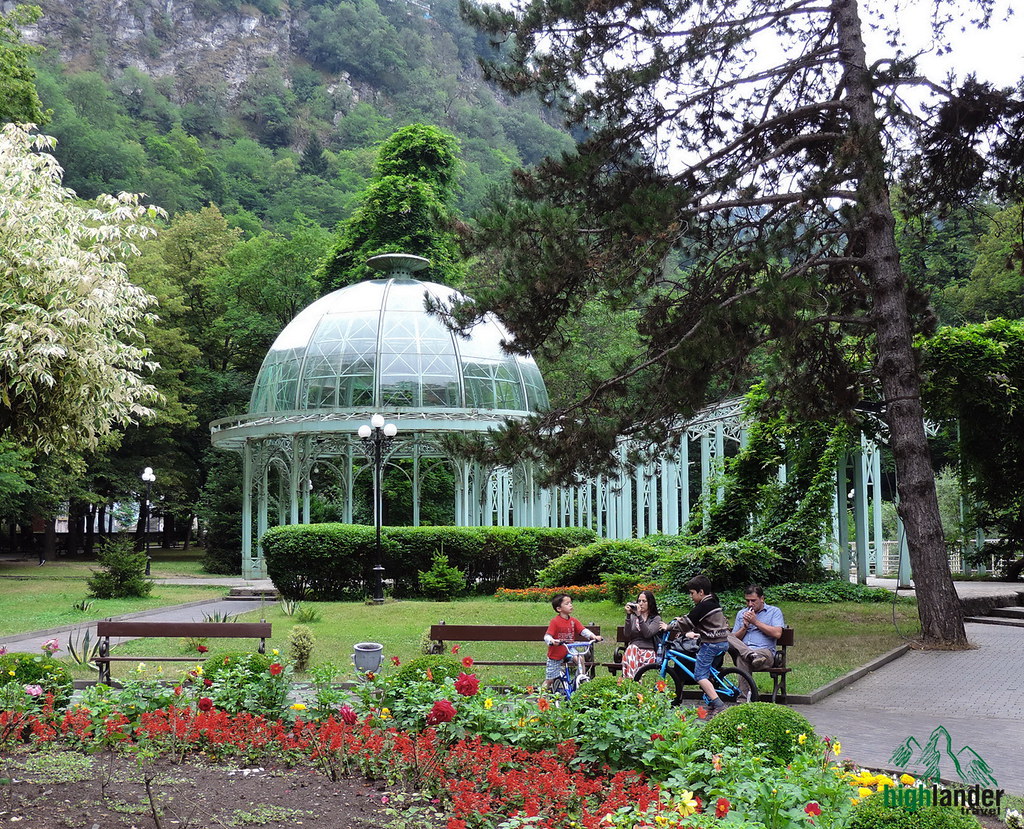
Borjomi Central Park introduces you to Georgia’s premier spa town. The mineral water here—naturally carbonated, slightly salty, with distinctive taste—has been bottled and exported since the 19th century. You can taste the water directly from the source; hot mineral water flows from springs in the park, and locals fill bottles daily.
Late Afternoon: Horse Riding in Europe’s Largest Forest
The surrounding Borjomi-Kharagauli National Park protects 85,000+ hectares of temperate forest—the largest intact forest ecosystem in Europe. The park contains bears, wolves, lynx, and over 200 bird species.
Your 2-3 hour horse riding excursion takes you into the forest on horseback. Even a few hours riding reveals the forest’s scale and wildness. The horses are well-trained, guides accommodate all experience levels, and the pace is gentle—mostly walking with some trotting if you’re comfortable.
Overnight: Borjomi (breakfast, lunch, and dinner included)
Route: Borjomi → Abastumani Observatory → Tbilisi | Distance: ~180km | Duration: Half day + transfer
Morning: Abastumani Astrophysical Observatory
The final day’s routing depends on season, weather, and group interest. In good weather, a morning excursion to Abastumani Astrophysical Observatory (20km from Borjomi at 1,650m elevation) provides fitting conclusion to a “mystic” tour.
The observatory, established in 1932 but occupying a site chosen for its exceptional sky clarity, has tracked celestial phenomena for nearly a century. The location was selected for minimal light pollution, clear mountain air, and elevation that reduces atmospheric distortion. Soviet astronomers made significant observations here, and the facility remains active in post-Soviet Georgia.
A visit (weather and observatory schedule permitting) includes seeing the historic telescopes, learning about astronomical research conducted here, and understanding why mountain observatories matter for studying the cosmos. The connection between earth-bound cave monasteries you’ve explored and an observatory searching the heavens creates thematic resonance—both represent human attempts to understand mysteries beyond immediate perception.
Afternoon: Return to Tbilisi
The drive back to Tbilisi (approximately 150-160km, 3-4 hours depending on traffic) completes your circuit through southern Georgia. The route allows reflection on the landscapes, monasteries, fortresses, and cultures you’ve experienced over four days.
Alternative Routing
The tour can alternatively end in Kutaisi (adding approximately 100km but opening western Georgia connections) or begin in Kutaisi and end in Tbilisi. Discuss preferences when booking.
End of tour: Tbilisi (or Kutaisi if arranged) | Meals: Breakfast, lunch (depending on timing)
Price details
[wptb id=17405]
What’s Included
Tour map
Tbilisi (Start/End)
Dashbashi Canyon
Paravani Lake (2,073m)
Poka Monastery
Sagamo Lake
Javakheti (Night 1)
Khertvisi Fortress
Vardzia Cave Monastery
Vanis Kvabebi
Upper Tmogvi (Jeep)
Saro Village Wine Tasting
Akhaltsikhe (Night 2)
Rabati Fortress
Sapara Monastery
Borjomi (Night 3)
Borjomi-Kharagauli National Park
Abastumani Observatory
Tour gallery

Practical Information
Duration: 4 days / 3 nights
Start/End: Tbilisi (alternative: Kutaisi start or end available)
Total Distance: ~750km over 4 days
Group Size: Small groups (2-10 people) or private arrangements
Difficulty: Easy—minimal walking required, horse riding suitable for beginners
Best Season: Late April through October
Language: English (Russian, German on request)
Physical Requirements
Basic fitness for short walks at monasteries and viewpoints. Comfortable with mountain driving on sometimes winding roads. Horse riding requires no previous experience (guides accommodate all levels). High altitude considerations at Javakheti plateau (2,000+ meters)—stay hydrated. Some sites involve stairs carved in rock (Vardzia).
What to Pack
Layers: Javakheti plateau is significantly cooler than lowlands—bring warm layers even in summer.
Comfortable walking shoes: For monastery visits and viewpoints.
Long pants: Required for horse riding.
Light rain jacket: Weather can change quickly in mountains.
Sun protection: High altitude means stronger UV exposure.
Modest clothing: For monastery visits—covered shoulders and knees.
Camera with extra batteries: Cold temperatures drain batteries faster.
Binoculars: Useful for observatory visit.
Best Time to Visit
Late April-May ⭐⭐⭐⭐: Spring arrives, wildflowers on plateau, occasional rain possible. Cooler temperatures at altitude.
June-August ⭐⭐⭐⭐⭐: Warmest weather, best conditions for horse riding and plateau exploration. Long days for sightseeing.
September-October ⭐⭐⭐⭐⭐: Ideal conditions—comfortable temperatures, autumn colors, grape harvest in wine villages, clear skies for observatory.
November-March ⭐⭐: Javakheti plateau becomes very cold, some roads may close, horse riding limited. Not recommended.
Tour FAQ
Why Book This Tour
Most Georgia tours focus on the Kakheti wine region or the Svaneti mountains. Southern Georgia receives far fewer visitors despite containing some of the country’s most remarkable sites. Vardzia alone deserves international recognition comparable to Cappadocia, yet it remains relatively undiscovered. The volcanic Javakheti plateau’s otherworldly landscapes provide scenery unlike anywhere else in the Caucasus.
The sites justify the journey. Vardzia’s 600+ rooms carved into a cliff represent medieval engineering ambition that rivals anything in Europe. The volcanic crater lakes at 2,000+ meters create landscapes that feel primordial, almost alien. Hermit caves clinging to vertical rock faces, island monasteries rising from cold water, an observatory searching the cosmos from mountain heights—these aren’t tourist fabrications but genuine wonders that inspire contemplation.
Small group size provides access. Upper Tmogvi requires both 4WD vehicle and local knowledge to reach. Saro village wine tasting requires family connections. Abastumani Observatory visits need coordination. Your guide opens doors and explains contexts that transform sites from pretty photo opportunities into meaningful experiences.
The region demonstrates Georgia’s cultural complexity. Javakheti’s Armenian population, Ottoman influence in Akhaltsikhe, cave monastery traditions, and Soviet-era observatory represent different cultural layers coexisting in a relatively small geographic area. You’ll gain understanding of Georgia as a multicultural crossroads rather than a monolithic nation.
Four days allow proper exploration. You’ll spend meaningful time at Vardzia, experience Javakheti’s atmosphere rather than just passing through, and engage with activities (horse riding, wine tasting, monastery visits) at a pace that permits understanding. This isn’t a rushed highlights sprint but a genuine immersion into one of Georgia’s most distinctive regions.