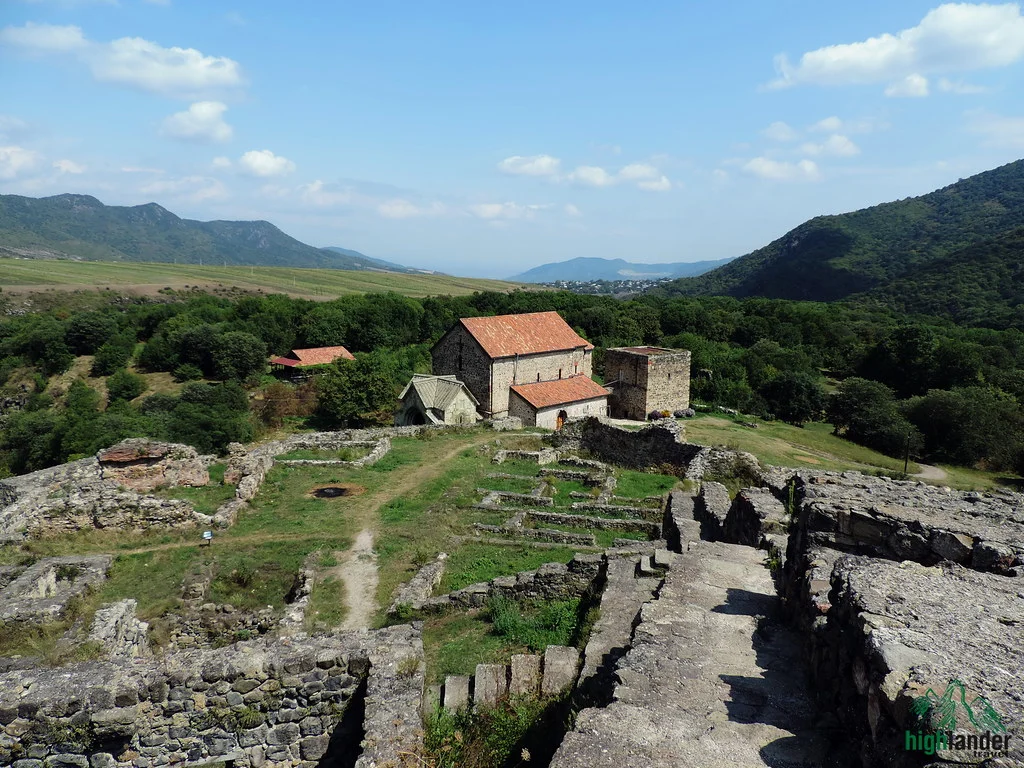
In the ruins of one of medieval Georgia’s most important cities stands Dmanisi Sioni Church, a remarkable cathedral whose history stretches across many centuries.
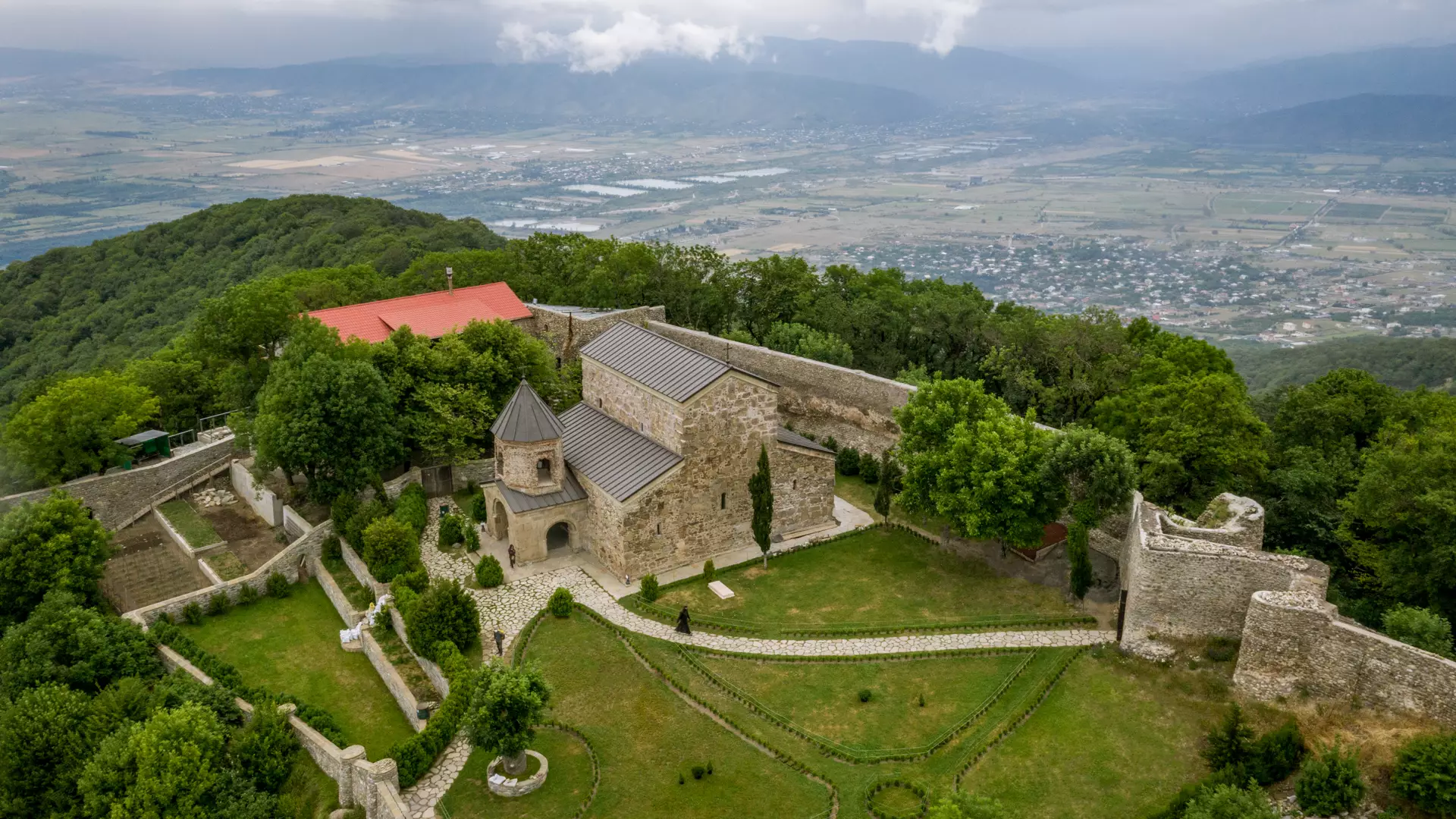
The church is located in the historic settlement of Dmanisi in the Kvemo Kartli region, on a high promontory above the confluence of the Mashavera and Pinezauri rivers. Around it are the remains of fortifications, streets, houses, baths and religious buildings belonging to a once-thriving medieval city.
Dmanisi Sioni is particularly interesting because several architectural periods can be seen within the same monument. Its main body belongs to the early medieval period, while its richly decorated western porch was added during the reign of King Giorgi IV Lasha in the early 13th century.
Dmanisi Sioni at a Glance
| Location | Dmanisi historic settlement, Kvemo Kartli |
| Church type | Early medieval basilica |
| Probable date | Early medieval period |
| Major later addition | Western porch, early 13th century |
| Known for | Stone architecture, carvings, inscriptions and fresco fragments |
| Religious tradition | Georgian Orthodox |
| Nearby attraction | Dmanisi archaeological site |
The Ancient City of Dmanisi
Dmanisi Sioni stands at the centre of the ruins of medieval Dmanisi, once an important commercial and strategic city in southern Georgia.
From approximately the 9th to the 16th century, Dmanisi developed into a significant urban centre positioned on trade routes linking Georgia with Armenia, Persia and other parts of the Near East.
The population was culturally and religiously diverse. Archaeological remains reveal fortifications, houses, streets, baths, churches and other structures that testify to the city’s former wealth and importance.
Today Dmanisi is famous not only for its medieval ruins but also for archaeological discoveries that transformed our understanding of early human migration. This makes the site one of the most unusual historical destinations in Kvemo Kartli.
Architecture of Dmanisi Sioni Church
The church is a large stone structure with an extended semicircular apse at its eastern end. Its interior is divided by massive rectangular wall projections and deep arches, creating a powerful sense of solidity.
Dark rubble-stone masonry dominates the façades, with reddish stone and other materials appearing in different sections of the building. The result is an austere architectural character that suits the dramatic surroundings of the ruined city.
Later chapels were attached to the northern and southern sides of the church. These additions changed the original outline and gave the building some resemblance to a three-church basilica.
The 13th-Century Western Porch
The most decorative part of Dmanisi Sioni is its western porch, constructed during the reign of King Giorgi IV Lasha in the early 13th century.
Unlike the comparatively plain walls of the older church, the porch is built from carefully dressed stone and decorated with carved crosses, ornamental patterns and architectural reliefs.
Its design includes niches, slender columns and a small domed section. The arrangement produces a cross-like architectural form and demonstrates the sophistication of Georgian stone carving during the high medieval period.
Georgian Inscriptions
The porch contains important medieval Georgian inscriptions connected with the rulers, clergy and patrons involved in the development of the cathedral.
These inscriptions are especially valuable to historians because they help identify the period in which parts of the church were constructed or restored.
They also provide a direct connection between the surviving architecture and the political history of medieval Georgia.
Surviving Wall Paintings
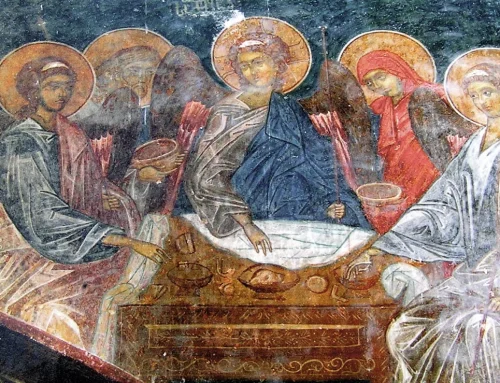
The interior of Dmanisi Sioni was once decorated with wall paintings.
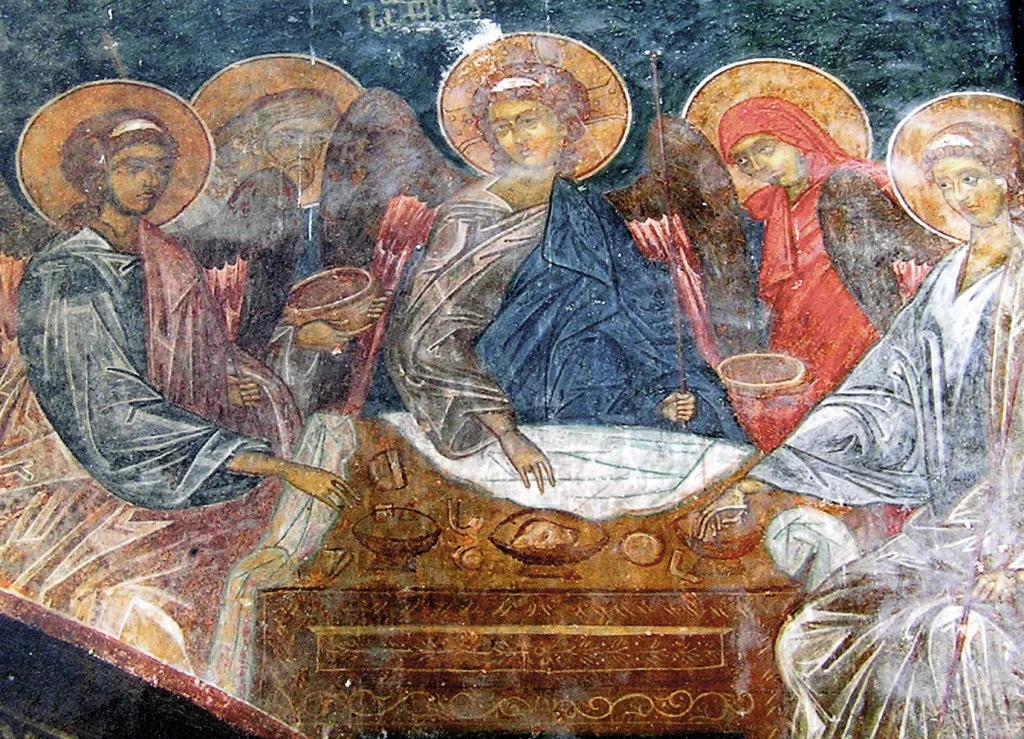
Only fragments survive today, particularly around the sanctuary and on parts of the northern wall. Although badly faded, these remains still preserve traces of medieval religious imagery and offer clues to the appearance of the original interior.
The contrast between the restrained stone architecture and the surviving painted decoration gives visitors a sense of how much richer the church interior once would have appeared.
Bell Tower and Later Chapel
A substantial bell tower stands to the west of the main church.
Another small single-nave chapel lies to the northwest. Built from stones of different colours and textures, this modest structure adds another historical layer to the cathedral complex.
Together, the cathedral, porch, bell tower and chapels illustrate how the site continued to change over many centuries.
Dmanisi as a Medieval Religious Centre
During the medieval period, Dmanisi was an important episcopal centre and Sioni served as its principal cathedral.
The church served the Orthodox Christian population of a city that was otherwise remarkably diverse in both ethnicity and religion.
This multicultural history is one of the features that distinguishes Dmanisi from many other medieval settlements in southern Georgia.
Why Is the Church Called Sioni?
The name Sioni appears frequently among important Georgian churches and cathedrals.
It refers to Mount Zion in Jerusalem and became part of a long Georgian ecclesiastical tradition. Other famous examples include Tbilisi Sioni and Bolnisi Sioni.
Visiting Dmanisi Sioni
Dmanisi Sioni should ideally be visited together with the surrounding archaeological settlement.
The historic site lies roughly 100 kilometres southwest of Tbilisi and can be visited as a day trip from the capital.
A private car, driver or organised tour in Georgia is generally the easiest way to visit, particularly if you want to combine Dmanisi with other monuments in Kvemo Kartli.
What to See at Dmanisi
- Dmanisi Sioni Church – the principal medieval cathedral of the settlement.
- Dmanisi archaeological site – internationally known for evidence of very early human occupation.
- Medieval city ruins – including streets, houses and public structures.
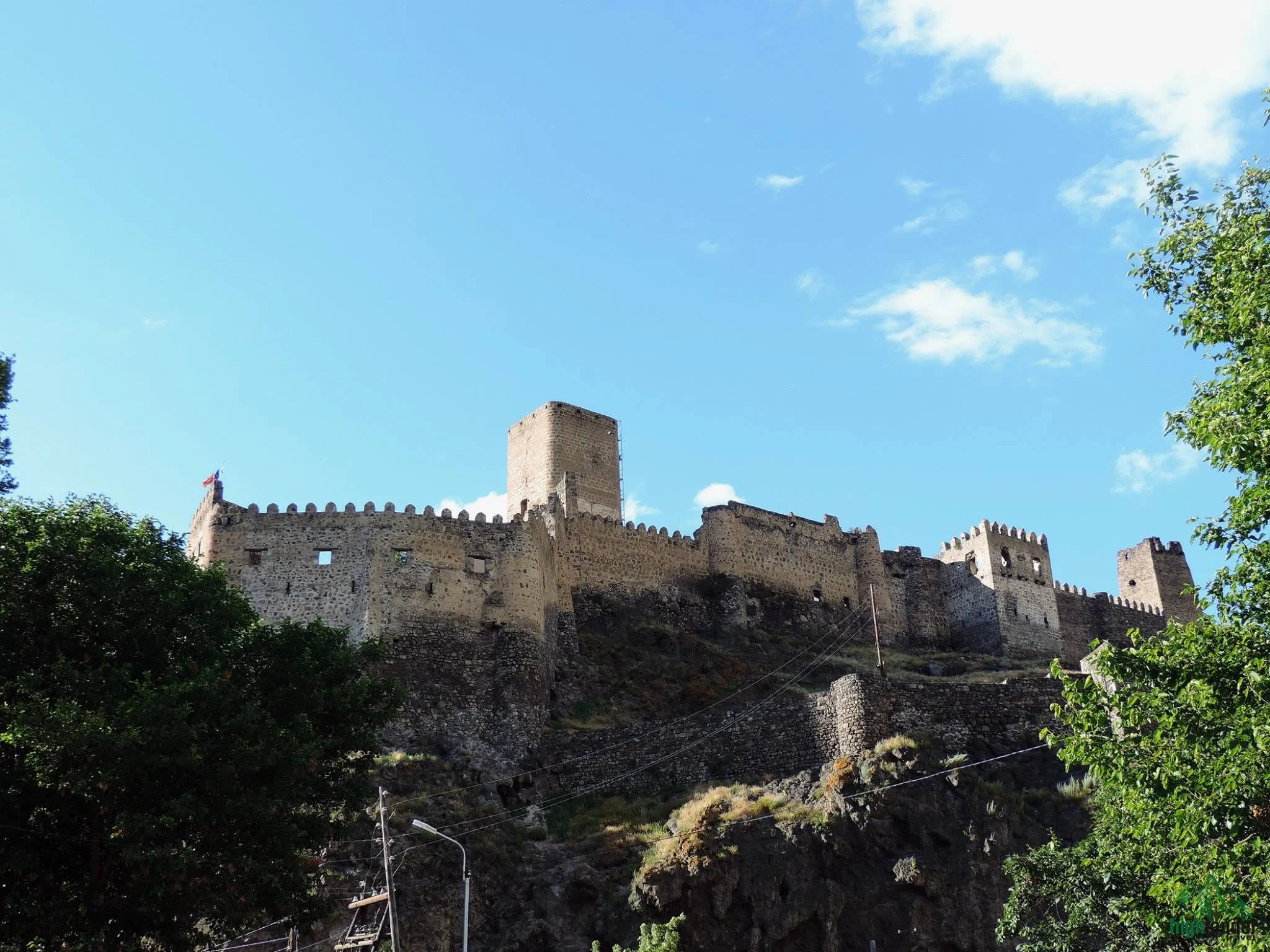
- Fortifications – remains of defensive walls and the citadel.
- Historic baths – evidence of the sophisticated urban life of medieval Dmanisi.
- Religious monuments – reflecting the diverse population that once lived in the city.
Few places in Georgia allow visitors to experience such different periods of history in one location. Archaeological layers at Dmanisi range from some of the earliest evidence of humans outside Africa to the remains of a prosperous medieval Georgian city.
Combine Dmanisi with Bolnisi
Dmanisi works particularly well as part of a cultural day trip through Kvemo Kartli.
One of the best combinations is Dmanisi Sioni, Bolnisi Sioni and Tsughrughasheni Church. Together, the three monuments offer an excellent introduction to the development of Georgian church architecture across different centuries.
Bolnisi Sioni is one of Georgia’s most important early Christian basilicas and is famous for its ancient Georgian inscriptions and distinctive stone decoration.
Nearby Tsughrughasheni represents the elegant domed architecture of the Georgian Golden Age, while Dmanisi adds the atmosphere of a ruined medieval city.
Best Time to Visit Dmanisi
Dmanisi can be visited throughout much of the year, although spring and autumn are particularly pleasant for exploring the large archaeological site on foot.
Summer offers long daylight hours but can be hot and exposed. Winter visits are possible, although snow, cold temperatures and changing road conditions should be considered.
Frequently Asked Questions
Where is Dmanisi Sioni Church?
Dmanisi Sioni is located within the historic Dmanisi settlement in the Kvemo Kartli region of southern Georgia.
How old is Dmanisi Sioni?
The main church belongs to the early medieval period and has undergone several later alterations. Its richly decorated western porch dates from the early 13th century.
What is Dmanisi Sioni famous for?
The church is known for its monumental stone architecture, 13th-century carved porch, Georgian inscriptions, surviving wall paintings and location in the heart of the ancient city of Dmanisi.
Can Dmanisi be visited from Tbilisi in one day?
Yes. Dmanisi can be visited as a day trip from Tbilisi, especially when travelling by private vehicle or organised tour.
What can I combine with Dmanisi?
The best nearby combination is Bolnisi Sioni, Tsughrughasheni Church and other historical attractions of Kvemo Kartli.
Why Dmanisi Sioni Is Worth Visiting
Dmanisi Sioni is more than an isolated medieval church. Its significance comes from the extraordinary historical landscape surrounding it.
The cathedral’s massive stone walls preserve the character of early medieval Georgian architecture, while its ornate 13th-century porch reflects a later period of artistic confidence and prosperity.
Around the church lie the remains of streets, fortifications and buildings belonging to a city that once connected different peoples, religions and international trade routes.
Even deeper beneath the medieval ruins, archaeological discoveries tell a story stretching back almost two million years.
For travellers interested in churches and monasteries of Georgia, archaeology and medieval history, Dmanisi Sioni is one of the most rewarding places to visit in Kvemo Kartli.