Eleven days from cave monasteries to Europe’s highest villages, from Tbilisi’s urban energy to volcanic plateaus, from Bronze Age settlements to medieval towers—Georgia’s full dramatic range without compromise
Most visitors to Georgia choose between regions—either Tbilisi and Kakheti, or Svaneti and the mountains, or the cave cities of the south. This tour refuses that compromise. Eleven days allow you to experience Georgia’s full dramatic range: medieval towers guarding Europe’s highest villages, cave monasteries carved into cliff faces, the chaotic energy of Tbilisi, UNESCO World Heritage sites that span millennia, and mountain passes where the Caucasus rises white and massive against blue sky.
This isn’t a sprint through highlights for photos and departure. It’s a proper journey through Georgia’s geography and history, moving from the humid west through the high mountains of Svaneti, down to the volcanic plateau of Javakheti, across to Tbilisi’s urban energy, and back through monastery-rich valleys. You’ll stay in authentic Svan villages where medieval towers still stand guard, eat meals prepared by families who’ve cooked the same recipes for generations, and visit archaeological sites that predate classical Greece.
Starting and ending in Kutaisi keeps logistics simple while maximizing time in regions that matter. Small group size—never more than ten people—means flexibility when something interesting appears, conversations with your guide that go deeper than basic facts, and the ability to adjust pace when needed. This is Georgia for travelers who want comprehensive understanding, not just iconic photos.
This tour suits: Travelers seeking comprehensive Georgia understanding rather than surface highlights, history enthusiasts interested in civilizations from Bronze Age to Soviet, mountain lovers who want proper Svaneti immersion, cultural explorers who value authentic village experiences, and anyone with 11 days who refuses to choose between Georgia’s incompatible-seeming regions.
This tour doesn’t suit: Those wanting quick highlights (consider our shorter tours), travelers uncomfortable with long driving days through mountain terrain, visitors requiring luxury accommodations throughout, people with severe mobility limitations (some sites involve stairs and uneven ground), or those who prefer independent exploration over guided experiences.
Tour highlights
11 days • 10 nights • 5 UNESCO sites • 3 days in Svaneti • Cooking class • Wine tasting • Maximum 10 participants
Why This Tour Covers Georgia Completely
Georgia compresses extraordinary diversity into a space smaller than Ireland. Drive three hours and you’ll move from subtropical valleys where tea and citrus grow to alpine peaks permanently white with snow. The country’s history layers civilizations like geological strata: Bronze Age sites beneath Greek influence beneath Persian beneath Arab beneath Mongol beneath Russian beneath Soviet beneath whatever comes next.
Understanding Regional Differences
Understanding Georgia requires experiencing its regional differences. Svaneti’s mountain isolation created a culture distinct from lowland Georgia—different architecture, different bread, even different polyphonic singing styles. The volcanic Javakheti plateau, populated largely by ethnic Armenians, feels like a different country entirely. Tbilisi’s cosmopolitan chaos contrasts sharply with quiet monastery valleys where monks maintain routines unchanged for centuries.
This itinerary connects these pieces into a coherent narrative. You’ll see how Georgia’s position between empires shaped its fortress architecture, understand why wine permeates every social ritual, recognize Byzantine influence in church design, and grasp why Georgians view their country as Europe’s eastern edge rather than Asia’s western border.
Famous Sites and Hidden Gems
The tour balances famous sites with places that remain genuinely undiscovered. You’ll visit Vardzia and Uplistsikhe cave complexes that belong on any Georgia itinerary. But you’ll also explore Lakhushdi village in Svaneti, where tourism hasn’t yet transformed daily life, and Saro village with its megalithic fortress, where you might be the only visitors that week.
Three Days in Svaneti
Most tours rush through Svaneti in a single exhausting day. This itinerary dedicates three full days to Georgia’s most distinctive region—time enough to understand Svan culture beyond just photographing towers. The cooking class in Lakhushdi, overnight in Mestia, and full day to Ushguli create opportunities for cultural immersion that rushed visits can’t provide.
You’ll visit Europe’s highest permanently inhabited settlement at Ushguli (2,200m), learn to make kubdari (Svan meat pie) with a local family, explore medieval tower houses that protected families during centuries of blood feuds, and understand how mountain geography created culture so distinct from lowland Georgia.
The Geographic Drama
This tour demonstrates Georgia’s remarkable landscape variety: from sea-level valleys to 2,200-meter villages, from humid subtropical west to continental volcanic plateaus, from cave systems to alpine peaks. The landscape variety matches cultural diversity, and eleven days allows both to reveal themselves properly.
Tour Itinerary
Arrival: Kutaisi International Airport | Duration: Half day
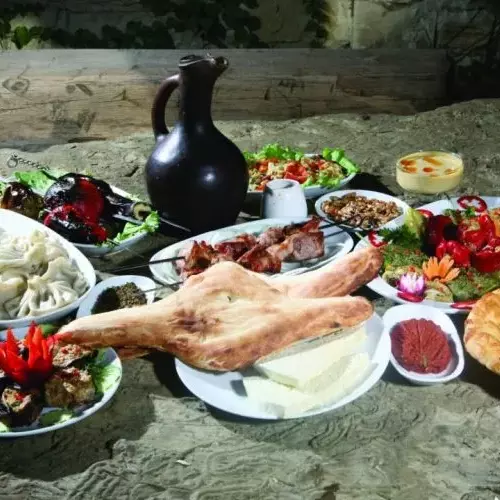
Your Georgian journey begins at Kutaisi International Airport, where your guide meets you for transfer into the country’s ancient western capital. Lunch at a traditional restaurant provides your first taste of Georgian cuisine—perhaps khachapuri (cheese bread), shkmeruli (chicken in garlic sauce), or badrijani (eggplant with walnut paste)—alongside an introduction to Georgian wine culture and toasting traditions.
Afternoon: Prometheus Cave
The afternoon takes you underground to Prometheus Cave, one of Georgia’s natural marvels. Walkways wind through six chambers spanning 1.4 kilometers, where millennia of water flow have created limestone formations in extraordinary variety. Cathedral-like halls reveal stalactites, stalagmites, and curtain formations lit to emphasize their sculptural quality. The underground river still flows, its sound echoing through chambers that feel both ancient and alien.
Evening: Tskaltubo Spa
Evening brings you to Tskaltubo, once a prestigious Soviet spa resort where Stalin and Beria took healing waters. The town’s faded grandeur tells stories about Soviet hierarchy and belief in mineral spring therapy. Your accommodation includes access to modern spa facilities where you can soak in the same waters that once attracted the Communist elite—genuinely therapeutic mineral springs at 33-35°C that ease travel fatigue.
Overnight: Tskaltubo (dinner included)
Route: Kutaisi → Rikoti Pass → Gori → Uplistsikhe → Mtskheta → Tbilisi | Distance: 250km
Morning: Kutaisi and Bagrati Cathedral
Morning in Kutaisi rewards early rising. The city center’s architecture spans from classical colonnades to Soviet monumentalism, while the morning market displays regional produce, churchkhela (candle-shaped grape candy with walnuts), fresh herbs, spices, and seasonal vegetables. Bagrati Cathedral crowns the hill above the city—its 11th-century construction under King Bagrat III symbolizing Georgia’s unification. The views over the Rioni River valley are spectacular.
Departing Kutaisi, the journey crosses Rikoti Pass, the traditional boundary between western and eastern Georgia. The landscape shifts—more continental, less humid, broader valleys.
Midday: Uplistsikhe Cave City
Uplistsikhe appears just outside Gori—one of Georgia’s oldest settlements. This rock-hewn city dates to the 6th century BC, though it reached prominence in the early medieval period. Walking through carved chambers, you’ll see a theater, pharmacy, throne room, pagan temple later converted to a Christian basilica, wine storage rooms, and residential caves where families lived, carved into soft sandstone. The site demonstrates how geology shaped Georgian architecture—when you can’t build with stone or wood, you carve directly into living rock.
Late Afternoon: Mtskheta — Georgia’s Spiritual Heart
Evening approaches as you reach Mtskheta, Georgia’s ancient capital and spiritual heart. Jvari Monastery perches on a hilltop where pagan temples once stood—its 6th-century form representing early Georgian Christian architecture at its most harmonious. The views encompass the confluence of the Mtkvari and Aragvi rivers, a location Georgians have considered sacred for millennia.
Below in Mtskheta proper, Svetitskhoveli Cathedral contains, according to tradition, Christ’s robe brought from Jerusalem. Whether you believe that or not, the cathedral’s importance to Georgian identity is undeniable. Kings are crowned here, many lie buried beneath its floor, and the building represents Georgian architectural and artistic achievement across centuries.
Evening: Arrival in Tbilisi
Arrival in Tbilisi completes a long but rewarding day that has moved you from Georgia’s humid west to its continental center, from natural wonders to human achievement spanning three thousand years.
Overnight: Tbilisi (dinner included)
Location: Tbilisi | Duration: Full day (guided morning, free afternoon)
Tbilisi reveals itself slowly, requiring time to understand its layers.
Morning: Old Town Walking Tour
Your morning walking tour covers the old town’s essential geography and history, starting from Metekhi Plateau where Queen Tamara’s statue overlooks the city, down through neighborhoods that cascade toward the Mtkvari River.
Narikala Fortress, originally constructed in the 4th century and expanded by successive occupiers, dominates the southern ridge. A cable car ride (or steep walk if you prefer) brings you to the ramparts where the city spreads below—a visual lesson in how Tbilisi grew along the river valley and up surrounding slopes.
The sulfur bath district dates to Tbilisi’s founding mythology. King Vakhtang Gorgasali supposedly founded the city here after his falcon, pursuing prey, fell into hot springs. The Persian-influenced domed bathhouses with their glazed tile exteriors remain operational; your guide can arrange a bath if you’re interested (additional cost).
Meidan (old market square), Sharden Street’s cafes and wine bars, Betlemi district’s steep lanes, and the contrast between renovated areas and neighborhoods that remain authentically worn—your guide tailors the walk to group interest.
Afternoon: Free Time for Independent Exploration
Afternoon free time allows independent exploration. Recommendations might include: Dry Bridge flea market for Soviet memorabilia, the National Museum for comprehensive historical context, Fabrika for contemporary creative culture, Rustaveli Avenue for grand architecture, or simply sitting at a cafe watching Tbilisi life flow past.
Overnight: Tbilisi
Route: Tbilisi → Javakheti Plateau → Paravani Lake → Akhalkalaki → Vardzia | Distance: 250km
Morning: Into the Volcanic Highlands
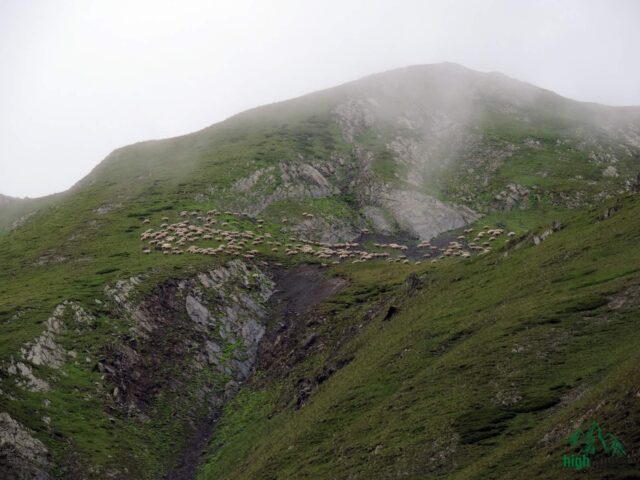
Today’s journey takes you south into Georgia’s least-known major region. Javakheti Plateau rises to over 2,000 meters—a volcanic highland of crater lakes, basalt formations, and sparse beauty. The climate here contradicts Georgia’s general reputation: continental, harsh winters, cool summers, and almost treeless expanses that feel more like Central Asian steppe than Caucasus foothills.
Midday: Lakes and Armenian Villages
Paravani Lake, Georgia’s largest, sits at 2,073 meters. On clear days, the water reflects surrounding peaks in mirror stillness. The lake freezes solid in winter, and even in summer, water temperature rarely exceeds 15°C. Armenian villages dot the shoreline—this region’s population is predominantly ethnic Armenian, creating cultural distinctions visible in church architecture, language heard in markets, and even bread styles.
Akhalkalaki’s market demonstrates the region’s ethnic character. Armenian is the primary language, Orthodox churches follow Armenian rather than Georgian tradition, and the town’s connection to Armenia (the border is close) feels stronger than ties to Tbilisi.
Afternoon: Khertvisi and Vardzia
The landscape changes dramatically as you descend from the plateau toward Vardzia. The Mtkvari River cuts through volcanic rock, creating gorges and dramatic scenery. Khertvisi Fortress appears on a ridge, its strategic position commanding the valley obvious even now.
Vardzia represents medieval Georgia’s engineering ambition and desperate military necessity. In the 12th century, under Queen Tamar’s reign, workers carved a monastery complex directly into the cliff face—over 600 rooms across multiple levels, connected by tunnels and stairs carved into rock, with a water supply system still functioning. The complex housed 2,000 monks and served as both spiritual center and fortress refuge when Mongol invasions threatened.
Walking through Vardzia’s caves—churches with frescoes still visible after 800 years, monk cells, wine cellars, bakery, library chambers—you understand both the achievement and the desperation that motivated such construction.
Overnight: Near Vardzia (dinner included)
Route: Vardzia → Saro village → Sapara Monastery → Rabati Fortress → Atskuri | Distance: 90km
This shorter driving day allows deeper exploration of southern Georgia’s mountain villages and fortresses.
Morning: Saro Village — Off the Tourist Map
Saro village requires a detour onto rough roads that tour buses can’t manage—precisely why it remains authentic. The village sits beneath a megalithic fortress (construction period debated, possibly Bronze Age, possibly medieval using Bronze Age foundation) and contains traditional houses built in centuries-old styles. Your guide explains Saro’s architectural vernacular and the practical reasons for building techniques that date back millennia.
The views from Saro’s ridge reward the rough drive—valleys stretching toward Turkey, Lesser Caucasus peaks in multiple ranges, a sense of isolation that explains how such villages maintained traditional culture even under Soviet homogenization efforts.
Afternoon: Sapara Monastery and Rabati Fortress
Sapara Monastery, hidden in forests outside Akhaltsikhe, contains exceptional medieval frescoes—less famous than other Georgian church art but aesthetically significant. The monastery’s setting in steep forested ravines creates atmosphere that enhances the spiritual context.
Rabati Fortress in Akhaltsikhe demonstrates Georgia’s complicated history in architectural layers. Originally a medieval Georgian construction, it was expanded under Ottoman occupation (Akhaltsikhe means “new castle” in Georgian, but the Turks held it for centuries), rebuilt again after Russian conquest, and recently underwent controversial renovation. The fortress complex includes a mosque, Georgian Orthodox church, Catholic church, and synagogue—physical evidence of the region’s multicultural history.
Evening: Atskuri Village Hospitality
Atskuri village, your overnight destination, offers family guesthouse hospitality. Dinner prepared by your hosts—likely including lobiani (bean-filled bread traditional to this region), grilled meats, fresh salads with herbs from the garden, and local wine—demonstrates Georgian hospitality at its most genuine.
Overnight: Atskuri guesthouse (dinner included)
Route: Atskuri → Gelati Monastery → Okatse Canyon → Kinchkha/Lomina Waterfalls → Winery | Distance: 240km
The return journey to western Georgia follows different routes from your initial crossing, revealing new landscapes.
Morning: Gelati Monastery — Georgia’s Intellectual Heart
Gelati Monastery is arguably Georgia’s most historically significant religious site. David the Builder, Georgia’s greatest medieval king (reigned 1089-1125), founded Gelati as both monastery and academy. The complex became the intellectual center of medieval Georgia, teaching philosophy, theology, astronomy, and other sciences when European universities were just emerging.
David requested burial in the monastery gateway so every monk would walk over his grave—an act of humility from a king who expanded Georgia to its greatest historical extent and is still revered almost like a saint. The monastery’s mosaics and frescoes represent Georgian medieval art at its peak. UNESCO recognition acknowledges both the artistic achievement and historical significance.
Afternoon: Canyons and Waterfalls
Nature provides the afternoon’s focus. Okatse Canyon offers a suspended walkway walking above a limestone gorge—the Okatse River rushing over 30 meters below, moss and ferns covering vertical walls, and small waterfalls appearing around bends. The engineering allows safe access to views that were previously impossible.
Kinchkha and Lomina waterfalls demonstrate western Georgia’s water abundance. Kinchkha drops 70 meters in multiple cascades through forest, the sound audible from hundreds of meters away. Lomina offers different character—wider, more powerful, accessible enough for closer approach. Both reward the short walks required to reach them.
Evening: Winery Accommodation
Evening brings you to a chateau-style winery accommodation where dinner and wine tasting provide relaxation after a full day. Western Georgian wines differ from Kakheti’s bold reds—expect more delicate whites, some amber qvevri wines, and the region’s characteristic hospitality.
Overnight: Imereti winery (dinner and wine tasting included)
Route: Imereti → Samegrelo → Zugdidi → Enguri Dam → Mestia | Distance: 270km
Today begins your Svaneti immersion—three days in Georgia’s most distinctive region.
Morning: Through Samegrelo
The drive north takes you through Samegrelo (Mingrelia), another of Georgia’s ethnographic regions with its own language, cuisine, and traditions.
Balda Canyon provides a first stop—a narrow limestone gorge where the river has carved through rock, creating walls so close that sunlight barely penetrates at midday. The suspended walkway allows safe passage through a canyon that would otherwise be impassable.
Midday: Zugdidi and Mingrelian Cuisine
Zugdidi, Samegrelo’s capital, serves as lunch stop and introduction to Mingrelian cuisine. Mingrelian khachapuri includes more cheese and more heat (both temperature and spice) than other versions. The town’s former palace and botanical garden hint at the 19th-century principality that ruled here before Russian absorption.
Afternoon: Enguri Dam and Into Svaneti
Enguri Dam appears as you approach Svaneti—a massive concrete arch 271.5 meters high, one of the world’s tallest. Built in Soviet times with forced labor (officially “voluntary”), the dam generates significant hydroelectric power but also symbolizes the environmental and human cost of Soviet development ideology.
The landscape transforms as you enter Svaneti proper. The valley narrows, peaks rise higher, traditional tower houses appear in villages, and you enter a region that maintained semi-independence through centuries when lowland Georgia suffered successive invasions. Svaneti’s mountain barriers protected it—what armies couldn’t reach, they couldn’t conquer.
Evening: Mestia
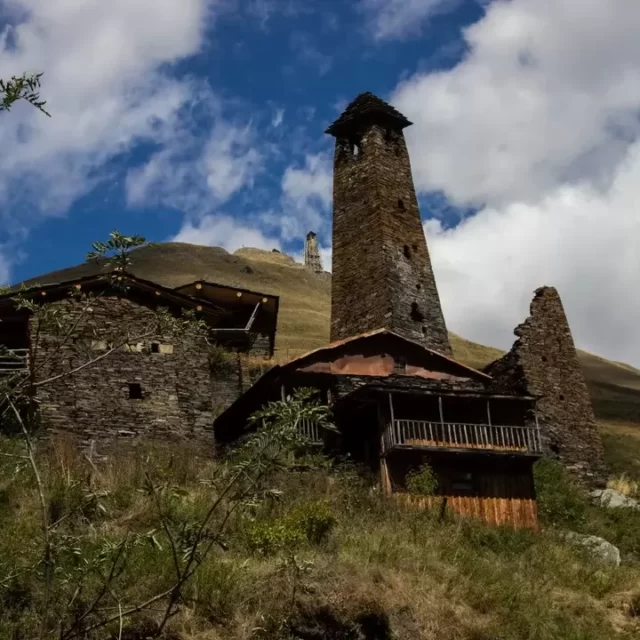
Mestia, Svaneti’s administrative center, sits at 1,500 meters surrounded by peaks exceeding 5,000 meters. Traditional Svan towers—four-story stone defensive structures that families built to protect against blood feuds and invasions—remain Mestia’s defining architectural feature.
Overnight: Mestia (dinner included)
Location: Lakhushdi village (Latali community, ~20km from Mestia) | Duration: Full day cultural immersion
While Mestia increasingly caters to tourists, nearby villages maintain more authentic traditional life. Lakhushdi remains genuinely un-touristed—you might be the only visitors that week.
Morning: Hike to Tangili Church
The morning hike to Tangili Church rewards moderate effort with exceptional payoff. The church sits on a ridge with 360-degree mountain panoramas—peaks in every direction, some snow-covered even in summer. The church’s frescoes follow Svan style, distinct from lowland Georgian traditions. Svan frescoes often include secular elements alongside religious imagery—warriors, hunters, daily life—creating folk art that feels more accessible than formal Byzantine traditions.
Midday: Cooking Class with Svan Family
Return to the village brings you to a family home where your hostess prepares a cooking class. You’ll learn to make kubdari (Svan meat pie with spices), perhaps tashmijabi (mashed potatoes with Svan cheese), and other regional specialties.
The cooking happens in a traditional Svan house—thick stone walls, small windows for heat retention, carved wood details. The house itself demonstrates how architecture adapts to mountain climate.
Those less interested in cooking can explore the village, talk with locals (guide translates), visit tower houses, understand agricultural methods in this high-altitude environment, and photograph extensively. The village’s authenticity provides insights into Svan culture that museums can’t match.
Lunch: Georgian Hospitality at Its Finest
Lunch at the family table embodies Georgian hospitality: abundant food prepared from local ingredients, wine or beer, toasting traditions, and genuine warmth that transcends language barriers. These are the moments that transform tourism into human connection.
Afternoon: Svaneti Museum
Afternoon return to Mestia allows museum visits. The Svaneti Museum of History and Ethnography contains artifacts spanning centuries—unique Svan icons (metalwork rather than painted wood), manuscripts, traditional clothing, and weapons. The collection helps contextualize what you’ve seen in villages.
Free evening time lets you explore Mestia independently.
Overnight: Mestia
Route: Mestia → Ushguli → Mestia | Distance: ~90km round trip
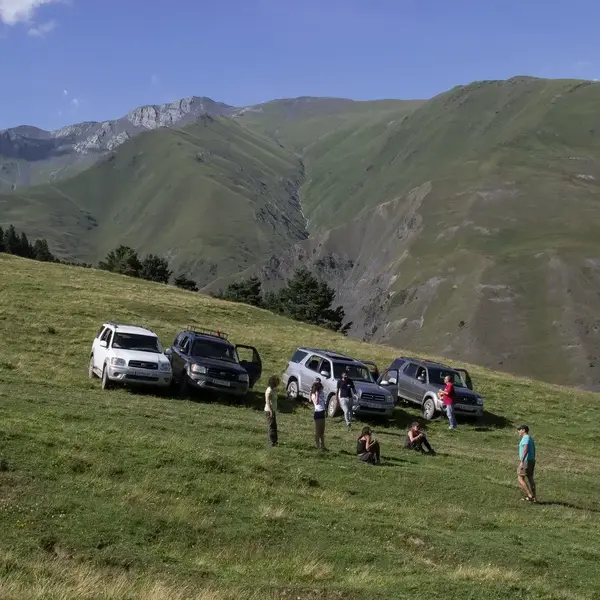
The drive to Ushguli follows the Enguri River valley deeper into the mountains. The road deteriorates as you climb—rough surface, occasional stream crossings, spectacular views at every turn. This is adventure travel territory; the rough access explains why Ushguli remains so well-preserved.
Ushguli: Europe’s Highest Settlement
Ushguli sits at approximately 2,200 meters. “Europe’s highest permanently inhabited settlement” is disputed (a few other places make similar claims), but Ushguli certainly ranks among them. UNESCO recognition came for the tower houses and the settlement’s extraordinary preservation of medieval architecture and culture.
The community comprises four villages with dozens of towers rising above stone houses. Most towers date to the 12th-14th centuries, built by powerful families during periods when blood feuds threatened daily life. A family under attack would retreat into their tower—four stories of stone with narrow windows and food stores capable of sustaining them through siege.
Mount Shkhara: Georgia’s Highest Peak
Behind Ushguli, Mount Shkhara rises to 5,193 meters—Georgia’s highest peak and the third-highest in the Caucasus. The mountain’s mass dominates the valley, glaciers flowing down its flanks even in summer. The scale is genuinely humbling.
Exploring the Villages
You’ll have free time to explore the villages on foot. Visit the small museum, climb to Lamaria Church for views, talk with locals, watch children playing among centuries-old towers, imagine winters here when snow closes the road for months. Photography opportunities are exceptional—the towers against mountain backdrop create iconic images.
Return Journey
Ugviri Pass on the drive provides a small alpine lake stop—cold, clear water at altitude with reflections of surrounding peaks. Tsvirmi village offers views of Tetnuldi peak (4,858m), another of Svaneti’s dramatic summits.
Return to Mestia completes your Svaneti exploration.
Overnight: Mestia (dinner included)
Route: Mestia → Vani → Natural Hot Springs → Obcha Wine Village → Kutaisi | Distance: 250km
The journey back to western Georgia includes new stops that round out your Georgian understanding.
Morning: Vani Archaeological Site
Vani, between Svaneti and Kutaisi, was a major Bronze Age settlement—possibly Colchis, though that identification remains debated. The archaeological site and museum display gold jewelry, bronze artifacts, pottery, and other finds demonstrating sophisticated culture in Georgia three thousand years ago.
The museum contextualizes Georgia’s claim as one of Europe’s oldest continuously inhabited regions. Artifacts here predate classical Greece, showing that when Athens was emerging from its dark ages, Georgian territory already supported complex societies with advanced metallurgy, trade networks, and artistic traditions.
Midday: Natural Hot Springs
After Bronze Age immersion, natural hot springs provide contrast. These aren’t developed spa facilities but rather wild sulphur springs emerging from the ground where you can soak in naturally hot water (around 40°C) with minimal infrastructure. The experience feels more authentic than polished spa resorts—just hot water, natural setting, and therapeutic properties that Georgians have enjoyed for centuries.
Afternoon: Obcha Wine Village
The day’s final stop brings you to Obcha village for wine tasting and your farewell dinner. Obcha specializes in Imeretian wines—western Georgian styles that differ from both Kakheti and Racha. You’ll taste local varieties, learn about Imeretian qvevri traditions, and enjoy a spread of dishes representing the region’s cuisine.
Evening: Farewell Dinner
The farewell dinner celebrates your journey’s completion—the regions you’ve crossed, the mountains you’ve seen, the people you’ve met, and the understanding you’ve gained about this complex, beautiful, dramatic country. Georgian toasting traditions mean numerous toasts—to friendship, to Georgia, to travels, to health, to peace. Each toast requires emptying your glass (though wine can replace harder alcohol if you prefer).
Overnight: Kutaisi (farewell dinner included)
Departure: Kutaisi International Airport
After breakfast, transfer to Kutaisi International Airport. Your guide ensures you reach the airport with appropriate time before flight departure.
Georgia has shared its history, landscapes, cuisine, wine, and hospitality. Safe travels—and may you return. As Georgians say, everyone becomes Georgian eventually; some just realize it later than others.
Price details
[wptb id=17404]
What’s Included
Tour map
Kutaisi Airport (Start/End)
Prometheus Cave
Tskaltubo (Night 1)
Kutaisi / Bagrati Cathedral
Uplistsikhe Cave City
Mtskheta - Jvari & Svetitskhoveli
Tbilisi (Nights 2-3)
Paravani Lake (2,073m)
Akhalkalaki
Khertvisi Fortress
Vardzia Cave Monastery (Night 4)
Saro Village
Sapara Monastery
Rabati Fortress
Atskuri (Night 5)
Gelati Monastery (UNESCO)
Okatse Canyon
Kinchkha Waterfall
Imereti Winery (Night 6)
Balda Canyon
Zugdidi
Enguri Dam
Mestia (Nights 7-9)
Lakhushdi Village
Ushguli (2,200m)
Vani Archaeological Site
Obcha Wine Village
Kutaisi (Night 10)
Tour gallery
Practical Information
Duration: 11 days / 10 nights
Start/End: Kutaisi International Airport
Group Size: Small groups (2-10 people maximum)
Difficulty: Moderate—involves walking on uneven terrain, high altitude (up to 2,200m), long driving days
Best Season: May through October (July-September optimal)
Language: English (Russian, German on request)
Physical Requirements
Comfortable with mountain driving on winding, sometimes rough roads. Able to walk moderate distances on uneven terrain (trails to viewpoints, village streets). Comfortable with high altitude (Ushguli at 2,200m—allow time to adjust). No severe mobility issues (some sites involve stairs, uneven ground).
What to Pack
Comfortable walking shoes: Hiking boots recommended for Svaneti.
Layers: Mountain temperatures vary significantly—evenings cool even in summer.
Light rain jacket: Weather changes quickly in mountains.
Sun protection: Sunscreen, hat, sunglasses essential.
Modest clothing: For church visits—covered shoulders and knees.
Camera: Extra batteries for mountain cold.
Personal medications: Rural areas have limited pharmacy access.
Power adapter: Type C/F European plugs.
Small daypack: For excursions.
Best Time to Visit
May-June ⭐⭐⭐⭐: Spring landscapes, wildflowers in mountains, mild temperatures, fewer tourists. Occasional rain in Svaneti.
July-August ⭐⭐⭐⭐⭐: Warmest weather, best for high-altitude Ushguli visit, peak season means more tourists at popular sites. All mountain roads reliably open.
September-October ⭐⭐⭐⭐⭐: Ideal timing—harvest season, autumn colors in mountains, comfortable temperatures, wine-making activities visible, stable weather.
November-April ⭐⭐: Winter conditions close or make difficult the road to Ushguli, cold in Svaneti, less predictable weather, some guesthouses closed—not recommended for this itinerary.
Tour FAQ
Why Book This Tour
Most visitors to Georgia choose between regions—Tbilisi and wine country, or Svaneti mountains, or cave cities of the south. This tour refuses that compromise. Eleven days allow you to experience Georgia’s full dramatic range without rushing, without choosing, without leaving wondering what you missed.
Small group size matters. Maximum 10 participants means flexibility when interesting opportunities arise, conversations that go beyond basic facts, and the ability to adjust pace when needed. Your guide becomes a cultural interpreter, not just an information source. You’ll have access to places that can’t accommodate larger groups—family homes in Svaneti, village guesthouses, wineries that don’t do mass tourism.
The Svaneti immersion sets this apart. Three full days in Georgia’s most distinctive region—rather than the typical rushed single day—allows proper exploration. The cooking class in Lakhushdi, overnight in Mestia, and full day to Ushguli create opportunities to understand Svan culture beyond photographing towers. You’ll learn to make kubdari, see how tower houses actually functioned, and experience hospitality that hasn’t been polished for tourists.
We include what others skip. The Javakheti plateau and Vardzia route reaches regions most tours never touch—volcanic highlands, Armenian-populated villages, cave monasteries that rival any in the world. Saro village’s megalithic fortress, natural hot springs, and authentic wine villages round out an itinerary that balances famous sites with genuine discoveries.
We’ve been running Georgia tours since 2011. The relationships we’ve built—with guesthouse owners, winemakers, families who host cooking classes—can’t be replicated by booking online. Our guides aren’t just knowledgeable; they’re connected to communities throughout Georgia. This creates experiences that transform tourism into genuine cultural exchange.
Eleven days sounds like commitment. It is. But Georgia rewards that commitment with depth that shorter tours can’t provide. You’ll leave understanding why Georgians consider their country unique, why wine matters here beyond being a beverage, and why everyone becomes Georgian eventually—some just realize it later than others.